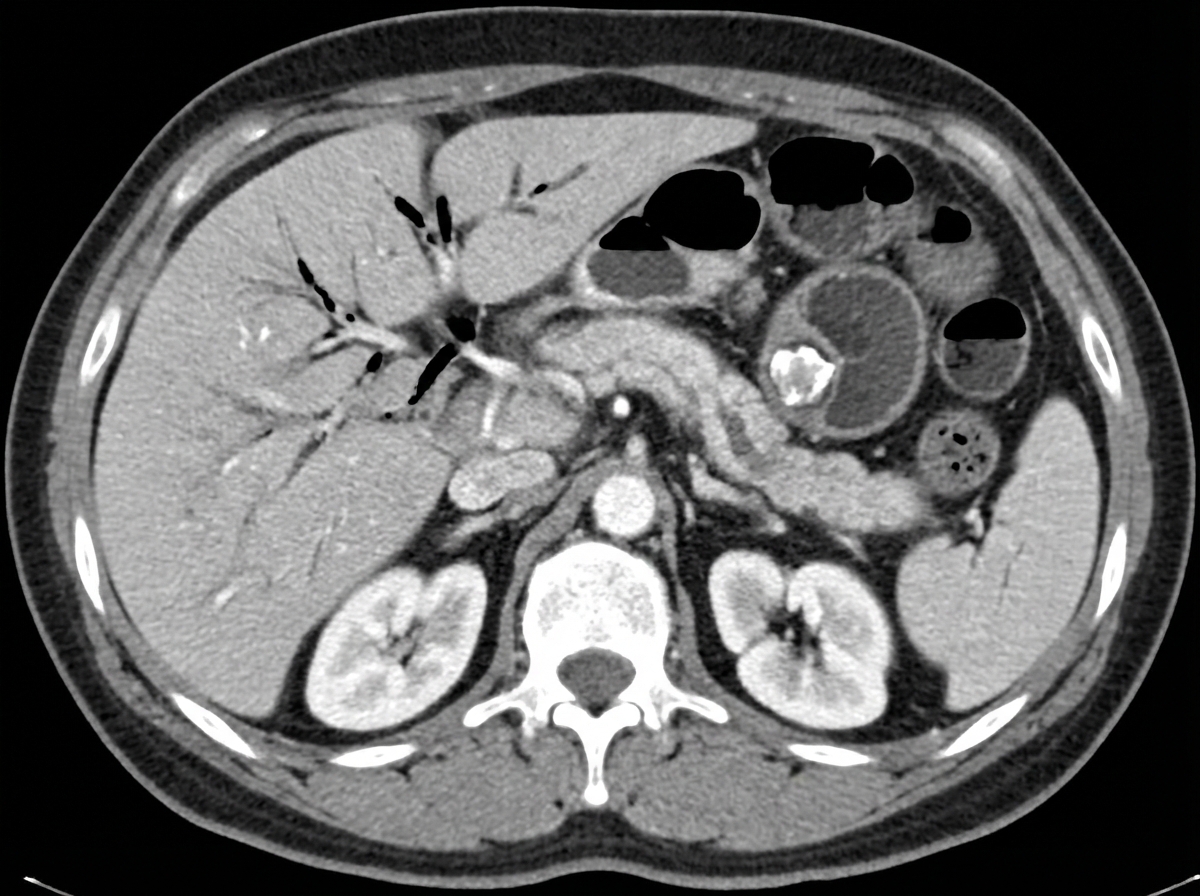
A 47-year-old woman comes to the emergency department 4 hours after the onset of abdominal and right shoulder pain. She has nausea and has had 2 episodes of vomiting. The pain began after her last meal, is constant, and she describes it as 7 out of 10 in intensity. She has had multiple similar episodes over the past 4 months that resolved spontaneously. She drinks 2 pints of vodka daily. She appears ill. Her temperature is 38.4°C (101.1°F), pulse is 110/min, respirations are 20/min, and blood pressure is 165/90 mm Hg. She is alert and fully oriented. Examination shows diaphoresis and multiple telangiectasias over the trunk and back. The abdomen is distended; there is tenderness to palpation in the right upper quadrant. When the patient is asked to inhale with the examiner's hand below the costal margin in the right midclavicular line, the patient winces and her breath catches. Voluntary guarding and shifting dullness are present. The liver is palpated 3 cm below the right costal margin. Laboratory studies show:
Hemoglobin 11.5 g/dL
Leukocyte count 16,300/mm3
Platelet count 150,000/mm3
Prothrombin time 20 sec (INR=1.3)
Serum
Urea nitrogen 16 mg/dL
Glucose 185 mg/dL
Creatinine 1.2 mg/dL
Bilirubin (total) 2.1 mg/dL
Albumin 3.1 g/dL
An abdominal ultrasound shows multiple small stones in the gallbladder and fluid in the gallbladder wall with wall thickening and pericholecystic fluid and stranding. Which of the following is the most appropriate next step in management?
Q12
A 48-year-old woman presents with severe chest pain for 2 hours. An episode of severe retching and bloody vomiting preceded the onset of chest pain. She says she had an episode of binge drinking last night. Past medical history includes a gastric ulcer 5 years ago, status post-surgical repair. Her blood pressure is 110/68 mm Hg, pulse is 90/min, respiratory rate is 18/min, and oxygen saturation is 90% on room air. ECG is unremarkable. Her cardiovascular examination is normal. Crepitus is heard over the left lower lobe of the lung. Which of the following is the most likely etiology of this patient’s symptoms?
Q13
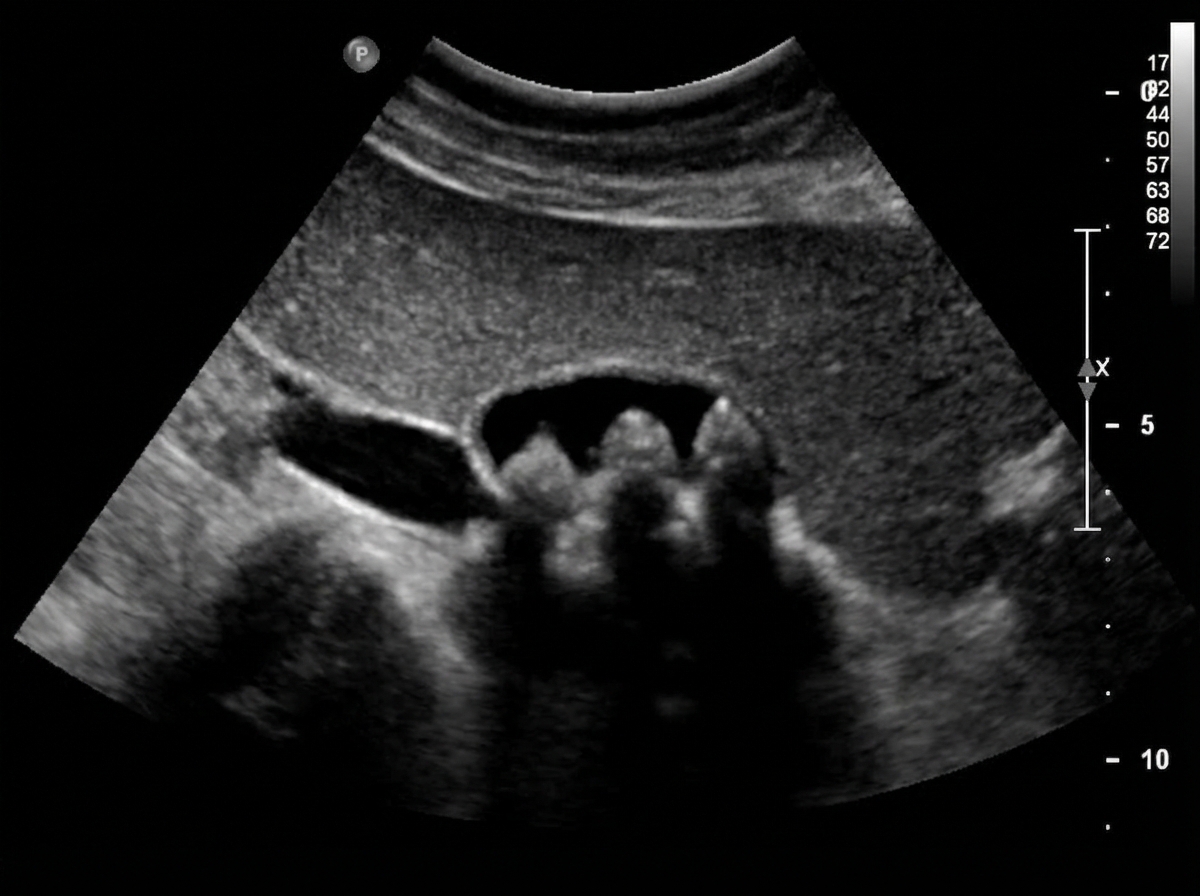
A 64-year-old man presents to the outpatient clinic because of abdominal pain. He reports that for the last few months, he has had postprandial pain that is worsened by spicy foods. He states that the pain is often located in the right upper portion of his abdomen and feels like it's traveling to his shoulder blade. These episodes are sporadic and unpredictable. He denies any fevers. Physical examination shows no abnormalities. Abdominal ultrasound is shown. Which of the following is the best treatment for this condition?
Q14
A 41-year-old woman comes to the physician because of an 8-hour history of colicky abdominal pain and nausea. The pain worsened after she ate a sandwich, and she has vomited once. She has no history of serious medical illness. Her temperature is 37.2°C (99.1°F), pulse is 80/min, and blood pressure is 134/83 mm Hg. Physical examination shows scleral icterus and diffuse tenderness in the upper abdomen. Serum studies show:
Total bilirubin 2.7 mg/dL
AST 35 U/L
ALT 38 U/L
Alkaline phosphatase 180 U/L
γ-Glutamyltransferase 90 U/L (N = 5–50)
Ultrasonography is most likely to show a stone located in which of the following structures?
Q15
A 56-year-old man comes to the physician because of intense anal pain that began 2 hours ago. He has a history of chronic constipation and rectal itching. His past medical history is otherwise unremarkable. He takes no medications. His vital signs are within normal limits. Because of extreme pain, a rectal examination is performed in the office under local anesthesia and shows a palpable perianal mass. No skin tag or mucosal prolapse through the anal canal is noted. Which of the following is the most appropriate immediate management?
Q16
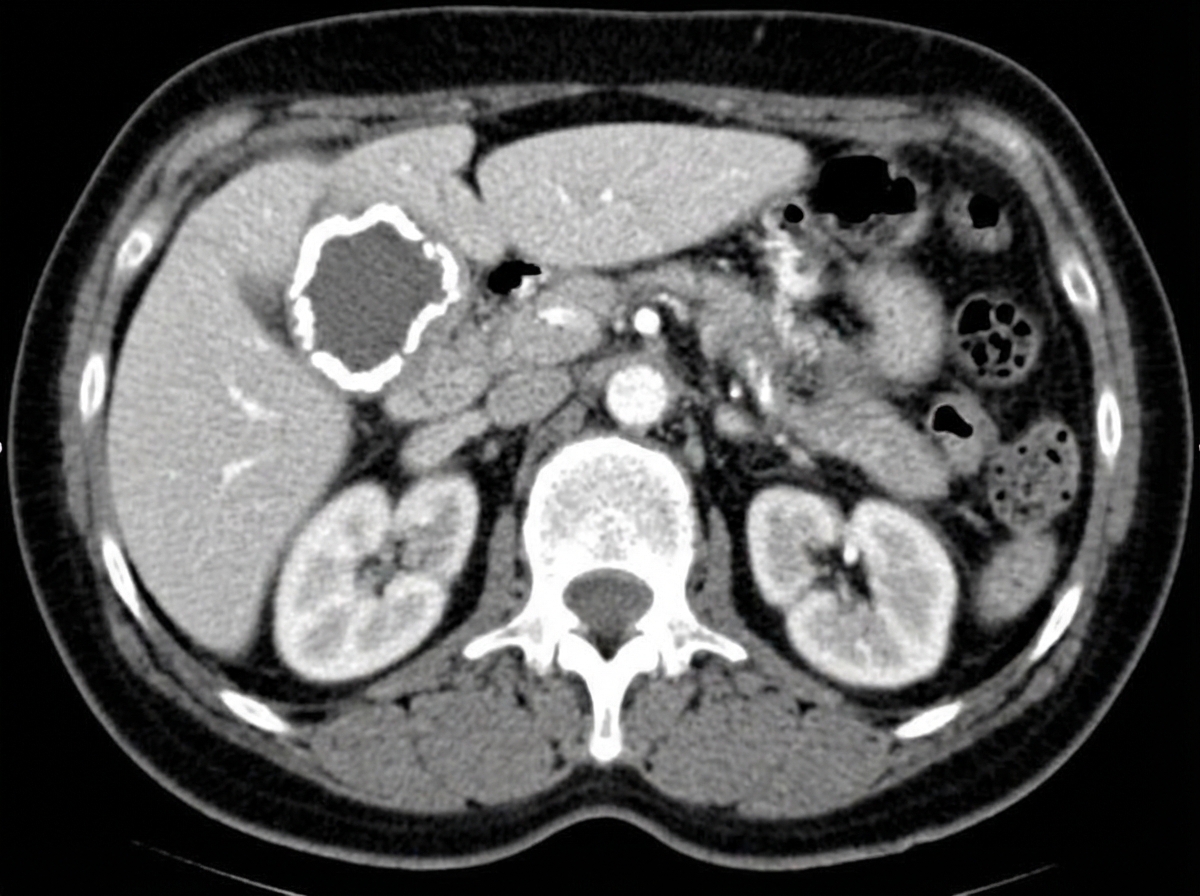
A 60-year-old woman comes to the physician because of intermittent abdominal pain for the past month. The patient reports that the pain is located in the right upper abdomen and that it does not change with food intake. She has had no nausea, vomiting, or change in weight. She has a history of hypertension and hyperlipidemia. She does not smoke. She drinks 1–2 glasses of wine per day. Current medications include captopril and atorvastatin. Physical examination shows a small, firm mass in the right upper quadrant. Laboratory studies are within the reference range. A CT scan of the abdomen is shown. This patient's condition puts her at increased risk of developing which of the following?
Q17
After 1 week of intubation and sedation in the ICU for severe pneumonia, a 62-year-old man develops severe pain in his penis. He has a history of chronic obstructive pulmonary disease. He is an ex-smoker. He is currently on broad-spectrum IV antibiotics. In the ICU, his temperature is 36.7°C (98.1°F), blood pressure is 115/70 mm/Hg, and pulse is 84/min. He is on 2 L of oxygen via nasal cannula and with a respiratory rate of 18/min. On examination, he is uncircumcised with a urinary catheter in place. The foreskin is retracted revealing a severely edematous and erythematous glans. The area is markedly tender to touch. There are no ulcers on the penis or discharge from the urethral meatus. Examination of the scrotum and perineum shows no abnormalities. Which of the following is the most appropriate next step in management?
Q18
A 54-year-old woman comes to the physician because of a 6-month history of dull, persistent pain and swelling of her right leg. The pain is worse at the end of the day and is relieved by walking or elevating her feet. Two years ago, she developed acute deep vein thrombosis in her right calf after a long flight, which was treated with anticoagulants for 6 months. Physical examination shows 2+ pitting edema of her right leg. The skin around the right ankle shows a reddish-brown discoloration and multiple telangiectasias. She has dilated varicose veins in the right leg. Which of the following is most likely to establish the diagnosis?
Q19
Three days after undergoing coronary artery bypass surgery, a 72-year-old man has severe right upper quadrant pain, fever, nausea, and vomiting. He has type 2 diabetes mellitus, benign prostatic hyperplasia, peripheral vascular disease, and chronic mesenteric ischemia. He had smoked one pack of cigarettes daily for 30 years but quit 10 years ago. He drinks 8 cans of beer a week. His preoperative medications include metformin, aspirin, simvastatin, and finasteride. His temperature is 38.9°C (102°F), pulse is 102/min, respirations are 18/min, and blood pressure is 110/60 mmHg. Auscultation of the lungs shows bilateral inspiratory crackles. Cardiac examination shows no murmurs, rubs or gallops. Abdominal examination shows soft abdomen with tenderness and sudden inspiratory arrest upon palpation in the right upper quadrant. There is no rebound tenderness or guarding. Laboratory studies show the following:
Hemoglobin 13.1 g/dL
Hematocrit 42%
Leukocyte count 15,700/mm3
Segmented neutrophils 65%
Bands 10%
Lymphocytes 20%
Monocytes 3%
Eosinophils 1%
Basophils 0.5%
AST 40 U/L
ALT 100 U/L
Alkaline phosphatase 85 U/L
Total bilirubin 1.5 mg/dL
Direct 0.9 mg/dL
Amylase 90 U/L
Abdominal ultrasonography shows a distended gallbladder, thickened gallbladder wall with pericholecystic fluid, and no stones. Which of the following is the most appropriate next step in management?
Q20
A 14-year-old boy is brought to the emergency department because of abdominal swelling and vomiting over the past 24 hours. He has generalized abdominal pain. He has no history of any serious illnesses and takes no medications. His temperature is 36.7°C (98.1°F), blood pressure is 115/70 mm/Hg, pulse is 88/min, and respirations are 16/min. Abdominal examination shows diffuse swelling with active bowel sounds. Mild generalized tenderness without guarding or rebound is noted. His leukocyte count is 8,000/mm3. An X-ray of the abdomen is shown. Intravenous fluids have been initiated. Which of the following is the most appropriate next step in management?
Abdominal emergencies US Medical PG Practice Questions and MCQs
Question 11: A 47-year-old woman comes to the emergency department 4 hours after the onset of abdominal and right shoulder pain. She has nausea and has had 2 episodes of vomiting. The pain began after her last meal, is constant, and she describes it as 7 out of 10 in intensity. She has had multiple similar episodes over the past 4 months that resolved spontaneously. She drinks 2 pints of vodka daily. She appears ill. Her temperature is 38.4°C (101.1°F), pulse is 110/min, respirations are 20/min, and blood pressure is 165/90 mm Hg. She is alert and fully oriented. Examination shows diaphoresis and multiple telangiectasias over the trunk and back. The abdomen is distended; there is tenderness to palpation in the right upper quadrant. When the patient is asked to inhale with the examiner's hand below the costal margin in the right midclavicular line, the patient winces and her breath catches. Voluntary guarding and shifting dullness are present. The liver is palpated 3 cm below the right costal margin. Laboratory studies show:
Hemoglobin 11.5 g/dL
Leukocyte count 16,300/mm3
Platelet count 150,000/mm3
Prothrombin time 20 sec (INR=1.3)
Serum
Urea nitrogen 16 mg/dL
Glucose 185 mg/dL
Creatinine 1.2 mg/dL
Bilirubin (total) 2.1 mg/dL
Albumin 3.1 g/dL
An abdominal ultrasound shows multiple small stones in the gallbladder and fluid in the gallbladder wall with wall thickening and pericholecystic fluid and stranding. Which of the following is the most appropriate next step in management?
A. Open cholecystectomy
B. Intravenous vitamin K
C. Oral rifaximin and lactulose
D. IV antibiotics and supportive care
E. Laparoscopic cholecystectomy (Correct Answer)
Explanation: ***Laparoscopic cholecystectomy***
- This patient presents with signs and symptoms consistent with **acute cholecystitis** (right upper quadrant pain, **Murphy's sign**, fever, leukocytosis, gallbladder wall thickening and pericholecystic fluid on ultrasound). Given that she is hemodynamically stable and within 72 hours of symptom onset, **early laparoscopic cholecystectomy** is the definitive treatment and is associated with better outcomes.
- Although she has signs of chronic liver disease (telangiectasias, elevated PT/INR, low albumin, enlarged liver, daily alcohol use), her synthetic function is not severely impaired enough to contraindicate surgery, especially given the acuteness of her cholecystitis.
*Open cholecystectomy*
- While open cholecystectomy is an option for acute cholecystitis, **laparoscopic cholecystectomy** is generally preferred due to its less invasive nature, faster recovery, and reduced pain.
- **Open cholecystectomy** is typically reserved for cases with severe inflammation, anatomical difficulties, or when laparoscopic surgery is not feasible or fails.
*Intravenous vitamin K*
- **Intravenous vitamin K** is given to correct **coagulopathy** due to vitamin K deficiency, often seen in liver disease. While this patient has an elevated INR (1.3), which might indicate some coagulopathy due to her liver disease, it is not the immediate priority over treating the acute cholecystitis.
- Correcting the **INR** with vitamin K might be part of preoperative management, but it does not address the urgent need for surgical intervention for acute cholecystitis.
*Oral rifaximin and lactulose*
- **Rifaximin and lactulose** are treatments for **hepatic encephalopathy**, which is characterized by altered mental status due to severe liver dysfunction.
- This patient is **alert and fully oriented**, and while she has signs of liver disease, there is no indication of hepatic encephalopathy, making this treatment inappropriate at this time.
*IV antibiotics and supportive care*
- **IV antibiotics** are an essential part of the initial management for **acute cholecystitis** to cover potential bacterial infections. Supportive care, including pain control and IV fluids, is also important.
- However, for definitive treatment of acute calculous cholecystitis, especially in a stable patient, **surgical removal of the gallbladder** is required to prevent recurrence and complications. Antibiotics alone are usually not sufficient as definitive management.
Question 12: A 48-year-old woman presents with severe chest pain for 2 hours. An episode of severe retching and bloody vomiting preceded the onset of chest pain. She says she had an episode of binge drinking last night. Past medical history includes a gastric ulcer 5 years ago, status post-surgical repair. Her blood pressure is 110/68 mm Hg, pulse is 90/min, respiratory rate is 18/min, and oxygen saturation is 90% on room air. ECG is unremarkable. Her cardiovascular examination is normal. Crepitus is heard over the left lower lobe of the lung. Which of the following is the most likely etiology of this patient’s symptoms?
A. Linear laceration at the gastroesophageal junction
B. Helicobacter pylori infection
C. Infarction of the myocardium
D. Rupture of the esophagus due to increased intraluminal pressure (Correct Answer)
E. Horizontal partition in the tunica media of the aorta
Explanation: ***Rupture of the esophagus due to increased intraluminal pressure***
- The history of **severe retching and vomiting** after binge drinking, followed by **severe chest pain**, **bloody vomiting**, and **crepitus** (subcutaneous emphysema) over the lung, is highly classic for **Boerhaave syndrome**, which is an esophageal rupture.
- This condition results from a sudden, forceful increase in **intra-abdominal pressure** transmitted to the esophagus, leading to a full-thickness tear.
*Linear laceration at the gastroesophageal junction*
- This description corresponds to a **Mallory-Weiss tear**, which typically causes **hematemesis** after vomiting but rarely causes severe chest pain or esophageal rupture with crepitus.
- A Mallory-Weiss tear is a partial-thickness tear, whereas Boerhaave syndrome is a full-thickness rupture.
*Helicobacter pylori infection*
- While *H. pylori* can cause **gastric ulcers** and gastrointestinal bleeding, it does not typically present with acute severe chest pain, vomiting, or esophageal rupture, nor would it lead to crepitus in the lung area.
- The patient's history of gastric ulcer (status post-surgical repair) is not directly linked to the acute presentation of esophageal rupture.
*Infarction of the myocardium*
- Although **chest pain** is a primary symptom of myocardial infarction, the preceding severe retching, bloody vomiting, and presence of **crepitus** over the lung are not typical features.
- The **unremarkable ECG** and normal cardiovascular exam also argue against an acute myocardial infarction.
*Horizontal partition in the tunica media of the aorta*
- This describes **aortic dissection**, which can cause severe, tearing chest pain.
- However, the preceding **retching and vomiting**, **bloody vomiting**, and **lung crepitus** are not characteristic of aortic dissection.
Question 13: A 64-year-old man presents to the outpatient clinic because of abdominal pain. He reports that for the last few months, he has had postprandial pain that is worsened by spicy foods. He states that the pain is often located in the right upper portion of his abdomen and feels like it's traveling to his shoulder blade. These episodes are sporadic and unpredictable. He denies any fevers. Physical examination shows no abnormalities. Abdominal ultrasound is shown. Which of the following is the best treatment for this condition?
A. Endoscopic retrograde cholangiopancreatography (ERCP)
B. Magnetic resonance cholangiopancreatography (MRCP)
C. Cholecystectomy (Correct Answer)
D. Ursodeoxycholic acid
E. Ketorolac
Explanation: ***Cholecystectomy***
- The patient's symptoms of **postprandial right upper quadrant pain** radiating to the **shoulder blade**, exacerbated by spicy foods, strongly suggest **biliary colic** due to **cholelithiasis**.
- The ultrasound findings of **gallstones in the gallbladder neck** with **posterior acoustic shadowing** confirm the diagnosis, making surgical removal of the gallbladder (cholecystectomy) the definitive treatment.
*Endoscopic retrograde cholangiopancreatography (ERCP)*
- ERCP is primarily an **invasive therapeutic procedure** used to remove **choledocholithiasis** (stones in the common bile duct) or to stent strictures, not for symptomatic cholelithiasis confined to the gallbladder.
- It carries risks such as **pancreatitis** and perforation, making it inappropriate as a first-line treatment for uncomplicated cholelithiasis.
*Magnetic resonance cholangiopancreatography (MRCP)*
- MRCP is a **non-invasive diagnostic imaging technique** primarily used to visualize the biliary and pancreatic ducts to detect stones or strictures, particularly in the common bile duct.
- While useful for diagnosis, it is **not a treatment** and is typically reserved for cases where common bile duct stones are suspected or when ERCP is contraindicated.
*Ursodeoxycholic acid*
- Ursodeoxycholic acid is a **bile acid** sometimes used to **dissolve small cholesterol gallstones** in patients who are not surgical candidates or for prevention in certain high-risk groups.
- It is **not effective for large or calcified stones**, and treatment can take months to years with a high recurrence rate, making it less suitable for symptomatic cholelithiasis requiring definitive treatment.
*Ketorolac*
- Ketorolac is a **non-steroidal anti-inflammatory drug (NSAID)** that can provide **symptomatic relief** for acute pain associated with biliary colic.
- However, it **does not treat the underlying cause** (gallstones) and is therefore not a definitive treatment for symptomatic cholelithiasis.
Question 14: A 41-year-old woman comes to the physician because of an 8-hour history of colicky abdominal pain and nausea. The pain worsened after she ate a sandwich, and she has vomited once. She has no history of serious medical illness. Her temperature is 37.2°C (99.1°F), pulse is 80/min, and blood pressure is 134/83 mm Hg. Physical examination shows scleral icterus and diffuse tenderness in the upper abdomen. Serum studies show:
Total bilirubin 2.7 mg/dL
AST 35 U/L
ALT 38 U/L
Alkaline phosphatase 180 U/L
γ-Glutamyltransferase 90 U/L (N = 5–50)
Ultrasonography is most likely to show a stone located in which of the following structures?
A. Gallbladder neck
B. Common bile duct (Correct Answer)
C. Cystic duct
D. Gallbladder fundus
E. Common hepatic duct
Explanation: **Common bile duct**
- The patient's symptoms of **colicky abdominal pain**, **nausea**, **scleral icterus**, and elevated **total bilirubin** (2.7 mg/dL) along with an elevated **alkaline phosphatase** (180 U/L) and **γ-glutamyltransferase** (90 U/L) strongly suggest an **obstructive jaundice**. [1]
- A stone in the **common bile duct** would cause obstruction to bile flow from both the liver and gallbladder, leading to the observed symptoms and lab findings, including post-prandial pain exacerbation due to gallbladder contraction. [1]
*Gallbladder neck*
- A stone lodged in the **gallbladder neck** typically causes **biliary colic** [2] but would not lead to **jaundice** (elevated total bilirubin and icterus) or significant elevation of **alkaline phosphatase** and **GGT** unless it was also obstructing the common bile duct via external compression (Mirizzi syndrome), which is less common. [3]
- The liver enzymes (AST, ALT) are normal, suggesting no significant hepatocellular injury, but the obstructive pattern points away from isolated gallbladder neck obstruction.
*Cystic duct*
- Obstruction of the **cystic duct** primarily causes **biliary colic** or **acute cholecystitis**, characterized by pain without **jaundice**, as bile can still flow from the liver to the duodenum via the common hepatic and common bile ducts. [2]
- The presence of **icterus** and elevated **bilirubin** and **GGT** makes isolated cystic duct obstruction unlikely.
*Gallbladder fundus*
- A stone in the **gallbladder fundus** is often **asymptomatic** or may cause mild, non-specific abdominal discomfort. [2]
- Unless it moves to obstruct an outflow tract (cystic duct or common bile duct), it typically does not cause the severe colicky pain, nausea, jaundice, or obstructive liver enzyme abnormalities seen in this patient.
*Common hepatic duct*
- While obstruction of the **common hepatic duct** would cause similar symptoms to common bile duct obstruction (jaundice, elevated alkaline phosphatase and GGT), stones originating from the gallbladder *typically* lodge in the common bile duct after passing through the cystic duct.
- **Primary common hepatic duct stones** (or those migrating from the gallbladder) are also possible, but given the presentation of gallbladder-related pain (post-prandial exacerbation), common bile duct obstruction is a more direct explanation for the complete picture.
Question 15: A 56-year-old man comes to the physician because of intense anal pain that began 2 hours ago. He has a history of chronic constipation and rectal itching. His past medical history is otherwise unremarkable. He takes no medications. His vital signs are within normal limits. Because of extreme pain, a rectal examination is performed in the office under local anesthesia and shows a palpable perianal mass. No skin tag or mucosal prolapse through the anal canal is noted. Which of the following is the most appropriate immediate management?
A. Infrared photocoagulation
B. Rubber band ligation
C. Sclerotherapy
D. Elliptical excision
E. Incision and drainage (Correct Answer)
Explanation: ***Incision and drainage***
- The sudden onset of **intense anal pain** and presence of a **palpable perianal mass** without mucosal prolapse strongly suggests a **thrombosed external hemorrhoid**.
- **Prompt incision and drainage** under local anesthesia provides immediate pain relief and prevents further complications when symptoms are acute (within 48-72 hours) and the thrombus is large.
*Infrared photocoagulation*
- This technique is typically used for **smaller, internal hemorrhoids** (grades I and II) that present with bleeding but usually *not* with acute, severe pain or a palpable perianal mass.
- It involves using heat to coagulate tissue and cause scar formation, which is not suitable for an acute thrombus.
*Rubber band ligation*
- This procedure is reserved for **internal hemorrhoids**, primarily those that prolapse (grades I-III), causing bleeding or discomfort, but *not* primarily for thrombosed external hemorrhoids with acute severe pain.
- Applying a band to an acutely thrombosed external hemorrhoid would be ineffective and extremely painful.
*Sclerotherapy*
- Similar to infrared photocoagulation, **sclerotherapy** involves injecting a chemical solution to scar and fix internal hemorrhoids (grades I and II).
- It is *not* indicated for the management of an acutely thrombosed external hemorrhoid, which requires evacuation of the thrombus.
*Elliptical excision*
- While an **excision** might ultimately be performed for a thrombosed external hemorrhoid, an **elliptical excision** is generally a more involved procedure often reserved for larger, recurrent, or long-standing thrombosed hemorrhoids.
- For acute and intense pain relief, simple incision and drainage to remove the clot is usually the preferred initial approach, especially within the first few days of symptom onset.
Question 16: A 60-year-old woman comes to the physician because of intermittent abdominal pain for the past month. The patient reports that the pain is located in the right upper abdomen and that it does not change with food intake. She has had no nausea, vomiting, or change in weight. She has a history of hypertension and hyperlipidemia. She does not smoke. She drinks 1–2 glasses of wine per day. Current medications include captopril and atorvastatin. Physical examination shows a small, firm mass in the right upper quadrant. Laboratory studies are within the reference range. A CT scan of the abdomen is shown. This patient's condition puts her at increased risk of developing which of the following?
A. Gallbladder adenocarcinoma (Correct Answer)
B. Hepatocellular carcinoma
C. Bowel obstruction
D. Acute pancreatitis
E. Pancreatic adenocarcinoma
Explanation: ***Gallbladder adenocarcinoma***
- The description of a **small, firm mass** in the right upper quadrant, along with intermittent abdominal pain that is not food-related and no change in weight, is highly suggestive of a **porcelain gallbladder** (calcified gallbladder wall), which is a significant risk factor for gallbladder adenocarcinoma.
- The CT scan, though not provided, would likely show calcification of the gallbladder wall, further supporting this diagnosis and the associated increased risk of malignancy.
*Hepatocellular carcinoma*
- This is typically associated with **chronic liver diseases** such as hepatitis B or C, or cirrhosis, none of which are indicated in the patient's history.
- While it can present with a right upper quadrant mass, the specific context points more strongly towards gallbladder pathology due to the nature and location of the mass.
*Bowel obstruction*
- This condition would typically present with symptoms such as **nausea, vomiting**, significant changes in bowel habits, and **colicky abdominal pain** that might be food-related, none of which are prominent in this patient.
- A palpable, discrete mass in the right upper quadrant lasting a month is less characteristic of an acute or subacute bowel obstruction.
*Acute pancreatitis*
- Acute pancreatitis usually causes **severe, constant epigastric pain** often radiating to the back, associated with **nausea and vomiting**, and elevated lipase/amylase, none of which are present here.
- The patient's intermittent, non-radiating pain and normal lab studies do not fit the profile of acute pancreatitis.
*Pancreatic adenocarcinoma*
- While it can present with abdominal pain and a mass, the pain is often in the **epigastric region** and may radiate to the back, and is also frequently associated with **weight loss**, **jaundice**, or new-onset diabetes, which are absent in this case.
- A porcelain gallbladder is not a known risk factor for pancreatic adenocarcinoma.
Question 17: After 1 week of intubation and sedation in the ICU for severe pneumonia, a 62-year-old man develops severe pain in his penis. He has a history of chronic obstructive pulmonary disease. He is an ex-smoker. He is currently on broad-spectrum IV antibiotics. In the ICU, his temperature is 36.7°C (98.1°F), blood pressure is 115/70 mm/Hg, and pulse is 84/min. He is on 2 L of oxygen via nasal cannula and with a respiratory rate of 18/min. On examination, he is uncircumcised with a urinary catheter in place. The foreskin is retracted revealing a severely edematous and erythematous glans. The area is markedly tender to touch. There are no ulcers on the penis or discharge from the urethral meatus. Examination of the scrotum and perineum shows no abnormalities. Which of the following is the most appropriate next step in management?
A. Topical betamethasone
B. Manual reduction (Correct Answer)
C. Emergency circumcision
D. Surgical incision
E. Referral to a urologist after discharge
Explanation: ***Manual reduction***
* The patient presents with **paraphimosis**, a urological emergency where the **foreskin is retracted** and trapped behind the corona of the glans, leading to venous and lymphatic congestion, edema, and pain.
* **Manual reduction** is the initial and most appropriate treatment for paraphimosis, aiming to relieve the constriction and restore normal foreskin position.
*Topical betamethasone*
* Topical corticosteroids like betamethasone are used to treat **phimosis** (inability to retract the foreskin) by softening the skin, not paraphimosis, which requires immediate detraption.
* Applying betamethasone would not resolve the acute constriction and edema in paraphimosis and would only delay appropriate management.
*Emergency circumcision*
* **Emergency circumcision** is typically reserved for cases where manual reduction fails or for recurrent paraphimosis, as it is an invasive surgical procedure.
* It is not the first-line treatment for an acute episode of paraphimosis and should only be considered after less invasive measures fail.
*Surgical incision*
* **Surgical incision** (dorsal slit) may be necessary if manual reduction is unsuccessful, allowing for the release of the constricting band, but it is not the initial management step.
* This is an invasive procedure with potential complications and comes after attempts at manual manipulation.
*Referral to a urologist after discharge*
* **Paraphimosis** is a urological emergency that requires immediate intervention to prevent potential complications such as **ischemia, necrosis**, and **autoamputation of the glans penis**.
* Delaying treatment until discharge could lead to irreversible damage and severe consequences, making immediate referral to a urologist crucial if manual reduction fails.
Question 18: A 54-year-old woman comes to the physician because of a 6-month history of dull, persistent pain and swelling of her right leg. The pain is worse at the end of the day and is relieved by walking or elevating her feet. Two years ago, she developed acute deep vein thrombosis in her right calf after a long flight, which was treated with anticoagulants for 6 months. Physical examination shows 2+ pitting edema of her right leg. The skin around the right ankle shows a reddish-brown discoloration and multiple telangiectasias. She has dilated varicose veins in the right leg. Which of the following is most likely to establish the diagnosis?
A. D-dimer assay
B. Ankle-brachial pressure index
C. Computerized tomography scan with contrast
D. Duplex ultrasonography (Correct Answer)
E. Nerve conduction studies
Explanation: ***Duplex ultrasonography***
- **Duplex ultrasonography** is the gold standard for evaluating **venous insufficiency**, which is strongly suggested by the patient's history of **deep vein thrombosis (DVT)**, **chronic leg pain**, **pitting edema**, **stasis dermatitis** (reddish-brown discoloration), and **varicose veins**.
- This non-invasive imaging technique allows visualization of vein structure, blood flow, and valve function, helping to identify **venous reflux** or **obstruction**.
*D-dimer assay*
- A **D-dimer assay** is primarily used to **rule out acute DVT** or pulmonary embolism.
- While D-dimer levels may be elevated in chronic venous disease, it is **not specific** enough to establish a diagnosis of chronic venous insufficiency or its cause.
*Ankle-brachial pressure index*
- The **ankle-brachial pressure index (ABPI)** is used to diagnose **peripheral artery disease (PAD)** by comparing blood pressure in the ankle to the arm.
- This patient's symptoms are more consistent with **venous disease** rather than arterial insufficiency.
*Computerized tomography scan with contrast*
- A **CT scan with contrast** can visualize vascular structures but is **less sensitive and specific** for diagnosing venous insufficiency compared to duplex ultrasonography.
- It also involves **radiation exposure** and **contrast dye risks**, making it a less suitable initial diagnostic tool for this condition.
*Nerve conduction studies*
- **Nerve conduction studies** are used to diagnose **neuropathies** and conditions affecting the peripheral nerves and are not relevant for evaluating vascular issues.
- The patient's symptoms clearly point to a **vascular problem**, not a neurological one.
Question 19: Three days after undergoing coronary artery bypass surgery, a 72-year-old man has severe right upper quadrant pain, fever, nausea, and vomiting. He has type 2 diabetes mellitus, benign prostatic hyperplasia, peripheral vascular disease, and chronic mesenteric ischemia. He had smoked one pack of cigarettes daily for 30 years but quit 10 years ago. He drinks 8 cans of beer a week. His preoperative medications include metformin, aspirin, simvastatin, and finasteride. His temperature is 38.9°C (102°F), pulse is 102/min, respirations are 18/min, and blood pressure is 110/60 mmHg. Auscultation of the lungs shows bilateral inspiratory crackles. Cardiac examination shows no murmurs, rubs or gallops. Abdominal examination shows soft abdomen with tenderness and sudden inspiratory arrest upon palpation in the right upper quadrant. There is no rebound tenderness or guarding. Laboratory studies show the following:
Hemoglobin 13.1 g/dL
Hematocrit 42%
Leukocyte count 15,700/mm3
Segmented neutrophils 65%
Bands 10%
Lymphocytes 20%
Monocytes 3%
Eosinophils 1%
Basophils 0.5%
AST 40 U/L
ALT 100 U/L
Alkaline phosphatase 85 U/L
Total bilirubin 1.5 mg/dL
Direct 0.9 mg/dL
Amylase 90 U/L
Abdominal ultrasonography shows a distended gallbladder, thickened gallbladder wall with pericholecystic fluid, and no stones. Which of the following is the most appropriate next step in management?
A. Intravenous heparin therapy followed by embolectomy
B. Careful observation with serial abdominal examinations
C. Endoscopic retrograde cholangiopancreatography with papillotomy
D. Intravenous piperacillin-tazobactam therapy and percutaneous cholecystostomy (Correct Answer)
E. Immediate cholecystectomy
Explanation: ***Intravenous piperacillin-tazobactam therapy and percutaneous cholecystostomy***
- The patient presents with **acalculous cholecystitis**, characterized by severe RUQ pain, fever, leukocytosis, elevated transaminases, and ultrasonographic findings of a distended gallbladder with a thickened wall and pericholecystic fluid, but no stones.
- Given his comorbid conditions (diabetes, PVD, recent CABG) and the severity of his illness, empirical **broad-spectrum antibiotics** (like piperacillin-tazobactam) along with image-guided **percutaneous cholecystostomy** for gallbladder decompression are the most appropriate management, avoiding the high risks of immediate surgery.
*Intravenous heparin therapy followed by embolectomy*
- This approach is indicated for **acute mesenteric ischemia with embolism**, which can present with severe abdominal pain and signs of hypoperfusion.
- While the patient has chronic mesenteric ischemia, his current symptoms and imaging findings are more consistent with cholecystitis, and there is no clear evidence of acute embolic event requiring embolectomy.
*Careful observation with serial abdominal examinations*
- This patient exhibits signs of a severe inflammatory process (fever, leukocytosis, RUQ tenderness, elevated LFTs, and sonographic findings of severe inflammation) and systemic illness, making **conservative observation insufficient** and potentially dangerous.
- **Acalculous cholecystitis** is a serious condition with a high risk of complications like perforation and sepsis, especially in critically ill patients, and requires prompt intervention.
*Endoscopic retrograde cholangiopancreatography with papillotomy*
- **ERCP with papillotomy** is indicated for conditions like **choledocholithiasis** (common bile duct stones) or **cholangitis**, which cause biliary obstruction.
- The ultrasound shows **no stones** and features specific to cholecystitis rather than common bile duct obstruction, making ERCP inappropriate as an initial step.
*Immediate cholecystectomy*
- While cholecystectomy is the definitive treatment for cholecystitis, immediate open or laparoscopic cholecystectomy in a critically ill patient with **acalculous cholecystitis** after recent CABG carries a **very high morbidity and mortality risk**.
- **Percutaneous cholecystostomy** offers a safer, less invasive alternative for source control and stabilizes the patient before potential delayed definitive surgery if needed, once the patient's condition improves.
Question 20: A 14-year-old boy is brought to the emergency department because of abdominal swelling and vomiting over the past 24 hours. He has generalized abdominal pain. He has no history of any serious illnesses and takes no medications. His temperature is 36.7°C (98.1°F), blood pressure is 115/70 mm/Hg, pulse is 88/min, and respirations are 16/min. Abdominal examination shows diffuse swelling with active bowel sounds. Mild generalized tenderness without guarding or rebound is noted. His leukocyte count is 8,000/mm3. An X-ray of the abdomen is shown. Intravenous fluids have been initiated. Which of the following is the most appropriate next step in management?
A. Rectal tube
B. IV antibiotics
C. Endoscopy
D. Close observation (Correct Answer)
E. Colectomy
Explanation: ***Close observation***
- This patient presents with signs of **partial or early bowel obstruction** (abdominal swelling, vomiting, diffuse pain) but remains **hemodynamically stable** with **no peritoneal signs** (no guarding or rebound tenderness), **normal vital signs**, and **normal leukocyte count**.
- The presence of **active bowel sounds** indicates the bowel is still viable and functional, suggesting this is not a complete obstruction with ischemia.
- **Initial management of bowel obstruction** in a stable patient without signs of perforation or strangulation is **conservative**: NPO status, NG tube decompression (if not already done), IV fluid resuscitation (already initiated), serial abdominal exams, and **close observation** to monitor for improvement or signs of deterioration.
- Many partial obstructions resolve with conservative management. Surgery is reserved for cases that fail to improve, develop peritoneal signs, or show evidence of bowel compromise.
- If diagnosis remains unclear or the patient worsens, **CT scan** would be the next imaging study, not endoscopy.
*Endoscopy*
- **Endoscopy is NOT indicated** for suspected mechanical small or large bowel obstruction in this age group and presentation.
- **Colonoscopy** with detorsion is used for **sigmoid volvulus** in elderly patients with a characteristic "coffee bean" sign on X-ray, not in adolescents with generalized obstruction.
- While **air or contrast enema under fluoroscopy** (not endoscopy) is used for **intussusception**, this condition typically affects infants and toddlers (peak age 6-36 months), not 14-year-olds.
- Performing endoscopy on an obstructed bowel carries risk of perforation and doesn't address the most likely anatomic locations of obstruction.
*Rectal tube*
- A **rectal tube** is used for **colonic decompression** in specific scenarios like sigmoid volvulus or Ogilvie syndrome (acute colonic pseudo-obstruction), typically in elderly patients.
- It provides no diagnostic information and is unlikely to relieve an obstruction in a 14-year-old, where small bowel obstruction or proximal large bowel pathology is more likely.
- This is not appropriate initial management without first establishing the location and nature of the obstruction.
*IV antibiotics*
- **Antibiotics are not indicated** as the initial next step in this stable patient without signs of infection or perforation.
- The patient is **afebrile**, has a **normal WBC count** (8,000/mm³), and has **no peritoneal signs** (no guarding or rebound).
- Antibiotics would be indicated if there were signs of **bowel ischemia, perforation, or peritonitis**, or if the patient was proceeding to surgery.
- Addressing the obstruction with conservative management is the priority.
*Colectomy*
- **Colectomy** is a major surgical intervention reserved for cases of **bowel necrosis, perforation, malignancy**, or when conservative/less invasive management fails.
- This is absolutely **not the initial management step** in a stable patient with suspected obstruction who has not yet been given a trial of conservative management.
- Surgery would only be considered after failed conservative management (24-48 hours) or if signs of peritonitis, ischemia, or complete obstruction with clinical deterioration develop.