
Acute cholecystitis — MCQs

Three days after undergoing coronary artery bypass surgery, a 72-year-old man has severe right upper quadrant pain, fever, nausea, and vomiting. He has type 2 diabetes mellitus, benign prostatic hyperplasia, peripheral vascular disease, and chronic mesenteric ischemia. He had smoked one pack of cigarettes daily for 30 years but quit 10 years ago. He drinks 8 cans of beer a week. His preoperative medications include metformin, aspirin, simvastatin, and finasteride. His temperature is 38.9°C (102°F), pulse is 102/min, respirations are 18/min, and blood pressure is 110/60 mmHg. Auscultation of the lungs shows bilateral inspiratory crackles. Cardiac examination shows no murmurs, rubs or gallops. Abdominal examination shows soft abdomen with tenderness and sudden inspiratory arrest upon palpation in the right upper quadrant. There is no rebound tenderness or guarding. Laboratory studies show the following: Hemoglobin 13.1 g/dL Hematocrit 42% Leukocyte count 15,700/mm3 Segmented neutrophils 65% Bands 10% Lymphocytes 20% Monocytes 3% Eosinophils 1% Basophils 0.5% AST 40 U/L ALT 100 U/L Alkaline phosphatase 85 U/L Total bilirubin 1.5 mg/dL Direct 0.9 mg/dL Amylase 90 U/L Abdominal ultrasonography shows a distended gallbladder, thickened gallbladder wall with pericholecystic fluid, and no stones. Which of the following is the most appropriate next step in management?
Ten days after undergoing emergent colectomy for a ruptured bowel that she sustained in a motor vehicle accident, a 59-year-old woman has abdominal pain. During the procedure, she was transfused 3 units of packed red blood cells. She is currently receiving total parenteral nutrition. Her temperature is 38.9°C (102.0°F), pulse is 115/min, and blood pressure is 100/60 mm Hg. Examination shows tenderness to palpation in the right upper quadrant of the abdomen. Bowel sounds are hypoactive. Serum studies show: Aspartate aminotransferase 142 U/L Alanine aminotransferase 86 U/L Alkaline phosphatase 153 U/L Total bilirubin 1.5 mg/dL Direct bilirubin 1.0 mg/dL Amylase 20 U/L Which of the following is the most likely diagnosis?
A 52-year-old woman presents to the urgent care center with several hours of worsening abdominal discomfort with radiation to the back. The patient also complains of malaise, chills, nausea, and vomiting. Social history is notable for alcoholism. On physical exam, she is febrile to 39.5°C (103.1°F), and she is diffusely tender to abdominal palpation. Complete blood count is notable for 13,500 white blood cells, bilirubin 2.1, lipase 842, and amylase 3,210. Given the following options, what is the most likely diagnosis?
A 45-year-old woman comes to the emergency department because of right upper abdominal pain and nausea that have become progressively worse since eating a large meal 8 hours ago. She has had intermittent pain similar to this before, but it has never lasted this long. She has a history of hypertension and type 2 diabetes mellitus. She does not smoke or drink alcohol. Current medications include metformin and enalapril. Her temperature is 38.5°C (101.3°F), pulse is 90/min, and blood pressure is 130/80 mm Hg. The abdomen is soft, and bowel sounds are normal. The patient has sudden inspiratory arrest during right upper quadrant palpation. Laboratory studies show a leukocyte count of 13,000/mm3. Serum alkaline phosphatase, total bilirubin, amylase, and aspartate aminotransferase levels are within the reference ranges. Imaging is most likely to show which of the following findings?
A 58-year-old woman comes to the emergency department because of a 2-day history of worsening upper abdominal pain. She reports nausea and vomiting, and is unable to tolerate oral intake. She appears uncomfortable. Her temperature is 38.1°C (100.6°F), pulse is 92/min, respirations are 18/min, and blood pressure is 132/85 mm Hg. Examination shows yellowish discoloration of her sclera. Her abdomen is tender in the right upper quadrant. There is no abdominal distention or organomegaly. Laboratory studies show: Hemoglobin 13 g/dL Leukocyte count 16,000/mm3 Serum Urea nitrogen 25 mg/dL Creatinine 2 mg/dL Alkaline phosphatase 432 U/L Alanine aminotransferase 196 U/L Aspartate transaminase 207 U/L Bilirubin Total 3.8 mg/dL Direct 2.7 mg/dL Lipase 82 U/L (N = 14–280) Ultrasound of the right upper quadrant shows dilated intrahepatic and extrahepatic bile ducts and multiple hyperechoic spheres within the gallbladder. The pancreas is not well visualized. Intravenous fluid resuscitation and antibiotic therapy with ceftriaxone and metronidazole is begun. Twelve hours later, the patient appears acutely ill and is not oriented to time. Her temperature is 39.1°C (102.4°F), pulse is 105/min, respirations are 22/min, and blood pressure is 112/82 mm Hg. Which of the following is the most appropriate next step in management?
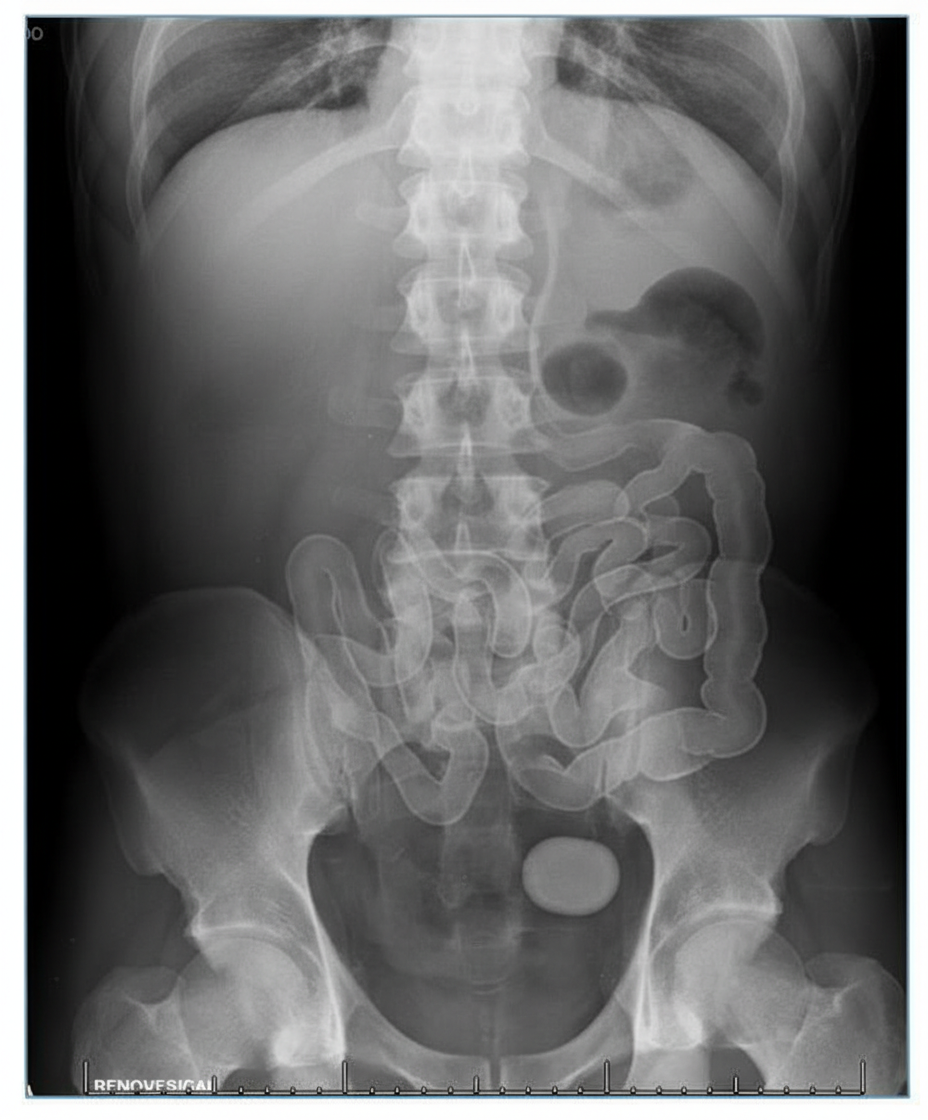
An 82-year-old woman visits her primary care provider complaining of a vague cramping pain on the right side of her abdomen for the past 6 hours. She is also nauseated and had an episode of vomiting earlier today and two episodes yesterday. Past medical history includes third-degree heart block, gastroesophageal reflux disease, hypertension, hypothyroidism and chronic cholecystitis with cholelithiasis. She is not a good candidate for cholecystectomy due to cardiac disease and is treated with analgesics and ursodeoxycholic acid. Her medications include chlorthalidone, omeprazole, levothyroxine, and occasional naproxen for pain. Vitals are normal. A supine abdominal X-ray reveals air in the gallbladder and biliary tree, small bowel obstruction, and a large radiolucent gallstone impacted in the small bowel. What is the most likely diagnosis?
Fourteen days after a laparoscopic cholecystectomy for cholelithiasis, a 45-year-old woman comes to the emergency department because of persistent episodic epigastric pain for 3 days. The pain radiates to her back, occurs randomly throughout the day, and is associated with nausea and vomiting. Each episode lasts 30 minutes to one hour. Antacids do not improve her symptoms. She has hypertension and fibromyalgia. She has smoked 1–2 packs of cigarettes daily for the past 10 years and drinks 4 cans of beer every week. She takes lisinopril and pregabalin. She appears uncomfortable. Her temperature is 37°C (98.6° F), pulse is 84/min, respirations are 14/min, and blood pressure is 127/85 mm Hg. Abdominal examination shows tenderness to palpation in the upper quadrants without rebound or guarding. Bowel sounds are normal. The incisions are clean, dry, and intact. Serum studies show: AST 80 U/L ALT 95 U/L Alkaline phosphatase 213 U/L Bilirubin, total 1.3 mg/dL Direct 0.7 mg/dL Amylase 52 U/L Abdominal ultrasonography shows dilation of the common bile duct and no gallstones. Which of the following is the most appropriate next step in management?
A 45-year-old woman comes to the emergency department complaining of abdominal pain for the past day. The pain is situated in the right upper quadrant, colicky, 8/10, and radiates to the tip of the right shoulder with no aggravating or relieving factors. The pain is associated with nausea but no vomiting. She tried to take over-the-counter antacids which relieved her pain to a certain extent, but not entirely. She does not smoke cigarettes or drink alcohol. She has no past medical illness. Her father died of pancreatic cancer at the age of 75, and her mother has diabetes controlled with medications. Temperature is 38°C (100.4°F), blood pressure is 125/89 mm Hg, pulse is 104/min, respiratory rate is 20/min, and BMI is 29 kg/m2. On abdominal examination, her abdomen is tender to shallow and deep palpation of the right upper quadrant. Laboratory test Complete blood count Hemoglobin 13 g/dL WBC 15,500/mm3 Platelets 145,000/mm3 Basic metabolic panel Serum Na+ 137 mEq/L Serum K+ 3.6 mEq/L Serum Cl- 95 mEq/L Serum HCO3- 25 mEq/L BUN 10 mg/dL Serum creatinine 0.8 mg/dL Liver function test Total bilirubin 1.3 mg/dL AST 52 U/L ALT 60 U/L Ultrasonography of the abdomen shows normal findings. What is the best next step in management of this patient?
A 47-year-old woman is brought to the emergency department by her husband with the complaints of severe abdominal pain and discomfort. The pain began 2 days earlier, she describes it as radiating to her back and is associated with nausea. Her past medical history is significant for similar episodes of pain after fatty meals that resolved on its own. She drinks socially and has a 15 pack-year smoking history. Her pulse is 121/min, blood pressure is 121/71 mm Hg, and her temperature is 103.1°F (39.5°C). She has tenderness in the right upper quadrant and epigastrium with guarding and rebound tenderness. Bowel sounds are hypoactive. Part of a CBC is given below. What is the next best step in the management of this patient? Hb%: 11 gm/dL Total count (WBC): 13,400/mm3 Differential count: Neutrophils: 80% Lymphocytes: 15% Monocytes: 5% ESR: 45 mm/hr C-reactive protein: 9.9 mg/dL (Normal < 3.0 mg/dL)
A 30-year-old woman, gravida 1, para 0, at 30 weeks' gestation is brought to the emergency department because of progressive upper abdominal pain for the past hour. The patient vomited once on her way to the hospital. She said she initially had dull, generalized stomach pain about 6 hours prior, but now the pain is located in the upper abdomen and is more severe. There is no personal or family history of any serious illnesses. She is sexually active with her husband. She does not smoke or drink alcohol. Medications include folic acid and a multivitamin. Her temperature is 38.5°C (101.3°F), pulse is 100/min, and blood pressure is 130/80 mm Hg. Physical examination shows right upper quadrant tenderness. The remainder of the examination shows no abnormalities. Laboratory studies show a leukocyte count of 12,000/mm3. Urinalysis shows mild pyuria. Which of the following is the most appropriate definitive treatment in the management of this patient?
Want unlimited practice?
Get full access to all questions, explanations, and performance tracking.
Scan to download app