
Tobacco use disorder — MCQs

A 20-year-old college student presents to the emergency room complaining of insomnia for the past 48 hours. He explains that although his body feels tired, he is "full of energy and focus" after taking a certain drug an hour ago. He now wants to sleep because he is having hallucinations. His vital signs are T 100.0 F, HR 110 bpm, and BP of 150/120 mmHg. The patient states that he was recently diagnosed with "inattentiveness." Which of the following is the mechanism of action of the most likely drug causing the intoxication?
A 44-year-old man presents to the clinic worried about his risk for bladder cancer. His best friend who worked with him as a painter for the past 20-years died recently after being diagnosed with transitional cell carcinoma. He is worried that their long and heavy cigarette smoking history might have contributed to his death. He also reports that he has been feeling down since his friend's death 2 months ago and has not been eating or sleeping as usual. He took time off from work but now is running past due on some of his bills. He feels like he is moving a lot slower than usual. He would like to stop smoking but feels like it's impossible with just his willpower. What side-effect is most likely if this patient were started on his appropriate pharmacotherapy?
A 49-year-old woman presents to the clinic for a routine exam. She recently quit smoking after a 30 pack-year history and started exercising a little. Past medical history is noncontributory. She takes no medication. Her mother died at 65 from lung cancer. She rarely drinks alcohol and only uses nicotine gum as needed. She admits to having some cravings for a cigarette in the morning before work, and after work. Which of the following best describes this patient’s stage in overcoming her nicotine addiction?
A 48-year-old woman presents to her primary care physician for a wellness visit. She states she is generally healthy and currently has no complaints. She drinks 1 alcoholic beverage daily and is currently sexually active. Her last menstrual period was 1 week ago and it is regular. She smokes 1 pack of cigarettes per day and would like to quit. She describes her mood as being a bit down in the winter months but otherwise feels well. Her family history is notable for diabetes in all of her uncles and colon cancer in her mother and father at age 72 and 81, respectively. She has been trying to lose weight and requests help with this as well. Her diet consists of mostly packaged foods. Her temperature is 98.0°F (36.7°C), blood pressure is 122/82 mmHg, pulse is 80/min, respirations are 12/min, and oxygen saturation is 98% on room air. Her BMI is 23 kg/m^2. Physical exam reveals a healthy woman with no abnormal findings. Which of the following is the most appropriate initial intervention for this patient?
A 35-year-old man presents to his primary care physician for a routine visit. He is in good health but has a 15 pack-year smoking history. He has tried to quit multiple times and expresses frustration in his inability to do so. He states that he has a 6-year-old son that was recently diagnosed with asthma and that he is ready to quit smoking. What is the most effective method of smoking cessation?
A researcher is currently working on developing new cholinergic receptor agonist drugs. He has formulated 2 new drugs: drug A, which is a selective muscarinic receptor agonist and has equal affinity for M1, M2, M3, M4, and M5 muscarinic receptors, and drug B, which is a selective nicotinic receptor agonist and has equal affinity for NN and NM receptors. The chemical structure and mechanisms of action of both drugs mimic acetylcholine. However, drug A does not have any nicotinic receptor activity and drug B does not have any muscarinic receptor activity. Which of the following statements is most likely correct regarding these new drugs?
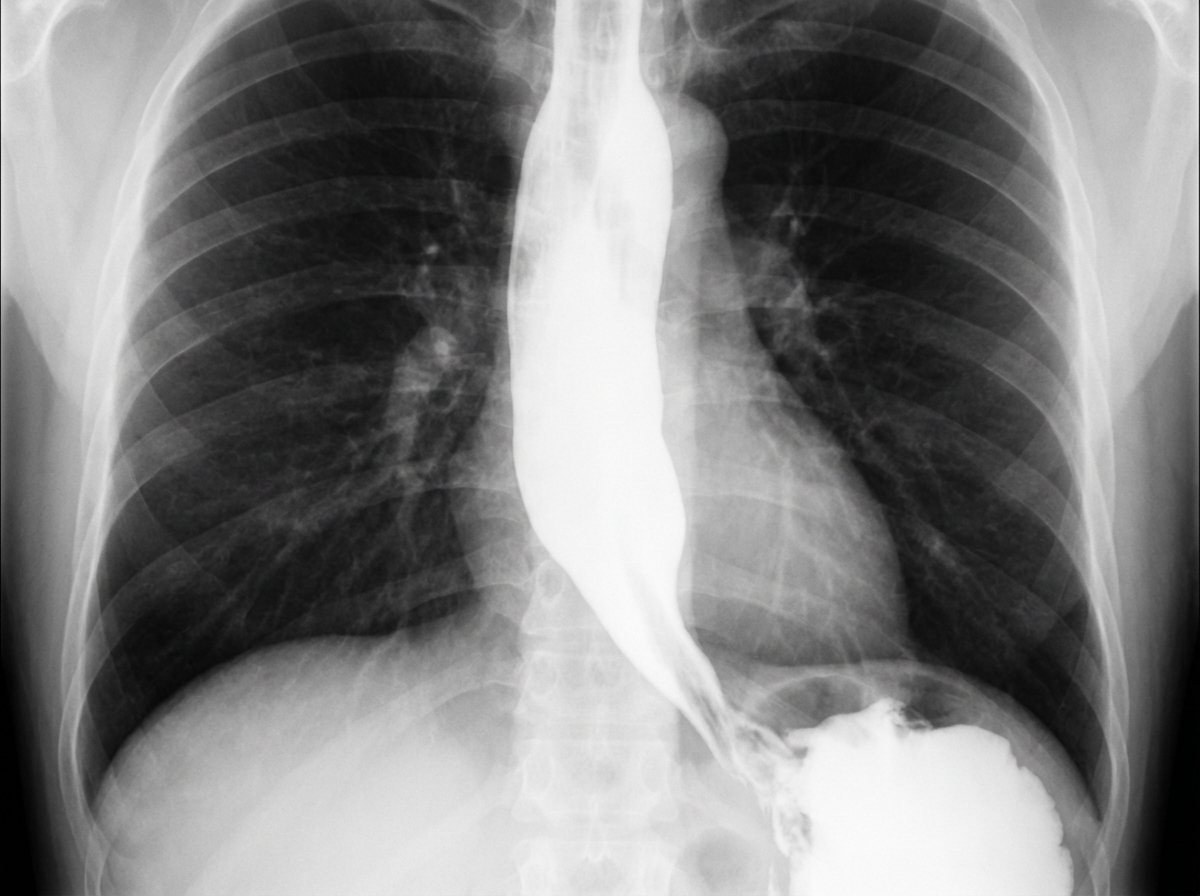
A 62-year-old man is referred to a gastroenterologist because of difficulty swallowing for the past 5 months. He has difficulty swallowing both solid and liquid foods, but there is no associated pain. He denies any shortness of breath or swelling in his legs. He immigrated from South America 10 years ago. He is a non-smoker and does not drink alcohol. His physical examination is unremarkable. A barium swallow study was ordered and the result is given below. Esophageal manometry confirms the diagnosis. What is the most likely underlying cause of this patient’s condition?
A 22-year-old college student comes to the physician because of depressed mood and fatigue for the past 5 weeks. He has been feeling sad and unmotivated to attend his college classes. He finds it particularly difficult to get out of bed in the morning. He has difficulty concentrating during lectures and often feels that he is less intelligent compared to his classmates. In elementary school, he was diagnosed with attention deficit hyperactivity disorder and treated with methylphenidate; he stopped taking this medication 4 years ago because his symptoms had improved during high school. He has smoked two packs of cigarettes daily for 8 years; he feels guilty that he has been unable to quit despite numerous attempts. During his last attempt 3 weeks ago, he experienced increased appetite and subsequently gained 3 kg (6 lb 10 oz) in a week. Mental status examination shows psychomotor retardation and restricted affect. There is no evidence of suicidal ideation. Which of the following is the most appropriate pharmacotherapy?
A 17-year-old girl is brought to the physician for the evaluation of fatigue for the past 6 months. During this period, she has had a 5-kg (11-lbs) weight loss. She states that she has no friends. When she is not in school, she spends most of her time in bed. She has no history of serious illness. Her mother has major depressive disorder. She appears pale and thin. She is at 25th percentile for height, 10th percentile for weight, and 20th percentile for BMI; her BMI is 19.0. Her temperature is 37°C (98.6°F), pulse is 65/min, and blood pressure is 110/70 mm Hg. Examination shows dry skin, brittle nails, and calluses on the knuckles. The remainder of the examination shows no abnormalities. Laboratory studies show: Hemoglobin 12.3 g/dL Serum Na+ 133 mEq/L Cl- 90 mEq/L K+ 3.2 mEq/L HCO3- 30 mEq/L Ca+2 7.8 mg/dL Which of the following is the most likely diagnosis?
A 21-year-old woman presents into the clinic worried that she might be pregnant. Her last menstrual period was 4 months ago and recalls that she did have unprotected sex with her boyfriend, despite not having sexual desire. They have since broken up, and she would like to do a pregnancy test. She appears very emaciated but is physically active. She says that she spends a few hours in the gym almost every day but would spend longer if she was to stray from her diet so that she does not gain any weight. Her calculated BMI is 17 kg/m2, and her urine pregnancy test is negative. Which of the following additional findings would most likely be present in this patient?
Want unlimited practice?
Get full access to all questions, explanations, and performance tracking.
Scan to download app