
Psychosocial rehabilitation — MCQs

Two dizygotic twins present to the university clinic because they believe they are being poisoned through the school's cafeteria food. They have brought these concerns up in the past, but no other students or cafeteria staff support this belief. Both of them are average students with strong and weak subject areas as demonstrated by their course grade-books. They have no known medical conditions and are not known to abuse illicit substances. Which statement best describes the condition these patients have?
A 20-year-old male is involuntarily admitted to the county psychiatric unit for psychotic behavior over the past three months. The patient's mother explained to the psychiatrist that her son had withdrawn from family and friends, appeared to have no emotions, and had delusions that he was working for the CIA. When he spoke, his sentences did not always seem to have any connection with each other. The mother finally decided to admit her son after he began stating that he "revealed too much information to her and was going to be eliminated by the CIA." Which of the following diagnoses best fits this patient's presentation?
A 10-year-old child is sent to the school psychologist in May because he refuses to comply with the class rules. His teacher says this has been going on since school started back in August. He gets upset at the teacher regularly when he is told to complete a homework assignment in class. Sometimes he refuses to complete them altogether. Several of his teachers have reported that he intentionally creates noises in class to interrupt the class. He tells the psychologist that the teacher and his classmates are at fault. What is the most appropriate treatment?
A study is being conducted on depression using the Patient Health questionnaire (PHQ-9) survey data embedded within a popular social media network with a response size of 500,000 participants. The sample population of this study is approximately normal. The mean PHQ-9 score is 14, and the standard deviation is 4. How many participants have scores greater than 22?
A 40-year-old man is brought into the emergency department because he was involved in a bar fight and sustained an injury to the head. The next day, as requested by the patient, the psychiatry team is called to address some of the concerns he has regarding his drinking habits. He admits that he got irate last night at the bar because his driver’s license was recently taken away and his wife had taken his children to live with her parents because of his drinking problem. He drinks 4–6 beers on a weeknight and more on the weekends. He wants to know if there is anything that could help him at this point. Which stage of overcoming his addiction is this patient currently in?
A 23-year-old male presents to the emergency department. He was brought in by police for shouting on a subway. The patient claims that little people were trying to kill him, and he was acting within his rights to defend himself. The patient has a past medical history of marijuana and IV drug use as well as multiple suicide attempts. He is currently homeless. While in the ED, the patient is combative and refuses a physical exam. He is given IM haloperidol and diphenhydramine. The patient is transferred to the inpatient psychiatric unit and is continued on haloperidol throughout the next week. Though he is no longer aggressive, he is seen making "armor" out of paper plates and plastic silverware to defend himself. The patient is switched onto risperidone. The following week the patient is still seen gathering utensils, and muttering about people trying to harm him. The patient's risperidone is discontinued. Which of the following is the best next step in management?
A 20-year-old man comes to the physician because of decreasing academic performance at his college for the past 6 months. He reports a persistent fear of “catching germs” from his fellow students and of contracting a deadly disease. He finds it increasingly difficult to attend classes. He avoids handshakes and close contact with other people. He states that when he tries to think of something else, the fears “keep returning” and that he has to wash himself for at least an hour when he returns home after going outside. Afterwards he cleans the shower and has to apply disinfectant to his body and to the bathroom. He does not drink alcohol. He used to smoke cannabis but stopped one year ago. His vital signs are within normal limits. He appears anxious. On mental status examination, he is oriented to person, place, and time. In addition to starting an SSRI, which of the following is the most appropriate next step in management?
A 31-year-old woman comes to the physician because she thinks that her “right wrist is broken.” She says that she has severe pain and that “the bone is sticking out.” She has not had any trauma to the wrist. Her medical records indicate that she was diagnosed with schizophrenia 2 years ago and treated with olanzapine; she has not filled any prescriptions over the past 4 months. Three weeks ago, she stopped going to work because she “did not feel like getting up” in the morning. Vital signs are within normal limits. Physical examination of the right wrist shows no visible injury; there is no warmth, swelling, or erythema. Range of motion is limited by pain. On mental status examination, she has a flat affect. Her speech is pressured and she frequently changes the topic. She has short- and long-term memory deficits. Attention and concentration are poor. There is no evidence of suicidal ideation. Urine toxicology screening is negative. An x-ray of the wrist shows no abnormalities. Which of the following is the most appropriate response to this patient's concerns?
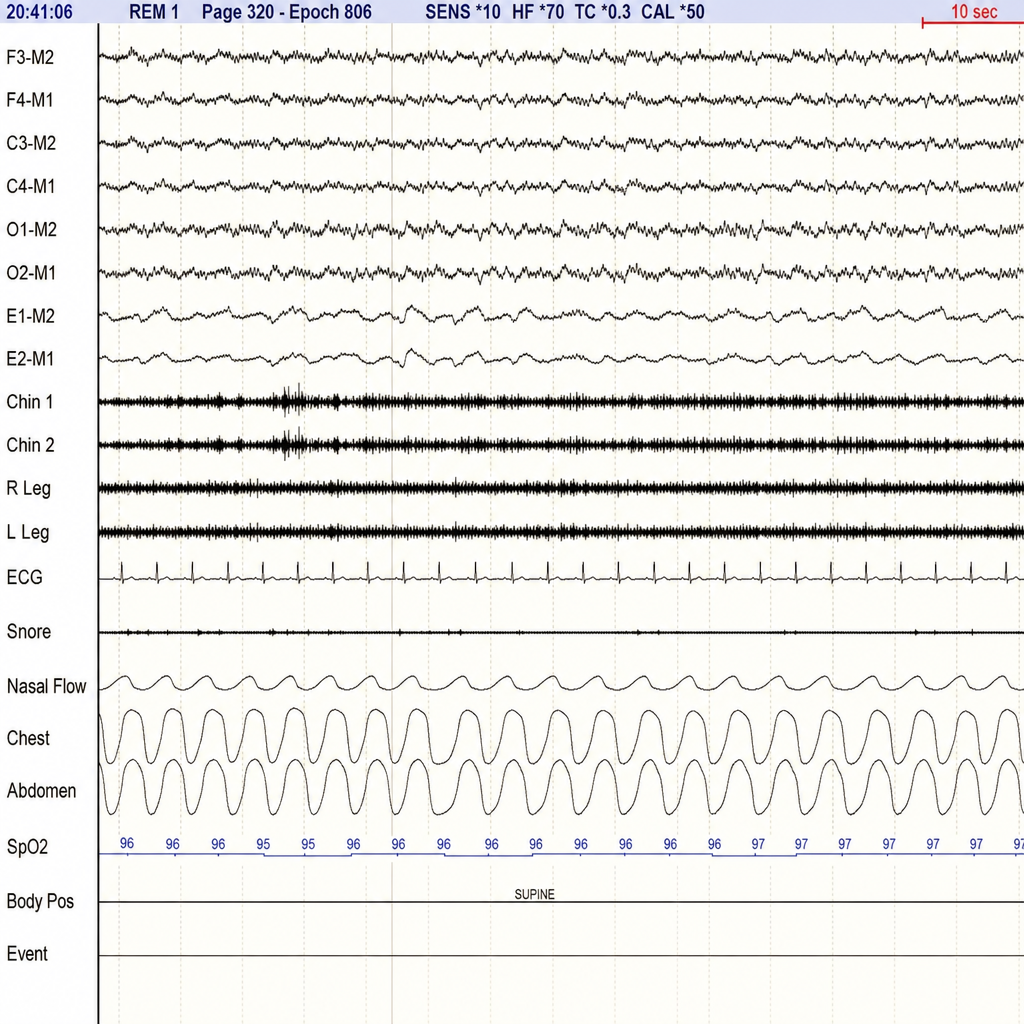
A sleep medicine clinic evaluates a 67-year-old man referred for abnormal nocturnal behaviors. His bed partner reports that he shouts, punches, and kicks during sleep, sometimes injuring himself. He does not recall the events. Polysomnography from stage R sleep demonstrates high-amplitude, mixed-frequency EEG activity with the EMG channel showing persistent tonic and phasic muscle activity in the chin and bilateral leg leads throughout the REM epoch. Apnea-hypopnea index is 3 events/hour. He takes no sedating medications. Which of the following is the most appropriate initial management?
A 24-year-old man and his mother arrive for a psychiatric evaluation. She is concerned about his health and behavior ever since he dropped out of graduate school and moved back home 8 months ago. He is always very anxious and preoccupied with thoughts of school and getting a job. He also seems to behave very oddly at times such as wearing his winter jacket in summer. He says that he hears voices but he can not understand what they are saying. When prompted he describes a plot to have him killed with poison seeping from the walls. Today, his heart rate is 90/min, respiratory rate is 17/min, blood pressure is 110/65 mm Hg, and temperature is 36.8°C (98.2°F). On physical exam, he appears gaunt and anxious. His heart has a regular rate and rhythm and his lungs are clear to auscultation bilaterally. CMP, CBC, and TSH are normal. A urine toxicology test is negative. What is the most likely diagnosis?
Want unlimited practice?
Get full access to all questions, explanations, and performance tracking.
Scan to download app