
Neuroimaging findings — MCQs

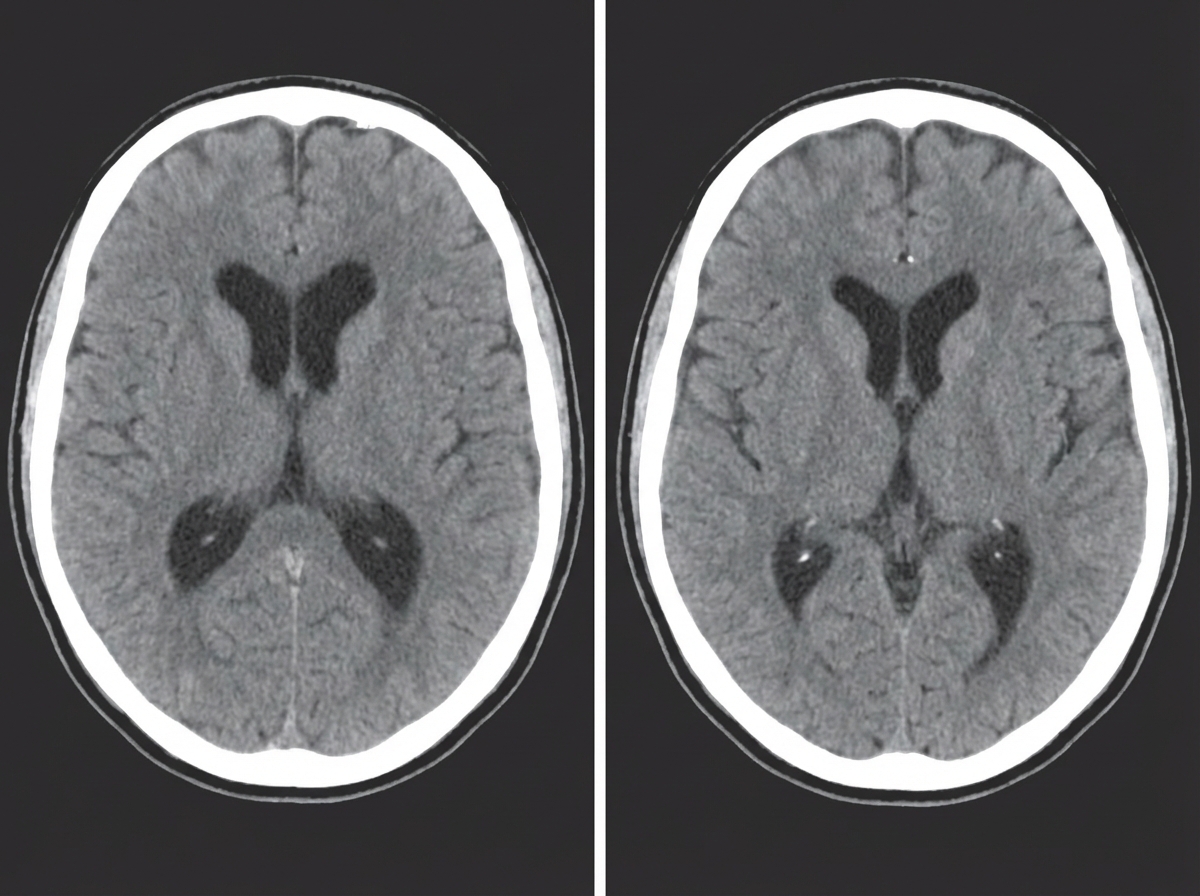
A 45-year-old man is brought by his wife with a complaint of an ongoing progressive history of memory problems for 6 months. He is an accountant by profession. He has difficulty remembering things and events, which has affected his job. He began using a diary to aid with remembering his agenda. His wife also says that he has wet his pants multiple times in the past 2 months and he avoids going out. He has been smoking 1 pack of cigarettes daily for the past 20 years. His past medical history is unremarkable. The vital signs include: blood pressure of 134/76 mm Hg, a pulse of 70 per minute, and a temperature of 37.0°C (98.6°F). His mini-mental state examination (MMSE) result is 22/30. His extraocular movements are normal. The muscle tone and strength are normal in all 4 limbs. The sensory examination is unremarkable. He has an absent Romberg’s sign. He walks slowly, taking small steps, with feet wide apart as if his feet are stuck to the floor. The CT scan of the head is shown in the image. What is the most likely diagnosis of the patient?
A 21-year-old man presents to the emergency room requesting surgery to remove "microchips," which he believes were implanted in his brain by "Russian spies" 6 months ago to control his thoughts. He also reports hearing the "spies" talk to each other through embedded "microspeakers." You notice that his hair appears unwashed and some of his clothes are on backward. Urine toxicology is negative for illicit drugs. Which of the following additional findings are you most likely to see in this patient during the course of his illness?
A 67-year-old female is brought to the emergency room by her son for unusual behavior. She moved into her son’s house three years ago after her husband passed away. The son reports that when he returned home from work earlier in the day, he found his mother minimally responsive. She regained consciousness soon after his arrival and did not recall the event. The son also reports that for the past two years, his mother has had trouble remembering names and addresses. She still goes shopping on her own and cooks regularly. Her past medical history is notable for major depressive disorder, diabetes mellitus, and hypertension. She takes clomipramine, glyburide, lisinopril, and hydrochlorothiazide. She recently saw her primary care provider who adjusted some of her medication dosages. Her temperature is 99°F (37.2°C), blood pressure is 135/75 mmHg, pulse is 80/min, and respirations are 18/min. On examination, she is easily distractible with disorganized speech. She does not recognize her son and thinks that her intravenous line is a rope. She says she feels fine and would like to go home. Brain imaging would likely reveal which of the following?
A 24-year-old woman is brought to the hospital by her mother because she has "not been herself" for the past 3 months. The patient says she hears voices in her head. The mother said that when she is talking to her daughter she can’t seem to make out what she is saying; it is as if her thoughts are disorganized. When talking with the patient, you notice a lack of energy and an apathetic affect. Which of the following is the most likely diagnosis for this patient?
A 75-year-old woman presents to her primary care physician with her son because she is convinced that people are stealing from her. Her son claims she has been misplacing her medications and money throughout the house. She recently lost her husband to old age and has become reclusive and no longer wants people to visit. Physical examination is unremarkable and the patient is oriented to person, time, and place. A mini-mental status examination (MMSE) is performed and she has difficulty recalling words after 5 minutes and also has problems with serial subtraction. Which of the following is the most likely diagnosis in this patient?
A 20-year-old male is brought to a psychiatrist by his parents for bizarre behavior. His parents report that over the past two semesters in school, his personality and behavior have changed noticeably. He refuses to leave his room because he believes people are spying on him. He hears voices that are persecutory and is convinced that people at school have chips implanted in their brains to spy on him. Screenings for depression and mania are negative. His past medical history is unremarkable. His family history is notable for a maternal uncle with bipolar disorder. He does not drink alcohol or smoke. His temperature is 98.8°F (37.1°C), blood pressure is 115/70 mmHg, pulse is 85/min, and respirations are 18/min. On examination, he appears to be responding to internal stimuli. Which of the following pathways is primarily responsible for these symptoms?
A 28-year-old male presents to his primary care physician with complaints of intermittent abdominal pain and alternating bouts of constipation and diarrhea. His medical chart is not significant for any past medical problems or prior surgeries. He is not prescribed any current medications. Which of the following questions would be the most useful next question in eliciting further history from this patient?
A 72-year-old woman is brought to the physician by her son for an evaluation of cognitive decline. Her son reports that she has had increased difficulty finding her way back home for the last several months, despite having lived in the same city for 40 years. He also reports that his mother has been unable to recall the names of her relatives and been increasingly forgetting important family gatherings such as her grandchildren's birthdays over the last few years. The patient has hypertension and type 2 diabetes mellitus. She does not smoke or drink alcohol. Her current medications include enalapril and metformin. Her temperature is 37°C (98.6°F), pulse is 70/min, and blood pressure is 140/80 mm Hg. She is confused and oriented only to person and place. She recalls 2 out of 3 words immediately and 1 out of 3 after 5 minutes. Her gait and muscle strength are normal. Deep tendon reflexes are 2+ bilaterally. The remainder of the examination shows no abnormalities. Further evaluation is most likely to reveal which of the following findings?
A 68-year-old man, accompanied by his wife, presents to his physician with cognitive decline and hallucinations. The patient’s wife tells that his cognitive impairment progressed gradually over the past 6 years, and first began with problems counting and attention. The hallucinations began approximately a year ago. The patient describes them as realistic and non-frightening; most often, he sees his cat accompanying him everywhere he goes. The patient’s wife also notes frequent episodes of staring spells in her husband and prolonged daytime napping. The blood pressure is 130/80 mm Hg with the orthostatic change to 110/60 mm Hg, heart rate is 75/min, respiratory rate is 13/min, and the temperature is 36.6°C (97.8°F). The patient is alert and responsive, but he is disoriented to time and place. He is pale and hypomimic. The cardiac, lung, and abdominal examinations are within normal limits for the patient’s age. The neurological examination is significant for a bilateral symmetrical cogwheel rigidity in the upper extremities. What would you most likely see on additional radiological investigations?
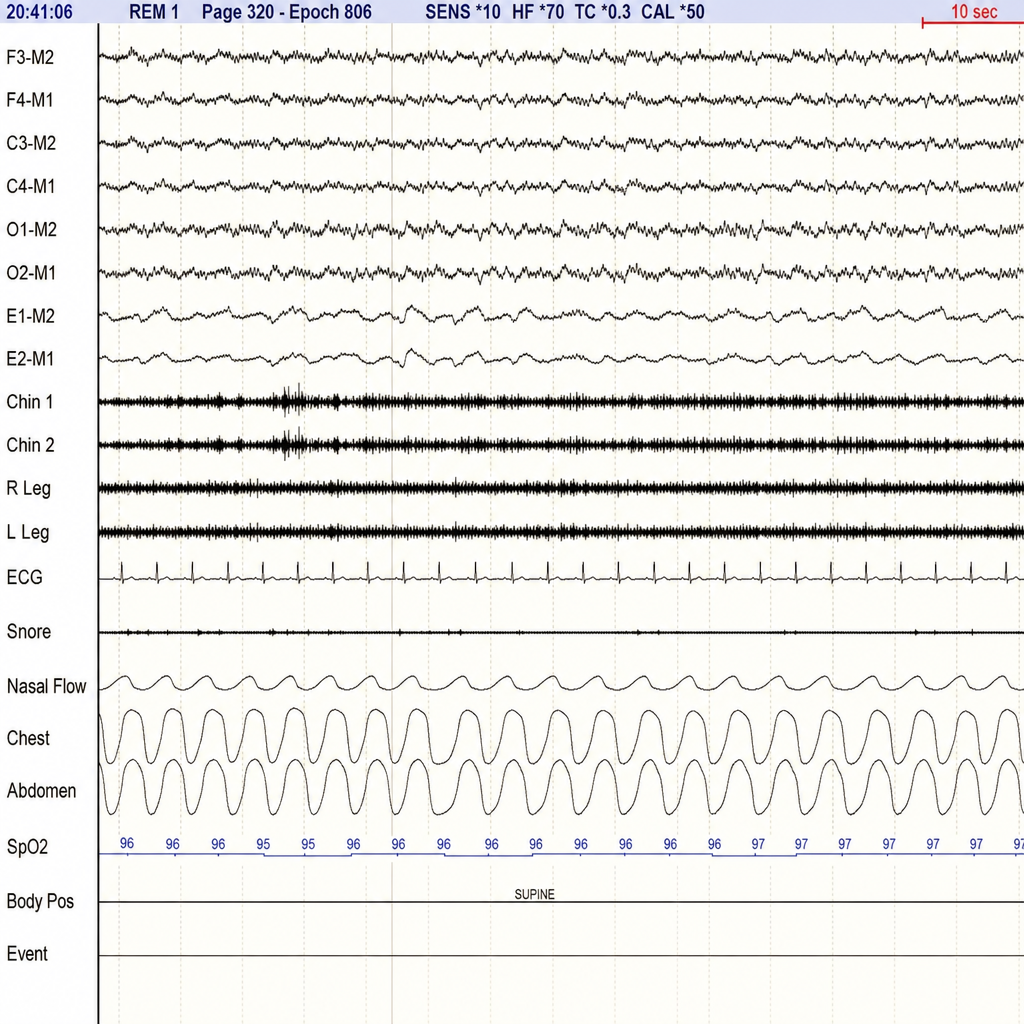
A sleep medicine clinic evaluates a 67-year-old man referred for abnormal nocturnal behaviors. His bed partner reports that he shouts, punches, and kicks during sleep, sometimes injuring himself. He does not recall the events. Polysomnography from stage R sleep demonstrates high-amplitude, mixed-frequency EEG activity with the EMG channel showing persistent tonic and phasic muscle activity in the chin and bilateral leg leads throughout the REM epoch. Apnea-hypopnea index is 3 events/hour. He takes no sedating medications. Which of the following is the most appropriate initial management?
Want unlimited practice?
Get full access to all questions, explanations, and performance tracking.
Scan to download app