
Transition to adult care — MCQs

A 5-year-old girl is brought to the physician because her mother has found her to be inattentive at home and has received multiple complaints from her teachers at school. She does not complete her assignments and does not listen to her teachers' instructions. She refuses to talk to her parents or peers. Her mother says, “She ignores everything I say to her!” She prefers playing alone, and her mother reports that she likes playing with 5 red toy cars, repeatedly arranging them in a straight line. She avoids eye contact with her mother and the physician throughout the visit. Physical and neurological examination shows no abnormalities. Which of the following is the most likely diagnosis?
A mother brings her 3-year-old son to the doctor because she is worried that he might be harming himself by constantly banging his head on the wall. He has been exhibiting this behavior for a few months. She is also worried because he has started to speak less than he used to and does not respond when his name is called. He seems aloof during playtime with other children and seems to have lost interest in most of his toys. What is the most likely diagnosis?
A 16-year-old girl comes to the physician for a regular health visit. She feels healthy. She lives with her parents at home. She says that the relationship with her parents has been strained lately because they ""do not approve"" of her new boyfriend. She recently became sexually active with her boyfriend and requests a prescription for an oral contraception. She does not want her parents to know. She smokes half-a-pack of cigarettes per day and does not drink alcohol. She appears well-nourished. Physical examination shows no abnormalities. Urine pregnancy test is negative. Which of the following is the most appropriate next step in management?
A 17-year-old white female with a history of depression is brought to your office by her parents because they are concerned that she is acting differently. She is quiet and denies any changes in her personality or drug use. After the parents step out so that you can speak alone, she begins crying. She states that school has been very difficult and has been very depressed for the past 2 months. She feels a lot of pressure from her parents and coaches and says she cannot handle it anymore. She says that she has been cutting her wrists for the past week and is planning to commit suicide. She instantly regrets telling you and begs you not to tell her parents. What is the most appropriate course of action?
A 4-year-old boy is brought to the physician by his parents because of concerns about his behavior during the past year. His parents report that he often fails to answer when they call him and has regular unprovoked episodes of crying and screaming. At kindergarten, he can follow and participate in group activities, but does not follow his teacher's instructions when these are given to him directly. He is otherwise cheerful and maintains eye contact when spoken to but does not respond when engaged in play. He gets along well with friends and family. He started walking at the age of 11 months and can speak in two-to-three-word phrases. He often mispronounces words. Which of the following is the most likely diagnosis?
A 3-year-old boy is brought in by his mother because she is concerned that he has been “acting differently recently”. She says he no longer seems interested in playing with his friends from preschool, and she has noticed that he has stopped making eye contact with others. In addition, she says he flaps his hands when excited or angry and only seems to enjoy playing with objects that he can place in rows or rigid patterns. Despite these behaviors, he is meeting his language goals for his age (single word use). The patient has no significant past medical history. He is at the 90th percentile for height and weight for his age. He is afebrile and his vital signs are within normal limits. A physical examination is unremarkable. Which of the following is the most likely diagnosis in this patient?
A 16-year-old boy comes to the physician for the evaluation of fatigue over the past month. He reports that his energy levels are low and that he spends most of his time in his room. He also states that he is not in the mood for meeting friends. He used to enjoy playing soccer and going to the shooting range with his father, but recently stopped showing interest in these activities. He has been having difficulties at school due to concentration problems. His appetite is low. He has problems falling asleep. He states that he has thought about ending his life, but he has no specific plan. He lives with his parents, who frequently fight due to financial problems. He does not smoke. He drinks 2–3 cans of beer on the weekends. He does not use illicit drugs. He takes no medications. His vital signs are within normal limits. On mental status examination, he is oriented to person, place, and time. Physical examination shows no abnormalities. In addition to the administration of an appropriate medication, which of the following is the most appropriate next step in management?
An 11-year-old boy is brought to a pediatrician by his parents with the complaint of progressive behavioral problems for the last 2 years. His parents report that he always looks restless at home and is never quiet. His school teachers frequently complain that he cannot remain seated for long during class, often leaving his seat to move around the classroom. A detailed history of his symptoms suggests a diagnosis of attention-deficit/hyperactivity disorder. The parents report that he has taken advantage of behavioral counseling several times without improvement. The pediatrician considers pharmacotherapy and plans to start methylphenidate at a low dose, followed by regular follow-up. Based on the side effect profile of the medication, which of the following components of the patient’s medical history should the pediatrician obtain before starting the drug?
A 67-year-old retired engineer is brought by his daughter for a 14-month history of progressive personality change. She reports he has become disinhibited, made sexually inappropriate comments at family gatherings, and recently shoplifted a candy bar without apparent concern. He scores 24/30 on the MoCA, losing points primarily in the executive function and abstraction domains. Memory is relatively preserved. He has no history of stroke, head trauma, or alcohol use. An MRI of the brain shows frontal and anterior temporal lobe atrophy with relative sparing of the posterior cortex and hippocampi. Which of the following is the most likely underlying diagnosis?
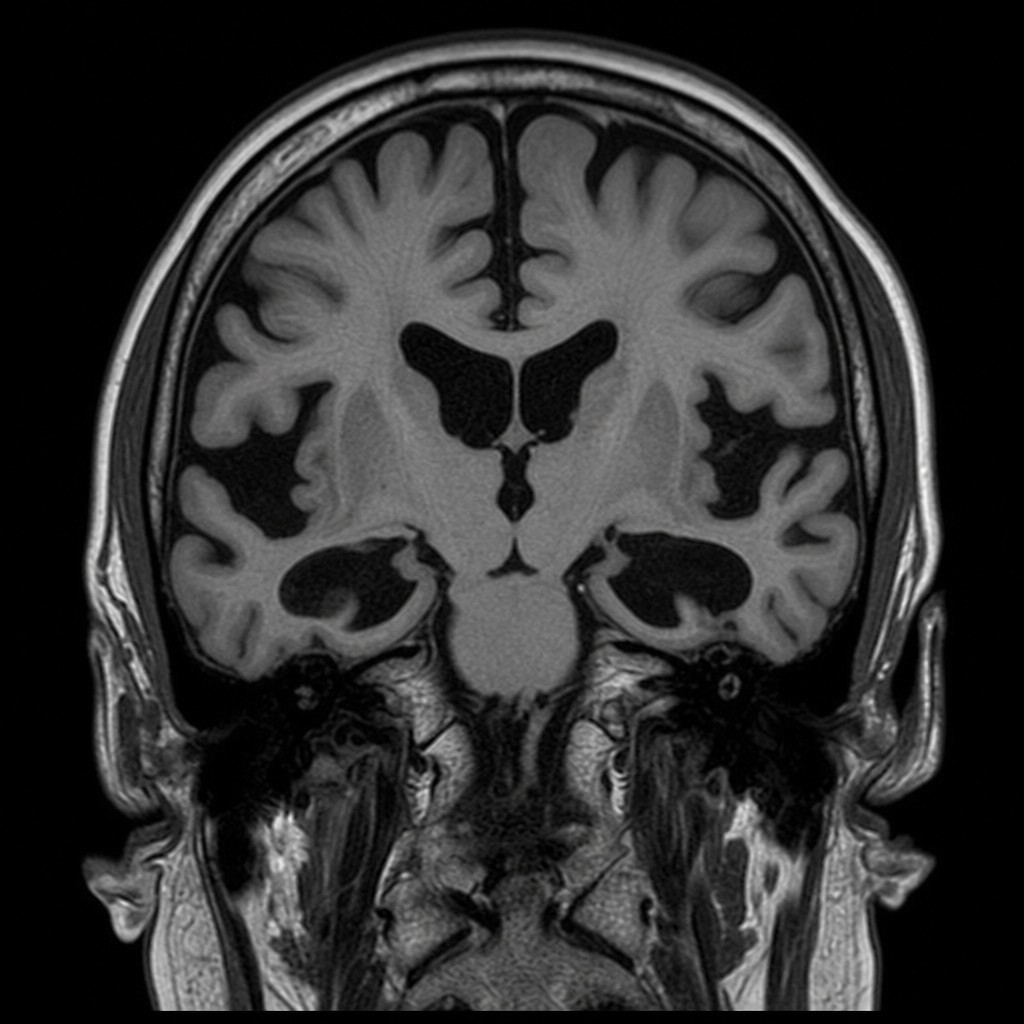
A 4-year-old boy presents with language delay, toe-walking, hand-flapping, and intense interest in trains. He makes poor eye contact but occasionally engages in joint attention with his mother when looking at trains. He has sensory sensitivities to loud noises. He can identify all letters and numbers but cannot have reciprocal conversations. His Childhood Autism Rating Scale (CARS) score is borderline. His parents request your opinion on diagnosis and intervention priorities given diagnostic uncertainty and limited early intervention resources in their area.
Want unlimited practice?
Get full access to all questions, explanations, and performance tracking.
Scan to download app