An 11-year-old boy is brought to the doctor by his father because his father is worried about the boy's performance in school and his lack of a social life. His father is also worried about the ongoing bullying his son is experiencing due to swearing outbursts the boy has exhibited for several years. During these outbursts, the boy contorts his face, blinks repeatedly, and grunts. His father is worried that the bullying will worsen and would like to see if there is a medication that can help his son. Which of the following medications is most likely to be beneficial?
Q82
A 50-year-old female radiologist who is interviewing for a night shift position states that she was fired from her past 3 previous positions because she had difficulty working with others. She states that she is perfect for this job however, as she likes to work on her own and be left alone. She emphasizes that she does not have any distractions or meaningful relationships, and therefore she is always punctual and never calls in sick. She is not an emotional individual. Which of the following personality disorders best fits this female?
Q83
A 53-year-old man is brought to the clinic by his son for the evaluation of unusual behavior. He is a shopkeeper by profession and sometimes behaves very rudely to the customers. Recently, he accused one of the customers of using black magic over his shop. He has been increasingly irritable, forgetting things, and having problems managing his finances over the past 8 months. He is also having difficulty finding words and recalling the names of objects during the conversation. There is no history of recent head trauma, fever, hallucinations, or abnormal limb movements. Past medical history is significant for a well-controlled type 2 diabetes mellitus. Family history is unremarkable. He does not smoke or use illicit drugs. Vital signs are stable with a blood pressure of 134/76 mm Hg, a heart rate of 88/min, and a temperature of 37.0°C (98.6°F). On physical examination, he has problems naming objects and planning tasks. Mini-mental state examination (MMSE) score is 26/30. Cranial nerve examination is normal. Muscle strength is normal in all 4 limbs with normal muscle tone and deep tendon reflexes. Sensory examination is also normal. What is the most likely diagnosis?
Q84
A 37-year-old woman is brought to the physician for worsening depressive mood and irritability. Her mood changes began several months ago. Her husband has also noticed shaky movements of her limbs and trunk for the past year. The patient has no suicidal ideation. She has no history of serious illness and takes no medications. Her father died by suicide at the age of 45 years. Her temperature is 37°C (98.6°F), pulse is 76/min, and blood pressure is 128/72 mm Hg. She speaks slowly and quietly and only looks at the floor. She registers 3/3 words but can recall only one word 5 minutes later. Examination shows irregular movements of the arms and legs at rest. Extraocular eye movements are normal. Muscle strength is 5/5 throughout, and deep tendon reflexes are 2+ bilaterally. Further evaluation is most likely to show which of the following?
Q85
A 66-year-old man comes to the physician for a follow-up examination after a below-knee amputation of the right lower leg. Three weeks ago, he had an acute arterial embolism that could not be revascularized in time to save the leg. He now reports episodic hot, shooting, and tingling pain in the right lower leg that began shortly after the amputation. He has type 2 diabetes mellitus. He has smoked one pack of cigarettes daily for the past 30 years. His current medications are metformin and prophylactic subcutaneous heparin. His temperature is 37.1°C (98.8°F), pulse is 78/min, and blood pressure is 135/88 mm Hg. Physical examination shows a slightly erythematous stump with clean sutures. The skin overlying the stump is warm and well-perfused. Muscle strength and sensation are normal throughout the remaining extremity and the left lower extremity. Which of the following is the most likely diagnosis?
Q86
An 8-year-old boy is brought to the physician by his foster mother because of complaints from his teachers regarding poor performance at school for the past 8 months. He does not listen to their instructions, often talks during class, and rarely completes his school assignments. He does not sit in his seat in the classroom and often cuts in line at the cafeteria. His foster mother reports that he runs around a lot inside the house and refuses to help his sister with chores and errands. He frequently interrupts his foster mother's conversations with others and talks excessively. She has found him trying to climb on the roof on multiple occasions. He was placed in foster care because of neglect by his biological parents 3 years ago. Physical examination shows no abnormalities. Neurologic examination shows no focal findings. Mental status examination shows a neutral affect. Which of the following is the most likely diagnosis?
Q87
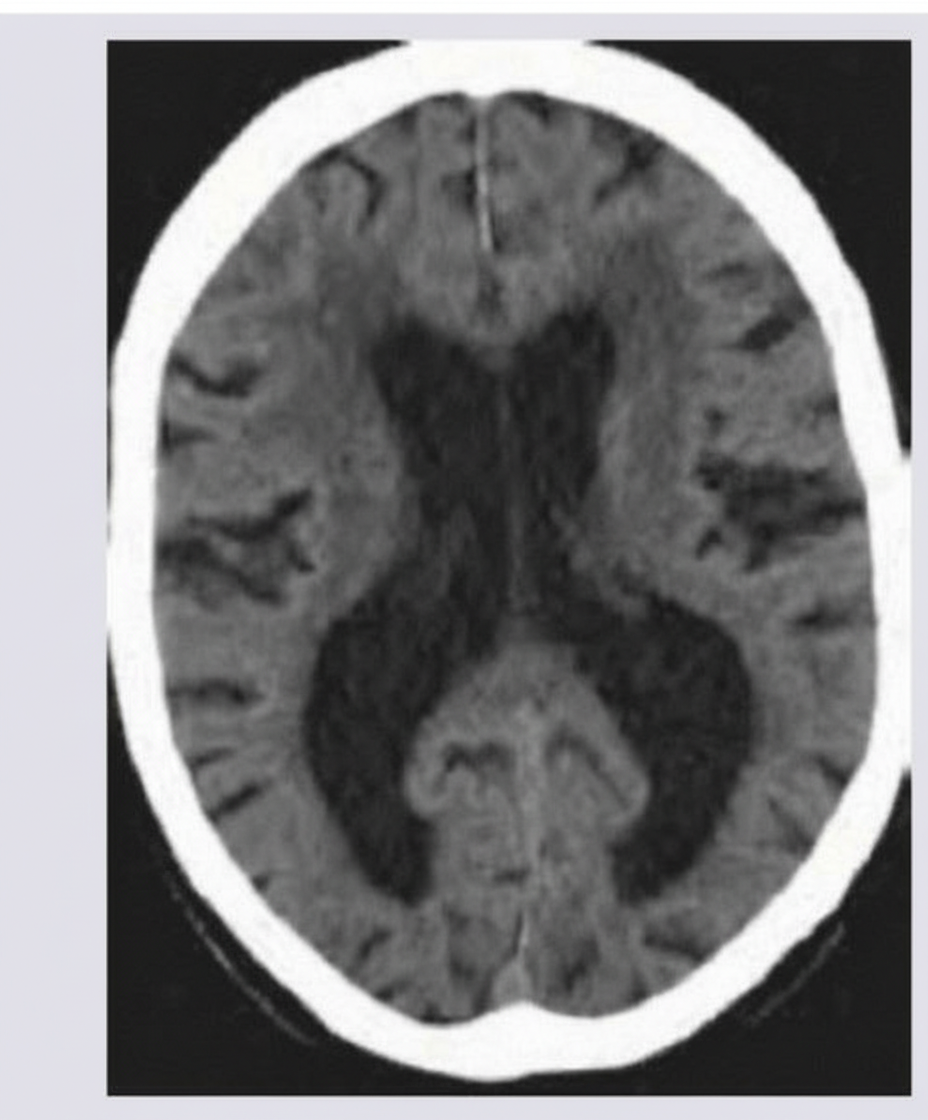
An 88-year-old man is brought to his primary care physician by his son. The patient has been in excellent health his entire life, but in the last few years appears to have grown steadily confused. He frequently calls his son about things that they have already discussed, forgets where he has placed his keys, and recently the patient's son noticed several unpaid bills on the patient's desk at home. The patient is upset at being "dragged" into see the physician and claims that everything is fine--he is just "getting older". A complete neurologic exam is normal except for significant difficulty with recall tasks. In the course of the medical work-up, you obtain a CT scan and see the findings in figure A. What is the most likely cause of this patient's CT findings?
Q88
A 13-year-old boy has been suspended 5 times this year for arguing with teachers. He has presented a pattern of negativism and hostility that has lasted for about 8 months. When asked about the suspensions, he admits that he loses his temper easily and often blames the principal for not being fair to him. He usually finds an argument before finishing his homework. At home, he goes out of his way to annoy his siblings. He gets furious if his legal guardian finds out about it and confiscates his smartphone. Which of the following is the primary behavior characteristic of this patient's most likely diagnosis?
Q89
A 46-year-old woman comes to the physician for a cognitive evaluation. She is an office manager. She has had increasing difficulties with multitasking and reports that her job performance has declined over the past 1 year. On mental status examination, short-term memory is impaired and long-term memory is intact. Laboratory studies, including thyroid-stimulating hormone and vitamin B12, are within the reference range. An MRI of the brain shows generalized atrophy, most pronounced in the bilateral medial temporal lobes and hippocampi. If this patient's condition has a genetic etiology, which of the following alterations is most likely to be found on genetic testing?
Q90
A 10-year-old child is sent to the school psychologist in May because he refuses to comply with the class rules. His teacher says this has been going on since school started back in August. He gets upset at the teacher regularly when he is told to complete a homework assignment in class. Sometimes he refuses to complete them altogether. Several of his teachers have reported that he intentionally creates noises in class to interrupt the class. He tells the psychologist that the teacher and his classmates are at fault. What is the most appropriate treatment?
Mood Disorders US Medical PG Practice Questions and MCQs
Question 81: An 11-year-old boy is brought to the doctor by his father because his father is worried about the boy's performance in school and his lack of a social life. His father is also worried about the ongoing bullying his son is experiencing due to swearing outbursts the boy has exhibited for several years. During these outbursts, the boy contorts his face, blinks repeatedly, and grunts. His father is worried that the bullying will worsen and would like to see if there is a medication that can help his son. Which of the following medications is most likely to be beneficial?
A. Clonazepam
B. Valproic acid
C. Lithium
D. Lamotrigine
E. Risperidone (Correct Answer)
Explanation: ***Risperidone***
- The patient's symptoms are highly suggestive of **Tourette syndrome**, characterized by multiple motor and at least one vocal tic, with symptoms beginning before age 18 and lasting for more than one year. These tics cause significant distress or impairment.
- **Risperidone**, an **atypical antipsychotic**, is a well-established first-line treatment for Tourette syndrome due to its ability to block dopamine D2 receptors, which are implicated in tic generation.
*Clonazepam*
- Clonazepam is a **benzodiazepine** primarily used for anxiety, panic disorder, and seizure disorders.
- While it can have a sedating effect that might reduce tic severity indirectly, it is **not a first-line agent** for Tourette syndrome and carries risks of dependence and withdrawal.
*Valproic acid*
- **Valproic acid** is an **anticonvulsant** and **mood stabilizer** used for epilepsy and bipolar disorder.
- It is **not indicated** for Tourette syndrome and does not directly address the underlying neurobiology of tics.
*Lithium*
- **Lithium** is primarily used as a **mood stabilizer** for bipolar disorder.
- It has **no established role or efficacy** in the treatment of Tourette syndrome.
*Lamotrigine*
- **Lamotrigine** is an **anticonvulsant** used for epilepsy and bipolar disorder.
- It is **not considered a treatment option** for Tourette syndrome and would not effectively manage tics.
Question 82: A 50-year-old female radiologist who is interviewing for a night shift position states that she was fired from her past 3 previous positions because she had difficulty working with others. She states that she is perfect for this job however, as she likes to work on her own and be left alone. She emphasizes that she does not have any distractions or meaningful relationships, and therefore she is always punctual and never calls in sick. She is not an emotional individual. Which of the following personality disorders best fits this female?
A. Schizotypal
B. Schizoid (Correct Answer)
C. Obsessive-Compulsive Personality Disorder
D. Antisocial
E. Borderline
Explanation: ***Schizoid***
- The patient's preference for **solitude**, lack of meaningful relationships, and disinterest in social interactions are classic features of **schizoid personality disorder**.
- Their statement about not being an emotional individual further supports schizoid personality, as they demonstrate an apparent indifference to praise or criticism and a **restricted range of emotional expression**.
*Schizotypal*
- Characterized by **eccentric behavior**, odd beliefs, and magical thinking, which are not described in the patient's presentation.
- While they share social isolation with schizoid personality, schizotypal individuals often experience **paranoid ideation** or unusual perceptual experiences.
*Obsessive-Compulsive Personality Disorder*
- Defined by **preoccupation with orderliness, perfectionism**, and mental and interpersonal control, at the expense of flexibility, openness, and efficiency.
- While the patient is punctual and reliable, her core difficulties stem from social detachment rather than **over-conscientiousness** or rigidity.
*Antisocial*
- Involves a pervasive pattern of **disregard for and violation of the rights of others**, including deceitfulness, impulsivity, and lack of remorse.
- The patient's difficulties are related to social isolation rather than exploitative or **criminal behavior**.
*Borderline*
- Characterized by **instability in interpersonal relationships**, self-image, affects, and impulsivity, often marked by frantic efforts to avoid abandonment.
- The patient's description of preferring to be left alone and having no meaningful relationships directly contradicts the **intense and unstable relationship patterns** typical of borderline personality.
Question 83: A 53-year-old man is brought to the clinic by his son for the evaluation of unusual behavior. He is a shopkeeper by profession and sometimes behaves very rudely to the customers. Recently, he accused one of the customers of using black magic over his shop. He has been increasingly irritable, forgetting things, and having problems managing his finances over the past 8 months. He is also having difficulty finding words and recalling the names of objects during the conversation. There is no history of recent head trauma, fever, hallucinations, or abnormal limb movements. Past medical history is significant for a well-controlled type 2 diabetes mellitus. Family history is unremarkable. He does not smoke or use illicit drugs. Vital signs are stable with a blood pressure of 134/76 mm Hg, a heart rate of 88/min, and a temperature of 37.0°C (98.6°F). On physical examination, he has problems naming objects and planning tasks. Mini-mental state examination (MMSE) score is 26/30. Cranial nerve examination is normal. Muscle strength is normal in all 4 limbs with normal muscle tone and deep tendon reflexes. Sensory examination is also normal. What is the most likely diagnosis?
A. Huntington’s disease
B. Pick’s disease (Correct Answer)
C. Creutzfeldt–Jakob disease
D. Lewy body dementia
E. Alzheimer’s disease
Explanation: ***Pick’s disease***
* This patient presents with prominent **behavioral changes** (rudeness, irritability, accusation of black magic) and **language difficulties** (finding words, recalling names of objects), along with impaired financial management—these are characteristic features of **frontotemporal dementia (FTD)**, of which Pick's disease is a subtype.
* The early onset of behavioral symptoms and language deficits, with relative preservation of memory in the initial stages (MMSE 26/30), points towards FTD rather than Alzheimer's.
*Huntington’s disease*
* This condition is primarily characterized by **chorea** (involuntary jerky movements) and **psychiatric symptoms** often preceding motor dysfunction, which are not described in the patient.
* While dementia can occur, it typically manifests later in the disease course and is often overshadowed by prominent motor symptoms.
*Creutzfeldt–Jakob disease*
* This rapidly progressive neurodegenerative disorder presents with quickly worsening dementia, often accompanied by **myoclonus**, ataxia, and other neurological signs, which are absent in this patient's slower progression and symptoms.
* The patient's symptoms have been ongoing for 8 months without the rapid global decline typical of CJD.
*Lewy body dementia*
* Key features of Lewy body dementia include **fluctuating cognition**, recurrent **visual hallucinations**, and **parkinsonism** (rigidity, bradykinesia), none of which are reported in this case.
* Psychiatric symptoms are common, but the specific type of behavioral disinhibition and language deficits presented here are less typical.
*Alzheimer’s disease*
* **Memory impairment** is typically the most prominent early symptom in Alzheimer's disease, whereas this patient's presentation is dominated by **behavioral changes** and **language difficulties**.
* While severe behavior changes can occur, they usually manifest in later stages; significant executive dysfunction and language problems without prominent initial memory loss are more indicative of frontotemporal dementia.
Question 84: A 37-year-old woman is brought to the physician for worsening depressive mood and irritability. Her mood changes began several months ago. Her husband has also noticed shaky movements of her limbs and trunk for the past year. The patient has no suicidal ideation. She has no history of serious illness and takes no medications. Her father died by suicide at the age of 45 years. Her temperature is 37°C (98.6°F), pulse is 76/min, and blood pressure is 128/72 mm Hg. She speaks slowly and quietly and only looks at the floor. She registers 3/3 words but can recall only one word 5 minutes later. Examination shows irregular movements of the arms and legs at rest. Extraocular eye movements are normal. Muscle strength is 5/5 throughout, and deep tendon reflexes are 2+ bilaterally. Further evaluation is most likely to show which of the following?
A. Oligoclonal bands on lumbar puncture
B. Positive Babinski sign on physical examination
C. Mitral vegetations on echocardiogram
D. Poor performance on an IQ test
E. Caudate nucleus atrophy on MRI (Correct Answer)
Explanation: ***Caudate nucleus atrophy on MRI***
- The patient's presentation with **chorea** (shaky movements of limbs and trunk), **depressive mood**, **irritability**, and a **family history of suicide** in her father (suggesting an inherited condition) is highly indicative of **Huntington disease**.
- Huntington disease is characterized by progressive neurodegeneration, with prominent **atrophy of the caudate nuclei** and putamen, which can be visualized on MRI.
*Oligoclonal bands on lumbar puncture*
- **Oligoclonal bands** in cerebrospinal fluid are a hallmark of **multiple sclerosis** and other inflammatory CNS conditions.
- This patient's symptoms (chorea, mood changes) are not consistent with typical MS presentation.
*Positive Babinski sign on physical examination*
- A **positive Babinski sign** indicates an **upper motor neuron lesion** or pyramidal tract dysfunction.
- While some neurological conditions can cause this, it is not a primary or characteristic finding in Huntington disease, which primarily affects the basal ganglia.
*Mitral vegetations on echocardiogram*
- **Mitral vegetations** are associated with **infective endocarditis** or non-bacterial thrombotic endocarditis, and can lead to embolic stroke or systemic complications.
- There is no clinical evidence to suggest endocarditis or embolic phenomena in this patient.
*Poor performance on an IQ test*
- While **cognitive decline** and **dementia** are features of Huntington disease, leading to poor performance on IQ tests, this is a general consequence of the neurological degeneration, not the most specific or primary structural finding.
- **Caudate atrophy** is a more direct and specific pathological finding for Huntington disease seen on imaging.
Question 85: A 66-year-old man comes to the physician for a follow-up examination after a below-knee amputation of the right lower leg. Three weeks ago, he had an acute arterial embolism that could not be revascularized in time to save the leg. He now reports episodic hot, shooting, and tingling pain in the right lower leg that began shortly after the amputation. He has type 2 diabetes mellitus. He has smoked one pack of cigarettes daily for the past 30 years. His current medications are metformin and prophylactic subcutaneous heparin. His temperature is 37.1°C (98.8°F), pulse is 78/min, and blood pressure is 135/88 mm Hg. Physical examination shows a slightly erythematous stump with clean sutures. The skin overlying the stump is warm and well-perfused. Muscle strength and sensation are normal throughout the remaining extremity and the left lower extremity. Which of the following is the most likely diagnosis?
A. Osteomyelitis
B. Reinfarction
C. Foreign body reaction
D. Phantom limb pain (Correct Answer)
E. Diabetic neuropathy
Explanation: ***Phantom limb pain***
- The patient's description of **episodic hot, shooting, and tingling pain** in the *amputated* right lower leg, starting shortly after surgery, is characteristic of **phantom limb sensation** that has become painful.
- This neuropathic pain is an expected complication after an amputation, regardless of the stump's physical appearance or the presence of other comorbidities.
*Osteomyelitis*
- **Osteomyelitis** would typically present with more overt signs of infection at the stump site, such as **fever, severe localized pain, purulent discharge**, and significant erythema or warmth.
- The physical exam notes a **slightly erythematous stump with clean sutures**, indicating a healing wound without signs of bone infection, and the patient **lacks systemic signs of infection**.
*Reinfarction*
- A **reinfarction** or new arterial embolism in the remaining limb would manifest with signs of **acute limb ischemia**, such as **severe pain, pallor, pulselessness, paresthesias, and paralysis**, primarily in the *remaining* limb—not the phantom limb.
- The patient's symptoms are localized to the *amputated* limb, and the remaining limb shows **normal muscle strength and sensation**, ruling out reinfarction.
*Foreign body reaction*
- A **foreign body reaction** would typically cause localized **inflammation, swelling, pain, and potentially drainage or granuloma formation** at the surgical site, usually related to non-absorbable sutures or surgical material.
- The patient's pain is described as **neuropathic** ("shooting, tingling") and affects the *phantom limb*, not a localized inflammatory reaction at the stump.
*Diabetic neuropathy*
- While the patient has **type 2 diabetes**, **diabetic neuropathy** typically presents as bilateral **paresthesias, numbness, or burning pain**, often in a **stocking-glove distribution**, gradually worsening over time.
- The pain described is specific to the *amputated limb*, is episodic, and has a distinctive **hot, shooting, tingling** quality that is more indicative of post-amputation neuropathic pain than generalized diabetic neuropathy.
Question 86: An 8-year-old boy is brought to the physician by his foster mother because of complaints from his teachers regarding poor performance at school for the past 8 months. He does not listen to their instructions, often talks during class, and rarely completes his school assignments. He does not sit in his seat in the classroom and often cuts in line at the cafeteria. His foster mother reports that he runs around a lot inside the house and refuses to help his sister with chores and errands. He frequently interrupts his foster mother's conversations with others and talks excessively. She has found him trying to climb on the roof on multiple occasions. He was placed in foster care because of neglect by his biological parents 3 years ago. Physical examination shows no abnormalities. Neurologic examination shows no focal findings. Mental status examination shows a neutral affect. Which of the following is the most likely diagnosis?
A. Attention-deficit/hyperactivity disorder (Correct Answer)
B. Oppositional defiant disorder
C. Conduct disorder
D. Hearing impairment
E. Age-appropriate behavior
Explanation: ***Attention-deficit/hyperactivity disorder***
- This boy exhibits classic symptoms of **ADHD combined presentation** with both inattention (difficulty following instructions, not completing assignments) and hyperactivity-impulsivity (frequent talking, not staying seated, interrupting, excessive physical activity including running around and climbing).
- **DSM-5 criteria are met**: Symptoms present for >6 months (8 months documented), occurring in multiple settings (school and home), with onset before age 12, and causing functional impairment (poor school performance).
- The **history of early childhood neglect** is a significant risk factor for ADHD, making this diagnosis even more likely.
*Oppositional defiant disorder*
- While some behaviors (refusing chores, cutting in line, interrupting) might suggest defiance, the **predominant pattern is inattention and hyperactivity-impulsivity**, not the angry/irritable mood, argumentative/defiant behavior, and vindictiveness characteristic of ODD.
- ODD can be comorbid with ADHD, but the primary diagnosis here is ADHD based on the symptom constellation.
*Conduct disorder*
- This diagnosis requires **serious violations of rules and rights of others**, including aggression toward people/animals, property destruction, deceitfulness/theft, or major rule violations.
- The boy's behaviors, while disruptive, represent **impulsivity and poor impulse control (ADHD features)** rather than the deliberate antisocial acts seen in conduct disorder.
*Hearing impairment*
- While hearing impairment could explain difficulty following instructions and poor school performance, it would **not account for hyperactivity, impulsivity, excessive talking, climbing behavior, or interrupting**.
- The **normal physical and neurologic examination** makes an organic sensory deficit unlikely as the primary cause.
*Age-appropriate behavior*
- Some restlessness and impulsivity can be normal in children, but the **severity, pervasiveness across settings, duration (8 months), and significant functional impairment** clearly exceed age-appropriate behavior for an 8-year-old.
- The impact on academic performance and daily functioning indicates pathological rather than developmental behavior.
Question 87: An 88-year-old man is brought to his primary care physician by his son. The patient has been in excellent health his entire life, but in the last few years appears to have grown steadily confused. He frequently calls his son about things that they have already discussed, forgets where he has placed his keys, and recently the patient's son noticed several unpaid bills on the patient's desk at home. The patient is upset at being "dragged" into see the physician and claims that everything is fine--he is just "getting older". A complete neurologic exam is normal except for significant difficulty with recall tasks. In the course of the medical work-up, you obtain a CT scan and see the findings in figure A. What is the most likely cause of this patient's CT findings?
A. Increased CSF production
B. Infection
C. Blockage of the cerebral aqueduct
D. Cortical atrophy (Correct Answer)
E. Congenital malformation
Explanation: ***Cortical atrophy***
- The patient's symptoms of **progressive confusion**, **memory loss**, and difficulty with **recall tasks** in an 88-year-old are highly suggestive of **neurodegenerative dementia**, such as **Alzheimer's disease**.
- **Cortical atrophy**, characterized by enlarged sulci and ventricles on a CT scan, is a common finding in these conditions due to **neuronal loss** and **brain tissue shrinkage**.
*Increased CSF production*
- This would typically lead to **hydrocephalus**, where increased intracranial pressure could cause symptoms, but the CT findings of **generalized atrophy** do not support CSF overproduction.
- While hydrocephalus can cause cognitive decline, the predominant pattern here points to **neurodegeneration** rather than CSF dynamics.
*Infection*
- Brain infections (e.g., **encephalitis**) usually present with more acute and rapid onset symptoms, such as fever, severe headache, and focal neurological deficits, which are not described.
- Imaging findings for infection might include **abscesses** or **meningeal inflammation**, not generalized cortical atrophy.
*Blockage of the cerebral aqueduct*
- A blockage at this location would cause **non-communicating hydrocephalus**, characterized by enlargement of the lateral and third ventricles.
- While it causes cognitive impairment, the described CT findings of **diffuse cortical atrophy** and enlarged sulci are not directly explained by an aqueduct blockage alone.
*Congenital malformation*
- Congenital malformations of the brain would present at a much younger age, often with **developmental delays** or neurological symptoms from birth or early childhood.
- The patient's history of being in **excellent health his entire life** precludes a congenital cause for his current symptoms.
Question 88: A 13-year-old boy has been suspended 5 times this year for arguing with teachers. He has presented a pattern of negativism and hostility that has lasted for about 8 months. When asked about the suspensions, he admits that he loses his temper easily and often blames the principal for not being fair to him. He usually finds an argument before finishing his homework. At home, he goes out of his way to annoy his siblings. He gets furious if his legal guardian finds out about it and confiscates his smartphone. Which of the following is the primary behavior characteristic of this patient's most likely diagnosis?
A. Destruction of property and theft
B. Hostile and disobedient behavior towards authority (Correct Answer)
C. Physical aggression
D. Violating the rights of others
E. Killing and/or harming small animals
Explanation: ***Hostile and disobedient behavior towards authority***
- This is the **primary characteristic of Oppositional Defiant Disorder (ODD)**, which best fits this clinical presentation
- The patient demonstrates a **pattern of angry/irritable mood, argumentative/defiant behavior** lasting 8 months with significant functional impairment (5 suspensions)
- Key ODD features present: **loses temper easily, argues with authority figures (teachers), deliberately annoys others (siblings), blames others** for his mistakes
- ODD is defined by a pattern of **negativistic, hostile, and defiant behavior** toward authority figures, not physical aggression
*Physical aggression*
- Physical aggression is **NOT a primary feature of ODD** - it would suggest **Conduct Disorder** instead
- The vignette describes **verbal defiance, arguing, and annoying behaviors**, but **no physical violence** or aggression toward people
- The anger described (getting furious) represents emotional dysregulation, not physical acting out
*Destruction of property and theft*
- These are characteristic behaviors of **Conduct Disorder**, a more severe diagnosis involving violation of societal norms
- The patient shows **oppositional behavior without property destruction or stealing**
- ODD may progress to Conduct Disorder if untreated, but this patient hasn't crossed that threshold
*Violating the rights of others*
- This is a core feature of **Conduct Disorder**, including behaviors like **bullying, intimidation, theft, or forced sexual activity**
- While the patient annoys siblings, this **doesn't constitute serious violation of basic rights** seen in Conduct Disorder
- The behavior is better characterized as **oppositional and defiant rather than rights-violating**
*Killing and/or harming small animals*
- Animal cruelty is a **serious red flag for Conduct Disorder** and potentially future antisocial behavior
- This represents **severe lack of empathy and callousness** not present in this case
- No evidence in the vignette suggests the patient engages in animal harm
Question 89: A 46-year-old woman comes to the physician for a cognitive evaluation. She is an office manager. She has had increasing difficulties with multitasking and reports that her job performance has declined over the past 1 year. On mental status examination, short-term memory is impaired and long-term memory is intact. Laboratory studies, including thyroid-stimulating hormone and vitamin B12, are within the reference range. An MRI of the brain shows generalized atrophy, most pronounced in the bilateral medial temporal lobes and hippocampi. If this patient's condition has a genetic etiology, which of the following alterations is most likely to be found on genetic testing?
A. Mutation in presenilin 1 (Correct Answer)
B. Presence of ApoE ε4 allele
C. Noncoding hexanucleotide repeats
D. Deletion of chromosome 21q
E. Expansion of CAG trinucleotide repeat
Explanation: ***Mutation in presenilin 1***
- The patient presents with **early-onset dementia** (46 years old) with marked **medial temporal lobe and hippocampal atrophy** on MRI, which is highly suggestive of **early-onset Alzheimer's disease**.
- Mutations in **presenilin 1 (PSEN1)**, *presenilin 2 (PSEN2)*, and **amyloid precursor protein (APP)** are associated with **autosomal dominant early-onset Alzheimer's disease**.
*Presence of ApoE ε4 allele*
- The **ApoE ε4 allele** is a significant genetic risk factor for **late-onset Alzheimer's disease**, typically presenting after age 65.
- While it increases risk, it is not determinative, and the patient's early age of onset points more strongly towards an autosomal dominant form with mutations like PSEN1.
*Noncoding hexanucleotide repeats*
- **Noncoding hexanucleotide repeat expansions** are characteristic of **amyotrophic lateral sclerosis (ALS)** and **frontotemporal dementia (FTD)**, particularly in the *C9ORF72 gene*.
- This patient's symptoms of initial memory impairment and specific atrophy pattern are more consistent with Alzheimer's than FTD or ALS.
*Deletion of chromosome 21q*
- **Deletion of chromosome 21q** is associated with conditions like **DiGeorge syndrome** if it involves specific regions, but is not typically linked to early-onset Alzheimer's disease.
- While **trisomy 21 (Down syndrome)** has a high risk of developing Alzheimer's pathology due to an extra APP gene, a deletion is not the correct association.
*Expansion of CAG trinucleotide repeat*
- **CAG trinucleotide repeat expansions** are the genetic hallmark of **Huntington's disease**, which presents with a triad of **motor dysfunction**, **cognitive decline**, and **psychiatric symptoms**.
- The patient's primary complaint of memory impairment and MRI findings are not typical for Huntington's disease, which often involves preferential atrophy of the caudate and putamen.
Question 90: A 10-year-old child is sent to the school psychologist in May because he refuses to comply with the class rules. His teacher says this has been going on since school started back in August. He gets upset at the teacher regularly when he is told to complete a homework assignment in class. Sometimes he refuses to complete them altogether. Several of his teachers have reported that he intentionally creates noises in class to interrupt the class. He tells the psychologist that the teacher and his classmates are at fault. What is the most appropriate treatment?
A. Cognitive-behavioral therapy (Correct Answer)
B. Interpersonal therapy
C. Administration of lithium
D. Motivational interviewing
E. Administration of clozapine
Explanation: ***Cognitive-behavioral therapy***
- This child exhibits symptoms consistent with **Oppositional Defiant Disorder (ODD)**, including persistent refusal to comply with rules, anger outbursts, and blaming others. **CBT** is a highly effective treatment for ODD, teaching children coping skills, anger management, and problem-solving.
- CBT helps children identify and change **maladaptive thought patterns** and behaviors, which is crucial for managing the defiant and argumentative behaviors seen in ODD.
*Interpersonal therapy*
- **Interpersonal therapy (IPT)** primarily focuses on improving interpersonal relationships and communication patterns, often used for depression or eating disorders.
- While improved relationships might be a secondary benefit, IPT does not directly target the core **defiant behaviors** and **anger management** issues central to ODD.
*Administration of lithium*
- **Lithium** is a mood stabilizer primarily used in the treatment of **bipolar disorder** and severe mood dysregulation.
- There is no indication from the provided symptoms (defiance, anger, blaming others) that the child is experiencing a mood disorder that would warrant lithium.
*Motivational interviewing*
- **Motivational interviewing** is a counseling approach that helps individuals resolve ambivalence to change, often used in substance abuse or health behavior change.
- While it can be useful in encouraging willingness to engage in therapy, it is not a direct therapeutic modality for addressing the specific **behavioral challenges** and **underlying cognitive distortions** of ODD.
*Administration of clozapine*
- **Clozapine** is an antipsychotic medication reserved for severe mental illnesses like **treatment-resistant schizophrenia** due to its significant side effects.
- The child's symptoms of defiance and rule-breaking are not indicative of a psychotic disorder requiring antipsychotic medication.