
Bereavement and complicated grief — MCQs

A 30-year-old woman comes to the physician because of difficulty sleeping. She is afraid of falling asleep and gets up earlier than desired. Four months ago, she was the driver in a car accident that resulted in the death of her unborn child. She has vivid nightmares of the event and reports that she frequently re-experiences the accident. She blames herself for the death of her child, has stopped working as an accountant, avoids driving in cars, and has withdrawn from her parents and close friends. Which of the following is the most likely diagnosis?
A 42-year-old man presents to his primary care provider complaining of insomnia. He describes 3 months of frequent nighttime awakenings and nightmares. Per chart review, he is a combat veteran and was on a military tour in Afghanistan 4 months ago when a car bomb exploded, injuring him and killing his friend; however, when the physician asks about this, the patient states that he “does not talk about that” and changes the subject. He reports anxiety, irritability and feeling detached from his friends and family, which he believes is harming his relationships. Physical exam reveals an overweight, anxious appearing man with normal vital signs and an exaggerated startle response. Which of the following medications might have helped prevent this patient’s current disorder?
A 5-year-old boy is brought to the physician by his mother because he claims to have spoken to his recently-deceased grandfather. The grandfather, who lived with the family and frequently watched the boy for his parents, died 2 months ago. The boy was taken out of preschool for 3 days after his grandfather's death but has since returned. His teachers report that the boy is currently doing well, completing his assignments, and engaging in play with other children. When asked about how he feels, the boy becomes tearful and says, “I miss my grandpa. I sometimes talk to him when my mom is not around.” Which of the following is the most likely diagnosis?
A 27-year-old woman is brought to the physician by her parents because they are concerned about her mood. They say that she has “not been herself” since the death of her friend, who was killed 3 weeks ago when the fighter jet he piloted was shot down overseas. She says that since the incident, she feels sad and alone. She reports having repeated nightmares about her friend's death. Her appetite has decreased, but she is still eating regularly and is otherwise able to take care of herself. She does not leave her home for any social activities and avoids visits from friends. She went back to work after taking 1 week off after the incident. Her vital signs are within normal limits. Physical examination shows no abnormalities. On mental status examination, she appears sad, has a full range of affect, and is cooperative. In addition to taking measures to evaluate this patient's anxiety, which of the following is the most appropriate statement by the physician at this time?
A 24-year-old woman presents to her primary care physician for a wellness exam. She currently has no acute concerns but has been feeling hopeless, has a poor appetite, difficulty with concentration, and trouble with sleep. She says that she has poor self-esteem and that her symptoms have been occurring for the past 3 years. She has had moments where she felt better, but it lasted a few weeks out of the year. She currently lives alone and does not pursue romantic relationships because she feels she is not attractive. She has a past medical history of asthma. Her mother is alive and healthy. Her father committed suicide and suffered from major depressive disorder. On physical exam, the patient has a gloomy demeanor and appears restless and anxious. Which of the following is the most likely diagnosis?
A 43-year-old woman is brought to the physician by her daughter because she has been intermittently crying for 6 hours and does not want to get out of bed. Her symptoms started after she was fired yesterday from her job of 20 years. She says she feels sad and does not understand what she will do with her life now. She uses an over-the-counter inhaler as needed for exercise-induced asthma, and recently started oral isotretinoin for acne. She used to smoke a pack of cigarettes per day, but for the last year she has decreased to 2 cigarettes daily. She appears sad and very upset. Her temperature is 37°C (98.6°F), pulse is 110/min, respirations are 20/min, and blood pressure is 140/80 mm Hg. Physical examination shows no other abnormalities. On mental status examination, she is oriented to person, place, and time. She maintains eye contact and follows instructions. She denies suicidal ideation. Which of the following is the most likely explanation for this finding?
A previously healthy 56-year-old woman comes to the family physician for a 1-month history of sleep disturbance and sadness. The symptoms have been occurring since her husband died in a car accident. Before eventually falling asleep, she stays awake for multiple hours and has crying spells. Several times she has been woken up by the sound of her husband calling her name. She has lost 3 kg (6.6 lb) over the past month. She has 3 children with whom she still keeps regular contact and regularly attends church services with her friends. She expresses feeling a great feeling of loss over the death of her husband. She has no suicidal ideation. She is alert and oriented. Neurological exam shows no abnormalities. Which of the following is the most likely diagnosis for this patient's symptoms?
A 23-year-old woman is brought to the physician by her father because of strange behavior for the past 6 months. The father reports that his daughter has increasingly isolated herself in college and received poor grades. She has told her father that aliens are trying to infiltrate her mind and that she has to continuously listen to the radio to monitor these activities. She appears anxious. Her vital signs are within normal limits. Physical examination shows no abnormalities. Neurologic examination shows no focal findings. Mental status examination shows psychomotor agitation. She says: “I can describe how the aliens chase me except for my car which is parked in the garage. You know, the sky is beautiful today. Why does my mother have a cat?” Which of the following best describes this patient's thought process?
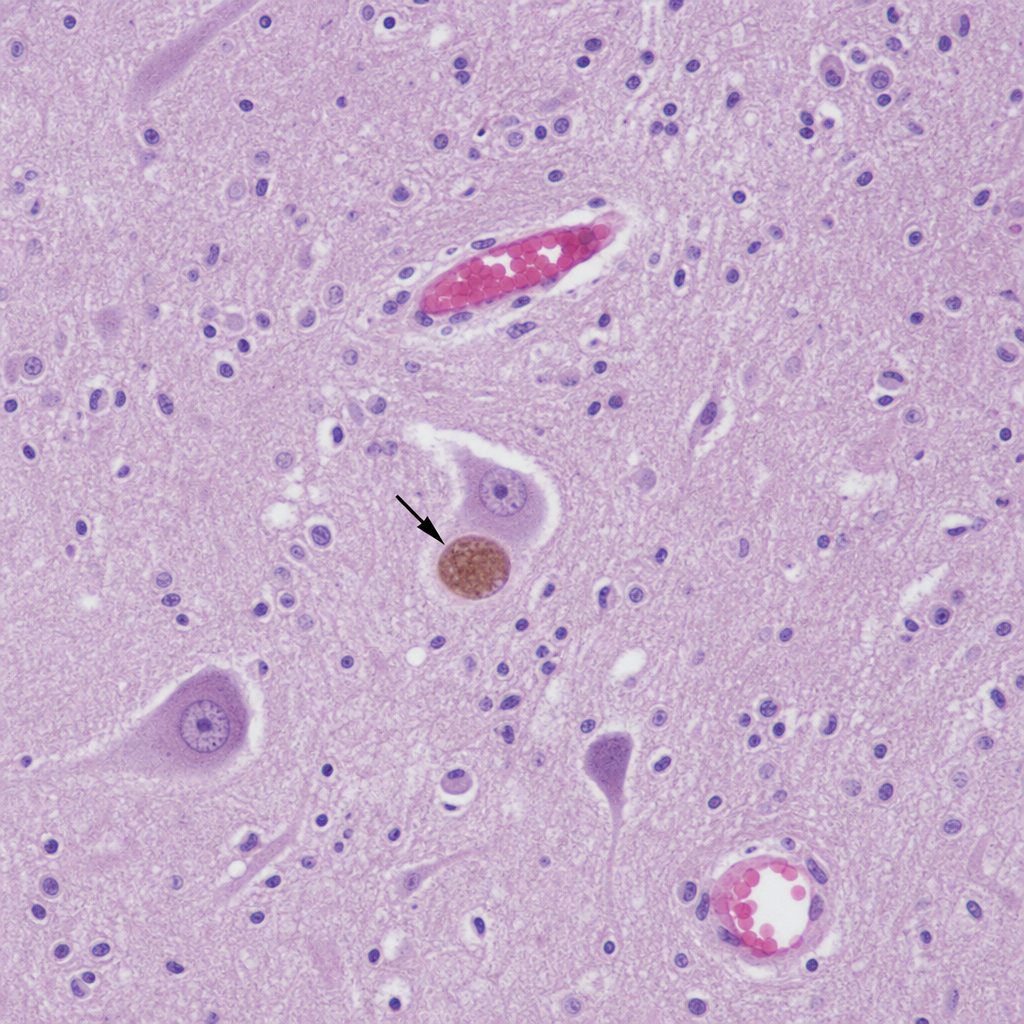
A 58-year-old retired engineer is brought to a memory clinic by his wife, who says he has been getting lost while driving familiar routes for the past 14 months. She also notes he has had two episodes of acting out his dreams violently — he punched the headboard while apparently fighting someone in his sleep. On examination he has mild cogwheel rigidity bilaterally, a resting tremor of the right hand, and a shuffling gait. MMSE is 22/30 with deficits concentrated in visuospatial tasks and attention. Polysomnography demonstrates REM sleep without atonia. Which of the following is the most likely underlying diagnosis?
A 21-year-old woman is brought to the emergency room 1 hour after she ingested 12 pills of acetaminophen. She had a fight with her boyfriend immediately prior to the ingestion, during which she threatened to kill herself if he broke up with her. She has been hospitalized 4 times for overdoses in the past 3 years following breakups with her partners. On the way to the hospital, she screamed and then assaulted the paramedic who attempted to take her temperature. Physical examination shows multiple rows of well-healed scars bilaterally on the wrists. This patient is most likely to display which of the following defense mechanisms?
Want unlimited practice?
Get full access to all questions, explanations, and performance tracking.
Scan to download app