
Single Gene Disorders — MCQs

Which is not a feature of G6PD deficiency?
What is the interpretation of the given pedigree chart?
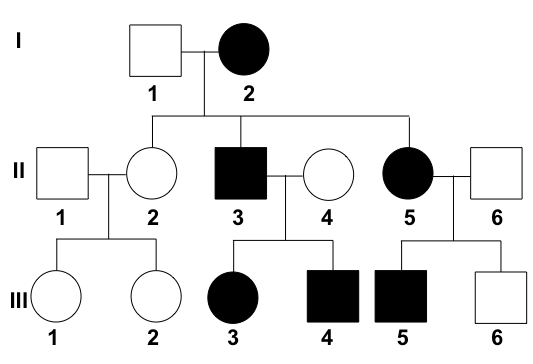
Which disease will show the mode of inheritance depicted in this pedigree?
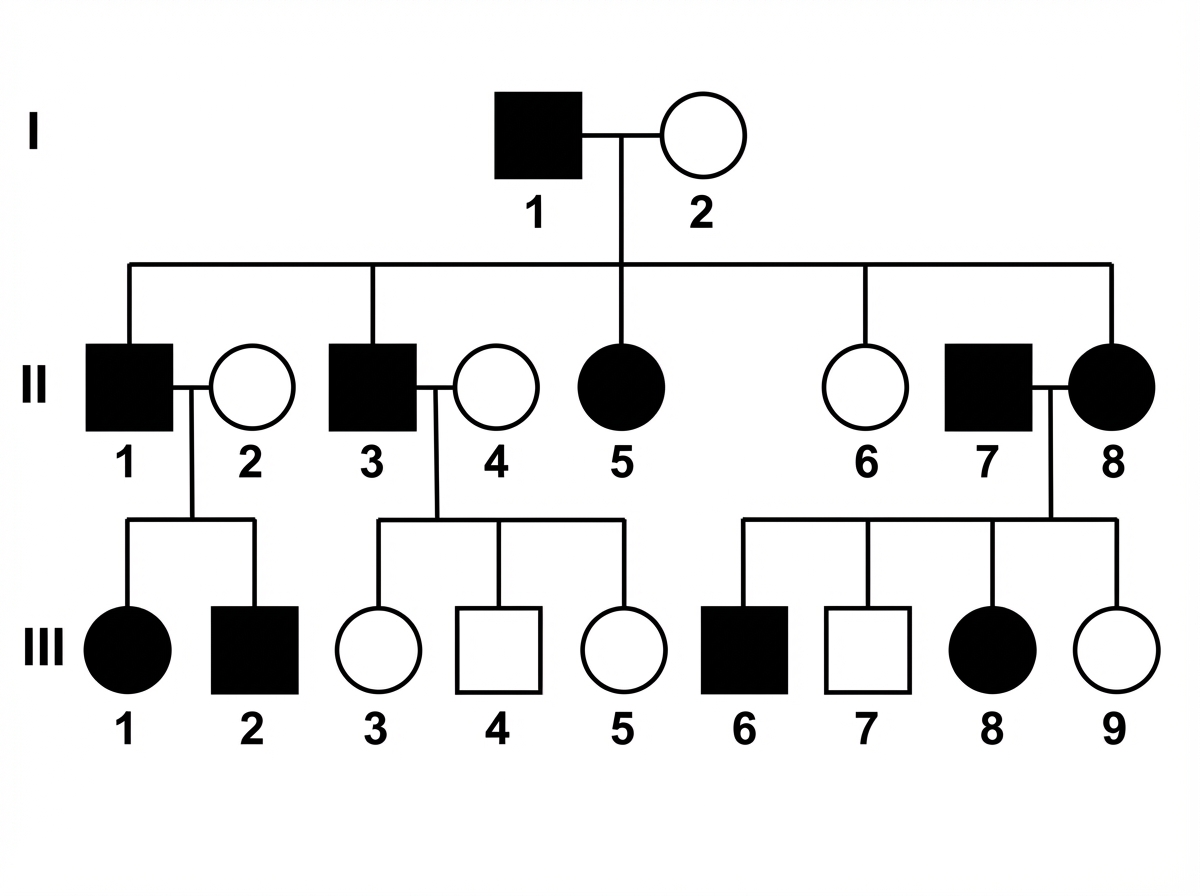
Duchenne muscular dystrophy is inherited as:
An affected male does not have affected children but an affected female always has affected children. Type of inheritance?
Kinky hair disease is a disorder where an affected child has peculiar white stubby hair, does not grow, brain degeneration is seen and dies by age of two years. Mrs A is hesitant about having children because her two sisters had sons who died from kinky hair disease. Her mother's brother also died of the same condition. Which of the following is the possible mode of inheritance in her family?
A 4-year-old boy is brought to a pediatrician by his parents for a consultation after his teacher complained about his inability to focus or make friends at school. They mention that the boy does not interact well with others at home, school, or daycare. On physical examination, his vital signs are stable with normal weight, height, and head circumference for his age and sex. His general examination and neurologic examination are completely normal. A recent audiological evaluation shows normal hearing, and intellectual disability has been ruled out by a clinical psychologist. Which of the following investigations is indicated as part of his diagnostic evaluation at present?
A 16-year-old male presents to an ophthalmologist as a new patient with a complaint of blurry vision. He reports that over the past several months he has had increasing difficulty seeing the board from the back of the classroom at school. The patient is otherwise doing well in school and enjoys playing basketball. His past medical history is otherwise significant for scoliosis which is managed by an orthopedic surgeon. His family history is significant for a mother with type II diabetes mellitus, and a father who underwent aortic valve replacement last year. On physical exam, the patient is tall for his age and has long arms. He has 20 degrees of thoracic scoliosis, which is stable from previous exams. On slit-lamp examination, the patient is found to have bilateral upward lens subluxation and is prescribed corrective lenses. Which of the following is the most likely etiology of this patient’s presentation?
A 12-year-old boy is brought by his mother to a neurologist for continuing evaluation of seizures. His seizures were previously well-controlled on medication but over the last month he has been having seizures several times per week. The boy is non-verbal and has had severe developmental delays and cognitive disability since birth. On exam, the boy is found to be enthusiastically playing with the toys in the office and laughing at almost any stimulus. Furthermore, his movements are found to be uncoordinated with a wide based gait. Previous genetic testing has revealed an abnormality in an E3 ubiquitin ligase gene. Compared to unaffected individuals, which of the following patterns of gene expression is most likely seen in this patient?
A 10-month-old boy is brought to the physician by his mother for evaluation of abnormal growth and skin abnormalities. His mother has also noticed that his eyes do not fully close when sleeping. He is at the 24th percentile for height, 17th percentile for weight, and 29th percentile for head circumference. Physical examination shows wrinkled skin, prominent veins on the scalp and extremities, and circumoral cyanosis. Genetic testing shows a point mutation in a gene that encodes for a scaffold protein of the inner nuclear membrane. The mutation causes a deformed and unstable nuclear membrane, which leads to premature aging. Which of the following is most likely to be the defective protein?
Want unlimited practice?
Get full access to all questions, explanations, and performance tracking.
Scan to download app