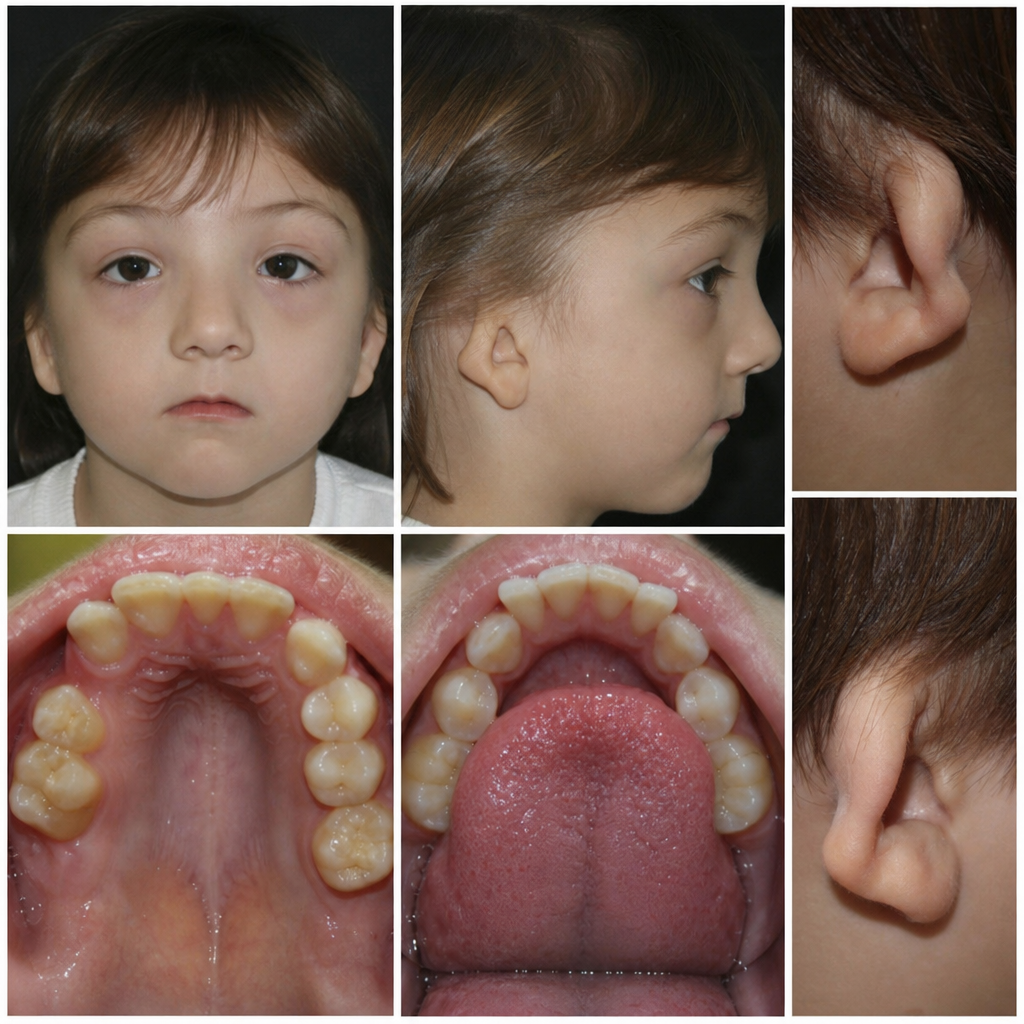
Which of the following statements is true regarding Turner syndrome?
Sweat chlorides are increased in:
A 2-year-old child is brought by parents with a history of seizures and developmental delay, and he has multiple hypopigmented macules over the back. What is the most probable diagnosis?
Duchenne muscular dystrophy is inherited as:
Which of the following conditions is characterized by webbing of the neck, short stature, increased carrying angle, low posterior hairline, primary amenorrhea, and short fourth metacarpal?
Which of the following statements is true regarding cystic fibrosis?
Explanation: ***Intelligence is typically normal*** - Individuals with **Turner syndrome** generally have **normal intelligence** but may experience specific **neurocognitive deficits**, such as difficulties with visual-spatial tasks or nonverbal learning. - While they may require **specialized educational support** for these challenges, their overall cognitive abilities usually fall within the average range. *Individuals typically have normal height and growth patterns* - A hallmark feature of Turner syndrome is **short stature**, which is due to the haploinsufficiency of the **SHOX gene**. - **Growth hormone therapy** is often initiated in childhood to improve adult height outcomes. *Breast development is typically normal and occurs at the expected age* - Due to **gonadal dysgenesis** (non-functional ovaries), individuals with Turner syndrome experience **primary amenorrhea** and **lack of breast development** unless estrogen replacement therapy is initiated. - **Estrogen deficiency** prevents the typical pubertal changes associated with feminization. *Individuals have normal functioning ovaries throughout their reproductive years* - A defining characteristic of Turner syndrome is **gonadal dysgenesis**, meaning the ovaries are non-functional **streak gonads**. - This leads to **infertility** and **primary ovarian insufficiency** from birth, requiring hormone replacement for secondary sexual characteristic development. *Cardiovascular anomalies are rarely associated with the condition* - **Cardiovascular defects** occur in approximately **30-50%** of individuals with Turner syndrome, making them a common and clinically significant feature. - The most frequent cardiac anomalies include **bicuspid aortic valve** (30%), **coarctation of the aorta** (10-15%), and **aortic dilation**. - Regular **cardiovascular screening** with echocardiography is recommended throughout life due to increased risk of aortic dissection.
Explanation: ***Cystic fibrosis*** - **Cystic fibrosis** is characterized by a defect in the **cystic fibrosis transmembrane conductance regulator (CFTR) protein**, which is responsible for chloride transport. - This defect leads to impaired reabsorption of chloride in sweat glands, resulting in characteristically **elevated sweat chloride levels** (usually >60 mEq/L), which is the basis for the **sweat chloride test** used for diagnosis. *Addison's disease* - **Addison's disease** (adrenal insufficiency) primarily affects mineralocorticoid and glucocorticoid production, leading to **hyponatremia** and **hyperkalemia**, but not directly affecting sweat chloride concentration in a diagnostically significant way. - Patients may experience dehydration and salt craving, but their sweat chloride levels are not used for diagnosis. *Conn's syndrome* - **Conn's syndrome** is characterized by primary **hyperaldosteronism**, leading to sodium retention and potassium excretion, often causing **hypertension** and **hypokalemia**. - It does not involve a defect in sweat gland chloride transport and therefore does not cause increased sweat chlorides. *Phaeochromocytoma* - A **phaeochromocytoma** is a tumor of the adrenal medulla that secretes excessive **catecholamines**, leading to symptoms like **hypertension**, palpitations, and sweating. - While excessive sweating can occur due to sympathetic overactivity, the chloride concentration in the sweat itself is not diagnostically elevated. *Hypothyroidism* - **Hypothyroidism** is characterized by decreased thyroid hormone production, leading to symptoms like **fatigue**, **weight gain**, **cold intolerance**, and **dry skin**. - It does not affect chloride transport in sweat glands and does not cause elevated sweat chloride levels.
Explanation: ***Tuberous sclerosis*** - The classic triad of **seizures**, **developmental delay**, and **hypopigmented macules** (ash-leaf spots) is highly suggestive of tuberous sclerosis. - This condition is an **autosomal dominant neurocutaneous disorder** characterized by the formation of **hamartomas** in various organs, including the brain, skin, kidneys, and heart. *Neurofibromatosis type 1* - Characterized by **multiple café-au-lait spots**, **axillary/inguinal freckling**, and **neurofibromas**. - While seizures and developmental delay can occur, the presence of **hypopigmented macules** points away from NF1. *Sturge weber's syndrome* - Presents with a **port-wine stain** (facial cutaneous angioma) in the distribution of the trigeminal nerve. - Associated with **leptomeningeal angioma**, leading to seizures and neurological deficits, but not with hypopigmented macules. *Linear Sebaceous nevus syndrome* - Involves a **large sebaceous nevus** (usually on the face or scalp) in association with **CNS abnormalities** (e.g., seizures, developmental delay) and other systemic findings. - The hallmark skin lesion is a **yellow-orange, waxy nevus**, not hypopigmented macules. *Hypomelanosis of Ito* - Characterized by **hypopigmented whorled streaks or patches** along the lines of Blaschko. - Can be associated with seizures and developmental delay, but the key distinguishing feature is the **bilateral whorled pattern** rather than discrete oval ash-leaf spots seen in tuberous sclerosis.
Explanation: ***X-linked recessive*** - Duchenne muscular dystrophy is primarily due to mutations in the **dystrophin gene**, located on the X chromosome, leading to X-linked recessive inheritance [1]. - Males are predominantly affected due to the presence of a single X chromosome, while females are carriers and may show mild symptoms [2]. *Autosomal dominant* - This mode of inheritance involves only one copy of a mutated gene for the condition to manifest, which is not the case for Duchenne muscular dystrophy. - Autosomal dominant disorders typically have a **vertical inheritance pattern**, unlike the skipped generations seen with X-linked recessive traits [2]. *X-linked dominant* - In X-linked dominant conditions, both males and females can be affected, which contrasts with the severe male predominance observed in Duchenne muscular dystrophy cases. - Female carriers of X-linked dominant disorders often experience more severe symptoms, which is not typical for this condition where females are usually asymptomatic carriers. *Autosomal recessive* - Autosomal recessive disorders require both copies of a gene to be mutated for the condition to be expressed, differing from the one-gene involvement in X-linked recessive disorders. - Conditions that follow this pattern often arise in families with a history of consanguinity, which is not the primary inheritance scenario for Duchenne muscular dystrophy. **References:** [1] Kumar V, Abbas AK, et al.. Robbins and Cotran Pathologic Basis of Disease. 9th ed. Peripheral Nerves and Skeletal Muscles, pp. 1244-1245. [2] Kumar V, Abbas AK, et al.. Robbins and Cotran Pathologic Basis of Disease. 9th ed. Genetic Disorders, p. 151.
Explanation: ***Turner syndrome*** - Characterized by **webbing of the neck**, **short stature**, and **primary amenorrhea**, which are classic features of Turner syndrome [1][2]. - The presence of a **short fourth metacarpal** is also a specific skeletal manifestation associated with this condition. - **Short stature** in Turner syndrome is specifically explained by haploinsufficiency of the SHOX gene [1]. *Noonan syndrome* - Presents with features like **short stature** and **cardiac anomalies**, but lacks the specific manifestations of neck webbing and primary amenorrhea. - Typically associated with facial dysmorphisms, such as **widely spaced eyes** and a **distinctive appearance** which are not mentioned here. *Klinefelter syndrome* - Characterized by **47,XXY** karyotype leading to **gynecomastia** and **testicular atrophy**, rather than symptoms like webbed neck or short stature. - Men with this syndrome usually display **delayed or incomplete puberty**, not primary amenorrhea. *Cri-du-chat syndrome* - Primarily associated with a **distinctive high-pitched cry** and developmental delays, rather than physical traits like webbed neck or short fourth metacarpal. - Symptoms are more related to **chromosomal deletion** and do not include amenorrhea or features typical of Turner syndrome. **References:** [1] Kumar V, Abbas AK, et al.. Robbins and Cotran Pathologic Basis of Disease. 9th ed. Genetic Disorders, pp. 175-177. [2] Kumar V, Abbas AK, et al.. Robbins and Cotran Pathologic Basis of Disease. 9th ed. Genetic Disorders, pp. 173-174.
Explanation: ***Can present with meconium ileus in newborns*** - **Meconium ileus**, an obstruction of the small intestine by thickened meconium, is a classic initial presentation of **cystic fibrosis (CF)** in about 10-20% of affected newborns. - This symptom arises due to the **thick, sticky secretions** in the intestines, a hallmark of CF's impact on exocrine glands. *Negative sweat test is diagnostic* - A **negative sweat test** (salt concentration less than 30 mmol/L for infants, or 40 mmol/L for older children/adults) typically *rules out* cystic fibrosis, rather than confirming it. - A **positive sweat test** (typically >60 mmol/L chloride) is indicative of CF, but needs to be confirmed with **genetic testing**. *Caused by mutations in the BRCA gene* - Cystic fibrosis is caused by mutations in the **CFTR (Cystic Fibrosis Transmembrane Conductance Regulator) gene**, which is responsible for chloride ion transport. - **BRCA genes** (BRCA1 and BRCA2) are associated with an increased risk of breast and ovarian cancers, and are completely unrelated to CF. *Has equal incidence across all ethnic populations* - CF has a **variable incidence** across different ethnic populations; it is most common in individuals of **Northern European descent**. - It is relatively rare in populations of African and Asian descent, demonstrating a clear ethnic predisposition rather than equal incidence. *Is inherited in an autosomal dominant pattern* - Cystic fibrosis is inherited in an **autosomal recessive pattern**, not autosomal dominant. - This means both parents must be carriers (or affected) for a child to have the disease; each pregnancy has a **25% chance** of producing an affected child when both parents are carriers. - In autosomal dominant conditions, only one mutated gene copy is needed to cause disease, which is not the case for CF.
Chromosomal Disorders
Practice Questions
Disorders of Amino Acid Metabolism
Practice Questions
Disorders of Carbohydrate Metabolism
Practice Questions
Disorders of Lipid Metabolism
Practice Questions
Genetic Counseling
Practice Questions
Genetic Testing in Pediatrics
Practice Questions
Inborn Errors of Metabolism
Practice Questions
Lysosomal Storage Diseases
Practice Questions
Mitochondrial Disorders
Practice Questions
Multifactorial Inheritance Disorders
Practice Questions
Newborn Screening
Practice Questions
Single Gene Disorders
Practice Questions
Get full access to all questions, explanations, and performance tracking.
Start For Free