
Disorders of Lipid Metabolism — MCQs

Which of the following is a metabolic disorder inherited in an X-linked manner?
The major carrier of cholesterol in plasma is:
The histopathology image shown is characteristic of which of the following diseases? 
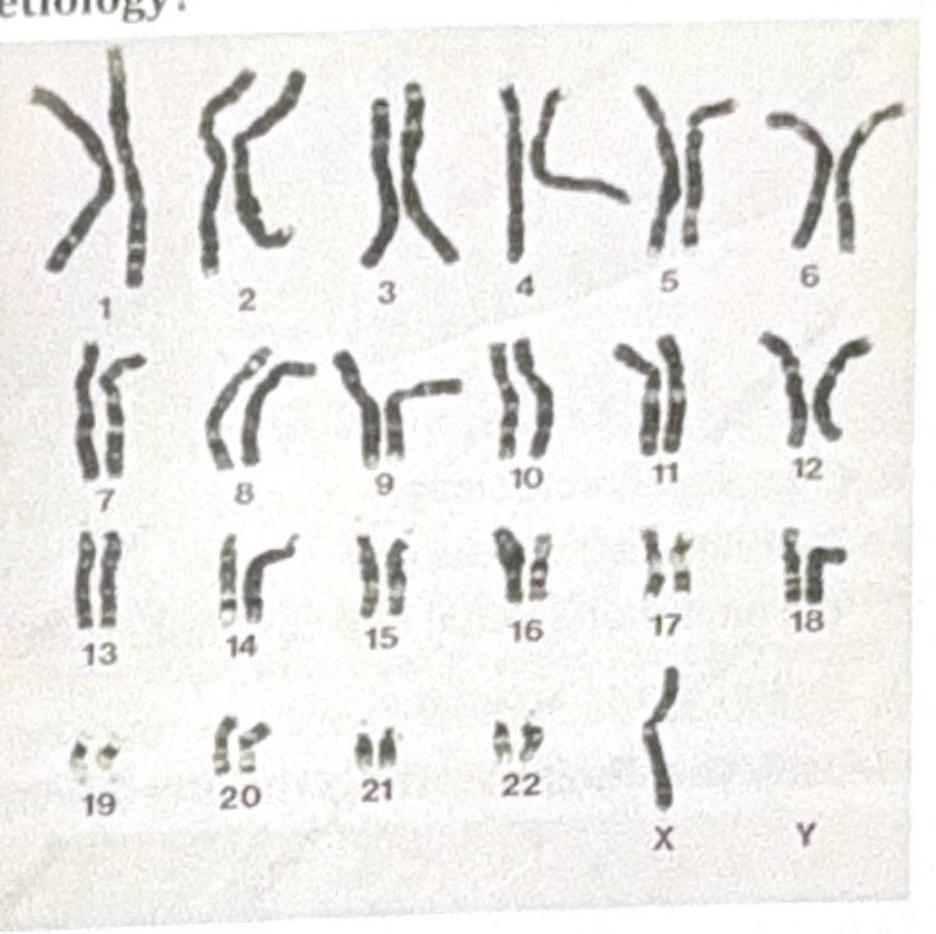
A patient diagnosed with an isolated increase in LDL, with a family history of the same disease in his father and brother, is likely to have a diagnosis of
A 4-year-old boy is brought to a pediatrician by his parents for a consultation after his teacher complained about his inability to focus or make friends at school. They mention that the boy does not interact well with others at home, school, or daycare. On physical examination, his vital signs are stable with normal weight, height, and head circumference for his age and sex. His general examination and neurologic examination are completely normal. A recent audiological evaluation shows normal hearing, and intellectual disability has been ruled out by a clinical psychologist. Which of the following investigations is indicated as part of his diagnostic evaluation at present?
A 4-year-old boy is brought to the physician for a well-child examination. He started walking at 20 months of age. He can use a cup to drink but cannot use silverware. He speaks in 2-word sentences and can build a tower of 4 blocks. He can scribble but cannot draw a circle. He is above the 99th percentile for height and at the 15th percentile for weight. Vital signs are within normal limits. Examination shows bilateral inferior lens dislocation. His fingers are long and slender. He has a high-arched palate. The thumb and 5th finger overlap when he grips a wrist with the opposite hand. The skin over the neck can be extended and stretched easily. Which of the following is the most likely cause of these findings?
A 52-year-old man is admitted directly from the clinic for a serum glucose of 980 mg/dL. He has had type 2 diabetes for 16 years, for which he was prescribed metformin and glimepiride; however, he reports not having followed his prescription due to its high cost. For the past 12 days, he has had excess urination, and has lost 6 kg in weight. He has also noted a progressively worsening cough productive of greenish-brown sputum for approximately 20 days. His temperature is 38.9°C (102.02°F), blood pressure is 97/62 mm Hg, pulse is 97/minute and respiratory rate is 26/minute. On physical examination, he is somnolent, his eyes are sunken, and there are crackles at the left lung base. Lab results are shown: Arterial pH: 7.33 Serum sodium: 130 mEq/L Serum potassium: 3 mEq/L Serum osmolality: 325 mOsm/kg Serum beta-hydroxybutyrate: negative Urinalysis: trace ketones Intravenous normal saline infusion is started. Which of the following is the best next step in this patient?
The lac operon allows E. coli to effectively utilize lactose when it is available, and not to produce unnecessary proteins. Which of the following genes is constitutively expressed and results in the repression of the lac operon?
A researcher is studying physiologic and hormonal changes that occur during pregnancy. Specifically, they examine the behavior of progesterone over the course of the menstrual cycle and find that it normally decreases over time; however, during pregnancy this decrease does not occur in the usual time frame. The researcher identifies a circulating factor that appears to be responsible for this difference in progesterone behavior. In order to further examine this factor, the researcher denatures the circulating factor and examines the sizes of its components on a western blot as compared to several other hormones. One of the bands the researcher identifies in this circulating factor is identical to that of another known hormone with which of the following sites of action?
An investigator is studying the metabolism of an experimental drug that is known to have first order kinetics. Immediately after administering an intravenous dose of the drug to a patient, the serum concentration is 60 U/L. 3 hours later, the serum concentration of the drug is 30 U/L. 9 hours after administration, the serum concentration of the drug is most likely to be which of the following?
Want unlimited practice?
Get full access to all questions, explanations, and performance tracking.
Scan to download app