
Preventive strategies for cognitive decline — MCQs

An otherwise healthy 55-year-old woman comes to the physician because of a 7-month history of insomnia. She has difficulty initiating sleep, and her sleep onset latency is normally about 1 hour. She takes melatonin most nights. The physician gives the following recommendations: leave the bedroom when unable to fall asleep within 20 minutes to read or listen to music; return only when sleepy; avoid daytime napping. These recommendations are best classified as which of the following?
A 69-year-old man presents for a general follow up appointment. He states that he is doing well and wants to be sure he is healthy. The patient’s past medical history is significant for type II diabetes mellitus, peripheral vascular disease, and hypertension. His current medications include metformin, glyburide, lisinopril, metoprolol and hydrochlorothiazide. His blood pressure is 130/90 mmHg and pulse is 80/min. A fasting lipid panel was performed last week demonstrating an LDL of 85 mg/dL and triglycerides of 160 mg/dL. The patient states that he has not experienced any symptoms since his last visit. The patient’s blood glucose at this visit is 100 mg/dL. Which of the following is recommended in this patient?
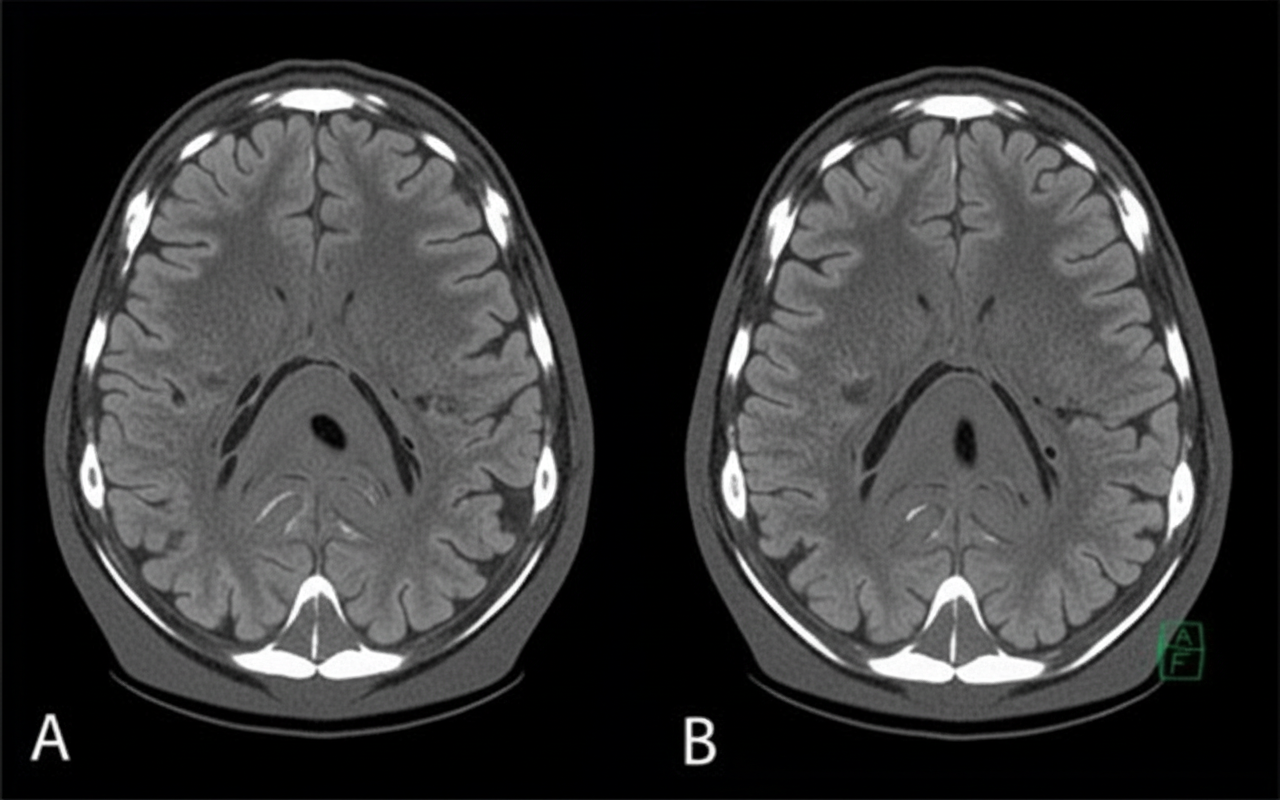
A 58-year-old man presents to the clinic concerned about his health after his elder brother recently became bed-bound due to a brain condition. He has also brought a head CT scan of his brother to reference, as shown in the picture. The patient has type 2 diabetes mellitus, hypertension, osteoarthritis, and hypercholesterolemia. His medication list includes aspirin, diclofenac sodium, metformin, and ramipril. He leads a sedentary lifestyle and smokes one pack of cigarettes daily. He also drinks 4–5 cups of red wine every weekend. His BMI is 33.2 kg/m2. His blood pressure is 164/96 mm Hg, the heart rate is 84/min, and the respiratory rate is 16/min. Which of the following interventions will be most beneficial for reducing the risk of developing the disease that his brother has?
A 70-year-old female presents to you for an office visit with complaints of forgetfulness. The patient states that over the last several years, the patient has stopped cooking for herself even though she lives alone. Recently, she also forgot how to drive back home from the grocery store and has difficulty paying her bills. The patient says she has been healthy over her whole life and does not take any medications. Her vitals are normal and her physical exam does not reveal any focal neurological deficits. Her mini-mental status exam is scored 19/30 and her MRI reveals diffuse cortical atrophy. What is the best initial treatment for this patient's condition?
A 29-year-old man presents to his primary care provider complaining of not being able to get enough rest at night. He goes to bed early enough and has otherwise good sleep hygiene but feels drained the next day. He feels he is unable to perform optimally at work, but he is still a valued employee and able to complete his share of the work. About a month ago his wife of 5 years asked for a divorce and quickly moved out. He has cut out coffee after 12 pm and stopped drinking alcohol. He also exercises 3 days per week. Today, his blood pressure is 120/80 mm Hg, heart rate is 95/min, respiratory rate is 25/min, and temperature is 37.0°C (98.6°F ). On physical exam, his heart has a regular rate and rhythm and his lungs are clear to auscultation bilaterally. A CMP, CBC, and thyroid test are negative. Which of the following statements best describes this patient’s condition?
A 56-year-old man presents to the family medicine office since he has been having difficulty keeping his blood pressure under control for the past month. He has a significant medical history of hypertension, coronary artery disease, and diabetes mellitus. He has a prescription for losartan, atenolol, and metformin. The blood pressure is 178/100 mm Hg, the heart rate is 92/min, and the respiratory rate is 16/min. The physical examination is positive for a grade II holosystolic murmur at the left sternal border. He also has diminished sensation in his toes. Which of the following statements is the most effective means of communication between the doctor and the patient?
A 56-year-old woman comes to the physician for follow-up after a measurement of elevated blood pressure at her last visit three months ago. She works as a high school teacher at a local school. She says that she mostly eats cafeteria food and take-out. She denies any regular physical activity. She does not smoke or use any recreational drugs. She drinks 2 to 3 glasses of wine per day. She has hypercholesterolemia for which she takes atorvastatin. Her height is 165 cm (5 ft 5 in), weight is 82 kg (181 lb), and BMI is 30.1 kg/m2. Her pulse is 67/min, respirations are 18/min, and blood pressure is 152/87 mm Hg on the right arm and 155/92 mm Hg on the left arm. She would like to try lifestyle modifications to improve her blood pressure before considering pharmacologic therapy. Which of the following lifestyle modifications is most likely to result in the greatest reduction of this patient's systolic blood pressure?
A 65-year-old woman presents with memory problems for the past few weeks. Patient vividly describes how she forgot where she put her car keys this morning and did not remember to wish her grandson a happy birthday last week. Patient denies any cognitive problems, bowel/bladder incontinence, tremors, gait problems, or focal neurologic signs. Patient mentions she wants to take Ginkgo because her friend told her that it can help improve her brain function and prevent memory loss. Past medical history is significant for an acute cardiac event several years ago. Current medications are aspirin, carvedilol, and captopril. Patient denies any history of smoking, alcohol or recreational drug use. Patient is a widow, lives alone, and is able to perform all activities of daily living (ADLs) easily. No significant family history. Patient is afebrile and vital signs are within normal limits. Physical examination is unremarkable. Which of the following would be the most appropriate response to this patient’s request to take Ginkgo?
An 81-year-old woman presents to your office accompanied by her husband. She has been doing well except for occasional word finding difficulty. Her husband is concerned that her memory is worsening over the past year. Recently, she got lost twice on her way home from her daughter’s house, was unable to remember her neighbor’s name, and could not pay the bills like she usually did. She has a history of hypertension and arthritis. She has no significant family history. Her medications include a daily multivitamin, hydrochlorothiazide, and ibuprofen as needed. Physical exam is unremarkable. Which of the following is associated with an increased risk of this patient’s disease?
A 28-year-old male presents to his primary care physician with complaints of intermittent abdominal pain and alternating bouts of constipation and diarrhea. His medical chart is not significant for any past medical problems or prior surgeries. He is not prescribed any current medications. Which of the following questions would be the most useful next question in eliciting further history from this patient?
Want unlimited practice?
Get full access to all questions, explanations, and performance tracking.
Scan to download app