
Hypothermia pathophysiology — MCQs

An 84-year-old man presents to the emergency department for a loss of consciousness. The patient states that he was using the bathroom when he lost consciousness and fell, hitting his head on the counter. The patient has a past medical history of diabetes, hypertension, obesity, factor V leiden, constipation, myocardial infarction, and vascular claudication. His current medications include lisinopril, atorvastatin, valproic acid, propranolol, insulin, metformin, and sodium docusate. The patient denies use of illicit substances. His temperature is 99.5°F (37.5°C), blood pressure is 167/98 mmHg, pulse is 90/min, respirations are 15/min, and oxygen saturation is 98% on room air. Physical exam reveals an elderly man sitting comfortably in his stretcher. Cardiac exam reveals a systolic murmur heard at the right upper sternal border that radiates to the carotids. Pulmonary exam reveals mild bibasilar crackles. Neurological exam reveals 5/5 strength in his upper and lower extremities with normal sensation. The patient's gait is mildly unstable. The patient is unable to give a urine sample in the emergency department and states that he almost fainted again when he tried to. Which of the following is the most likely diagnosis?
A 15-year-old boy is brought to the emergency department by his father 10 minutes after falling into a frozen lake during ice fishing. He was in the water for less than 1 minute before his father managed to pull him out. On arrival, his clothes are still wet and he appears scared. His body temperature is 36.2°C (97.1°F), pulse is 102/min, blood pressure is 133/88 mm Hg. Which of the following mechanisms contributes most to maintaining this patient's core body temperature?
A 37-year-old man is brought to the emergency department by a friend after he was found lying unconscious outside his front door. The friend reports that they were “pretty drunk” the previous night, and she had dropped her friend off at his home and driven off. When she came back in the morning, she found him passed out on the ground next to the doorstep. On arrival, he is conscious and cooperative. He reports feeling cold, with severe pain in his hands and face. He remembers having lost his gloves last night. His rectal temperature is 35.2°C (95.3°F), pulse is 86/min, respirations are 17/min, and blood pressure is 124/58 mm Hg. Examination shows decreased sensations over the distal fingers, which are cold to touch. The skin over the distal phalanges is cyanotic, hard, waxy, and tender, with surrounding edema. Laboratory studies are within the reference range. An x-ray of the chest and ECG show no abnormalities. Which of the following is the most appropriate next step in management?
An 11-year-old boy presents with a 2-day history of uncontrollable shivering. During admission, the patient’s vital signs are within normal limits, except for a fluctuating body temperature registering as low as 35.0°C (95.0°F) and as high as 40.0°C (104.0°F), requiring alternating use of cooling and warming blankets. A complete blood count (CBC) is normal, and a chest radiograph is negative for consolidations and infiltrates. An MRI of the brain reveals a space-occupying lesion infiltrating the posterior hypothalamus and extending laterally. Which of the following additional findings are most likely, based on this patient’s physical examination?
A cardiologist is studying how a new virus that infects the heart affects the electrical conduction system of the cardiac myocytes. He decides to obtain electrocardiograms on patients with this disease in order to see how the wave patterns and durations change over time. While studying these records, he asks a medical student who is working with him to interpret the traces. Specifically, he asks her to identify the part that represents initial ventricular depolarization. Which of the following characteristics is most consistent with this feature of the electrocardiogram?
A 41-year-old woman presents to the emergency room with chest pain. She has had progressive substernal chest pain accompanied by weakness and mild shortness of breath for the past 2 hours. Her past medical history is notable for poorly controlled systemic lupus erythematosus (SLE), Sjogren syndrome, and interstitial lung disease. She was hospitalized last year with pericarditis presumed to be from SLE. Her temperature is 98.6°F (37°C), blood pressure is 106/56 mmHg, pulse is 132/min, and respirations are 26/min. On exam, the skin overlying the internal jugular vein fills at 9 cm above the sternal angle and distant heart sounds are appreciated. There is no friction rub. She is given 1000cc of intravenous fluids with no appreciable change in her blood pressure. An electrocardiogram in this patient would most likely reveal which of the following findings?
A 33-year-old man is evaluated by paramedics after being found unconscious outside of his home. He has no palpable pulses. Physical examination shows erythematous marks in a fern-leaf pattern on his lower extremities. An ECG shows ventricular fibrillation. Which of the following is the most likely cause of this patient's findings?
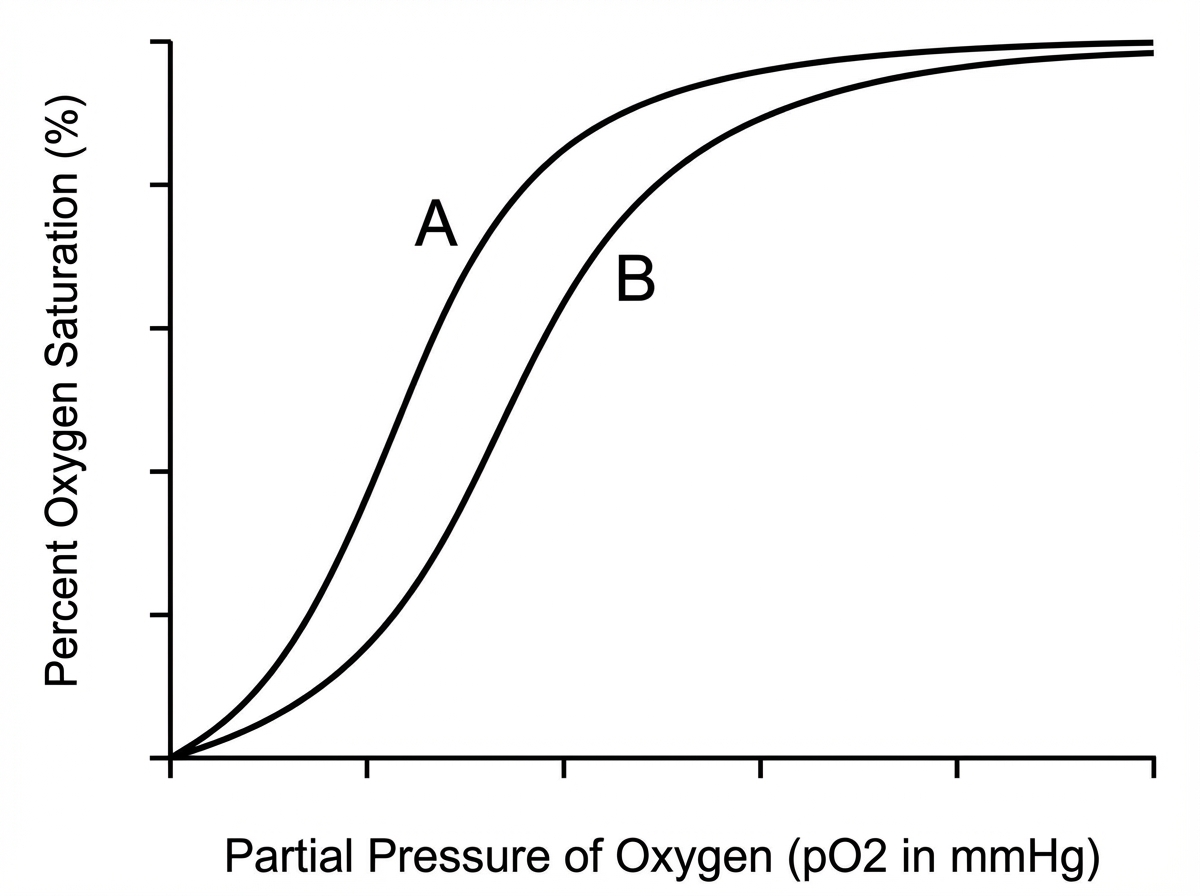
An investigator is conducting a study on hematological factors that affect the affinity of hemoglobin for oxygen. An illustration of two graphs (A and B) that represent the affinity of hemoglobin for oxygen is shown. Which of the following best explains a shift from A to B?
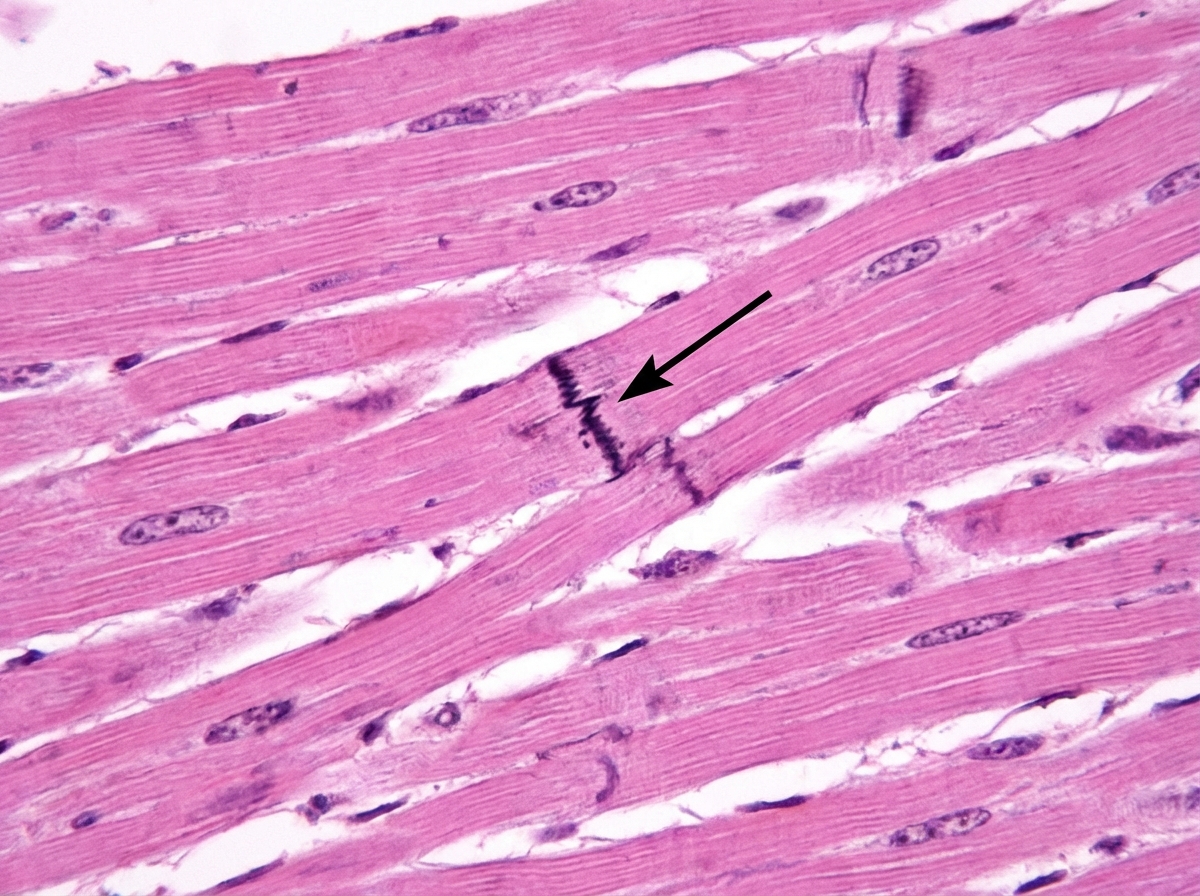
Cardiac muscle serves many necessary functions, leading to a specific structure that serves these functions. The structure highlighted is an important histology component of cardiac muscle. What would be the outcome if this structure diffusely failed to function?
A 42-year-old man undergoes therapeutic hypothermia (target temperature 33°C/91.4°F) following cardiac arrest with return of spontaneous circulation. During the cooling phase, he develops shivering, which increases oxygen consumption and interferes with target temperature achievement. He is already on sedation and neuromuscular blockade is being considered. Evaluate the most appropriate management strategy considering both efficacy and safety.
Want unlimited practice?
Get full access to all questions, explanations, and performance tracking.
Scan to download app