
Respiratory centers in the brainstem — MCQs

A 21-year-old man presents to his physician because he has been feeling increasingly tired and short of breath at work. He has previously had these symptoms but cannot recall the diagnosis he was given. Chart review reveals the following results: Oxygen tension in inspired air = 150 mmHg Alveolar carbon dioxide tension = 50 mmHg Arterial oxygen tension = 71 mmHg Respiratory exchange ratio = 0.80 Diffusion studies reveal normal diffusion distance. The patient is administered 100% oxygen but the patient's blood oxygen concentration does not improve. Which of the following conditions would best explain this patient's findings?
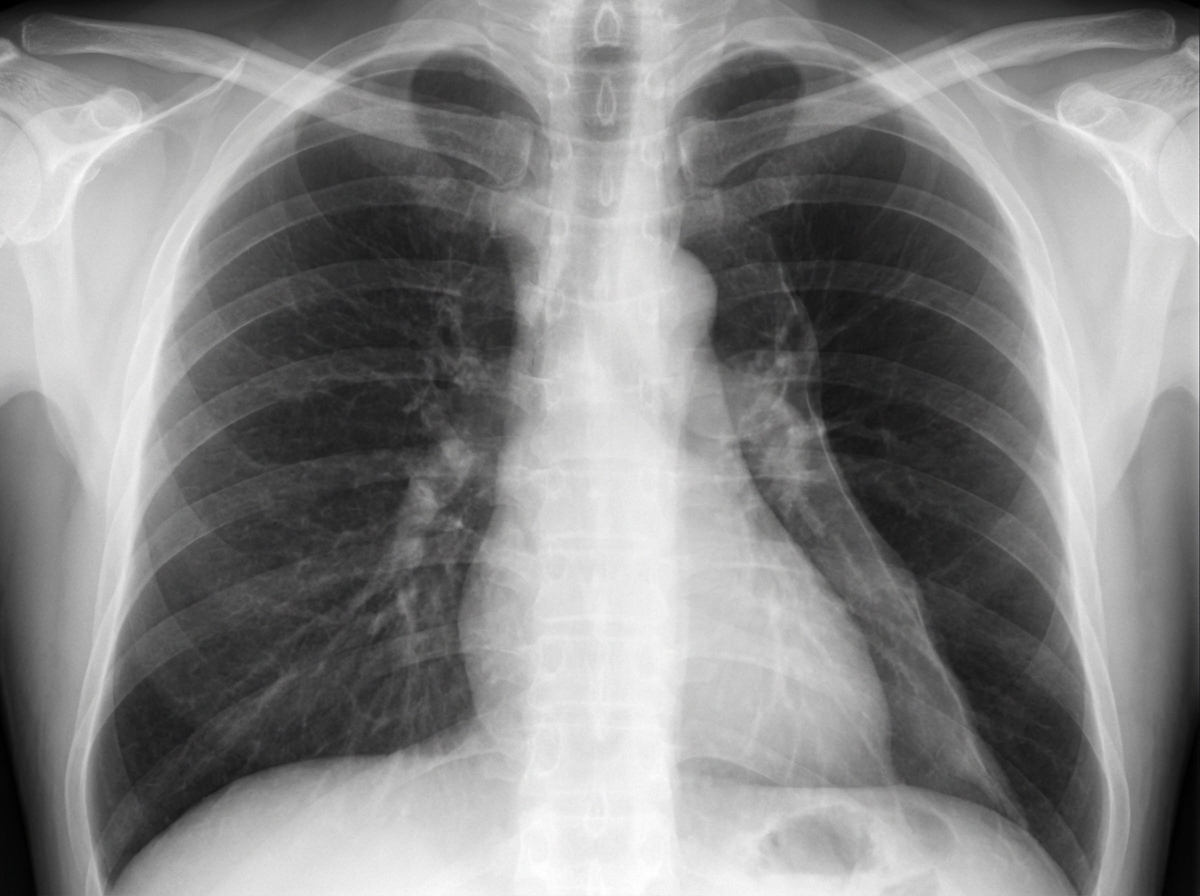
A 19-year-old man comes to the emergency department with sharp, left-sided chest pain and shortness of breath. He has no history of recent trauma. He does not smoke or use illicit drugs. He is 196 cm (6 feet 5 in) tall and weighs 70 kg (154 lb); BMI is 18 kg/m2. Examination shows reduced breath sounds over the left lung field. An x-ray of the chest is shown. Which of the following changes is most likely to immediately result from this patient's current condition?
During exercise, what is the primary mechanism for increased oxygen delivery to active muscles?
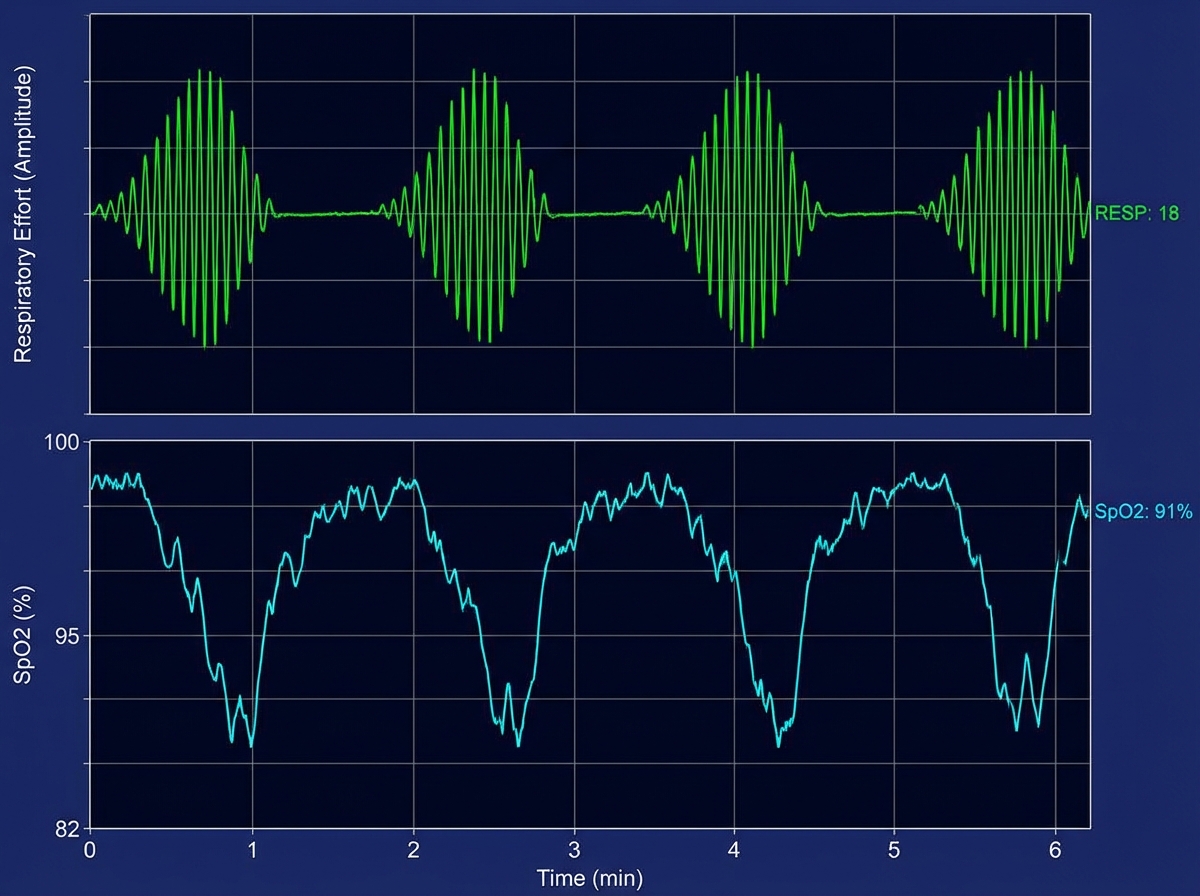
A 66-year-old man is brought to the emergency department because of shortness of breath and confusion. His pulse is 98/min, and blood pressure is 109/73 mm Hg. He is oriented to person but not time or place. A graph of his breathing pattern and oxygen saturation is shown. Which of the following additional findings is most likely present in this patient?
A 25-year-old previously healthy woman is admitted to the hospital with progressively worsening shortness of breath. She reports a mild fever. Her vital signs at the admission are as follows: blood pressure 100/70 mm Hg, heart rate 111/min, respiratory rate 20/min, and temperature 38.1℃ (100.6℉); blood saturation on room air is 90%. Examination reveals a bilateral decrease of vesicular breath sounds and rales in the lower lobes. Plain chest radiograph demonstrates bilateral opacification of the lower lobes. Despite appropriate treatment, her respiratory status worsens. The patient is transferred to the intensive care unit and put on mechanical ventilation. Adjustment of which of the following ventilator settings will only affect the patient’s oxygenation?
A 64-year-old man with longstanding ischemic heart disease presents to the clinic with complaints of increasing exercise intolerance and easy fatigability for the past 2 weeks. He further states that he has been experiencing excessive daytime somnolence and shortness of breath with exertion. His wife adds that his shortness of breath is more in the recumbent position, and after approximately 2 hours of sleep, after which he suddenly wakes up suffocating and gasping for breath. This symptom is relieved after assuming an upright position for more than 30 minutes. The vital signs are as follows: heart rate, 126/min; respiratory rate, 16/min; temperature, 37.6°C (99.6°F); and blood pressure, 122/70 mm Hg. The physical examination reveals a S3 gallop on cardiac auscultation and positive hepatojugular reflux with distended neck veins. An electrocardiogram shows ischemic changes similar to ECG changes noted in the past. An echocardiogram reveals an ejection fraction of 33%. Which of the following best describes the respiratory pattern abnormality which occurs in this patient while sleeping?
A 55-year-old man presents with an unremitting cough and swelling of the lower limbs for the past 2 weeks. He says he has had a chronic cough for years, however, he feels it is getting worse. He reports a 30-pack-year smoking history. Physical examination reveals mild central cyanosis and expiratory wheezes throughout the chest. Oxygen therapy is ordered immediately but, soon after administering it, his respiratory rate starts to slow down and he becomes drowsy. Dysfunction of which of the following receptors most likely led to this patient’s current condition?
A middle-aged homeless man is found lying unresponsive on the streets by the police and is rushed to the emergency department. His vital signs include: blood pressure 110/80 mm Hg, pulse rate 100/min, and respirations 10/min and shallow. On physical examination, his extremities are cold and clammy. Pupils are constricted and non-reactive. His blood glucose is 55 mg/dL. IV access is established immediately with the administration of dextrose and naloxone. In half an hour, the patient is fully conscious, alert and responsive. He denies any medical illnesses, hospitalizations, or surgeries in the past. Physical examination reveals injection track marks along both arms. He admits to the use of cocaine and heroin. He smokes cigarettes and consumes alcohol. His vital signs are now stable. A urine sample is sent for toxicology screening. Which of the following was the most likely cause of this patient’s respiratory depression?
A 60-year-old woman with a history of emphysema has been referred by her pulmonologist for follow-up pulmonary function testing. During the test, the patient reaches a point where her airway pressure is equal to the atmospheric pressure. Which of the following is most likely to be found during this respiratory state?
A 15-year-old boy and his mother were referred to a pulmonology clinic. She is concerned that her son is having some breathing difficulty for the past few months, which is aggravated with exercise. The family is especially concerned because the patient’s older brother has cystic fibrosis. The past medical history is noncontributory. Today, the vital signs include: blood pressure 119/80 mm Hg, heart rate 90/min, respiratory rate 17/min, and temperature 37.0°C (98.6°F). On physical exam, he appears well-developed and well-nourished. The heart has a regular rate and rhythm, and the lungs are clear to auscultation bilaterally. During the exam, he is brought into a special room to test his breathing. A clamp is placed on his nose and he is asked to take in as much air as he can, and then forcefully expire all the air into a spirometer. The volume of expired air represents which of the following?
Want unlimited practice?
Get full access to all questions, explanations, and performance tracking.
Scan to download app