
Magnesium handling — MCQs

Four days after admission to the hospital for anorexia nervosa, a 20-year-old woman has new-onset palpitations and paresthesias in all four limbs. Prior to admission, she was found unconscious by her parents on the floor of a residential treatment center. The patient was started on a trial of nutritional rehabilitation upon arrival to the hospital. Her temperature is 36°C (96.8°F), pulse is 47/min, and blood pressure is 90/60 mmHg. She is 160 cm tall and weighs 35 kg; BMI is 14 kg/m2. The patient appears emaciated. Examination shows lower leg edema. A 2/6 holosystolic murmur is heard over the 5th intercostal space at the midclavicular line. An ECG shows intermittent supraventricular tachycardia and QTc prolongation. Serum studies show: Day 2 Day 4 Potassium (mEq/L) 3.5 2.7 Calcium (mg/dL) 8.5 7.8 Magnesium (mEq/L) 1.2 0.5 Phosphorus (mg/dL) 3.6 1.5 Which of the following is the most likely underlying cause of this patient's condition?
A 32-year-old man with a history of chronic alcoholism presents to the emergency department with vomiting and diarrhea for 1 week. He states he feels weak and has had poor oral intake during this time. The patient is a current smoker and has presented many times to the emergency department for alcohol intoxication. His temperature is 97.5°F (36.4°C), blood pressure is 102/62 mmHg, pulse is 135/min, respirations are 25/min, and oxygen saturation is 99% on room air. On physical exam, he is found to have orthostatic hypotension and dry mucus membranes. Laboratory studies are ordered as seen below. Serum: Na+: 139 mEq/L Cl-: 101 mEq/L K+: 3.9 mEq/L HCO3-: 25 mEq/L BUN: 20 mg/dL Glucose: 99 mg/dL Creatinine: 1.1 mg/dL Ca2+: 9.8 mg/dL The patient is given normal saline, oral potassium, dextrose, thiamine, and folic acid. The following day, the patient seems confused and complains of diffuse weakness and muscle/bone pain. An ECG and head CT are performed and are unremarkable. Which of the following is the most likely explanation for this patient's new symptoms?
On cardiology service rounds, your team sees a patient admitted with an acute congestive heart failure exacerbation. In congestive heart failure, decreased cardiac function leads to decreased renal perfusion, which eventually leads to excess volume retention. To test your knowledge of physiology, your attending asks you which segment of the nephron is responsible for the majority of water absorption. Which of the following is a correct pairing of the segment of the nephron that reabsorbs the majority of all filtered water with the means by which that segment absorbs water?
A new drug has been shown to block epithelial sodium channels in the cortical collecting duct. Which of the following is most likely to be decreased upon drug administration?
Which transport mechanism is primarily responsible for calcium reabsorption in the proximal tubule?
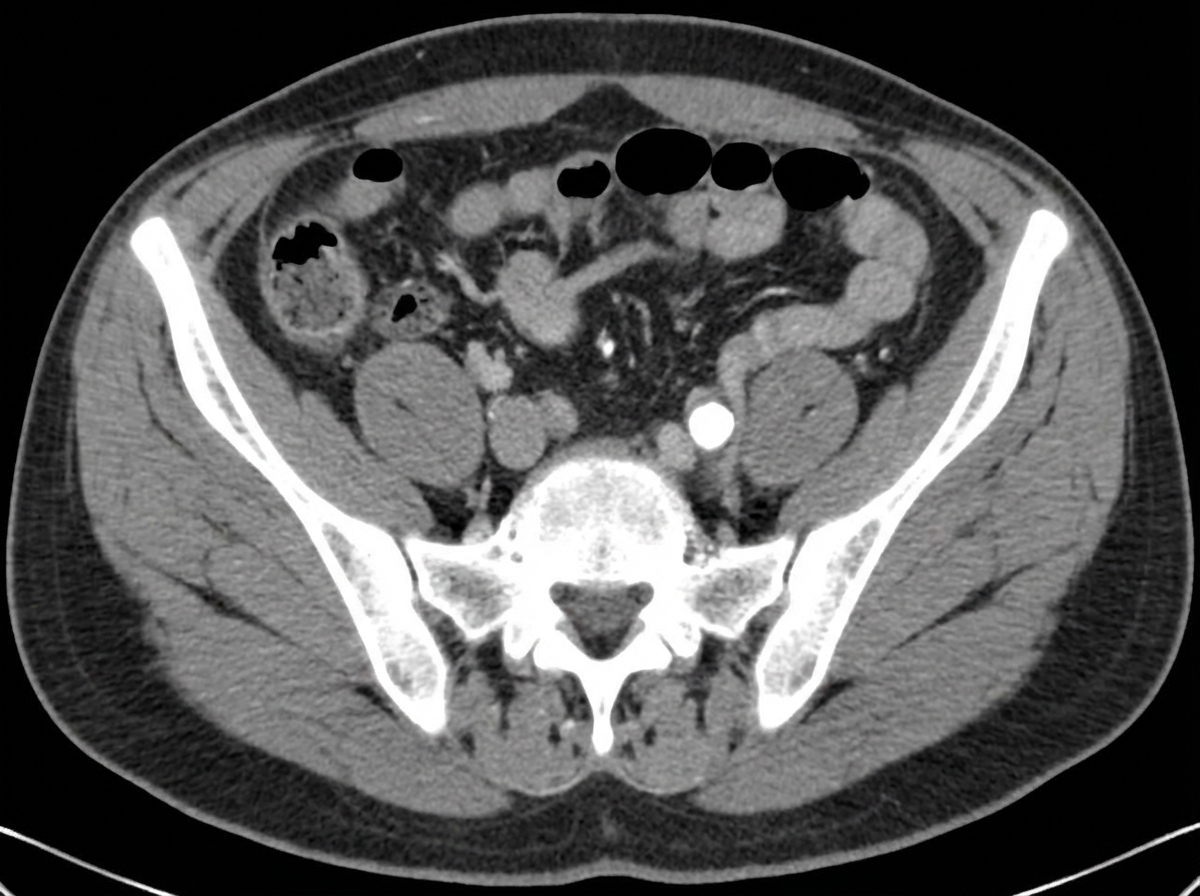
A 55-year-old woman presents to the emergency room with severe abdominal pain for the past 24 hours. She has also noticed blood in her urine. She does not have any significant past medical history. Family history is significant for her mother having cholecystitis status post cholecystectomy at age 45. Her vital signs include: temperature 36.8°C (98.2°F), pulse 103/min, respiratory rate 15/min, blood pressure 105/85 mm Hg. Physical examination is significant for a woman continuously moving on the exam table in an attempt to get comfortable. Laboratory findings are significant for the following: Serum electrolytes Na 138 mEq/L N: 135–145 mEq/L K 4.0 mEq/L N: 3.5–5.0 mEq/L Cl 102 mEq/L N: 98–108 mEq/L CO2 27 mEq/L N: 22–32 mEq/L Ca 9.2 mEq/dL N: 8.4–10.2 mEq/dL PO4 3.5 mg/dL N: 3.0–4.5 mg/dL A 24-hour urine collection is performed and reveals a urinary calcium of 345 mg/day (ref: < 300 mg/day in men; < 250 mg/day in women). A non-contrast CT of the abdomen is performed and is shown in the exhibit. The patient’s symptoms pass within the next 12 hours with hydration and acetaminophen for pain management. She is prescribed a medication to prevent subsequent episodes. At which of the following parts of the nephron does this medication most likely work?
A 55-year-old man presents to his physician with weakness and fatigue for 1 week. There is no significant past medical history. He mentions that he is very health conscious and has heard about the health benefits of juices. He is following a juice-only diet for the last 2 weeks. His physical examination is completely normal, except for depressed deep tendon reflexes. The only abnormality in a complete laboratory evaluation is a serum potassium level of 6.0 mEq/L (6.0 mmol/L). There are significantly peaked T-waves on ECG. Which of the following pathophysiologic mechanisms best explains the patient’s symptoms?
A 55-year-old man with a history of congestive heart failure, hypertension, and hyperlipidemia presents to his primary care clinic. He admits he did not adhere to a low salt diet on a recent vacation. He now has progressive leg swelling and needs two pillows to sleep because he gets short of breath when lying flat. Current medications include aspirin, metoprolol, lisinopril, atorvastatin, and furosemide. His physician decides to increase the dosage and frequency of the patient’s furosemide. Which of the following electrolyte abnormalities is associated with loop diuretics?
A 28-year-old woman presents to her primary care physician with recurring muscle cramps that have lasted for the last 2 weeks. She mentions that she commonly has these in her legs and back. She also has a constant tingling sensation around her mouth. On physical examination, her vital signs are stable. The Trousseau sign and Chvostek sign are present with exaggerated deep tendon reflexes. A comprehensive blood test reveals the following: Na+ 140 mEq/L K+ 4.5 mEq/L Chloride 100 mEq/L Bicarbonate 24 mEq/L Creatinine 0.9 mg/dL Ca2+ 7.0 mg/dL Which of the following electrophysiologic mechanisms best explain this woman’s clinical features?
A researcher is studying proteins that contribute to intestinal epithelial permeability. He has isolated intestinal tissue from several mice. After processing the tissue into its individual components, he uses a Western blot analysis to identify a protein that forms part of a multi-protein complex at the apical aspect of epithelial cells. The complex is known to provide a diffusion barrier between the apical and basolateral aspects of epithelial cells. Which of the following proteins is this researcher most likely investigating?
Want unlimited practice?
Get full access to all questions, explanations, and performance tracking.
Scan to download app