Twenty minutes after delivery of a newborn infant, a 22-year-old woman starts breastfeeding. Initially, the expressed milk is thick and yellowish. Three days later, the mother's breasts swell and the expressed milk becomes thinner and whiter. A decrease in maternal serum concentration of which of the following is most likely responsible for the observed changes in milk production?
Q12
A 55-year-old woman has a total thyroidectomy for papillary thyroid carcinoma. She complains of tingling around the mouth 11 hours after the operation. Her condition rapidly deteriorates with difficulty breathing and chest tightness. Which of the following best represent the signaling pathway of the deficient hormone responsible for this patient’s symptoms?
Q13
A 28-year-old female comes to the emergency department complaining of heart palpitations. She has had multiple episodes of these in the past few months. She has found that if she wears tight clothing then sometimes these episodes will stop spontaneously. On presentation to the ED, she feels like her heart is pounding and reports feeling nauseous. She appears mildly diaphoretic. Her blood pressure is 125/75 mmHg, pulse is 180/min, and respirations are 22/min with an O2 saturation of 99% on room air. A neck maneuver is performed and her pulse returns to 90/min with improvement of her symptoms. Stimulation of afferent fibers from which nerve are most responsible for the resolution of her symptoms?
Q14
A researcher is studying the effects of hormones on different cells within the ovarian follicle. She adds follicle stimulating hormone (FSH) to a culture of ovarian follicle cells. She then measures the activity levels of different enzymes within the cells. Which enzyme and ovarian cell type would be expected to be stimulated by the addition of FSH?
Q15
A 27-year-old is going through a pre-employment evaluation. The patient has no history of any medical conditions, but there is a strong family history of ischemic heart disease on his father’s side. The patient drinks alcohol occasionally but does not use any illicit drugs or smoke. On examination, the physician notices that the patient has a very flexible body and long fingers (seen in the image). Auscultation of the heart reveals a mid-systolic click over the apex. What is the most likely mechanism behind this finding?
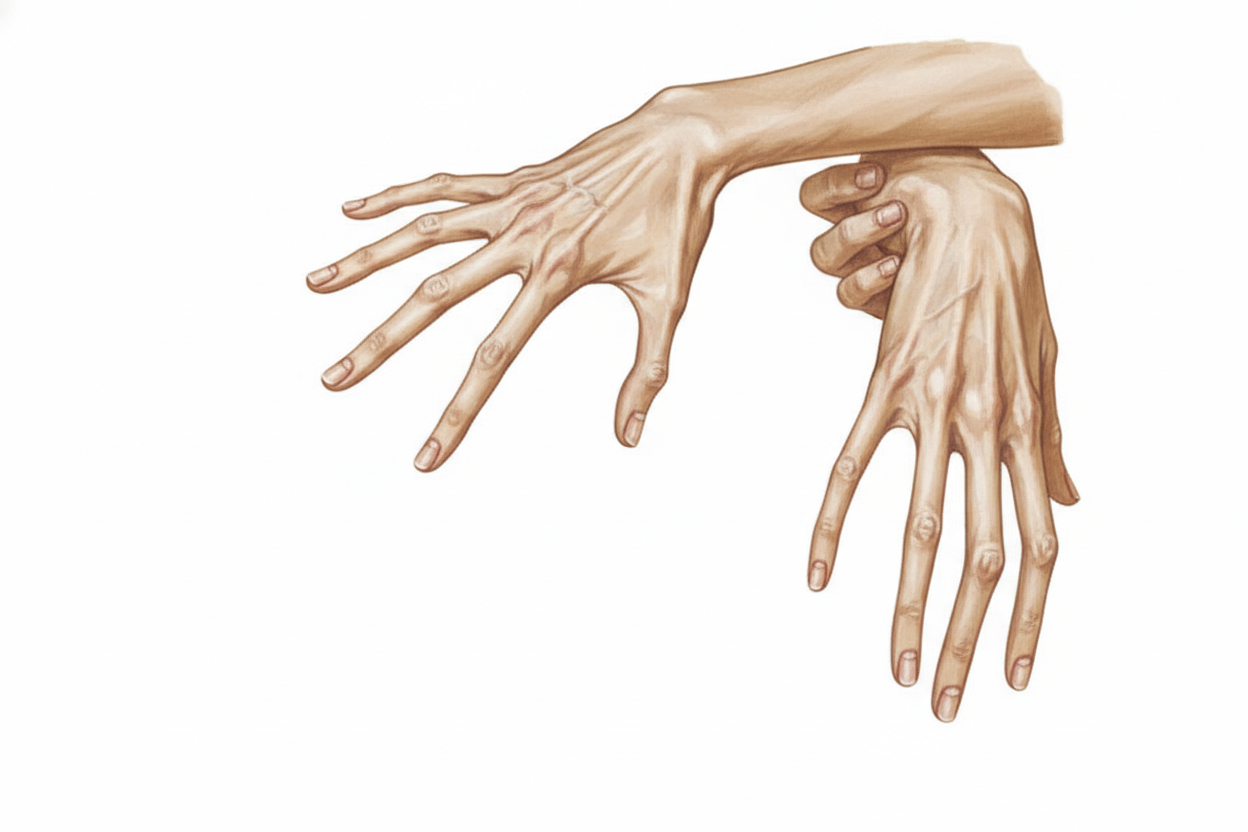
Q16
A 29-year-old woman presents to a physician for evaluation of palpitations, increased sweating, and unintentional weight loss despite a good appetite. She also reports difficulty swallowing and voice changes. All of the symptoms have developed over the past 6 months. The patient has no concurrent illnesses and takes no medications. The vital signs include the following: blood pressure 125/80 mm Hg, heart rate 106/min, respiratory rate 15/min, and temperature 37.0℃ (98.6℉). The physical examination was significant for increased perspiration, fine digital tremors, and a small mass on the posterior aspect of the tongue, which moves with movements of the tongue. There is no neck swelling. The thyroid profile is as follows:
Triiodothyronine (T3) 191 ng/dL (2.93 nmol/L)
Thyroxine (T4), total 22 µg/dL (283.1 nmol/L)
Thyroid-stimulating hormone (TSH) 0.2 µU/mL (0.2 mU/L)
A radioiodine thyroid scan reveals hyper-functional thyroid tissue at the base of the patient’s tongue. Which of the following statements is correct?
Q17
A 42-year-old man is referred for an endocrinology consult because of decreased triiodothyronine (T3) hormone levels. He presented to the emergency department 1 week prior to this consultation with pneumonia and was admitted to a medicine service for management of his infection. He has since recovered from his infection after intravenous antibiotic administration. He currently has no symptoms and denies feeling cold or lethargic. A panel of laboratory tests are obtained with the following results:
Thyroid-stimulating hormone: 4.7 µU/mL
Thyroxine (T4): 6 µg/dL
Triiodothyronine (T3): 68 ng/dL
Which of the following additional findings would most likely also be seen in this patient?
Q18
A 15-year-old boy is brought to the emergency department by his father 10 minutes after falling into a frozen lake during ice fishing. He was in the water for less than 1 minute before his father managed to pull him out. On arrival, his clothes are still wet and he appears scared. His body temperature is 36.2°C (97.1°F), pulse is 102/min, blood pressure is 133/88 mm Hg. Which of the following mechanisms contributes most to maintaining this patient's core body temperature?
Q19
A 43-year-old woman comes to the physician because of a 3-month history of tremor, diarrhea, and a 5-kg (11-lb) weight loss. Her pulse is 110/min. Examination shows protrusion of the eyeball when looking forward. A bruit is heard over the anterior neck on auscultation. Serum studies show autoantibodies to the thyroid-stimulating hormone receptor. The patient decides to undergo definitive treatment for her condition with a radioactive tracer. The success of this treatment directly depends on the activity of which of the following?
Q20
A scientist is studying patients with neuromuscular weakness and discovers a mutation in a plasma membrane ion channel. She thinks that this mutation may have an effect on the dynamics of action potentials so she investigates its effect in an isolated neuronal membrane. She finds that the ion channel has no effect when potassium, sodium, and calcium are placed at physiological concentrations on both sides of the membrane; however, when some additional potassium is placed inside the membrane, the channel rapidly allows for sodium to enter the membrane. She continues to examine the mutant channel and finds that it is more rapidly inactivated compared with the wildtype channel. Which of the following effects would this mutant channel most likely have on the electrical profile of neurons in these patients?
Cardiovascular US Medical PG Practice Questions and MCQs
Question 11: Twenty minutes after delivery of a newborn infant, a 22-year-old woman starts breastfeeding. Initially, the expressed milk is thick and yellowish. Three days later, the mother's breasts swell and the expressed milk becomes thinner and whiter. A decrease in maternal serum concentration of which of the following is most likely responsible for the observed changes in milk production?
A. Human chorionic gonadotropin
B. Oxytocin
C. Thyroxine
D. Progesterone (Correct Answer)
E. Estrogen
Explanation: ***Progesterone***
- The drop in **progesterone** levels after birth removes its inhibitory effect on **milk production**, allowing for the transition from **colostrum** to **mature milk**.
- High levels of **progesterone** during pregnancy inhibit the full effects of **prolactin** on the mammary glands, preventing lactation (lactogenesis II).
- After placental delivery, the dramatic fall in progesterone allows prolactin to stimulate copious milk secretion, typically occurring around day 3-5 postpartum.
*Human chorionic gonadotropin*
- **hCG** maintains the corpus luteum during early pregnancy but is not directly involved in the regulation of postpartum milk production.
- Its levels decrease significantly after delivery, but this decrease is not the primary driver of milk changes.
*Oxytocin*
- **Oxytocin** is responsible for **milk ejection (let-down)**, not milk production or changes in milk composition.
- Its levels tend to increase during breastfeeding due to suckling, rather than decrease.
*Thyroxine*
- **Thyroxine** (thyroid hormones) is essential for overall metabolism and can affect milk supply, but a decrease in its levels is not primarily responsible for the switch from colostrum to mature milk.
- Decreased thyroxine would more likely lead to *reduced* milk production or broader metabolic disturbances.
*Estrogen*
- **Estrogen** levels decrease significantly after delivery, similar to progesterone, but progesterone's inhibitory effect on lactation is more direct and critical for the transition in milk type.
- While high estrogen during pregnancy also inhibits lactation, the removal of progesterone's block is the key trigger for copious milk secretion.
Question 12: A 55-year-old woman has a total thyroidectomy for papillary thyroid carcinoma. She complains of tingling around the mouth 11 hours after the operation. Her condition rapidly deteriorates with difficulty breathing and chest tightness. Which of the following best represent the signaling pathway of the deficient hormone responsible for this patient’s symptoms?
A. Cyclic guanosine monophosphate (cGMP)
B. Cyclic adenosine monophosphate (cAMP) (Correct Answer)
C. Intracellular receptors
D. Receptor tyrosine kinase
E. Inositol trisphosphate (IP3)
Explanation: ***Cyclic adenosine monophosphate (cAMP)***
- The patient's symptoms of perioral tingling, difficulty breathing, and chest tightness after total thyroidectomy suggest **hypocalcemia**, likely due to accidental removal or damage to the **parathyroid glands** during surgery.
- The deficient **parathyroid hormone (PTH)** acts primarily through the **cAMP second messenger system** to increase serum calcium levels.
*Cyclic guanosine monophosphate (cGMP)*
- **cGMP** is a second messenger system primarily involved in mediating the effects of hormones like **atrial natriuretic peptide (ANP)** and **nitric oxide**, which are unrelated to calcium homeostasis and parathyroid function.
- This pathway is not the primary mechanism of action for **PTH**.
*Intracellular receptors*
- **Intracellular receptors** are typically used by **steroid hormones** (e.g., cortisol, estrogen) and **thyroid hormones**, which are lipid-soluble and can cross the cell membrane.
- **PTH** is a peptide hormone and acts on cell surface receptors.
*Receptor tyrosine kinase*
- **Receptor tyrosine kinases (RTKs)** are transmembrane receptors involved in signaling pathways for hormones like **insulin** and **growth factors**, promoting cell growth, differentiation, and metabolism.
- This is not the primary signaling pathway for **PTH**.
*Inositol trisphosphate (IP3)*
- The **IP3/DAG (diacylglycerol)** pathway is another common second messenger system used by various hormones (e.g., **vasopressin, oxytocin, TRH**), leading to the release of intracellular calcium.
- While it involves calcium signaling, it is not the primary or most characteristic pathway for **PTH** action, which predominantly utilizes **cAMP**.
Question 13: A 28-year-old female comes to the emergency department complaining of heart palpitations. She has had multiple episodes of these in the past few months. She has found that if she wears tight clothing then sometimes these episodes will stop spontaneously. On presentation to the ED, she feels like her heart is pounding and reports feeling nauseous. She appears mildly diaphoretic. Her blood pressure is 125/75 mmHg, pulse is 180/min, and respirations are 22/min with an O2 saturation of 99% on room air. A neck maneuver is performed and her pulse returns to 90/min with improvement of her symptoms. Stimulation of afferent fibers from which nerve are most responsible for the resolution of her symptoms?
A. Facial
B. Hypoglossal
C. Glossopharyngeal (Correct Answer)
D. Trigeminal
E. Vagus
Explanation: ***Glossopharyngeal***
- The question specifically asks about **afferent fibers** responsible for the resolution of symptoms during the neck maneuver (carotid sinus massage).
- The **glossopharyngeal nerve (cranial nerve IX)** provides the **afferent (sensory) limb** of the baroreflex by carrying signals from **baroreceptors in the carotid sinus** to the nucleus tractus solitarius in the medulla.
- When the carotid sinus is massaged, baroreceptors are stimulated → afferent signals travel via **CN IX** → medullary cardiovascular centers → efferent vagal output → heart rate slows.
- This is the afferent pathway that initiates the reflex response to terminate **supraventricular tachycardia (SVT)**.
*Vagus*
- The **vagus nerve (cranial nerve X)** is crucial for treating SVT, but it provides the **efferent (motor) limb** of the baroreflex, not the afferent limb.
- After afferent signals from CN IX reach the medulla, the vagus nerve carries parasympathetic output to the SA node to slow the heart rate.
- If the question asked about efferent fibers, vagus would be correct, but it asks specifically about **afferent fibers**.
*Facial*
- The **facial nerve (cranial nerve VII)** primarily controls **facial expressions**, carries taste sensation from the anterior two-thirds of the tongue, and innervates salivary glands.
- It has no role in the baroreflex or cardiac rhythm regulation via neck maneuvers.
*Hypoglossal*
- The **hypoglossal nerve (cranial nerve XII)** is responsible for **tongue movement**.
- It has no involvement in cardiac rhythm regulation or the afferent pathways of the baroreflex.
*Trigeminal*
- The **trigeminal nerve (cranial nerve V)** mediates sensation from the face and controls the muscles of **mastication (chewing)**.
- While trigeminal stimulation via the **diving reflex** (cold water on face) can cause bradycardia, this is not the mechanism involved in carotid sinus massage for SVT treatment.
Question 14: A researcher is studying the effects of hormones on different cells within the ovarian follicle. She adds follicle stimulating hormone (FSH) to a culture of ovarian follicle cells. She then measures the activity levels of different enzymes within the cells. Which enzyme and ovarian cell type would be expected to be stimulated by the addition of FSH?
A. Desmolase; theca interna cell
B. Aromatase; theca externa cell
C. Aromatase; granulosa cell (Correct Answer)
D. Desmolase; granulosa cell
E. Aromatase; theca interna cell
Explanation: ***Aromatase; granulosa cell***
- **FSH** acts directly on **granulosa cells** to stimulate their proliferation and differentiation.
- One of the key functions of stimulated granulosa cells is the production of **aromatase**, an enzyme responsible for converting **androgens** (produced by theca cells) into **estrogens**.
*Desmolase; theca interna cell*
- **Desmolase** (specifically cholesterol desmolase, or CYP11A1) is found in **theca interna cells** and is responsible for converting cholesterol into **androgens**.
- Theca interna cell activity, including desmolase, is primarily stimulated by **LH**, not FSH.
*Aromatase; theca externa cell*
- The **theca externa cells** are primarily connective tissue and lack significant endocrine function, including aromatase activity.
- **Aromatase** is predominantly present in the granulosa cells.
*Desmolase; granulosa cell*
- While granulosa cells are crucial for estrogen synthesis via aromatase, they do not produce **desmolase**.
- **Desmolase** is the key enzyme in theca interna cells for androgen synthesis.
*Aromatase; theca interna cell*
- **Theca interna cells** produce **androgens** under the influence of **LH** and do not express **aromatase**.
- **Aromatase** is exclusively expressed in the **granulosa cells** and converts these androgens into estrogens.
Question 15: A 27-year-old is going through a pre-employment evaluation. The patient has no history of any medical conditions, but there is a strong family history of ischemic heart disease on his father’s side. The patient drinks alcohol occasionally but does not use any illicit drugs or smoke. On examination, the physician notices that the patient has a very flexible body and long fingers (seen in the image). Auscultation of the heart reveals a mid-systolic click over the apex. What is the most likely mechanism behind this finding?
A. Fibrillin defect (Correct Answer)
B. Group A streptococcal pharyngitis
C. Calcification
D. Collagen defect
E. Autoimmune valve destruction
Explanation: ***Fibrillin defect***
- The patient's presentation with a **very flexible body**, **long fingers (arachnodactyly)**, and a **mid-systolic click over the apex** (suggesting **mitral valve prolapse**) are classic signs of **Marfan syndrome**.
- **Marfan syndrome** is caused by a **defect in the FBN1 gene**, which codes for **fibrillin-1**, a glycoprotein essential for the formation of elastic fibers in connective tissue. This defect leads to structural abnormalities in the cardiovascular, skeletal, and ocular systems.
- The fibrillin defect weakens the connective tissue of the mitral valve leaflets and chordae tendineae, causing them to become redundant and prolapse into the left atrium during systole, producing the characteristic **mid-systolic click**.
*Group A streptococcal pharyngitis*
- This is the cause of **rheumatic fever**, which can lead to **rheumatic heart disease** and affect heart valves, but it is not associated with the skeletal features (flexible body, long fingers) seen in this patient.
- The typical heart murmurs in **rheumatic heart disease** are often diastolic (e.g., mitral stenosis) or holosystolic regurgitant murmurs, rather than an isolated mid-systolic click.
*Calcification*
- While **calcification** can affect heart valves and lead to murmurs (e.g., calcific aortic stenosis, mitral annular calcification), it is typically seen in older individuals.
- It does not explain the widespread connective tissue abnormalities and skeletal features present in this young patient, nor does it typically cause isolated mid-systolic clicks in young adults.
*Collagen defect*
- **Collagen defects** are associated with conditions like **Ehlers-Danlos syndrome**, which shares some features of connective tissue laxity and joint hypermobility.
- However, classic Marfan syndrome is specifically linked to **fibrillin-1** mutation, not collagen. The specific constellation of features (arachnodactyly, lens subluxation, aortic root dilation, mitral valve prolapse) are hallmarks of **Marfan syndrome**.
*Autoimmune valve destruction*
- Autoimmune destruction of heart valves can occur in conditions like **systemic lupus erythematosus (Libman-Sacks endocarditis)** or post-infectious autoimmune processes.
- However, these conditions do not present with the characteristic skeletal features (arachnodactyly, hypermobility) seen in this patient, and the clinical picture is more consistent with a genetic connective tissue disorder.
Question 16: A 29-year-old woman presents to a physician for evaluation of palpitations, increased sweating, and unintentional weight loss despite a good appetite. She also reports difficulty swallowing and voice changes. All of the symptoms have developed over the past 6 months. The patient has no concurrent illnesses and takes no medications. The vital signs include the following: blood pressure 125/80 mm Hg, heart rate 106/min, respiratory rate 15/min, and temperature 37.0℃ (98.6℉). The physical examination was significant for increased perspiration, fine digital tremors, and a small mass on the posterior aspect of the tongue, which moves with movements of the tongue. There is no neck swelling. The thyroid profile is as follows:
Triiodothyronine (T3) 191 ng/dL (2.93 nmol/L)
Thyroxine (T4), total 22 µg/dL (283.1 nmol/L)
Thyroid-stimulating hormone (TSH) 0.2 µU/mL (0.2 mU/L)
A radioiodine thyroid scan reveals hyper-functional thyroid tissue at the base of the patient’s tongue. Which of the following statements is correct?
A. This patient is at increased risk of thyroid carcinoma development.
B. There is a male predilection for this condition.
C. This condition results from a failure of caudal migration of thyroid tissue. (Correct Answer)
D. Most often in such a condition, there is an additional thyroid tissue elsewhere in the neck.
E. Ectopic thyroid tissue is most commonly found in the mediastinum.
Explanation: ***This condition results from a failure of caudal migration of thyroid tissue.***
- This patient's symptoms (palpitations, sweating, weight loss with good appetite, dysphagia, voice changes, and a mass at the base of the tongue, along with **hyperthyroidism** on labs) are highly suggestive of a **lingual thyroid**.
- **Lingual thyroid** occurs when the thyroid gland fails to descend from its embryological origin at the **foramen cecum** at the base of the tongue to its normal position in the neck during embryological development.
*This patient is at increased risk of thyroid carcinoma development.*
- While thyroid carcinoma can occur in lingual thyroids, the risk is generally **low**, ranging from 1-3%. The primary concern is often the obstructive symptoms and hyperthyroidism.
- The most significant association with increased risk of thyroid carcinoma is usually with **radiation exposure** or certain genetic syndromes, which are not mentioned here.
*There is a male predilection for this condition.*
- **Lingual thyroid** is more common in **females**, with a female-to-male ratio of approximately 4:1 to 7:1.
- This condition is also more often diagnosed during periods of **increased physiological demand for thyroid hormones**, such as puberty, pregnancy, or menopause.
*Most often in such a condition, there is an additional thyroid tissue elsewhere in the neck.*
- In over 70% of cases, the lingual thyroid is the **ONLY functioning thyroid tissue** present in the patient.
- This is why surgical removal of a lingual thyroid requires careful consideration of potential **post-operative hypothyroidism** and lifelong hormone replacement.
*Ectopic thyroid tissue is most commonly found in the mediastinum.*
- The **base of the tongue (lingual thyroid)** is the **most common site** of ectopic thyroid tissue, accounting for approximately 90% of cases.
- Other less common locations for ectopic thyroid include sublingual, subhyoid, mediastinal, and very rarely intracardiac or intrasplenic areas.
Question 17: A 42-year-old man is referred for an endocrinology consult because of decreased triiodothyronine (T3) hormone levels. He presented to the emergency department 1 week prior to this consultation with pneumonia and was admitted to a medicine service for management of his infection. He has since recovered from his infection after intravenous antibiotic administration. He currently has no symptoms and denies feeling cold or lethargic. A panel of laboratory tests are obtained with the following results:
Thyroid-stimulating hormone: 4.7 µU/mL
Thyroxine (T4): 6 µg/dL
Triiodothyronine (T3): 68 ng/dL
Which of the following additional findings would most likely also be seen in this patient?
A. Increased free T3 concentration
B. Increased reverse T3 concentration (Correct Answer)
C. Decreased free T3 concentration
D. Normal free and reverse T3 concentration
E. Decreased reverse T3 concentration
Explanation: ***Increased reverse T3 concentration***
- The patient's presentation including recent severe illness (pneumonia), normal TSH, slightly low T4, and low T3, with no symptoms of hypothyroidism, is classic for **euthyroid sick syndrome** (also known as non-thyroidal illness syndrome).
- In euthyroid sick syndrome, there is a characteristic increase in the peripheral conversion of T4 to **inactive reverse T3 (rT3)** rather than to active T3, due to altered deiodinase activity (decreased type 1 deiodinase and increased type 3 deiodinase).
- **Elevated rT3 is the most specific finding** that distinguishes euthyroid sick syndrome from primary hypothyroidism.
*Increased free T3 concentration*
- This would contradict the initial finding of **decreased total T3** and the typical pattern of euthyroid sick syndrome, where free T3 is usually decreased or low-normal.
- An increased free T3 level would suggest **hyperthyroidism**, which is inconsistent with the patient's clinical picture and other lab values.
*Decreased free T3 concentration*
- While free T3 would indeed be decreased in euthyroid sick syndrome along with total T3, this finding is **less specific** than elevated reverse T3.
- Decreased free T3 can be seen in **primary hypothyroidism, central hypothyroidism, and euthyroid sick syndrome**, making it less diagnostically useful.
- The question asks for the "most likely" additional finding, and **elevated reverse T3 is the hallmark biochemical marker** that best characterizes euthyroid sick syndrome and differentiates it from true hypothyroidism.
*Normal free and reverse T3 concentration*
- This would be inconsistent with the primary finding of **decreased T3** and the clinical context of recent severe illness, which almost invariably alters thyroid hormone metabolism.
- Normal levels would imply that the initial T3 finding was an anomaly or that the patient does not have euthyroid sick syndrome.
*Decreased reverse T3 concentration*
- A decreased reverse T3 concentration is typically seen in conditions like **hyperthyroidism** or during recovery phases of severe illness, not during the acute phase where rT3 is elevated.
- This finding would contradict the metabolic adaptations seen in **euthyroid sick syndrome**, where T4 is preferentially converted to rT3 (via type 3 deiodinase) to conserve energy during critical illness.
Question 18: A 15-year-old boy is brought to the emergency department by his father 10 minutes after falling into a frozen lake during ice fishing. He was in the water for less than 1 minute before his father managed to pull him out. On arrival, his clothes are still wet and he appears scared. His body temperature is 36.2°C (97.1°F), pulse is 102/min, blood pressure is 133/88 mm Hg. Which of the following mechanisms contributes most to maintaining this patient's core body temperature?
A. Inhibition of the thyroid axis
B. Involuntary muscular contractions (Correct Answer)
C. Activation of thermogenin
D. Increase in hypothalamic set point
E. Contraction of arrector pili muscles
Explanation: ***Involuntary muscular contractions***
- **Shivering** is the body's primary mechanism for increasing heat production in response to cold stress, involving rapid, involuntary muscle contractions to generate heat.
- This process significantly increases the **metabolic rate** and heat output, crucial for maintaining core body temperature when exposed to cold environments.
*Inhibition of the thyroid axis*
- The **thyroid axis** is generally activated in response to chronic cold exposure to increase basal metabolic rate, not inhibited.
- Inhibition of thyroid hormones would lead to a decrease in metabolism and heat production, worsening hypothermia.
*Activation of thermogenin*
- **Thermogenin** (uncoupling protein 1) is found primarily in **brown adipose tissue** and its activation leads to non-shivering thermogenesis.
- While present in infants and some adults, shivering is a much more significant and rapid response to acute cold in a 15-year-old.
*Increase in hypothalamic set point*
- An increase in the **hypothalamic set point** is characteristic of **fever**, where the body aims to achieve a higher temperature.
- In this scenario, the body is trying to maintain its normal set point despite cold exposure, not raise it.
*Contraction of arrector pili muscles*
- **Contraction of arrector pili muscles** causes **piloerection** (goosebumps), which traps a layer of air close to the skin.
- While contributing to insulation, this mechanism is relatively minor in humans compared to the heat generated by shivering.
Question 19: A 43-year-old woman comes to the physician because of a 3-month history of tremor, diarrhea, and a 5-kg (11-lb) weight loss. Her pulse is 110/min. Examination shows protrusion of the eyeball when looking forward. A bruit is heard over the anterior neck on auscultation. Serum studies show autoantibodies to the thyroid-stimulating hormone receptor. The patient decides to undergo definitive treatment for her condition with a radioactive tracer. The success of this treatment directly depends on the activity of which of the following?
A. Anion-oxidizing enzyme
B. Transmembrane carrier (Correct Answer)
C. Lysosomal protease
D. Binding globulin
E. Hormone-activating enzyme
Explanation: ***Transmembrane carrier***
- Radioactive iodine treatment relies on the uptake of iodine by thyroid follicular cells via the **sodium-iodide symporter (NIS)**, a **transmembrane carrier protein**.
- NIS actively transports iodide into thyroid cells, allowing the radioactive iodine to concentrate in the thyroid and destroy overactive tissue.
*Anion-oxidizing enzyme*
- This refers to **thyroid peroxidase (TPO)**, an enzyme that oxidizes iodide to iodine, incorporates iodine into thyroglobulin, and couples iodinated tyrosines.
- While essential for thyroid hormone synthesis, TPO's activity does not directly determine the success of **radioactive iodine uptake** for treatment.
*Lysosomal protease*
- **Lysosomal proteases** are involved in the breakdown of thyroglobulin to release thyroid hormones (T3 and T4) into circulation.
- They are important for the *release* of hormones but not for the *uptake* of iodine for radioactive treatment.
*Binding globulin*
- **Thyroxine-binding globulin (TBG)** is a plasma protein that transports thyroid hormones in the blood, maintaining a reservoir of T3 and T4.
- TBG's activity affects the availability of free thyroid hormones but has no direct role in the cellular uptake of radioactive iodine by the thyroid gland.
*Hormone-activating enzyme*
- This typically refers to deiodinases, enzymes that convert T4 (prohormone) into the more active T3 in peripheral tissues.
- These enzymes act *outside* the thyroid gland to activate hormones, and their activity does not directly influence the uptake of radioactive iodine.
Question 20: A scientist is studying patients with neuromuscular weakness and discovers a mutation in a plasma membrane ion channel. She thinks that this mutation may have an effect on the dynamics of action potentials so she investigates its effect in an isolated neuronal membrane. She finds that the ion channel has no effect when potassium, sodium, and calcium are placed at physiological concentrations on both sides of the membrane; however, when some additional potassium is placed inside the membrane, the channel rapidly allows for sodium to enter the membrane. She continues to examine the mutant channel and finds that it is more rapidly inactivated compared with the wildtype channel. Which of the following effects would this mutant channel most likely have on the electrical profile of neurons in these patients?
A. Decreased hyperpolarization potential
B. Increased threshold for action potential activation
C. Increased action potential refractory period
D. Decreased resting membrane potential
E. Decreased action potential amplitude (Correct Answer)
Explanation: ***Decreased action potential amplitude***
- The mutant channel opens when intracellular potassium is elevated, allowing **sodium influx**. This suggests it's a **sodium channel** that is sensitive to potassium.
- Its **rapid inactivation** means that less sodium will enter the cell during an action potential, leading to a smaller depolarization and thus a **decreased amplitude**.
*Decreased hyperpolarization potential*
- **Hyperpolarization** is primarily mediated by the efflux of potassium ions, moving the membrane potential further from 0 mV.
- The described channel's activity (sodium influx rather than potassium efflux) would not directly cause a decrease in hyperpolarization.
*Increased threshold for action potential activation*
- The threshold for action potential activation depends on the number of sodium channels needed to open to reach the **threshold potential**.
- While rapid inactivation might affect the *success* of an action potential once triggered, it doesn't inherently increase the initial voltage threshold required to open sufficient channels.
*Increased action potential refractory period*
- The **refractory period** is largely determined by the inactivation state of voltage-gated sodium channels and the activity of potassium channels.
- While the mutant channel inactivates rapidly, this would more likely lead to a *shorter* phase of excitability, not necessarily an increased absolute or relative refractory period.
*Decreased resting membrane potential*
- The **resting membrane potential** is primarily set by the leak channels, particularly potassium leak channels, and the **Na+/K+ ATPase pump**.
- The described channel's activity as a sodium channel would not significantly alter the resting potential, as it requires a specific condition (elevated intracellular potassium) to open, which is not characteristic of the resting state.