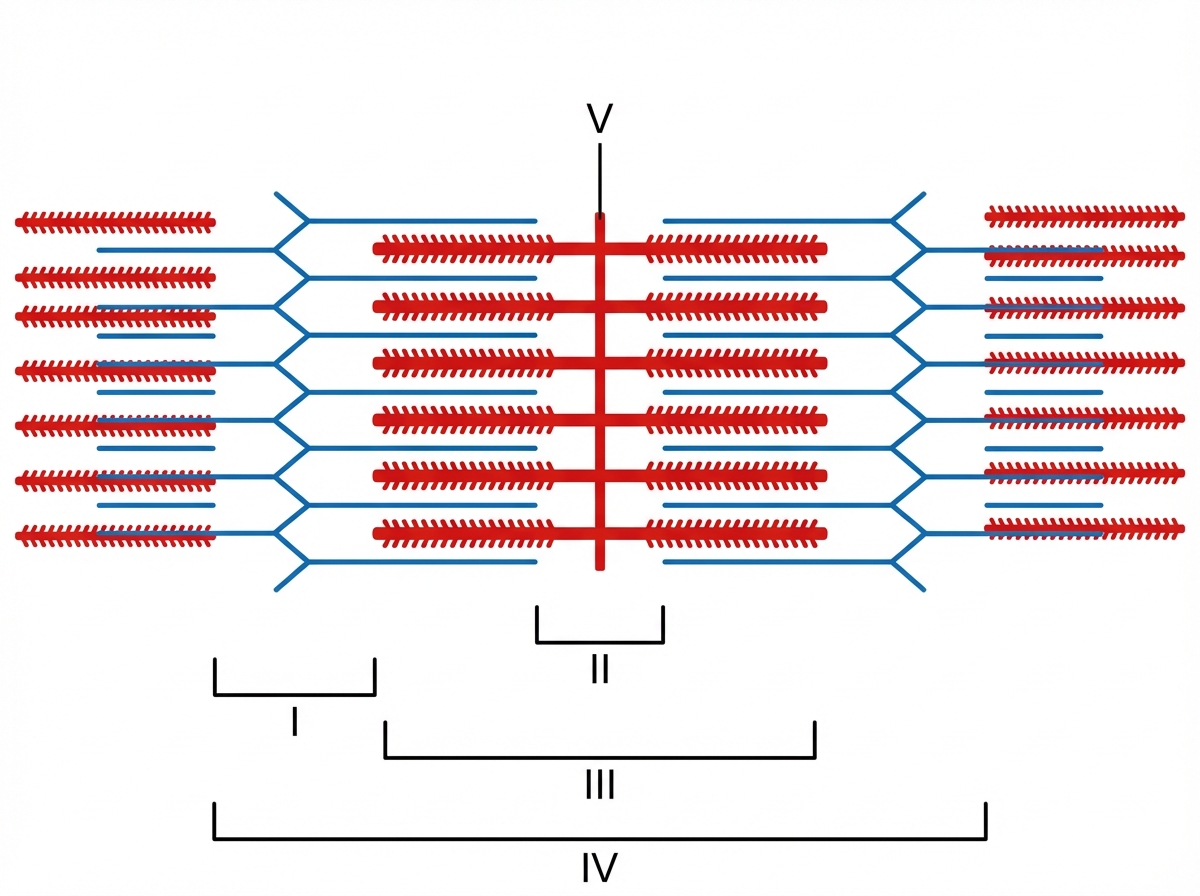
An energy drink claiming to improve athletic performance is being investigated for its mechanism of action. An active substance in the drink is thought to increase the activity of an ATPase involved in muscle contraction. Radiolabeling of the active substance reveals it binds to an allosteric site on the globular head of a myosin heavy chain dimer, with greater affinity during muscle relaxation and lesser affinity when the myosin head binds actin. During muscle relaxation, what portion of the sarcomere shown below will exhibit the greatest affinity for the substance?
Q12
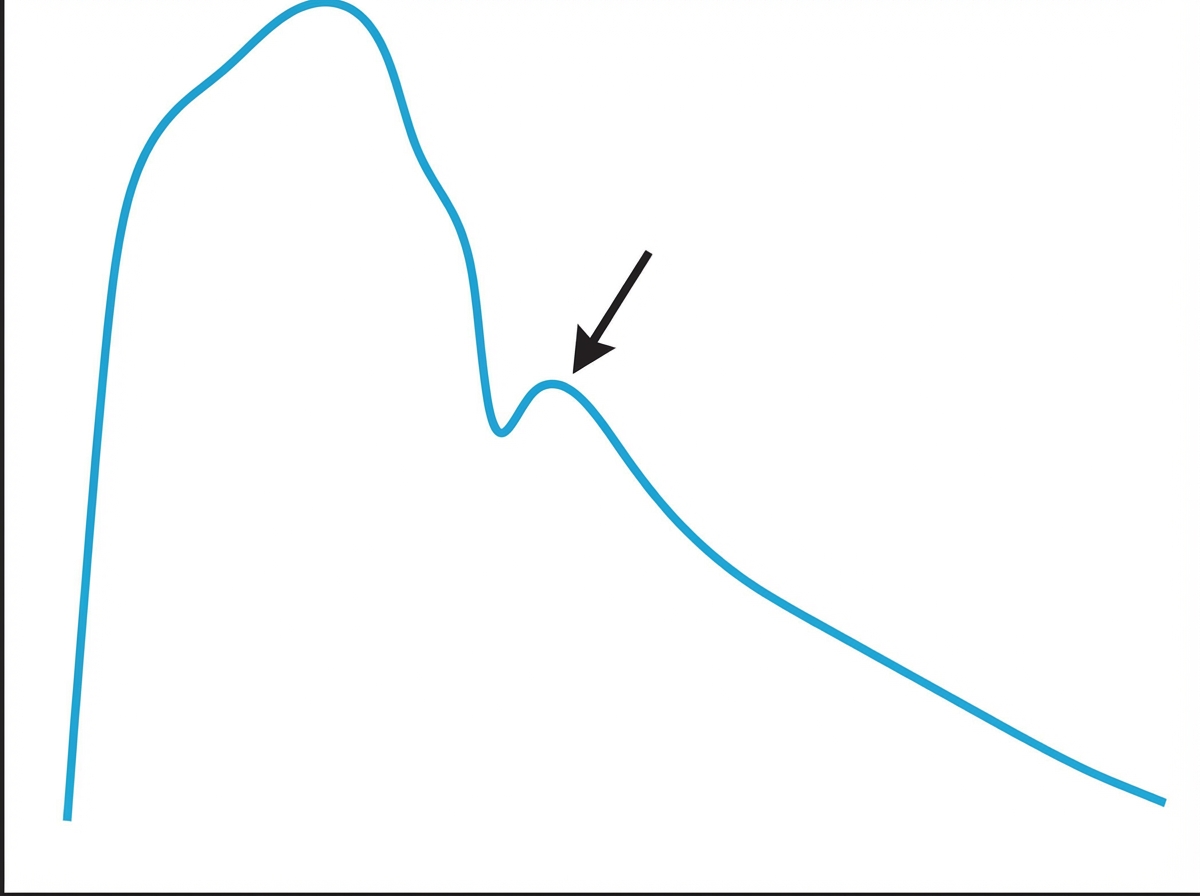
Prior to undergoing a total knee arthroplasty, a 62-year-old man with coronary artery disease undergoes diagnostic cardiac catheterization. The catheter is inserted via the femoral artery and then advanced to the ascending aorta. Pressure tracing of the catheter is shown. The peak marked by the arrow is most likely caused by which of the following?
Q13
A 21-year-old man presents to his physician for a routine checkup. His doctor asks him if he has had any particular concerns since his last visit and if he has taken any new medications. He says that he has not been ill over the past year, except for one episode of the flu. He has been training excessively for his intercollege football tournament, which is supposed to be a huge event. His blood pressure is 110/70 mm Hg, pulse is 69/min, and respirations are 17/min. He has a heart sound coinciding with the rapid filling of the ventricles and no murmurs. He does not have any other significant physical findings. Which of the following best describes the heart sound heard in this patient?
Q14
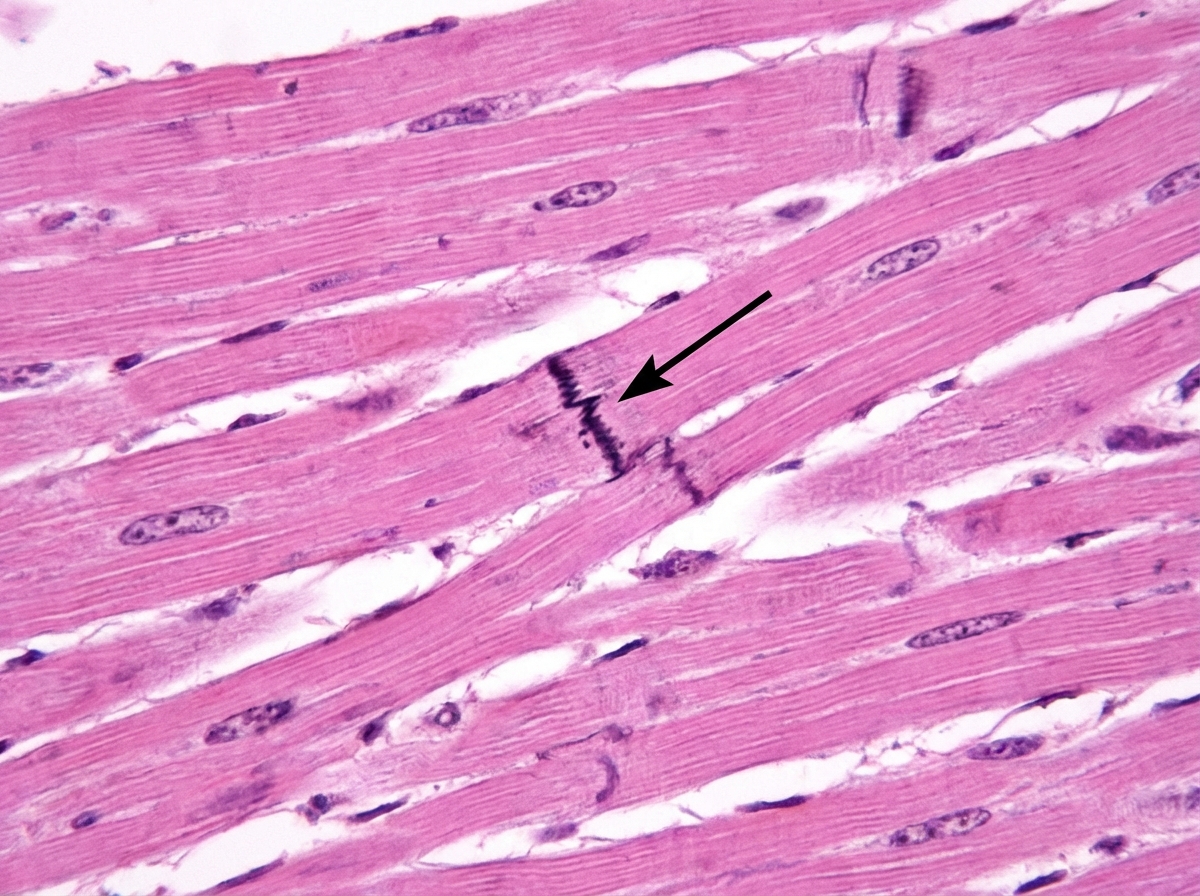
Cardiac muscle serves many necessary functions, leading to a specific structure that serves these functions. The structure highlighted is an important histology component of cardiac muscle. What would be the outcome if this structure diffusely failed to function?
Q15
A molecular biologist is studying the roles of different types of ion channels regulating cardiac excitation. He identifies a voltage-gated calcium channel in the sinoatrial node, which is also present throughout the myocardium. The channel is activated at ~ -40 mV of membrane potential, undergoes voltage-dependent inactivation, and is highly sensitive to nifedipine. Which of the following phases of the action potential in the sinoatrial node is primarily mediated by ion currents through the channel that the molecular biologist is studying?
Q16
A 21-year-old man presents to a physician with repeated episodes of syncope and dizziness over the last month. On physical examination, his pulse is 64/min while all other vital signs are normal. His 24-hour ECG monitoring suggests a diagnosis of sinus node dysfunction. His detailed genetic evaluation shows that he carries a copy of a mutated gene “X” that codes for an ion channel, which is the most important ion channel underlying the automaticity of the sinoatrial node. This is the first ion channel to be activated immediately after hyperpolarization. Which of the following ion channels does the gene “X” code for?
Q17
A 27-year-old man presents to the clinic for his annual physical examination. He was diagnosed with a rare arrhythmia a couple of years ago following an episode of dizziness. A mutation in the gene encoding for the L-type calcium channel protein was identified by genetic testing. He feels fine today. His vitals include: blood pressure 122/89 mm Hg, pulse 90/min, respiratory rate 14/min, and temperature 36.7°C (98.0°F). The cardiac examination is unremarkable. The patient has been conducting some internet research on how the heart works and specifically asks you about his own “ventricular action potential”. Which of the following would you expect to see in this patient?
Q18
While explaining the effects of hypokalemia and hyperkalemia on the cardiac rhythm, a cardiologist explains that the electrophysiology of cardiac tissue is unique. He mentions that potassium ions play an important role in the electrophysiology of the heart, and the resting membrane potential of the cardiac myocytes is close to the equilibrium potential of K+ ions. This is because of the high resting potassium conductance of the ventricular myocytes, which is regulated by specific potassium channels. These are open at rest and are closed when there is depolarization. Which of the following potassium channels is the cardiologist talking about?
Q19
A woman with coronary artery disease is starting to go for a walk. As she begins, her heart rate accelerates from a resting pulse of 60 bpm until it reaches a rate of 120 bpm, at which point she begins to feel a tightening in her chest. She stops walking to rest and the tightening resolves. This has been happening to her consistently for the last 6 months. Which of the following is a true statement?
Cardiac cycle US Medical PG Practice Questions and MCQs
Question 11: An energy drink claiming to improve athletic performance is being investigated for its mechanism of action. An active substance in the drink is thought to increase the activity of an ATPase involved in muscle contraction. Radiolabeling of the active substance reveals it binds to an allosteric site on the globular head of a myosin heavy chain dimer, with greater affinity during muscle relaxation and lesser affinity when the myosin head binds actin. During muscle relaxation, what portion of the sarcomere shown below will exhibit the greatest affinity for the substance?
A. I (represented on image as I band)
B. IV (represented on image as Sarcomere)
C. V (represented on image as M line)
D. II (represented on image as H band) (Correct Answer)
E. III (represented on image as A band)
Explanation: **II (represented on image as H band)**
* The substance binds to an **allosteric site** on the **myosin heavy chain dimer**, with greater affinity during **muscle relaxation**.
* The **H band** consists exclusively of **myosin thick filaments** and is most prominent during muscle relaxation, containing the highest concentration of potential binding sites in a relaxed state.
*I (represented on image as I band)*
* The **I band** is composed solely of **actin thin filaments** and does not contain myosin, so the substance would not bind here.
* The **Z-line** bisects the I band, serving as an anchor for thin filaments, but it also lacks myosin.
*IV (represented on image as Sarcomere)*
* The **sarcomere** is the entire contractile unit, encompassing both thick and thin filaments. While the substance binds within the sarcomere, specifying the entire unit doesn't identify the region of greatest affinity.
* The question asks for the specific portion of the sarcomere exhibiting greatest affinity, which implies a more localized region.
*V (represented on image as M line)*
* The **M line** is located in the center of the H band and serves as an anchoring point for myosin filaments.
* While it contains myosin, the M line represents only a small central portion of the H band and would not exhibit the greatest overall affinity compared to the entire H band during relaxation.
*III (represented on image as A band)*
* The **A band** represents the entire length of the **myosin thick filaments** and includes overlapping regions with actin thin filaments.
* During relaxation, the **H band**, which is part of the A band, would have the greatest concentration of unbound myosin heads, as it contains only myosin and no actin overlap.
Question 12: Prior to undergoing a total knee arthroplasty, a 62-year-old man with coronary artery disease undergoes diagnostic cardiac catheterization. The catheter is inserted via the femoral artery and then advanced to the ascending aorta. Pressure tracing of the catheter is shown. The peak marked by the arrow is most likely caused by which of the following?
A. Left atrial contraction
B. Closure of the aortic valve (Correct Answer)
C. Opening of the pulmonic valve
D. Right atrial relaxation
E. Right ventricular contraction
Explanation: ***Closure of the aortic valve***
- The arrow points to the **dicrotic notch**, which marks a transient increase in aortic pressure due to the **backflow of blood** hitting the closed aortic valve, indicating the beginning of **diastole**.
- This event signifies the end of ventricular systole and the onset of ventricular relaxation, preventing regurgitation of blood into the left ventricle.
*Left atrial contraction*
- This event, responsible for the **'a' wave** in atrial pressure tracings, would occur just before ventricular systole, contributing to ventricular filling, and would not be seen as a notch in the aortic pressure tracing.
- It's a low-pressure event in the left atrium, distinct from the high-pressure changes in the aorta.
*Opening of the pulmonic valve*
- The **pulmonic valve opens** when right ventricular pressure exceeds pulmonary artery pressure, allowing blood flow into the pulmonary circulation.
- This event is unrelated to the systemic aortic pressure tracing shown and would not cause a dicrotic notch.
*Right atrial relaxation*
- **Right atrial relaxation** contributes to the 'v' wave and then the 'y' descent in venous pressure tracings as the right ventricle fills.
- This occurs during ventricular systole and is not responsible for the dicrotic notch in the systemic arterial pressure curve.
*Right ventricular contraction*
- **Right ventricular contraction** propels blood into the pulmonary artery and is not directly reflected as a pressure peak in the ascending aorta.
- The aortic pressure tracing primarily reflects events in the left ventricle and aorta.
Question 13: A 21-year-old man presents to his physician for a routine checkup. His doctor asks him if he has had any particular concerns since his last visit and if he has taken any new medications. He says that he has not been ill over the past year, except for one episode of the flu. He has been training excessively for his intercollege football tournament, which is supposed to be a huge event. His blood pressure is 110/70 mm Hg, pulse is 69/min, and respirations are 17/min. He has a heart sound coinciding with the rapid filling of the ventricles and no murmurs. He does not have any other significant physical findings. Which of the following best describes the heart sound heard in this patient?
A. Fourth heart sound (S4)
B. Opening snap
C. Third heart sound (S3) (Correct Answer)
D. Second heart sound (S2)
E. Mid-systolic click
Explanation: ***Third heart sound (S3)***
- An **S3 heart sound** is a low-pitched sound heard during **rapid ventricular filling** in early diastole, immediately after S2.
- In young, healthy individuals, especially athletes, an S3 can be a normal physiological finding, representing rapid filling of a **compliant ventricle**.
*Fourth heart sound (S4)*
- An **S4 heart sound** occurs during **atrial contraction** against a stiff or non-compliant ventricle, just before S1.
- It is typically associated with conditions like **ventricular hypertrophy** or **ischemia** and is less likely to be a normal finding in a young, healthy individual.
*Opening snap*
- An **opening snap** is a high-pitched, crisp sound heard after S2, caused by the sudden opening of a **stenotic mitral** or **tricuspid valve**.
- It indicates valvular pathology, specifically **mitral stenosis**, and is not related to ventricular filling in a healthy heart.
*Second heart sound (S2)*
- The **S2 heart sound** represents the **closure of the aortic and pulmonary valves** at the end of ventricular systole.
- While it marks the beginning of diastole, it does not coincide with the rapid filling of the ventricles itself.
*Mid-systolic click*
- A **mid-systolic click** is typically associated with **mitral valve prolapse**, caused by the sudden tensing of the chordae tendineae or valve leaflets.
- It occurs during systole, not diastole, and is not related to ventricular filling.
Question 14: Cardiac muscle serves many necessary functions, leading to a specific structure that serves these functions. The structure highlighted is an important histology component of cardiac muscle. What would be the outcome if this structure diffusely failed to function?
A. Failure of potassium channels to appropriately open to repolarize the cell
B. Failure of propagation of the action potential from the conduction system (Correct Answer)
C. Ineffective excitation-contraction coupling due to insufficient calcium ions
D. Inappropriate formation of cardiac valve leaflets
E. Outflow tract obstruction
Explanation: ***Failure of propagation of the action potential from the conduction system***
- The highlighted structure, the **intercalated disc**, contains **gap junctions** which are crucial for the rapid, synchronized spread of **action potentials** between cardiac muscle cells.
- A diffuse failure of these structures would prevent the coordinated electrical activation of the myocardium, leading to a failure of impulse propagation and **compromised cardiac contraction**.
*Failure of potassium channels to appropriately open to repolarize the cell*
- This scenario describes a problem with **ion channel function** within individual cardiomyocytes, affecting their repolarization phase.
- While critical for a single cell's electrical activity, it does not directly relate to the primary function of **intercalated discs** in *propagating* action potentials across multiple cells.
*Ineffective excitation-contraction coupling due to insufficient calcium ions*
- This outcome would result from issues with **calcium handling** mechanisms, such as problems with the **sarcoplasmic reticulum** or **calcium channels**, which are internal to the cardiomyocyte.
- It is distinct from the role of **intercalated discs** in facilitating intercellular communication and electrical spread.
*Inappropriate formation of cardiac valve leaflets*
- The formation of cardiac valve leaflets is an intricate process during **embryological development** involving specific signaling pathways and cell migration.
- This structural defect is not directly related to the function of **intercalated discs** in mature cardiac muscle, which are involved in electrical and mechanical coupling.
*Outflow tract obstruction*
- **Outflow tract obstruction** is a congenital or acquired structural defect affecting the major arteries leaving the heart (e.g., aortic or pulmonary stenosis).
- This is a macroscopic structural anomaly that is not caused by a primary failure of **intercalated disc** function.
Question 15: A molecular biologist is studying the roles of different types of ion channels regulating cardiac excitation. He identifies a voltage-gated calcium channel in the sinoatrial node, which is also present throughout the myocardium. The channel is activated at ~ -40 mV of membrane potential, undergoes voltage-dependent inactivation, and is highly sensitive to nifedipine. Which of the following phases of the action potential in the sinoatrial node is primarily mediated by ion currents through the channel that the molecular biologist is studying?
A. Phase 2
B. Phase 3
C. Phase 1
D. Phase 4
E. Phase 0 (Correct Answer)
Explanation: ***Phase 0***
- The description of the channel (**activated at -40 mV**, **voltage-dependent inactivation**, sensitive to **nifedipine**) points to an **L-type calcium channel**.
- In the **sinoatrial node**, **L-type calcium channels** are primarily responsible for the **Phase 0 depolarization** (upstroke) of the action potential.
*Phase 2*
- In **myocardial cells**, **Phase 2** (plateau phase) is primarily mediated by **L-type calcium channels**, but the question refers to the **sinoatrial node action potential**.
- **Sinoatrial node cells** typically lack a distinct **Phase 2** plateau, distinguishing them from ventricular myocytes.
*Phase 3*
- **Phase 3** (repolarization) in the **sinoatrial node** is primarily mediated by the **efflux of potassium ions** through various **potassium channels**.
- The described channel, being a **calcium channel**, would contribute to depolarization rather than repolarization.
*Phase 1*
- **Phase 1** (initial repolarization) is characteristic of **ventricular myocytes** and is mediated by a transient outward **potassium current (Ito)**.
- The **sinoatrial node** action potential typically lacks a distinct **Phase 1**, as it does not have this rapid initial repolarization.
*Phase 4*
- **Phase 4** (spontaneous depolarization) in the **sinoatrial node** is primarily driven by the "funny" current (**If**, carried by **HCN channels**) and a gradually increasing **calcium current** (mainly through **T-type calcium channels**), leading to the threshold for **Phase 0**.
- While L-type channels contribute to reaching the threshold, their primary role is the rapid depolarization of **Phase 0**.
Question 16: A 21-year-old man presents to a physician with repeated episodes of syncope and dizziness over the last month. On physical examination, his pulse is 64/min while all other vital signs are normal. His 24-hour ECG monitoring suggests a diagnosis of sinus node dysfunction. His detailed genetic evaluation shows that he carries a copy of a mutated gene “X” that codes for an ion channel, which is the most important ion channel underlying the automaticity of the sinoatrial node. This is the first ion channel to be activated immediately after hyperpolarization. Which of the following ion channels does the gene “X” code for?
A. Fast delayed rectifier (IKr) voltage-dependent K+ channels
B. Stretch-activated cationic channels
C. L-type voltage-dependent calcium channels
D. T-type voltage-dependent calcium channels
E. HCN-channels (Correct Answer)
Explanation: ***HCN-channels***
- **HCN-channels (hyperpolarization-activated cyclic nucleotide-gated channels)** are responsible for the **funny current (If)**, which is the initial inward current that depolarizes the sinoatrial node after hyperpolarization.
- This current is crucial for **pacemaker activity** and the automaticity of the heart, aligning with the description of the gene and associated sinus node dysfunction.
*Fast delayed rectifier (IKr) voltage-dependent K+ channels*
- These channels are primarily involved in the **repolarization phase** of the cardiac action potential, particularly in the ventricles and atria, by carrying an outward potassium current.
- While important for heart rhythm, they are not the primary channels responsible for the **initial diastolic depolarization** in the sinoatrial node.
*Stretch-activated cationic channels*
- These channels respond to **mechanical stretch** and play a role in mechanosensation and mechanotransduction in various tissues, including the heart.
- They are not directly responsible for the intrinsic **automaticity** of the sinoatrial node immediately after hyperpolarization.
*L-type voltage-dependent calcium channels*
- These channels are activated at more positive potentials during the action potential and are responsible for the **upstroke and plateau phases** of the sinoatrial node action potential.
- They are crucial for transmitting the action potential but are not the **first ion channel** to be activated immediately after hyperpolarization.
*T-type voltage-dependent calcium channels*
- **T-type calcium channels** contribute to the late phase of diastolic depolarization but are activated at less negative potentials compared to HCN channels.
- They are involved in the **initial rapid depolarization**, but the funny current (HCN channels) is generally considered the *first* to be activated after hyperpolarization, especially at the most negative membrane potentials.
Question 17: A 27-year-old man presents to the clinic for his annual physical examination. He was diagnosed with a rare arrhythmia a couple of years ago following an episode of dizziness. A mutation in the gene encoding for the L-type calcium channel protein was identified by genetic testing. He feels fine today. His vitals include: blood pressure 122/89 mm Hg, pulse 90/min, respiratory rate 14/min, and temperature 36.7°C (98.0°F). The cardiac examination is unremarkable. The patient has been conducting some internet research on how the heart works and specifically asks you about his own “ventricular action potential”. Which of the following would you expect to see in this patient?
A. Abnormal phase 2 (Correct Answer)
B. Abnormal phase 4
C. Abnormal phase 0
D. Abnormal phase 3
E. Abnormal phase 1
Explanation: ***Abnormal phase 2***
- Phase 2 of the ventricular action potential, also known as the **plateau phase**, is primarily maintained by the influx of **L-type calcium channels** and the efflux of potassium.
- A mutation in the gene encoding for the L-type calcium channel protein would directly affect phase 2 and likely **result in an abnormal plateau phase** of the action potential.
*Abnormal phase 4*
- Phase 4 represents the **resting membrane potential** in ventricular myocytes and is maintained by **inward-rectifier potassium channels**.
- Mutations affecting L-type calcium channels would not directly or primarily cause an abnormality in the resting potential.
*Abnormal phase 0*
- Phase 0, the **depolarization phase**, is driven by the rapid influx of **sodium ions** through fast voltage-gated sodium channels.
- While calcium channels play a minor role, their primary impact is not on the initial rapid upstroke of phase 0.
*Abnormal phase 3*
- Phase 3, the **repolarization phase**, is primarily mediated by the **efflux of potassium ions** through various potassium channels (e.g., delayed rectifier potassium channels).
- Although calcium channel inactivation contributes to the end of the plateau, the **dominant ion flux** determining phase 3 is potassium efflux.
*Abnormal phase 1*
- Phase 1, the **initial repolarization phase**, is characterized by the **inactivation of sodium channels** and a brief efflux of potassium ions through transient outward potassium channels.
- L-type calcium channel activity is just beginning during this phase and is not the primary determinant of its shape.
Question 18: While explaining the effects of hypokalemia and hyperkalemia on the cardiac rhythm, a cardiologist explains that the electrophysiology of cardiac tissue is unique. He mentions that potassium ions play an important role in the electrophysiology of the heart, and the resting membrane potential of the cardiac myocytes is close to the equilibrium potential of K+ ions. This is because of the high resting potassium conductance of the ventricular myocytes, which is regulated by specific potassium channels. These are open at rest and are closed when there is depolarization. Which of the following potassium channels is the cardiologist talking about?
A. Inward rectifier IKACh potassium channels
B. Fast delayed rectifier IKr potassium channels
C. Slow delayed rectifier IKs potassium channels
D. Inward rectifier IK1 potassium channels (Correct Answer)
E. Transient outward current Ito potassium channels
Explanation: ***Inward rectifier IK1 potassium channels***
- These channels are primarily responsible for maintaining the **resting membrane potential** of ventricular myocytes close to the **equilibrium potential of potassium (EK)**.
- They exhibit **inward rectification**, meaning they conduct potassium current more readily in the inward direction (at negative potentials) than outward. They are open at negative resting potentials and **close upon depolarization due to blockage by intracellular magnesium and polyamines**.
- They contribute to phase 4 of the action potential and prevent early repolarization during the plateau phase.
*Inward rectifier IKACh potassium channels*
- These channels are activated by **acetylcholine** via muscarinic receptors (M2), leading to hyperpolarization and reduced heart rate.
- They are primarily found in the **sinoatrial (SA) node and atrioventricular (AV) node**, not the main determinants of ventricular myocyte resting potential.
*Fast delayed rectifier IKr potassium channels*
- These channels contribute to the **repolarization phase (phase 3)** of the cardiac action potential, along with IKs.
- Their primary role is in **potassium efflux during repolarization**, not in establishing the resting membrane potential.
*Slow delayed rectifier IKs potassium channels*
- These channels also contribute to the **repolarization phase (phase 3)** of the cardiac action potential, acting more slowly than IKr.
- Their main function is to **terminate the action potential**, not to set the resting membrane potential.
*Transient outward current Ito potassium channels*
- These channels contribute to **early repolarization (phase 1)** in ventricular and atrial myocytes, and some Purkinje fibers.
- They cause a **brief outward potassium current** after the upstroke of the action potential, but do not maintain the resting membrane potential.
Question 19: A woman with coronary artery disease is starting to go for a walk. As she begins, her heart rate accelerates from a resting pulse of 60 bpm until it reaches a rate of 120 bpm, at which point she begins to feel a tightening in her chest. She stops walking to rest and the tightening resolves. This has been happening to her consistently for the last 6 months. Which of the following is a true statement?
A. This patient's chest pain is indicative of transmural ischemia
B. Perfusion of the myocardium takes place equally throughout the cardiac cycle
C. Increasing the heart rate increases the amount of time spent during each cardiac cycle
D. Increasing the heart rate decreases the relative amount of time spent during diastole (Correct Answer)
E. Perfusion of the myocardium takes place primarily during systole
Explanation: ***Increasing the heart rate decreases the relative amount of time spent during diastole***
- With increasing heart rate, the **duration of the cardiac cycle decreases**, but this reduction is disproportionately greater in **diastole (filling phase)** compared to systole (ejection phase), which becomes critical in patients with coronary artery disease as myocardial perfusion occurs during diastole.
- Reduced diastolic time means less time for **coronary artery filling** and **myocardial perfusion**, exacerbating ischemia in the presence of fixed coronary stenosis.
*This patient's chest pain is indicative of transmural ischemia*
- The patient's symptoms are consistent with **stable angina**, characterized by chest pain with exertion that resolves with rest, suggesting **subendocardial ischemia** rather than transmural.
- **Transmural ischemia** typically indicates a more severe, often prolonged, and extensive reduction in blood flow, such as in a **ST-elevation myocardial infarction (STEMI)**.
*Perfusion of the myocardium takes place equally throughout the cardiac cycle*
- Myocardial perfusion is **not equal throughout the cardiac cycle**; it primarily occurs during **diastole** when the heart muscle is relaxed and coronary arteries are less compressed.
- During **systole**, the contracting myocardium compresses the coronary arteries, restricting blood flow, especially to the **subendocardial layers**.
*Increasing the heart rate increases the amount of time spent during each cardiac cycle*
- **Increasing heart rate** by definition **decreases the total duration of each cardiac cycle** (e.g., if heart rate is 60 bpm, cycle duration is 1 second; if 120 bpm, cycle duration is 0.5 seconds).
- While both systole and diastole shorten, the **diastolic phase shortens more significantly**, which is problematic for myocardial perfusion.
*Perfusion of the myocardium takes place primarily during systole*
- **Myocardial perfusion primarily occurs during diastole**, not systole, because the **intramyocardial pressure is lower** and the coronary arteries are less compressed, allowing for better blood flow.
- During **systole**, the high intramyocardial pressure, especially in the left ventricular wall, compresses the coronary vessels, significantly reducing blood flow to the myocardium.