
Effects of heart rate on cardiac cycle — MCQs

A woman with coronary artery disease is starting to go for a walk. As she begins, her heart rate accelerates from a resting pulse of 60 bpm until it reaches a rate of 120 bpm, at which point she begins to feel a tightening in her chest. She stops walking to rest and the tightening resolves. This has been happening to her consistently for the last 6 months. Which of the following is a true statement?
A 37-year-old man is brought to the emergency department by ambulance after a motor vehicle accident. He suffered multiple deep lacerations and experienced significant blood loss during transport. In the emergency department, his temperature is 98.6°F (37°C), blood pressure is 102/68 mmHg, pulse is 112/min, and respirations are 22/min. His lacerations are sutured and he is given 2 liters of saline by large bore intravenous lines. Which of the following changes will occur in this patient's cardiac physiology due to this intervention?
Which factor most strongly influences coronary blood flow during exercise?
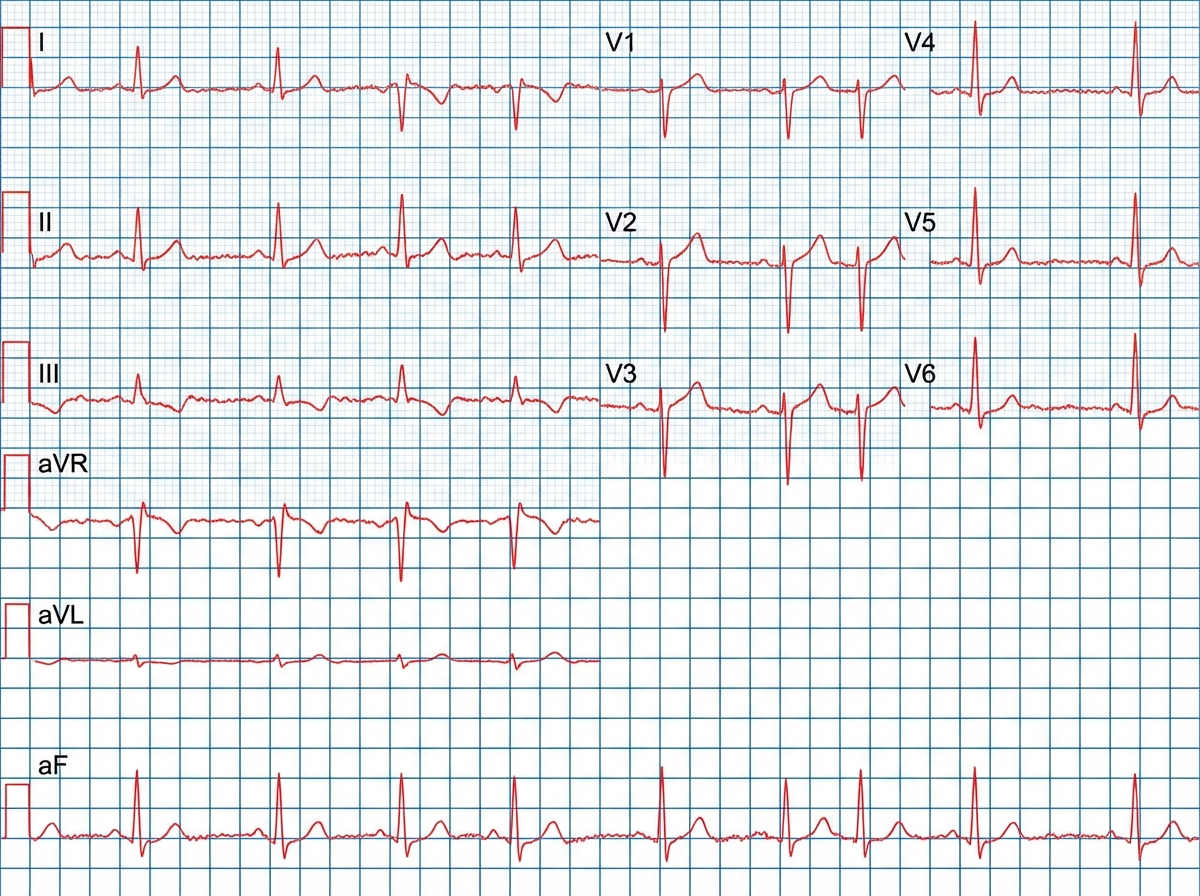
A 67-year-old woman comes to the physician because of intermittent chest pain and dizziness on exertion for 6 months. Her pulse is 76/min and blood pressure is 125/82 mm Hg. Cardiac examination shows a grade 3/6, late-peaking, crescendo-decrescendo murmur heard best at the right upper sternal border. An echocardiogram confirms the diagnosis. Three months later, the patient returns to the physician with worsening shortness of breath for 2 weeks. An ECG is shown. Which of the following changes is most likely responsible for this patient's acute exacerbation of symptoms?
A 27-year-old man is running on the treadmill at his gym. His blood pressure prior to beginning his workout was 110/72. Which of the following changes in his cardiovascular system may be seen in this man now that he is exercising?
A 73-year-old woman presents to clinic with a week of fatigue, headache, and swelling of her ankles bilaterally. She reports that she can no longer go on her daily walk around her neighborhood without stopping frequently to catch her breath. At night she gets short of breath and has found that she can only sleep well in her recliner. Her past medical history is significant for hypertension and a myocardial infarction three years ago for which she had a stent placed. She is currently on hydrochlorothiazide, aspirin, and clopidogrel. She smoked 1 pack per day for 30 years before quitting 10 years ago and socially drinks around 1 drink per month. She denies any illicit drug use. Her temperature is 99.0°F (37.2°C), pulse is 115/min, respirations are 18/min, and blood pressure is 108/78 mmHg. On physical exam there is marked elevations of her neck veins, bilateral pitting edema in the lower extremities, and a 3/6 holosystolic ejection murmur over the right sternal border. Echocardiography shows the following findings: End systolic volume (ESV): 100 mL End diastolic volume (EDV): 160 mL How would cardiac output be determined in this patient?
A 35-year-old man presents to the physician’s clinic due to episodic chest pain over the last couple of months. He is currently pain-free. His chest pain occurs soon after he starts to exercise, and it is rapidly relieved by rest. He recently started training for a marathon after a decade of a fairly sedentary lifestyle. He was a competitive runner during his college years, but he has only had occasional exercise since then. He is concerned that he might be developing some heart disease. He has no prior medical issues and takes no medications. The family history is significant for hypertension and myocardial infarction in his father. His vital signs include: pulse 74/min, respirations 10/min, and blood pressure 120/74 mm Hg. The ECG test is normal. The physician orders an exercise tolerance test that has to be stopped after 5 minutes due to the onset of chest pain. Which of the following contributes most to the decreasing cardiac perfusion in this patient's heart?
A 77-year-old woman with congestive heart failure is admitted to the hospital for evaluation prior to cardiac transplantation. During her stay at the hospital, the physician prescribes a drug to improve cardiac contractility. The drug works by selectively inhibiting an isoenzyme that is responsible for the degradation of cyclic adenosine monophosphate. Which of the following is the most likely adverse effect of this drug?
A 28-year-old research assistant is brought to the emergency department for severe chemical burns 30 minutes after accidentally spilling hydrochloric acid on himself. The burns cover both hands and forearms. His temperature is 37°C (98.6°F), pulse is 112/min, respirations are 20/min, and blood pressure is 108/82 mm Hg. Initial stabilization and resuscitation is begun, including respiratory support, fluid resuscitation, and cardiovascular stabilization. The burned skin is irrigated with saline water to remove the chemical agent. Which of the following is the most appropriate method to verify adequate fluid infusion in this patient?
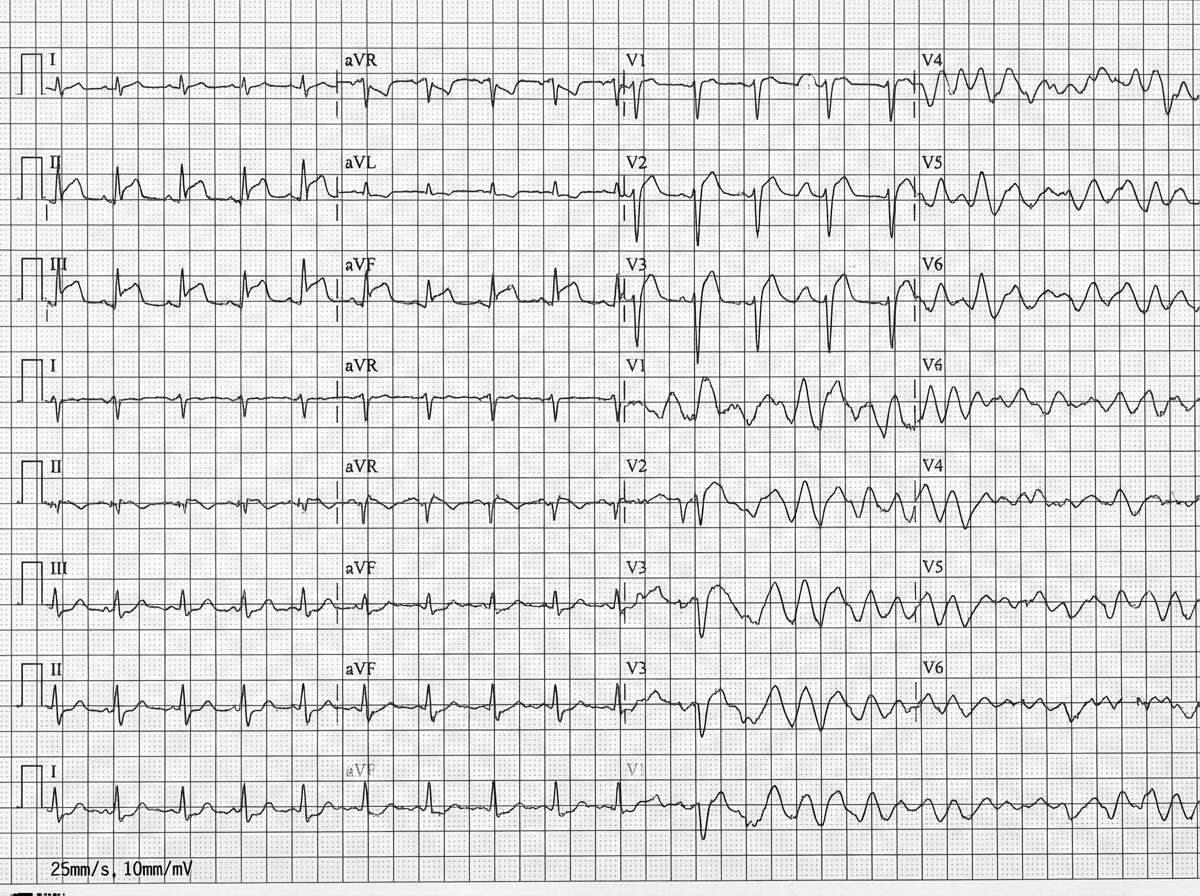
A 42-year-old man is brought to the emergency department 20 minutes after the sudden onset of severe chest pain, diaphoresis, shortness of breath, and palpitations. His symptoms occurred while he was at a party with friends. He has smoked one pack of cigarettes daily for 24 years. He uses cocaine occasionally. The last use was three hours ago. He appears pale. His pulse is 110/min, blood pressure is 178/106 mm Hg, and respirations are 24/min. His pupils are dilated and react sluggishly to light. The lungs are clear to auscultation. An ECG shows tachycardia and ST segment elevation in leads II, III, and aVF. While recording the ECG, the patient loses consciousness. A photo of the ECG at that point is shown. Which of the following is the most appropriate next step in management?
Want unlimited practice?
Get full access to all questions, explanations, and performance tracking.
Scan to download app