
Biliary excretion — MCQs

A 72-year-old man presents to the emergency department with a 1 hour history of bruising and bleeding. He says that he fell and scraped his knee on the ground. Since then, he has been unable to stop the bleeding and has developed extensive bruising around the area. He has a history of gastroesophageal reflux disease, hypertension, and atrial fibrillation for which he is taking an oral medication. He says that he recently started taking omeprazole for reflux. Which of the following processes is most likely inhibited in this patient?
What is the primary mechanism for iron absorption in the duodenum?
A 42-year-old woman is brought to the emergency department because of intermittent sharp right upper quadrant abdominal pain and nausea for the past 10 hours. She has vomited 3 times. There is no associated fever, chills, diarrhea, or urinary symptoms. She has 2 children who both attend high school. She appears uncomfortable. She is 165 cm (5 ft 5 in) tall and weighs 86 kg (190 lb). Her BMI is 32 kg/m2. Her temperature is 37.0°C (98.6°F), pulse is 100/min, and blood pressure is 140/90 mm Hg. She has mild scleral icterus. On physical examination, her abdomen is soft and nondistended, with tenderness to palpation of the right upper quadrant without guarding or rebound. Bowel sounds are normal. Laboratory studies show the following: Blood Hemoglobin count 14 g/dL Leukocyte count 9,000 mm3 Platelet count 160,000 mm3 Serum Alkaline phosphatase 238 U/L Aspartate aminotransferase 60 U/L Bilirubin Total 2.8 mg/dL Direct 2.1 mg/dL Which of the following is the most appropriate next step in diagnosis?
A patient is receiving daily administrations of Compound X. Compound X is freely filtered in the glomeruli and undergoes net secretion in the renal tubules. The majority of this tubular secretion occurs in the proximal tubule. Additional information regarding this patient's renal function and the renal processing of Compound X is included below: Inulin clearance: 120 mL/min Plasma concentration of Inulin: 1 mg/mL PAH clearance: 600 mL/min Plasma concentration of PAH: 0.2 mg/mL Total Tubular Secretion of Compound X: 60 mg/min Net Renal Excretion of Compound X: 300 mg/min Which of the following is the best estimate of the plasma concentration of Compound X in this patient?
A 46-year-old man comes to the physician for a follow-up examination. Two weeks ago, he underwent laparoscopic herniorrhaphy for an indirect inguinal hernia. During the procedure, a black liver was noted. He has a history of intermittent scleral icterus that resolved without treatment. Serum studies show: Aspartate aminotransferase 30 IU/L Alanine aminotransferase 35 IU/L Alkaline phosphatase 47 mg/dL Total bilirubin 1.7 mg/dL Direct bilirubin 1.1 mg/dL Which of the following is the most likely diagnosis?
A 20-year-old girl presents to a physician following unprotected coitus with her boyfriend about 10 hours ago. She tells the doctor that although they usually use a barrier method of contraception, this time they forgot. She does not want to become pregnant. She also mentions that she has major depression and does not want to take an estrogen-containing pill. After necessary counseling, the physician prescribes an enteric-coated pill containing 1.5 mg of levonorgestrel. Which of the following is the primary mechanism of action of this drug?
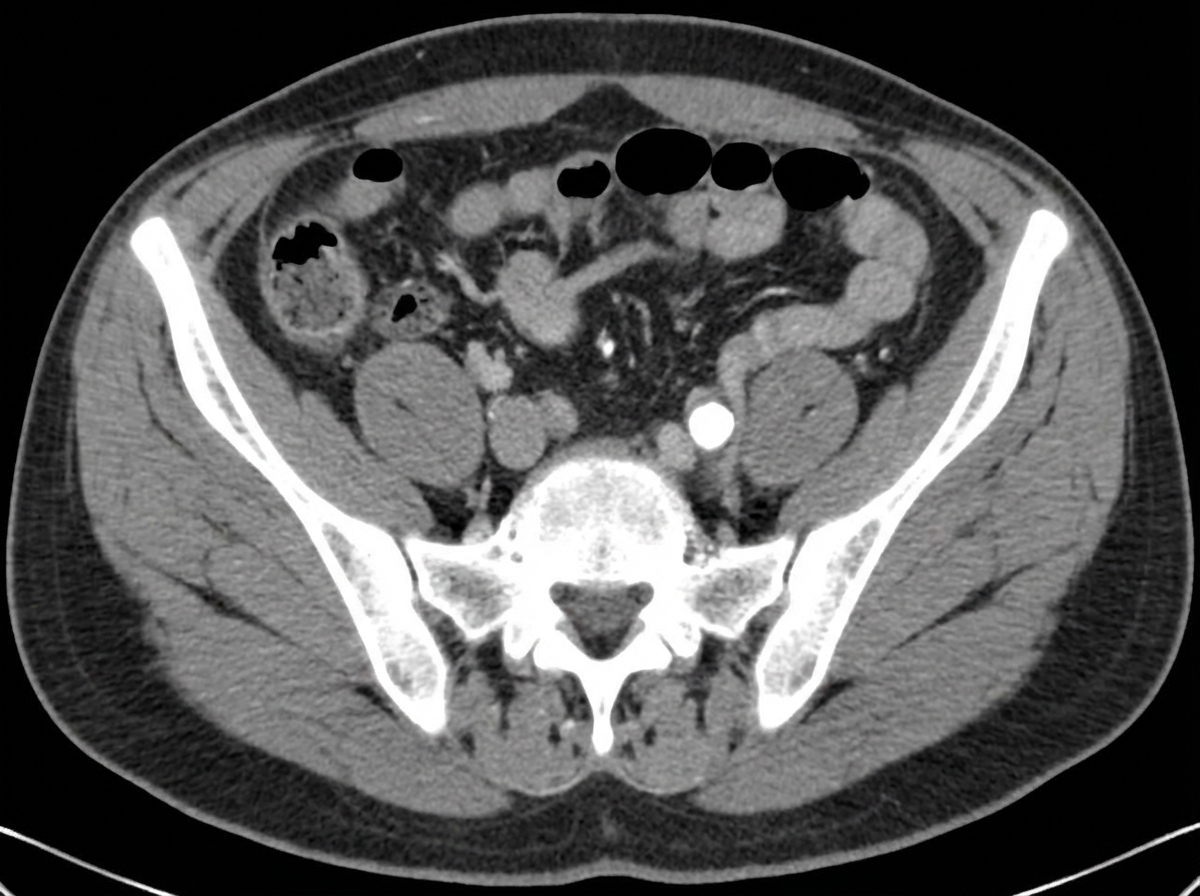
A 55-year-old woman presents to the emergency room with severe abdominal pain for the past 24 hours. She has also noticed blood in her urine. She does not have any significant past medical history. Family history is significant for her mother having cholecystitis status post cholecystectomy at age 45. Her vital signs include: temperature 36.8°C (98.2°F), pulse 103/min, respiratory rate 15/min, blood pressure 105/85 mm Hg. Physical examination is significant for a woman continuously moving on the exam table in an attempt to get comfortable. Laboratory findings are significant for the following: Serum electrolytes Na 138 mEq/L N: 135–145 mEq/L K 4.0 mEq/L N: 3.5–5.0 mEq/L Cl 102 mEq/L N: 98–108 mEq/L CO2 27 mEq/L N: 22–32 mEq/L Ca 9.2 mEq/dL N: 8.4–10.2 mEq/dL PO4 3.5 mg/dL N: 3.0–4.5 mg/dL A 24-hour urine collection is performed and reveals a urinary calcium of 345 mg/day (ref: < 300 mg/day in men; < 250 mg/day in women). A non-contrast CT of the abdomen is performed and is shown in the exhibit. The patient’s symptoms pass within the next 12 hours with hydration and acetaminophen for pain management. She is prescribed a medication to prevent subsequent episodes. At which of the following parts of the nephron does this medication most likely work?
A 53-year-old woman presents to her primary care doctor due to discolored, itchy skin, joint pain, and a feeling of abdominal fullness for the past week. Her medical history includes anxiety and depression. She also experiences occasional headaches and dizziness. Of note, the patient recently returned from an expedition to Alaska, where she and her group ate polar bear liver. Physical examination shows dry skin with evidence of excoriation and mild hepatosplenomegaly. Lab investigations reveal an alkaline phosphatase level of 35 U/L and total bilirubin of 0.4 mg/dL. Which of the following tests is most likely to uncover the etiology of her condition?
A 55-year-old woman presents to the physician because of a fever 4 days after discharge from the hospital following induction chemotherapy for acute myeloid leukemia (AML). She has no other complaints and feels well otherwise. Other than the recent diagnosis of AML, she has no history of a serious illness. The temperature is 38.8°C (101.8°F), the blood pressure is 110/65 mm Hg, the pulse is 82/min, and the respirations are 14/min. Examination of the catheter site, skin, head and neck, heart, lungs, abdomen, and perirectal area shows no abnormalities. The results of the laboratory studies show: Hemoglobin 9 g/dL Leukocyte count 800/mm3 Percent segmented neutrophils 40% Platelet count 85,000/mm3 Which of the following is the most appropriate pharmacotherapy at this time?
Five days after being admitted to the hospital for a scald wound, a 2-year-old boy is found to have a temperature of 40.2°C (104.4°F). He does not have difficulty breathing, cough, or painful urination. He initially presented one hour after spilling a pot of boiling water on his torso while his mother was cooking dinner. He was admitted for fluid resuscitation, nutritional support, pain management, and wound care, and he was progressing well until today. He has no other medical conditions. Other than analgesia during this hospital stay, he does not take any medications. He appears uncomfortable but not in acute distress. His pulse is 150/min, respirations are 41/min, and blood pressure is 90/50 mm Hg. Pulse oximetry on room air shows an oxygen saturation of 99%. Examination shows uneven, asymmetrical scalding covering his anterior torso in arrow-like patterns with surrounding erythema and purulent discharge. The remainder of the examination shows no abnormalities. His hemoglobin is 13.4 g/dL, platelet count is 200,000/mm3, and leukocyte count is 13,900/mm3. Which of the following is the most appropriate initial pharmacological treatment for this patient?
Want unlimited practice?
Get full access to all questions, explanations, and performance tracking.
Scan to download app