
Thyroid hormone replacements — MCQs

A 39-year-old female presents to the clinic with the complaints of dry skin for a few months. She adds that she also has constipation for which she started eating vegetables and fruits but with no improvement. She lives with her husband and children who often complain when she turns the air conditioning to high as she cannot tolerate low temperatures. She has gained 5 kgs (11.2 lb) since her last visit 2 months back although her diet has not changed much. Her past medical history is relevant for cardiac arrhythmias and diabetes. She is on several medications currently. Her temperature is 98.6° F (37° C), respirations are 15/min, pulse is 57/min and blood pressure is 132/98 mm Hg. A physical examination is within normal limits. Thyroid function test results are given below: Serum TSH: 13.0 μU/mL Thyroxine (T4): 3.0 μg/dL Triiodothyronine (T3): 100 ng/dL Which of the following medications is most likely to be responsible for her symptoms?
An investigator is studying a drug that acts on the thyroid hormone pathway. Levels of serum free T3 and T4 in healthy participants are measured before and after administration of the drug. After administration, there is a decrease in the average serum free T3 level, while the average serum free T4 level is increased compared to initial serum studies. Inhibition of which of the following is the most likely mechanism of action of this drug?
A previously healthy 25-year-old woman comes to the physician because of a 1-month history of palpitations that occur on minimal exertion and sometimes at rest. She has no chest discomfort or shortness of breath. She feels nervous and irritable most of the time and attributes these feelings to her boyfriend leaving her 2 months ago. Since then she has started exercising more frequently and taking an herbal weight-loss pill, since which she has lost 6.8 kg (15 lb) of weight. She finds it hard to fall asleep and awakens 1 hour before the alarm goes off each morning. She has been drinking 2 to 3 cups of coffee daily for the past 7 years and has smoked one pack of cigarettes daily for the past 3 years. Her temperature is 37.4°C (99.4°F), pulse is 110/min, respirations are 18/min, and blood pressure is 150/70 mm Hg. Examination shows moist palms. Neurologic examination shows a fine resting tremor of the hands. Deep tendon reflexes are 3+ with a shortened relaxation phase. Which of the following is the most likely cause of this patient's symptoms?
A 50-year-old woman comes to the physician because of palpitations and irritability. Over the past 4 months, she has had several episodes of heart racing and skipping beats that lasted between 30 seconds and several hours. She has also been arguing with her husband more, often about the temperature being too warm. The patient has also lost 8.8-kg (19.4-lb) over the past 4 months, despite being less strict with her diet. She has mild asthma treated with inhaled bronchodilators. Her pulse is 102/min and blood pressure is 148/98 mm Hg. On physical examination, the skin is warm and moist. A mass is palpated in the anterior neck area. On laboratory studies, thyroid stimulating hormone is undetectable and there are antibodies against the thyrotropin-receptor. Thyroid scintigraphy shows diffusely increased iodine uptake. Two weeks later, a single oral dose of radioactive iodine is administered. This patient will most likely require which of the following in the long-term?
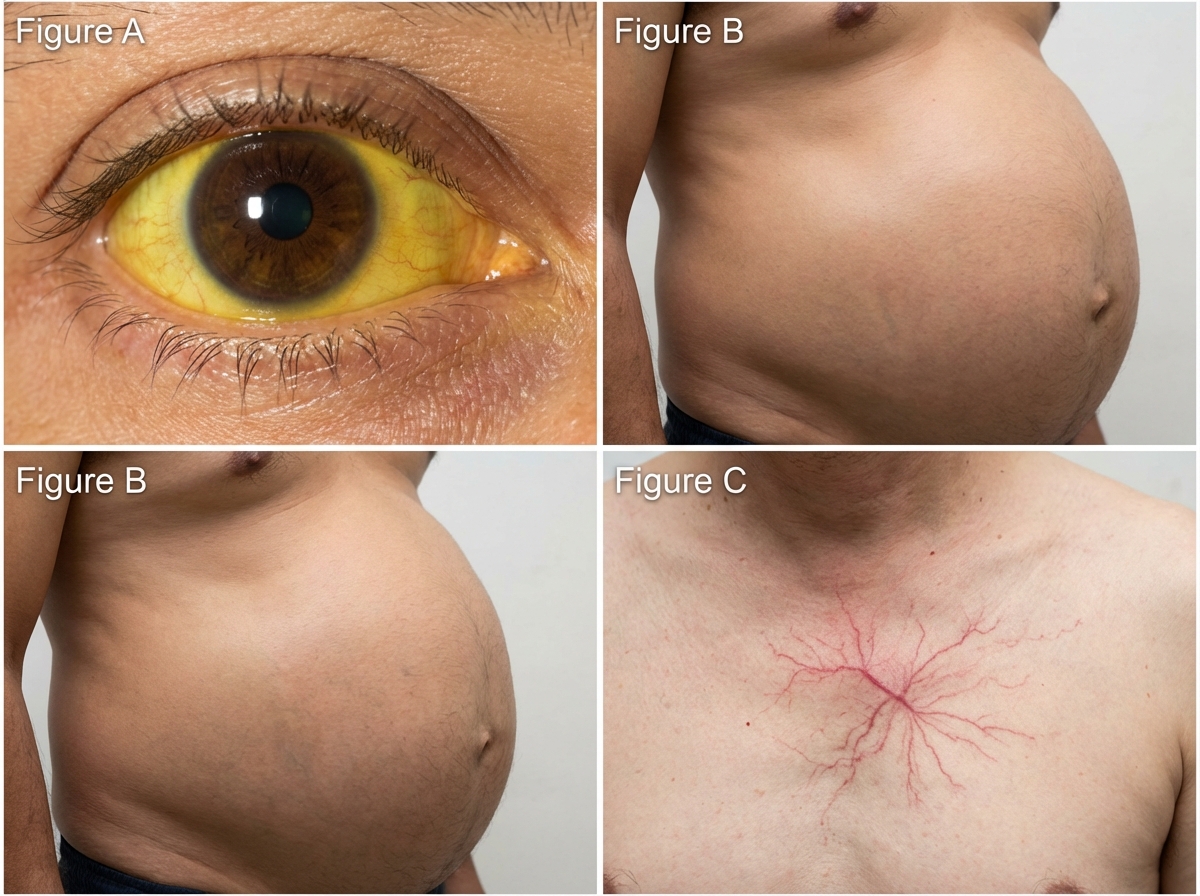
A 64-year-old man who has not seen a physician in over 20 years presents to your office complaining of recently worsening fatigue and weakness, a decreased appetite, distended abdomen, and easy bruising. His family history is notable for a mother with Hashimoto's thyroiditis, a sister with lupus and a brother with type II diabetes. On further questioning, the patient discloses a history of prior alcoholism as well as intravenous drug use, though he currently only smokes a pack per day of cigarettes. On physical exam, you note the following findings (see Figures A-C) as well as several ecchymoses and telangiectasias. As the patient has not seen a physician in many years, you obtain the following laboratory studies: Leukocyte count: 4,100/mm^3 Hemoglobin: 9.6 g/dL Platelet count: 87,000/mm^3 Prothrombin time (PT): 21.0 seconds International Normalized Ratio (INR): 1.8 Serum: Creatinine: 1.7 mg/dL Total bilirubin: 3.2 mg/dL Aspartate aminotransferase (AST): 225 U/L Alanine aminotransferase (ALT): 103 U/L Alkaline phosphatase: 162 U/L Albumin: 2.6 g/dL Serum thyroxine (T4): 3.1 µg/dL Thyroid-stimulating hormone (TSH): 3.4 µU/mL What is the cause of this patient’s low serum thyroxine?
A 30-year-old woman with a 1-year history of medically-managed Graves disease visits her endocrinologist to discuss her desire to become pregnant and whether pregnancy is safe with her medications. Her temperature is 98.4°F (36.9°C), blood pressure is 110/66 mmHg, pulse is 78/min, respirations are 12/min. The endocrinologist advises that the patient may pursue pregnancy, but first needs to be switched from methimazole to propylthiouracil for her Graves disease due to pregnancy safety considerations. Which of the following is a possible side effect of propylthiouracil that represents a greater risk compared to methimazole?
A previously healthy 27-year-old man comes to the physician because of a 3-week history of anxiety, diarrhea, and a 4.1-kg (9-lb) weight loss. On questioning, he also reports that he noticed a painless mass on his left testicle 2 weeks ago. His pulse is 110/min and irregular and blood pressure is 150/70 mm Hg. Examination shows diaphoresis and a fine tremor of the outstretched fingers. Testicular examination shows a 3-cm, firm, nontender mass on the left scrotum that does not transilluminate. This patient's underlying condition is most likely to be associated with which of the following findings?
A 43-year-old woman comes to the physician because of a 3-month history of tremor, diarrhea, and a 5-kg (11-lb) weight loss. Her pulse is 110/min. Examination shows protrusion of the eyeball when looking forward. A bruit is heard over the anterior neck on auscultation. Serum studies show autoantibodies to the thyroid-stimulating hormone receptor. The patient decides to undergo definitive treatment for her condition with a radioactive tracer. The success of this treatment directly depends on the activity of which of the following?
An 18-year-old girl comes to the clinic because she is concerned about her weight. She states that she is on her school’s cheerleading team and is upset because she feels she is the “fattest” girl on the team despite her healthy diet. She says that in the last 2 weeks since practice began, she has lost 2 lbs. The patient has bipolar disorder I. Her medications include lithium and a combined oral contraceptive that was recently started by her gynecologist, because “everyone is on it." Her mother has hypothyroidism and is treated with levothyroxine. The patient’s BMI is 23.2 kg/m2. Thyroid function labs are drawn and shown below: Thyroid-stimulating hormone (TSH): 4.0 mIU/L Serum thyroxine (T4): 18 ug/dL Free thyroxine (Free T4): 1.4 ng/dl (normal range: 0.7-1.9 ng/dL) Serum triiodothyronine (T3): 210 ng/dL Free triiodothyronine (T3): 6.0 pg/mL (normal range: 3.0-7.0 pg/mL) Which of the following is the most likely cause of the patient’s abnormal lab values?
A 4-year-old-female presents with a flattened, reddish 2 cm lump located at the base of the tongue. The patient's mother reports her having trouble swallowing, often leading to feeding difficulties. The mother also reports lethargy, constipation, dry skin, and hypothermia. Which of the following is the most appropriate management of this patient’s presentation?
Want unlimited practice?
Get full access to all questions, explanations, and performance tracking.
Scan to download app