A 52-year-old man comes to the physician for a routine health maintenance examination. He feels well. His blood pressure is 125/70 mm Hg. His glomerular filtration rate is calculated to be 105 mL/min/1.73 m2 and glucose clearance is calculated to be 103 mL/min. This patient is most likely being treated with which of the following agents?
Q2
A 54-year-old African American man presents to the clinic for his first annual well-check. He was unemployed for years but recently received health insurance from a new job. He reports feeling healthy and has no complaints. His blood pressure is 157/90 mmHg, pulse is 86/min, and respirations are 12/min. Routine urinalysis demonstrated a mild increase in albumin and creatinine. What medication is indicated at this time?
Q3
A 42-year-old man presents to his primary care physician for preventative care. He does not have any current complaint. His father died of diabetic nephropathy. Vital signs include a temperature of 36.7°C (98.06°F), blood pressure of 150/95 mm Hg, and pulse of 90/min. His fasting blood glucose is 159 mg/dL (on 2 occasions) and HbA1c is 8.1%. The patient is started on metformin and lifestyle modifications. 3 months later, he comes for a follow-up visit. His serum blood glucose is 370 mg/dL and HbA1C is 11%. The patient currently complains of weight loss and excessive urination. Which of the following is the optimal therapy for this patient?
Q4
A 52-year-old woman makes a follow-up appointment with her primary care physician for evaluation of her diabetes medications. Specifically, she complains that she has been experiencing flushing, nausea, and palpitations after drinking a glass of wine with dinner after she started the latest regimen for her diabetes. She was warned that this was a side-effect of one of her medications but she did not understand the severity of the reaction. Given this experience, she asks to be placed on an alternative regimen that does not involve the medication that caused this reaction. Her physician therefore replaces the medication with another one that interacts with the same target though at a different binding site. Which of the following is a side-effect of the new medication?
Q5
A randomized controlled trial was initiated to evaluate a novel DPP-4 inhibitor for blood glucose management in diabetic patients. The study used a commonly prescribed sulfonylurea as the standard of care treatment. 2,000 patients were enrolled in the study with 1,000 patients in each arm. One of the primary outcomes was the development of diabetic nephropathy during treatment. This outcome occurred in 68 patients on the DPP-4 inhibitor and 134 patients on the sulfonylurea. What is the relative risk reduction (RRR) for patients using the DPP-4 inhibitor compared with the sulfonylurea?
Q6
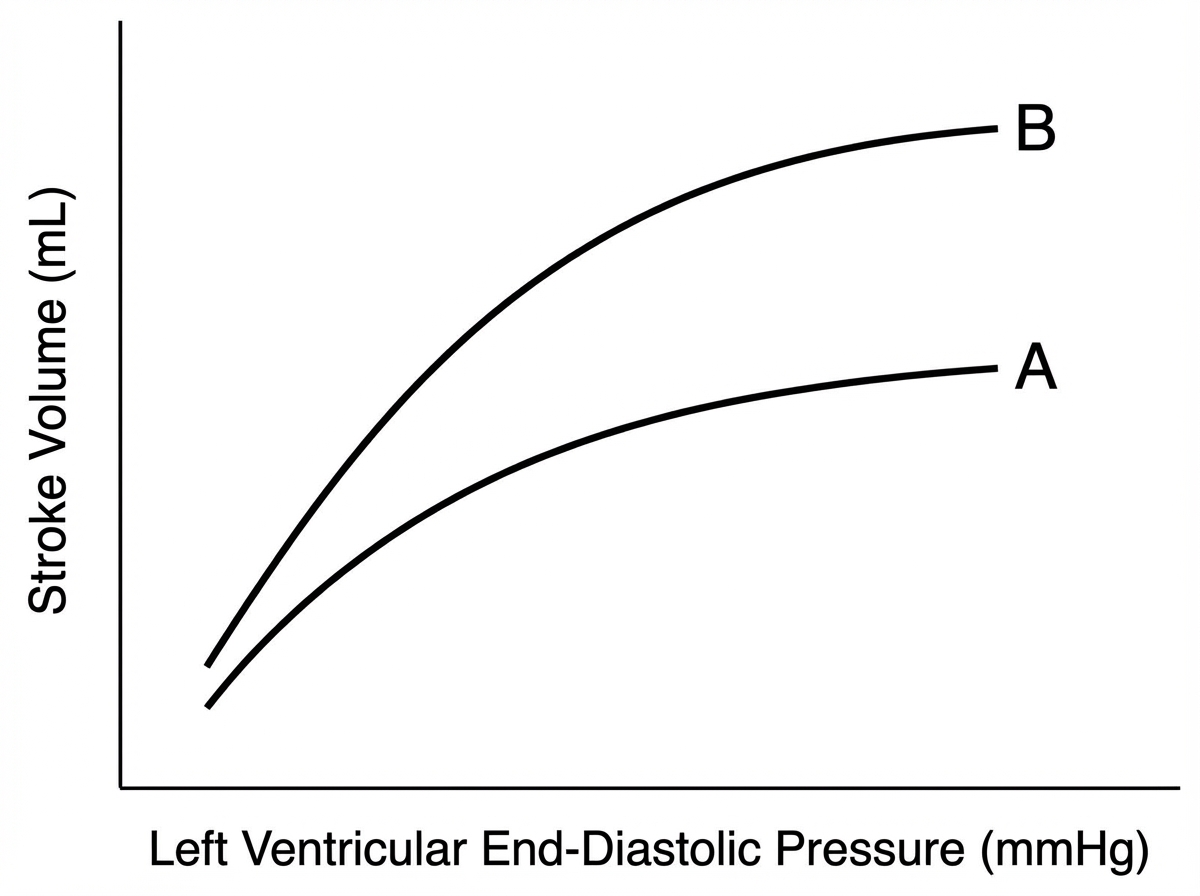
A 78-year-old male comes to the physician’s office for a routine check-up. He complains of increased lower extremity swelling, inability to climb the one flight of stairs in his home, and waking up in the middle of the night 2-3 times gasping for breath. He has had to increase the number of pillows on which he sleeps at night. These symptoms started 9 months ago and have been progressing. The doctor starts him on a medication regimen, one of which changes his Starling curve from A to B as shown in the Figure. Which of the following medications is most consistent with this mechanism of action?
Q7
A 55-year-old male is hospitalized for acute heart failure. The patient has a 20-year history of alcoholism and was diagnosed with diabetes mellitus type 2 (DM2) 5 years ago. Physical examination reveals ascites and engorged paraumbilical veins as well as 3+ pitting edema around both ankles. Liver function tests show elevations in gamma glutamyl transferase and aspartate transaminase (AST). Of the following medication, which most likely contributed to this patient's presentation?
Q8
A 63-year-old woman presents with dyspnea on exertion. She reports that she used to work in her garden without any symptoms, but recently she started to note dyspnea and fatigue after working for 20–30 minutes. She has type 2 diabetes mellitus diagnosed 2 years ago but she does not take any medications preferring natural remedies. She also has arterial hypertension and takes torsemide 20 mg daily. The weight is 88 kg and the height is 164 cm. The vital signs include: blood pressure is 140/85 mm Hg, heart rate is 90/min, respiratory rate is 14/min, and the temperature is 36.6℃ (97.9℉). Physical examination is remarkable for increased adiposity, pitting pedal edema, and present S3. Echocardiography shows a left ventricular ejection fraction of 51%. The combination of which of the following medications would be a proper addition to the patient’s therapy?
Q9
A 63-year-old African American man presents to the physician for a follow-up examination. He has a history of chronic hypertension and type 2 diabetes mellitus. He has no history of coronary artery disease. His medications include aspirin, hydrochlorothiazide, losartan, and metformin. He exercises every day and follows a healthy diet. He does not smoke. He consumes alcohol moderately. There is no history of chronic disease in the family. His blood pressure is 125/75 mm Hg, which is confirmed on a repeat measurement. His BMI is 23 kg/m2. The physical examination shows no abnormal findings. The laboratory test results show:
Serum
HbA1C 6.9%
Total cholesterol 176 mg/dL
Low-density lipoprotein (LDL-C) 105 mg/dL
High-density lipoprotein (HDL-C) 35 mg/dL
Triglycerides 175 mg/dL
The patient's 10-year risk of cardiovascular disease (CVD) is 18.7%. Lifestyle modifications including diet and exercise have been instituted. Which of the following is the most appropriate next step in pharmacotherapy?
Q10
A 67-year-old man presents to his physician with increased thirst and polyuria for the past 4 months. Patient also notes a decrease in his vision for the past 6 months and tingling in his feet. The medical history is significant for a chronic pyelonephritis and stage 2 chronic kidney disease. The current medications include losartan and atorvastatin. He reports a daily alcohol intake of 3 glasses of whiskey. The blood pressure is 140/90 mm Hg and the heart rate is 63/min. The BMI is 35.4 kg/m2. On physical examination, there is 2+ pitting edema of the lower legs and face. The pulmonary, cardiac, and abdominal examinations are within normal limits. There is no costovertebral angle tenderness noted. Ophthalmoscopy shows numerous microaneurysms and retinal hemorrhages concentrated in the fundus. The neurological examination reveals a symmetric decrease in vibration and 2 point discrimination in the patient’s feet and legs extending up to the lower third of the calves. The ankle-deep tendon reflexes are decreased bilaterally. The laboratory test results are as follows:
Serum glucose (fasting) 140 mg/dL
HbA1c 8.5%
BUN 27 mg/dL
Serum creatinine 1.3 mg/dL
eGFR 55 mL/min
The patient is prescribed the first-line drug recommended for his condition. Which of the following side effect is associated with this drug?
SGLT-2 inhibitors US Medical PG Practice Questions and MCQs
Question 1: A 52-year-old man comes to the physician for a routine health maintenance examination. He feels well. His blood pressure is 125/70 mm Hg. His glomerular filtration rate is calculated to be 105 mL/min/1.73 m2 and glucose clearance is calculated to be 103 mL/min. This patient is most likely being treated with which of the following agents?
A. Ifosfamide
B. Acarbose
C. Canagliflozin (Correct Answer)
D. Glipizide
E. Metformin
Explanation: ***Canagliflozin***
- The key finding is that **glucose clearance (103 mL/min) approximately equals GFR (105 mL/min)**, indicating nearly complete failure of glucose reabsorption.
- **Canagliflozin** is an **SGLT2 inhibitor** that blocks the sodium-glucose cotransporter 2 in the proximal tubule, preventing glucose reabsorption.
- This causes filtered glucose to be excreted in urine, resulting in **glucose clearance approaching GFR** - exactly what is seen in this patient.
- SGLT2 inhibitors are increasingly used as first-line agents in Type 2 Diabetes, especially with cardiovascular or renal benefits.
*Metformin*
- **Metformin** is a biguanide that decreases hepatic gluconeogenesis and increases peripheral insulin sensitivity.
- It does **NOT affect renal glucose handling** or glucose clearance, which would remain near zero in patients on metformin.
- The elevated glucose clearance in this patient rules out metformin monotherapy.
*Ifosfamide*
- **Ifosfamide** is an alkylating chemotherapy agent used for cancer treatment, not diabetes management.
- It can cause **Fanconi syndrome** (proximal tubule dysfunction) leading to glycosuria, but this would also cause decreased GFR, proteinuria, and electrolyte abnormalities.
- This patient's normal GFR and otherwise normal presentation makes ifosfamide-induced toxicity unlikely.
*Acarbose*
- **Acarbose** is an alpha-glucosidase inhibitor that slows carbohydrate absorption in the intestine.
- It works in the **GI tract**, not the kidneys, and does not affect glucose clearance.
- It would not explain the elevated renal glucose excretion seen here.
*Glipizide*
- **Glipizide** is a sulfonylurea that stimulates pancreatic insulin release.
- It does **NOT affect renal glucose handling** and would not cause elevated glucose clearance.
- The patient's glucose clearance pattern is inconsistent with sulfonylurea therapy.
Question 2: A 54-year-old African American man presents to the clinic for his first annual well-check. He was unemployed for years but recently received health insurance from a new job. He reports feeling healthy and has no complaints. His blood pressure is 157/90 mmHg, pulse is 86/min, and respirations are 12/min. Routine urinalysis demonstrated a mild increase in albumin and creatinine. What medication is indicated at this time?
A. Hydrochlorothiazide
B. Metoprolol
C. Furosemide
D. Lisinopril (Correct Answer)
E. Amlodipine
Explanation: ***Lisinopril***
- This patient presents with **hypertension (157/90 mmHg)** and **mild albuminuria with elevated creatinine**, indicating early chronic kidney disease (CKD). An **ACE inhibitor (e.g., lisinopril)** is the first-line treatment for hypertension in **any patient with CKD or proteinuria**, regardless of race or ethnicity.
- ACE inhibitors are **renoprotective** by reducing intraglomerular pressure and slowing progression of kidney disease. The presence of albuminuria represents a **compelling indication** that overrides other considerations for initial antihypertensive selection.
- Note: While ACE inhibitors are typically **less effective** as monotherapy in African Americans without compelling indications, the presence of CKD/proteinuria makes them the preferred agent.
*Hydrochlorothiazide*
- While a **thiazide diuretic** like hydrochlorothiazide would be an appropriate first-line agent for this African American patient with uncomplicated hypertension, it is **less effective** than an ACE inhibitor in patients with **proteinuria or kidney disease**.
- It does not offer the same degree of **renoprotection** as an ACE inhibitor in this clinical scenario with documented albuminuria.
*Metoprolol*
- **Beta-blockers** like metoprolol are effective antihypertensives but are generally **not considered first-line** for uncomplicated hypertension unless there are compelling indications like heart failure, angina, or history of myocardial infarction.
- They also do not provide the specific **renoprotective benefits** seen with ACE inhibitors in patients with albuminuria.
*Furosemide*
- **Loop diuretics** such as furosemide are potent diuretics primarily used for managing **symptoms of fluid overload** (e.g., heart failure, severe edema) and are not typically the first choice for chronic hypertension without such indications.
- For patients with **mild kidney impairment and hypertension without volume overload**, an ACE inhibitor is preferred for its renoprotective effects.
*Amlodipine*
- **Calcium channel blockers** like amlodipine are effective antihypertensives and would typically be an excellent first-line choice for an African American patient with hypertension.
- However, for this patient with **documented albuminuria**, an ACE inhibitor is preferred due to its **specific renoprotective effects** and proven benefit in slowing CKD progression, which amlodipine does not provide.
Question 3: A 42-year-old man presents to his primary care physician for preventative care. He does not have any current complaint. His father died of diabetic nephropathy. Vital signs include a temperature of 36.7°C (98.06°F), blood pressure of 150/95 mm Hg, and pulse of 90/min. His fasting blood glucose is 159 mg/dL (on 2 occasions) and HbA1c is 8.1%. The patient is started on metformin and lifestyle modifications. 3 months later, he comes for a follow-up visit. His serum blood glucose is 370 mg/dL and HbA1C is 11%. The patient currently complains of weight loss and excessive urination. Which of the following is the optimal therapy for this patient?
A. A thiazolidinedione added to metformin
B. Basal-bolus insulin (Correct Answer)
C. Basal insulin added to metformin
D. A sulfonylurea added to metformin
E. A sodium-glucose cotransporter 2 inhibitor added to metformin
Explanation: ***Basal-bolus insulin***
- This patient presents with an HbA1C of 11% and symptoms of **polyuria** and **weight loss**, indicating significant hyperglycemia. Due to the high HbA1c and symptomatic presentation despite initial metformin and lifestyle modifications, **aggressive glucose lowering** is required to prevent acute complications and long-term organ damage.
- Basal-bolus insulin therapy provides both continuous basal insulin to control fasting glucose and prandial boluses to manage post-meal glucose spikes, offering the most comprehensive and effective glucose control in severe hyperglycemia.
*A thiazolidinedione added to metformin*
- Thiazolidinediones (TZDs) like pioglitazone improve insulin sensitivity and are used as a second-line agent, but they have a **slow onset of action** and are generally insufficient for patients with such severe hyperglycemia (HbA1c 11%).
- TZDs can take several weeks to reach maximal effect and are not potent enough for immediate and significant glucose reduction in symptomatic patients with markedly elevated HbA1c.
*Basal insulin added to metformin*
- While adding basal insulin to metformin is a common step for patients whose HbA1c is a few points above target, an HbA1c of 11% with symptoms of weight loss and polyuria indicates **more severe insulin deficiency** or resistance requiring more comprehensive insulin replacement.
- Basal insulin alone would not adequately address post-prandial hyperglycemia, which is likely contributing significantly to the overall high HbA1c.
*A sulfonylurea added to metformin*
- Sulfonylureas stimulate insulin release from pancreatic beta cells, but their efficacy is limited, and they carry a risk of **hypoglycemia** and weight gain.
- Given the patient's very high HbA1c of 11%, sulfonylureas would likely be insufficient to achieve target glycemic control and might lead to significant side effects without achieving adequate glucose lowering.
*A sodium-glucose cotransporter 2 inhibitor added to metformin*
- SGLT2 inhibitors promote glucose excretion in the urine and offer cardiovascular and renal benefits, but they are generally less potent in reducing HbA1c compared to insulin, especially in patients with severe hyperglycemia.
- While beneficial for some, they would not provide the rapid and substantial glucose reduction needed for a patient with an HbA1c of 11% and acute symptoms.
Question 4: A 52-year-old woman makes a follow-up appointment with her primary care physician for evaluation of her diabetes medications. Specifically, she complains that she has been experiencing flushing, nausea, and palpitations after drinking a glass of wine with dinner after she started the latest regimen for her diabetes. She was warned that this was a side-effect of one of her medications but she did not understand the severity of the reaction. Given this experience, she asks to be placed on an alternative regimen that does not involve the medication that caused this reaction. Her physician therefore replaces the medication with another one that interacts with the same target though at a different binding site. Which of the following is a side-effect of the new medication?
A. Hepatotoxicity
B. Pancreatitis
C. Weight gain (Correct Answer)
D. Lactic acidosis
E. Urinary tract infection
Explanation: ***Weight gain***
- The patient experienced a **disulfiram-like reaction** with alcohol, indicative of a **sulfonylurea** medication like glipizide or glyburide. The physician replaces it with another medication that interacts with the same target (sulfonylurea receptor on pancreatic beta cells) but at a different binding site, which describes a **meglitinide (e.g., repaglinide)**.
- **Weight gain** is a common side effect of meglitinides, similar to sulfonylureas, due to increased insulin secretion.
*Hepatotoxicity*
- While some diabetes medications can affect the liver, **hepatotoxicity** is not a primary or common side effect associated with meglitinides.
- Pioglitazone, for instance, has a black box warning for liver failure, but is not the drug class described.
*Pancreatitis*
- **Pancreatitis** is not a characteristic side effect of meglitinides.
- This adverse effect is more commonly associated with GLP-1 receptor agonists (e.g., exenatide, liraglutide) and DPP-4 inhibitors (e.g., sitagliptin).
*Lactic acidosis*
- **Lactic acidosis** is a rare but serious side effect specifically associated with **metformin**, especially in patients with renal impairment or conditions causing tissue hypoxia.
- This side effect is not seen with meglitinides.
*Urinary tract infection*
- **Urinary tract infections (UTIs)** are a common side effect of **SGLT2 inhibitors** (e.g., canagliflozin, empagliflozin) due to increased glucose excretion in the urine which promotes bacterial growth.
- This is not a typical side effect of meglitinides.
Question 5: A randomized controlled trial was initiated to evaluate a novel DPP-4 inhibitor for blood glucose management in diabetic patients. The study used a commonly prescribed sulfonylurea as the standard of care treatment. 2,000 patients were enrolled in the study with 1,000 patients in each arm. One of the primary outcomes was the development of diabetic nephropathy during treatment. This outcome occurred in 68 patients on the DPP-4 inhibitor and 134 patients on the sulfonylurea. What is the relative risk reduction (RRR) for patients using the DPP-4 inhibitor compared with the sulfonylurea?
A. 23%
B. 49% (Correct Answer)
C. 33%
D. 59%
E. 43%
Explanation: ***49%***
- To calculate **relative risk reduction (RRR)**, first determine the **event rate (ER)** for each group.
- ER (DPP-4 inhibitor) = 68/1000 = 0.068. ER (Sulfonylurea) = 134/1000 = 0.134.
- Next, calculate the **absolute risk reduction (ARR)**: ARR = ER (Sulfonylurea) - ER (DPP-4 inhibitor) = 0.134 - 0.068 = 0.066.
- Finally, calculate RRR: RRR = ARR / ER (Sulfonylurea) = 0.066 / 0.134 ≈ 0.4925 or **49%**.
*23%*
- This value is incorrect and does not result from the proper application of the **relative risk reduction (RRR)** formula.
- A common mistake is to reverse the subtrahend and minuend in the numerator or denominator.
*33%*
- This value is incorrect and does not result from the proper application of the **relative risk reduction (RRR)** formula.
- Incorrect calculations in either the numerator or denominator of the **RRR formula** would lead to this incorrect result.
*59%*
- This value is incorrect and is likely the result of an error in calculating either the **absolute risk reduction (ARR)** or dividing it by the wrong **event rate**.
- Always ensure the correct event rates are used for the control group and the intervention group.
*43%*
- This value is incorrect and does not align with the correct calculation of **relative risk reduction (RRR)**.
- Errors in setting up the formula or executing the division could lead to this result.
Question 6: A 78-year-old male comes to the physician’s office for a routine check-up. He complains of increased lower extremity swelling, inability to climb the one flight of stairs in his home, and waking up in the middle of the night 2-3 times gasping for breath. He has had to increase the number of pillows on which he sleeps at night. These symptoms started 9 months ago and have been progressing. The doctor starts him on a medication regimen, one of which changes his Starling curve from A to B as shown in the Figure. Which of the following medications is most consistent with this mechanism of action?
A. Aspirin
B. Furosemide
C. Digoxin (Correct Answer)
D. Metoprolol
E. Hydrochlorothiazide
Explanation: ***Digoxin***
- The patient's symptoms (lower extremity swelling, dyspnea on exertion, paroxysmal nocturnal dyspnea) are highly suggestive of **congestive heart failure (CHF)**.
- The Starling curve shifts from **A to B** with the medication, indicating an increase in stroke volume for a given left ventricular end-diastolic pressure, which is characteristic of an **inotropic effect**.
- **Digoxin** is a positive inotropic agent that increases cardiac contractility by inhibiting Na⁺/K⁺-ATPase, leading to increased intracellular calcium.
*Aspirin*
- Aspirin is an antiplatelet agent used for cardiovascular disease prevention, but it does not directly alter the Starling curve in the manner shown by improving cardiac contractility.
- It would not improve the symptoms of heart failure by increasing stroke volume.
*Furosemide*
- Furosemide is a loop diuretic that reduces preload (LV end-diastolic pressure) but does not directly improve cardiac contractility.
- On the Starling curve, a diuretic would shift the operating point to the left, not upward as shown from A to B.
*Metoprolol*
- Metoprolol is a beta-blocker that reduces heart rate and myocardial oxygen demand and can improve mortality in CHF, but it is a **negative inotrope**, reducing contractility acutely.
- It would not cause an immediate upward shift in the Starling curve representing increased stroke volume.
*Hydrochlorothiazide*
- Hydrochlorothiazide is a thiazide diuretic that reduces preload by increasing sodium and water excretion, similar to furosemide but less potent.
- It would cause a leftward shift on the Starling curve, not an upward shift indicating improved contractility.
Question 7: A 55-year-old male is hospitalized for acute heart failure. The patient has a 20-year history of alcoholism and was diagnosed with diabetes mellitus type 2 (DM2) 5 years ago. Physical examination reveals ascites and engorged paraumbilical veins as well as 3+ pitting edema around both ankles. Liver function tests show elevations in gamma glutamyl transferase and aspartate transaminase (AST). Of the following medication, which most likely contributed to this patient's presentation?
A. Glargine
B. Pramlintide
C. Pioglitazone (Correct Answer)
D. Glipizide
E. Metformin
Explanation: ***Pioglitazone***
- **Pioglitazone**, a thiazolidinedione, is known to cause **fluid retention** and can exacerbate or precipitate **congestive heart failure**.
- The patient's presentation with **ascites**, **pitting edema**, and **acute heart failure** is consistent with the adverse effects of this medication, especially in a patient with risk factors like alcoholism.
*Glargine*
- **Glargine** is a **long-acting insulin** analog primarily used to control blood glucose levels in diabetes.
- It does not typically cause **fluid retention** or worsen **heart failure** directly, making it an unlikely contributor to these specific symptoms.
*Pramlintide*
- **Pramlintide** is an **amylin analog** used to improve glycemic control by slowing gastric emptying and suppressing glucagon secretion.
- It is not associated with **fluid retention** or the exacerbation of **heart failure**.
*Glipizide*
- **Glipizide** is a **sulfonylurea** that stimulates insulin release from pancreatic beta cells.
- While it can cause hypoglycemia, it does not typically contribute to **fluid retention** or worsen **heart failure**.
*Metformin*
- **Metformin** is a **biguanide** that reduces hepatic glucose production and increases insulin sensitivity.
- It is generally considered **cardioprotective** and does not cause **fluid retention** or exacerbate **heart failure**.
Question 8: A 63-year-old woman presents with dyspnea on exertion. She reports that she used to work in her garden without any symptoms, but recently she started to note dyspnea and fatigue after working for 20–30 minutes. She has type 2 diabetes mellitus diagnosed 2 years ago but she does not take any medications preferring natural remedies. She also has arterial hypertension and takes torsemide 20 mg daily. The weight is 88 kg and the height is 164 cm. The vital signs include: blood pressure is 140/85 mm Hg, heart rate is 90/min, respiratory rate is 14/min, and the temperature is 36.6℃ (97.9℉). Physical examination is remarkable for increased adiposity, pitting pedal edema, and present S3. Echocardiography shows a left ventricular ejection fraction of 51%. The combination of which of the following medications would be a proper addition to the patient’s therapy?
A. Metoprolol and indapamide
B. Enalapril and bisoprolol (Correct Answer)
C. Spironolactone and fosinopril
D. Indapamide and amlodipine
E. Valsartan and spironolactone
Explanation: ***Enalapril and bisoprolol***
- This patient presents with **heart failure with preserved ejection fraction (HFpEF)**, characterized by symptoms of heart failure (dyspnea, fatigue, edema, S3 sound) with an LVEF >50%. She also has **uncontrolled hypertension** (BP 140/85) and a **heart rate of 90/min**.
- **Important:** Unlike HFrEF, **ACE inhibitors and beta-blockers have NOT demonstrated mortality benefit in HFpEF** (CHARM-Preserved, PEP-CHF trials). However, they remain important for **blood pressure control** and **symptom management** in patients with HFpEF and comorbid hypertension.
- **Enalapril** (ACE inhibitor) helps control blood pressure through reduction of preload and afterload. **Bisoprolol** (beta-blocker) provides **heart rate control** (patient's HR is 90/min) and further blood pressure reduction. Both medications address her inadequately controlled hypertension while managing symptoms.
- **Note:** Current guidelines emphasize SGLT2 inhibitors as first-line therapy for HFpEF (not offered here), along with diuretics for volume management (patient is already on torsemide) and aggressive treatment of comorbidities like hypertension and diabetes.
*Metoprolol and indapamide*
- Metoprolol is a beta-blocker that could help with rate and blood pressure control. However, **indapamide is a thiazide-like diuretic** that is redundant since the patient is already on **torsemide** (a loop diuretic) for volume management.
- This combination lacks an **ACE inhibitor or ARB** for optimal blood pressure control and neurohormonal modulation, which is important even in HFpEF for managing hypertension and its consequences.
*Spironolactone and fosinopril*
- **Spironolactone** (mineralocorticoid receptor antagonist) showed modest benefit in reducing HF hospitalizations in the TOPCAT trial for HFpEF. **Fosinopril** is an ACE inhibitor appropriate for blood pressure control.
- However, the patient has a **heart rate of 90/min**, indicating need for **rate control** which neither spironolactone nor fosinopril provides. A **beta-blocker would be more appropriate** to address both rate control and blood pressure.
- Additionally, while spironolactone has some evidence in HFpEF, the combination with an ACE inhibitor **without rate control** is suboptimal for this patient's presentation.
*Indapamide and amlodipine*
- **Indapamide** (thiazide-like diuretic) is **redundant** since the patient is already on torsemide. **Amlodipine** (calcium channel blocker) is effective for hypertension but can cause **peripheral edema**, which this patient already has (pitting pedal edema).
- **Calcium channel blockers are not recommended in heart failure** due to lack of mortality benefit and potential to worsen fluid retention. This combination does not address the underlying HFpEF pathophysiology or provide optimal symptom management.
*Valsartan and spironolactone*
- **Valsartan** (ARB) is appropriate for blood pressure control and is an alternative to ACE inhibitors. **Spironolactone** has modest evidence for reducing hospitalizations in HFpEF (TOPCAT trial).
- However, similar to the fosinopril/spironolactone combination, this lacks a **beta-blocker for heart rate control** (patient's HR is 90/min). Rate control is important for optimizing diastolic filling time in HFpEF and controlling blood pressure.
- While this combination has theoretical benefits, **enalapril and bisoprolol** better addresses both blood pressure control and rate control simultaneously.
Question 9: A 63-year-old African American man presents to the physician for a follow-up examination. He has a history of chronic hypertension and type 2 diabetes mellitus. He has no history of coronary artery disease. His medications include aspirin, hydrochlorothiazide, losartan, and metformin. He exercises every day and follows a healthy diet. He does not smoke. He consumes alcohol moderately. There is no history of chronic disease in the family. His blood pressure is 125/75 mm Hg, which is confirmed on a repeat measurement. His BMI is 23 kg/m2. The physical examination shows no abnormal findings. The laboratory test results show:
Serum
HbA1C 6.9%
Total cholesterol 176 mg/dL
Low-density lipoprotein (LDL-C) 105 mg/dL
High-density lipoprotein (HDL-C) 35 mg/dL
Triglycerides 175 mg/dL
The patient's 10-year risk of cardiovascular disease (CVD) is 18.7%. Lifestyle modifications including diet and exercise have been instituted. Which of the following is the most appropriate next step in pharmacotherapy?
A. Fenofibrate
B. Atorvastatin (Correct Answer)
C. Metoprolol
D. Liraglutide
E. Lisinopril
Explanation: ***Atorvastatin***
- This patient has **diabetes mellitus**, an **LDL-C of 105 mg/dL**, and an estimated **10-year CVD risk of 18.7%**. Current guidelines recommend **high-intensity statin therapy** for individuals with diabetes aged 40-75 with an LDL-C >= 70 mg/dL and a 10-year ASCVD risk of 7.5% or higher.
- Atorvastatin is a **high-intensity statin** that can significantly lower LDL-C and reduce cardiovascular event risk.
*Fenofibrate*
- **Fenofibrate** is primarily used to reduce **elevated triglyceride levels** and can increase HDL-C, but it is **not the first-line therapy** for primary prevention of cardiovascular disease in a patient with diabetes and elevated LDL-C like this one.
- Its role is usually considered in cases of **severe hypertriglyceridemia** (typically >500 mg/dL) to prevent pancreatitis, or as an adjunct to statins if triglycerides remain high, but the primary goal here is LDL reduction.
*Metoprolol*
- **Metoprolol** is a **beta-blocker** primarily used for blood pressure control, heart rate reduction, and in conditions like angina or heart failure.
- The patient's **blood pressure is well-controlled** (125/75 mmHg) with his current regimen, and there is no indication for a beta-blocker in this context for primary CVD prevention.
*Liraglutide*
- **Liraglutide** is a **GLP-1 receptor agonist** used in the management of **type 2 diabetes mellitus** to improve glycemic control and has shown cardiovascular benefits.
- However, the patient's **HbA1c of 6.9%** indicates relatively good glycemic control for a patient with diabetes, and the immediate priority for CVD prevention, given his lipid profile and risk, is LDL-C lowering with a statin.
*Lisinopril*
- **Lisinopril** is an **ACE inhibitor** commonly used for **hypertension**, heart failure, and renal protection in diabetes.
- The patient is already on **losartan**, an angiotensin receptor blocker (ARB), which serves a similar purpose, and his **blood pressure is well-controlled**, so adding lisinopril would be redundant and unnecessary for immediate CVD primary prevention.
Question 10: A 67-year-old man presents to his physician with increased thirst and polyuria for the past 4 months. Patient also notes a decrease in his vision for the past 6 months and tingling in his feet. The medical history is significant for a chronic pyelonephritis and stage 2 chronic kidney disease. The current medications include losartan and atorvastatin. He reports a daily alcohol intake of 3 glasses of whiskey. The blood pressure is 140/90 mm Hg and the heart rate is 63/min. The BMI is 35.4 kg/m2. On physical examination, there is 2+ pitting edema of the lower legs and face. The pulmonary, cardiac, and abdominal examinations are within normal limits. There is no costovertebral angle tenderness noted. Ophthalmoscopy shows numerous microaneurysms and retinal hemorrhages concentrated in the fundus. The neurological examination reveals a symmetric decrease in vibration and 2 point discrimination in the patient’s feet and legs extending up to the lower third of the calves. The ankle-deep tendon reflexes are decreased bilaterally. The laboratory test results are as follows:
Serum glucose (fasting) 140 mg/dL
HbA1c 8.5%
BUN 27 mg/dL
Serum creatinine 1.3 mg/dL
eGFR 55 mL/min
The patient is prescribed the first-line drug recommended for his condition. Which of the following side effect is associated with this drug?
A. Lactic acidosis (Correct Answer)
B. Infections
C. Hypoglycemia
D. Iron deficiency anemia
E. Hyperkalemia
Explanation: ***Lactic acidosis***
- The patient presents with classic **Type 2 Diabetes Mellitus** (polyuria, polydipsia, HbA1c 8.5%, fasting glucose 140 mg/dL, diabetic retinopathy, peripheral neuropathy).
- **Metformin** is the first-line medication for Type 2 Diabetes according to all major guidelines (ADA, AACE).
- While **lactic acidosis** is a rare side effect of metformin, it is the most **serious** adverse effect and the answer to this question.
- This patient has multiple risk factors for lactic acidosis: **moderate renal impairment** (eGFR 55 mL/min), **chronic alcohol use** (3 glasses whiskey daily), and advanced age.
- Note: Current guidelines allow metformin use at eGFR ≥30 mL/min with dose adjustment, so metformin is not contraindicated in this patient but requires careful monitoring.
- The most common side effects of metformin are GI-related (diarrhea, nausea), but lactic acidosis is the most clinically significant.
*Infections*
- Increased risk of **genitourinary infections** is associated with **SGLT2 inhibitors** (canagliflozin, empagliflozin, dapagliflozin), not metformin.
- While the patient has a history of chronic pyelonephritis, this is unrelated to metformin therapy.
*Hypoglycemia*
- **Metformin** decreases hepatic glucose production and improves insulin sensitivity without stimulating insulin secretion.
- Metformin monotherapy **rarely causes hypoglycemia**, which is more common with sulfonylureas (glyburide, glipizide) or insulin.
*Iron deficiency anemia*
- Iron deficiency anemia is **not** a recognized side effect of metformin.
- Note: Metformin is associated with **Vitamin B12 deficiency** (due to malabsorption) leading to megaloblastic anemia, but not iron deficiency anemia.
*Hyperkalemia*
- Hyperkalemia is **not** a side effect of metformin.
- This patient's losartan (ARB) and chronic kidney disease could cause hyperkalemia, but this is unrelated to metformin therapy.
Want unlimited practice?
Get full access to all questions, explanations, and performance tracking.