
Corticosteroids and mechanisms — MCQs

A 52-year-old man presents to his primary care physician for a yearly checkup complaining of recent weight gain. The patient states that he has noticed that, regardless of his diet, his midsection has gotten increasingly larger and his old clothes no longer fit. The patient has a 2-year history of left hip arthritis from a car accident for which he is on prednisone, as well as a history of migraine headaches. The patient has also noticed that in the last 2 months, he has developed acne and his face has become fuller in appearance. On exam, the patient has gained 26 pounds since his previous checkup 1 year prior, and he now has a BMI 28.2 kg/m^2 (up from 24.1 kg/m^2 previously). His temperature is 98.3°F (36.8°C), blood pressure is 134/94 mmHg, pulse is 72/min, and respirations are 12/min. His physical exam is notable for red striae on his shoulders and around his waist. On his labs, the patient’s serum ACTH is found to be decreased. Which of the following changes is most likely expected?
A 56-year-old woman visits her primary care provider complaining of fatigue, weight gain, increased thirst, hair loss, and headaches. She has been perimenopausal for 3 years. She was diagnosed with rheumatoid arthritis 4 years ago and prescribed oral prednisolone. Currently, she takes prednisolone and omeprazole daily. Her vital signs are as follows: blood pressure 150/90 mm Hg, heart rate 70/min, respiratory rate 13/min, and temperature 36.6°C (97.9°F). Her weight is 95 kg (209.4 lb), height is 165 cm (5 ft 4 in), BMI is 34.9 kg/m2, waist circumference is 109 cm (42.9 in), and hip circumference is 93 cm (36.6 in). At physical exam, the patient has abdominal obesity, round red face, and increased fat deposition on the back and around the neck. Her skin elasticity is diminished. Cardiac auscultation reveals fixed splitting of S2 with an increased aortic component. The rest of the exam is unremarkable. Blood analysis shows the following findings: Total serum cholesterol 204.9 mg/dL HDL 50.3 mg/dL LDL 131.4 mg/dL Triglycerides 235.9 mg/dL Fasting serum glucose 192.0 mg/dL Which of the following options describes the pathogenesis of the patient’s hyperglycemia?
An 8-year-old boy is brought to the pediatrician by his parents due to recurrent episodes of wheezing for the last 2 years. He uses a salbutamol inhaler for relief from wheezing, but his symptoms have recently worsened. He often coughs during the night, which awakens him from sleep almost every other day. He is not able to play football because he starts coughing after 10–15 minutes of play. His current physical examination is completely normal and auscultation of his chest does not reveal any abnormal breath sounds. His peak expiratory flow rate (PEFR) is 75% of expected for his age, gender, and height. After a complete diagnostic evaluation, the pediatrician prescribes a low-dose inhaled fluticasone daily for at least 3 months. He also mentions that the boy may require continuing inhaled corticosteroid (ICS) therapy for a few years if symptoms recur after discontinuation of ICS. However, the parents are concerned about the side effects of corticosteroids. Which of the following corticosteroid-related adverse effects is most likely?
A 56-year-old woman with rheumatoid arthritis comes to the physician for a follow-up examination. She has no other history of serious illness. Menopause occurred 1 year ago. Current medications include antirheumatic drugs and hormone replacement therapy. She exercises regularly. A DEXA scan shows a T-score of -1.80, indicating decreased bone density. Which of the following drugs is most likely involved in the pathogenesis of this finding?
A 19-year-old woman with a history of poorly controlled asthma presents to her pulmonologist for a follow-up visit. She was recently hospitalized for an asthma exacerbation. It is her third hospitalization in the past five years. She currently takes inhaled salmeterol and medium-dose inhaled budesonide. Her past medical history is also notable for psoriasis. She does not smoke and does not drink alcohol. Her temperature is 98.6°F (37°C), blood pressure is 110/65 mmHg, pulse is 75/min, and respirations are 20/min. Physical examination reveals bilateral wheezes that are loudest at the bases. The patient’s physician decides to start the patient on zileuton. Which of the following is the most immediate downstream effect of initiating zileuton?
A 47-year-old woman presents to the physician with complaints of fatigue accompanied by symmetric pain, swelling, and stiffness in her wrists, fingers, knees, and other joints. She describes the stiffness as being particularly severe upon awakening, but gradually improves as she moves throughout her day. Her physician initially suggests that she take NSAIDs. However, after a few months of minimal symptomatic improvement, she is prescribed an immunosuppressive drug that has a mechanism of preventing IL-2 transcription. What is the main toxicity that the patient must be aware of with this particular class of drugs?
A 43-year-old male with a history of thyroid cancer status post total thyroidectomy presents to his primary care physician after repeated bouts of headaches. His headaches are preceded by periods of anxiety, palpitations, and sweating. The patient says he is unable to pinpoint any precipitating factors and instead says the events occur without warning. Of note, the patient's father and uncle also have a history of thyroid cancer. On exam his vitals are: T 36.8 HR 87, BP 135/93, RR 14, and O2 Sat 100% on room air. The patient's TSH is within normal limits, and he reports taking his levothyroxine as prescribed. What is the next best step in diagnosing this patient's chief complaint?
A 56-year-old woman undergoes open reduction and internal fixation of the distal tibia 1 day after a fall. She has had rheumatoid arthritis for 12 years and diabetes mellitus for 2 years. Her medications over the past year have included metformin, prednisone, calcium supplements, and methotrexate. Prior to surgery, insulin was added to her medications, and the dose of prednisone was increased. She has had appropriate nutrition over the years with regular follow-ups with her healthcare professional. Which of the following is the most appropriate supplement to prevent wound failure in this patient?
A 65-year-old woman with COPD comes to the emergency department with 2-day history of worsening shortness of breath and cough. She often has a mild productive cough, but she noticed that her sputum is more yellow than usual. She has not had any recent fevers, chills, sore throat, or a runny nose. Her only medication is a salmeterol inhaler that she uses twice daily. Her temperature is 36.7°C (98°F), pulse is 104/min, blood pressure is 134/73 mm Hg, respiratory rate is 22/min, and oxygen saturation is 85%. She appears uncomfortable and shows labored breathing. Lung auscultation reveals coarse bibasilar inspiratory crackles. A plain film of the chest shows mild hyperinflation and flattening of the diaphragm but no consolidation. She is started on supplemental oxygen via nasal cannula. Which of the following is the most appropriate initial pharmacotherapy?
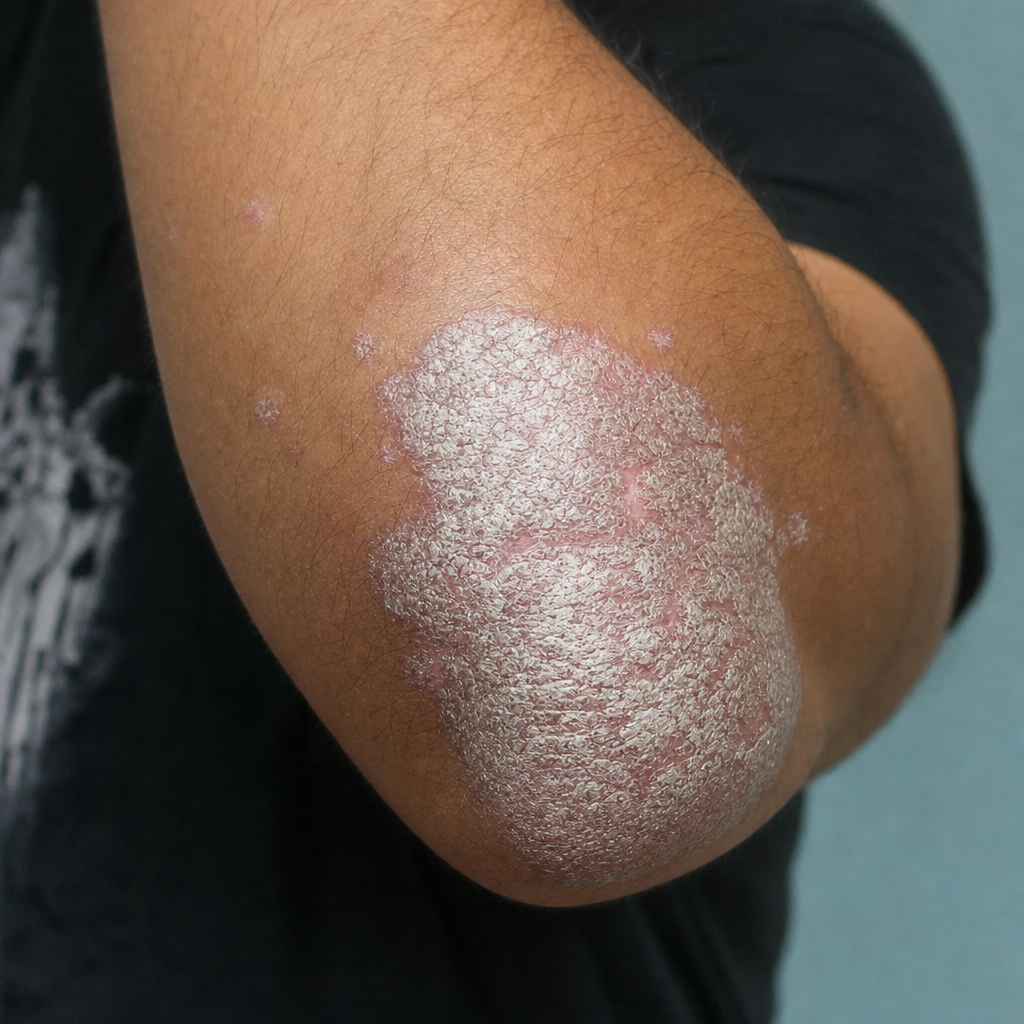
A previously healthy 30-year-old man comes to the physician because of a 2-week history of lesions on his elbows. He has no history of serious illness and takes no medications. Physical examination shows skin lesions on bilateral elbows. A photograph of his right elbow is shown. Which of the following is the most appropriate treatment for this patient's skin condition?
Want unlimited practice?
Get full access to all questions, explanations, and performance tracking.
Scan to download app