
Bone metabolism drugs (bisphosphonates, RANKL inhibitors) — MCQs

A 69-year-old man with type 2 diabetes mellitus comes to the physician for a follow-up examination. His only medication is metformin. He has tried to lose weight for several years without success. He is 168 cm (5 ft 6 in) tall and weighs 110 kg (243 lb); BMI is 39 kg/m2. His hemoglobin A1c is 8.5%. Which of the following is the most appropriate antidiabetic drug to address both this patient's glucose control and weight?
A scientist is studying the anatomy and function of bone growth. He is able to create a cell line of osteocytes with a mutation that prevents the osteocytes from exchanging nutrients and waste products within neighboring lamellae. This mutation most likely affected which of the following cell structures?
A 67-year-old woman presents to her physician for a regular checkup. She is a community-dwelling, retired teacher without any smoking history. She has arterial hypertension and takes hydrochlorothiazide 12.5 mg and valsartan 80 mg daily. She was recently discharged from the hospital after admission for an ulnar fracture she received after a fall from the second step of a ladder in her garden. A year ago, she had a clavicular fracture from tripping over some large rocks in her yard. She does not report lightheadedness or fainting. Her medical history is also significant for an appendectomy 11 years ago. She is in menopause. She mostly consumes vegetables and dairy products. Her height is 163 cm (5 ft 4 in) and weight is 55 kg (123 lb). Her blood pressure is 130/80 mm Hg without orthostatic changes, heart rate is 73/min and regular, respiratory rate is 14/min, and temperature is 36.6°C (97.9°F). Her lungs are clear to auscultation. Cardiac auscultation reveals S2 accentuation over the aorta. The abdomen is mildly distended on palpation; there are no identifiable masses. The neurological examination is unremarkable. Considering the history and presentation, which of the following medications most likely will be prescribed to this patient after additional investigations?
A 62-year-old man comes to the physician for hematemesis and progressive heartburn over the past 5 days. Ten days ago, he was started on a medication to treat a condition that causes hearing difficulties and pain of the lower legs. He has no other history of serious illness. He has smoked 1 pack of cigarettes daily for the past 20 years. Physical examination shows bowing of the tibias. Upper endoscopy shows inflammation of the mucosa and a 1-cm punched-out ulcer in the distal esophagus. Which of the following drugs is the most likely cause of the patient's current condition?
A 69-year-old woman comes to the clinic for an annual well exam. She reports no significant changes to her health except for an arm fracture 3 weeks ago while she was lifting some heavy bags. Her diabetes is well controlled with metformin. She reports some vaginal dryness that she manages with adequate lubrication. She denies any weight changes, fevers, chills, palpitations, nausea/vomiting, incontinence, or bowel changes. A dual-energy X-ray absorptiometry (DEXA) scan was done and demonstrated a T-score of -2.7. She was subsequently prescribed a selective estrogen receptor modulator, in addition to vitamin and weight-bearing exercises, for the management of her symptoms. What is the mechanism of action of the prescribed medication?
A 64-year-old woman presents to the clinic with a history of 3 fractures in the past year with the last one being last month. Her bone-density screening from last year reported a T-score of -3.1 and she was diagnosed with osteoporosis. She was advised to quit smoking and was asked to adapt to a healthy lifestyle to which she complied. She was also given calcium and vitamin D supplements. After a detailed discussion with the patient, the physician decides to start her on weekly alendronate. Which of the following statements best describes this patient’s new therapy?
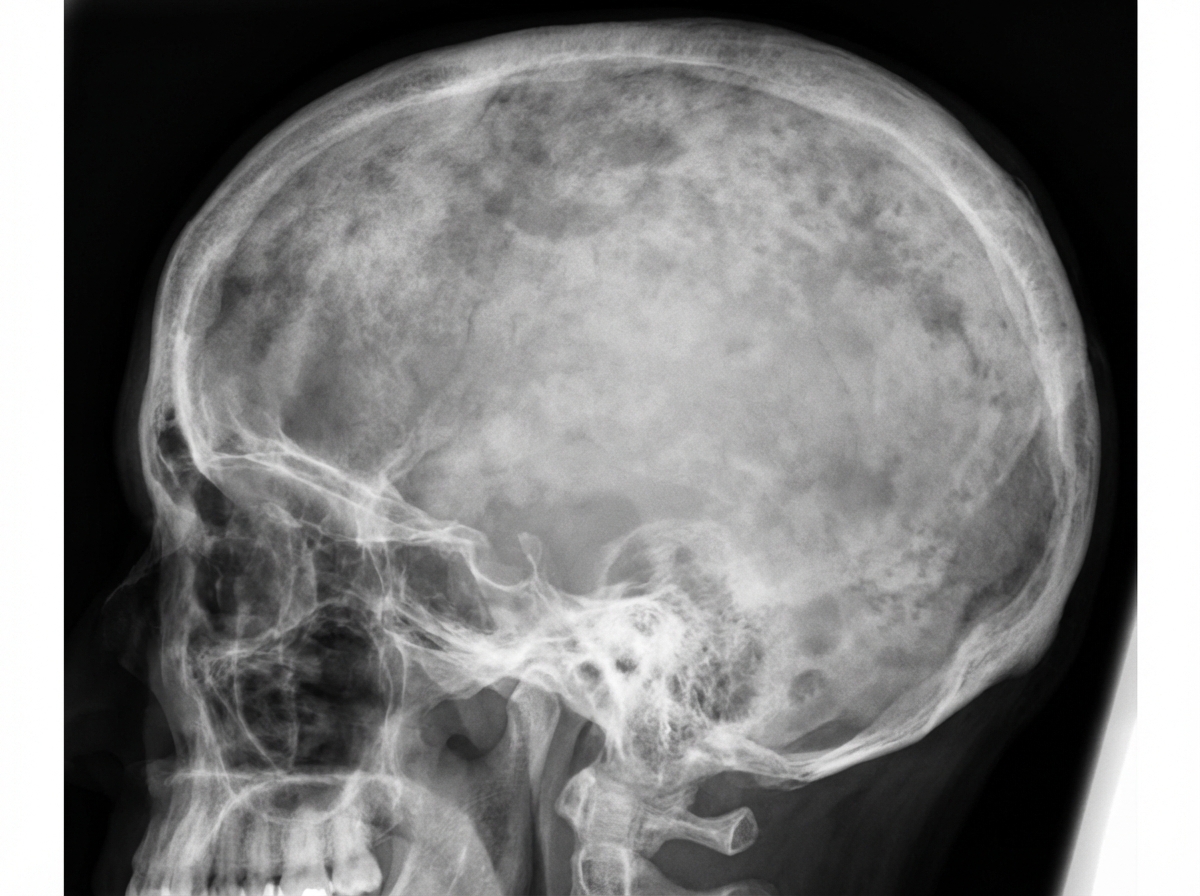
A 58-year-old man comes to the physician because of a 6-month history of headaches and back pain. Examination shows mild sensorineural hearing loss. Serum concentration of alkaline phosphatase is increased. An x-ray of the skull is shown. The most appropriate pharmacotherapy for this patient is a drug that has which of the following mechanisms of action?
A 67-year-old Caucasian female presents to her primary care physician after a screening DEXA scan reveals a T-score of -3.0. Laboratory work-up reveals normal serum calcium, phosphate, vitamin D, and PTH levels. She smokes 1-2 cigarettes per day. Which of the following measures would have reduced this patient's risk of developing osteoporosis?
A 69-year-old African American man is brought to the emergency department with sudden onset lower limb paralysis and back pain. He has had generalized bone pain for 2 months. He has no history of severe illnesses. He takes ibuprofen for pain. On examination, he is pale. The vital signs include: temperature 37.1°C (98.8°F), pulse 68/min, respiratory rate 16/min, and blood pressure 155/90 mm Hg. The neurologic examination shows paraparesis. The 8th thoracic vertebra is tender to palpation. An X-ray of the thoracic vertebrae confirms a compression fracture at the same level. The laboratory studies show the following: Laboratory test Hemoglobin 9 g/dL Mean corpuscular volume 95 μm3 Leukocyte count 5,000/mm3 Platelet count 240,000/mm3 ESR 85 mm/hour Serum Na+ 135 mEq/L K+ 4.2 mEq/L Cl− 113 mEq/L HCO3− 20 mEq/L Ca+ 11.5 mg/dL Albumin 4 g/dL Urea nitrogen 18 mg/dL Creatinine 1.2 mg/dL Serum electrophoresis shows a monoclonal protein level of 38 g/L. To reduce the likelihood of fracture recurrence, it is most appropriate to administer which of the following?
A 43-year-old man with HIV infection comes to the physician because of a 2-week history of progressive diarrhea and a 3-kg (6.6-lb) weight loss. During this period, he has had 3–4 episodes of watery stools daily, with multiple instances of blood in the stool. He is currently receiving antiretroviral therapy with zidovudine, lamivudine, and dolutegravir. Physical examination shows pallor and dry mucous membranes. A colonoscopy shows multiple linear ulcers. Polymerase chain reaction of a stool sample is positive for cytomegalovirus. Treatment with valganciclovir is begun. Adding this drug to his current medication regimen puts this patient at greatest risk for which of the following adverse effects?
Want unlimited practice?
Get full access to all questions, explanations, and performance tracking.
Scan to download app