
QT prolongation and torsades de pointes — MCQs

Two days after admission for myocardial infarction and subsequent coronary angioplasty, a 65-year-old man becomes distressed and diaphoretic in the cardiac intensive care unit. Suddenly he is no longer responsive. Pulse oximetry does not show a tracing. He has a history of hypertension and depression. Prior to his admission, his medication included ramipril and aripiprazole. Examination shows no carotid pulse. An ECG is shown. After beginning chest compressions, which of the following is the most appropriate step in management of the patient?
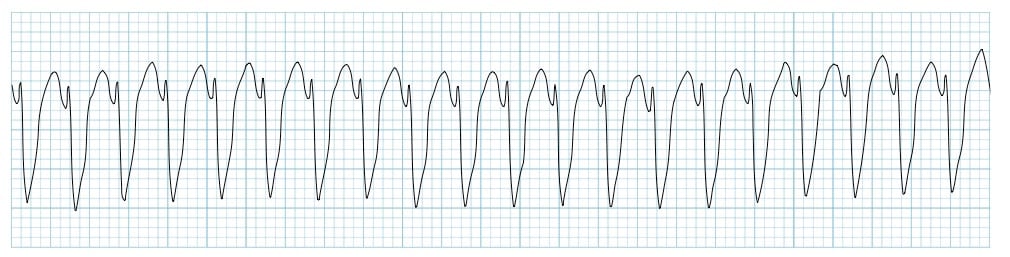
A 62-year-old man is brought to the emergency department because of syncope. He reports sudden onset of palpitations followed by loss of consciousness while carrying his groceries to his car. He is unable to recall any further details and does not have any chest pain or dizziness. He has a history of hypertension, type 2 diabetes mellitus, gastroparesis, and osteoarthritis of the knees. Medications include lisinopril, metformin, and ondansetron as needed for nausea. He also takes methadone daily for chronic pain. Apart from an abrasion on his forehead, he appears well. His temperature is 37.2 °C (98.9 F), heart rate is 104/min and regular, and blood pressure is 135/70 mm Hg. While he is in the emergency department, he loses consciousness again. Telemetry shows polymorphic ventricular tachycardia with cyclic alteration of the QRS axis that spontaneously resolves after 30 seconds. Results of a complete blood count, serum electrolyte concentrations, and serum thyroid studies show no abnormalities. Cardiac enzymes are within normal limits. Which of the following is the most likely underlying cause of this patient's syncope?
An investigator is comparing the risk of adverse effects among various antiarrhythmic medications. One of the drugs being studied primarily acts by blocking the outward flow of K+ during myocyte repolarization. Further investigation shows that the use of this drug is associated with a lower rate of ventricular tachycardia, ventricular fibrillation, and torsades de pointes when compared to similar drugs. Which of the following drugs is most likely being studied?
A 27-year-old man presents to the clinic for his annual physical examination. He was diagnosed with a rare arrhythmia a couple of years ago following an episode of dizziness. A mutation in the gene encoding for the L-type calcium channel protein was identified by genetic testing. He feels fine today. His vitals include: blood pressure 122/89 mm Hg, pulse 90/min, respiratory rate 14/min, and temperature 36.7°C (98.0°F). The cardiac examination is unremarkable. The patient has been conducting some internet research on how the heart works and specifically asks you about his own “ventricular action potential”. Which of the following would you expect to see in this patient?
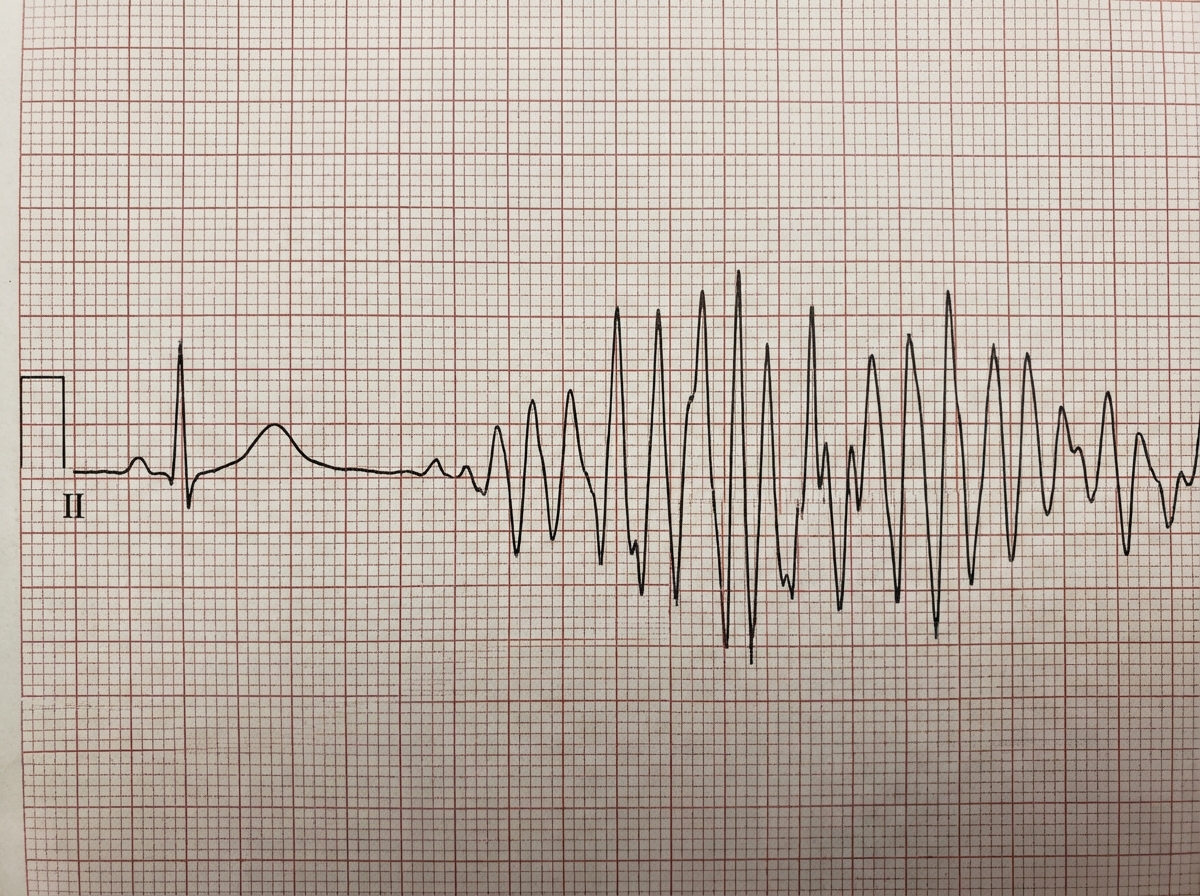
Four days into hospitalization for severe pneumonia, a 76-year-old woman suddenly becomes unresponsive. She has no history of heart disease. She is on clarithromycin and ceftriaxone. Her carotid pulse is not detected. A single-lead ECG strip is shown. Previous ECG shows QT prolongation. Laboratory studies show: Serum Na+ 145 mEq/L K+ 6.1 mEq/L Ca2+ 10.5 mEq/L Mg2+ 1.8 mEq/L Thyroid-stimulating hormone 0.1 μU/mL Cardiopulmonary resuscitation has been initiated. Which of the following is the most likely underlying cause of this patient’s recent condition?
A 51-year-old woman schedules an appointment with her physician with complaints of upper abdominal pain, nausea, and early satiety for the last 6 months. She has type 1 diabetes for the past 10 years and is on subcutaneous insulin therapy. She complains of occasional heartburn and lost 4.5 kg (10 lb) in the past 6 months without any changes in her diet. The medical history is significant for long QT syndrome. The vital signs include: pulse 74/min, respirations 18/min, temperature 37.7°C (99.9°F), and blood pressure 140/84 mm Hg. Abdominal examination is negative for organomegaly or a palpable mass, but there is a presence of succussion splash. She has slightly decreased vision in both her eyes and fundoscopy reveals diabetic changes in the retina. Esophagogastroduodenoscopy is performed, which is negative for obstruction, but a small ulcer is noted near the cardiac end of the stomach with some food particles. Which of the following drugs would be inappropriate in the management of this patient's condition?
A 54-year-old man with a past medical history significant for hypertension, type 2 diabetes, and chronic obstructive pulmonary disease presents with complaints of nausea and abdominal pain for the past month. The pain is located in the epigastric region and is described as “burning” in quality, often following food intake. The patient denies any changes in bowel movements, fever, or significant weight loss. Medications include metformin, lisinopril, hydrochlorothiazide, albuterol inhaler, and fluconazole for a recent fungal infection. Physical examination was unremarkable except for a mildly distended abdomen that is diffusely tender to palpation and decreased sensation at lower extremities bilaterally. A medication was started for the symptoms. Two days later, the patient reports heart palpitations. An EKG is shown below. Which of the following is the medication most likely prescribed?
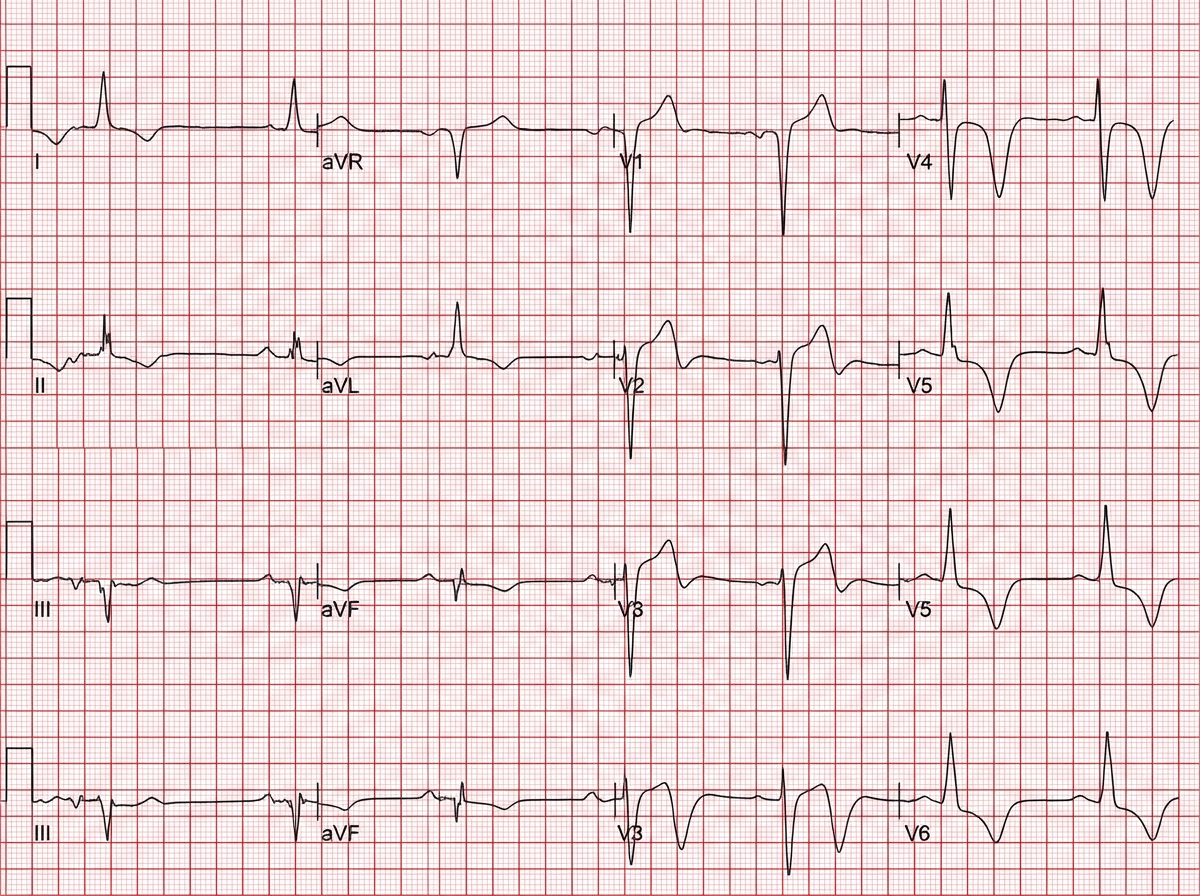
A 72-year-old man with congestive heart failure is brought to the emergency department because of chest pain, shortness of breath, dizziness, and palpitations for 30 minutes. An ECG shows a wide complex tachycardia with a P-wave rate of 105/min, an R-wave rate of 130/min, and no apparent relation between the two. Intravenous pharmacotherapy is initiated with a drug that prolongs the QRS and QT intervals. The patient was most likely treated with which of the following drugs?
Match the following drugs in Column A with their contraindications in Column B. | Column A | Column B | | :-- | :-- | | 1. Morphine | 1. QT prolongation | | 2. Amiodarone | 2. Thromboembolism | | 3. Vigabatrin | 3. Pregnancy | | 4. Estrogen preparations | 4. Head injury |
A 70-year-old male immigrant from Asia is brought to the emergency room with complaints of palpitations and light-headedness for 1 hour. The patient was sitting in his chair watching television when he felt his heart racing and became dizzy. He was unable to stand up from his chair because of weakness and light-headedness. His past medical history is notable for mitral stenosis secondary to rheumatic fever as a child. On arrival to the emergency department, the patient's temperature is 99.7°F (37.6°C), blood pressure is 110/55 mmHg, pulse is 140/min, and respirations are 15/min. The patient appears comfortable but anxious. Electrocardiogram shows atrial fibrillation with rapid ventricular response. The patient is started on dofetilide. Which of the following would be expected in this patient’s cardiac action potential as a result of this drug?
Want unlimited practice?
Get full access to all questions, explanations, and performance tracking.
Scan to download app