
Pharmacovigilance principles — MCQs

A 14-year-old boy is brought to the emergency department because of a 4-hour history of vomiting, lethargy, and confusion. Three days ago, he was treated with an over-the-counter medication for fever and runny nose. He is oriented only to person. His blood pressure is 100/70 mm Hg. Examination shows bilateral optic disc swelling and hepatomegaly. His blood glucose concentration is 65 mg/dL. Toxicology screening for serum acetaminophen is negative. The over-the-counter medication that was most likely used by this patient has which of the following additional effects?
A researcher is trying to determine whether a newly discovered substance X can be useful in promoting wound healing after surgery. She conducts this study by enrolling the next 100 patients that will be undergoing this surgery and separating them into 2 groups. She decides which patient will be in which group by using a random number generator. Subsequently, she prepares 1 set of syringes with the novel substance X and 1 set of syringes with a saline control. Both of these sets of syringes are unlabeled and the substances inside cannot be distinguished. She gives the surgeon performing the surgery 1 of the syringes and does not inform him nor the patient which syringe was used. After the study is complete, she analyzes all the data that was collected and performs statistical analysis. This study most likely provides which level of evidence for use of substance X?
A pharmaceutical company conducts a randomized clinical trial to demonstrate that their new anticoagulant drug, Aclotsaban, prevents more thrombotic events following total knee arthroplasty than the current standard of care. A significant number of patients are lost to follow-up, and many fail to complete treatment according to the study arm to which they were assigned. Despite these protocol deviations, the results for the patients who completed the course of Aclotsaban are encouraging. Which of the following analytical approaches is most appropriate for the primary analysis to establish the efficacy of Aclotsaban?
A 62-year-old man comes to his primary care physician with a 3-month history of insomnia and severe work anxiety. He says that he is unable to retire because he has no financial resources; however, the stress level at his work has been causing him to have worsening performance and he is afraid of being fired. He thinks that he would be able to resume work normally if he was able to decrease his level of anxiety. His physician prescribes him a trial 1-month regimen of benzodiazepine therapy and schedules a follow-up appointment to see whether this treatment has been effective. Three weeks later, the patient's wife calls and says "My husband was fired from work and it's your fault for prescribing that medication! I know he must have been taking too much of that drug. Don't you know that he had a horrible problem with drug abuse in his 30s?" Which of the following is the most appropriate first action for the physician to take?
After the administration of an erroneous dose of intravenous phenytoin for recurrent seizures, a 9-year-old girl develops bradycardia and asystole. Cardiopulmonary resuscitation was initiated immediately. After 15 minutes, the blood pressure is 120/75 mm Hg, the pulse is 105/min, and the respirations are 14/min and spontaneous. She is taken to the critical care unit for monitoring and mechanical ventilation. She follows commands but requires sedation due to severe anxiety. Which of the following terms most accurately describes the unexpected occurrence in this patient?
A research team is studying the effects of a novel drug that was discovered to treat type 2 diabetes. In order to learn more about its effects, they follow patients who are currently taking the drug and determine whether there are adverse effects that exceed anticipated levels and may therefore be drug-related. They discover that the drug causes an excess of sudden cardiac death in 19 patients with renal failure out of 2 million total patients that are followed. Based on these results, an additional warning about this serious adverse effect is added to the investigator brochure for the drug. Which of the following clinical phase studies does this study most likely describe?
An experimental new drug (SD27C) is being studied. This novel drug delivers insulin via the intranasal route. Consent is obtained from participants who are diabetic and are taking insulin as their current treatment regimen to participate in a clinical trial. 500 patients consent and are divided into 2 groups, and a double-blind clinical trial was conducted. One group received the new formulation (SD27C), while the second group received regular insulin via subcutaneous injection. The results showed that the treatment outcomes in both groups are the same. SD27C is currently under investigation in which phase of the clinical trial?
A 21-year-old man presents to the office for a follow-up visit. He was recently diagnosed with type 1 diabetes mellitus after being hospitalized for diabetic ketoacidosis following a respiratory infection. He is here today to discuss treatment options available for his condition. The doctor mentions a recent study in which researchers have developed a new version of the insulin pump that appears efficacious in type 1 diabetics. They are currently comparing it to insulin injection therapy. This new pump is not yet available, but it looks very promising. At what stage of clinical trials is this current treatment most likely at?
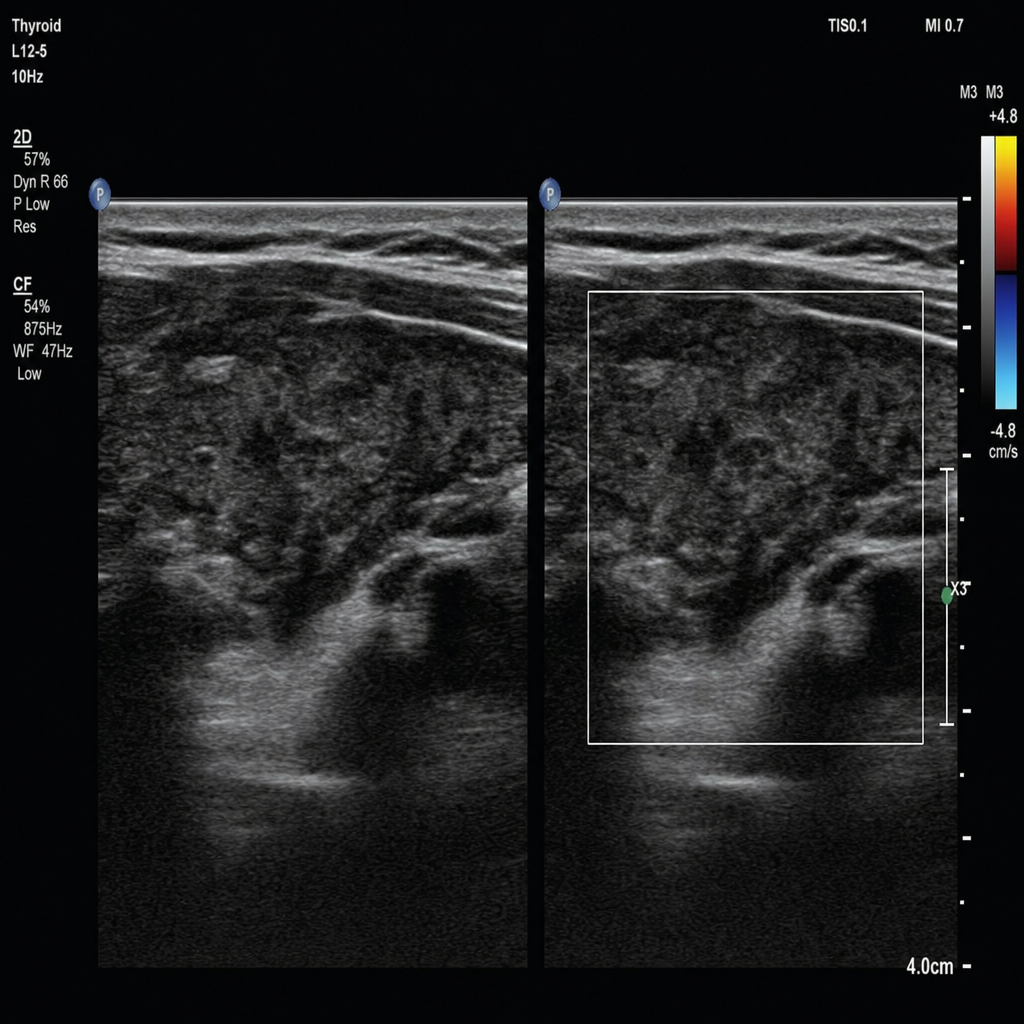
A 62-year-old man with a history of atrial fibrillation is admitted for elective cardioversion. He has been on amiodarone for rate control for the past 8 months. Laboratory results show TSH < 0.01 mIU/L, free T4 elevated, and free T3 elevated. He denies palpitations or heat intolerance. A thyroid ultrasound with color Doppler is performed and demonstrates absent vascularity within a heterogeneous gland. Which of the following best describes the underlying pathophysiology of his thyroid abnormality?
A 70-year-old man with Parkinson disease controlled on levodopa/carbidopa for 5 years develops psychotic symptoms. His neurologist considers adding an antipsychotic but is concerned about worsening parkinsonism. His family reports he has good motor control currently but the hallucinations are distressing. Evaluate the most appropriate antipsychotic choice considering the drug interaction profile.
Want unlimited practice?
Get full access to all questions, explanations, and performance tracking.
Scan to download app