
P-glycoprotein interactions — MCQs

An investigator is comparing the risk of adverse effects among various antiarrhythmic medications. One of the drugs being studied primarily acts by blocking the outward flow of K+ during myocyte repolarization. Further investigation shows that the use of this drug is associated with a lower rate of ventricular tachycardia, ventricular fibrillation, and torsades de pointes when compared to similar drugs. Which of the following drugs is most likely being studied?
Which transport mechanism is primarily responsible for calcium reabsorption in the proximal tubule?
A 63-year-old man with a history of hypertension and atrial fibrillation is brought into the emergency room and found to have a ventricular tachyarrhythmia. Ibutilide is discontinued and the patient is switched to another drug that also prolongs the QT interval but is associated with a decreased risk of torsades de pointes. Which drug was most likely administered in this patient?
A 62-year-old man is brought to the emergency department because of a 4-hour history of abdominal pain, nausea, vomiting, and confusion. His wife reports that he had blurry vision on the way to the hospital. Two weeks ago, he lost his job and since then has been extremely worried about their financial situation and future. He has congestive heart failure and atrial fibrillation well controlled with combination medical therapy. His temperature is 36.5°C (97.7°F), pulse is 57/min and irregular, respirations are 14/min, and blood pressure is 118/63 mm Hg. The patient is oriented only to person. Serum studies show: Na+ 138 mEq/L Cl− 100 mEq/L K+ 5.3 mEq/L HCO3− 25 mEq/L Blood urea nitrogen 14 mg/dL Creatinine 0.9 mg/dL An ECG shows premature ventricular beats. The drug most likely responsible for this patient's symptoms has which of the following mechanisms of action?
A pharmaceutical company is studying a new drug that inhibits the glucose transporter used by intestinal enterocytes to absorb glucose into the body. The drug was designed such that it would act upon the glucose transporter similarly to how cyanide acts upon cytochrome proteins. During pre-clinical studies, the behavior of this drug on the activity of the glucose transporter is examined. Specifically, enterocyte cells are treated with the drug and then glucose is added to the solution at a concentration that saturates the activity of the transporter. The transport velocity and affinity of the transporters under these conditions are then measured. Compared to the untreated state, which of the following changes would most likely be seen in these transporters after treatment?
A 55-year-old male presents to his primary care physician for a normal check-up. He has a history of atrial fibrillation for which he takes metoprolol and warfarin. During his last check-up, his international normalized ratio (INR) was 2.5. He reports that he recently traveled to Mexico for a business trip where he developed a painful red rash on his leg. He was subsequently prescribed an unknown medication by a local physician. The rash resolved after a few days and he currently feels well. His temperature is 98.6°F (37°C), blood pressure is 130/80 mmHg, pulse is 95/min, and respirations are 18/min. Laboratory analysis reveals that his current INR is 4.5. Which of the following is the most likely medication this patient took while in Mexico?
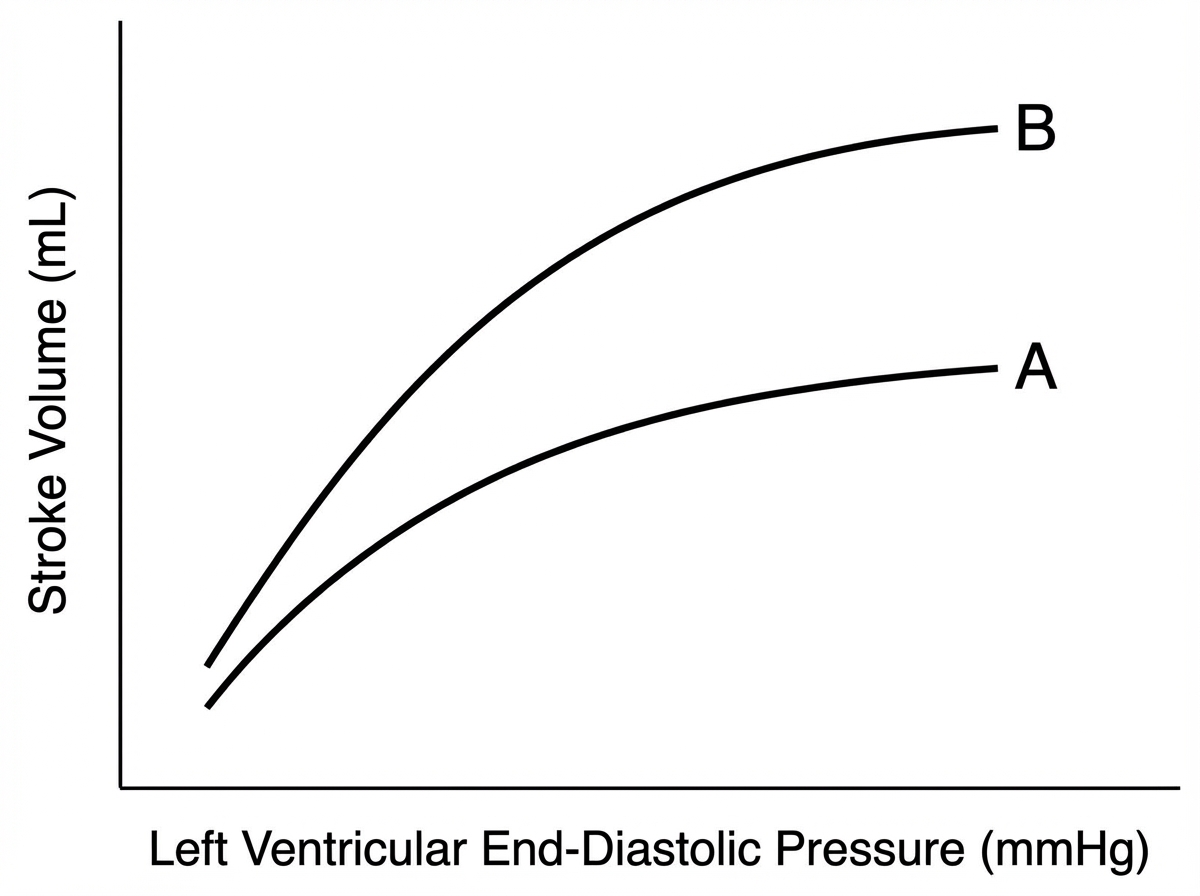
A 78-year-old male comes to the physician’s office for a routine check-up. He complains of increased lower extremity swelling, inability to climb the one flight of stairs in his home, and waking up in the middle of the night 2-3 times gasping for breath. He has had to increase the number of pillows on which he sleeps at night. These symptoms started 9 months ago and have been progressing. The doctor starts him on a medication regimen, one of which changes his Starling curve from A to B as shown in the Figure. Which of the following medications is most consistent with this mechanism of action?
A previously healthy 52-year-old woman comes to the physician because of a 3-month history of chest pain on exertion. She takes no medications. Cardiopulmonary examination shows no abnormalities. Cardiac stress ECG shows inducible ST-segment depressions in the precordial leads that coincide with the patient's report of chest pain and resolve upon cessation of exercise. Pharmacotherapy with verapamil is initiated. This drug is most likely to have which of the following sets of effects? $$$ End-diastolic volume (EDV) %%% Blood pressure (BP) %%% Contractility %%% Heart rate (HR) $$$
A patient is receiving daily administrations of Compound X. Compound X is freely filtered in the glomeruli and undergoes net secretion in the renal tubules. The majority of this tubular secretion occurs in the proximal tubule. Additional information regarding this patient's renal function and the renal processing of Compound X is included below: Inulin clearance: 120 mL/min Plasma concentration of Inulin: 1 mg/mL PAH clearance: 600 mL/min Plasma concentration of PAH: 0.2 mg/mL Total Tubular Secretion of Compound X: 60 mg/min Net Renal Excretion of Compound X: 300 mg/min Which of the following is the best estimate of the plasma concentration of Compound X in this patient?
A 72-year-old man with congestive heart failure is brought to the emergency department because of chest pain, shortness of breath, dizziness, and palpitations for 30 minutes. An ECG shows a wide complex tachycardia with a P-wave rate of 105/min, an R-wave rate of 130/min, and no apparent relation between the two. Intravenous pharmacotherapy is initiated with a drug that prolongs the QRS and QT intervals. The patient was most likely treated with which of the following drugs?
Want unlimited practice?
Get full access to all questions, explanations, and performance tracking.
Scan to download app