
Peripheral vascular disease therapies — MCQs

A 67-year-old man comes to the office due to pain in the lower part of his calves on his afternoon walk to get the mail. The pain is relieved by rest. It started slowly about 6 months ago and has become more painful over time. He has a history of hypertension, hyperlipidemia, diabetes mellitus, and a 20-pack-year smoking history. Medications include hydrochlorothiazide, atorvastatin, metformin, and a multivitamin that he takes daily. The patient quit smoking 2 years ago and only drinks socially. Today, his blood pressure is 145/90 mm Hg, pulse is 75/min, respiratory rate is 17/min, and temperature is 37.6°C (99.6°F). On physical exam, he appears mildly obese and healthy. His heart has a regular rate and rhythm, and his lungs are clear to auscultation bilaterally. Examination of the legs shows atrophic changes and diminished pedal pulses. A measure of his ankle brachial index (ABI) is 0.89. Which of the following is the most appropriate initial treatment?
A 62-year-old man presents to his primary care provider complaining of leg pain with exertion for the past 6 months. He notices that he has bilateral calf cramping with walking. He states that it is worse in his right calf than in his left, and it goes away when he stops walking. He has also noticed that his symptoms are progressing and that this pain is occurring sooner than before. His medical history is remarkable for type 2 diabetes mellitus and 30-pack-year smoking history. His ankle-brachial index (ABI) is found to be 0.80. Which of the following can be used as initial therapy for this patient's condition?
A primary care physician who focuses on treating elderly patients is researching recommendations for secondary prevention. She is particularly interested in recommendations regarding aspirin, as she has several patients who ask her if they should take it. Of the following, which patient should be started on lifelong aspirin as monotherapy for secondary prevention of atherosclerotic cardiovascular disease?
A 58-year-old man comes to the physician because of a 3-month history of intermittent pain in his right calf that occurs after walking up more than 2 flights of stairs. He reports that the pain is associated with a tingling sensation and lasts for about 10 minutes. He is otherwise healthy. He has smoked 2 packs of cigarettes daily for 30 years and drinks 1 alcoholic beverage daily. He currently takes no medications. His pulse is 78/min, and blood pressure is 180/110 mm Hg. Physical examination shows yellow plaques below the lower eyelids bilaterally, loss of hair on the distal third of the right leg, and brittle toenails on the right foot. Femoral pulses are palpable bilaterally; right popliteal and pedal pulses are absent. Which of the following is the most appropriate management to prevent future morbidity and mortality of this patient's condition?
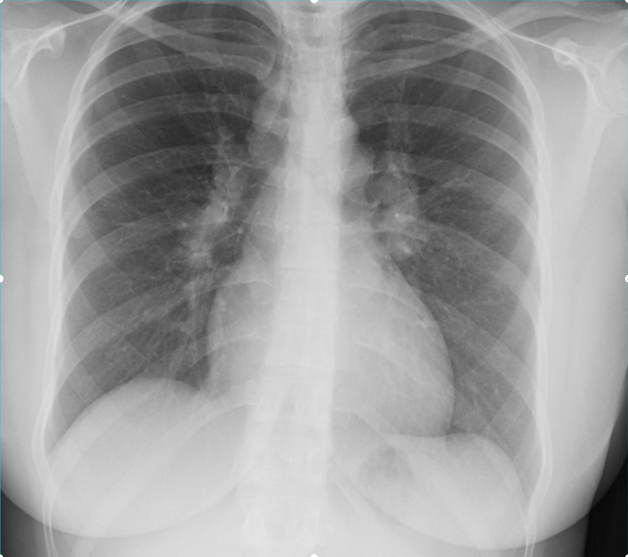
A 26-year-old man comes to the physician because of a 1-week history of left-sided chest pain. The pain is worse when he takes deep breaths. Over the past 6 weeks, he had been training daily for an upcoming hockey tournament. He does not smoke cigarettes or drink alcohol but has used cocaine once. His temperature is 37.1°C (98.7°F), pulse is 75/min, and blood pressure is 128/85 mm Hg. Physical examination shows tenderness to palpation of the left chest. An x-ray of the chest is shown. Which of the following is the most appropriate initial pharmacotherapy?
A 43-year-old woman comes to the physician because of a 3-month history of a painless ulcer on the sole of her right foot. There is no history of trauma. She has been dressing the ulcer once daily at home with gauze. She has a 15-year history of poorly-controlled type 1 diabetes mellitus and hypertension. Current medications include insulin and lisinopril. Vital signs are within normal limits. Examination shows a 2 x 2-cm ulcer on the plantar aspect of the base of the great toe with whitish, loose tissue on the floor of the ulcer and a calloused margin. A blunt metal probe reaches the deep plantar space. Sensation to vibration and light touch is decreased over both feet. Pedal pulses are intact. An x-ray of the right foot shows no abnormalities. Which of the following is the most appropriate initial step in management?
A 67-year-old man presents with pain in both legs. He says the pain is intermittent in nature and has been present for approximately 6 months. The pain increases with walking, especially downhill, and prolonged standing. It is relieved by lying down and leaning forward. Past medical history is significant for type 2 diabetes mellitus, hypercholesterolemia, and osteoarthritis. The patient reports a 56-pack-year history but denies any alcohol or recreational drug use. His vital signs include: blood pressure 142/88 mm Hg, pulse 88/min, respiratory rate 14/min, temperature 37°C (98.6°F). On physical examination, the patient is alert and oriented. Muscle strength is 5/5 in his upper and lower extremities bilaterally. Babinski and Romberg tests are negative. Pulses measure 2+ in upper and lower extremities bilaterally. Which of the following is the next best step in the management of this patient?
A 38-year-old woman with a history of Crohn’s disease presents with a 3-week history of weight gain. The patient also presents with a 1-month history of abdominal pain, cramping, and bloody diarrhea consistent with worsening of her inflammatory bowel disease. Past medical history is significant for Crohn’s disease diagnosed 2 years ago for which she currently takes an oral medication daily and intermittently receives intravenous medication she cannot recall the name of. Her temperature is 37.0°C (98.6°F), blood pressure is 120/90 mm Hg, pulse is 68/min, respiratory rate is 14/min, and oxygen saturation is 99% on room air. Physical examination reveals significant truncal weight gain. The patient has excessive facial hair in addition to purplish striae on her abdomen. Which of the following laboratory findings would most likely be found in this patient?
A 60-year-old patient is at his physician’s office for a routine health maintenance exam. The patient has a past medical history of osteoarthritis in his right knee and GERD that is well-controlled with over the counter medication. On a fasting lipid profile, he is found to have high cholesterol. The patient is started on daily atorvastatin to reduce his risk of cardiovascular disease. What is the major apolipoprotein found on the lipoprotein most directly affected by his statin medication?
A 21-year-old woman comes to the physician because of a 4-day history of abdominal cramps and bloody diarrhea 5 times per day. Her symptoms began after she ate an egg sandwich from a restaurant. Her vital signs are within normal limits. Physical examination shows diffuse abdominal tenderness. Stool culture shows gram-negative rods that produce hydrogen sulfide and do not ferment lactose. Which of the following effects is most likely to occur if she receives antibiotic therapy?
Want unlimited practice?
Get full access to all questions, explanations, and performance tracking.
Scan to download app