An 8-year-old female is given omalizumab for the treatment of bronchial asthma. Omalizumab treats asthma through which mechanism?
Q762
A 49-year-old man seeks evaluation at an urgent care clinic with a complaint of palpitations for the past few hours. He denies any chest pain, shortness of breath, or sweating. He is anxious and appears worried. His medical history is unremarkable with the exception of mild bronchial asthma. He only uses medications during an asthma attack and has not used medications since last week. He is a former smoker and drinks a couple of beers on weekends. His heart rate is 146/min, respiratory rate is 16/min, temperature is 37.6°C (99.68°F), and blood pressure is 120/80 mm Hg. The physical examination is unremarkable, and an electrocardiogram is ordered. Which of the following groups of drugs should be given to treat his symptoms?
Q763
A 62-year-old man is brought to the emergency room because of pain in his right hip. He was found lying on the floor several hours after falling onto his right side. Ten years ago, he received a renal transplant from a living related donor. He has a 4-year history of type 2 diabetes. Current medications include prednisone, cyclosporine, and metformin. Examination shows a shortened and externally rotated right leg. There is extensive bruising over the right buttock and thigh. X-ray of the right hip shows a displaced femoral neck fracture. The patient is resuscitated in the emergency room and taken to surgery for a right total hip replacement. Post-operative laboratory studies show:
Hemoglobin 11.2 g/dL
Serum
Na+ 148 mmol/L
K+ 7.1 mmol/L
Cl- 119 mmol/L
HCO3- 18 mmol/L
Urea nitrogen 22 mg/dL
Creatinine 1.6 mg/dL
Glucose 200 mg/dL
Creatine kinase 1,562 U/L
His urine appears brown. Urine dipstick is strongly positive for blood. ECG shows peaked T waves. Intravenous calcium gluconate is administered. What is the most appropriate next step in management?
Q764
A 65-year-old woman, with end-stage renal disease (ESRD) on hemodialysis, presents with pain, swelling and discoloration of her right leg and foot. She says that she started twice-weekly hemodialysis 2 weeks ago and has had no issues until 1 week ago when she noticed a warm, painful swelling of the back of her right leg and right foot after finishing her dialysis session. Over the week, she says these symptoms have steadily worsened and, in the last few days, her right foot has become discolored. Past medical history is significant for ESRD secondary to long-standing hypertension. Current medications are verapamil 200 mg orally daily and unfractionated heparin that is given during hemodialysis. Her vital signs include: temperature 37.0°C (98.6°F), blood pressure 145/75 mm Hg, pulse 88/min, respirations 15/min, and oxygen saturation 99% on room air. On physical examination, the patient is alert and cooperative. The cardiac exam is normal. Lungs are clear to auscultation. The abdomen is soft and nontender with no hepatosplenomegaly. The right calf is swollen, warm, and erythematous. Physical findings of the patient’s right foot are shown in the exhibit. Laboratory findings are significant for the following:
Sodium 141 mEq/L
Potassium 4.9 mEq/L
Chloride 104 mEq/L
Bicarbonate 25 mEq/L
BUN 32 mg/dL
Creatinine 3.1 mg/dL
Glucose (fasting) 75 mg/dL
Bilirubin, conjugated 0.5 mg/dL
Bilirubin, total 1.0 mg/dL
AST (SGOT) 22 U/L
ALT (SGPT) 23 U/L
Alkaline phosphatase 56 U/L
Bleeding time 19 min
Prothrombin time (PT) 11 s
Partial thromboplastin time (PTT) 30 s
WBC 8,500/mm3
RBC 4.10 x 10⁶/mm3
Hematocrit 41.5%
Hemoglobin 13.5 g/dL
Platelet count 100,000/mm3 (previously 200,000/mm3)
Which of the following is the next best diagnostic step in this patient?

Q765
A 58-year-old Caucasian male who is being treated for atrial fibrillation and angina complains of dyspnea on exertion. On exam, his heart rate 104-115/min and irregularly irregular at rest. He has no chest pain. You believe his rate control for atrial fibrillation is suboptimal and the likely cause of his dyspnea. You are considering adding verapamil to his current metoprolol for additional rate control of his atrial fibrillation. Which of the following side effects should you be most concerned about with this additional medication?
Q766
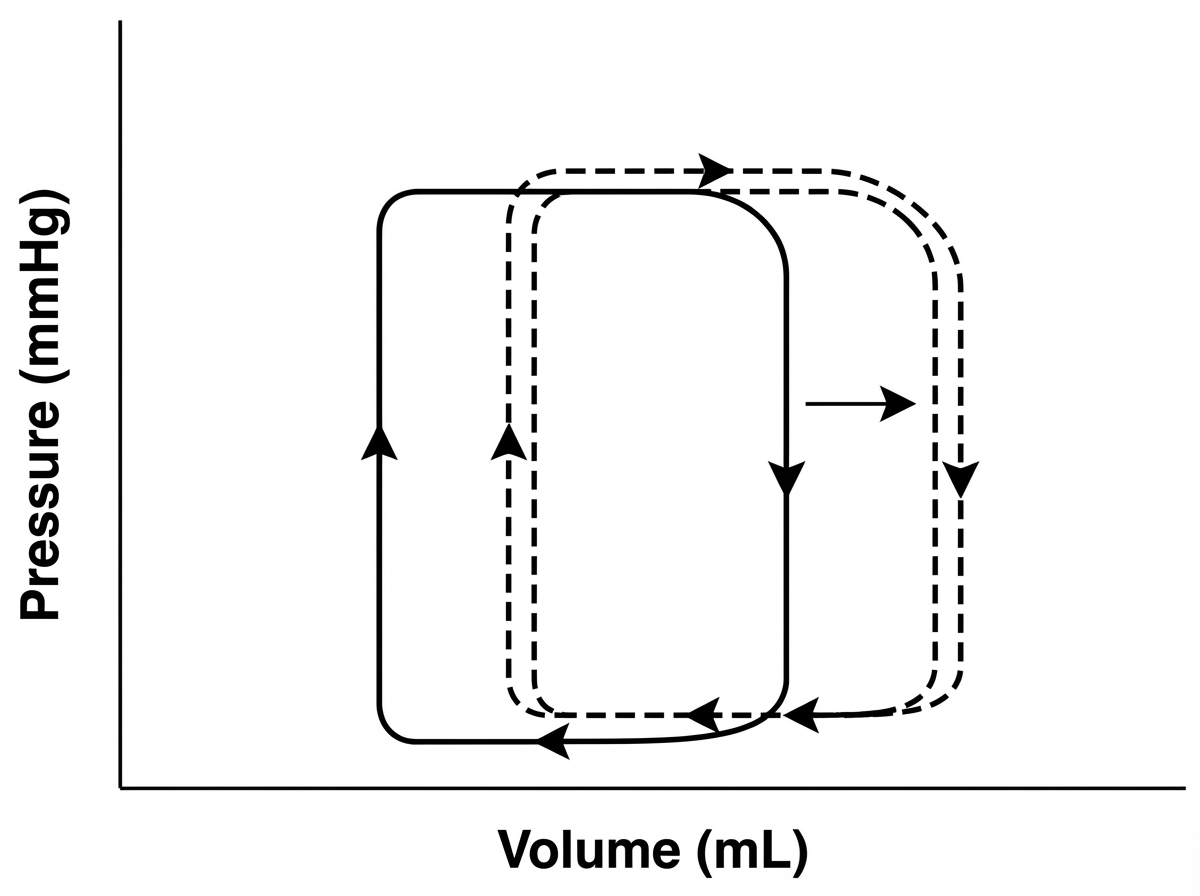
A pharmaceutical company is testing a new antidepressant. During phase I of the drug trial, healthy volunteers are recruited, and the effects of the drug on the cardiovascular system are studied. A graphical representation of the volume-pressure relationship of the left ventricle of the heart is given below with the dashed line representing post medication changes. Which of the following is the most likely mechanism of the drug being studied?
Q767
A 67-year-old man presents to his primary care physician for a decline in his hearing that he noticed over the past week. The patient has a past medical history of hypertension and diabetes mellitus and was recently diagnosed with bladder cancer which is currently appropriately being treated. The patient is a hunter and often goes shooting in his spare time. His recent sick contacts include his grandson who is being treated with amoxicillin for ear pain. Physical exam is notable for decreased hearing bilaterally. The Weber test does not localize to either ear, and the Rinne test demonstrates air conduction is louder than bone conduction. Which of the following is the most likely etiology for this patient's hearing loss?
Q768
A 78-year-old male comes to the physician’s office for a routine check-up. He complains of increased lower extremity swelling, inability to climb the one flight of stairs in his home, and waking up in the middle of the night 2-3 times gasping for breath. He has had to increase the number of pillows on which he sleeps at night. These symptoms started 9 months ago and have been progressing. The doctor starts him on a medication regimen, one of which changes his Starling curve from A to B as shown in the Figure. Which of the following medications is most consistent with this mechanism of action?
Q769
Benzodiazepines are clinically useful because of their inhibitory effects on the central nervous system. Which of the following correctly pairs the site of action of benzodiazepines with the molecular mechanism by which they exert their effects?
Q770
A 45-year-old man with type 2 diabetes mellitus presents to his family physician for a follow-up appointment. He is currently using a 3-drug regimen consisting of metformin, sitagliptin, and glipizide. Despite this therapeutic regimen, his most recent hemoglobin A1c level is 8.1%. Which of the following is the next best step for this patient?
Autonomic/CV Drugs US Medical PG Practice Questions and MCQs
Question 761: An 8-year-old female is given omalizumab for the treatment of bronchial asthma. Omalizumab treats asthma through which mechanism?
A. Inhibition of leukotriene binding to receptor
B. Binding to nuclear receptors
C. Inhibition of phosphodiesterase breakdown of cAMP
D. Inhibition of IgE binding to mast cells (Correct Answer)
E. Mediating type IV hypersensitivity reaction
Explanation: ***Inhibition of IgE binding to mast cells***
- **Omalizumab** is a **monoclonal antibody** that specifically targets and binds to **free IgE** in the bloodstream.
- By binding to IgE, it prevents IgE from attaching to its receptors on **mast cells** and other inflammatory cells, thereby reducing the release of inflammatory mediators that cause asthma symptoms.
*Inhibition of leukotriene binding to receptor*
- This mechanism describes drugs like **montelukast** and **zafirlukast**, which are **leukotriene receptor antagonists**.
- These drugs block the action of leukotrienes, which are potent bronchoconstrictors and inflammatory mediators, but this is not how omalizumab works.
*Binding to nuclear receptors*
- This mechanism is characteristic of **corticosteroids** (e.g., prednisone, fluticasone), which bind to intracellular nuclear receptors to modulate gene expression and reduce inflammation.
- Omalizumab does not act on nuclear receptors; its primary action is extracellular.
*Inhibition of phosphodiesterase breakdown of cAMP*
- This is the mechanism of action for **methylxanthines** like **theophylline**, which increase intracellular cAMP levels leading to bronchodilation.
- Omalizumab does not inhibit phosphodiesterase; it works upstream by targeting IgE.
*Mediating type IV hypersensitivity reaction*
- Type IV hypersensitivity reactions (delayed-type hypersensitivity) are cell-mediated, involving **T cells** and **macrophages**, not antibodies like IgE or omalizumab directly.
- If anything, omalizumab aims to *reduce* the allergic immune response that can contribute to asthma, not mediate a hypersensitivity reaction itself.
Question 762: A 49-year-old man seeks evaluation at an urgent care clinic with a complaint of palpitations for the past few hours. He denies any chest pain, shortness of breath, or sweating. He is anxious and appears worried. His medical history is unremarkable with the exception of mild bronchial asthma. He only uses medications during an asthma attack and has not used medications since last week. He is a former smoker and drinks a couple of beers on weekends. His heart rate is 146/min, respiratory rate is 16/min, temperature is 37.6°C (99.68°F), and blood pressure is 120/80 mm Hg. The physical examination is unremarkable, and an electrocardiogram is ordered. Which of the following groups of drugs should be given to treat his symptoms?
A. Non-selective β-receptor antagonist
B. β-receptor agonist
C. α-receptor agonist
D. Selective β1-receptor antagonist (Correct Answer)
E. α1-receptor antagonist
Explanation: ***Selective β1-receptor antagonist***
- The patient presents with **palpitations** and a heart rate of 146/min, indicating a **tachyarrhythmia**. A selective β1-receptor antagonist is ideal as it can slow the heart rate without significantly affecting β2-receptors in the lungs, which is crucial for a patient with a history of **asthma**.
- Medications like **metoprolol** or **atenolol** belong to this class and are preferred in patients with pulmonary conditions.
*Non-selective β-receptor antagonist*
- While effective at reducing heart rate, a **non-selective β-receptor antagonist** (e.g., **propranolol**) would block both β1 and β2 receptors.
- Blocking β2-receptors can lead to **bronchoconstriction**, potentially exacerbating the patient's underlying **asthma**.
*β-receptor agonist*
- A **β-receptor agonist** would **increase heart rate** and cardiac contractility, worsening the patient's existing palpitations and tachycardia.
- This class of drugs is primarily used for conditions like asthma (e.g., **albuterol**, a β2-agonist) or heart failure, not for treating tachycardia.
*α-receptor agonist*
- **α-receptor agonists** primarily cause **vasoconstriction** and can increase blood pressure (e.g., **phenylephrine**).
- They are not indicated for treating palpitations or tachycardia and may further elevate heart rate reflexively due to increased peripheral resistance.
*α1-receptor antagonist*
- **α1-receptor antagonists** (e.g., **prazosin**) are primarily used to treat **hypertension** or **benign prostatic hyperplasia** by causing vasodilation.
- They would not directly address the patient's palpitations or tachycardia and could potentially cause **hypotension**.
Question 763: A 62-year-old man is brought to the emergency room because of pain in his right hip. He was found lying on the floor several hours after falling onto his right side. Ten years ago, he received a renal transplant from a living related donor. He has a 4-year history of type 2 diabetes. Current medications include prednisone, cyclosporine, and metformin. Examination shows a shortened and externally rotated right leg. There is extensive bruising over the right buttock and thigh. X-ray of the right hip shows a displaced femoral neck fracture. The patient is resuscitated in the emergency room and taken to surgery for a right total hip replacement. Post-operative laboratory studies show:
Hemoglobin 11.2 g/dL
Serum
Na+ 148 mmol/L
K+ 7.1 mmol/L
Cl- 119 mmol/L
HCO3- 18 mmol/L
Urea nitrogen 22 mg/dL
Creatinine 1.6 mg/dL
Glucose 200 mg/dL
Creatine kinase 1,562 U/L
His urine appears brown. Urine dipstick is strongly positive for blood. ECG shows peaked T waves. Intravenous calcium gluconate is administered. What is the most appropriate next step in management?
A. Administer intravenous furosemide and normal saline
B. Initiate hemodialysis
C. Administer nebulized albuterol
D. Administer intravenous sodium bicarbonate
E. Administer intravenous insulin and glucose (Correct Answer)
Explanation: ***Administer intravenous insulin and glucose***
- The patient has severe **hyperkalemia (K+ 7.1 mmol/L)** with **ECG changes (peaked T waves)**, necessitating urgent treatment to shift potassium into cells.
- **Insulin and glucose** drive potassium into cells by stimulating the Na+/K+-ATPase pump, rapidly lowering serum potassium and stabilizing the cardiac membrane.
*Administer intravenous furosemide and normal saline*
- While furosemide can increase potassium excretion, it is less effective for emergent hyperkalemia with significant ECG changes, and **saline infusion** alone does not address the intracellular shift needed.
- The patient also likely has **rhabdomyolysis** (elevated CK, brown urine, positive blood on dipstick without RBCs), which requires aggressive fluid resuscitation, but this specific combination does not directly resolve the immediate threat of hyperkalemia.
*Initiate hemodialysis*
- Hemodialysis is the most effective way to remove potassium from the body and would be indicated for refractory or severe hyperkalemia, especially in the setting of renal impairment.
- However, **insulin and glucose** provide a more rapid initial intervention to stabilize the patient while preparations for hemodialysis are made.
*Administer nebulized albuterol*
- Nebulized albuterol can transiently lower serum potassium by stimulating the Na+/K+-ATPase pump, similar to insulin, but it is generally less potent and has a variable response.
- It could be considered as an adjunct, but is not the primary or most reliable acute treatment for severe hyperkalemia with ECG changes.
*Administer intravenous sodium bicarbonate*
- Sodium bicarbonate can shift potassium into cells by correcting acidosis, which this patient likely has (bicarbonate 18 mmol/L).
- However, its effect is typically slower and less predictable than insulin and glucose, especially in non-acidotic hyperkalemia or when rapid membrane stabilization is critical.
Question 764: A 65-year-old woman, with end-stage renal disease (ESRD) on hemodialysis, presents with pain, swelling and discoloration of her right leg and foot. She says that she started twice-weekly hemodialysis 2 weeks ago and has had no issues until 1 week ago when she noticed a warm, painful swelling of the back of her right leg and right foot after finishing her dialysis session. Over the week, she says these symptoms have steadily worsened and, in the last few days, her right foot has become discolored. Past medical history is significant for ESRD secondary to long-standing hypertension. Current medications are verapamil 200 mg orally daily and unfractionated heparin that is given during hemodialysis. Her vital signs include: temperature 37.0°C (98.6°F), blood pressure 145/75 mm Hg, pulse 88/min, respirations 15/min, and oxygen saturation 99% on room air. On physical examination, the patient is alert and cooperative. The cardiac exam is normal. Lungs are clear to auscultation. The abdomen is soft and nontender with no hepatosplenomegaly. The right calf is swollen, warm, and erythematous. Physical findings of the patient’s right foot are shown in the exhibit. Laboratory findings are significant for the following:
Sodium 141 mEq/L
Potassium 4.9 mEq/L
Chloride 104 mEq/L
Bicarbonate 25 mEq/L
BUN 32 mg/dL
Creatinine 3.1 mg/dL
Glucose (fasting) 75 mg/dL
Bilirubin, conjugated 0.5 mg/dL
Bilirubin, total 1.0 mg/dL
AST (SGOT) 22 U/L
ALT (SGPT) 23 U/L
Alkaline phosphatase 56 U/L
Bleeding time 19 min
Prothrombin time (PT) 11 s
Partial thromboplastin time (PTT) 30 s
WBC 8,500/mm3
RBC 4.10 x 10⁶/mm3
Hematocrit 41.5%
Hemoglobin 13.5 g/dL
Platelet count 100,000/mm3 (previously 200,000/mm3)
Which of the following is the next best diagnostic step in this patient?
A. Flow cytometry for CD55
B. Functional assay for factor VIII
C. Peripheral blood smear
D. Serotonin release assay
E. Heparin/PF4 enzyme-linked immunosorbent assay (ELISA) (Correct Answer)
Explanation: **Heparin/PF4 enzyme-linked immunosorbent assay (ELISA)**
- The patient's presentation with **pain**, **swelling**, and **discoloration** of the leg and foot, occurring after starting hemodialysis with heparin and associated with **thrombocytopenia** (platelets decreased from 200,000 to 100,000), strongly suggests **heparin-induced thrombocytopenia (HIT) with thrombosis**.
- **Heparin/PF4 ELISA** is a crucial initial diagnostic step for HIT, detecting antibodies formed against the heparin-platelet factor 4 complex, which are central to the pathogenesis of HIT.
*Flow cytometry for CD55*
- This assay is used to diagnose **paroxysmal nocturnal hemoglobinuria (PNH)** by detecting deficiencies in GPI-anchored proteins like CD55 and CD59 on blood cells.
- PNH typically presents with hemolytic anemia, pancytopenia, and thrombosis, but the acute onset following heparin exposure and the specific drop in platelet count make HIT a more likely diagnosis in this patient.
*Functional assay for factor VIII*
- A functional assay for factor VIII is used to diagnose **hemophilia A**, a bleeding disorder characterized by recurrent bleeding episodes.
- This patient presents with thrombosis and thrombocytopenia, not a bleeding tendency, making hemophilia A an unlikely diagnosis.
*Peripheral blood smear*
- While a **peripheral blood smear** is a foundational hematologic test, it would primarily evaluate red cell morphology, white cell differential, and platelet estimation.
- Although it might show platelet clumping or schistocytes in some thrombotic microangiopathies, it is not specific enough to diagnose HIT and would not be the *next best* diagnostic step compared to tests for HIT antibodies.
*Serotonin release assay*
- The **serotonin release assay (SRA)** is considered the **gold standard functional assay** for HIT, confirming the presence of platelet-activating antibodies.
- However, it is typically performed *after* a positive ELISA result to confirm the diagnosis due to its complexity and limited availability, making the ELISA the more appropriate *initial* diagnostic step.
Question 765: A 58-year-old Caucasian male who is being treated for atrial fibrillation and angina complains of dyspnea on exertion. On exam, his heart rate 104-115/min and irregularly irregular at rest. He has no chest pain. You believe his rate control for atrial fibrillation is suboptimal and the likely cause of his dyspnea. You are considering adding verapamil to his current metoprolol for additional rate control of his atrial fibrillation. Which of the following side effects should you be most concerned about with this additional medication?
A. Hypotension (Correct Answer)
B. Diarrhea
C. Torsades de pointes
D. Tachycardia
E. Shortening of action potential length at the AV node
Explanation: ***Hypotension***
- **Verapamil** (a non-dihydropyridine calcium channel blocker) and **metoprolol** (a beta-blocker) both have significant **negative inotropic** and **chronotropic** effects, as well as vasodilatory properties.
- Their combined use can lead to synergistic **blood pressure lowering**, increasing the risk of symptomatic hypotension, especially in a patient with **angina** where careful blood pressure management is crucial.
*Diarrhea*
- Diarrhea is not a common or significant side effect of either **verapamil** or **metoprolol** that would cause major concern in this clinical scenario.
- While gastrointestinal side effects can occur with many medications, **constipation** is more frequently associated with verapamil.
*Torsades de pointes*
- **Torsades de pointes** is a form of polymorphic ventricular tachycardia typically caused by drugs that prolong the **QT interval**.
- Neither **verapamil** nor **metoprolol** are known to significantly prolong the QT interval or cause Torsades de pointes.
*Tachycardia*
- Both **verapamil** and **metoprolol** are used to **slow heart rate**, particularly in conditions like **atrial fibrillation** and **angina**.
- Combining these medications would be expected to further decrease the heart rate, not cause tachycardia.
*Shortening of action potential length at the AV node*
- Both **verapamil** and **beta-blockers** like metoprolol primarily act to **slow conduction** through the **AV node** by extending the refractory period and **prolonging the action potential duration** (or decreasing excitability), thereby decreasing ventricular rate in atrial fibrillation.
- Shortening the action potential length at the AV node would theoretically lead to faster conduction and an increased heart rate, which is the opposite of the intended effect of these medications.
Question 766: A pharmaceutical company is testing a new antidepressant. During phase I of the drug trial, healthy volunteers are recruited, and the effects of the drug on the cardiovascular system are studied. A graphical representation of the volume-pressure relationship of the left ventricle of the heart is given below with the dashed line representing post medication changes. Which of the following is the most likely mechanism of the drug being studied?
A. Delaying phase 0 of the pacemaker action potential
B. M2 receptor activation (Correct Answer)
C. Gs-coupled receptor activation
D. Selective AT1 receptor blockade
E. Gq-coupled receptor activation
Explanation: ***M2 receptor activation***
- The pressure-volume loop shows a **rightward shift** with increased **left ventricular end-diastolic volume (LVEDV)** and **left ventricular end-systolic volume (LVESV)** while peak systolic pressure remains relatively unchanged, indicating **decreased myocardial contractility** (negative inotropic effect).
- **M2 muscarinic receptor activation** is mediated by **Gi protein signaling**, which inhibits adenylyl cyclase, decreasing **cAMP** levels and reducing intracellular calcium mobilization in cardiac myocytes.
- This leads to **decreased contractility** and **reduced heart rate** (negative chronotropic effect), resulting in impaired ventricular emptying and the observed rightward shift of the PV loop with larger ventricular volumes.
- Many antidepressants (particularly tricyclic antidepressants) can have complex autonomic effects, and some may indirectly enhance parasympathetic tone or have direct cardiac effects that reduce contractility.
*Gq-coupled receptor activation*
- **Gq-coupled receptor activation** (e.g., α1-adrenergic receptors) activates **phospholipase C**, generating **IP3** and **DAG**, which increases intracellular **calcium**.
- This causes **increased myocardial contractility** (positive inotropic effect) and vasoconstriction, which would produce a **leftward shift** of the PV loop with decreased LVESV.
- This is the **opposite** of what is shown in the graph.
*Gs-coupled receptor activation*
- **Gs-coupled receptor activation** (e.g., **β1-adrenergic receptors**) increases **cAMP** production, leading to **increased heart rate** and **enhanced contractility**.
- This would result in a **leftward shift** with smaller LVESV and increased ejection fraction, contradicting the observed changes.
*Selective AT1 receptor blockade*
- **AT1 receptor blockade** (e.g., by angiotensin receptor blockers like losartan) causes **vasodilation** and **decreased afterload**.
- This would improve ventricular ejection and typically **decrease LVESV**, producing a leftward shift, which is opposite to the graph.
*Delaying phase 0 of the pacemaker action potential*
- Delaying phase 0 would **slow automaticity** and reduce heart rate (e.g., class I antiarrhythmics like sodium channel blockers).
- While this affects heart rate, it does not directly explain the **reduced contractility** and increased ventricular volumes shown in the pressure-volume loop.
Question 767: A 67-year-old man presents to his primary care physician for a decline in his hearing that he noticed over the past week. The patient has a past medical history of hypertension and diabetes mellitus and was recently diagnosed with bladder cancer which is currently appropriately being treated. The patient is a hunter and often goes shooting in his spare time. His recent sick contacts include his grandson who is being treated with amoxicillin for ear pain. Physical exam is notable for decreased hearing bilaterally. The Weber test does not localize to either ear, and the Rinne test demonstrates air conduction is louder than bone conduction. Which of the following is the most likely etiology for this patient's hearing loss?
A. Otitis externa
B. Presbycusis
C. Otosclerosis
D. Medication regimen (Correct Answer)
E. Otitis media
Explanation: ***Medication regimen***
- The patient's history of bladder cancer treatment suggests recent exposure to **chemotherapeutic agents**, such as **cisplatin**, which are known to be **ototoxic**.
- A **sudden decline in hearing** over the past week points to an acute cause, such as drug-induced hearing loss.
*Otitis externa*
- This condition typically presents with **ear pain**, **pruritus**, and **discharge**, none of which are mentioned in the patient's presentation.
- The **Weber and Rinne test results** (normal AC > BC, no lateralization) are inconsistent with a conductive hearing loss typically associated with otitis externa.
*Presbycusis*
- **Presbycusis** is an age-related **sensorineural hearing loss** that typically develops **gradually over years**, not suddenly over a week.
- While the patient's age (67) is a risk factor, the acute onset makes this diagnosis less likely.
*Otosclerosis*
- **Otosclerosis** usually causes a **progressive conductive hearing loss**, often starting in young adulthood.
- The **Weber and Rinne test results** (normal AC > BC, no lateralization) are inconsistent with a conductive hearing loss.
*Otitis media*
- **Otitis media** typically presents with **ear pain**, **fullness**, and often **fever** or **discharge**, which are absent in this patient.
- The **Weber and Rinne test results** (normal AC > BC, no lateralization) are inconsistent with the conductive hearing loss that would be expected with otitis media.
Question 768: A 78-year-old male comes to the physician’s office for a routine check-up. He complains of increased lower extremity swelling, inability to climb the one flight of stairs in his home, and waking up in the middle of the night 2-3 times gasping for breath. He has had to increase the number of pillows on which he sleeps at night. These symptoms started 9 months ago and have been progressing. The doctor starts him on a medication regimen, one of which changes his Starling curve from A to B as shown in the Figure. Which of the following medications is most consistent with this mechanism of action?
A. Aspirin
B. Furosemide
C. Digoxin (Correct Answer)
D. Metoprolol
E. Hydrochlorothiazide
Explanation: ***Digoxin***
- The patient's symptoms (lower extremity swelling, dyspnea on exertion, paroxysmal nocturnal dyspnea) are highly suggestive of **congestive heart failure (CHF)**.
- The Starling curve shifts from **A to B** with the medication, indicating an increase in stroke volume for a given left ventricular end-diastolic pressure, which is characteristic of an **inotropic effect**.
- **Digoxin** is a positive inotropic agent that increases cardiac contractility by inhibiting Na⁺/K⁺-ATPase, leading to increased intracellular calcium.
*Aspirin*
- Aspirin is an antiplatelet agent used for cardiovascular disease prevention, but it does not directly alter the Starling curve in the manner shown by improving cardiac contractility.
- It would not improve the symptoms of heart failure by increasing stroke volume.
*Furosemide*
- Furosemide is a loop diuretic that reduces preload (LV end-diastolic pressure) but does not directly improve cardiac contractility.
- On the Starling curve, a diuretic would shift the operating point to the left, not upward as shown from A to B.
*Metoprolol*
- Metoprolol is a beta-blocker that reduces heart rate and myocardial oxygen demand and can improve mortality in CHF, but it is a **negative inotrope**, reducing contractility acutely.
- It would not cause an immediate upward shift in the Starling curve representing increased stroke volume.
*Hydrochlorothiazide*
- Hydrochlorothiazide is a thiazide diuretic that reduces preload by increasing sodium and water excretion, similar to furosemide but less potent.
- It would cause a leftward shift on the Starling curve, not an upward shift indicating improved contractility.
Question 769: Benzodiazepines are clinically useful because of their inhibitory effects on the central nervous system. Which of the following correctly pairs the site of action of benzodiazepines with the molecular mechanism by which they exert their effects?
A. GABA-A receptors; increasing the frequency of activation of a chloride ion channel (Correct Answer)
B. GABA-B receptors; activating potassium channels
C. GABA-A receptors; increasing the duration of activation of a chloride ion channel
D. GABA-A receptors; blocking action of GABA
E. GABA-B receptors; activating a G-protein coupled receptor
Explanation: ***GABA-A receptors; increasing the frequency of activation of a chloride ion channel***
- Benzodiazepines bind to a specific site on the **GABA-A receptor**, which is a **ligand-gated chloride ion channel**.
- Their binding enhances the effect of GABA by increasing the **frequency of channel opening**, leading to increased chloride influx and neuronal hyperpolarization.
*GABA-B receptors; activating potassium channels*
- Benzodiazepines **do not act on GABA-B receptors**, which are G-protein coupled receptors.
- GABA-B receptor activation typically leads to the activation of **potassium channels** or inhibition of calcium channels, not directly influenced by benzodiazepines.
*GABA-A receptors; increasing the duration of activation of a chloride ion channel*
- This describes the mechanism of action of **barbiturates**, not benzodiazepines.
- Barbiturates increase the **duration of chloride channel opening**, leading to a more pronounced and potentially dangerous central nervous system depression compared to benzodiazepines.
*GABA-A receptors; blocking action of GABA*
- Benzodiazepines are **agonists** (or positive allosteric modulators) of GABA's action, not blockers.
- They enhance, rather than inhibit, the inhibitory effects of GABA.
*GABA-B receptors; activating a G-protein coupled receptor*
- While GABA-B receptors are indeed **G-protein coupled receptors**, benzodiazepines do not exert their effects by activating these receptors.
- Their primary site of action is the **GABA-A receptor**.
Question 770: A 45-year-old man with type 2 diabetes mellitus presents to his family physician for a follow-up appointment. He is currently using a 3-drug regimen consisting of metformin, sitagliptin, and glipizide. Despite this therapeutic regimen, his most recent hemoglobin A1c level is 8.1%. Which of the following is the next best step for this patient?
A. Discontinue metformin; initiate basal-bolus insulin
B. Discontinue sitagliptin; initiate basal-bolus insulin
C. Discontinue metformin; initiate insulin aspart at mealtimes
D. Discontinue metformin; initiate insulin glargine 10 units at bedtime
E. Discontinue glipizide; initiate insulin glargine 10 units at bedtime (Correct Answer)
Explanation: ***Discontinue glipizide; initiate insulin glargine 10 units at bedtime***
- The patient's **hemoglobin A1c of 8.1%** indicates that his current triple oral therapy is inadequate, requiring further intensification of treatment.
- **Glipizide**, a sulfonylurea, carries a significant risk of **hypoglycemia** and should be discontinued before initiating basal insulin to avoid cumulative effects and reduce this risk.
- **Metformin** and **sitagliptin** can be safely continued with basal insulin therapy.
*Discontinue metformin; initiate basal-bolus insulin*
- **Metformin** is typically the **first-line agent** for type 2 diabetes due to its efficacy, low risk of hypoglycemia, and potential cardiovascular benefits, and should generally be continued unless contraindicated.
- Initiating a full **basal-bolus insulin** regimen is often too aggressive as a next step, especially when the patient is already on triple oral therapy; a **basal insulin** addition is usually preferred initially.
*Discontinue sitagliptin; initiate basal-bolus insulin*
- **Sitagliptin**, a DPP-4 inhibitor, has a **low risk of hypoglycemia** and generally contributes to A1c reduction without significant side effects, so there is no compelling reason to discontinue it in favor of basal-bolus insulin.
- As mentioned, a **basal-bolus insulin** regimen is often not the initial step for intensification when basal insulin monotherapy can be tried first.
*Discontinue metformin; initiate insulin aspart at mealtimes*
- Again, **metformin** should generally be continued due to its benefits and safety profile, unless contraindicated.
- Adding **mealtime insulin (insulin aspart)** without a basal insulin component is usually not effective for overall glycemic control in patients with an A1c of 8.1% who are already on triple oral therapy.
*Discontinue metformin; initiate insulin glargine 10 units at bedtime*
- **Metformin** should not be discontinued as it is a foundational drug in type 2 diabetes management due to its efficacy and safety profile.
- While **basal insulin (insulin glargine)** is an appropriate next step, discontinuing metformin unnecessarily removes a beneficial agent.