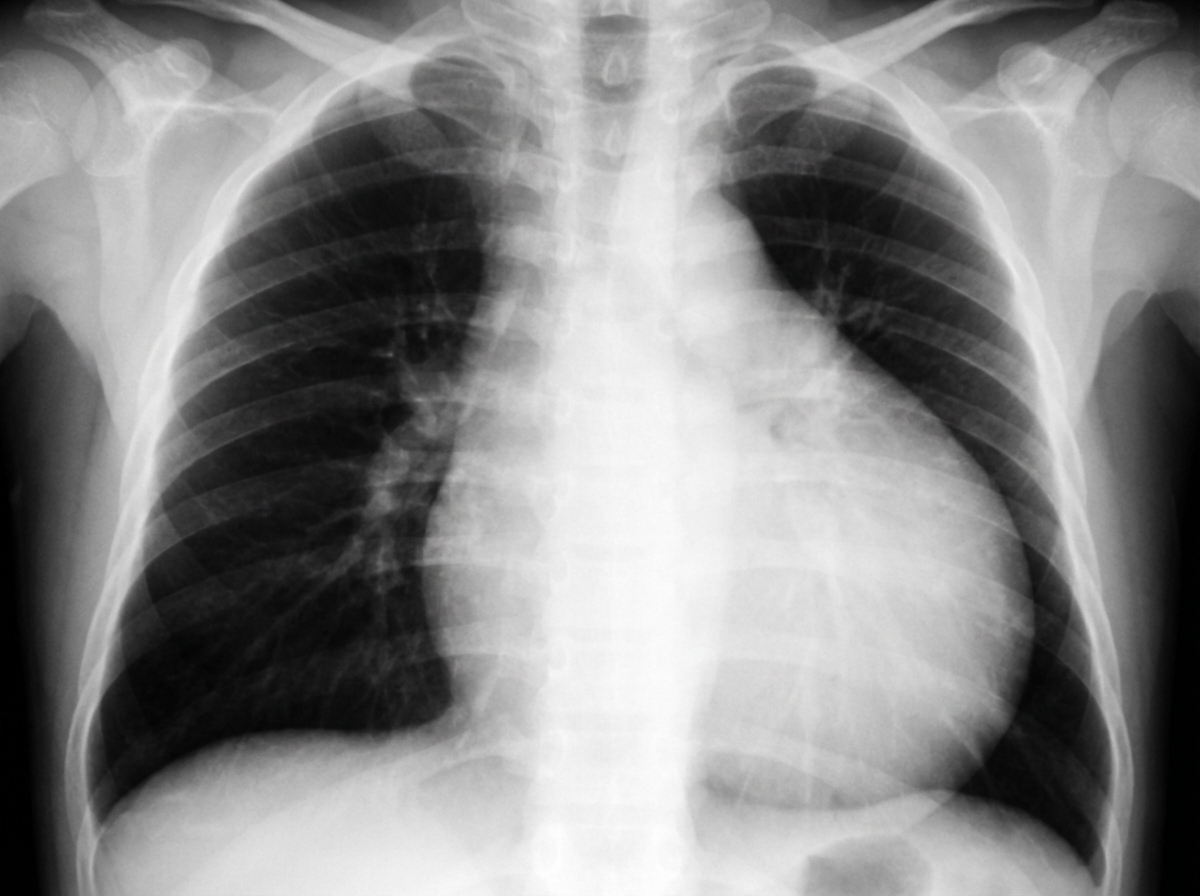
A 27-year-old woman, primigravida, gave birth to a boy 3 months ago and now presents the newborn to your clinic for evaluation. She did not receive prenatal care. She reports that she was taking a medication for her mood swings, but cannot remember the medication’s name. The baby was born cyanotic, with a congenital malformation of the heart that is characterized by apical displacement of the septa and posterior tricuspid valve leaflets. A chest radiograph is shown in the image. Which of the following medications was the mother most likely taking?
Q732
Two 19-year-old men are referred by their professor and mentor to a psychiatrist for substance abuse management. The two friends have both used different stimulants for 3 years—Drug A and Drug B, respectively. Both use these substances cyclically. Use of Drug A usually lasts for about 12 hours. The cycle for Drug B lasts several days. A month ago, both men visited the emergency room (ER) due to acute intoxication. Clinical features in the emergency department included hypotension, bradycardia, sweating, chills, mydriasis, nausea, and psychomotor agitation. After a urine drug screen, the psychiatrist identifies both the drugs and informs the professor that although both Drug A and Drug B are stimulants, their mechanisms of action are different. Drug A is an alkaloid that is naturally present in the leaves of the coca plant, while it is possible to make Drug B from over-the-counter nasal decongestant products. Which of the following options best describes the mechanism of action of both drugs?
Q733
A 51-year-old man presents to his primary care provider for recurrent epigastric pain. He reports a 3-month history of gnawing epigastric and chest pain that is worse after meals and after lying down. His past medical history is notable for obesity, hypertension, and hyperlipidemia. He takes lisinopril and rosuvastatin. He has a 30 pack-year smoking history and drinks 4-5 beers per day. On exam, he is well-appearing and in no acute distress. He has no epigastric tenderness. He is prescribed an appropriate medication for his symptoms and is told to follow up in 2 weeks. He returns 2 weeks later with improvement in his symptoms, and a decision is made to continue the medication. However, he returns to clinic 3 months later complaining of decreased libido and enlarged breast tissue. Which of the following medications was this patient most likely taking?
Q734
A 24-year-old female medical student presents to the emergency department after she develops sudden difficulty breathing and vague chest pain while preparing for exams. The chest pain is non-pleuritic without radiation. She denies any recent travel. She denies any hemoptysis, nausea, vomiting, or leg pain. She only takes oral contraceptives; she denies smoking or alcohol use. Her vitals reveal a heart rate of 120 beats per minute, blood pressure of 100/80 mm Hg, and respiratory rate of 30 per minute. She is afebrile. Otherwise, her physical exam is unremarkable. A CT scan of her chest with IV contrast reveals filling defects along her left pulmonary artery. Which of the following is the most likely mechanism of this finding?
Q735
A 59-year-old man comes to the emergency department because of progressively worsening chest pain and nausea that started while visiting a local bar 30 minutes ago. The pain radiates to the epigastric area. He has a 10-year history of untreated hypertension. He has smoked 1 pack of cigarettes daily for 35 years. The patient is diaphoretic and in marked distress. His pulse is 94/min, respirations are 28/min, and blood pressure is 161/92 mm Hg. Pulse oximetry on 2 L/min of oxygen via nasal cannula shows an oxygen saturation of 97%. Cardiac examination shows a regular heartbeat and a systolic ejection murmur heard best over the upper right sternal border. The lungs are clear to auscultation bilaterally. Pedal pulses are intact. An ECG shows inverted T waves in leads I, avL, and V5-6. Urine toxicology screening is positive for cocaine. Which of the following drugs is contraindicated in the management of this patient's condition?
Q736
A 28-year-old female patient with a history of schizophrenia, type 2 diabetes mellitus, and hypothyroidism comes to clinic stating she would like to be put back on a medication. She recently stopped taking her haloperidol as it made it hard for her to "sit still." She requests to be put on olanzapine as a friend from a support group said it was helpful. Why should this medication be avoided in this patient?
Q737
A 4-year-old boy presents to the ED with a one day history of severe right eye pain accompanied by nausea, vomiting, and headache. He is afebrile and he appears to be alert despite being irritable. Three days ago an ophthalmologist prescribed eye drops for his right eye but his parents do not know the name of the medication. On exam, his right eye is hard to palpation and moderately dilated. His left eye is unremarkable. What is the mechanism of action of the medication that most likely provoked this acute presentation?
Q738
A 30-year-old man presents with heartburn for the past couple of weeks. He says he feels a burning sensation in his chest, at times reaching his throat, usually worse after eating spicy foods. He is overweight and actively trying to lose weight. He also has tried other lifestyle modifications for the past couple of months, but symptoms have not improved. He denies any history of cough, difficulty swallowing, hematemesis, or melena. The patient says he often drinks a can of beer in the evening after work and does not smoke. His blood pressure is 124/82 mm Hg, pulse is 72/min and regular, and respiratory rate is 14/min. Abdominal tenderness is absent. Which of the following is the next best step in the management of this patient?
Q739
A 65-year-old veteran with a history of hypertension, diabetes, and end-stage renal disease presents with nausea, vomiting, and abdominal pain. The patient was found to have a small bowel obstruction on CT imaging. He is managed conservatively with a nasogastric tube placed for decompression. After several days in the hospital, the patient’s symptoms are gradually improving. Today, he complains of left leg swelling. On physical exam, the patient has a swollen left lower extremity with calf tenderness on forced dorsiflexion of the ankle. An ultrasound confirms a deep vein thrombus. An unfractionated heparin drip is started. What should be monitored to adjust heparin dosing?
Q740
A 28-year-old woman presents to a physician with complaints of fever, cough, and cold for the last 2 days. She does not have any other symptoms and she has no significant medical history. She has recently started using combined oral contraceptive pills (OCPs) for birth control. On physical examination, the temperature is 38.3°C (101.0°F), the pulse is 98/min, the blood pressure is 122/80 mm Hg, and the respiratory rate is 14/min. The nasal mucosa and pharynx are inflamed, but there is no purulent discharge. Auscultation of the chest does not reveal any abnormalities. She mentions that she has been a heavy smoker for the last 5 years, smoking about 15–20 cigarettes per day. The physician suggests she should discontinue using combined OCPs and choose an alternative contraception method. Which of the following best explains the rationale behind the physician's suggestion?
Autonomic/CV Drugs US Medical PG Practice Questions and MCQs
Question 731: A 27-year-old woman, primigravida, gave birth to a boy 3 months ago and now presents the newborn to your clinic for evaluation. She did not receive prenatal care. She reports that she was taking a medication for her mood swings, but cannot remember the medication’s name. The baby was born cyanotic, with a congenital malformation of the heart that is characterized by apical displacement of the septa and posterior tricuspid valve leaflets. A chest radiograph is shown in the image. Which of the following medications was the mother most likely taking?
A. Buspirone
B. Clozapine
C. Enalapril
D. Losartan
E. Lithium (Correct Answer)
Explanation: ***Lithium***
- Lithium exposure during pregnancy is associated with a specific cardiac anomaly known as **Ebstein's anomaly**, characterized by apical displacement of the **tricuspid valve leaflets** and septa, leading to atrialization of the right ventricle.
- The medication's use for "mood swings" (suggesting **bipolar disorder**) combined with the characteristic heart defect in the newborn strongly points to lithium as the causative agent.
*Buspirone*
- Buspirone is an anxiolytic medication generally considered to have a **low risk of teratogenicity** (Category B) and is not associated with specific congenital heart defects like Ebstein's anomaly.
- It is used for anxiety disorders, not typically for mood swings in the context of bipolar disorder, which lithium treats.
*Clozapine*
- Clozapine is an antipsychotic medication, and while some antipsychotics have been investigated for teratogenicity, it is **not specifically linked to Ebstein's anomaly**.
- Its primary use is for refractory schizophrenia, not typically for mood swings in the same context as lithium.
*Enalapril*
- Enalapril is an ACE inhibitor and is known to be **teratogenic in the second and third trimesters**, causing renal dysfunction, oligohydramnios, and skeletal defects, but not Ebstein's anomaly.
- It treats hypertension and heart failure, not mood swings.
*Losartan*
- Losartan is an ARB (angiotensin receptor blocker), which, like ACE inhibitors, is **teratogenic in the second and third trimesters**, causing renal and skeletal malformations.
- Its use is for hypertension and heart failure, not mood swings.
Question 732: Two 19-year-old men are referred by their professor and mentor to a psychiatrist for substance abuse management. The two friends have both used different stimulants for 3 years—Drug A and Drug B, respectively. Both use these substances cyclically. Use of Drug A usually lasts for about 12 hours. The cycle for Drug B lasts several days. A month ago, both men visited the emergency room (ER) due to acute intoxication. Clinical features in the emergency department included hypotension, bradycardia, sweating, chills, mydriasis, nausea, and psychomotor agitation. After a urine drug screen, the psychiatrist identifies both the drugs and informs the professor that although both Drug A and Drug B are stimulants, their mechanisms of action are different. Drug A is an alkaloid that is naturally present in the leaves of the coca plant, while it is possible to make Drug B from over-the-counter nasal decongestant products. Which of the following options best describes the mechanism of action of both drugs?
A. Drug A increases norepinephrine activity, while Drug B does not.
B. Drug A increases serotonin activity, while Drug B does not.
C. Drug A predominantly acts by increasing the release of monoamine neurotransmitters (dopamine, serotonin, and norepinephrine) into the synapse, while Drug B does not.
D. Drug A transiently increases the extracellular concentration of dopamine in the reward circuit, while Drug B does not.
E. Drug A predominantly acts by inhibiting the reuptake of monoamine neurotransmitters (dopamine, serotonin, and norepinephrine) at the synapse, while Drug B predominantly acts by promoting their release from presynaptic terminals. (Correct Answer)
Explanation: ***Drug A predominantly acts by inhibiting the reuptake of monoamine neurotransmitters (dopamine, serotonin, and norepinephrine) at the synapse, while Drug B predominantly acts by promoting their release from presynaptic terminals.***
- Drug A is **cocaine**, an alkaloid from the coca plant, which primarily acts by **blocking the reuptake of dopamine, norepinephrine, and serotonin**, leading to their accumulation in the synaptic cleft.
- Drug B is likely **methamphetamine**, derivable from nasal decongestants, which primarily works by **promoting the release of monoamines** from presynaptic terminals, particularly dopamine and norepinephrine.
*Drug A increases norepinephrine activity, while Drug B does not.*
- While Drug A (cocaine) does increase norepinephrine activity by inhibiting its reuptake, Drug B (methamphetamine) also significantly increases norepinephrine activity by promoting its release.
- This option incorrectly states that Drug B does not increase norepinephrine activity.
*Drug A increases serotonin activity, while Drug B does not.*
- Both Drug A (cocaine) and Drug B (methamphetamine) increase serotonin activity, albeit through different mechanisms. Cocaine inhibits serotonin reuptake, while methamphetamine promotes its release.
- The premise that Drug B does not affect serotonin activity is incorrect.
*Drug A predominantly acts by increasing the release of monoamine neurotransmitters (dopamine, serotonin, and norepinephrine) into the synapse, while Drug B does not.*
- This statement misrepresents the primary mechanism of Drug A (cocaine), which is to **inhibit reuptake**, not primarily increase release.
- It also incorrectly implies that Drug B does not significantly affect the monoamine neurotransmitter release.
*Drug A transiently increases the extracellular concentration of dopamine in the reward circuit, while Drug B does not.*
- Both cocaine (Drug A) and methamphetamine (Drug B) **increase extracellular dopamine** in the reward circuit, which is central to their addictive properties.
- This option is incorrect because Drug B also significantly increases dopamine concentrations.
Question 733: A 51-year-old man presents to his primary care provider for recurrent epigastric pain. He reports a 3-month history of gnawing epigastric and chest pain that is worse after meals and after lying down. His past medical history is notable for obesity, hypertension, and hyperlipidemia. He takes lisinopril and rosuvastatin. He has a 30 pack-year smoking history and drinks 4-5 beers per day. On exam, he is well-appearing and in no acute distress. He has no epigastric tenderness. He is prescribed an appropriate medication for his symptoms and is told to follow up in 2 weeks. He returns 2 weeks later with improvement in his symptoms, and a decision is made to continue the medication. However, he returns to clinic 3 months later complaining of decreased libido and enlarged breast tissue. Which of the following medications was this patient most likely taking?
A. Nizatidine
B. Cimetidine (Correct Answer)
C. Famotidine
D. Lansoprazole
E. Calcium carbonate
Explanation: ***Cimetidine***
- **Cimetidine** is an H2-receptor antagonist known to cause **antiandrogenic side effects** like gynecomastia and decreased libido, matching the patient's symptoms.
- It works by blocking **histamine H2 receptors** in the stomach, reducing acid production, which would improve relief of epigastric pain.
*Nizatidine*
- **Nizatidine** is an H2-receptor antagonist that does not commonly cause **gynecomastia** or **decreased libido** as side effects.
- While effective for acid reduction, it lacks the specific adverse effect profile seen in this patient.
*Famotidine*
- **Famotidine** is another H2-receptor antagonist with a similar mechanism of action but is not typically associated with **antiandrogenic effects**.
- Its side effect profile is generally mild and does not include gynecomastia or sexual dysfunction.
*Lansoprazole*
- **Lansoprazole** is a proton pump inhibitor (PPI), which works by irreversibly blocking the **H+/K+-ATPase pump** in parietal cells.
- PPIs are not known to cause **gynecomastia** or **decreased libido** as side effects.
*Calcium carbonate*
- **Calcium carbonate** is an antacid that neutralizes stomach acid directly and is used for symptomatic relief.
- It can cause **constipation** or **acid rebound** but is not associated with gynecomastia or decreased libido.
Question 734: A 24-year-old female medical student presents to the emergency department after she develops sudden difficulty breathing and vague chest pain while preparing for exams. The chest pain is non-pleuritic without radiation. She denies any recent travel. She denies any hemoptysis, nausea, vomiting, or leg pain. She only takes oral contraceptives; she denies smoking or alcohol use. Her vitals reveal a heart rate of 120 beats per minute, blood pressure of 100/80 mm Hg, and respiratory rate of 30 per minute. She is afebrile. Otherwise, her physical exam is unremarkable. A CT scan of her chest with IV contrast reveals filling defects along her left pulmonary artery. Which of the following is the most likely mechanism of this finding?
A. Anxiety
B. Endothelial injury
C. Venous stasis
D. Dehydration
E. Hypercoagulability (Correct Answer)
Explanation: ***Hypercoagulability***
- The patient's use of **oral contraceptives** is a known risk factor for developing a **hypercoagulable state**, increasing the likelihood of thrombus formation.
- The imaging finding of **filling defects in the pulmonary artery** confirms a **pulmonary embolism (PE)**, a condition directly caused by hypercoagulability leading to clot formation.
*Anxiety*
- While exam stress can cause symptoms like **dyspnea** and **chest pain**, it does not explain the objective finding of **filling defects in the pulmonary artery** on CT scan.
- Pulmonary embolism can induce anxiety, but anxiety itself does not cause the anatomical changes seen on imaging.
*Endothelial injury*
- **Endothelial injury** is a component of Virchow's triad, but there are no clinical indications like **trauma**, **surgery**, or **vasculitis** to suggest significant endothelial damage in this patient.
- Oral contraceptive use primarily affects coagulation factors rather than directly causing widespread vascular injury.
*Venous stasis*
- **Venous stasis** is another component of Virchow's triad, often seen with **prolonged immobility** (e.g., long flights, bed rest), which is not described in this active patient.
- While studying could involve prolonged sitting, it's less likely to be the primary cause of a PE compared to a strong prothrombotic risk factor.
*Dehydration*
- **Dehydration** can lead to **increased blood viscosity**, potentially contributing to clot formation, but it is not as direct or significant a risk factor for PE as **oral contraceptive use** leading to hypercoagulability.
- There are no specific clinical signs of major dehydration in this patient to make it a primary mechanism.
Question 735: A 59-year-old man comes to the emergency department because of progressively worsening chest pain and nausea that started while visiting a local bar 30 minutes ago. The pain radiates to the epigastric area. He has a 10-year history of untreated hypertension. He has smoked 1 pack of cigarettes daily for 35 years. The patient is diaphoretic and in marked distress. His pulse is 94/min, respirations are 28/min, and blood pressure is 161/92 mm Hg. Pulse oximetry on 2 L/min of oxygen via nasal cannula shows an oxygen saturation of 97%. Cardiac examination shows a regular heartbeat and a systolic ejection murmur heard best over the upper right sternal border. The lungs are clear to auscultation bilaterally. Pedal pulses are intact. An ECG shows inverted T waves in leads I, avL, and V5-6. Urine toxicology screening is positive for cocaine. Which of the following drugs is contraindicated in the management of this patient's condition?
A. Prasugrel
B. Diazepam
C. Diltiazem
D. Propranolol (Correct Answer)
E. Aspirin
Explanation: ***Propranolol***
- The patient's cocaine use and presenting symptoms (chest pain, elevated blood pressure, tachycardia) indicate a likely **cocaine-induced myocardial ischemia or infarction**. Beta-blockers like propranolol are **contraindicated** in acute cocaine intoxication because they can cause **unopposed alpha-adrenergic vasoconstriction**, worsening coronary vasoconstriction and increasing blood pressure.
- This unopposed alpha stimulation can exacerbate myocardial ischemia and increase the risk of adverse cardiovascular events such as **hypertensive crisis** or **myocardial infarction extension**.
*Prasugrel*
- Prasugrel is an **antiplatelet agent** (P2Y12 inhibitor) used in acute coronary syndromes to prevent platelet aggregation and thrombosis.
- While typically indicated in managing myocardial infarction, its use is not immediately contraindicated in the presence of cocaine; rather, its administration may be delayed until the acute cocaine effects are managed.
*Diazepam*
- Diazepam, a **benzodiazepine**, is often used to manage agitation, anxiety, and hypertension associated with **cocaine intoxication** due to its sedative and anxiolytic effects.
- It can help to reduce sympathetic overdrive, which is beneficial in this clinical scenario.
*Diltiazem*
- Diltiazem is a **calcium channel blocker** that can be used to treat cocaine-induced chest pain, hypertension, and tachycardia.
- It works by causing **vasodilation** and reducing myocardial oxygen demand, making it a safer alternative to beta-blockers in this setting.
*Aspirin*
- Aspirin is an **antiplatelet agent** indicated for acute coronary syndromes, including myocardial infarction, to prevent further thrombus formation.
- Its use is standard practice and **not contraindicated** in patients with cocaine-induced chest pain, as it helps to inhibit platelet aggregation and improve coronary blood flow.
Question 736: A 28-year-old female patient with a history of schizophrenia, type 2 diabetes mellitus, and hypothyroidism comes to clinic stating she would like to be put back on a medication. She recently stopped taking her haloperidol as it made it hard for her to "sit still." She requests to be put on olanzapine as a friend from a support group said it was helpful. Why should this medication be avoided in this patient?
A. The patient has type 2 diabetes (Correct Answer)
B. The patient may develop galactorrhea
C. Tardive dyskinesia will likely result from the prolonged use of olanzapine
D. There is a high risk for retinopathy
E. The patient is at a high risk for torsades de pointes
Explanation: **The patient has type 2 diabetes**
- Olanzapine is associated with a high risk of **metabolic side effects**, including **weight gain**, **hyperglycemia**, and **dyslipidemia**, which would exacerbate her pre-existing type 2 diabetes.
- Given her history of diabetes, choosing a different antipsychotic with a lower metabolic risk profile would be more appropriate to prevent further metabolic complications.
*The patient may develop galactorrhea*
- **First-generation antipsychotics** and some **second-generation antipsychotics** like **risperidone** or **paliperidone** are more commonly associated with hyperprolactinemia, which can lead to galactorrhea.
- Olanzapine has a relatively **lower propensity** to cause significant elevations in prolactin compared to other antipsychotics.
*Tardive dyskinesia will likely result from the prolonged use of olanzapine*
- While all antipsychotics carry some risk of **tardive dyskinesia**, **second-generation antipsychotics** like olanzapine have a **lower risk** compared to first-generation antipsychotics such as haloperidol.
- The patient stopped haloperidol due to **akathisia**, an acute extrapyramidal symptom, not tardive dyskinesia, and olanzapine is generally associated with a lower incidence of extrapyramidal symptoms.
*There is a high risk for retinopathy*
- **Retinopathy** is not a common or significant adverse effect associated with olanzapine.
- **Thioridazine**, a first-generation antipsychotic, is uniquely associated with **pigmentary retinopathy** at high doses.
*The patient is at a high risk for torsades de pointes*
- Olanzapine carries a **low risk** for QTc prolongation and **torsades de pointes** compared to some other antipsychotics like **ziprasidone** or **thioridazine**.
- There is no indication from the patient's history that she is at an increased risk for QT prolongation, such as pre-existing cardiac conditions or electrolyte imbalances.
Question 737: A 4-year-old boy presents to the ED with a one day history of severe right eye pain accompanied by nausea, vomiting, and headache. He is afebrile and he appears to be alert despite being irritable. Three days ago an ophthalmologist prescribed eye drops for his right eye but his parents do not know the name of the medication. On exam, his right eye is hard to palpation and moderately dilated. His left eye is unremarkable. What is the mechanism of action of the medication that most likely provoked this acute presentation?
A. M3 agonist causing ciliary muscle contraction
B. Alpha-adrenergic agonist increasing aqueous fluid production
C. Muscarinic antagonist inhibiting pupillary sphincter muscle contraction (Correct Answer)
D. Iris neovascularization
E. Agonist of prostaglandin F receptor increasing aqueous fluid outflow
Explanation: ***Muscarinic antagonist inhibiting pupillary sphincter muscle contraction***
- A muscarinic antagonist, such as **atropine** or **homatropine eye drops**, would cause **mydriasis** (pupil dilation) by inhibiting the **pupillary sphincter muscle**.
- In children with narrow angles, this sustained dilation can precipitate **acute angle-closure glaucoma**, leading to symptoms like severe eye pain, headache, nausea, vomiting, and a hard, dilated eye on examination.
*M3 agonist causing ciliary muscle contraction*
- An **M3 agonist** (e.g., pilocarpine) would cause **miosis** (pupil constriction) and contraction of the ciliary muscle, which generally **opens the anterior chamber angle** and facilitates aqueous outflow.
- This effect would typically **decrease intraocular pressure** and would not cause the described symptoms of acute angle-closure glaucoma.
*Alpha-adrenergic agonist increasing aqueous fluid production*
- While some alpha-adrenergic agonists can increase aqueous production or reduce outflow, they are not typically the primary cause of acute angle-closure glaucoma in this context.
- Medications like **phenylephrine** (an alpha-1 agonist) cause mydriasis but usually do not dramatically increase intraocular pressure in healthy eyes without a pre-existing narrow angle.
*Iris neovascularization*
- **Iris neovascularization** is a pathological condition involving abnormal blood vessel growth on the iris, often due to **ischemia from conditions like diabetes or retinal vein occlusion**.
- While it can lead to **neovascular glaucoma**, it's a chronic process and not directly related to an acute presentation caused by eye drops in a healthy 4-year-old.
*Agonist of prostaglandin F receptor increasing aqueous fluid outflow*
- **Prostaglandin F receptor agonists** (e.g., latanoprost) primarily increase **uveoscleral outflow** of aqueous humor, effectively **lowering intraocular pressure**.
- This mechanism would **treat (not cause)** glaucoma and is not associated with acute angle closure or pupillary dilation from eye drops.
Question 738: A 30-year-old man presents with heartburn for the past couple of weeks. He says he feels a burning sensation in his chest, at times reaching his throat, usually worse after eating spicy foods. He is overweight and actively trying to lose weight. He also has tried other lifestyle modifications for the past couple of months, but symptoms have not improved. He denies any history of cough, difficulty swallowing, hematemesis, or melena. The patient says he often drinks a can of beer in the evening after work and does not smoke. His blood pressure is 124/82 mm Hg, pulse is 72/min and regular, and respiratory rate is 14/min. Abdominal tenderness is absent. Which of the following is the next best step in the management of this patient?
A. Start oral antacids.
B. H. pylori screening
C. Start omeprazole. (Correct Answer)
D. Start sucralfate.
E. Start famotidine.
Explanation: ***Start omeprazole.***
- This patient presents with classic symptoms of **gastroesophageal reflux disease (GERD)** that have not improved with lifestyle modifications. A **proton pump inhibitor (PPI)** like omeprazole is the most effective initial medical therapy for GERD.
- The absence of **alarm symptoms** (e.g., dysphagia, weight loss, hematemesis) in an adult under 60-65 years old allows for empirical PPI therapy without immediate endoscopy.
*Start famotidine.*
- **H2-receptor blockers** like famotidine are less potent and less effective than PPIs for healing esophagitis and providing complete symptom relief in moderate to severe GERD.
- While they can be used for mild, intermittent symptoms, they are not the next best step when lifestyle modifications have failed and a patient presents with persistent GERD symptoms.
*Start oral antacids.*
- **Antacids** provide only temporary relief of GERD symptoms by neutralizing stomach acid. They do not prevent acid production or heal esophageal inflammation.
- Given the patient's persistent symptoms despite lifestyle changes, a more potent and long-acting medication is required.
*Start sucralfate.*
- **Sucralfate** is a mucosal protective agent that forms a barrier over ulcers and erosions, primarily used in peptic ulcer disease and stress ulcer prophylaxis.
- It is not a primary treatment for GERD and does not reduce acid production or address the underlying reflux mechanism.
*H. pylori screening*
- While **H. pylori infection** can cause dyspepsia, its symptoms often include a gnawing or burning pain in the epigastric region, which can be distinguished from typical GERD symptoms.
- There is no indication from the patient's symptoms (predominantly heartburn and regurgitation) to suggest *H. pylori* testing as the immediate next step in managing his GERD.
Question 739: A 65-year-old veteran with a history of hypertension, diabetes, and end-stage renal disease presents with nausea, vomiting, and abdominal pain. The patient was found to have a small bowel obstruction on CT imaging. He is managed conservatively with a nasogastric tube placed for decompression. After several days in the hospital, the patient’s symptoms are gradually improving. Today, he complains of left leg swelling. On physical exam, the patient has a swollen left lower extremity with calf tenderness on forced dorsiflexion of the ankle. An ultrasound confirms a deep vein thrombus. An unfractionated heparin drip is started. What should be monitored to adjust heparin dosing?
A. Prothrombin time
B. Activated partial thromboplastin time (Correct Answer)
C. Internationalized Normal Ratio (INR)
D. Creatinine level
E. Liver transaminase levels
Explanation: ***Activated partial thromboplastin time***
- The **aPTT** is regularly monitored to assess the anticoagulant effect of **unfractionated heparin (UFH)**.
- UFH primarily exerts its effect by binding to **antithrombin III**, which in turn inactivates clotting factors such as thrombin and factor Xa, thereby prolonging the aPTT.
*Prothrombin time*
- The **prothrombin time (PT)** is primarily used to monitor the extrinsic pathway of coagulation and the effect of warfarin.
- It is not the standard test for adjusting unfractionated heparin dosing.
*Internationalized Normal Ratio (INR)*
- The **INR** is derived from the PT and is specifically used to standardize the monitoring of **warfarin** therapy, which inhibits vitamin K-dependent clotting factors.
- It is not relevant for monitoring unfractionated heparin.
*Creatinine level*
- **Creatinine** levels are used to assess **kidney function**, which is important for drug excretion in general, but not for directly monitoring the anticoagulant effect of heparin.
- While patients with **end-stage renal disease** require careful dosing adjustments for many medications, creatinine itself does not guide heparin titration.
*Liver transaminase levels*
- **Liver transaminases** (ALT, AST) are indicators of **liver function or injury** and are not used to monitor the anticoagulant effect of heparin.
- They might be checked in the context of drug-induced liver injury, but not for routine heparin monitoring.
Question 740: A 28-year-old woman presents to a physician with complaints of fever, cough, and cold for the last 2 days. She does not have any other symptoms and she has no significant medical history. She has recently started using combined oral contraceptive pills (OCPs) for birth control. On physical examination, the temperature is 38.3°C (101.0°F), the pulse is 98/min, the blood pressure is 122/80 mm Hg, and the respiratory rate is 14/min. The nasal mucosa and pharynx are inflamed, but there is no purulent discharge. Auscultation of the chest does not reveal any abnormalities. She mentions that she has been a heavy smoker for the last 5 years, smoking about 15–20 cigarettes per day. The physician suggests she should discontinue using combined OCPs and choose an alternative contraception method. Which of the following best explains the rationale behind the physician's suggestion?
A. Smoking inhibits CYP1A2, therefore there is an increased risk of estrogen-related side effects of OCPs
B. Smoking inhibits CYP3A4, therefore there is an increased risk of progestin-related side effects of OCPs
C. Smoking induces CYP3A4, therefore OCPs would be ineffective
D. Smoking induces CYP1A2, therefore OCPs would be ineffective
E. Smoking is likely to increase the risk of developing deep vein thrombosis and pulmonary embolism in women taking OCPs (Correct Answer)
Explanation: ***Smoking is likely to increase the risk of developing deep vein thrombosis and pulmonary embolism in women taking OCPs***
- **Combined OCPs** increase the risk of **venous thromboembolism (VTE)** due to the pro-coagulant effects of estrogen, and this risk is significantly amplified by **smoking**, especially in women over 35 or heavy smokers.
- The combination of **smoking** and **combined OCPs** creates a synergistic effect that elevates the risk of serious cardiovascular events such as **deep vein thrombosis (DVT)** and **pulmonary embolism (PE)**, making alternative contraception advisable.
*Smoking inhibits CYP1A2, therefore there is an increased risk of estrogen-related side effects of OCPs*
- **Smoking** is known to **induce**, not inhibit, hepatic enzymes like CYP1A2, which would typically lead to increased metabolism and potentially lower drug efficacy, rather than increased side effects from elevated levels.
- The primary concern with smoking and OCPs is not increased estrogen-related side effects due to enzyme inhibition, but rather the **thrombogenic risk**.
*Smoking inhibits CYP3A4, therefore there is an increased risk of progestin-related side effects of OCPs*
- **Smoking** generally acts as an **inducer** of CYP enzymes, not an inhibitor, meaning it would likely increase the metabolism of drugs, rather than leading to higher levels and increased side effects.
- The clinical significance of smoking concerning OCPs revolves around **cardiovascular risk**, not primarily progestin-related side effects due to enzyme inhibition.
*Smoking induces CYP3A4, therefore OCPs would be ineffective*
- While smoking can **induce some CYP enzymes**, CYP3A4 induction by smoking is less consistently cited as a major concern for OCP effectiveness compared to its impact on other pathways.
- The main reason for discontinuing OCPs in heavy smokers is the **increased risk of thromboembolic events**, not predominantly a concern about contraceptive failure due to enzyme induction.
*Smoking induces CYP1A2, therefore OCPs would be ineffective*
- Smoking does **induce CYP1A2** which can increase the metabolism of certain drugs, but the primary clinical relevance for OCPs is not reduced efficacy through this mechanism.
- The crucial risk associated with smoking and OCP use is the greatly enhanced likelihood of **thrombotic complications**, overshadowing concerns about CYP1A2-mediated ineffectiveness.