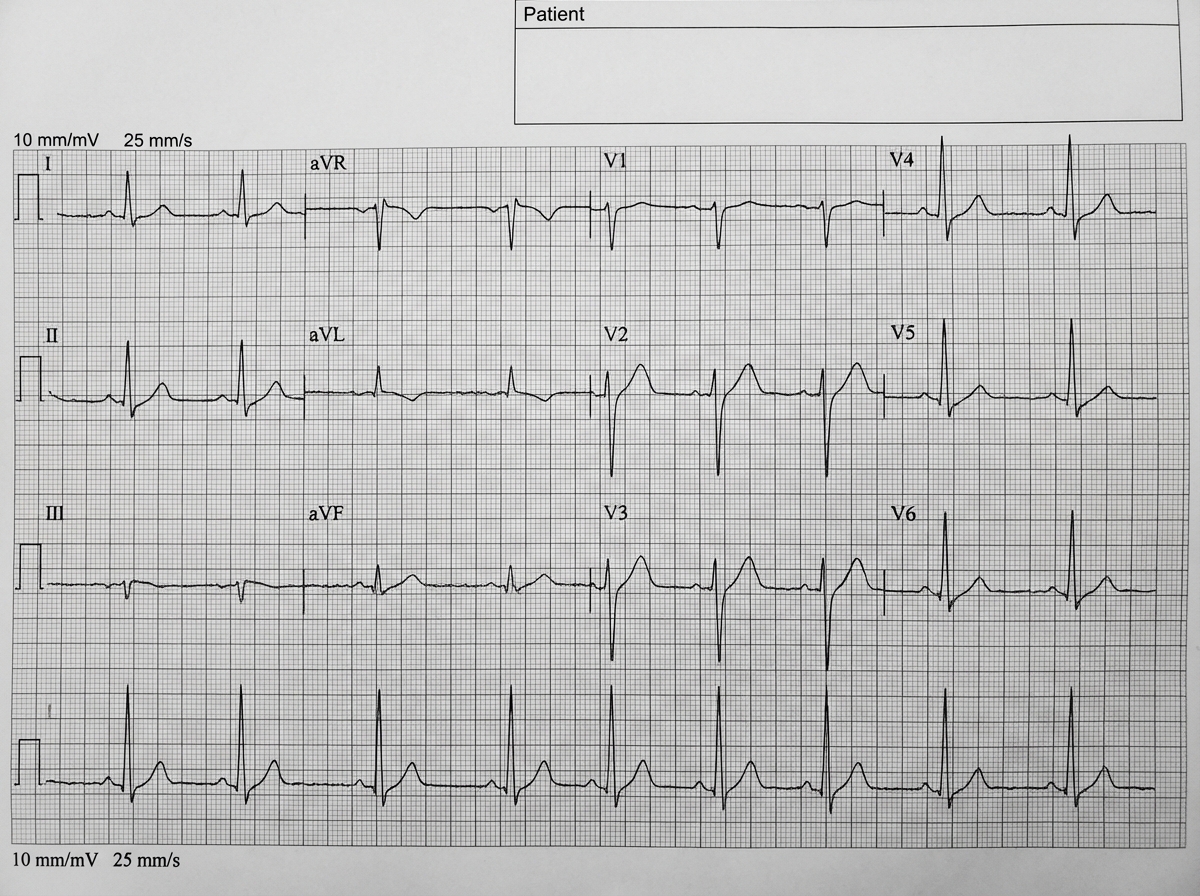
A 24-year-old woman, gravida 2, para 1, at 33 weeks’ gestation, is admitted to the hospital for treatment of preterm labor. She has no history of serious illness and her only medication is a multivitamin. Her temperature is 37.2°C (99.0°F), pulse is 100/min, respirations are 20/min, and blood pressure is 100/75 mm Hg. Therapy with nifedipine and betamethasone is begun. The patient continues to have contractions; nifedipine is discontinued and treatment with high-dose terbutaline is initiated. Her contractions resolve. Three hours later, the patient reports fatigue and weakness. Neurologic examination shows proximal muscle weakness of the lower extremities. Deep tendon reflexes are 1+ bilaterally. Which of the following is most likely to confirm the diagnosis?
Q722
A 48-year-old male with a history of rhinitis presents to the emergency department with complaints of shortness of breath and wheezing over the past 2 days. He reports bilateral knee pain over the past month for which he recently began taking naproxen 1 week ago. Physical examination is significant for a nasal polyp and disappearance of bilateral radial pulses on deep inspiration. Which of the following is the most likely cause of this patient's physical examination findings?
Q723
A 58-year-old female presents to her primary care physician with a 1-month history of facial and chest flushing, as well as intermittent diarrhea and occasional difficulty breathing. On physical exam, a new-onset systolic ejection murmur is auscultated and is loudest at the left second intercostal space. Subsequent echocardiography reveals leaflet thickening secondary to fibrous plaque deposition on both the pulmonic and tricuspid valves. Which of the following laboratory abnormalities would most likely be found in this patient?
Q724
One month after undergoing surgical spinal fusion because of a traumatic spinal cord injury, a 68-year-old man comes to the physician because of lower abdominal pain. He last voided yesterday. Physical examination shows a suprapubic mass and decreased sensation below the umbilicus. Urodynamic studies show simultaneous contractions of the detrusor muscle and the internal urethral sphincter. Urinary catheterization drains 900 mL of urine from the bladder. Which of the following is the most appropriate pharmacotherapy for this patient’s urinary symptoms?
Q725
A 24-year-old African American male with sickle cell disease has been followed by a hematologist since infancy. Two years ago, he was started on hydroxyurea for frequent pain crises but has not achieved good control. The addition of a Gardos channel blocking agent is being considered. What is the mechanism of action of this class of medications?
Q726
A 60-year-old woman presents to you with vision problems. Objects appear clear, but she just can't see as well as before. She says she first noticed this when she went to the movies with her grandkids, and she could not see the whole screen. She denies any complaints of redness, itchiness, or excessive tearing of her eyes. Current medications are captopril for her hypertension, acetaminophen for occasional headaches, and a daily multivitamin. Her vital signs are a blood pressure 130/80 mm Hg, pulse 80/min and regular, respiratory rate 14/min, and a temperature of 36.7°C (98.0°F). Eye examination reveals that her visual acuity is normal but the visual field is reduced with enlarged blind spots. Tonometry reveals mildly increased IOP. The patient is started on brimonidine. Which of the following statements best describes the therapeutic mechanism of action of this medication in this patient?
Q727
A 47-year-old woman comes to the physician because of a 5-month history of insomnia. She frequently experiences leg discomfort when trying to fall asleep that is relieved temporarily by movement. Her husband tells her that she frequently flexes her ankles upward when she sleeps. She appears fatigued and anxious. Physical examination shows no abnormalities. Laboratory studies including a complete blood count and iron studies are within the reference range. Which of the following is the most appropriate pharmacotherapy?
Q728
A 51-year-old man is undergoing chemotherapy treatment for a rapidly progressive newly-diagnosed acute myelogenous leukemia. On day 4 of his hospitalization, the patient is noted to be obtunded. Other than the chemotherapy, he is receiving lansoprazole, acetaminophen, and an infusion of D5–0.9% normal saline at 50 mL/h. On examination, the patient’s blood pressure is 94/50 mm Hg, heart rate is 52/min, and respiratory rate is 14/min. The patient appears weak but is in no acute distress. Chest auscultation reveals bibasilar crackles and scattered wheezing. His abdomen is soft, non-distended, and with a palpable liver and spleen. His ECG shows peaked T waves and widened QRS complexes. What is the best next step in the management of this patient?
Q729
A 59-year-old man is brought to the emergency department because of a 2-hour history of abdominal pain and severe vomiting after ingesting an unknown medication in a suicide attempt. On the way to the hospital, he had a generalized tonic-clonic seizure. He has chronic obstructive pulmonary disease, coronary artery disease, and chronic back pain. His pulse is 130/min, respirations are 16/min, and blood pressure is 110/60 mm Hg. Serum studies show a glucose concentration of 180 mg/dL and a potassium concentration of 2.8 mEq/L. An ECG shows ventricular tachycardia. This patient's current findings are most likely caused by an overdose of which of the following drugs?
Q730
A 78-year-old female presents to her primary care provider complaining of shaking of her hands. She reports that her hands shake when she is pouring her coffee in the morning and when she is buttoning her shirt. She has noticed that her tremor improves with the several beers she has every night with dinner. She has a past medical history of hypertension, atrial fibrillation, moderate persistent asthma, acute intermittent porphyria, and urinary retention. Her home medications include hydrochlorothiazide, warfarin, bethanechol, low-dose inhaled fluticasone, and an albuterol inhaler as needed. On physical exam, she has an irregularly irregular heart rhythm without S3/S4. She has mild wheezing on pulmonary exam. She has no tremor when her hands are in her lap. A low-amplitude tremor is present during finger-to-nose testing. Her neurological exam is otherwise unremarkable.
Which of the following is a contraindication to the first-line treatment of this condition?
Autonomic/CV Drugs US Medical PG Practice Questions and MCQs
Question 721: A 24-year-old woman, gravida 2, para 1, at 33 weeks’ gestation, is admitted to the hospital for treatment of preterm labor. She has no history of serious illness and her only medication is a multivitamin. Her temperature is 37.2°C (99.0°F), pulse is 100/min, respirations are 20/min, and blood pressure is 100/75 mm Hg. Therapy with nifedipine and betamethasone is begun. The patient continues to have contractions; nifedipine is discontinued and treatment with high-dose terbutaline is initiated. Her contractions resolve. Three hours later, the patient reports fatigue and weakness. Neurologic examination shows proximal muscle weakness of the lower extremities. Deep tendon reflexes are 1+ bilaterally. Which of the following is most likely to confirm the diagnosis?
A. Serum electrolytes (Correct Answer)
B. Thyroid function tests
C. Complete blood count
D. Amniotic fluid culture
E. Serologic antibody testing
Explanation: ***Serum electrolytes***
- **High-dose terbutaline**, a **beta-2 agonist**, can cause a significant shift of potassium intracellularly, leading to **hypokalemia**.
- Symptoms of hypokalemia include **muscle weakness**, fatigue, and diminished deep tendon reflexes, which matches the patient's presentation.
*Thyroid function tests*
- While **hyperthyroidism** can cause muscle weakness, it's less likely to manifest acutely after terbutaline administration.
- The patient's vital signs and lack of other classic features (e.g., tremors, heat intolerance) do not strongly suggest thyroid dysfunction.
*Complete blood count*
- A CBC is useful for assessing for **anemia** or **infection**, but these conditions do not typically explain acute proximal muscle weakness and diminished reflexes in this context.
- While anemia can cause fatigue, it wouldn't directly cause the specific neurological findings observed.
*Amniotic fluid culture*
- An amniotic fluid culture is primarily used to detect **intra-amniotic infection**, which could be a cause of preterm labor.
- It would not explain the patient's acute muscle weakness and neurological symptoms occurring specifically after terbutaline administration.
*Serologic antibody testing*
- **Autoimmune disorders** that cause muscle weakness, such as **myasthenia gravis** or **Guillain-Barré syndrome**, are generally chronic or subacute in onset.
- The acute timing of the symptoms following terbutaline makes these less likely; instead, the drug's known side effects are a more direct explanation.
Question 722: A 48-year-old male with a history of rhinitis presents to the emergency department with complaints of shortness of breath and wheezing over the past 2 days. He reports bilateral knee pain over the past month for which he recently began taking naproxen 1 week ago. Physical examination is significant for a nasal polyp and disappearance of bilateral radial pulses on deep inspiration. Which of the following is the most likely cause of this patient's physical examination findings?
A. Pulmonary hypertension
B. Cardiac tamponade
C. Pulmonary embolism
D. Asthma
E. AERD (Aspirin-Exacerbated Respiratory Disease) (Correct Answer)
Explanation: ***AERD (Aspirin-Exacerbated Respiratory Disease)***
- The patient's presentation with **rhinitis, nasal polyps, asthma-like symptoms (shortness of breath, wheezing), and worsening after initiating naproxen (an NSAID)** is highly characteristic of AERD.
- **The pulsus paradoxus (disappearance of radial pulses on deep inspiration)** is caused by **severe bronchospasm and airway obstruction** from the AERD exacerbation, which increases negative intrathoracic pressure during inspiration, reducing left ventricular stroke volume and systolic blood pressure.
- **Aspirin and other NSAIDs** trigger respiratory distress and bronchospasm in AERD by inhibiting COX-1 enzyme, leading to increased leukotriene production and mast cell activation.
- AERD is a distinct clinical syndrome (also called Samter's triad) involving the classic triad of **asthma, nasal polyps, and NSAID sensitivity**.
*Pulmonary hypertension*
- While pulmonary hypertension can cause shortness of breath, it typically does not present with **nasal polyps, rhinitis, or an acute exacerbation linked to NSAID use**.
- Physical exam findings more commonly include **jugular venous distension, peripheral edema, and a prominent P2 heart sound**, which are not described here.
*Cardiac tamponade*
- While **pulsus paradoxus** is a classic sign of cardiac tamponade, the overall clinical picture—especially the **rhinitis, nasal polyp, and NSAID-induced respiratory exacerbation**—clearly points to a respiratory cause of the pulsus paradoxus, not cardiac tamponade.
- Other features of tamponade include **Beck's triad (hypotension, muffled heart sounds, elevated JVP)**, which are absent in this case.
- The pulsus paradoxus here is due to **severe airway obstruction**, not pericardial constriction.
*Pulmonary embolism*
- Pulmonary embolism typically presents with **acute onset dyspnea, pleuritic chest pain, and sometimes hemoptysis**.
- It is not associated with a history of **rhinitis, nasal polyps, or a clear link to NSAID ingestion** exacerbating respiratory symptoms.
- PE does not typically cause pulsus paradoxus.
*Asthma*
- While severe asthma can cause **wheezing, shortness of breath, and even pulsus paradoxus**, the presence of **nasal polyps** and the specific exacerbation with an **NSAID (naproxen)** point more directly to AERD, a distinct subset of asthma.
- AERD is a unique clinical syndrome involving overproduction of leukotrienes, specifically triggered by COX-1 inhibitors, which differentiates it from typical allergic or non-allergic asthma.
Question 723: A 58-year-old female presents to her primary care physician with a 1-month history of facial and chest flushing, as well as intermittent diarrhea and occasional difficulty breathing. On physical exam, a new-onset systolic ejection murmur is auscultated and is loudest at the left second intercostal space. Subsequent echocardiography reveals leaflet thickening secondary to fibrous plaque deposition on both the pulmonic and tricuspid valves. Which of the following laboratory abnormalities would most likely be found in this patient?
A. Elevated urinary 5-hydroxyindoleacetic acid (Correct Answer)
B. Elevated serum bicarbonate
C. Elevated serum potassium
D. Decreased serum chromogranin A
E. Elevated urinary vanillylmandelic acid
Explanation: **Elevated urinary 5-hydroxyindoleacetic acid**
* This patient's symptoms (flushing, diarrhea, dyspnea, and cardiac valve abnormalities, especially right-sided with fibrous plaque deposition) are classic for **carcinoid syndrome**. This syndrome is caused by neuroendocrine tumors, often in the gastrointestinal tract, that secrete large amounts of serotonin.
* **5-hydroxyindoleacetic acid (5-HIAA)** is the main metabolite of **serotonin**, and its elevated levels in urine are a key diagnostic marker for carcinoid syndrome.
*Elevated serum bicarbonate*
* **Elevated serum bicarbonate** is typically associated with **metabolic alkalosis**, which is not a direct or expected finding in carcinoid syndrome.
* Carcinoid syndrome can lead to electrolyte imbalances due to diarrhea, but metabolic alkalosis through elevated bicarbonate is not a primary or characteristic feature.
*Elevated serum potassium*
* **Elevated serum potassium** (hyperkalemia) is not a common or direct consequence of carcinoid syndrome.
* While severe diarrhea can sometimes lead to electrolyte disturbances, it more typically causes **hypokalemia** due to potassium loss, not hyperkalemia.
*Decreased serum chromogranin A*
* **Chromogranin A** is a general marker for neuroendocrine tumors; however, in actively secreting tumors like those causing carcinoid syndrome, **serum chromogranin A** levels would most likely be **elevated**, not decreased.
* It serves as a useful diagnostic and prognostic marker for neuroendocrine tumors, indicating tumor burden and activity.
*Elevated urinary vanillylmandelic acid*
* **Elevated urinary vanillylmandelic acid (VMA)** is a diagnostic marker for **pheochromocytoma** and **paraganglioma**, tumors that secrete catecholamines (epinephrine and norepinephrine).
* While some symptoms like flushing can overlap, the specific cardiac and gastrointestinal symptoms described, along with the right-sided valvular lesions, are characteristic of carcinoid syndrome, not pheochromocytoma.
Question 724: One month after undergoing surgical spinal fusion because of a traumatic spinal cord injury, a 68-year-old man comes to the physician because of lower abdominal pain. He last voided yesterday. Physical examination shows a suprapubic mass and decreased sensation below the umbilicus. Urodynamic studies show simultaneous contractions of the detrusor muscle and the internal urethral sphincter. Urinary catheterization drains 900 mL of urine from the bladder. Which of the following is the most appropriate pharmacotherapy for this patient’s urinary symptoms?
A. Prazosin (Correct Answer)
B. Phenylephrine
C. Finasteride
D. Neostigmine
E. Bethanechol
Explanation: ***Prazosin***
- This patient is experiencing **detrusor-sphincter dyssynergia (DSD)** secondary to a spinal cord injury, leading to bladder outlet obstruction and urinary retention. **Prazosin** is an **alpha-1 antagonist** that relaxes the internal urethral sphincter, improving urine flow and reducing functional obstruction.
- Relaxing the internal urethral sphincter helps to reduce the high bladder pressures during voiding, preventing complications like hydronephrosis and improving bladder emptying in patients with DSD.
*Phenylephrine*
- **Phenylephrine** is an **alpha-1 adrenergic agonist** that causes vasoconstriction and contraction of smooth muscles, including the internal urethral sphincter.
- This would worsen the patient's condition by increasing urethral resistance and exacerbating urinary retention.
*Finasteride*
- **Finasteride** is a **5-alpha reductase inhibitor** used to treat benign prostatic hyperplasia (BPH) by reducing prostate size.
- This patient's urinary symptoms are due to neurogenic bladder and DSD, not BPH; therefore, finasteride would not address the underlying pathology.
*Neostigmine*
- **Neostigmine** is an **acetylcholinesterase inhibitor** that increases acetylcholine levels at the neuromuscular junction, used for conditions like myasthenia gravis or to reverse neuromuscular blockade.
- While it can increase detrusor contractility, it would not address the spastic contraction of the internal urethral sphincter (DSD), and could potentially worsen the symptoms by increasing detrusor pressure against an obstructed outlet.
*Bethanechol*
- **Bethanechol** is a **muscarinic agonist** that directly stimulates detrusor muscle contraction, used to promote bladder emptying in cases of hypotonic or atonic bladder.
- Although it enhances detrusor contraction, it does not relax the internal urethral sphincter and could lead to even higher bladder pressures in the presence of detrusor-sphincter dyssynergia, increasing the risk of upper urinary tract damage.
Question 725: A 24-year-old African American male with sickle cell disease has been followed by a hematologist since infancy. Two years ago, he was started on hydroxyurea for frequent pain crises but has not achieved good control. The addition of a Gardos channel blocking agent is being considered. What is the mechanism of action of this class of medications?
A. Increases water diffusion by increasing activity of aquaporin-1 receptors
B. Increases production of hemoglobin F
C. Encourages alkalinization of the blood by facilitating H+/K+ antiporter activity
D. Prevents dehydration of RBCs by inhibiting Ca2+ efflux
E. Prevents RBC dehydration by inhibiting K+ efflux (Correct Answer)
Explanation: ***Prevents RBC dehydration by inhibiting K+ efflux***
- Gardos channel blockers, like **voxelotor**, inhibit the **Gardos channel (KCCN4)** in red blood cells, which is a calcium-activated potassium channel.
- By blocking **K+ efflu**x, these agents prevent the **dehydration** and sickling of red blood cells, thereby reducing the frequency of vaso-occlusive crises in sickle cell disease.
*Increases water diffusion by increasing activity of aquaporin-1 receptors*
- **Aquaporins** are water channels, but their modulation is not the primary mechanism of action for Gardos channel blockers in **sickle cell disease**.
- The focus of Gardos channel blockers is on maintaining **RBC volume** by preventing K+ loss, not by directly increasing water diffusion across aquaporins.
*Increases production of hemoglobin F*
- **Hydroxyurea** is the medication that primarily works by increasing the production of **fetal hemoglobin (HbF)**, which is known to inhibit HbS polymerization.
- Gardos channel blockers operate through a distinct mechanism, focusing on **red blood cell hydration**, rather than HbF induction.
*Encourages alkalinization of the blood by facilitating H+/K+ antiporter activity*
- The **H+/K+ antiporter** is more relevant in gastric acid secretion and kidney physiology, not as a primary target for preventing red blood cell sickling in sickle cell disease.
- Gardos channel blockers specifically target potassium channels in RBCs to prevent **dehydration** and sickling, unconnected to H+/K+ antiporter activity.
*Prevents dehydration of RBCs by inhibiting Ca2+ efflux*
- While Gardos channels are **calcium-activated**, the Gardos channel blockers work by inhibiting the **potassium efflux** *through* the channel, rather than directly inhibiting calcium efflux.
- The primary problem in sickle cell dehydration is the loss of **potassium**, which draws water out of the cell, leading to sickling.
Question 726: A 60-year-old woman presents to you with vision problems. Objects appear clear, but she just can't see as well as before. She says she first noticed this when she went to the movies with her grandkids, and she could not see the whole screen. She denies any complaints of redness, itchiness, or excessive tearing of her eyes. Current medications are captopril for her hypertension, acetaminophen for occasional headaches, and a daily multivitamin. Her vital signs are a blood pressure 130/80 mm Hg, pulse 80/min and regular, respiratory rate 14/min, and a temperature of 36.7°C (98.0°F). Eye examination reveals that her visual acuity is normal but the visual field is reduced with enlarged blind spots. Tonometry reveals mildly increased IOP. The patient is started on brimonidine. Which of the following statements best describes the therapeutic mechanism of action of this medication in this patient?
A. Brimonidine blocks the beta-receptors on the ciliary body to reduce aqueous humor production.
B. Brimonidine causes an increase in cAMP, leading to increased aqueous humor formation by the ciliary body.
C. Peripheral vasoconstriction by brimonidine leads to better control of her hypertension.
D. Brimonidine causes immediate contraction of the ciliary body, leading to decreased uveoscleral outflow.
E. Brimonidine acts as an alpha-2 adrenergic agonist to reduce aqueous humor production and increase uveoscleral outflow. (Correct Answer)
Explanation: ***Brimonidine acts as an alpha-2 adrenergic agonist to reduce aqueous humor production and increase uveoscleral outflow.***
- **Brimonidine** is an **alpha-2 adrenergic agonist** that reduces **aqueous humor production** and increases **uveoscleral outflow**, thereby lowering intraocular pressure (IOP) in glaucoma.
- This mechanism is crucial for treating conditions like **open-angle glaucoma**, which presents with visual field defects and increased IOP.
*Brimonidine blocks the beta-receptors on the ciliary body to reduce aqueous humor production.*
- **Brimonidine** is an **alpha-2 agonist**, not a **beta-blocker**. **Beta-blockers** (e.g., timolol) block beta-receptors on the ciliary body to reduce aqueous humor production.
- The medication's primary action is not through beta-receptor antagonism.
*Brimonidine causes an increase in cAMP, leading to increased aqueous humor formation by the ciliary body.*
- **Alpha-2 adrenergic agonists** typically decrease **cAMP** levels, which leads to reduced aqueous humor production.
- An increase in cAMP would generally lead to **increased aqueous humor formation**, which is counterproductive in treating glaucoma.
*Peripheral vasoconstriction by brimonidine leads to better control of her hypertension.*
- While **alpha-2 agonists** can affect blood pressure, **brimonidine** is primarily a topical agent for the eye, and its systemic effects on **hypertension** are not its primary therapeutic mechanism for glaucoma.
- Its main role is to lower **intraocular pressure**, not to treat systemic hypertension.
*Brimonidine causes immediate contraction of the ciliary body, leading to decreased uveoscleral outflow.*
- **Brimonidine** primarily works by **reducing aqueous humor production** and **increasing uveoscleral outflow**, not by causing ciliary body contraction leading to decreased outflow.
- **Miotics** (e.g., pilocarpine) cause ciliary body contraction to increase trabecular outflow, which is a different mechanism.
Question 727: A 47-year-old woman comes to the physician because of a 5-month history of insomnia. She frequently experiences leg discomfort when trying to fall asleep that is relieved temporarily by movement. Her husband tells her that she frequently flexes her ankles upward when she sleeps. She appears fatigued and anxious. Physical examination shows no abnormalities. Laboratory studies including a complete blood count and iron studies are within the reference range. Which of the following is the most appropriate pharmacotherapy?
A. Ropinirole (Correct Answer)
B. Atenolol
C. Zolpidem
D. Nortriptyline
E. Sertraline
Explanation: ***Ropinirole***
- This patient's symptoms of **leg discomfort** at rest, relief with movement, and presence of **periodic limb movements in sleep** (flexing ankles upward) are classic for **Restless Legs Syndrome (RLS)**.
- **Dopamine agonists** like ropinirole are first-line pharmacotherapy for RLS as they alleviate the primary motor and sensory symptoms.
*Atenolol*
- **Atenolol** is a **beta-blocker** primarily used for hypertension, angina, and certain arrhythmias.
- It has no role in the treatment of RLS and would not address the patient's specific symptoms.
*Zolpidem*
- **Zolpidem** is a **sedative-hypnotic** (Z-drug) used for insomnia, helping initiate and maintain sleep.
- While the patient has insomnia, zolpidem would only mask the sleep disturbance without treating the underlying RLS symptoms.
*Nortriptyline*
- **Nortriptyline** is a **tricyclic antidepressant (TCA)** used for depression, neuropathic pain, and occasionally insomnia.
- TCAs can sometimes worsen RLS symptoms and are generally avoided in these patients.
*Sertraline*
- **Sertraline** is a **selective serotonin reuptake inhibitor (SSRI)** used for depression, anxiety disorders, and other psychiatric conditions.
- Like TCAs, SSRIs can sometimes exacerbate RLS symptoms and are not appropriate first-line treatment for RLS-related insomnia.
Question 728: A 51-year-old man is undergoing chemotherapy treatment for a rapidly progressive newly-diagnosed acute myelogenous leukemia. On day 4 of his hospitalization, the patient is noted to be obtunded. Other than the chemotherapy, he is receiving lansoprazole, acetaminophen, and an infusion of D5–0.9% normal saline at 50 mL/h. On examination, the patient’s blood pressure is 94/50 mm Hg, heart rate is 52/min, and respiratory rate is 14/min. The patient appears weak but is in no acute distress. Chest auscultation reveals bibasilar crackles and scattered wheezing. His abdomen is soft, non-distended, and with a palpable liver and spleen. His ECG shows peaked T waves and widened QRS complexes. What is the best next step in the management of this patient?
A. Glucagon
B. Calcium chloride (Correct Answer)
C. Polystyrene sulfonate
D. Subcutaneous regular insulin
E. Atropine
Explanation: ***Calcium chloride***
- This patient's presentation with **obtundation**, **bradycardia** (HR 52/min), **hypotension** (BP 94/50), widened QRS complexes, and peaked T waves on ECG, along with recent chemotherapy for AML, strongly suggests severe **hyperkalemia** secondary to **tumor lysis syndrome**.
- **Calcium chloride** (or calcium gluconate) is the first-line treatment for hyperkalemia with ECG changes because it **stabilizes the cardiac membrane**, protecting against life-threatening arrhythmias, without directly lowering serum potassium levels.
*Glucagon*
- **Glucagon** is primarily used in cases of **hypoglycemia** or as an antidote for **beta-blocker overdose**, which is not indicated by the patient's symptoms or ECG findings.
- There is no evidence suggesting its utility in treating severe hyperkalemia or its associated cardiac manifestations.
*Polystyrene sulfonate*
- **Polystyrene sulfonate** (e.g., Kayexalate) works by **exchanging potassium for sodium in the gastrointestinal tract**, thus reducing overall body potassium.
- While effective in lowering potassium, its onset of action is slow (hours), making it inappropriate for acute, life-threatening hyperkalemia with ECG changes where immediate cardiac stabilization is required.
*Subcutaneous regular insulin*
- **Insulin**, often given with dextrose, helps shift potassium from the extracellular to the intracellular space, effectively lowering serum potassium levels.
- However, its action is not immediate enough to protect the heart during acute hyperkalemia with ECG changes; therefore, it follows calcium in the management sequence.
*Atropine*
- **Atropine** is used to treat **bradycardia**, but its role is limited to vagally mediated bradycardia and would not address the underlying hyperkalemia or its direct cardiac effects like widened QRS and peaked T waves.
- Treating bradycardia without addressing the cause (hyperkalemia) would not stabilize the patient in this scenario.
Question 729: A 59-year-old man is brought to the emergency department because of a 2-hour history of abdominal pain and severe vomiting after ingesting an unknown medication in a suicide attempt. On the way to the hospital, he had a generalized tonic-clonic seizure. He has chronic obstructive pulmonary disease, coronary artery disease, and chronic back pain. His pulse is 130/min, respirations are 16/min, and blood pressure is 110/60 mm Hg. Serum studies show a glucose concentration of 180 mg/dL and a potassium concentration of 2.8 mEq/L. An ECG shows ventricular tachycardia. This patient's current findings are most likely caused by an overdose of which of the following drugs?
A. Theophylline (Correct Answer)
B. Metoprolol
C. Albuterol
D. Acetaminophen
E. Amitriptyline
Explanation: ***Theophylline***
- **Theophylline toxicity** presents with GI symptoms (vomiting), neurological symptoms (seizures), and cardiac arrhythmias like **ventricular tachycardia**.
- Its narrow therapeutic index makes overdose particularly dangerous; the patient's history of **COPD** (for which theophylline might be prescribed) further supports this.
*Metoprolol*
- **Beta-blocker overdose** typically leads to **bradycardia**, hypotension, and potentially bronchospasm.
- The patient's presentation with tachycardia and seizures is inconsistent with metoprolol overdose.
*Albuterol*
- **Albuterol overdose** (a beta-2 agonist) can cause tachycardia, palpitations, and hypokalemia.
- However, it is less likely to induce **seizures** or severe, life-threatening arrhythmias like recurrent ventricular tachycardia as seen in this case.
*Acetaminophen*
- **Acetaminophen overdose** primarily causes **hepatotoxicity**, which would develop over days, not within 2 hours.
- Initial symptoms might be vague (nausea, vomiting), but it would not typically cause acute seizures or ventricular tachycardia.
*Amitriptyline*
- **Tricyclic antidepressant (TCA) overdose** can cause cardiovascular (QT prolongation, arrhythmias) and neurological (seizures, coma) symptoms.
- While it causes **wide QRS complex tachycardia** rather than ventricular tachycardia and **anticholinergic effects** (e.g., dry mouth, blurred vision) are common, the symptom profile here points more strongly to theophylline.
Question 730: A 78-year-old female presents to her primary care provider complaining of shaking of her hands. She reports that her hands shake when she is pouring her coffee in the morning and when she is buttoning her shirt. She has noticed that her tremor improves with the several beers she has every night with dinner. She has a past medical history of hypertension, atrial fibrillation, moderate persistent asthma, acute intermittent porphyria, and urinary retention. Her home medications include hydrochlorothiazide, warfarin, bethanechol, low-dose inhaled fluticasone, and an albuterol inhaler as needed. On physical exam, she has an irregularly irregular heart rhythm without S3/S4. She has mild wheezing on pulmonary exam. She has no tremor when her hands are in her lap. A low-amplitude tremor is present during finger-to-nose testing. Her neurological exam is otherwise unremarkable.
Which of the following is a contraindication to the first-line treatment of this condition?
A. Heavy alcohol use
B. Asthma (Correct Answer)
C. Urinary retention
D. Acute intermittent porphyria
E. Warfarin use
Explanation: ***Asthma***
- The patient's presentation of an **action tremor** that improves with alcohol is classic for **essential tremor**. First-line treatment is often a **beta-blocker** like propranolol.
- Beta-blockers are contraindicated in patients with pulmonary conditions such as asthma, as they can cause **bronchoconstriction** and worsen respiratory symptoms.
*Heavy alcohol use*
- While the tremor briefly improves with alcohol, **heavy alcohol use** is not a contraindication to pharmacological treatment for essential tremor. In fact, it often indicates self-medication for the tremor.
- Chronic heavy alcohol use can have its own adverse effects and interactions but typically does not preclude the use of first-line pharmacotherapy for essential tremor.
*Urinary retention*
- **Urinary retention** is primarily a concern with anticholinergic medications like oxybutynin, which are not first-line treatments for essential tremor.
- Beta-blockers, the first-line treatment, generally do not exacerbate urinary retention.
*Acute intermittent porphyria*
- **Acute intermittent porphyria** is a rare genetic disorder where certain medications can trigger attacks. While some drugs are contraindicated, beta-blockers like propranolol are generally considered safe.
- This condition does not directly contraindicate the use of beta-blockers for essential tremor.
*Warfarin use*
- **Warfarin** is an anticoagulant, and while drug interactions are a concern, there is generally no absolute contraindication to using beta-blockers with warfarin.
- Close monitoring of **INR** may be needed as some beta-blockers can affect warfarin metabolism, but this is typically a management consideration, not a contraindication.