A 24-year-old woman comes to the physician because of excessive hair growth. She has noticed increasing numbers of dark hairs on her upper lip and on her abdomen over the past 8 years. Menarche was at the age of 13 years. Menses occur at regular 28-day intervals and last 5–6 days with moderate flow. She is sexually active with one male partner. Her only medication is a combination oral contraceptive. She is 168 cm (5 ft 6 in) tall and weighs 88 kg (193 lb); BMI is 31 kg/m2. Vital signs are within normal limits. Physical examination shows coarse dark hair on the upper lip and periumbilical and periareolar skin. Her external genitalia appear normal. The remainder of the examination shows no abnormalities. Midcycle serum studies show:
Fasting glucose 95 mg/dL
Dehydroepiandrosterone sulfate 3.1 μg/mL (N = 0.5–5.4)
Luteinizing hormone 95 mIU/mL
Follicle-stimulating hormone 75 mIU/mL
17α-Hydroxyprogesterone 190 ng/dL (N = 20–300)
Testosterone 1.1 nmol/L (N < 3.5)
Dihydrotestosterone 435 pg/mL (N < 300)
A urine pregnancy test is negative. Which of the following is the most likely underlying cause of this patient's symptom?
Q452
A 14-year-old female with no past medical history presents to the emergency department with nausea and abdominal pain. On physical examination, her blood pressure is 78/65, her respiratory rate is 30, her breath has a fruity odor, and capillary refill is > 3 seconds. Serum glucose is 820 mg/dL. After starting IV fluids, what is the next best step in the management of this patient?
Q453
A 52-year-old man comes to the physician because of increasing weakness of his arms and legs over the past year. He has also had difficulty speaking for the past 5 months. He underwent a partial gastrectomy for gastric cancer 10 years ago. His temperature is 37.1°C (98.8°F), pulse is 88/min, and blood pressure is 118/70 mm Hg. Examination shows dysarthria. There is mild atrophy and twitching of the tongue. Muscle strength is decreased in all extremities. Muscle tone is decreased in the right lower extremity and increased in the other extremities. Deep tendon reflexes are absent in the right lower extremity and 4+ in the other extremities. Plantar reflex shows an extensor response on the left. Sensation is intact in all extremities. Which of the following is the most appropriate pharmacotherapy for this patient?
Q454
A 56-year-old man with substernal chest pain calls 911. When paramedics arrive, they administer drug X sublingually for the immediate relief of angina. What is the most likely site of action of drug X?
Q455
A 78-year-old woman with a history of cerebrovascular accident (CVA) presents to the emergency department with slurred speech, diplopia and dizziness that has persisted for eight hours. Upon further questioning you find that since her CVA one year ago, she has struggled with depression and poor nutrition. Her dose of paroxetine has been recently increased. Additionally, she is on anti-seizure prophylaxis due to sequelae from her CVA. CT scan reveals an old infarct with no acute pathology. Vital signs are within normal limits. On physical exam you find the patient appears frail. She is confused and has nystagmus and an ataxic gait. What would be an appropriate next step?
Q456
A 23-year-old man presents with a blunt force injury to the head from a baseball bat. He is currently unconscious, although his friends say he was awake and speaking with them en route to the hospital. He has no significant past medical history and takes no current medications. The vital signs include: temperature 37.0°C (98.6°F), blood pressure 165/85 mm Hg, pulse 50/min, and respiratory rate 19/min. On physical examination, there is a blunt force injury to the left temporoparietal region approximately 10.1–12.7 cm (4–5 in) in diameter. There is anisocoria of the left pupil, which is unresponsive to light. The patient is intubated and fluid resuscitation is initiated. A noncontrast computed tomography (CT) scan of the head is acquired and shown in the exhibit (see image). Which of the following is the most appropriate medical treatment for this patient?
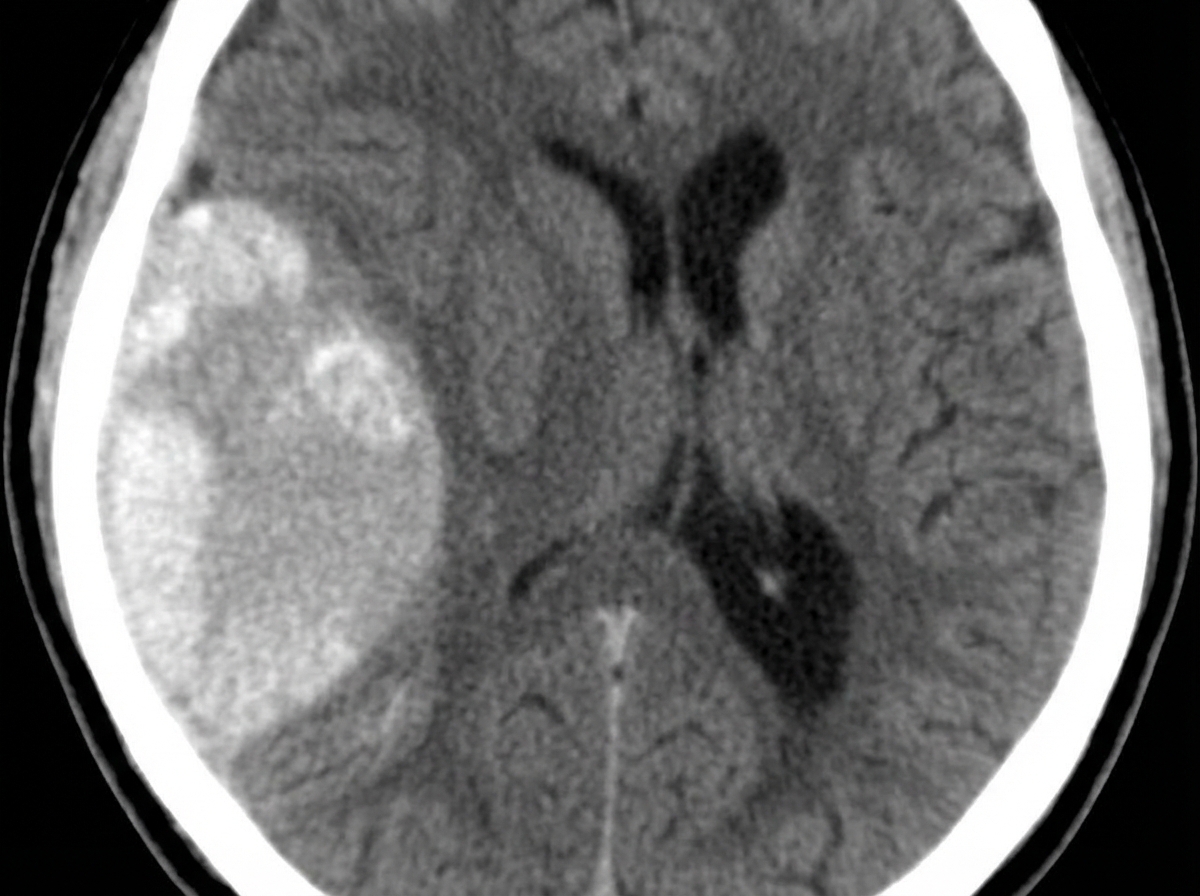
Q457
A patient in a phase 1 trial for a novel epoxide reductase inhibitor, being studied for stroke prophylaxis, develops pain and erythema on the right thigh two days after starting the trial. This rapidly progresses to a purpuric rash with necrotic bullae within 24 hours. Lab results show a PTT of 29 seconds, PT of 28 seconds, and INR of 2.15. What is the most likely pathogenesis of this condition?
Q458
A 32-year-old man comes to the physician because of a 2-week history of diarrhea. During this period, he has had about 10 bowel movements per day. He states that his stools are light brown and watery, with no blood or mucus. He also reports mild abdominal pain and nausea. Over the past year, he has had 6 episodes of diarrhea that lasted several days and resolved spontaneously. Over this time, he also noticed frequent episodes of reddening in his face and neck. He returned from a 10-day trip to Nigeria 3 weeks ago. There is no personal or family history of serious illness. He has smoked a pack of cigarettes daily for the past 13 years. His temperature is 37°C (98.6°F), pulse is 110/min, and blood pressure is 100/60 mm Hg. Physical examination shows dry mucous membranes. The abdomen is tender with no rebound or guarding. The remainder of the examination shows no abnormalities. Serum studies show:
Na+ 136 mEq/L
Cl- 102 mEq/L
K+ 2.3 mEq/L
HCO3- 22 mEq/L
Mg2+ 1.7 mEq/L
Ca2+ 12.3 mg/dL
Glucose (fasting) 169 mg/dL
Nasogastric tube aspiration reveals significantly decreased gastric acid production. Which of the following is the most likely underlying cause of this patient's symptoms?
Q459
A 25-year-old man is rushed to the emergency department following a motor vehicle accident. After an initial evaluation, he is found to have bilateral femoral fractures. After surgical fixation of his fractures, he suddenly starts to feel nauseated and becomes agitated. Past medical history is significant for a thyroid disorder. His temperature is 40.0°C (104°F), blood pressure is 165/100 mm Hg, pulse is 170/min and irregularly irregular, and respirations are 20/min. On physical examination, the patient is confused and delirious. Oriented x 0. Laboratory studies are significant for the following:
Thyroxine (T4), free 5 ng/dL
Thyroid stimulating hormone (TSH) 0.001 mU/L
The patient is started on propranolol to control his current symptoms. Which of the following best describes the mechanism of action of this new medication?
Q460
A 31-year-old man presents with a headache, myalgias, nausea, irritability, and forgetfulness. He developed these symptoms gradually over the past 3 months. He is a motor mechanic, and he changed his place of work 4 months ago. He smokes a half a pack of cigarettes per day. His vaccinations are up to date. On presentation, his vital signs are as follows: blood pressure is 145/70 mm Hg, heart rate is 94/min, respiratory rate is 17/min, and temperature is 36.8℃ (98.2℉). Physical examination reveals diffuse erythema of the face and chest and slight abdominal distention. Neurological examination shows symmetrical brisk upper and lower extremities reflexes. Blood tests show the following results:
pH 7.31
Po2 301 mm Hg
Pco2 28 mm Hg
Na+ 141 mEq/L
K+ 4.3 mEq/L
Cl- 109 mEq/L
HCO3- 17 mEq/L
Base Excess -3 mEq/L
Carboxyhemoglobin 38%
Methemoglobin 1%
Serum cyanide 0.35 mcg/mL (Reference range 0.5–1 mcg/mL)
Which of the following statements about the patient’s condition is true?
Autonomic/CV Drugs US Medical PG Practice Questions and MCQs
Question 451: A 24-year-old woman comes to the physician because of excessive hair growth. She has noticed increasing numbers of dark hairs on her upper lip and on her abdomen over the past 8 years. Menarche was at the age of 13 years. Menses occur at regular 28-day intervals and last 5–6 days with moderate flow. She is sexually active with one male partner. Her only medication is a combination oral contraceptive. She is 168 cm (5 ft 6 in) tall and weighs 88 kg (193 lb); BMI is 31 kg/m2. Vital signs are within normal limits. Physical examination shows coarse dark hair on the upper lip and periumbilical and periareolar skin. Her external genitalia appear normal. The remainder of the examination shows no abnormalities. Midcycle serum studies show:
Fasting glucose 95 mg/dL
Dehydroepiandrosterone sulfate 3.1 μg/mL (N = 0.5–5.4)
Luteinizing hormone 95 mIU/mL
Follicle-stimulating hormone 75 mIU/mL
17α-Hydroxyprogesterone 190 ng/dL (N = 20–300)
Testosterone 1.1 nmol/L (N < 3.5)
Dihydrotestosterone 435 pg/mL (N < 300)
A urine pregnancy test is negative. Which of the following is the most likely underlying cause of this patient's symptom?
A. Peripheral insulin resistance
B. Deficiency of 21-hydroxylase
C. Androgen-producing tumor of the adrenals
D. Increased activity of 5-alpha reductase (Correct Answer)
E. Tumor of granulosa-theca cells of the ovary
Explanation: ***Increased activity of 5-alpha reductase***
- This patient presents with signs of **hirsutism** (excessive dark hair growth on the upper lip, abdomen, and peri-areolar areas) along with **normal testosterone levels** and elevated **dihydrotestosterone (DHT)**. Elevated DHT despite normal testosterone strongly suggests increased peripheral conversion of testosterone to DHT by **5-alpha reductase**.
- **5-alpha reductase** converts testosterone into the more potent androgen **dihydrotestosterone (DHT)** in target tissues like hair follicles. The normal LH/FSH ratio, regular menses, and combination oral contraceptive use make conditions like PCOS less likely to be the primary cause of the androgen excess in this context.
*Peripheral insulin resistance*
- While **insulin resistance** is common in obese individuals (BMI 31) and can contribute to hirsutism, it typically leads to **elevated ovarian androgen production** (e.g., higher testosterone). Here, the testosterone is within the normal range, making it less likely to be the direct cause of the elevated DHT.
- The fasting glucose is normal (95 mg/dL), which does not strongly support overt insulin resistance as the primary cause of excess androgenization in this clinical scenario.
*Deficiency of 21-hydroxylase*
- **21-hydroxylase deficiency (Congenital Adrenal Hyperplasia)** would typically present with significantly **elevated 17α-hydroxyprogesterone** levels, often into thousands of ng/dL, and signs of precocious puberty or virilization from childhood.
- This patient's 17α-hydroxyprogesterone level is **190 ng/dL**, which is within the normal range (20–300 ng/dL), ruling out this condition.
*Androgen-producing tumor of the adrenals*
- An **adrenal androgen-producing tumor** would typically cause a **rapid onset** of severe hirsutism/virilization and often markedly elevated **DHEA-S** levels.
- This patient's hirsutism developed gradually over 8 years, and her DHEA-S level is normal (3.1 μg/mL), making an adrenal tumor unlikely.
*Tumor of granulosa-theca cells of the ovary*
- While ovarian tumors (such as **granulosa-theca cell tumors**) can produce androgens and lead to hirsutism, they usually cause a **rapid onset** of symptoms and significantly **elevated testosterone levels**, often above 3.5 nmol/L.
- This patient has a gradual onset of symptoms and normal testosterone levels, making an ovarian tumor less likely.
Question 452: A 14-year-old female with no past medical history presents to the emergency department with nausea and abdominal pain. On physical examination, her blood pressure is 78/65, her respiratory rate is 30, her breath has a fruity odor, and capillary refill is > 3 seconds. Serum glucose is 820 mg/dL. After starting IV fluids, what is the next best step in the management of this patient?
A. Intravenous Dextrose in water
B. Subcutaneous insulin glargine
C. Intravenous regular insulin (Correct Answer)
D. Intravenous glucagon
E. Subcutaneous insulin lispro
Explanation: ***Intravenous regular insulin***
- The patient presents with **diabetic ketoacidosis (DKA)**, characterized by **hyperglycemia**, **fruity breath** (due to ketones), and **hypotension**. Prompt administration of **intravenous regular insulin** is crucial to lower blood glucose and resolve ketoacidosis.
- **Regular insulin** is preferred intravenously due to its **rapid onset** and short duration of action, allowing for precise titration and continuous adjustment based on glucose levels.
*Intravenous Dextrose in water*
- **Dextrose** would further increase the already severely elevated blood glucose level in a patient with DKA, worsening the metabolic derangements.
- Dextrose is typically initiated only after blood glucose drops to safe levels (<200 mg/dL) to prevent **hypoglycemia** during insulin infusion.
*Subcutaneous insulin glargine*
- **Insulin glargine** is a **long-acting insulin** designed for basal insulin coverage, not for acute management of severe hyperglycemia or DKA.
- Its **slow onset of action** and prolonged effect make it unsuitable for the urgent and rapid glucose reduction required in DKA.
*Intravenous glucagon*
- **Glucagon** is a hormone that **raises blood glucose levels**, counteracting the effects of insulin.
- Administering glucagon would exacerbate the severe hyperglycemia present in DKA and is used only in cases of severe hypoglycemia.
*Subcutaneous insulin lispro*
- **Insulin lispro** is a **rapid-acting insulin analog** but is typically given subcutaneously.
- While faster than regular insulin subcutaneously, the **subcutaneous route** has variable absorption in critically ill patients, and the immediate and precisely controllable effect of intravenous regular insulin is needed in DKA.
Question 453: A 52-year-old man comes to the physician because of increasing weakness of his arms and legs over the past year. He has also had difficulty speaking for the past 5 months. He underwent a partial gastrectomy for gastric cancer 10 years ago. His temperature is 37.1°C (98.8°F), pulse is 88/min, and blood pressure is 118/70 mm Hg. Examination shows dysarthria. There is mild atrophy and twitching of the tongue. Muscle strength is decreased in all extremities. Muscle tone is decreased in the right lower extremity and increased in the other extremities. Deep tendon reflexes are absent in the right lower extremity and 4+ in the other extremities. Plantar reflex shows an extensor response on the left. Sensation is intact in all extremities. Which of the following is the most appropriate pharmacotherapy for this patient?
A. Nusinersen
B. Riluzole (Correct Answer)
C. Glatiramer acetate
D. Vitamin B12
E. Corticosteroids
Explanation: ***Riluzole***
- This patient's presentation with progressive weakness, dysarthria, muscle atrophy, fasciculations (twitching of the tongue), and a mix of **upper motor neuron signs** (increased tone, 4+ reflexes, extensor plantar response) and **lower motor neuron signs** (decreased tone in one extremity, absent reflexes in another) is highly suggestive of **amyotrophic lateral sclerosis (ALS)**
- **Riluzole** is an FDA-approved medication for ALS that reduces **glutamate-mediated excitotoxicity**, which is thought to contribute to neuronal degeneration in ALS
- It has been shown to **extend survival** and **delay the need for tracheostomy** in patients with ALS
*Nusinersen*
- Nusinersen is an antisense oligonucleotide used to treat **spinal muscular atrophy (SMA)**, a genetic disorder characterized by alpha motor neuron degeneration
- SMA presents differently from ALS, typically starting in infancy or childhood with progressive muscle weakness and hypotonia, **without the prominent upper motor neuron signs** seen in this patient
*Glatiramer acetate*
- Glatiramer acetate is an immunomodulatory drug used in the treatment of **multiple sclerosis (MS)**
- MS is characterized by demyelination in the central nervous system, leading to a variety of neurological symptoms that can include weakness, but typically with **sensory disturbances** and often **relapsing-remitting courses**, which are not characteristic of this patient's presentation
*Vitamin B12*
- **Vitamin B12 deficiency** can cause neurological symptoms, including weakness, paresthesias, and gait abnormalities due to subacute combined degeneration of the spinal cord and peripheral neuropathy
- While the patient had a partial gastrectomy (a risk factor for B12 deficiency), his clinical picture with **prominent upper motor neuron signs, dysarthria, and fasciculations is not typical for B12 deficiency**, which primarily affects sensory and peripheral motor function
*Corticosteroids*
- Corticosteroids are potent anti-inflammatory and immunosuppressive agents used in various neurological conditions such as **multiple sclerosis exacerbations**, **myasthenia gravis**, or inflammatory myopathies
- They are **not effective in treating ALS** and may even worsen muscle weakness in some individuals
Question 454: A 56-year-old man with substernal chest pain calls 911. When paramedics arrive, they administer drug X sublingually for the immediate relief of angina. What is the most likely site of action of drug X?
A. Pulmonary arteries
B. Large veins (Correct Answer)
C. Cardiac muscle
D. Large arteries
E. Arterioles
Explanation: ***Large veins***
- Drug X is most likely **nitroglycerin**, which is administered sublingually for rapid relief of angina.
- Its primary mechanism of action involves **vasodilation of large veins**, leading to **decreased preload** and reduced myocardial oxygen demand.
*Pulmonary arteries*
- While nitroglycerin can cause some pulmonary vasodilation, its primary therapeutic effect in angina is not focused on the **pulmonary arteries**.
- Medications targeting pulmonary arteries are typically used for conditions like **pulmonary hypertension**.
*Cardiac muscle*
- Nitroglycerin does not directly act on **cardiac muscle** to improve angina; its effects are primarily vascular.
- It does not directly enhance contractility or directly reduce oxygen consumption at the myocardial cellular level.
*Large arteries*
- Nitroglycerin does cause some **arterial vasodilation**, but this effect is less prominent than its venodilating effect at typical anti-anginal doses.
- Significant arterial dilation can lead to **hypotension**, which is a side effect, not the primary therapeutic mechanism for angina relief.
*Arterioles*
- Nitroglycerin causes **less vasodilation of resistance arterioles** compared to its venodilating effects.
- While some arteriolar dilation occurs, it mainly contributes to a decrease in **afterload**, but the predominant effect for angina relief is preload reduction.
Question 455: A 78-year-old woman with a history of cerebrovascular accident (CVA) presents to the emergency department with slurred speech, diplopia and dizziness that has persisted for eight hours. Upon further questioning you find that since her CVA one year ago, she has struggled with depression and poor nutrition. Her dose of paroxetine has been recently increased. Additionally, she is on anti-seizure prophylaxis due to sequelae from her CVA. CT scan reveals an old infarct with no acute pathology. Vital signs are within normal limits. On physical exam you find the patient appears frail. She is confused and has nystagmus and an ataxic gait. What would be an appropriate next step?
A. Lower the dose of her anti-seizure medication (Correct Answer)
B. Start total parenteral nutrition (TPN)
C. Administer tissue plasminogen activator (tPA)
D. Start trimethoprim-sulfamethoxazole (TMP-SMX)
E. Increase the dose of her anti-seizure medication
Explanation: ***Lower the dose of her anti-seizure medication***
- The patient presents with classic symptoms of **anti-seizure medication toxicity**, including **slurred speech, diplopia, dizziness, nystagmus, and ataxia**, which are common with drugs like **phenytoin** or **carbamazepine**.
- Given her **frailty**, poor nutrition, and recent CVA, she is likely more susceptible to adverse drug effects, making a dose reduction the most appropriate next step to resolve the toxicity.
*Start total parenteral nutrition (TPN)*
- While the patient has **poor nutrition**, her acute symptoms are neurological and suggest a drug-related issue, not a primary nutritional emergency requiring TPN.
- TPN carries its own risks and is not indicated as an immediate treatment for drug toxicity or acute neurological symptoms in this context.
*Administer tissue plasminogen activator (tPA)*
- The patient's symptoms have been present for **eight hours**, exceeding the typical **time window for thrombolytic therapy** for acute ischemic stroke, which is generally 3 to 4.5 hours.
- The **CT scan shows an old infarct** with no acute pathology, ruling out an acute ischemic stroke that would warrant tPA.
*Start trimethoprim-sulfamethoxazole (TMP-SMX)*
- There is **no indication of an infection** in the provided clinical picture; her symptoms are neurological and consistent with medication toxicity.
- Administering an antibiotic without evidence of infection is inappropriate and could lead to unnecessary side effects.
*Increase the dose of her anti-seizure medication*
- The patient is exhibiting clear signs of **anti-seizure medication toxicity** (slurred speech, diplopia, dizziness, nystagmus, ataxia).
- Increasing the dose would exacerbate these symptoms and could lead to more severe adverse events, making it a dangerous and inappropriate action.
Question 456: A 23-year-old man presents with a blunt force injury to the head from a baseball bat. He is currently unconscious, although his friends say he was awake and speaking with them en route to the hospital. He has no significant past medical history and takes no current medications. The vital signs include: temperature 37.0°C (98.6°F), blood pressure 165/85 mm Hg, pulse 50/min, and respiratory rate 19/min. On physical examination, there is a blunt force injury to the left temporoparietal region approximately 10.1–12.7 cm (4–5 in) in diameter. There is anisocoria of the left pupil, which is unresponsive to light. The patient is intubated and fluid resuscitation is initiated. A noncontrast computed tomography (CT) scan of the head is acquired and shown in the exhibit (see image). Which of the following is the most appropriate medical treatment for this patient?
A. Placement of a ventriculoperitoneal (VP) shunt
B. Acetazolamide
C. Placing the head of the bed at 0 degrees
D. Maintain a PaCO2 of 24 mm Hg
E. Mannitol (Correct Answer)
Explanation: ***Mannitol***
- The patient presents with classic signs of **epidural hematoma** (lucid interval, ipsilateral pupillary dilation, contralateral hemiparesis), and the CT scan confirms a large, biconvex hemorrhage compressing the brain.
- **Mannitol** is an osmotic diuretic used to rapidly **reduce intracranial pressure (ICP)** by drawing water from the brain into the vasculature, which can be life-saving in cases of acute brain herniation.
*Placement of a ventriculoperitoneal (VP) shunt*
- A VP shunt is used for long-term management of **hydrocephalus** due to impaired CSF absorption or flow, not for acute, traumatic hemorrhage and mass effect.
- Placing a shunt would not address the immediate, life-threatening mass effect from the epidural hematoma.
*Acetazolamide*
- **Acetazolamide** is a carbonic anhydrase inhibitor that reduces CSF production, primarily used for conditions like chronic **idiopathic intracranial hypertension** (pseudotumor cerebri) or hydrocephalus.
- It is not an effective treatment for the rapid reduction of ICP in the setting of acute intracranial hemorrhage and mass effect.
*Placing the head of the bed at 0 degrees*
- Keeping the head of the bed flat (at 0 degrees) is generally discouraged in patients with **elevated ICP** as it can worsen cerebral venous outflow and increase ICP.
- Elevating the head of the bed to **30 degrees** is standard practice to promote venous drainage and reduce ICP.
*Maintain a PaCO2 of 24 mm Hg*
- While **hyperventilation** to lower PaCO2 can cause cerebral vasoconstriction and reduce ICP, maintaining a PaCO2 as low as 24 mm Hg (severe hyperventilation) is typically reserved for **brief periods** in severe, refractory ICP elevation.
- Prolonged severe hyperventilation can lead to **cerebral ischemia** due to excessive vasoconstriction and is generally not the first-line or sustained management strategy.
Question 457: A patient in a phase 1 trial for a novel epoxide reductase inhibitor, being studied for stroke prophylaxis, develops pain and erythema on the right thigh two days after starting the trial. This rapidly progresses to a purpuric rash with necrotic bullae within 24 hours. Lab results show a PTT of 29 seconds, PT of 28 seconds, and INR of 2.15. What is the most likely pathogenesis of this condition?
A. Decreased plasmin activity
B. Decreased platelet count
C. Decreased protein C levels (Correct Answer)
D. Increased factor VIII activity
E. Decreased antithrombin III activity
Explanation: ***Decreased protein C levels***
- The clinical presentation of **pain and erythema progressing to purpuric rash with necrotic bullae** within 2-3 days of starting therapy, along with elevated PT/INR, is **pathognomonic for warfarin-induced skin necrosis**.
- This novel **epoxide reductase inhibitor** works like warfarin by inhibiting **vitamin K epoxide reductase**, which depletes all vitamin K-dependent factors.
- **Protein C and protein S** (natural anticoagulants) have **short half-lives** (6-8 hours) and drop rapidly, while procoagulant factors II, VII, IX, and X have longer half-lives (24-60 hours).
- This creates a **transient hypercoagulable state** in the first 2-3 days of therapy with **low protein C/S** but relatively preserved procoagulant factors, leading to **microvascular thrombosis** and skin necrosis.
- Most common in patients with **hereditary protein C or S deficiency** or those receiving loading doses.
*Decreased antithrombin III activity*
- Antithrombin III is **not a vitamin K-dependent factor** and is not directly affected by epoxide reductase inhibitors.
- Decreased antithrombin III would cause thrombosis but does not explain the **specific temporal relationship** and mechanism of warfarin-induced skin necrosis.
- Antithrombin III deficiency causes **venous thromboembolism**, not the characteristic cutaneous necrosis pattern.
*Decreased plasmin activity*
- Plasmin is involved in **fibrinolysis** and is not affected by vitamin K epoxide reductase inhibitors.
- Decreased plasmin activity would impair clot breakdown but does not explain the **early hypercoagulable state** specific to warfarin initiation.
- This mechanism is not relevant to warfarin-induced skin necrosis.
*Decreased platelet count*
- The lab values provided show **elevated PT/INR**, consistent with coagulation factor depletion, not thrombocytopenia.
- Thrombocytopenia causes **petechiae and mucosal bleeding**, not the large **necrotic bullae** seen here.
- Platelet count is not affected by epoxide reductase inhibitors.
*Increased factor VIII activity*
- Factor VIII is **not a vitamin K-dependent factor** and is not depleted by epoxide reductase inhibitors.
- While elevated factor VIII can contribute to hypercoagulability, it does not explain the **specific mechanism and timeline** of warfarin-induced skin necrosis.
- This is not the primary pathogenesis of this condition.
Question 458: A 32-year-old man comes to the physician because of a 2-week history of diarrhea. During this period, he has had about 10 bowel movements per day. He states that his stools are light brown and watery, with no blood or mucus. He also reports mild abdominal pain and nausea. Over the past year, he has had 6 episodes of diarrhea that lasted several days and resolved spontaneously. Over this time, he also noticed frequent episodes of reddening in his face and neck. He returned from a 10-day trip to Nigeria 3 weeks ago. There is no personal or family history of serious illness. He has smoked a pack of cigarettes daily for the past 13 years. His temperature is 37°C (98.6°F), pulse is 110/min, and blood pressure is 100/60 mm Hg. Physical examination shows dry mucous membranes. The abdomen is tender with no rebound or guarding. The remainder of the examination shows no abnormalities. Serum studies show:
Na+ 136 mEq/L
Cl- 102 mEq/L
K+ 2.3 mEq/L
HCO3- 22 mEq/L
Mg2+ 1.7 mEq/L
Ca2+ 12.3 mg/dL
Glucose (fasting) 169 mg/dL
Nasogastric tube aspiration reveals significantly decreased gastric acid production. Which of the following is the most likely underlying cause of this patient's symptoms?
A. Excessive accumulation of mast cells
B. Increased conversion of 5-hydroxytryptophan to serotonin
C. Functional gastrointestinal disorder
D. Transmural inflammation of the intestinal walls
E. Elevated serum VIP concentration (Correct Answer)
Explanation: ***Elevated serum VIP concentration***
- The patient's symptoms, including **chronic watery diarrhea**, **hypokalemia**, **hypercalcemia**, **impaired gastric acid secretion**, and **flushing**, are classic manifestations of a **VIPoma**.
- **Vasoactive intestinal peptide (VIP)** directly stimulates intestinal fluid and electrolyte secretion, inhibits gastric acid secretion, and can cause cutaneous flushing and systemic effects.
*Excessive accumulation of mast cells*
- **Systemic mastocytosis** can cause diarrhea and flushing due to the release of histamine and other mediators.
- However, it typically presents with **urticaria pigmentosa** (skin lesions), bone pain, and hepatosplenomegaly, and would not explain the **hypokalemia**, **hypercalcemia**, or **impaired gastric acid secretion** seen in this patient.
*Increased conversion of 5-hydroxytryptophan to serotonin*
- This describes **carcinoid syndrome**, which presents with **diarrhea**, **flushing**, and sometimes **cardiac valvular lesions** or **bronchospasm**.
- While diarrhea and flushing are present, the patient's **hypokalemia**, **hypercalcemia**, and especially **achlorhydria** (decreased gastric acid production) are not typical features of carcinoid syndrome.
*Functional gastrointestinal disorder*
- Functional GI disorders like **irritable bowel syndrome (IBS)** can cause chronic diarrhea and abdominal pain.
- However, they do not cause the systemic findings such as **flushing**, **hypokalemia**, **hypercalcemia**, or **hypochlorhydria** observed in this patient.
*Transmural inflammation of the intestinal walls*
- **Inflammatory bowel diseases (IBD)**, such as Crohn's disease, involve transmural inflammation and can cause chronic diarrhea, abdominal pain, and weight loss.
- While IBD can cause diarrhea, it typically presents with **bloody stools**, fever, and does not explain the flushing, hypokalemia, hypercalcemia, or achlorhydria found here.
Question 459: A 25-year-old man is rushed to the emergency department following a motor vehicle accident. After an initial evaluation, he is found to have bilateral femoral fractures. After surgical fixation of his fractures, he suddenly starts to feel nauseated and becomes agitated. Past medical history is significant for a thyroid disorder. His temperature is 40.0°C (104°F), blood pressure is 165/100 mm Hg, pulse is 170/min and irregularly irregular, and respirations are 20/min. On physical examination, the patient is confused and delirious. Oriented x 0. Laboratory studies are significant for the following:
Thyroxine (T4), free 5 ng/dL
Thyroid stimulating hormone (TSH) 0.001 mU/L
The patient is started on propranolol to control his current symptoms. Which of the following best describes the mechanism of action of this new medication?
A. Inhibition of an underlying autoimmune process
B. Interference with enterohepatic circulation and recycling of thyroid hormones
C. Inhibition of release of thyroid hormones
D. Inhibition of thyroid peroxidase enzyme
E. Decrease the peripheral conversion of T4 to T3 (Correct Answer)
Explanation: ***Decrease the peripheral conversion of T4 to T3***
- **Propranolol**, a non-selective beta-blocker, plays a crucial role in thyroid storm management by **blocking beta-adrenergic receptors**, thereby mitigating the cardiovascular symptoms like tachycardia and hypertension.
- Furthermore, at high doses, propranolol directly **inhibits the peripheral conversion of T4 to T3**, which is the more biologically active thyroid hormone, thus reducing the overall thyroid hormone effect.
*Inhibition of an underlying autoimmune process*
- This mechanism describes drugs like **glucocorticoids** or **immunosuppressants**, which are effective in autoimmune thyroid diseases like Graves' disease but are not the primary mechanism of action for propranolol.
- While thyroid storm is often triggered by **Graves' disease**, initial management focuses on symptom control and blocking hormone effects, not primarily immune suppression by propranolol.
*Interference with enterohepatic circulation and recycling of thyroid hormones*
- This mechanism is characteristic of **cholestyramine** or **iodinated contrast agents**, which bind to thyroid hormones in the gut, preventing their reabsorption and increasing their fecal excretion.
- Propranolol does not significantly influence the enterohepatic circulation or recycling of thyroid hormones.
*Inhibition of release of thyroid hormones*
- This action is primarily achieved by **iodine preparations** (e.g., Lugol's iodine, potassium iodide) given after antithyroid drugs, which acutely block the release of preformed thyroid hormones from the gland.
- Although propranolol can reduce some aspects of sympathetic stimulation, it does not directly inhibit the release of thyroid hormones from the thyroid gland.
*Inhibition of thyroid peroxidase enzyme*
- This mechanism is specific to **thionamides** like **propylthiouracil (PTU)** and **methimazole**, which block the organification of iodine and coupling of iodotyrosines, thereby inhibiting thyroid hormone synthesis.
- Propranolol does not directly affect the thyroid peroxidase enzyme or thyroid hormone synthesis.
Question 460: A 31-year-old man presents with a headache, myalgias, nausea, irritability, and forgetfulness. He developed these symptoms gradually over the past 3 months. He is a motor mechanic, and he changed his place of work 4 months ago. He smokes a half a pack of cigarettes per day. His vaccinations are up to date. On presentation, his vital signs are as follows: blood pressure is 145/70 mm Hg, heart rate is 94/min, respiratory rate is 17/min, and temperature is 36.8℃ (98.2℉). Physical examination reveals diffuse erythema of the face and chest and slight abdominal distention. Neurological examination shows symmetrical brisk upper and lower extremities reflexes. Blood tests show the following results:
pH 7.31
Po2 301 mm Hg
Pco2 28 mm Hg
Na+ 141 mEq/L
K+ 4.3 mEq/L
Cl- 109 mEq/L
HCO3- 17 mEq/L
Base Excess -3 mEq/L
Carboxyhemoglobin 38%
Methemoglobin 1%
Serum cyanide 0.35 mcg/mL (Reference range 0.5–1 mcg/mL)
Which of the following statements about the patient’s condition is true?
A. Viral infection should be suspected in this patient.
B. Chronic cyanide exposure is the main cause of patient’s condition.
C. The patient’s symptoms are a consequence of his essential hypertension.
D. This patient’s symptoms are due to CO-induced inactivation of cytochrome oxidase and carboxyhemoglobin formation. (Correct Answer)
E. This patient has disrupted glycolysis due to inactivation of fructose-bisphosphate aldolase.
Explanation: ***This patient’s symptoms are due to CO-induced inactivation of cytochrome oxidase and carboxyhemoglobin formation.***
- The elevated **carboxyhemoglobin (COHb)** level of 38% indicates significant **carbon monoxide (CO) poisoning**. CO binds to **hemoglobin** with much greater affinity than oxygen, forming COHb, which impairs **oxygen transport** to tissues and causes **hypoxia**.
- CO also directly binds to and inhibits **cytochrome c oxidase** in the **electron transport chain**, disrupting cellular respiration and ATP production, which contributes to systemic symptoms like **headache**, **myalgias**, and **neurological dysfunction** (irritability, forgetfulness), consistent with this patient's presentation.
*Viral infection should be suspected in this patient.*
- While headache and myalgias can be seen in **viral infections**, the presence of severely elevated **carboxyhemoglobin** and the patient's occupation as a mechanic strongly point towards carbon monoxide poisoning.
- The other specific findings, such as **diffuse erythema** and **neurological changes**, are not typical or sufficient to primarily suspect a viral infection in light of the lab results.
*Chronic cyanide exposure is the main cause of patient’s condition.*
- The **serum cyanide level** is below the reference range (0.35 mcg/mL vs. 0.5–1 mcg/mL), indicating that **cyanide poisoning** is not present and therefore not the cause of his symptoms.
- **Cyanide poisoning** would typically cause more acute and severe symptoms related to cellular **hypoxia**, often with a normal PCO2 and lactate production.
*The patient’s symptoms are a consequence of his essential hypertension.*
- While the patient has **elevated blood pressure** (145/70 mmHg), which could be a sign of **hypertension**, this alone does not explain the full constellation of symptoms, especially the **erythema** and severe **neurological impairment** described.
- Most importantly, **hypertension** would not account for the significantly elevated **carboxyhemoglobin** levels, which are the primary driver of the patient's symptoms.
*This patient has disrupted glycolysis due to inactivation of fructose-bisphosphate aldolase.*
- There is no clinical or laboratory evidence to suggest disruption of **glycolysis** or inactivation of **fructose-bisphosphate aldolase**.
- This enzyme is crucial for glycolysis, and its dysfunction would lead to different metabolic derangements, distinct from the signs and symptoms of **carbon monoxide poisoning**, which directly impacts oxygen delivery and utilization.