29-year-old construction worker is brought to the emergency department after falling 10 ft (3 m) from the scaffolding at a construction site. He reports that he landed on his outstretched arms, which are now in severe pain (10/10 on a numeric scale). He has a history of opioid use disorder and is currently on methadone maintenance treatment. His pulse is 100/min, respirations are 20/min, and blood pressure is 140/90 mm Hg. Pulse oximetry on room air shows an oxygen saturation of 98%. He is diaphoretic and in distress. Physical examination shows a hematoma on the patient's right forearm. X-ray of the right arm shows a nondisplaced fracture of the ulna. A CT of the abdomen and pelvis shows no abnormalities. The patient requests pain medication. In addition to managing the patient's injury, which of the following is the most appropriate next step in management?
Q392
A 44-year-old man presents to the clinic worried about his risk for bladder cancer. His best friend who worked with him as a painter for the past 20-years died recently after being diagnosed with transitional cell carcinoma. He is worried that their long and heavy cigarette smoking history might have contributed to his death. He also reports that he has been feeling down since his friend's death 2 months ago and has not been eating or sleeping as usual. He took time off from work but now is running past due on some of his bills. He feels like he is moving a lot slower than usual. He would like to stop smoking but feels like it's impossible with just his willpower. What side-effect is most likely if this patient were started on his appropriate pharmacotherapy?
Q393
A 72-year-old man is brought in by ambulance to the hospital after being found down at home. On presentation, he appears cachectic and is found to be confused. Specifically, he does not answer questions appropriately and is easily distracted. His wife says that he has been losing weight over the last 3 months and he has a 40 pack-year history of smoking. His serum sodium is found to be 121 mEq/L and his urine osmolality is found to be 415 mOsm/kg. Chest radiograph shows a large central mass in the right lung. Which of the following treatments would be effective in addressing this patient's serum abnormality?
Q394
A 66-year-old man was referred for endoscopic evaluation due to iron deficiency anemia. He has had anorexia and weight loss for two months. Three years ago, the patient had coronary artery bypass grafting and aortic mechanical valve replacement. He has a 12-year history of diabetes mellitus and hypertension. He takes warfarin, lisinopril, amlodipine, metformin, aspirin, and carvedilol. His blood pressure is 115/65 mm Hg, pulse is 68/min, respirations are 14/min, temperature is 36.8°C (98.2°F), and blood glucose is 220 mg/dL. Conjunctivae are pale. Heart examination reveals a metallic click just before the carotid pulse. Which of the following is the most appropriate switch in this patient’s drug therapy before the endoscopy?
Q395
A 69-year-old African American man is brought to the emergency department with sudden onset lower limb paralysis and back pain. He has had generalized bone pain for 2 months. He has no history of severe illnesses. He takes ibuprofen for pain. On examination, he is pale. The vital signs include: temperature 37.1°C (98.8°F), pulse 68/min, respiratory rate 16/min, and blood pressure 155/90 mm Hg. The neurologic examination shows paraparesis. The 8th thoracic vertebra is tender to palpation. An X-ray of the thoracic vertebrae confirms a compression fracture at the same level. The laboratory studies show the following:
Laboratory test
Hemoglobin 9 g/dL
Mean corpuscular volume 95 μm3
Leukocyte count 5,000/mm3
Platelet count 240,000/mm3
ESR 85 mm/hour
Serum
Na+ 135 mEq/L
K+ 4.2 mEq/L
Cl− 113 mEq/L
HCO3− 20 mEq/L
Ca+ 11.5 mg/dL
Albumin 4 g/dL
Urea nitrogen 18 mg/dL
Creatinine 1.2 mg/dL
Serum electrophoresis shows a monoclonal protein level of 38 g/L. To reduce the likelihood of fracture recurrence, it is most appropriate to administer which of the following?
Q396
A 56-year-old homeless male presents to a free clinic for a health evaluation. He states that he has not seen a physician in over 25 years but finally decided to seek medical attention after he noticed recent chronic fatigue and weight gain. Upon questioning, he endorses drinking 2 handles of whiskey per day. On exam, the physician observes the findings shown in Figures A-D. Which of the following findings would also be expected to be observed in this patient?
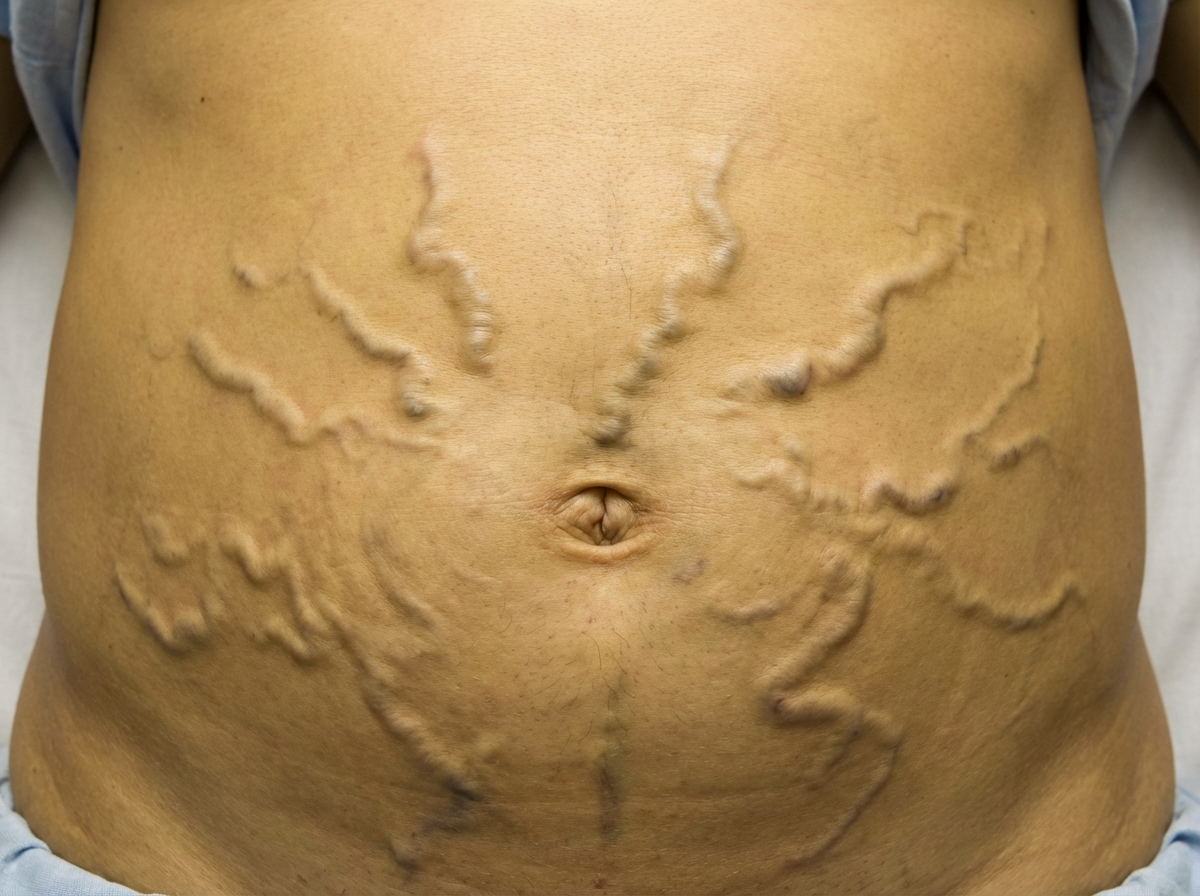
Q397
One week after starting a new medication, a 16-year-old girl is brought to the emergency department by her mother because of a painful, blistering rash. She has a history of bipolar disorder. Her temperature is 39°C (102°F). Physical examination shows numerous coalescing bullae with epidermal detachment covering the face, trunk, and extremities. There are hemorrhagic erosions on the hard palate and buccal mucosa. When lateral pressure is applied to healthy-appearing skin at the edge of a bulla, a blister starts to form. Which of the following drugs is most likely responsible for this patient's current condition?
Q398
A 34-year-old woman presents with blurred vision and ringing in her ears. She says she has a 6-month history of recurrent worsening bilateral pulsatile headaches that she manages with ibuprofen, which does very little to relieve the pain. For the past week, she says she has vomited nearly every morning and missed work due to the pain in her head. She first noticed vision problems 3 months ago that has occurred several times since then. Past medical history is significant for uncomplicated urinary tract infection for which she has just finished a course of antibiotics. She has a history of a mild urticarial reaction when she takes penicillin. Her vital signs include: blood pressure 115/74 mm Hg, pulse 75/min, and respiratory rate 16/min. Her body mass index (BMI) is 36 kg/m2. Physical examination is significant for bilateral peripheral visual field loss with preservation of visual acuity. Fundoscopic examination reveals blurring of the disc margins with vessel tortuosity. The remainder of her physical examination is unremarkable. A magnetic resonance image (MRI) of the brain is normal. Lumbar puncture (LP) is remarkable for a markedly elevated opening pressure. Which of the following is the next best step in the treatment of her condition?
Q399
A 56-year-old man with coronary artery disease agrees to participate in a pharmacological study. He takes an oral medication that leads to dephosphorylation of myosin light chains in venous smooth muscle cells. An investigator measures the plasma concentration of the drug over time after intravenous and then after oral administration. There is no statistically significant difference in the dose-corrected area under the curve for the 2 routes of administration. The patient most likely ingested which of the following drugs?
Q400
A 50-year-old woman presents with sudden onset right upper quadrant abdominal pain. She says her symptoms started 6 hours ago after she had dinner. She describes the pain as cramping, radiating to her shoulders. She had similar episodes in the past, but they were less severe and resolved with over-the-counter analgesics. Her medical history is significant for hypertension and coronary artery disease. Her current medications include warfarin, hydrochlorothiazide, and fibrates. Her temperature is 37.7°C (99.9°F), blood pressure is 110/80 mm Hg, pulse is 80/min, and respirations are 15/min. Abdominal exam reveals severe right upper quadrant tenderness, and she catches her breath when palpated deeply just below the right costal margin. Surgical consult determines her to be surgically unfit for any intervention due to her high risk of bleeding. After treating her pain with appropriate analgesics, which of the following is the next best step in the management of this patient?
Autonomic/CV Drugs US Medical PG Practice Questions and MCQs
Question 391: 29-year-old construction worker is brought to the emergency department after falling 10 ft (3 m) from the scaffolding at a construction site. He reports that he landed on his outstretched arms, which are now in severe pain (10/10 on a numeric scale). He has a history of opioid use disorder and is currently on methadone maintenance treatment. His pulse is 100/min, respirations are 20/min, and blood pressure is 140/90 mm Hg. Pulse oximetry on room air shows an oxygen saturation of 98%. He is diaphoretic and in distress. Physical examination shows a hematoma on the patient's right forearm. X-ray of the right arm shows a nondisplaced fracture of the ulna. A CT of the abdomen and pelvis shows no abnormalities. The patient requests pain medication. In addition to managing the patient's injury, which of the following is the most appropriate next step in management?
A. Administration of buprenorphine
B. Psychiatric evaluation for drug-seeking behavior
C. Increase of outpatient methadone regimen
D. Urine toxicology screening
E. Scheduled short-acting opioid administration (Correct Answer)
Explanation: ***Scheduled short-acting opioid administration***
- This patient is experiencing significant pain (10/10) from a verified injury (ulna fracture) and has a known history of **opioid use disorder** managed with methadone.
- Providing **scheduled short-acting opioids** is appropriate for acute pain management in this context, addressing both the severe pain and the risk of withdrawal/escalated pain due to his opioid tolerance.
*Administration of buprenorphine*
- Administering buprenorphine in a patient currently on methadone for **opioid use disorder** could precipitate **acute opioid withdrawal** due to buprenorphine's partial agonist and high affinity properties.
- Buprenorphine is typically used for **opioid dependence treatment** rather than acute pain management in someone currently maintained on methadone.
*Psychiatric evaluation for drug-seeking behavior*
- Attributing the patient's request for pain medication solely to "drug-seeking behavior" while he has a confirmed painful injury is **unethical and inappropriate**.
- All patients, regardless of their substance use history, deserve adequate pain management for acute injuries.
*Increase of outpatient methadone regimen*
- Adjusting a stable outpatient methadone regimen for **acute pain management** is complex and typically requires coordination with the patient's opioid treatment program (OTP).
- An isolated increase in methadone might not adequately address acute, incident pain from a fracture and could complicate subsequent long-term management.
*Urine toxicology screening*
- While a urine toxicology screen might be part of a comprehensive assessment in some contexts, it is **not the most appropriate immediate next step** for a patient presenting with severe acute pain from a confirmed injury.
- The patient's pain needs immediate attention, and awaiting toxicology results would delay necessary pain relief.
Question 392: A 44-year-old man presents to the clinic worried about his risk for bladder cancer. His best friend who worked with him as a painter for the past 20-years died recently after being diagnosed with transitional cell carcinoma. He is worried that their long and heavy cigarette smoking history might have contributed to his death. He also reports that he has been feeling down since his friend's death 2 months ago and has not been eating or sleeping as usual. He took time off from work but now is running past due on some of his bills. He feels like he is moving a lot slower than usual. He would like to stop smoking but feels like it's impossible with just his willpower. What side-effect is most likely if this patient were started on his appropriate pharmacotherapy?
A. Can decrease seizure threshold (Correct Answer)
B. Can treat overdose with sodium bicarbonate
C. Can cause restlessness at initiation or termination
D. Can cause sedation and weight gain
E. Can worsen uncontrolled hypertension
Explanation: ***Can decrease seizure threshold***
- The patient exhibits symptoms consistent with **major depressive disorder** (anhedonia, sleep/appetite disturbance, psychomotor retardation) and co-occurring **nicotine dependence**.
- **Bupropion** is an appropriate pharmacotherapy as it treats both depression and aids in smoking cessation, but it carries a dose-dependent risk of **lowering the seizure threshold**.
*Can treat overdose with sodium bicarbonate*
- This statement is characteristic of **tricyclic antidepressant (TCA) overdose**, which leads to cardiac arrhythmias that can be mitigated by sodium bicarbonate.
- Bupropion overdose is associated with seizures, blurred vision, and hallucinations, not typically managed with sodium bicarbonate for cardiac effects.
*Can cause restlessness at initiation or termination*
- This side effect is more commonly associated with **akathisia from antipsychotics** or sometimes **selective serotonin reuptake inhibitors (SSRIs)** during initiation or withdrawal.
- While bupropion can cause agitation, "restlessness" in this context as a primary differentiating side effect for initiation/termination is less specific than the seizure risk.
*Can cause sedation and weight gain*
- **Sedation and weight gain** are common side effects of many antidepressants, particularly older TCAs and some newer atypical antidepressants like **mirtazapine**.
- Bupropion is known for being **non-sedating** and can actually cause **weight loss**, making this option incorrect.
*Can worsen uncontrolled hypertension*
- While bupropion can cause a **mild increase in blood pressure**, sustained treatment with **MAOIs** (monoamine oxidase inhibitors) or **SNRIs** (serotonin-norepinephrine reuptake inhibitors) are more significantly associated with worsening uncontrolled hypertension.
- The risk of seizure threshold lowering is a more distinct and clinically relevant side effect for bupropion compared to hypertension exacerbation.
Question 393: A 72-year-old man is brought in by ambulance to the hospital after being found down at home. On presentation, he appears cachectic and is found to be confused. Specifically, he does not answer questions appropriately and is easily distracted. His wife says that he has been losing weight over the last 3 months and he has a 40 pack-year history of smoking. His serum sodium is found to be 121 mEq/L and his urine osmolality is found to be 415 mOsm/kg. Chest radiograph shows a large central mass in the right lung. Which of the following treatments would be effective in addressing this patient's serum abnormality?
A. Antipsychotic
B. Antidiuretic hormone
C. Normal saline
D. Renin
E. Demeclocycline (Correct Answer)
Explanation: ***Demeclocycline***
- This patient presents with **hyponatremia** and **concentrated urine** in the setting of lung cancer, suggestive of **SIADH**. Demeclocycline is a **tetracycline derivative** that inhibits the action of ADH on the renal tubules, promoting water excretion.
- While other treatments like fluid restriction are first-line for SIADH, Demeclocycline is an effective pharmacological treatment, especially for **chronic or severe cases**.
*Antipsychotic*
- Antipsychotics are used to treat **psychotic disorders** and may induce hyponatremia as a side effect, but they do not directly treat the underlying mechanism of SIADH.
- This patient's confusion is likely due to **hyponatremia** and his underlying medical condition, not a primary psychiatric disorder requiring antipsychotics.
*Antidiuretic hormone*
- **Antidiuretic hormone (ADH)**, also known as vasopressin, is the *cause* of SIADH (syndrome of inappropriate ADH secretion), where there is *excessive* ADH secretion. Administering more ADH would worsen the condition.
- The goal of treatment in SIADH is to **reduce the effect or amount of ADH**, not increase it.
*Normal saline*
- Administering **normal saline (0.9% NaCl)** in SIADH can worsen hyponatremia. The kidneys will retain the free water due to ADH, while excreting the sodium, leading to a further drop in serum sodium.
- Normal saline is used for **hypovolemic hyponatremia**, not euvolemic hyponatremia like SIADH.
*Renin*
- **Renin** is an enzyme involved in the **renin-angiotensin-aldosterone system** (RAAS), which primarily regulates blood pressure and fluid balance. It is not directly involved in the pathogenesis or treatment of SIADH.
- The RAAS system's role in hyponatremia is distinct from the ADH-mediated pathology of SIADH.
Question 394: A 66-year-old man was referred for endoscopic evaluation due to iron deficiency anemia. He has had anorexia and weight loss for two months. Three years ago, the patient had coronary artery bypass grafting and aortic mechanical valve replacement. He has a 12-year history of diabetes mellitus and hypertension. He takes warfarin, lisinopril, amlodipine, metformin, aspirin, and carvedilol. His blood pressure is 115/65 mm Hg, pulse is 68/min, respirations are 14/min, temperature is 36.8°C (98.2°F), and blood glucose is 220 mg/dL. Conjunctivae are pale. Heart examination reveals a metallic click just before the carotid pulse. Which of the following is the most appropriate switch in this patient’s drug therapy before the endoscopy?
A. Metformin to empagliflozin
B. Aspirin to clopidogrel
C. Lisinopril to losartan
D. Warfarin to heparin (Correct Answer)
E. Amlodipine to diltiazem
Explanation: ***Warfarin to heparin***
- The patient is on **warfarin** due to his **mechanical aortic valve**, which increases his risk of bleeding during endoscopy.
- Switching to **heparin (bridging therapy)** allows for a shorter half-life and easier reversal if bleeding occurs, making it safer for the procedure.
*Metformin to empagliflozin*
- This change in **antidiabetic medication** does not address the immediate concern of bleeding risk for endoscopy.
- **Empagliflozin** can cause **euglycemic diabetic ketoacidosis** and its benefits related to cardiovascular outcomes are long term, not relevant to peri-procedural management.
*Aspirin to clopidogrel*
- Both **aspirin** and **clopidogrel** are **antiplatelet agents** that increase bleeding risk.
- Switching from one to the other does not mitigate the bleeding risk for endoscopy; often, one or both are held before such procedures if possible.
*Lisinopril to losartan*
- Both **lisinopril** and **losartan** are **antihypertensive medications** (ACE inhibitor and ARB, respectively) with similar effects on blood pressure.
- This change would not impact the **bleeding risk** or the need for peri-procedural anticoagulation management.
*Amlodipine to diltiazem*
- Both **amlodipine** and **diltiazem** are **calcium channel blockers** used for hypertension and angina.
- While they have different mechanisms, switching between them does not address the immediate safety concern of **bleeding risk** during endoscopy.
Question 395: A 69-year-old African American man is brought to the emergency department with sudden onset lower limb paralysis and back pain. He has had generalized bone pain for 2 months. He has no history of severe illnesses. He takes ibuprofen for pain. On examination, he is pale. The vital signs include: temperature 37.1°C (98.8°F), pulse 68/min, respiratory rate 16/min, and blood pressure 155/90 mm Hg. The neurologic examination shows paraparesis. The 8th thoracic vertebra is tender to palpation. An X-ray of the thoracic vertebrae confirms a compression fracture at the same level. The laboratory studies show the following:
Laboratory test
Hemoglobin 9 g/dL
Mean corpuscular volume 95 μm3
Leukocyte count 5,000/mm3
Platelet count 240,000/mm3
ESR 85 mm/hour
Serum
Na+ 135 mEq/L
K+ 4.2 mEq/L
Cl− 113 mEq/L
HCO3− 20 mEq/L
Ca+ 11.5 mg/dL
Albumin 4 g/dL
Urea nitrogen 18 mg/dL
Creatinine 1.2 mg/dL
Serum electrophoresis shows a monoclonal protein level of 38 g/L. To reduce the likelihood of fracture recurrence, it is most appropriate to administer which of the following?
A. Calcitonin
B. Calcitriol
C. Pamidronate (Correct Answer)
D. Fluoride
E. Testosterone
Explanation: ***Pamidronate***
- The patient's presentation with **bone pain**, **hypercalcemia**, **anemia**, **elevated ESR**, **renal insufficiency**, and a **monoclonal protein** in serum electrophoresis is highly suggestive of **multiple myeloma**.
- **Bisphosphonates** like pamidronate are crucial in managing multiple myeloma by inhibiting osteoclast activity, reducing bone resorption, and thereby decreasing the risk of **pathological fractures** and managing **hypercalcemia**.
*Calcitonin*
- **Calcitonin** primarily works to lower serum calcium levels quickly but has a less sustained effect on bone remodeling compared to bisphosphonates.
- While it can be used for acute hypercalcemia, its role in preventing long-term fracture recurrence in multiple myeloma is limited.
*Calcitriol*
- **Calcitriol**, the active form of **vitamin D**, promotes calcium absorption from the gut and bone mineralization.
- Administering calcitriol in a patient with pre-existing hypercalcemia due to multiple myeloma would worsen the condition.
*Fluoride*
- **Fluoride** can increase bone density by affecting hydroxyapatite crystal formation.
- However, high doses of fluoride can lead to **fluorosis** and paradoxically increase bone fragility, making it unsuitable for preventing fractures in multiple myeloma.
*Testosterone*
- **Testosterone** is an anabolic steroid that can improve bone density in individuals with **hypogonadism**.
- It is not indicated for preventing fractures in the context of multiple myeloma, where bone destruction is driven by osteoclast activation due to plasma cell proliferation.
Question 396: A 56-year-old homeless male presents to a free clinic for a health evaluation. He states that he has not seen a physician in over 25 years but finally decided to seek medical attention after he noticed recent chronic fatigue and weight gain. Upon questioning, he endorses drinking 2 handles of whiskey per day. On exam, the physician observes the findings shown in Figures A-D. Which of the following findings would also be expected to be observed in this patient?
A. Microcytic anemia
B. 4-hertz hand tremor
C. Direct hyperbilirubinemia
D. Nystagmus
E. Testicular atrophy (Correct Answer)
Explanation: ***Testicular atrophy***
- The image shows **caput medusae**, a sign of severe **portal hypertension** due to **cirrhosis**, likely from chronic alcohol abuse. Testicular atrophy is a common finding in alcoholic cirrhosis due to **impaired liver metabolism of estrogens**, leading to hyperestrogenism and hypogonadism.
- **Malnutrition** and **direct toxic effects of alcohol** on the testes also contribute to atrophy.
*Microcytic anemia*
- **Chronic alcohol abuse** typically causes **macrocytic anemia** (due to folate deficiency) or occasionally normocytic anemia, not microcytic anemia.
- Microcytic anemia is usually associated with **iron deficiency**, **thalassemia**, or **sideroblastic anemia**.
*4-hertz hand tremor*
- A **4-6 Hz "action" tremor** is characteristic of **essential tremor**, while **alcohol withdrawal** can cause a coarse, rapid tremor.
- Tremors associated with chronic liver disease are typically **asterixis** (flapping tremor), which is an irregular, high-amplitude tremor, not a 4-hertz hand tremor.
*Direct hyperbilirubinemia*
- **Cirrhosis** can lead to hyperbilirubinemia, but it's typically **mixed hyperbilirubinemia** (both direct and indirect) or predominantly indirect in early stages.
- Predominant **direct hyperbilirubinemia** is usually seen in **biliary obstruction** or **cholestatic liver diseases**, which are not directly implied by the presentation of alcoholic cirrhosis.
*Nystagmus*
- **Nystagmus** is often associated with **Wernicke encephalopathy**, a complication of severe **thiamine deficiency** often seen in chronic alcoholics.
- While possible, it is a specific neurological finding, whereas **testicular atrophy** is a more systemic and direct consequence of hormonal imbalances in advanced liver disease.
Question 397: One week after starting a new medication, a 16-year-old girl is brought to the emergency department by her mother because of a painful, blistering rash. She has a history of bipolar disorder. Her temperature is 39°C (102°F). Physical examination shows numerous coalescing bullae with epidermal detachment covering the face, trunk, and extremities. There are hemorrhagic erosions on the hard palate and buccal mucosa. When lateral pressure is applied to healthy-appearing skin at the edge of a bulla, a blister starts to form. Which of the following drugs is most likely responsible for this patient's current condition?
A. Valproic acid
B. Lithium
C. Quetiapine
D. Topiramate
E. Lamotrigine (Correct Answer)
Explanation: ***Lamotrigine***
- The patient's symptoms (painful, blistering rash, coalescing bullae with epidermal detachment, hemorrhagic erosions on mucous membranes, fever, and positive **Nikolsky sign**) are classic for **Stevens-Johnson syndrome (SJS)** or **Toxic Epidermal Necrolysis (TEN)**.
- **Lamotrigine** is a mood stabilizer commonly used in bipolar disorder and is a well-known high-risk drug for inducing SJS/TEN, especially when initiated rapidly or at high doses.
*Valproic acid*
- While used in bipolar disorder, **valproic acid** is generally not associated with a high risk of SJS/TEN.
- Its common dermatological side effects are usually more benign, such as **alopecia** or **mild rash**, not severe blistering.
*Lithium*
- **Lithium** is a mood stabilizer for bipolar disorder, but it is rarely implicated in severe cutaneous adverse reactions like SJS/TEN.
- Dermatologic side effects of lithium are typically mild, including **acneiform eruptions** or **psoriasiform rashes**.
*Quetiapine*
- **Quetiapine** is an antipsychotic sometimes used in bipolar disorder, but it has a low risk of causing SJS/TEN compared to lamotrigine.
- While any drug can theoretically cause severe reactions, quetiapine is not a primary suspect for this presentation.
*Topiramate*
- **Topiramate** can cause various dermatological side effects, but it is not as strongly linked to SJS/TEN as lamotrigine.
- Its use for bipolar disorder is often off-label, and its most serious skin reactions are less common than with specific anticonvulsants.
Question 398: A 34-year-old woman presents with blurred vision and ringing in her ears. She says she has a 6-month history of recurrent worsening bilateral pulsatile headaches that she manages with ibuprofen, which does very little to relieve the pain. For the past week, she says she has vomited nearly every morning and missed work due to the pain in her head. She first noticed vision problems 3 months ago that has occurred several times since then. Past medical history is significant for uncomplicated urinary tract infection for which she has just finished a course of antibiotics. She has a history of a mild urticarial reaction when she takes penicillin. Her vital signs include: blood pressure 115/74 mm Hg, pulse 75/min, and respiratory rate 16/min. Her body mass index (BMI) is 36 kg/m2. Physical examination is significant for bilateral peripheral visual field loss with preservation of visual acuity. Fundoscopic examination reveals blurring of the disc margins with vessel tortuosity. The remainder of her physical examination is unremarkable. A magnetic resonance image (MRI) of the brain is normal. Lumbar puncture (LP) is remarkable for a markedly elevated opening pressure. Which of the following is the next best step in the treatment of her condition?
A. Ventriculoperitoneal shunting
B. Furosemide
C. Counseling for weight loss
D. Optic nerve sheath fenestration
E. Acetazolamide (Correct Answer)
Explanation: ***Acetazolamide***
- Given the diagnosis of **idiopathic intracranial hypertension (IIH)**, characterized by **elevated CSF opening pressure**, normal MRI, and symptoms like **pulsatile headaches**, blurred vision, and papilledema, **acetazolamide** is the first-line medical treatment.
- **Acetazolamide** works by reducing **cerebrospinal fluid (CSF) production**, thereby lowering intracranial pressure and alleviating symptoms.
*Ventriculoperitoneal shunting*
- **Ventriculoperitoneal shunting** is a surgical intervention reserved for severe cases of **IIH** that are refractory to medical management or for patients with rapidly progressing vision loss.
- It is not the initial treatment of choice when medical therapy with **acetazolamide** has not yet been attempted.
*Furosemide*
- While a diuretic, **furosemide** is not the primary treatment for **IIH**. It may be used as an adjunct in some cases, but it is less effective than acetazolamide in reducing CSF production.
- Its main mechanism is to increase urinary output, not directly to decrease CSF pressure as effectively as a carbonic anhydrase inhibitor.
*Counseling for weight loss*
- **Weight loss** is a crucial long-term management strategy for **IIH**, as obesity is a significant risk factor and contributor to the condition.
- However, it is a behavioral intervention that takes time to be effective and is not the immediate next best step for acute symptom management or to rapidly reduce elevated intracranial pressure.
*Optic nerve sheath fenestration*
- **Optic nerve sheath fenestration** is a surgical procedure considered for patients with **IIH** who experience progressive vision loss despite medical treatment, particularly when vision loss is severe or rapid.
- It aims to directly relieve pressure on the optic nerve to prevent blindness and is not the initial treatment when **acetazolamide** has not been tried.
Question 399: A 56-year-old man with coronary artery disease agrees to participate in a pharmacological study. He takes an oral medication that leads to dephosphorylation of myosin light chains in venous smooth muscle cells. An investigator measures the plasma concentration of the drug over time after intravenous and then after oral administration. There is no statistically significant difference in the dose-corrected area under the curve for the 2 routes of administration. The patient most likely ingested which of the following drugs?
A. Isosorbide mononitrate (Correct Answer)
B. Nitroglycerine
C. Nimodipine
D. Nifedipine
E. Nitroprusside
Explanation: ***Isosorbide mononitrate***
- **Isosorbide mononitrate** has nearly **100% oral bioavailability** due to minimal first-pass metabolism, which explains the comparable AUC between intravenous and oral administration.
- This drug acts by releasing **nitric oxide**, leading to dephosphorylation of myosin light chains and subsequent **venous smooth muscle relaxation**, a mechanism consistent with the question stem.
*Nitroglycerine*
- **Nitroglycerine** undergoes extensive **first-pass metabolism** when taken orally, resulting in very low oral bioavailability and a significantly smaller AUC compared to intravenous administration.
- It is typically administered sublingually or transdermally to avoid hepatic metabolism and achieve therapeutic effects.
*Nimodipine*
- **Nimodipine** is a **dihydropyridine calcium channel blocker** used for cerebral vasospasm, not primarily as a venous dilator acting via myosin light chain dephosphorylation.
- While it can be given orally, its mechanism of action and primary clinical use are different from the description.
*Nifedipine*
- **Nifedipine** is another **dihydropyridine calcium channel blocker** primarily affecting arterial smooth muscle, not venous smooth muscle via myosin light chain dephosphorylation.
- It undergoes significant first-pass metabolism, leading to variable oral bioavailability, which would likely result in a noticeable difference in AUC compared to IV administration.
*Nitroprusside*
- **Nitroprusside** is an **intravenously administered agent** that directly releases nitric oxide, but it has no oral formulation due to rapid degradation and toxicity.
- Its use is limited to acute hypertensive emergencies and it does not fit the description of an orally administered drug with high bioavailability.
Question 400: A 50-year-old woman presents with sudden onset right upper quadrant abdominal pain. She says her symptoms started 6 hours ago after she had dinner. She describes the pain as cramping, radiating to her shoulders. She had similar episodes in the past, but they were less severe and resolved with over-the-counter analgesics. Her medical history is significant for hypertension and coronary artery disease. Her current medications include warfarin, hydrochlorothiazide, and fibrates. Her temperature is 37.7°C (99.9°F), blood pressure is 110/80 mm Hg, pulse is 80/min, and respirations are 15/min. Abdominal exam reveals severe right upper quadrant tenderness, and she catches her breath when palpated deeply just below the right costal margin. Surgical consult determines her to be surgically unfit for any intervention due to her high risk of bleeding. After treating her pain with appropriate analgesics, which of the following is the next best step in the management of this patient?
A. Antispasmodic therapy (hyoscine butylbromide) (Correct Answer)
B. Re-evaluate after few hours and perform laparoscopic cholecystectomy
C. Discontinue fibrates
D. Initiate stronger analgesic medications such as morphine
E. No need for further treatment
Explanation: ***Antispasmodic therapy (hyoscine butylbromide)***
- The patient presents with symptoms highly suggestive of **biliary colic**, including right upper quadrant pain radiating to the shoulder, exacerbated by a fatty meal, and a positive Murphy's sign (catching her breath on deep palpation). Given she is surgically unfit due to anticoagulation, **medical management** for pain and spasm relief is the priority.
- Hyoscine butylbromide is an **anticholinergic agent** that helps relax smooth muscles of the gastrointestinal tract, including the biliary tree, thereby reducing the painful spasms associated with biliary colic.
*Re-evaluate after few hours and perform laparoscopic cholecystectomy*
- While **laparoscopic cholecystectomy** is the definitive treatment for symptomatic cholelithiasis, the patient's current use of **warfarin** makes her surgically unfit due to a high bleeding risk.
- Proceeding with surgery, even after re-evaluation, without addressing the anticoagulation and bleeding risk would be **unsafe** and could lead to severe hemorrhagic complications.
*Discontinue fibrates*
- Fibrates, like fenofibrate or gemfibrozil, can **increase the risk of gallstone formation** (cholelithiasis) by altering bile composition. However, discontinuing them acutely would not immediately resolve the current episode of biliary colic.
- While it may be a consideration for **long-term management** to prevent future episodes, it is not the immediate best step for managing the acute symptomatic presentation.
*Initiate stronger analgesic medications such as morphine*
- Although the patient is in severe pain, **morphine** and other opioids can paradoxically **increase spasm of the sphincter of Oddi**, potentially worsening biliary colic rather than relieving it.
- While effective for general pain relief, opioids like morphine are **generally avoided** in the initial management of suspected biliary colic due to this side effect.
*No need for further treatment*
- The patient is experiencing an acute, severe episode of **biliary colic** requiring urgent symptomatic relief. Her pain is significant, describing it as cramping, and she has a positive Murphy's sign.
- Dismissing the need for further treatment would be **inappropriate** and would leave the patient suffering, potentially leading to complications if the obstruction is prolonged.