A 65-year-old woman presents with complaints of difficulty sleeping due to discomfort in her legs for the past 6 months. She is unable to describe the discomfort, but says it is an unpleasant, creeping and crawling feeling that is not painful. She feels an irresistible urge to move her legs to decrease the discomfort. The unpleasant sensation in her legs often occurs at night when she is lying in bed. She is recently divorced and lives alone. She denies any changes in appetite, weight loss, low mood, or suicidal thoughts. The physical examination is unremarkable except for signs of mild pallor. Laboratory test results show microcytic anemia with hemoglobin of 9.8 g/dL and decreased serum iron and ferritin levels. Apart from correcting her anemia, which additional drug would you prescribe for her symptoms?
Q32
A 42-year-old man is brought to the emergency department by police. He was found obtunded at a homeless shelter. The patient has a past medical history of alcohol abuse, intravenous (IV) drug use, schizophrenia, hepatitis C, and anxiety. His current medications include disulfiram, intramuscular haloperidol, thiamine, and clonazepam. The patient is non-compliant with his medications except for his clonazepam. His temperature is 99.5°F (37.5°C), blood pressure is 110/67 mmHg, pulse is 100/min, respirations are 16/min, and oxygen saturation is 96% on room air. On physical exam, the patient is covered in bruises, and his nose is bleeding. The patient's abdomen is distended and positive for a fluid wave. IV fluids are started, and the patient is also given thiamine, folic acid, and magnesium. It is noted by the nursing staff that the patient seems to be bleeding at his IV sites. Laboratory values are ordered and return as below:
Hemoglobin: 10 g/dL
Hematocrit: 25%
Leukocyte count: 7,500 cells/mm^3 with normal differential
Platelet count: 65,000/mm^3
Serum:
Na+: 139 mEq/L
Cl-: 102 mEq/L
K+: 4.1 mEq/L
HCO3-: 24 mEq/L
BUN: 24 mg/dL
Glucose: 77 mg/dL
Creatinine: 1.4 mg/dL
Ca2+: 9.9 mg/dL
D-dimer: < 250 ng/mL
AST: 79 U/L
ALT: 52 U/L
Which of the following is most likely to help with this patient's bleeding?
Q33
A 7-year-old boy presents with frequent episodes of blanking out or daydreaming. Each episode lasts for less than 10 seconds. During the episode, he is unaware of what is going on around him and does not respond to questions or calling his name. After the episode, he continues whatever he was doing before. An EEG is performed during one of these episodes, which shows generalized 3–4 Hz 'spike-and-dome' wave complexes. What is the mechanism of action of the drug recommended to treat this patient’s condition?
Q34
A previously healthy 9-year-old boy is brought to the physician by his mother because of a 3-month history of episodic abdominal pain. During this time, he has been more tired than usual. For the past 2 months, he has also had bulky stools that are difficult to flush. His maternal aunt has systemic lupus erythematosus. The boy is at the 31st percentile for height and 5th percentile for weight. Vital signs are within normal limits. Examination shows scattered ecchymoses across bilateral knees, the left forearm, and the upper back. The abdomen is mildly distended; bowel sounds are hyperactive. Laboratory studies show:
Hemoglobin 11.1 g/dL
Leukocyte count 4,500/mm3
Platelet count 243,000/mm3
Mean corpuscular volume 78 μm3
Bleeding time 5 minutes
Prothrombin time 24 seconds
Partial thromboplastin time 45 seconds
Further evaluation is most likely to show which of the following?
Q35
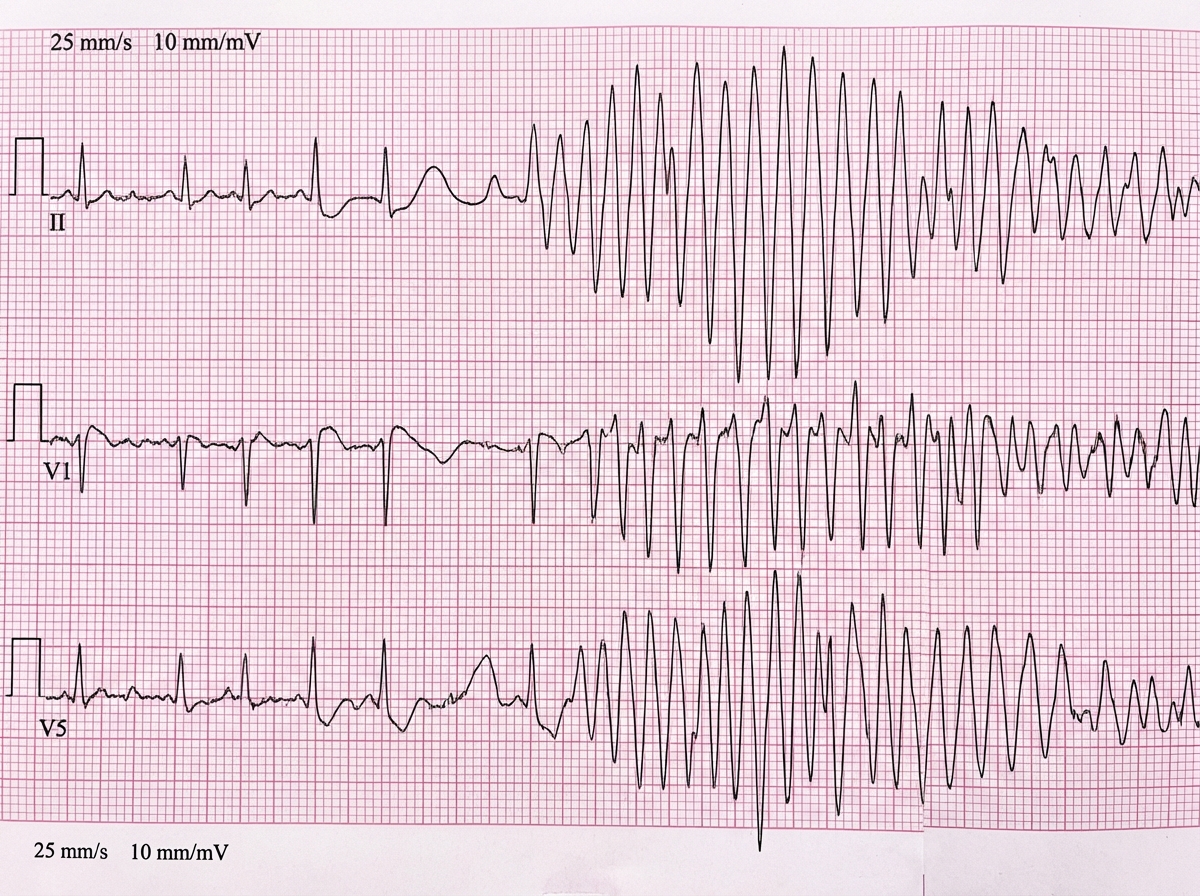
Two days after being admitted for pneumonia, a 70-year-old man has repeated episodes of palpitations and nausea. He does not feel lightheaded and does not have chest pain. The patient appears mildly distressed. His pulse is 59/min and blood pressure is 110/60 mm Hg. Examination shows no abnormalities. Sputum cultures taken at the time of admission were positive for Mycoplasma pneumoniae. His magnesium is 2.0 mEq/L and his potassium is 3.7 mEq/L. An ECG taken during an episode of palpitations is shown. Which of the following is the most appropriate next step in management?
Q36
A 58-year-old female comes to the physician because of generalized fatigue and malaise for 3 months. Four months ago, she was treated for a urinary tract infection with trimethoprim-sulfamethoxazole. She has hypertension, asthma, chronic lower back pain, and chronic headaches. Current medications include hydrochlorothiazide, an albuterol inhaler, naproxen, and an aspirin-caffeine combination. Examination shows conjunctival pallor. Laboratory studies show:
Hemoglobin 8.9 g/dL
Serum
Urea nitrogen 46 mg/dL
Creatinine 2.4 mg/dL
Calcium 9.8 mg/dL
Urine
Protein 1+
Blood 1+
RBCs none
WBCs 9-10/hpf
Urine cultures are negative. Ultrasound shows shrunken kidneys with irregular contours and papillary calcifications. Which of the following is the most likely underlying mechanism of this patient's renal failure?
Q37
A 32-year-old man presents with excessive urination. He reports that he urinates 10 times a day and wakes up multiple times a night to pee. He complains that this is affecting both his social life and his ability to concentrate at work. He states that he always has an “active bladder,” but his symptoms worsened when he started meeting with a physical trainer last month who told him he should increase his water intake to prevent dehydration. The patient has a history of migraines and bipolar I disorder. His medications include metoprolol, lithium, and naproxen as needed. A basic metabolic panel is performed, and the results are shown below:
Serum:
Na+: 149 mEq/L
Cl-: 102 mEq/L
K+: 3.4 mEq/L
HCO3-: 26 mEq/L
Urea nitrogen: 12 mg/dL
Creatinine: 1.0 mg/dL
Glucose: 78 mg/dL
Ca2+: 9.5 mg/dL
A urinalysis is obtained, which reveals pale-colored urine with a specific gravity of 0.852 and a urine osmolarity of 135 mOsm/L. The patient undergoes a water deprivation test. The patient’s urine specific gravity increases to 0.897 and urine osmolarity is now 155 mOsm/L. The patient is given an antidiuretic hormone analogue. Urine osmolarity rises to 188 mOsm/L. Which of the following is the best initial management for the patient’s most likely condition?
Q38
An anesthesiologist is preparing a patient for a short surgical procedure. The physician would like to choose a sedating agent that can be given intravenously and will have a quick onset of action and short half-life. Which of the following agents would be ideal for this purpose?
Q39
A 57-year-old woman presents to her physician for a checkup. The past medical history is significant for diabetes mellitus type 2, and a history of myocardial infarction. The current medications are aspirin, lisinopril, metoprolol, atorvastatin, and metformin. The patient’s HbA1c is 7.9%, and her fasting blood glucose is 8.9 mmol/L (160 mg/dL). Which of the following statements regarding the use of exenatide in this patient is most correct?
Q40
A 71-year-old female presents to the clinic with frequent and voluminous urination for 2 weeks. She is a new patient and does not have any medical records as she recently moved to the US from Europe to live with her grandson. When asked about any prior health issues, she looks confused and shows some medications that she takes every day which includes aspirin, omeprazole, naproxen, and lithium. Her grandson is accompanying her and adds that he has requested a copy of her medical records from her previous physician in Europe. The grandson states that she has been drinking about 4–5 L of water every day. Her temperature is 37°C (98.6°F), respirations are 15/min, pulse is 107/min, and blood pressure is 92/68 mm Hg. The physical examination is significant for dry mucous membranes. Laboratory evaluation reveals the following:
Plasma osmolarity (Posm) 310 mOsm/kg
Urine osmolarity (Uosm) 270 mOsm/kg
After 6 hours of water deprivation:
Plasma osmolarity (Posm) 320 mOsm/kg
Urine osmolarity (Uosm) 277 mOsm/kg
After administration of desmopressin acetate (DDAVP):
Plasma osmolarity (Posm) 318 mOsm/kg
Urine osmolarity (Uosm) 280 mOsm/kg
What is the most likely cause of this patient's condition?
Autonomic/CV Drugs US Medical PG Practice Questions and MCQs
Question 31: A 65-year-old woman presents with complaints of difficulty sleeping due to discomfort in her legs for the past 6 months. She is unable to describe the discomfort, but says it is an unpleasant, creeping and crawling feeling that is not painful. She feels an irresistible urge to move her legs to decrease the discomfort. The unpleasant sensation in her legs often occurs at night when she is lying in bed. She is recently divorced and lives alone. She denies any changes in appetite, weight loss, low mood, or suicidal thoughts. The physical examination is unremarkable except for signs of mild pallor. Laboratory test results show microcytic anemia with hemoglobin of 9.8 g/dL and decreased serum iron and ferritin levels. Apart from correcting her anemia, which additional drug would you prescribe for her symptoms?
A. Ropinirole (Correct Answer)
B. Paroxetine
C. Lithium
D. Haloperidol
E. Propranolol
Explanation: ***Ropinirole***
- The patient's symptoms are classic for **Restless Legs Syndrome (RLS)**: an unpleasant, creepy-crawly sensation, an irresistible urge to move legs, and symptom relief with movement, occurring predominantly at night.
- **Dopamine agonists** like ropinirole are first-line treatments for RLS, especially when conservative measures and iron supplementation (for associated anemia) are insufficient.
*Paroxetine*
- **Paroxetine** is a Selective Serotonin Reuptake Inhibitor (SSRI) used for depression and anxiety.
- SSRIs can sometimes **worsen RLS symptoms** due to their impact on dopamine pathways, making them an inappropriate choice.
*Lithium*
- **Lithium** is a mood stabilizer primarily used in the treatment of bipolar disorder.
- It has no established role in the treatment of Restless Legs Syndrome.
*Haloperidol*
- **Haloperidol** is a typical antipsychotic that blocks dopamine receptors.
- **Dopamine blockers** can significantly exacerbate RLS symptoms and are contraindicated.
*Propranolol*
- **Propranolol** is a beta-blocker used for conditions such as hypertension, anxiety, and tremors.
- It is not indicated for the treatment of Restless Legs Syndrome.
Question 32: A 42-year-old man is brought to the emergency department by police. He was found obtunded at a homeless shelter. The patient has a past medical history of alcohol abuse, intravenous (IV) drug use, schizophrenia, hepatitis C, and anxiety. His current medications include disulfiram, intramuscular haloperidol, thiamine, and clonazepam. The patient is non-compliant with his medications except for his clonazepam. His temperature is 99.5°F (37.5°C), blood pressure is 110/67 mmHg, pulse is 100/min, respirations are 16/min, and oxygen saturation is 96% on room air. On physical exam, the patient is covered in bruises, and his nose is bleeding. The patient's abdomen is distended and positive for a fluid wave. IV fluids are started, and the patient is also given thiamine, folic acid, and magnesium. It is noted by the nursing staff that the patient seems to be bleeding at his IV sites. Laboratory values are ordered and return as below:
Hemoglobin: 10 g/dL
Hematocrit: 25%
Leukocyte count: 7,500 cells/mm^3 with normal differential
Platelet count: 65,000/mm^3
Serum:
Na+: 139 mEq/L
Cl-: 102 mEq/L
K+: 4.1 mEq/L
HCO3-: 24 mEq/L
BUN: 24 mg/dL
Glucose: 77 mg/dL
Creatinine: 1.4 mg/dL
Ca2+: 9.9 mg/dL
D-dimer: < 250 ng/mL
AST: 79 U/L
ALT: 52 U/L
Which of the following is most likely to help with this patient's bleeding?
A. Desmopressin
B. Platelet transfusion (Correct Answer)
C. Fresh frozen plasma
D. Factor VIII concentrate
E. Phytonadione
Explanation: ***Platelet transfusion***
- The patient's **platelet count is significantly low (65,000/mm^3)**, and he is actively bleeding (nosebleed, bleeding at IV sites).
- Given his history of **cirrhosis** (suggested by alcohol abuse, Hepatitis C, distended abdomen, fluid wave, slightly elevated AST/ALT), **thrombocytopenia** is a common complication due to **splenomegaly** and reduced thrombopoietin production.
*Desmopressin*
- **Desmopressin (DDAVP)** is primarily used to treat **mild hemophilia A** or **Type 1 von Willebrand disease** by increasing the release of factor VIII and von Willebrand factor from endothelial cells.
- It is not indicated for **thrombocytopenia** as the primary cause of bleeding, which is the case here.
*Fresh frozen plasma*
- **Fresh frozen plasma (FFP)** provides **clotting factors**, and would be appropriate for deficiencies in these factors, such as in severe liver disease with prolonged **PT/INR** or **APTT**.
- While this patient has liver disease, his most critical and direct cause of bleeding listed is severe thrombocytopenia, not a coagulation factor deficiency, and D-dimer is normal, suggesting no DIC.
*Factor VIII concentrate*
- **Factor VIII concentrate** is used to treat **hemophilia A**, which is a deficiency in factor VIII.
- This patient's presentation and laboratory findings (low platelets, normal D-dimer) do not suggest hemophilia A.
*Phytonadione*
- **Phytonadione (Vitamin K)** is used to **reverse the effects of warfarin** or treat **Vitamin K deficiency**, which impairs the synthesis of factors II, VII, IX, and X.
- While liver disease can lead to vitamin K malabsorption or impaired synthesis of these factors, the most immediate and treatable cause of bleeding highlighted by the labs is severe thrombocytopenia, and there's no direct evidence of prolonged PT/INR due to vitamin K deficiency.
Question 33: A 7-year-old boy presents with frequent episodes of blanking out or daydreaming. Each episode lasts for less than 10 seconds. During the episode, he is unaware of what is going on around him and does not respond to questions or calling his name. After the episode, he continues whatever he was doing before. An EEG is performed during one of these episodes, which shows generalized 3–4 Hz 'spike-and-dome' wave complexes. What is the mechanism of action of the drug recommended to treat this patient’s condition?
A. Inhibits neuronal GABA receptors
B. Inhibits voltage-gated sodium channels
C. Potentiates GABA transmission
D. Inhibits voltage-gated calcium channels (Correct Answer)
E. Inhibits release of excitatory amino acid glutamate
Explanation: ***Inhibits voltage-gated calcium channels***
- The clinical presentation of **absence seizures** (brief blanking out, unawareness, rapid recovery) combined with the EEG finding of **3–4 Hz spike-and-wave complexes** is characteristic of childhood absence epilepsy.
- The first-line treatment for absence seizures is **ethosuximide**, which primarily works by blocking **T-type calcium channels** in the thalamus, reducing oscillatory thalamic activity responsible for the seizures.
*Inhibits neuronal GABA receptors*
- This mechanism would typically lead to **proconvulsant effects** by reducing inhibitory neurotransmission, rather than treating seizures.
- Drugs that inhibit GABA receptors are not used in the treatment of absence seizures.
*Inhibits voltage-gated sodium channels*
- Drugs that inhibit **voltage-gated sodium channels** (e.g., carbamazepine, phenytoin, lamotrigine) are effective for **focal seizures** and **tonic-clonic seizures**.
- These drugs are generally **not effective** for absence seizures and can sometimes exacerbate them.
*Potentiates GABA transmission*
- Drugs that potentiate GABA transmission (e.g., **benzodiazepines**, **valproate**) can be used for various seizure types, including absence seizures (valproate being a broad-spectrum AED).
- However, for absence seizures specifically, **ethosuximide** is often preferred as a first-line agent, and its primary mechanism directly targets thalamic T-type calcium channels, not GABA potentiation.
*Inhibits release of excitatory amino acid glutamate*
- Inhibiting the release of **glutamate** is a mechanism of action for some antiseizure drugs (e.g., lamotrigine, levetiracetam).
- While this can be effective for various seizure types, it is not the primary mechanism of action for the most effective first-line treatment for classic absence seizures (ethosuximide).
Question 34: A previously healthy 9-year-old boy is brought to the physician by his mother because of a 3-month history of episodic abdominal pain. During this time, he has been more tired than usual. For the past 2 months, he has also had bulky stools that are difficult to flush. His maternal aunt has systemic lupus erythematosus. The boy is at the 31st percentile for height and 5th percentile for weight. Vital signs are within normal limits. Examination shows scattered ecchymoses across bilateral knees, the left forearm, and the upper back. The abdomen is mildly distended; bowel sounds are hyperactive. Laboratory studies show:
Hemoglobin 11.1 g/dL
Leukocyte count 4,500/mm3
Platelet count 243,000/mm3
Mean corpuscular volume 78 μm3
Bleeding time 5 minutes
Prothrombin time 24 seconds
Partial thromboplastin time 45 seconds
Further evaluation is most likely to show which of the following?
A. Impaired platelet-to-platelet aggregation
B. Increased activity of protein S
C. Deficiency of clotting factor VIII
D. Increased serum anti-phospholipid antibodies
E. Deficiency of clotting factor II (Correct Answer)
Explanation: ***Deficiency of clotting factor II***
- The patient presents with **malabsorption** (low weight, bulky stools, abdominal distention) and **bleeding dysfunction** (ecchymoses, prolonged PT and PTT). This constellation of symptoms, especially in a child with malabsorption, suggests **vitamin K deficiency**.
- **Vitamin K is essential for the gamma-carboxylation of clotting factors II (prothrombin), VII, IX, and X, as well as proteins C and S**. A deficiency in factor II (also known as prothrombin) would lead to prolonged PT and PTT, as observed.
*Impaired platelet-to-platelet aggregation*
- This would lead to a **prolonged bleeding time** and potentially petechiae, but it typically does not affect PT or PTT.
- The patient's bleeding time is normal, and his symptoms involve deeper bleeding (ecchymoses) rather than mucosal or superficial bleeding characteristic of aggregation defects.
*Increased activity of protein S*
- **Protein S is a natural anticoagulant**, and increased activity would predispose to bleeding, not clotting. It would prolong PT and PTT.
- However, the patient's symptoms are more consistent with a global deficiency in vitamin K-dependent factors, and increased protein S activity typically isn't associated with malabsorption or the specific pattern of laboratory findings seen here.
*Deficiency of clotting factor VIII*
- A deficiency in Factor VIII causes **Hemophilia A**, which primarily leads to a **prolonged PTT** with a normal PT and bleeding time.
- While it can cause ecchymoses, the additional finding of a prolonged PT and signs of malabsorption make this diagnosis less likely.
*Increased serum anti-phospholipid antibodies*
- Anti-phospholipid antibodies can cause a **paradoxical prolongation of PTT** (due to interference with phospholipid-dependent clotting assays) in vitro, but in vivo, they are associated with a **thrombotic diathesis** (increased clotting), not bleeding.
- The patient's symptoms are related to bleeding and malabsorption, making a thrombotic disorder less likely.
Question 35: Two days after being admitted for pneumonia, a 70-year-old man has repeated episodes of palpitations and nausea. He does not feel lightheaded and does not have chest pain. The patient appears mildly distressed. His pulse is 59/min and blood pressure is 110/60 mm Hg. Examination shows no abnormalities. Sputum cultures taken at the time of admission were positive for Mycoplasma pneumoniae. His magnesium is 2.0 mEq/L and his potassium is 3.7 mEq/L. An ECG taken during an episode of palpitations is shown. Which of the following is the most appropriate next step in management?
A. Administration of potassium chloride
B. Administration of metoprolol
C. Intermittent transvenous overdrive pacing
D. Administration of amiodarone
E. Administration of magnesium sulfate (Correct Answer)
Explanation: ***Administration of magnesium sulfate***
- The ECG shows **Torsades de Pointes**, a polymorphic ventricular tachycardia often associated with **QT prolongation** and electrolyte disturbances.
- While potassium and magnesium levels appear normal, **intravenous magnesium sulfate** is the first-line treatment for Torsades de Pointes, regardless of serum magnesium levels, due to its ability to stabilize cardiac membranes and shorten the QT interval.
*Administration of potassium chloride*
- This patient's **serum potassium is 3.7 mEq/L**, which is within the normal range.
- Administering potassium chloride would be appropriate if the patient had **hypokalemia**, which can cause QT prolongation, but it is not indicated here.
*Administration of metoprolol*
- **Beta-blockers** like metoprolol are often used for supraventricular tachyarrhythmias or in some forms of ventricular tachycardia that are not associated with QT prolongation.
- However, for **Torsades de Pointes**, beta-blockers are generally inappropriate and can even worsen the condition if associated with bradycardia.
*Intermittent transvenous overdrive pacing*
- **Overdrive pacing** is a treatment option for Torsades de Pointes that is refractory to magnesium sulfate, especially in cases of underlying **bradycardia** or long QT syndrome.
- However, it is not the first-line treatment and should only be considered after initial medical management has failed.
*Administration of amiodarone*
- Amiodarone is an **antiarrhythmic drug** that is effective for various ventricular tachyarrhythmias.
- However, it can **prolong the QT interval**, making it contraindicated in patients with Torsades de Pointes.
Question 36: A 58-year-old female comes to the physician because of generalized fatigue and malaise for 3 months. Four months ago, she was treated for a urinary tract infection with trimethoprim-sulfamethoxazole. She has hypertension, asthma, chronic lower back pain, and chronic headaches. Current medications include hydrochlorothiazide, an albuterol inhaler, naproxen, and an aspirin-caffeine combination. Examination shows conjunctival pallor. Laboratory studies show:
Hemoglobin 8.9 g/dL
Serum
Urea nitrogen 46 mg/dL
Creatinine 2.4 mg/dL
Calcium 9.8 mg/dL
Urine
Protein 1+
Blood 1+
RBCs none
WBCs 9-10/hpf
Urine cultures are negative. Ultrasound shows shrunken kidneys with irregular contours and papillary calcifications. Which of the following is the most likely underlying mechanism of this patient's renal failure?
A. Hypersensitivity reaction
B. Inhibition of prostaglandin I2 production (Correct Answer)
C. Overproduction of light chains
D. Precipitation of drugs within the renal tubules
E. Infection with an acid-fast bacillus
Explanation: ***Inhibition of prostaglandin I2 production***
- Chronic use of **NSAIDs** (naproxen) inhibits **prostaglandin synthesis**, leading to **afferent arteriolar constriction** and reduced renal blood flow, which can cause acute kidney injury or exacerbate chronic kidney disease, especially in patients with comorbidities like hypertension.
- The patient's **shrunken kidneys** with **irregular contours** and **papillary calcifications** are consistent with **analgesic nephropathy**, a form of chronic interstitial nephritis often caused by prolonged NSAID use.
*Hypersensitivity reaction*
- While drug-induced interstitial nephritis can be caused by hypersensitivity reactions (e.g., to trimethoprim-sulfamethoxazole), this typically presents with acute kidney injury, eosinophilia, fever, and rash, which are not prominent features here.
- The imaging findings of **shrunken kidneys** and **papillary calcifications** are more indicative of chronic, rather than acute, damage.
*Overproduction of light chains*
- This mechanism is characteristic of **multiple myeloma**, which causes **cast nephropathy** and typically presents with hypercalcemia, anemia due to marrow infiltration, and large amounts of protein (Bence-Jones proteins) in the urine.
- The patient's calcium is normal, and while she has anemia, the overall picture of chronic kidney changes and NSAID use points elsewhere.
*Precipitation of drugs within the renal tubules*
- This can occur with certain medications like **acyclovir** or **sulfonamides** (trimethoprim-sulfamethoxazole) leading to **obstructive nephropathy**.
- However, the patient's exposure to trimethoprim-sulfamethoxazole was 4 months prior, and the imaging findings of **shrunken kidneys** and **papillary calcifications** are not typical of acute tubular obstruction but rather chronic damage from analgesic use.
*Infection with an acid-fast bacillus*
- This refers to **renal tuberculosis**, which can cause chronic kidney disease, but it usually presents with sterile pyuria and can lead to calcifications and strictures.
- However, there is no information in the vignette to suggest exposure to tuberculosis or other symptoms often associated with it, and **analgesic nephropathy** is a more common cause given the patient's medication history.
Question 37: A 32-year-old man presents with excessive urination. He reports that he urinates 10 times a day and wakes up multiple times a night to pee. He complains that this is affecting both his social life and his ability to concentrate at work. He states that he always has an “active bladder,” but his symptoms worsened when he started meeting with a physical trainer last month who told him he should increase his water intake to prevent dehydration. The patient has a history of migraines and bipolar I disorder. His medications include metoprolol, lithium, and naproxen as needed. A basic metabolic panel is performed, and the results are shown below:
Serum:
Na+: 149 mEq/L
Cl-: 102 mEq/L
K+: 3.4 mEq/L
HCO3-: 26 mEq/L
Urea nitrogen: 12 mg/dL
Creatinine: 1.0 mg/dL
Glucose: 78 mg/dL
Ca2+: 9.5 mg/dL
A urinalysis is obtained, which reveals pale-colored urine with a specific gravity of 0.852 and a urine osmolarity of 135 mOsm/L. The patient undergoes a water deprivation test. The patient’s urine specific gravity increases to 0.897 and urine osmolarity is now 155 mOsm/L. The patient is given an antidiuretic hormone analogue. Urine osmolarity rises to 188 mOsm/L. Which of the following is the best initial management for the patient’s most likely condition?
A. Lithium cessation (Correct Answer)
B. Calcitonin and zoledronic acid
C. Hydrochlorothiazide
D. Furosemide
E. Desmopressin
Explanation: ***Lithium cessation***
- The patient exhibits symptoms of **nephrogenic diabetes insipidus (NDI)**, including polyuria, nocturia, and dilute urine with low specific gravity and osmolarity, despite mild hypernatremia. **Lithium** is a known cause of acquired NDI, blocking the action of ADH in the collecting ducts.
- Given that lithium is the likely cause and the patient started having worsening symptoms after increasing water intake (which can unmask NDI), the best initial management is to **discontinue lithium**, if clinically feasible, especially since his symptoms worsened with increased fluid intake which stresses the affected renal tubules further.
*Calcitonin and zoledronic acid*
- **Calcitonin and zoledronic acid** are used to treat hypercalcemia, which is not present in this patient; his calcium level is normal.
- These medications have no direct role in the management of diabetes insipidus.
*Hydrochlorothiazide*
- **Hydrochlorothiazide** is sometimes used in NDI, as it can induce mild volume depletion, increasing proximal tubular reabsorption of water and sodium and thereby reducing urine output.
- However, in cases of drug-induced NDI, especially from lithium, discontinuing the offending agent is the **first-line and most effective initial step**.
*Furosemide*
- **Furosemide** is a loop diuretic that inhibits water reabsorption in the ascending loop of Henle, leading to increased urine output.
- This would **worsen polyuria** and dehydration in a patient with diabetes insipidus, thus it is contraindicated.
*Desmopressin*
- **Desmopressin** is an ADH analog used to treat central diabetes insipidus, where there is insufficient ADH production.
- In **nephrogenic diabetes insipidus (NDI)**, the kidneys are resistant to ADH, so desmopressin would be ineffective or only minimally effective, as demonstrated by the limited increase in urine osmolarity after its administration (155 mOsm/L to 188 mOsm/L, which is still very low).
Question 38: An anesthesiologist is preparing a patient for a short surgical procedure. The physician would like to choose a sedating agent that can be given intravenously and will have a quick onset of action and short half-life. Which of the following agents would be ideal for this purpose?
A. Hydromorphone
B. Succinylcholine
C. Isoflurane
D. Propofol (Correct Answer)
E. Sodium thiopental
Explanation: ***Propofol***
- This is the **ideal IV anesthetic** for short procedures with **rapid onset** (30-45 seconds) and **short duration of action**.
- Has a **very short half-life** due to rapid redistribution and metabolism, allowing for quick recovery.
- Currently the **most commonly used agent** for induction and maintenance of anesthesia in short surgical procedures.
- Provides excellent sedation with smooth induction and emergence.
*Sodium thiopental*
- This **barbiturate** historically was used for rapid induction and had a quick onset due to high lipid solubility.
- While it would fit the description, **sodium thiopental has been discontinued** in the United States and is no longer available for clinical use in most countries.
- Its short duration was due to **redistribution** from the brain to other tissues, not rapid metabolism.
*Hydromorphone*
- This is an **opioid analgesic** used for pain relief, not typically as the primary agent for surgical sedation.
- While it has analgesic properties, it does not provide the sedation and amnesia required for surgical procedures.
*Succinylcholine*
- This is a **neuromuscular blocker** used to induce muscle paralysis, not a sedative.
- It would not provide sedation or loss of consciousness; the patient would remain fully aware but unable to move or breathe.
*Isoflurane*
- This is an **inhaled anesthetic**, not administered intravenously.
- While effective for anesthesia, the question specifically asks for an IV agent, making this inappropriate for the scenario.
Question 39: A 57-year-old woman presents to her physician for a checkup. The past medical history is significant for diabetes mellitus type 2, and a history of myocardial infarction. The current medications are aspirin, lisinopril, metoprolol, atorvastatin, and metformin. The patient’s HbA1c is 7.9%, and her fasting blood glucose is 8.9 mmol/L (160 mg/dL). Which of the following statements regarding the use of exenatide in this patient is most correct?
A. It cannot be used in combination with metformin
B. It requires daily subcutaneous injection
C. It has a high risk of causing severe hypoglycemia when used alone
D. It is contraindicated in patients with a history of myocardial infarction
E. It is associated with weight loss in most patients (Correct Answer)
Explanation: ***It is associated with weight loss in most patients***
- Exenatide and other **GLP-1 receptor agonists** are consistently associated with **modest weight loss** (typically 2-5 kg) in the majority of patients.
- This occurs through multiple mechanisms: **delayed gastric emptying**, **increased satiety**, and **reduced appetite** via central nervous system effects.
- Weight loss is a significant **clinical benefit** in overweight diabetic patients and is one reason these agents are preferred in this population.
*It cannot be used in combination with metformin*
- Exenatide is **commonly combined with metformin** and this is an FDA-approved combination.
- They have **complementary mechanisms**: metformin reduces hepatic glucose production while exenatide enhances glucose-dependent insulin secretion.
- This combination is a **standard therapeutic approach** for type 2 diabetes management.
*It requires daily subcutaneous injection*
- The original exenatide formulation (Byetta) requires **twice-daily subcutaneous injections**, not once daily.
- An **extended-release formulation** (Bydureon) is available as a **once-weekly injection**.
- The statement is imprecise and not universally applicable to all exenatide formulations.
*It has a high risk of causing severe hypoglycemia when used alone*
- GLP-1 receptor agonists have a **low risk of hypoglycemia** when used as monotherapy because their insulinotropic effect is **glucose-dependent**.
- Insulin secretion only occurs when glucose levels are elevated, providing a **built-in safety mechanism**.
- Hypoglycemia risk increases when combined with **sulfonylureas or insulin**, but not with metformin alone.
*It is contraindicated in patients with a history of myocardial infarction*
- This is **FALSE**. Exenatide is **NOT contraindicated** in patients with prior MI.
- In fact, several GLP-1 receptor agonists have demonstrated **cardiovascular benefits** in outcome trials (LEADER, SUSTAIN-6).
- Current **ADA/ACC guidelines recommend** GLP-1 agonists in diabetic patients with established cardiovascular disease for risk reduction.
- The only absolute contraindication for exenatide is personal or family history of **medullary thyroid carcinoma** or **MEN 2 syndrome**.
Question 40: A 71-year-old female presents to the clinic with frequent and voluminous urination for 2 weeks. She is a new patient and does not have any medical records as she recently moved to the US from Europe to live with her grandson. When asked about any prior health issues, she looks confused and shows some medications that she takes every day which includes aspirin, omeprazole, naproxen, and lithium. Her grandson is accompanying her and adds that he has requested a copy of her medical records from her previous physician in Europe. The grandson states that she has been drinking about 4–5 L of water every day. Her temperature is 37°C (98.6°F), respirations are 15/min, pulse is 107/min, and blood pressure is 92/68 mm Hg. The physical examination is significant for dry mucous membranes. Laboratory evaluation reveals the following:
Plasma osmolarity (Posm) 310 mOsm/kg
Urine osmolarity (Uosm) 270 mOsm/kg
After 6 hours of water deprivation:
Plasma osmolarity (Posm) 320 mOsm/kg
Urine osmolarity (Uosm) 277 mOsm/kg
After administration of desmopressin acetate (DDAVP):
Plasma osmolarity (Posm) 318 mOsm/kg
Urine osmolarity (Uosm) 280 mOsm/kg
What is the most likely cause of this patient's condition?
A. Pituitary adenoma
B. Primary polydipsia
C. Lithium (Correct Answer)
D. Aspirin
E. Omeprazole
Explanation: ***Lithium***
- The patient's inability to concentrate urine, even after water deprivation and desmopressin administration, indicates **nephrogenic diabetes insipidus**.
- **Lithium** is a known cause of acquired **nephrogenic diabetes insipidus**, often leading to symptoms like polyuria and polydipsia, consistent with the patient's presentation and medication history.
*Pituitary adenoma*
- A pituitary adenoma could cause **central diabetes insipidus** by impairing ADH production.
- However, in central DI, urine osmolarity would significantly increase after desmopressin, which is not observed here, ruling out significant ADH deficiency at the pituitary level.
*Primary polydipsia*
- In primary polydipsia, the initial plasma and urine osmolalities would typically be **lower** due to chronic water overload.
- After water deprivation, urine osmolality would eventually increase significantly as the body attempts to conserve water, which is contrary to the findings in this case.
*Aspirin*
- **Aspirin** and other NSAIDs (including naproxen, which the patient is also taking) primarily act as anti-inflammatory agents and are not implicated in causing diabetes insipidus.
- While NSAIDs can rarely cause acute interstitial nephritis or reduce GFR, they do not directly lead to the pattern of impaired urine concentration characteristic of nephrogenic diabetes insipidus.
*Omeprazole*
- **Omeprazole** is a proton pump inhibitor used for acid reduction and does not have a known association with diabetes insipidus or its symptoms.
- Its mechanism of action is unrelated to renal water handling or ADH pathways.