A newborn infant comes to the attention of the neonatal care unit because he started having heavy and rapid breathing. In addition, he was found to be very irritable with pale skin and profuse sweating. Finally, he was found to have cold feet with diminished lower extremity pulses. Cardiac auscultation reveals a harsh systolic murmur along the left sternal border. Notably, the patient is not observed to have cyanosis. Which of the following treatments would most likely be effective for this patient's condition?
Q322
A 20-year-old man presents to your office with dyspnea, reporting nocturnal cough. You note expiratory wheezing on auscultation. Chest x-ray reveals increased anteroposterior diameter. Past medical history is significant for multiple episodes of "bronchitis" as a child. Which of the following drugs would be most effective for long-term treatment of this patient?
Q323
Forty minutes after undergoing nasal polypectomy for refractory rhinitis, a 48-year-old woman develops chest tightness and shortness of breath. The surgical course was uncomplicated and the patient was successfully extubated. She received ketorolac for postoperative pain. She has a history of asthma, hypertension, and aspirin allergy. Her daily medications include metoprolol and lisinopril. Examination shows a flushed face. Chest auscultation reveals wheezes and decreased breath sounds in both lung fields. An ECG shows no abnormalities. Which of the following is the most likely underlying cause of this patient's symptoms?
Q324
A 34-year-old male with a previous diagnosis of Grave's disease presents for a check-up. Since his diagnosis 4 months ago, the patient's symptoms have been relatively well-controlled with medications since starting them 3 weeks ago after an initial unsuccessful course of radioiodine ablation. The patient's complete blood count reveals decreased absolute neutrophils at 450/mL and a slightly decreased hematocrit of 39%. Which of the following is the most likely cause of this patient's abnormal laboratory results?
Q325
A 60-year-old male presents to the emergency room with shortness of breath after waking up in the middle of the night with a "choking" sensation. The patient has a history of hypertension and MI. Physical examination reveals bibasilar inspiratory crackles and an S3 heart sound.
Which of the following drugs should be administered for rapid, significant relief of this patient's symptoms?
Q326
A 31-year-old woman makes an appointment with a fertility specialist because she has not been able to conceive despite trying for over a year with her husband. She is concerned because her husband has 2 children from a previous marriage whereas she has no children. After obtaining a detailed history as well as lab tests, the specialist prescribes a certain drug. Interestingly, this drug is able to stimulate receptors in the presence of low hormone levels and inhibit the same receptors in the presence of high hormone levels. The drug that is most likely being prescribed in this case is associated with which of the following adverse events?
Q327
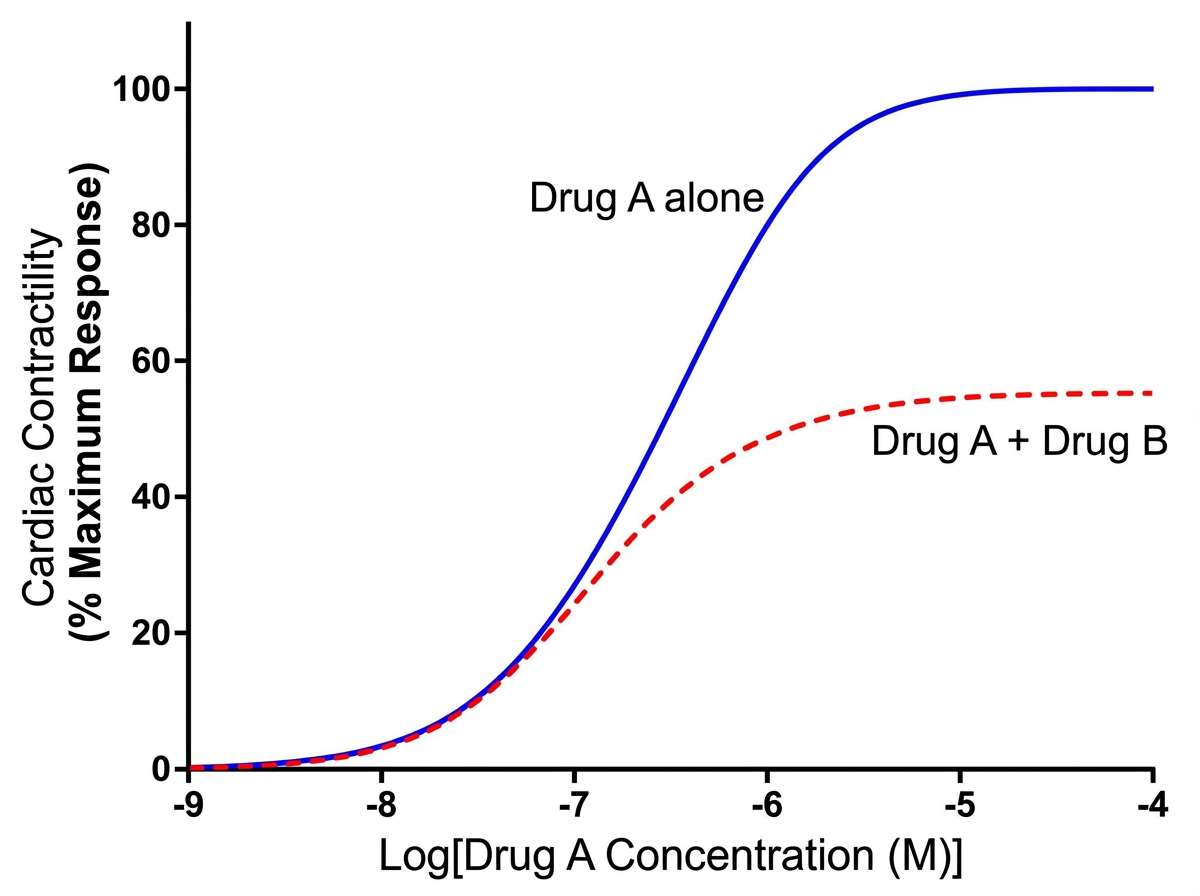
An investigator is studying the effects of different drugs on the contraction of cardiomyocytes. The myocytes are able to achieve maximal contractility with the administration of drug A. The subsequent administration of drug B produces the response depicted in the graph shown. Which of the following drugs is most likely to produce a response similar to that of drug B?
Q328
An 82-year-old male with congestive heart failure experiences rapid decompensation of his condition, manifesting as worsening dyspnea, edema, and increased fatigue. Labs reveal an increase in his serum creatinine from baseline. As part of the management of this acute change, the patient is given IV dobutamine to alleviate his symptoms. Which of the following effects occur as a result of this therapy?
Q329
A 52-year-old man comes to the physician because of a 3-day history of intermittent chest tightness that worsens with exercise. He has chronic atrial fibrillation treated with a drug that prolongs the QT interval. During cardiac stress testing, an ECG shows progressive shortening of the QT interval as the heart rate increases. Which of the following drugs is this patient most likely taking?
Q330
A 23-year-old woman presents to her primary care physician for poor sleep. Her symptoms began approximately 1 week ago, when she started waking up multiple times throughout the night to urinate. She also reports an increase in her water intake for the past few days prior to presentation, as well as larger urine volumes than normal. Medical history is significant for asthma. Family history is significant for type 2 diabetes mellitus. She denies alcohol, illicit drug, or cigarette use. Her temperature is 98.6°F (37°C), blood pressure is 108/65 mmHg, pulse is 103/min, and respirations are 18/min. On physical exam, she has mildly dry mucous membranes and has no focal neurological deficits. Laboratory testing demonstrates the following:
Serum:
Na+: 145 mEq/L
Cl-: 102 mEq/L
K+: 4.2 mEq/L
HCO3-: 28 mEq/L
BUN: 15 mg/dL
Glucose: 98 mg/dL
Creatinine: 0.92 mg/dL
Urine:
Urine osmolality: 250 mOsm/kg
The patient undergoes a water deprivation test, and her labs demonstrate the following:
Na+: 147 mEq/L
Cl-: 103 mEq/L
K+: 4.4 mEq/L
HCO3-: 22 mEq/L
BUN: 16 mg/dL
Glucose: 101 mg/dL
Creatinine: 0.94 mg/dL
Urine osmolality: 252 mOsm/kg
Which of the following is the best next step in management?
Autonomic/CV Drugs US Medical PG Practice Questions and MCQs
Question 321: A newborn infant comes to the attention of the neonatal care unit because he started having heavy and rapid breathing. In addition, he was found to be very irritable with pale skin and profuse sweating. Finally, he was found to have cold feet with diminished lower extremity pulses. Cardiac auscultation reveals a harsh systolic murmur along the left sternal border. Notably, the patient is not observed to have cyanosis. Which of the following treatments would most likely be effective for this patient's condition?
A. Prostaglandin I2
B. Leukotriene E4
C. Prostaglandin E2
D. Prostaglandin E1 (Correct Answer)
E. Thromboxane A2
Explanation: ***Prostaglandin E1***
- The newborn's presentation with **respiratory distress, irritability, pale skin, profuse sweating, cold feet, diminished lower extremity pulses**, and a **harsh systolic murmur** without cyanosis is highly suggestive of **coarctation of the aorta**.
- **Prostaglandin E1 (PGE1)** is critical in maintaining the **patency of the ductus arteriosus**, which allows for blood flow to the lower body when there is severe obstruction like coarctation.
*Prostaglandin I2*
- **Prostaglandin I2 (PGI2)**, or **prostacyclin**, is a potent **vasodilator** and **platelet aggregation inhibitor**.
- While it has vascular effects, it is not the primary prostaglandin used to maintain ductal patency in newborns with critical congenital heart disease.
*Leukotriene E4*
- **Leukotrienes** are mediators of inflammation and allergic reactions, primarily involved in bronchoconstriction and vascular permeability.
- They do not play a significant role in the management of congenital heart defects requiring ductal patency.
*Prostaglandin E2*
- While **prostaglandin E2 (PGE2)** also contributes to maintaining ductal patency, **PGE1** is the preferred and more commonly used agent for this purpose in clinical practice.
- Both PGE1 and PGE2 are members of the E-series prostaglandins, but PGE1 is the standard pharmaceutical intervention.
*Thromboxane A2*
- **Thromboxane A2 (TXA2)** is a potent **vasoconstrictor** and promotes **platelet aggregation**.
- Its effects are opposite to what is desired in this patient, where maintained vessel patency (ductus arteriosus) is crucial.
Question 322: A 20-year-old man presents to your office with dyspnea, reporting nocturnal cough. You note expiratory wheezing on auscultation. Chest x-ray reveals increased anteroposterior diameter. Past medical history is significant for multiple episodes of "bronchitis" as a child. Which of the following drugs would be most effective for long-term treatment of this patient?
A. Ipratropium
B. Albuterol
C. Fluticasone (Correct Answer)
D. Theophylline
E. Zileuton
Explanation: ***Fluticasone***
- This patient's symptoms (dyspnea, nocturnal cough, expiratory wheezing, history of "bronchitis," and increased AP diameter on CXR) are consistent with **asthma**, a chronic inflammatory airway disease.
- **Inhaled corticosteroids** like fluticasone are the most effective long-term controllers for asthma, targeting the underlying inflammation.
*Ipratropium*
- **Ipratropium** is a **short-acting anticholinergic** used as a bronchodilator, primarily for relief of acute bronchospasm or in COPD, but it is not a first-line long-term controller for asthma.
- It works by blocking muscarinic receptors to cause bronchodilation, but it does not address the underlying **airway inflammation** in asthma.
*Albuterol*
- **Albuterol** is a **short-acting beta-2 agonist (SABA)** used for quick relief of asthma symptoms by causing rapid bronchodilation.
- It is a **rescue medication**, not a long-term controller, as it does not treat the chronic airway inflammation.
*Theophylline*
- **Theophylline** is a methylxanthine that causes bronchodilation and has some anti-inflammatory effects, but it has a **narrow therapeutic window** and potential for significant side effects.
- It is generally considered a **third-line or add-on therapy** for asthma management, not a first-line long-term treatment.
*Zileuton*
- **Zileuton** is a **leukotriene pathway inhibitor** that works by inhibiting 5-lipoxygenase, reducing the production of inflammatory leukotrienes.
- It may be used as an **add-on therapy** for asthma, particularly for aspirin-exacerbated respiratory disease, but it is less potent than inhaled corticosteroids for primary long-term control.
Question 323: Forty minutes after undergoing nasal polypectomy for refractory rhinitis, a 48-year-old woman develops chest tightness and shortness of breath. The surgical course was uncomplicated and the patient was successfully extubated. She received ketorolac for postoperative pain. She has a history of asthma, hypertension, and aspirin allergy. Her daily medications include metoprolol and lisinopril. Examination shows a flushed face. Chest auscultation reveals wheezes and decreased breath sounds in both lung fields. An ECG shows no abnormalities. Which of the following is the most likely underlying cause of this patient's symptoms?
A. Prinzmetal angina
B. Bradykinin-induced bronchial irritation
C. Type 1 hypersensitivity reaction
D. Excessive beta-adrenergic blockade
E. Pseudoallergic reaction (Correct Answer)
Explanation: ***Pseudoallergic reaction***
- The patient has a history of **aspirin allergy** and **asthma**, which, combined with the administration of **ketorolac (an NSAID)** post-surgery, strongly suggests a pseudoallergic reaction (specifically **aspirin-exacerbated respiratory disease** or AERD).
- Her symptoms of **chest tightness**, **shortness of breath**, **flushed face**, and **wheezing** are consistent with this reaction, which is mediated by **leukotriene overproduction** due to COX-1 inhibition.
*Prinzmetal angina*
- This condition is characterized by **coronary artery spasm**, leading to chest pain, often at rest, but less commonly associated with diffuse wheezing and shortness of breath unless a severe cardio-pulmonary interaction is present.
- While it causes chest tightness, it would not typically explain the prominent **respiratory symptoms** such as wheezing and decreased breath sounds in both lung fields, especially in the context of recent NSAID use and aspirin allergy.
*Bradykinin-induced bronchial irritation*
- Bradykinin-induced reactions are more commonly associated with **ACE inhibitor use**, which this patient is taking (lisinopril), and can cause angioedema or a dry cough.
- While it can induce bronchoconstriction in some individuals, it is less likely to cause such an acute and severe asthmatic response with flushing compared to a pseudoallergic reaction in a patient with a known aspirin allergy and NSAID exposure.
*Type 1 hypersensitivity reaction*
- A Type 1 hypersensitivity reaction (anaphylaxis) involves an IgE-mediated response to an allergen, leading to mast cell degranulation and histamine release.
- While anaphylaxis can present with similar respiratory and dermatological symptoms, the key differentiator here is the patient's specific history of **aspirin allergy** and the specific trigger (ketorolac, an NSAID), which points to a non-IgE mediated pseudoallergic reaction due to altered arachidonic acid metabolism.
*Excessive beta-adrenergic blockade*
- The patient is on **metoprolol**, a beta-blocker, which can potentially worsen asthma by blocking bronchodilatory beta-2 receptors.
- However, the sudden and severe onset of symptoms including flushing and the magnitude of airway narrowing strongly indicates a direct bronchoconstrictive trigger rather than just an exacerbation due to baseline beta-blockade, especially given the NSAID exposure.
Question 324: A 34-year-old male with a previous diagnosis of Grave's disease presents for a check-up. Since his diagnosis 4 months ago, the patient's symptoms have been relatively well-controlled with medications since starting them 3 weeks ago after an initial unsuccessful course of radioiodine ablation. The patient's complete blood count reveals decreased absolute neutrophils at 450/mL and a slightly decreased hematocrit of 39%. Which of the following is the most likely cause of this patient's abnormal laboratory results?
A. Levothyroxine
B. Atenolol
C. Methimazole (Correct Answer)
D. Perchlorate
E. Complication from radioiodine ablation
Explanation: ***Methimazole***
- **Methimazole** is an antithyroid drug that can cause **agranulocytosis** (severe neutropenia) as a serious side effect, which aligns with the patient's decreased absolute neutrophils.
- The onset of this adverse effect can occur within the first few weeks or months of starting the medication, consistent with the patient having started medication 3 weeks prior.
*Levothyroxine*
- **Levothyroxine** is a synthetic thyroid hormone used for hypothyroidism, not hyperthyroidism (Graves' disease).
- It does not cause neutropenia or anemia as typical side effects.
*Atenolol*
- **Atenolol** is a beta-blocker used to manage symptomatic hyperthyroidism, but it does not treat the underlying cause.
- It does not typically cause neutropenia or bone marrow suppression.
*Perchlorate*
- **Perchlorate** is an anion occasionally used to block iodide uptake in resistant cases of hyperthyroidism, but it is not a first-line treatment.
- While it can cause **aplastic anemia** in rare cases, methimazole-induced agranulocytosis is far more common with standard hyperthyroid treatment.
*Complication from radioiodine ablation*
- **Radioiodine ablation** can lead to hypothyroidism but typically does not cause acute bone marrow suppression or neutropenia in this timeframe.
- While theoretical concerns about radiation exposure exist, hematological complications like severe neutropenia are not a common or immediate consequence of therapeutic doses.
Question 325: A 60-year-old male presents to the emergency room with shortness of breath after waking up in the middle of the night with a "choking" sensation. The patient has a history of hypertension and MI. Physical examination reveals bibasilar inspiratory crackles and an S3 heart sound.
Which of the following drugs should be administered for rapid, significant relief of this patient's symptoms?
A. A drug that acts on the Na/K/Cl symporter in the thick ascending limb of the loop of Henle (Correct Answer)
B. A drug that competes for mineralocorticoid receptors in the collecting duct
C. A drug that acts on the Na/Cl cotransporter in the distal convoluted tubule
D. A drug that inhibits angiotensin converting enzyme
E. A drug that inhibits carbonic anhydrase
Explanation: **A drug that acts on the Na/K/Cl symporter in the thick ascending limb of the loop of Henle**
- The patient's symptoms (shortness of breath, "choking" sensation, bibasilar crackles, S3 heart sound) are highly suggestive of **acute decompensated heart failure** with **pulmonary edema**.
- **Loop diuretics** (e.g., furosemide), which inhibit the **Na/K/Cl symporter** in the thick ascending limb, are the most effective class of diuretics for rapid and significant fluid removal in such cases, leading to symptomatic relief.
*A drug that competes for mineralocorticoid receptors in the collecting duct*
- This describes **aldosterone antagonists** (e.g., spironolactone, eplerenone), which are typically used for their long-term beneficial effects in **chronic heart failure** by reducing mortality and morbidity.
- They have a **slow onset of action** and are **not effective for rapid fluid removal** in acute settings, making them unsuitable for immediate symptom relief in acute pulmonary edema.
*A drug that acts on the Na/Cl cotransporter in the distal convoluted tubule*
- This describes **thiazide diuretics** (e.g., hydrochlorothiazide), which are primarily used for **hypertension** and mild edema due to their moderate diuretic efficacy.
- Thiazides have a **limited diuretic effect** compared to loop diuretics and are generally **ineffective in acute pulmonary edema**, especially when renal function is impaired.
*A drug that inhibits angiotensin converting enzyme*
- This describes **ACE inhibitors** (e.g., enalapril, lisinopril), which are cornerstone medications for **chronic heart failure** and hypertension due to their effects on **vasodilation** and **remodeling**.
- While beneficial long-term, they are **not first-line for rapid symptom relief** in acute pulmonary edema and can sometimes worsen hypotension or renal function in acute settings.
*A drug that inhibits carbonic anhydrase*
- This describes **carbonic anhydrase inhibitors** (e.g., acetazolamide), which are primarily used for **glaucoma**, **altitude sickness**, and metabolic alkalosis.
- They have a **weak diuretic effect** and are **not indicated** for the treatment of acute pulmonary edema or severe fluid overload.
Question 326: A 31-year-old woman makes an appointment with a fertility specialist because she has not been able to conceive despite trying for over a year with her husband. She is concerned because her husband has 2 children from a previous marriage whereas she has no children. After obtaining a detailed history as well as lab tests, the specialist prescribes a certain drug. Interestingly, this drug is able to stimulate receptors in the presence of low hormone levels and inhibit the same receptors in the presence of high hormone levels. The drug that is most likely being prescribed in this case is associated with which of the following adverse events?
A. Hirsutism
B. Deep venous thrombosis
C. Thrombophilia
D. Osteoporosis
E. Visual disturbances (Correct Answer)
Explanation: ***Visual disturbances***
- The description of the drug activating receptors in low hormone states and inhibiting them in high hormone states, coupled with its use for infertility, strongly suggests **clomiphene citrate**, a selective estrogen receptor modulator (SERM).
- **Visual disturbances** such as blurred vision, scotomas, or photopsia are a relatively common adverse effect of clomiphene due to its effect on estrogen receptors in the retina.
*Hirsutism*
- **Hirsutism** (excessive hair growth) is typically associated with conditions causing androgen excess, like **polycystic ovary syndrome (PCOS)**, and is not a direct common adverse effect of clomiphene.
- While clomiphene aims to induce ovulation, it does not directly cause an increase in androgens leading to hirsutism.
*Deep venous thrombosis*
- Although some hormonal treatments can increase the risk of **DVT**, clomiphene's association with DVT is **not as primary or common** as other adverse effects, and it's less direct compared to estrogen-containing medications.
- The mechanism of action of clomiphene as a SERM modulating estrogen receptors does not typically lead to a significant procoagulant state comparable to exogenous estrogen.
*Thrombophilia*
- **Thrombophilia** refers to an increased tendency to form blood clots; while some hormonal medications can exacerbate thrombophilia, clomiphene is **not generally recognized** for causing thrombophilia or significantly increasing its risk.
- Its mechanism of action primarily involves stimulating gonadotropin release rather than directly altering coagulation factors to induce thrombophilia.
*Osteoporosis*
- While **estrogen deficiency** can lead to osteoporosis, clomiphene's role is to modulate estrogen receptors; it can cause some anti-estrogenic effects, but **osteoporosis is not a common acute or direct adverse event** of its short-term use for fertility.
- Long-term use of anti-estrogenic drugs like tamoxifen can increase osteoporosis risk, but clomiphene is typically used for a limited duration, making osteoporosis less relevant as an immediate adverse event.
Question 327: An investigator is studying the effects of different drugs on the contraction of cardiomyocytes. The myocytes are able to achieve maximal contractility with the administration of drug A. The subsequent administration of drug B produces the response depicted in the graph shown. Which of the following drugs is most likely to produce a response similar to that of drug B?
A. Albuterol
B. Phenoxybenzamine
C. Pindolol (Correct Answer)
D. Isoproterenol
E. Propranolol
Explanation: ***Pindolol***
- The graph shows drug B reducing the maximal contractility achieved by drug A, suggesting it is a **partial agonist** or a **competitive antagonist** that can exert some intrinsic activity. Pindolol is a **beta-blocker** with **intrinsic sympathomimetic activity (ISA)**, meaning it can partially stimulate beta-receptors while blocking full agonists.
- This **partial agonism** allows pindolol to reduce the effect of a stronger agonist (like drug A, if it's a full beta-agonist) but still provide some baseline stimulation, thus decreasing the maximal response rather than completely abolishing it.
*Albuterol*
- Albuterol is a **selective beta-2 adrenergic agonist** primarily used as a bronchodilator.
- It would increase contractility if beta-2 receptors were present and acted upon, but it would not reduce the maximal contraction from an existing strong agonist.
*Phenoxybenzamine*
- Phenoxybenzamine is an **irreversible alpha-adrenergic antagonist**.
- It would not directly affect cardiac contractility which is primarily mediated by beta-adrenergic receptors, nor would it produce the depicted effect on contractility.
*Isoproterenol*
- Isoproterenol is a **non-selective beta-adrenergic agonist**.
- As a full agonist, it would increase contractility and could even be drug A if drug A is a beta-agonist, but it would not reduce the maximal response of an established agonist.
*Propranolol*
- Propranolol is a **non-selective beta-adrenergic antagonist** without intrinsic sympathomimetic activity (ISA).
- It would act as a **full competitive antagonist**, completely blocking the effects of drug A if drug A is a beta-agonist, thus reducing contractility much more significantly than depicted, potentially to baseline or below.
Question 328: An 82-year-old male with congestive heart failure experiences rapid decompensation of his condition, manifesting as worsening dyspnea, edema, and increased fatigue. Labs reveal an increase in his serum creatinine from baseline. As part of the management of this acute change, the patient is given IV dobutamine to alleviate his symptoms. Which of the following effects occur as a result of this therapy?
A. Decreased cardiac contractility
B. Decreased heart rate
C. Increased myocardial oxygen consumption (Correct Answer)
D. Increased systemic vascular resistance due to systemic vasoconstriction
E. Slowed atrioventricular conduction velocities
Explanation: ***Increased myocardial oxygen consumption***
- Dobutamine is a **beta-1 adrenergic agonist** that increases **myocardial contractility** and **heart rate**.
- This enhanced cardiac workload directly leads to an **increased demand for oxygen** by the heart muscle.
*Decreased cardiac contractility*
- Dobutamine is primarily used in heart failure to **increase cardiac contractility** (positive inotropic effect), thus improving cardiac output.
- Decreased contractility would worsen the patient's condition, which is contrary to the therapeutic goal of dobutamine.
*Decreased heart rate*
- Dobutamine, through its beta-1 agonism, typically causes an **increase in heart rate**, not a decrease.
- A decreased heart rate would further compromise cardiac output in a decompensated heart failure patient.
*Increased systemic vascular resistance due to systemic vasoconstriction*
- Dobutamine has a relatively weak effect on alpha-1 adrenergic receptors, and its primary action is to cause **vasodilation**, which tends to **decrease systemic vascular resistance**.
- While other inotropes like norepinephrine can cause vasoconstriction, dobutamine's effect on SVR is generally minimal or mildly vasodilatory, which helps to reduce afterload.
*Slowed atrioventricular conduction velocities*
- Beta-1 agonists like dobutamine generally tend to **increase atrioventricular (AV) conduction velocity** and can even precipitate arrhythmias.
- Slowed AV conduction is characteristic of drugs like beta-blockers or calcium channel blockers, which would be contraindicated in this setting.
Question 329: A 52-year-old man comes to the physician because of a 3-day history of intermittent chest tightness that worsens with exercise. He has chronic atrial fibrillation treated with a drug that prolongs the QT interval. During cardiac stress testing, an ECG shows progressive shortening of the QT interval as the heart rate increases. Which of the following drugs is this patient most likely taking?
A. Lidocaine
B. Flecainide
C. Carvedilol
D. Dofetilide (Correct Answer)
E. Diltiazem
Explanation: ***Dofetilide***
- **Dofetilide** is a **Class III antiarrhythmic** that blocks potassium channels (IKr) and **prolongs the QT interval**, making it the drug described in the stem.
- It is **FDA-approved for conversion and maintenance of sinus rhythm in atrial fibrillation**, matching this patient's treatment history.
- The QT shortening observed during stress testing is **normal physiologic behavior** seen with all drugs—the QT interval naturally decreases as heart rate increases (the corrected QT, or QTc, accounts for this).
- Dofetilide carries a significant **risk of torsades de pointes**, especially with QT prolongation, which is why the stem emphasizes QT monitoring.
*Lidocaine*
- **Lidocaine** is a **Class IB antiarrhythmic** that primarily shortens or has minimal effect on the QT interval.
- It is used for **ventricular arrhythmias** (especially in acute MI), **not for atrial fibrillation**.
- Does not match the described QT-prolonging treatment.
*Flecainide*
- **Flecainide** is a **Class IC antiarrhythmic** that primarily slows conduction by blocking sodium channels.
- It **does not significantly prolong the QT interval**—it may widen the QRS complex but doesn't affect ventricular repolarization substantially.
- While it can be used for atrial fibrillation, it doesn't match the QT-prolonging drug described.
*Carvedilol*
- **Carvedilol** is a **non-selective beta-blocker** with alpha-1 blocking properties used for rate control in atrial fibrillation and heart failure.
- Beta-blockers **do not prolong the QT interval**; they may slightly shorten it or have no effect.
- Does not match the stem description.
*Diltiazem*
- **Diltiazem** is a **non-dihydropyridine calcium channel blocker** used for rate control in atrial fibrillation.
- It **does not prolong the QT interval**—calcium channel blockers affect AV nodal conduction but not ventricular repolarization.
- Does not match the drug described in the stem.
Question 330: A 23-year-old woman presents to her primary care physician for poor sleep. Her symptoms began approximately 1 week ago, when she started waking up multiple times throughout the night to urinate. She also reports an increase in her water intake for the past few days prior to presentation, as well as larger urine volumes than normal. Medical history is significant for asthma. Family history is significant for type 2 diabetes mellitus. She denies alcohol, illicit drug, or cigarette use. Her temperature is 98.6°F (37°C), blood pressure is 108/65 mmHg, pulse is 103/min, and respirations are 18/min. On physical exam, she has mildly dry mucous membranes and has no focal neurological deficits. Laboratory testing demonstrates the following:
Serum:
Na+: 145 mEq/L
Cl-: 102 mEq/L
K+: 4.2 mEq/L
HCO3-: 28 mEq/L
BUN: 15 mg/dL
Glucose: 98 mg/dL
Creatinine: 0.92 mg/dL
Urine:
Urine osmolality: 250 mOsm/kg
The patient undergoes a water deprivation test, and her labs demonstrate the following:
Na+: 147 mEq/L
Cl-: 103 mEq/L
K+: 4.4 mEq/L
HCO3-: 22 mEq/L
BUN: 16 mg/dL
Glucose: 101 mg/dL
Creatinine: 0.94 mg/dL
Urine osmolality: 252 mOsm/kg
Which of the following is the best next step in management?
A. Counsel to decrease excess water intake
B. Intravenous fluids
C. Desmopressin (Correct Answer)
D. Dietary modification
E. Metformin
Explanation: ***Desmopressin***
- The patient exhibits symptoms of **polyuria** and **polydipsia**, with a persistently **low urine osmolality** (250-252 mOsm/kg) that **fails to concentrate after water deprivation test**. This indicates **diabetes insipidus (DI)**.
- The **best next step** is a **desmopressin challenge test** to differentiate between **central DI** and **nephrogenic DI**.
- In **central DI**, administration of desmopressin (synthetic ADH) will cause urine osmolality to **increase significantly** (>50% or >600 mOsm/kg), confirming the diagnosis.
- In **nephrogenic DI**, the kidneys cannot respond to ADH, so urine osmolality **remains low** despite desmopressin administration.
- This diagnostic step is essential before initiating long-term treatment, as central and nephrogenic DI have different management strategies.
*Counsel to decrease excess water intake*
- The increased water intake is a **compensatory response** to the excessive urine output caused by diabetes insipidus, not the primary cause.
- Restricting water intake without addressing the underlying inability to concentrate urine could lead to severe **dehydration** and **hypernatremia**.
- This would be dangerous and does not address the pathophysiology.
*Intravenous fluids*
- While the patient has **mild dehydration** (dry mucous membranes, Na+ 147 mEq/L after water deprivation), she is hemodynamically stable and not in hypovolemic shock.
- IV fluids may provide temporary relief but **do not diagnose or treat the underlying disorder** (inability to concentrate urine).
- The primary issue requires hormonal diagnosis and management, not just volume replacement.
*Dietary modification*
- The patient's **normal glucose** (98-101 mg/dL) rules out diabetes mellitus, so dietary changes for glycemic control are not indicated.
- **Diabetes insipidus** is a disorder of **water balance due to ADH deficiency or resistance**, not a metabolic or dietary condition.
- Dietary modification would not address the hormonal deficit.
*Metformin*
- **Metformin** is used to treat **type 2 diabetes mellitus**, which involves insulin resistance and hyperglycemia.
- The patient has **normal blood glucose** and symptoms consistent with **diabetes insipidus** (a disorder of water metabolism), not diabetes mellitus (a disorder of glucose metabolism).
- The name similarity is a distractor, but these are completely different conditions.