A 28-year-old woman presents with weakness, fatigability, headache, and faintness. She began to develop these symptoms 4 months ago, and their intensity has been increasing since then. Her medical history is significant for epilepsy diagnosed 4 years ago. She was prescribed valproic acid, which, even at a maximum dose, did not control her seizures. She was prescribed phenytoin 6 months ago. Currently, she takes 300 mg of phenytoin sodium daily and is seizure-free. She also takes 40 mg of omeprazole daily for gastroesophageal disease, which was diagnosed 4 months ago. She became a vegan 2 months ago. She does not smoke and consumes alcohol occasionally. Her blood pressure is 105/80 mm Hg, heart rate is 98/min, respiratory rate is 14/min, and temperature is 36.8℃ (98.2℉). Her physical examination is significant only for paleness. Blood test shows the following findings:
Erythrocytes 2.5 x 10⁹/mm3
Hb 9.7 g/dL
Hct 35%
Mean corpuscular hemoglobin 49.9 pg/cell (3.1 fmol/cell)
Mean corpuscular volume 136 µm3 (136 fL)
Reticulocyte count 0.1%
Total leukocyte count 3110/mm3
Neutrophils 52%
Lymphocytes 37%
Eosinophils 3%
Monocytes 8%
Basophils 0%
Platelet count 203,000/mm3
Which of the following factors most likely caused this patient’s condition?
Q252
A 40-year-old man presents with multiple episodes of sudden-onset severe pain in his right side of the face lasting for only a few seconds. He describes the pain as lancinating, giving the sensation of an electrical shock. He says the episodes are precipitated by chewing or touching the face. Which of the following side effects is characteristic of the drug recommended for treatment of this patient’s most likely condition?
Q253
A 14-year-old boy comes to the physician for a follow-up after a blood test showed a serum triglyceride level of 821 mg/dL. Several of his family members have familial hypertriglyceridemia. The patient is prescribed a fibrate medication that increases his risk of gallstone disease. The expected beneficial effect of this drug is most likely due to which of the following actions?
Q254
A 29-year-old woman came to the emergency department due to severe symptoms of intoxication and unexplained convulsions. She is accompanied by her husband who reports that she takes disulfiram. There is no prior personal and family history of epilepsy. She shows signs of confusion, hyperirritability, and disorientation. On further evaluation, the patient is noted to have stomatitis, glossitis, and cheilosis. A chest X-ray is unremarkable. The deficiency of which of the vitamins below is likely to be the major cause of this patient’s symptoms?
Q255
A 4-month-old girl with Down syndrome is brought into the pediatrician’s office by her father for her first well-child visit. The father states she was a home birth at 39 weeks gestation after an uneventful pregnancy without prenatal care. The child has not received any routine immunizations. The father states that sometimes when she is crying or nursing she "gets a little blue", but otherwise the patient is healthy. The patient is within the normal range of weight and height. Her blood pressure is 110/45 mm Hg, the pulse is 185/min, the respiratory rate is 25/min, and the temperature is 37.1°C (98.7°F). The physician notes an elevated heart rate, widened pulse pressure, and some difficulty breathing. On exam, the patient is playful and in no apparent distress. On lung exam, some faint crackles are heard at the lung bases without wheezing. Cardiac exam is significant for a harsh, machine-like murmur. An echocardiogram verifies the diagnosis. What is the next step in treatment of this patient?
Q256
A 70-year-old man presents to an urgent care clinic with bilateral flank pain for the past 2 days. During the last week, he has been experiencing some difficulty with urination, which prevented him from leaving his home. Now, he has to go to the bathroom 4–5 times per hour and he wakes up multiple times during the night to urinate. He also complains of straining and difficulty initiating urination with a poor urinary stream. The temperature is 37.5°C (99.5°F), the blood pressure is 125/90 mm Hg, the pulse is 90/min, and the respiratory rate is 18/min. The physical examination showed bilateral flank tenderness and palpable kidneys bilaterally. A digital rectal exam revealed a smooth, severely enlarged prostate without nodules. A CT scan is obtained. He is prescribed a drug that will alleviate his symptoms by reducing the size of the prostate. Which of the following best describes the mechanism of action of this drug?
Q257
A 23-year-old woman presents with flatulence and abdominal cramping after meals. For the last year, she has been feeling uneasy after meals and sometimes has severe pain after eating breakfast in the morning. She also experiences flatulence and, on rare occasions, diarrhea. She says she has either cereal or oats in the morning which she usually consumes with a glass of milk. The patient is afebrile and vital signs are within normal limits. Physical examination is unremarkable. Which of the following drugs should be avoided in this patient?
Q258
A 60-year-old man visits his primary care doctor after being discharged from the hospital 3 weeks ago. He presented to the hospital with chest pain and was found to have ST elevations in leads I, aVL, and V6. He underwent cardiac catheterization with balloon angioplasty and was discharged on appropriate medications. At this visit, he complains of feeling deconditioned over the past week. He states that he is not able to jog his usual 3 miles and feels exhausted after walking up stairs. He denies chest pain. His temperature is 98.6°F (37°C), blood pressure is 101/62 mmHg, pulse is 59/min, and respirations are 18/min. His cardiac exam is notable for a 2/6 early systolic murmur at the left upper sternal border. He describes mild discomfort with palpation of his epigastrium. The remainder of his exam is unremarkable. His laboratory workup is shown below:
Hemoglobin: 8 g/dL
Hematocrit: 25 %
Leukocyte count: 11,000/mm^3 with normal differential
Platelet count: 400,000/mm^3
Serum:
Na+: 136 mEq/L
Cl-: 103 mEq/L
K+: 3.8 mEq/L
HCO3-: 25 mEq/L
BUN: 45 mg/dL
Glucose: 89 mg/dL
Creatinine: 1.1 mg/dL
Which medication is most likely contributing to this patient's current presentation?
Q259
A 26-year-old woman presents with a 3-month history of progressive muscle weakness and dysphagia. She reports choking on her food several times a day and has difficulty climbing the stairs at work. She denies any changes in her routine, diet or muscle pain. Her vital signs include: blood pressure 110/70 mm Hg, pulse 70/min, respiratory rate 13/min, temperature 36.5°C (97.7°F). On physical examination, strength is 3 out of 5 in her upper extremities bilaterally and 2 out of 5 in her lower extremities bilaterally. Laboratory tests are significant for the following:
Mean corpuscular volume 92.2 μm3
Erythrocyte sedimentation rate 35 mm/h
C-reactive protein 6 mg/dL (ref: 0-10 mg/dL)
Anti-citrullinated protein 10 EU (ref: < 20 EU)
Creatine kinase-MB 320 U/L (ref: < 145 U/L)
Anti-Jo-1 3.2 U (ref: < 1.0 U)
Hemoglobin 12.9 g/dL
Hematocrit 45.7%
Leukocyte count 5500/mm3
Platelet count 200,000/mm3
Differential:
Neutrophils 65%
Lymphocytes 30%
Monocytes 5%
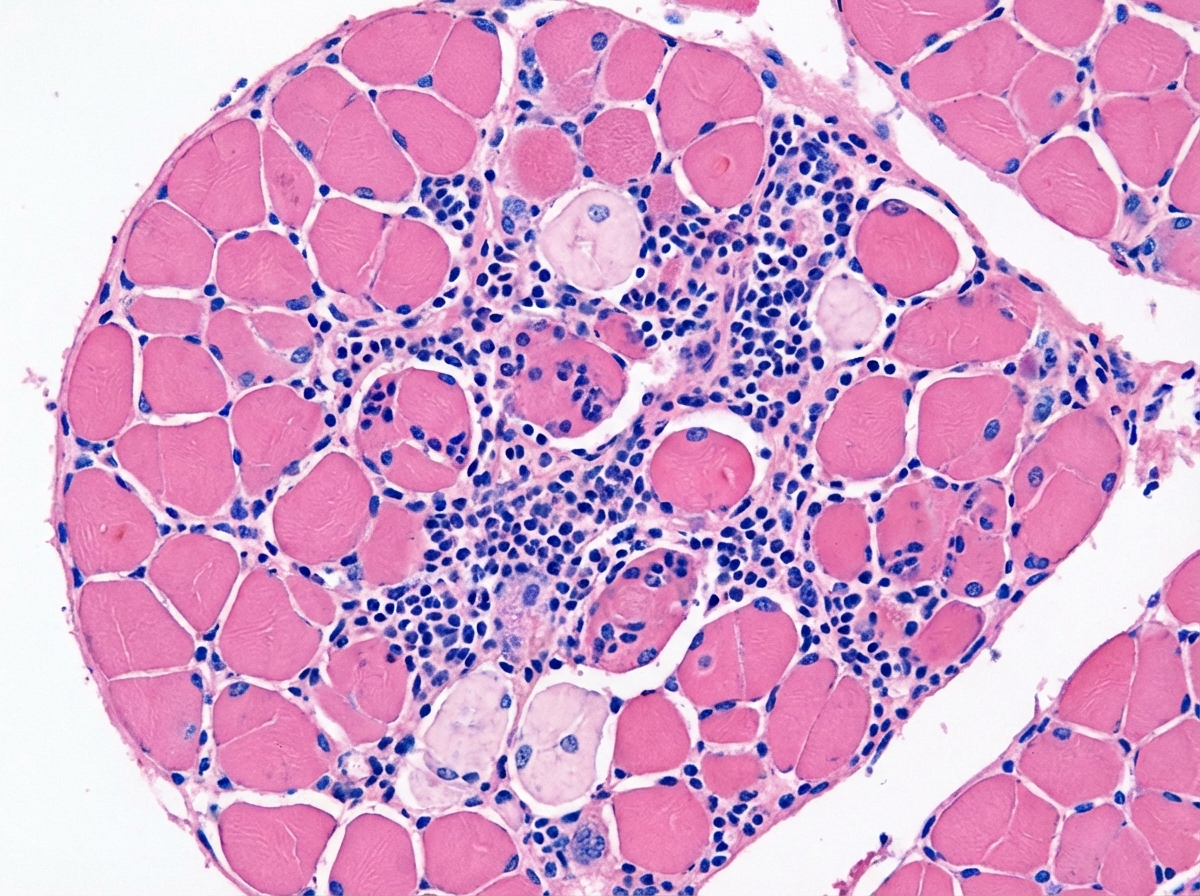
Transthoracic echocardiography is unremarkable. A muscle biopsy is performed, and the finding are shown in the exhibit (see image). The patient is started on high doses of systemic corticosteroids, but, after 4 weeks, no clinical improvement is noted. Which of the following is the most appropriate next treatment for this patient?
Q260
A 56-year-old woman with rheumatoid arthritis comes to the physician for a follow-up examination. She has no other history of serious illness. Menopause occurred 1 year ago. Current medications include antirheumatic drugs and hormone replacement therapy. She exercises regularly. A DEXA scan shows a T-score of -1.80, indicating decreased bone density. Which of the following drugs is most likely involved in the pathogenesis of this finding?
Autonomic/CV Drugs US Medical PG Practice Questions and MCQs
Question 251: A 28-year-old woman presents with weakness, fatigability, headache, and faintness. She began to develop these symptoms 4 months ago, and their intensity has been increasing since then. Her medical history is significant for epilepsy diagnosed 4 years ago. She was prescribed valproic acid, which, even at a maximum dose, did not control her seizures. She was prescribed phenytoin 6 months ago. Currently, she takes 300 mg of phenytoin sodium daily and is seizure-free. She also takes 40 mg of omeprazole daily for gastroesophageal disease, which was diagnosed 4 months ago. She became a vegan 2 months ago. She does not smoke and consumes alcohol occasionally. Her blood pressure is 105/80 mm Hg, heart rate is 98/min, respiratory rate is 14/min, and temperature is 36.8℃ (98.2℉). Her physical examination is significant only for paleness. Blood test shows the following findings:
Erythrocytes 2.5 x 10⁹/mm3
Hb 9.7 g/dL
Hct 35%
Mean corpuscular hemoglobin 49.9 pg/cell (3.1 fmol/cell)
Mean corpuscular volume 136 µm3 (136 fL)
Reticulocyte count 0.1%
Total leukocyte count 3110/mm3
Neutrophils 52%
Lymphocytes 37%
Eosinophils 3%
Monocytes 8%
Basophils 0%
Platelet count 203,000/mm3
Which of the following factors most likely caused this patient’s condition?
A. Omeprazole intake
B. Alcohol intake
C. Epilepsy
D. Phenytoin intake (Correct Answer)
E. Vegan diet
Explanation: ***Phenytoin intake***
- The patient presents with **macrocytic anemia** (MCV 136 µm3) and **leukopenia** (WBC 3110/mm3), which are characteristic of **folate deficiency**. Phenytoin is a well-established cause of drug-induced folate deficiency, especially with long-term use (patient has been on phenytoin for 6 months).
- Phenytoin causes folate deficiency primarily by **inhibiting intestinal folate absorption** and interfering with folate-dependent enzymatic reactions. This leads to impaired DNA synthesis, resulting in megaloblastic anemia and leukopenia.
- The timeline fits perfectly: phenytoin started 6 months ago, symptoms began 4 months ago, allowing time for folate stores to deplete.
*Incorrect: Omeprazole intake*
- Omeprazole is a **proton pump inhibitor** that can impair the absorption of **vitamin B12** due to reduced gastric acid, which is needed to cleave B12 from dietary proteins.
- While vitamin B12 deficiency can also cause macrocytic anemia, it typically takes **years** to develop after the onset of malabsorption (the patient has only been on omeprazole for 4 months). Additionally, B12 deficiency does not typically cause the degree of leukopenia seen here.
*Incorrect: Alcohol intake*
- **Chronic alcohol abuse** can cause macrocytic anemia through multiple mechanisms: direct bone marrow toxicity, folate deficiency (poor intake and absorption), and liver disease.
- However, the patient reports only **occasional alcohol consumption**, making this an unlikely primary cause. Alcohol-related folate deficiency requires chronic heavy use.
*Incorrect: Epilepsy*
- Epilepsy itself is **not directly associated** with macrocytic anemia or leukopenia.
- The hematologic abnormalities are due to the **antiepileptic medication** (phenytoin) rather than the neurological condition itself.
*Incorrect: Vegan diet*
- A **vegan diet** is a common cause of **vitamin B12 deficiency** since B12 is primarily found in animal products (meat, dairy, eggs).
- However, the patient became vegan only **2 months ago**. The body has substantial B12 stores (in the liver) that typically last **3-5 years** before deficiency develops. This timeline is too short to explain the current presentation. Additionally, B12 deficiency alone does not typically cause significant leukopenia as seen here.
Question 252: A 40-year-old man presents with multiple episodes of sudden-onset severe pain in his right side of the face lasting for only a few seconds. He describes the pain as lancinating, giving the sensation of an electrical shock. He says the episodes are precipitated by chewing or touching the face. Which of the following side effects is characteristic of the drug recommended for treatment of this patient’s most likely condition?
A. Syndrome of inappropriate ADH (Correct Answer)
B. Hirsutism
C. Pinpoint pupils
D. Gingival hyperplasia
E. Alopecia
Explanation: ***Syndrome of inappropriate ADH***
- The patient's symptoms (sudden-onset severe lancinating facial pain, precipitated by chewing/touching the face) are classic for **trigeminal neuralgia**.
- The first-line treatment for trigeminal neuralgia is **carbamazepine**, which can cause a serious side effect of **Syndrome of Inappropriate Antidiuretic Hormone (SIADH)** leading to hyponatremia.
*Hirsutism*
- **Hirsutism** (excessive hair growth) is a common side effect associated with the anticonvulsant medication **phenytoin**, not carbamazepine.
- Phenytoin is used for seizures and status epilepticus, not typically first-line for trigeminal neuralgia.
*Pinpoint pupils*
- **Pinpoint pupils** are characteristic of **opioid overdose** or organophosphate poisoning, and are not a typical side effect of carbamazepine.
- Opioids are generally not effective for trigeminal neuralgia.
*Gingival hyperplasia*
- **Gingival hyperplasia** (overgrowth of gum tissue) is a well-known side effect of chronic **phenytoin** use.
- This is not associated with carbamazepine.
*Alopecia*
- **Alopecia** (hair loss) can be a side effect of several medications, including some chemotherapy agents and anticonvulsants like **valproic acid**, but it is not a hallmark side effect of carbamazepine.
- Valproic acid is primarily used for seizures and bipolar disorder.
Question 253: A 14-year-old boy comes to the physician for a follow-up after a blood test showed a serum triglyceride level of 821 mg/dL. Several of his family members have familial hypertriglyceridemia. The patient is prescribed a fibrate medication that increases his risk of gallstone disease. The expected beneficial effect of this drug is most likely due to which of the following actions?
A. Increased PPAR-gamma activity
B. Increased bile acid sequestration
C. Increased lipoprotein lipase activity (Correct Answer)
D. Decreased HMG-CoA reductase activity
E. Decreased lipolysis in adipose tissue
Explanation: **Increased lipoprotein lipase activity**
- Fibrates, such as **gemfibrozil** and **fenofibrate**, are agonists of **peroxisome proliferator-activated receptor alpha (PPAR-alpha)**, which upregulates the expression of **lipoprotein lipase (LPL)**.
- Increased LPL activity leads to enhanced catabolism of **triglyceride-rich lipoproteins** (VLDL and chylomicrons), thereby lowering serum triglyceride levels.
*Increased PPAR-gamma activity*
- This is the primary mechanism of action for **thiazolidinediones (glitazones)**, used in the treatment of **type 2 diabetes mellitus**.
- PPAR-gamma activation primarily improves **insulin sensitivity** and promotes **adipogenesis**, with a less direct effect on triglyceride clearance compared to PPAR-alpha activation.
*Increased bile acid sequestration*
- This is the mechanism of action for **bile acid resins** (e.g., cholestyramine, colestipol), which bind bile acids in the intestine, preventing their reabsorption.
- This leads to increased synthesis of **new bile acids** from cholesterol in the liver, thereby lowering **LDL cholesterol** levels, but not directly targeting triglycerides.
*Decreased HMG-CoA reductase activity*
- This describes the mechanism of action of **statins** (e.g., atorvastatin, simvastatin), which are potent inhibitors of **HMG-CoA reductase**, the rate-limiting enzyme in **cholesterol biosynthesis**.
- Statins primarily reduce **LDL cholesterol** levels, with a secondary, less pronounced effect on triglycerides.
*Decreased lipolysis in adipose tissue*
- **Niacin (vitamin B3)** primarily works by inhibiting **hormone-sensitive lipase** in adipose tissue, which reduces the release of **free fatty acids** into circulation.
- This, in turn, decreases hepatic synthesis of **triglycerides** and **VLDL**, thus lowering triglyceride levels.
Question 254: A 29-year-old woman came to the emergency department due to severe symptoms of intoxication and unexplained convulsions. She is accompanied by her husband who reports that she takes disulfiram. There is no prior personal and family history of epilepsy. She shows signs of confusion, hyperirritability, and disorientation. On further evaluation, the patient is noted to have stomatitis, glossitis, and cheilosis. A chest X-ray is unremarkable. The deficiency of which of the vitamins below is likely to be the major cause of this patient’s symptoms?
A. B12
B. B6 (Correct Answer)
C. B9
D. B2
E. B3
Explanation: ***B6***
- The patient's presentation of **seizures, confusion, and oral symptoms (stomatitis, glossitis, cheilosis)** in the context of **disulfiram use** strongly suggests **pyridoxine (vitamin B6) deficiency**.
- **Disulfiram inhibits pyridoxine phosphokinase**, which converts pyridoxine to its active form (pyridoxal-5-phosphate), leading to functional B6 deficiency.
- **Seizures are a hallmark of B6 deficiency** because pyridoxal-5-phosphate is a cofactor for glutamic acid decarboxylase, which synthesizes GABA; reduced GABA leads to increased neuronal excitability and seizures.
- B6 deficiency also causes **peripheral neuropathy, cheilosis, glossitis, and stomatitis**.
*B2*
- Vitamin B2 (riboflavin) deficiency does cause **stomatitis, glossitis, and cheilosis**, along with seborrheic dermatitis and normocytic anemia.
- However, **riboflavin deficiency does not typically cause seizures**, which is the most acute and concerning symptom in this case.
- While disulfiram can affect multiple vitamin pathways, the seizure presentation points specifically to B6.
*B12*
- Vitamin B12 deficiency typically presents with **megaloblastic anemia** and **neurological symptoms** such as subacute combined degeneration (posterior column and corticospinal tract), peripheral neuropathy, and cognitive changes.
- The acute seizures and oral mucosal symptoms are not characteristic of B12 deficiency.
*B9*
- Vitamin B9 (folate) deficiency primarily causes **megaloblastic anemia** with symptoms of fatigue and weakness.
- While **glossitis** can occur, it's usually accompanied by anemia, and seizures are not a feature of folate deficiency.
- The clinical picture does not fit folate deficiency.
*B3*
- Vitamin B3 (niacin) deficiency causes **pellagra**, characterized by the classic triad: **dermatitis, diarrhea, and dementia** (the "3 Ds").
- While glossitis can be present, the **absence of photosensitive dermatitis and diarrhea** makes pellagra unlikely.
- Seizures are not a typical feature of pellagra.
Question 255: A 4-month-old girl with Down syndrome is brought into the pediatrician’s office by her father for her first well-child visit. The father states she was a home birth at 39 weeks gestation after an uneventful pregnancy without prenatal care. The child has not received any routine immunizations. The father states that sometimes when she is crying or nursing she "gets a little blue", but otherwise the patient is healthy. The patient is within the normal range of weight and height. Her blood pressure is 110/45 mm Hg, the pulse is 185/min, the respiratory rate is 25/min, and the temperature is 37.1°C (98.7°F). The physician notes an elevated heart rate, widened pulse pressure, and some difficulty breathing. On exam, the patient is playful and in no apparent distress. On lung exam, some faint crackles are heard at the lung bases without wheezing. Cardiac exam is significant for a harsh, machine-like murmur. An echocardiogram verifies the diagnosis. What is the next step in treatment of this patient?
A. Antibiotics
B. Heart transplant
C. PGE2
D. Emergent open heart surgery
E. Indomethacin (Correct Answer)
Explanation: ***Indomethacin***
- The patient's history of Down syndrome, cyanosis during crying, elevated heart rate, widened pulse pressure, crackles, and a **harsh, machine-like murmur** are classic signs of a **patent ductus arteriosus (PDA)** with significant left-to-right shunting.
- **Indomethacin** is a **prostaglandin inhibitor** that promotes closure of the PDA by blocking prostaglandin synthesis. While it is most effective in premature neonates, it can still be attempted in older infants with symptomatic PDA as **initial pharmacological management**.
- Given this is a **Pharmacology** question and the patient shows signs of mild heart failure but is "playful and in no apparent distress," a trial of **indomethacin** is appropriate before considering invasive interventions.
- If indomethacin fails, **elective surgical or transcatheter closure** would be the next step, but pharmacological closure should be attempted first in stable patients.
*Antibiotics*
- While **prophylactic antibiotics** might be considered in some cardiac conditions to prevent endocarditis, the primary issue here is a structural heart defect causing **hemodynamic changes**, not an infection.
- Antibiotics would not address the underlying **patent ductus arteriosus** or the progressive symptoms of increased pulmonary blood flow.
*Heart transplant*
- A **heart transplant** is typically reserved for end-stage cardiac failure that is refractory to all other medical and surgical interventions.
- The patient's condition is amenable to medical management or closure of the **patent ductus arteriosus**, which can significantly improve cardiac function without need for transplant.
*PGE2*
- **Prostaglandin E2 (PGE2)** is used to **maintain patency** of the ductus arteriosus in ductal-dependent congenital heart disease where blood flow through the ductus is critical for survival (e.g., severe coarctation of the aorta, transposition of great arteries, hypoplastic left heart syndrome).
- In this case, the **patent ductus arteriosus** is causing symptoms of **pulmonary overcirculation** and mild heart failure, so maintaining its patency with PGE2 would worsen the patient's condition.
*Emergent open heart surgery*
- While **surgical closure** is definitive treatment for PDA, **emergent** surgery is not indicated in a stable patient who is "playful and in no apparent distress."
- The standard approach is to attempt **medical management first** (indomethacin or other prostaglandin inhibitors), then consider **elective closure** (transcatheter or surgical) if pharmacological treatment fails.
- Modern management typically favors **transcatheter closure** over open heart surgery when anatomically feasible, and the procedure is performed electively, not emergently, unless there is severe hemodynamic compromise.
Question 256: A 70-year-old man presents to an urgent care clinic with bilateral flank pain for the past 2 days. During the last week, he has been experiencing some difficulty with urination, which prevented him from leaving his home. Now, he has to go to the bathroom 4–5 times per hour and he wakes up multiple times during the night to urinate. He also complains of straining and difficulty initiating urination with a poor urinary stream. The temperature is 37.5°C (99.5°F), the blood pressure is 125/90 mm Hg, the pulse is 90/min, and the respiratory rate is 18/min. The physical examination showed bilateral flank tenderness and palpable kidneys bilaterally. A digital rectal exam revealed a smooth, severely enlarged prostate without nodules. A CT scan is obtained. He is prescribed a drug that will alleviate his symptoms by reducing the size of the prostate. Which of the following best describes the mechanism of action of this drug?
A. 5-alpha reductase inhibitor (Correct Answer)
B. Cholinergic agonist
C. Anticholinergic
D. Phosphodiesterase-5 inhibitors
E. Alpha-1-adrenergic antagonists
Explanation: ***5-alpha reductase inhibitor***
- The patient's symptoms (difficulty urinating, frequent urination, straining, poor stream) and **enlarged prostate** on digital rectal exam are classic for **Benign Prostatic Hyperplasia (BPH)**. The question specifies a drug that *reduces prostate size*.
- **5-alpha reductase inhibitors** (e.g., finasteride, dutasteride) block the conversion of testosterone to **dihydrotestosterone (DHT)**, which is responsible for prostate growth. This leads to a reduction in prostate size over several months.
*Cholinergic agonist*
- **Cholinergic agonists** increase parasympathetic tone, leading to bladder contraction.
- While they might help with bladder emptying in hypotonic bladder, they would not reduce prostate size and could worsen symptoms if the obstruction is severe, potentially leading to increased bladder pressure or hydronephrosis.
*Anticholinergic*
- **Anticholinergic drugs** relax the bladder detrusor muscle, reducing bladder overactivity and symptoms of urgency and frequency.
- They do not address the underlying prostatic hypertrophy or reduce prostate size and could exacerbate urinary retention in a patient with significant prostatic obstruction.
*Phosphodiesterase-5 inhibitors*
- **Phosphodiesterase-5 (PDE5) inhibitors** (e.g., sildenafil, tadalafil) are primarily used for erectile dysfunction, and tadalafil can also improve BPH symptoms by relaxing smooth muscle in the bladder neck and prostate.
- However, they do not **reduce the size of the prostate**; their mechanism of action is related to smooth muscle relaxation, not inhibition of prostate growth.
*Alpha-1-adrenergic antagonists*
- **Alpha-1-adrenergic antagonists** (e.g., tamsulosin, doxazosin) relax the smooth muscle in the prostate and bladder neck, improving urinary flow by reducing dynamic obstruction.
- While effective for BPH symptoms, they do not **reduce the size of the prostate**; they only alleviate symptoms by relaxing the existing tissue.
Question 257: A 23-year-old woman presents with flatulence and abdominal cramping after meals. For the last year, she has been feeling uneasy after meals and sometimes has severe pain after eating breakfast in the morning. She also experiences flatulence and, on rare occasions, diarrhea. She says she has either cereal or oats in the morning which she usually consumes with a glass of milk. The patient is afebrile and vital signs are within normal limits. Physical examination is unremarkable. Which of the following drugs should be avoided in this patient?
A. Pantoprazole
B. Cimetidine
C. Sucralfate
D. Loperamide
E. Magnesium hydroxide (Correct Answer)
Explanation: ***Magnesium hydroxide***
- Magnesium hydroxide is an **osmotic laxative**, and its side effects include **diarrhea**, which the patient already experiences.
- In a patient presenting with symptoms suggestive of **lactose intolerance** (abdominal cramping, flatulence, and occasional diarrhea after consuming milk with cereal), a laxative intensifying these symptoms should be avoided.
*Pantoprazole*
- **Pantoprazole** is a proton pump inhibitor primarily used to reduce stomach acid, which is not indicated for the patient's symptoms.
- It would not worsen the patient's current symptoms of **flatulence** and **occasional diarrhea**.
*Cimetidine*
- **Cimetidine** is an H2 receptor antagonist used to decrease stomach acid, which is not relevant to the patient's symptoms of **lactose intolerance**.
- Its side effects generally do not include significant changes in **bowel habits** that would exacerbate the patient's presentation.
*Sucralfate*
- **Sucralfate** is a cytoprotective agent that forms a protective barrier in the stomach, primarily used for ulcers.
- It works locally in the gastrointestinal tract and is not known to cause symptoms like significant **flatulence** or **diarrhea**.
*Loperamide*
- **Loperamide** is an anti-diarrheal medication, which would be used to treat diarrhea, not avoided.
- It would likely alleviate the patient's occasional diarrhea rather than exacerbate it.
Question 258: A 60-year-old man visits his primary care doctor after being discharged from the hospital 3 weeks ago. He presented to the hospital with chest pain and was found to have ST elevations in leads I, aVL, and V6. He underwent cardiac catheterization with balloon angioplasty and was discharged on appropriate medications. At this visit, he complains of feeling deconditioned over the past week. He states that he is not able to jog his usual 3 miles and feels exhausted after walking up stairs. He denies chest pain. His temperature is 98.6°F (37°C), blood pressure is 101/62 mmHg, pulse is 59/min, and respirations are 18/min. His cardiac exam is notable for a 2/6 early systolic murmur at the left upper sternal border. He describes mild discomfort with palpation of his epigastrium. The remainder of his exam is unremarkable. His laboratory workup is shown below:
Hemoglobin: 8 g/dL
Hematocrit: 25 %
Leukocyte count: 11,000/mm^3 with normal differential
Platelet count: 400,000/mm^3
Serum:
Na+: 136 mEq/L
Cl-: 103 mEq/L
K+: 3.8 mEq/L
HCO3-: 25 mEq/L
BUN: 45 mg/dL
Glucose: 89 mg/dL
Creatinine: 1.1 mg/dL
Which medication is most likely contributing to this patient's current presentation?
A. Atorvastatin
B. Carvedilol
C. Furosemide
D. Lisinopril
E. Aspirin (Correct Answer)
Explanation: ***Aspirin***
- The patient's **epigastric discomfort**, **anemia** (hemoglobin 8 g/dL, hematocrit 25%), and the presence of a new **systolic murmur** (suggesting flow murmur due to anemia) are highly indicative of **upper gastrointestinal bleeding**.
- **Aspirin**, an antiplatelet medication often prescribed after an MI, is a common cause of **gastric ulcers** and subsequent GI bleeding due to its inhibition of prostaglandin synthesis, which compromises the gastric mucosal barrier.
*Atorvastatin*
- While statins can cause **myalgias** and, rarely, **rhabdomyolysis**, they are not typically associated with GI bleeding or anemia.
- The patient's deconditioning is more likely related to anemia than a direct statin effect, and there are no signs of muscle pain or elevated creatine kinase.
*Carvedilol*
- This **beta-blocker** is prescribed post-MI to reduce cardiac workload and improve survival, but it does not cause GI bleeding or anemia.
- Its side effects include **bradycardia**, **hypotension**, and fatigue, which could contribute to deconditioning but not the primary findings of anemia and epigastric discomfort.
*Furosemide*
- Furosemide is a **loop diuretic** used to manage fluid overload, not typically prescribed routinely after an uncomplicated MI unless signs of heart failure are present.
- While it can cause electrolyte imbalances or hypovolemia, it does not directly lead to GI bleeding or anemia.
*Lisinopril*
- **ACE inhibitors** like lisinopril are commonly prescribed post-MI to prevent ventricular remodeling and reduce mortality.
- Known side effects include **cough** and **angioedema**, but they do not cause GI bleeding or anemia.
Question 259: A 26-year-old woman presents with a 3-month history of progressive muscle weakness and dysphagia. She reports choking on her food several times a day and has difficulty climbing the stairs at work. She denies any changes in her routine, diet or muscle pain. Her vital signs include: blood pressure 110/70 mm Hg, pulse 70/min, respiratory rate 13/min, temperature 36.5°C (97.7°F). On physical examination, strength is 3 out of 5 in her upper extremities bilaterally and 2 out of 5 in her lower extremities bilaterally. Laboratory tests are significant for the following:
Mean corpuscular volume 92.2 μm3
Erythrocyte sedimentation rate 35 mm/h
C-reactive protein 6 mg/dL (ref: 0-10 mg/dL)
Anti-citrullinated protein 10 EU (ref: < 20 EU)
Creatine kinase-MB 320 U/L (ref: < 145 U/L)
Anti-Jo-1 3.2 U (ref: < 1.0 U)
Hemoglobin 12.9 g/dL
Hematocrit 45.7%
Leukocyte count 5500/mm3
Platelet count 200,000/mm3
Differential:
Neutrophils 65%
Lymphocytes 30%
Monocytes 5%
Transthoracic echocardiography is unremarkable. A muscle biopsy is performed, and the finding are shown in the exhibit (see image). The patient is started on high doses of systemic corticosteroids, but, after 4 weeks, no clinical improvement is noted. Which of the following is the most appropriate next treatment for this patient?
A. Infliximab
B. Tacrolimus
C. Intravenous immunoglobulin
D. Methotrexate (Correct Answer)
E. Rituximab
Explanation: ***Methotrexate***
- The patient's history of **progressive muscle weakness**, **dysphagia**, elevated **ESR**, and positive **Anti-Jo-1 antibody** are highly suggestive of **polymyositis** or **dermatomyositis**, which are **idiopathic inflammatory myopathies**. The absence of improvement with corticosteroids indicates refractory disease.
- **Methotrexate** is a common **corticosteroid-sparing agent** and a **second-line immunosuppressant** used in the treatment of inflammatory myopathies when patients are refractory to or cannot tolerate corticosteroids. It works by inhibiting folate metabolism, thereby reducing inflammation.
*Infliximab*
- **Infliximab** is a **TNF-alpha inhibitor** generally used for inflammatory conditions like rheumatoid arthritis, Crohn's disease, and psoriasis.
- It is **not a first or second-line treatment** for inflammatory myopathies and its efficacy in these conditions is not well-established.
*Tacrolimus*
- **Tacrolimus** is a **calcineurin inhibitor** primarily used to prevent **organ transplant rejection** and in some autoimmune diseases.
- While it has immunosuppressive properties, it is **not typically the next step** in treatment for refractory inflammatory myopathies after corticosteroid failure.
*Intravenous immunoglobulin*
- **Intravenous immunoglobulin (IVIG)** is typically used in cases of **severe, acute exacerbations** or **refractory disease** with rapid progression, especially if there's significant cardiovascular or respiratory involvement, or in patients who fail to respond to multiple immunosuppressants.
- Given that the patient has failed corticosteroids and is now considering further management, a **steroid-sparing agent** like methotrexate is usually tried before IVIG, unless there are signs of life-threatening complications, which are not explicitly mentioned here.
*Rituximab*
- **Rituximab** is an **anti-CD20 monoclonal antibody** that targets B cells, commonly used in certain lymphomas, rheumatoid arthritis, and some vasculitides.
- Though it has been used in some refractory cases of inflammatory myopathies, it is **not typically considered before methotrexate** in the treatment pathway for corticosteroid-refractory inflammatory myopathies.
Question 260: A 56-year-old woman with rheumatoid arthritis comes to the physician for a follow-up examination. She has no other history of serious illness. Menopause occurred 1 year ago. Current medications include antirheumatic drugs and hormone replacement therapy. She exercises regularly. A DEXA scan shows a T-score of -1.80, indicating decreased bone density. Which of the following drugs is most likely involved in the pathogenesis of this finding?
A. Naproxen
B. Medroxyprogesterone acetate
C. Adalimumab
D. Prednisone (Correct Answer)
E. Sulfasalazine
Explanation: ***Prednisone***
- **Glucocorticoids** like prednisone are a major cause of secondary osteoporosis due to their direct inhibitory effects on osteoblast function and promotion of osteoclast activity.
- Long-term use of prednisone, common in managing rheumatoid arthritis, significantly increases the risk of decreased bone density, even with a history of regular exercise and hormone replacement therapy.
*Naproxen*
- **Naproxen** is a **nonsteroidal anti-inflammatory drug (NSAID)** used for pain and inflammation; it does not directly cause bone loss or osteoporosis.
- While it may be used in rheumatoid arthritis, its mechanism of action does not involve bone metabolism.
*Medroxyprogesterone acetate*
- **Medroxyprogesterone acetate (MPA)** is a progestin that can cause **bone mineral density loss** with long-term use, particularly as a contraceptive injection (Depo-Provera).
- However, the patient is on **hormone replacement therapy** (likely estrogen, which is bone-protective) and MPA's effect on bone is generally less significant than that of glucocorticoids in this context, and it's not a typical long-term RA medication.
*Adalimumab*
- **Adalimumab** is a **TNF-alpha inhibitor** used to treat rheumatoid arthritis; it has no known adverse effect on bone density.
- By controlling the inflammatory process in RA, it may indirectly help preserve bone health by reducing inflammation-induced bone erosion.
*Sulfasalazine*
- **Sulfasalazine** is a **disease-modifying antirheumatic drug (DMARD)** used for rheumatoid arthritis and inflammatory bowel disease.
- It does not have any direct adverse effects on bone density or metabolism.