A middle aged man is brought in by emergency medical services after being found unconscious, lying on the street next to an empty bottle of vodka. His past medical history is unknown. Upon evaluation, he opens his eyes spontaneously and is able to obey commands. After peripheral access is obtained, IV normal saline and glucose are administered. Suddenly, the patient becomes confused and agitated. Horizontal nystagmus is noted on exam. This acute presentation was likely caused by a deficiency in which of the following?
Q232
A 32-year-old male patient presents to the emergency department after being found down on a sidewalk. He is able to be aroused but seems confused and confabulates extensively during history taking. Physical exam of the eye reveals nystagmus and the patient is unable to complete finger-to-nose or heel-to-shin testing. Chart review shows that the patient is well known for a long history of alcohol abuse. Which of the following substances should be administered prior to giving IV glucose to this patient?
Q233
A 64-year-old female with a history of end-stage renal disease presents to her primary care physician complaining of weakness. She reports a six-month history of progressive weakness accompanied by occasional dull aching pain in her arms, legs, and lower back. She has also started to increase her fiber intake because of occasional strained bowel movements. Her past medical history is notable for poorly controlled diabetes, major depressive disorder, and obesity. She takes insulin and sertraline. She has a twenty pack-year smoking history and drinks alcohol socially. Her temperature is 98.5°F (36.9°C), blood pressure is 130/85 mmHg, pulse is 80/min, and respirations are 16/min. Laboratory findings are shown below:
Serum:
Na+: 138 mEq/L
Cl-: 99 mEq/L
K+: 3.9 mEq/L
HCO3-: 26 mEq/L
BUN: 20 mg/dL
Glucose: 140 mg/dL
Creatinine: 2.0 mg/dL
Parathyroid hormone: 720 µU/mL
Ca2+: 11.1 mg/dL
Phosphorus (inorganic): 4.8 mg/dl
A medication with which of the following mechanisms of action is most likely indicated to address this patient’s symptoms?
Q234
A 30-year-old man with history of intravenous drug use and methamphetamine-associated chronic thromboembolic pulmonary hypertension (CTEPH) is brought to the emergency department by his girlfriend for worsening abdominal pain and fevers. The patient said the pain was initially around his umbilicus, but he is now experiencing intense tenderness near his groin. He was initially prescribed rivaroxaban, but due to insurance issues, he was switched to warfarin for management of CTEPH two weeks ago. His temperature is 102°F (38.9°C), blood pressure is 95/60 mmHg, pulse is 95/min, respirations are 22/min. He states that his blood pressure usually runs low. His physical exam is notable for an unremarkable cardiac exam, bibasilar crackles, and RLQ tenderness with rebound tenderness when the LLQ is palpated. Laboratory results are shown below:
Hemoglobin: 11 g/dL
Hematocrit: 35 %
Leukocyte count: 16,000/mm^3 with normal differential
Platelet count: 190,000/mm^3
Serum:
Na+: 137 mEq/L
Cl-: 100 mEq/L
K+: 3.7 mEq/L
HCO3-: 23 mEq/L
BUN: 40 mg/dL
Glucose: 110 mg/dL
Creatinine: 0.8 mg/dL
Ca2+: 9.1 mg/dL
AST: 34 U/L
ALT: 45 U/L
International normalized ratio (INR): 6.2
Prothrombin time (PT): 40 seconds
Partial thromboplastin time: 70 seconds
Blood type: O
Rhesus: Positive
Antibody screen: Negative
A clinical diagnosis is made and supported by the surgical consult team in lieu of imaging. The next operating room for an add-on procedure will not be available for another 5 hours. Appropriate medical therapy is initiated. What is the best next step for surgical optimization?
Q235
A 74-year-old female with a history of lung adenocarcinoma status post lobectomy, chronic obstructive pulmonary disease, congestive heart failure, and diabetic nephropathy presents to clinic complaining of hearing loss. Over the last week, she has noticed that she has had difficulty hearing the telephone or the television. When sitting in a quiet room, she also has noticed a high-pitched ringing in her ears. She denies any vertigo or disequilibrium. Further review reveals ongoing dyspnea on exertion and worsening cough productive of whitish sputum for the last month. The patient was recently discharged from the hospital for a congestive heart failure exacerbation. She lives alone and keeps track of all her medications, but admits that sometimes she gets confused. She has a 20 pack-year tobacco history. Her home medications include aspirin, lisinopril, furosemide, short-acting insulin, and a long-acting ß-agonist inhaler. Two weeks ago she completed a course of salvage chemotherapy with docetaxel and cisplatin. Her tympanic membranes are clear and intact with no signs of trauma or impaction. Auditory testing reveals bilateral hearing impairment to a whispered voice. The Weber test is non-lateralizing. Rinne test is unrevealing.
Hemoglobin: 11.8 g/dL
Leukocyte count: 9,400/mm^3
Platelet count: 450,000/mm^3
Serum (Present visit):
Na+: 134 mEq/L
K+: 3.8 mEq/L
Cl-: 95 mEq/L
HCO3-: 30 mEq/L
BUN: 45 mg/dL
Creatinine: 2.1 mg/dL
Serum (1 month ago):
Na+: 135 mEq/L
K+: 4.6 mEq/L
Cl-: 102 mEq/L
HCO3-: 24 mEq/L
BUN: 22 mg/dL
Creatinine: 1.2 mg/dL
On follow up visit two weeks later, the patient's hearing has significantly improved. Which of the following is the most likely cause of her initial hearing loss?
Q236
A 23-year-old Caucasian male presents to the emergency department with a persistent penile erection for the last 6 hours. He recently began outpatient treatment for depression with associated insomnia. He traveled to Mexico 5 months ago. His medical history is otherwise unremarkable.
Which of the following is the most likely precipitating factor for priapism in this patient?
Q237
A 42-year-old woman presents to the emergency department with pain in her abdomen. She was eating dinner when her symptoms began. Upon presentation, her symptoms have resolved. She has a past medical history of type II diabetes mellitus, hypertension, heavy menses, morbid obesity, and constipation. Her current medications include atorvastatin, lisinopril, insulin, metformin, aspirin, ibuprofen, and oral contraceptive pills. She has presented to the ED for similar complaints in the past. Her temperature is 98.1°F (36.7°C), blood pressure is 160/97 mmHg, pulse is 84/min, respirations are 15/min, and oxygen saturation is 98% on room air. Physical exam and abdominal exam are unremarkable. The patient is notably obese and weighs 315 pounds. Cardiac and pulmonary exams are within normal limits. Which of the following is the best prophylactic measure for this patient?
Q238
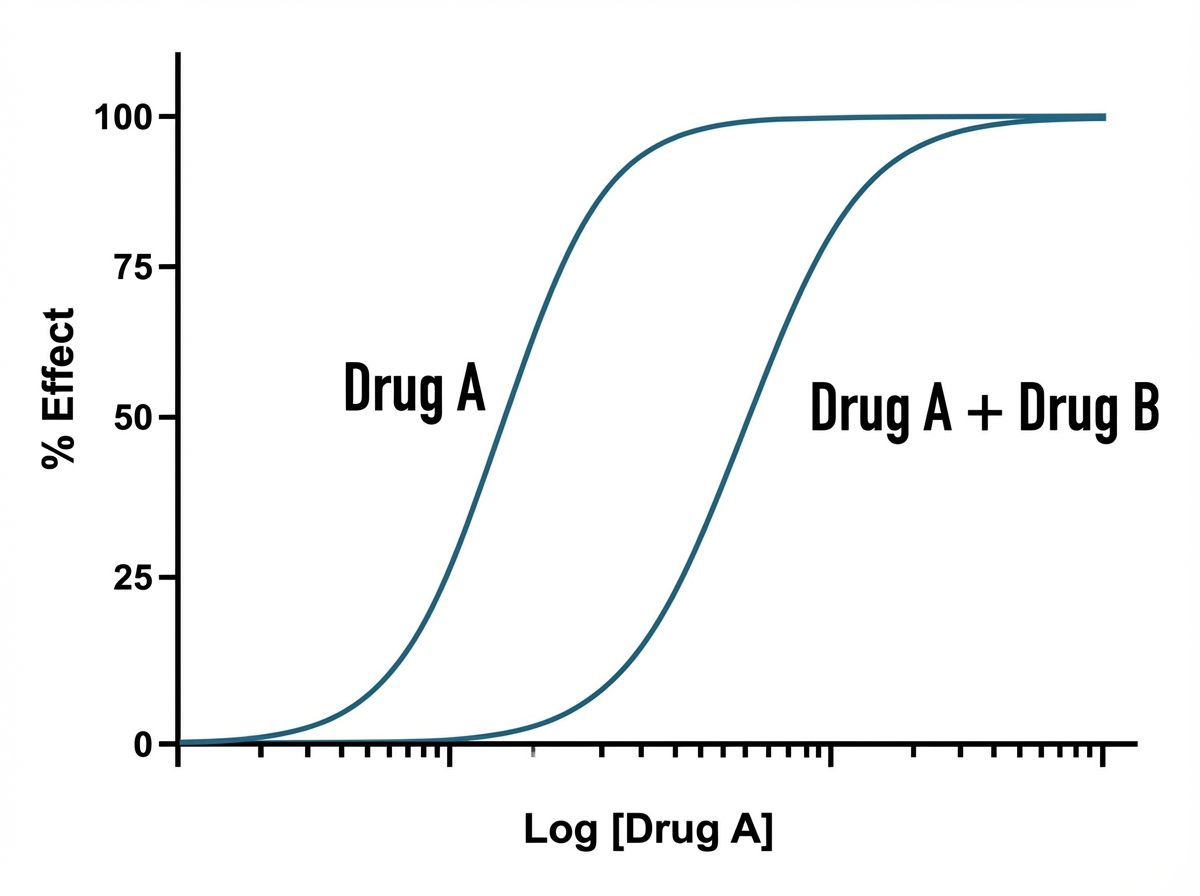
An investigator is studying the interaction between a new drug B and an existing drug A. The results are recorded and plotted on the graph shown. Which of the following properties of drug B best explain the observed effect on the dose-response curve of drug A?
Q239
A 3-year-old boy presents with progressive lethargy and confusion over the last 5 days. He lives with his parents in a home that was built in the early 1900s. His parents report that "his tummy has been hurting" for the last 3 weeks and that he is constipated. He eats and drinks normally, but occasionally tries things that are not food. Abdominal exam shows no focal tenderness. Hemoglobin is 8 g/dL and hematocrit is 24%. Venous lead level is 55 ug/dL. Which therapy is most appropriate for this boy's condition?
Q240
A 38-year-old man presents to the emergency department with chest pain and difficulty breathing for the last 3 hours. He denies cough, nasal discharge or congestion, sneezing, and palpitations. There is no history of recent surgery or hospitalization but he mentions that he was diagnosed with a psychiatric disorder 6 months ago and has been on medication, as prescribed by the psychiatrist. His past medical history is negative for any cardiac or respiratory conditions. His temperature is 38.1°C (100.5°F), pulse is 112/min, blood pressure is 128/84 mm Hg, and respiratory rate is 24/min. Auscultation of the chest reveals crackles and a decreased intensity of breath sounds over the right infrascapular region. The heart sounds are normal and there are no murmurs. His plasma D-dimer level is elevated. A contrast-enhanced computed tomography (CT) of the chest shows a filling defect in 2 segmental pulmonary arteries on the right side. Which of the following medications is most likely to cause the condition found in this man?
Autonomic/CV Drugs US Medical PG Practice Questions and MCQs
Question 231: A middle aged man is brought in by emergency medical services after being found unconscious, lying on the street next to an empty bottle of vodka. His past medical history is unknown. Upon evaluation, he opens his eyes spontaneously and is able to obey commands. After peripheral access is obtained, IV normal saline and glucose are administered. Suddenly, the patient becomes confused and agitated. Horizontal nystagmus is noted on exam. This acute presentation was likely caused by a deficiency in which of the following?
A. Vitamin B6
B. Vitamin B12
C. Vitamin B1 (Correct Answer)
D. Vitamin B9
E. Vitamin A
Explanation: ***Vitamin B1***
- The patient exhibits classic signs of **Wernicke-Korsakoff syndrome**, caused by **thiamine (Vitamin B1) deficiency**, commonly seen in chronic alcoholics.
- The sudden neurological deterioration (confusion, agitation, nystagmus) after intravenous **glucose administration** without prior thiamine repletion is characteristic, as glucose metabolism depletes remaining thiamine reserves.
*Vitamin B6*
- **Pyridoxine (Vitamin B6) deficiency** can cause peripheral neuropathy, sideroblastic anemia, and seizures, but typically not acute encephalopathy or nystagmus exacerbated by glucose.
- It is less commonly associated with acute neurological decline in the context of chronic alcoholism compared to thiamine.
*Vitamin B12*
- **Cobalamin (Vitamin B12) deficiency** can lead to megaloblastic anemia and peripheral neuropathy, and in severe cases, subacute combined degeneration of the spinal cord.
- However, it does not typically present with acute confusion, nystagmus, and agitation, especially not exacerbated by glucose administration.
*Vitamin B9*
- **Folate (Vitamin B9) deficiency** typically causes megaloblastic anemia and, in some cases, neurological symptoms due to high homocysteine levels, but not the acute constellation of symptoms described.
- Like B12 deficiency, it is not acutely worsened by glucose administration.
*Vitamin A*
- **Vitamin A deficiency** can lead to night blindness, xerophthalmia, and immune dysfunction.
- It does not cause acute neurological symptoms such as confusion, agitation, or nystagmus, and is unrelated to glucose metabolism in this context.
Question 232: A 32-year-old male patient presents to the emergency department after being found down on a sidewalk. He is able to be aroused but seems confused and confabulates extensively during history taking. Physical exam of the eye reveals nystagmus and the patient is unable to complete finger-to-nose or heel-to-shin testing. Chart review shows that the patient is well known for a long history of alcohol abuse. Which of the following substances should be administered prior to giving IV glucose to this patient?
A. Vitamin B12
B. Vitamin B1 (Correct Answer)
C. Vitamin C
D. Fomepizole
E. Folate
Explanation: ***Vitamin B1***
- This patient presents with signs of **Wernicke-Korsakoff syndrome**, characterized by **nystagmus**, **ataxia** (difficulty with finger-to-nose and heel-to-shin), and **global confusion with confabulation**, in the setting of chronic **alcohol abuse**.
- **Thiamine (Vitamin B1) deficiency** is the underlying cause, and administering IV glucose before thiamine can precipitate or worsen Wernicke encephalopathy by increasing glucose metabolism, which further depletes the already low thiamine stores.
*Vitamin B12*
- While **alcohol abuse** can lead to various nutritional deficiencies, **Vitamin B12 deficiency** is more commonly associated with macrocytic anemia and neurological symptoms like peripheral neuropathy or subacute combined degeneration, not the acute neurological picture described here.
- There is no specific indication to administer B12 prior to glucose in this context.
*Vitamin C*
- **Vitamin C (ascorbic acid) deficiency** causes **scurvy**, presenting with bleeding gums, petechiae, and poor wound healing.
- It is not indicated for the neurological symptoms observed in this patient.
*Fomepizole*
- **Fomepizole** is an antidote used for **methanol or ethylene glycol poisoning** by inhibiting alcohol dehydrogenase.
- There is no information in the patient's presentation to suggest methanol or ethylene glycol toxicity.
*Folate*
- **Folate deficiency** is common in alcoholics and can cause **macrocytic anemia** and contribute to neurological issues like peripheral neuropathy.
- However, it does not address the acute neurological syndrome described (Wernicke-Korsakoff) and its administration is not prioritized before glucose in this specific acute scenario.
Question 233: A 64-year-old female with a history of end-stage renal disease presents to her primary care physician complaining of weakness. She reports a six-month history of progressive weakness accompanied by occasional dull aching pain in her arms, legs, and lower back. She has also started to increase her fiber intake because of occasional strained bowel movements. Her past medical history is notable for poorly controlled diabetes, major depressive disorder, and obesity. She takes insulin and sertraline. She has a twenty pack-year smoking history and drinks alcohol socially. Her temperature is 98.5°F (36.9°C), blood pressure is 130/85 mmHg, pulse is 80/min, and respirations are 16/min. Laboratory findings are shown below:
Serum:
Na+: 138 mEq/L
Cl-: 99 mEq/L
K+: 3.9 mEq/L
HCO3-: 26 mEq/L
BUN: 20 mg/dL
Glucose: 140 mg/dL
Creatinine: 2.0 mg/dL
Parathyroid hormone: 720 µU/mL
Ca2+: 11.1 mg/dL
Phosphorus (inorganic): 4.8 mg/dl
A medication with which of the following mechanisms of action is most likely indicated to address this patient’s symptoms?
A. Aldosterone receptor antagonist
B. Carbonic anhydrase inhibitor
C. Osteoprotegerin analog
D. Calcimimetic agent (Correct Answer)
E. Sodium chloride cotransporter antagonist
Explanation: ***Calcimimetic agent***
- The patient's presentation with **end-stage renal disease (ESRD)**, elevated **parathyroid hormone (PTH)**, and elevated **calcium** and **phosphate** indicates **secondary hyperparathyroidism** with associated **renal osteodystrophy**.
- **Calcimimetic agents** like cinacalcet increase the sensitivity of the **calcium-sensing receptor** on the parathyroid gland, reducing PTH secretion and ultimately lowering calcium and phosphate levels.
*Aldosterone receptor antagonist*
- An **aldosterone receptor antagonist** (e.g., spironolactone) is primarily used to treat **heart failure**, **hypertension**, and **hyperaldosteronism**.
- While the patient has elevated blood pressure, there is no direct indication for hyperaldosteronism, and this class of drug would not directly address her metabolic bone disease.
*Carbonic anhydrase inhibitor*
- A **carbonic anhydrase inhibitor** (e.g., acetazolamide) is used for conditions like **glaucoma**, **metabolic alkalosis**, or **high-altitude sickness**.
- It works by inhibiting carbonic anhydrase, leading to bicarbonate diuresis and fluid/electrolyte changes, which is not relevant to this patient's primary issue of secondary hyperparathyroidism.
*Osteoprotegerin analog*
- An **osteoprotegerin (OPG) analog**, such as denosumab, is used to treat **osteoporosis** by inhibiting **osteoclast activity**.
- While the patient has bone pain, an OPG analog would not address the underlying pathology of **secondary hyperparathyroidism** as effectively as a calcimimetic, which directly targets PTH overproduction.
*Sodium chloride cotransporter antagonist*
- A **sodium chloride cotransporter antagonist** (e.g., thiazide diuretics, loop diuretics) primarily targets hypertension and edema.
- These agents alter kidney electrolyte handling, but they are not the primary treatment for **secondary hyperparathyroidism** or its associated metabolic bone disease in ESRD.
Question 234: A 30-year-old man with history of intravenous drug use and methamphetamine-associated chronic thromboembolic pulmonary hypertension (CTEPH) is brought to the emergency department by his girlfriend for worsening abdominal pain and fevers. The patient said the pain was initially around his umbilicus, but he is now experiencing intense tenderness near his groin. He was initially prescribed rivaroxaban, but due to insurance issues, he was switched to warfarin for management of CTEPH two weeks ago. His temperature is 102°F (38.9°C), blood pressure is 95/60 mmHg, pulse is 95/min, respirations are 22/min. He states that his blood pressure usually runs low. His physical exam is notable for an unremarkable cardiac exam, bibasilar crackles, and RLQ tenderness with rebound tenderness when the LLQ is palpated. Laboratory results are shown below:
Hemoglobin: 11 g/dL
Hematocrit: 35 %
Leukocyte count: 16,000/mm^3 with normal differential
Platelet count: 190,000/mm^3
Serum:
Na+: 137 mEq/L
Cl-: 100 mEq/L
K+: 3.7 mEq/L
HCO3-: 23 mEq/L
BUN: 40 mg/dL
Glucose: 110 mg/dL
Creatinine: 0.8 mg/dL
Ca2+: 9.1 mg/dL
AST: 34 U/L
ALT: 45 U/L
International normalized ratio (INR): 6.2
Prothrombin time (PT): 40 seconds
Partial thromboplastin time: 70 seconds
Blood type: O
Rhesus: Positive
Antibody screen: Negative
A clinical diagnosis is made and supported by the surgical consult team in lieu of imaging. The next operating room for an add-on procedure will not be available for another 5 hours. Appropriate medical therapy is initiated. What is the best next step for surgical optimization?
A. Fresh frozen plasma
B. Prothrombin complex concentrate (Correct Answer)
C. Protamine
D. Do nothing
E. Phytonadione
Explanation: ***Prothrombin complex concentrate***
- The patient has **warfarin over-anticoagulation (INR 6.2)** and requires **emergency surgery** for suspected appendicitis with peritonitis, necessitating rapid reversal of anticoagulation.
- **Prothrombin complex concentrate (4-factor PCC)** contains concentrated factors II, VII, IX, and X (and proteins C & S), providing **rapid and complete reversal** of warfarin's anticoagulant effects within minutes, which is crucial in emergency surgical situations.
- PCC is **preferred over FFP** per current guidelines (ACCP, AHA) for urgent warfarin reversal due to faster administration, smaller volume, and more predictable INR correction.
- **Vitamin K should be administered concurrently** to provide sustained reversal (takes 12-24 hours), but PCC is essential for immediate correction before surgery.
*Fresh frozen plasma*
- While FFP contains all coagulation factors and can reverse warfarin, it requires **larger volumes (4-6 units)**, takes longer to thaw and administer, and is **less effective** in rapidly correcting INR to normal range compared to PCC.
- Administering large volumes of FFP can lead to **volume overload** (especially concerning in CTEPH patients) and **transfusion-related complications**.
- PCC is superior for urgent reversal in patients requiring emergency surgery.
*Protamine*
- **Protamine** is used to reverse the anticoagulant effects of **unfractionated heparin** (and partially reverses low molecular weight heparin), not warfarin.
- It would have **no effect** on the patient's elevated INR due to warfarin use.
- Note: The elevated PTT (70s) in this case may suggest concurrent heparin bridging therapy or other factor deficiency, but the primary issue requiring reversal is the critical warfarin over-anticoagulation.
*Do nothing*
- This patient has **surgical peritonitis** (appendicitis with peritoneal signs) and requires emergency surgery with an INR of 6.2, creating **high risk of surgical bleeding**.
- Proceeding to surgery without reversing anticoagulation would result in **life-threatening hemorrhage**.
- Delaying treatment would likely result in further **clinical deterioration** with possible perforation and sepsis.
*Phytonadione*
- **Phytonadione (Vitamin K)** reverses warfarin's effects by restoring hepatic synthesis of vitamin K-dependent clotting factors, but its onset of action is **slow (12-24 hours for full effect)**, making it unsuitable as the sole agent for immediate reversal in patients requiring emergent surgery.
- While **Vitamin K should be administered** alongside PCC to provide sustained reversal, it is **not sufficient alone** for rapid correction in surgical emergencies.
Question 235: A 74-year-old female with a history of lung adenocarcinoma status post lobectomy, chronic obstructive pulmonary disease, congestive heart failure, and diabetic nephropathy presents to clinic complaining of hearing loss. Over the last week, she has noticed that she has had difficulty hearing the telephone or the television. When sitting in a quiet room, she also has noticed a high-pitched ringing in her ears. She denies any vertigo or disequilibrium. Further review reveals ongoing dyspnea on exertion and worsening cough productive of whitish sputum for the last month. The patient was recently discharged from the hospital for a congestive heart failure exacerbation. She lives alone and keeps track of all her medications, but admits that sometimes she gets confused. She has a 20 pack-year tobacco history. Her home medications include aspirin, lisinopril, furosemide, short-acting insulin, and a long-acting ß-agonist inhaler. Two weeks ago she completed a course of salvage chemotherapy with docetaxel and cisplatin. Her tympanic membranes are clear and intact with no signs of trauma or impaction. Auditory testing reveals bilateral hearing impairment to a whispered voice. The Weber test is non-lateralizing. Rinne test is unrevealing.
Hemoglobin: 11.8 g/dL
Leukocyte count: 9,400/mm^3
Platelet count: 450,000/mm^3
Serum (Present visit):
Na+: 134 mEq/L
K+: 3.8 mEq/L
Cl-: 95 mEq/L
HCO3-: 30 mEq/L
BUN: 45 mg/dL
Creatinine: 2.1 mg/dL
Serum (1 month ago):
Na+: 135 mEq/L
K+: 4.6 mEq/L
Cl-: 102 mEq/L
HCO3-: 24 mEq/L
BUN: 22 mg/dL
Creatinine: 1.2 mg/dL
On follow up visit two weeks later, the patient's hearing has significantly improved. Which of the following is the most likely cause of her initial hearing loss?
A. Cisplatin
B. Furosemide (Correct Answer)
C. Lisinopril
D. Docetaxel
E. Aspirin
Explanation: ***Furosemide***
- The patient's **renal function has worsened** significantly, indicated by the rise in **BUN and creatinine**, making her more susceptible to **ototoxicity** from furosemide due to reduced drug clearance.
- Her recent discharge for **congestive heart failure exacerbation** suggests she was likely on higher doses or had increased exposure to furosemide during hospitalization.
- The **significant improvement in hearing within two weeks** is the key diagnostic feature, as **furosemide-induced ototoxicity is reversible** when the drug is discontinued or the dose is reduced, unlike other ototoxic agents.
- Loop diuretics like furosemide cause ototoxicity by disrupting the ionic balance in the endolymph of the inner ear, but this effect is typically **transient and reversible**.
*Cisplatin*
- **Cisplatin** is a known **ototoxic chemotherapy agent**, and its timing (two weeks post-treatment) fits with the onset of symptoms.
- However, cisplatin-induced ototoxicity is typically **irreversible and permanent**, involving destruction of the **outer hair cells** of the cochlea.
- The **rapid improvement in the patient's hearing** within two weeks makes cisplatin an unlikely cause, as its ototoxicity results in persistent, dose-dependent bilateral sensorineural hearing loss.
*Lisinopril*
- **Lisinopril**, an **ACE inhibitor**, is not associated with **ototoxicity** or hearing loss.
- Its primary mechanisms of action are related to **blood pressure regulation** and **cardiovascular remodeling**, with no direct known impact on auditory function.
*Docetaxel*
- **Docetaxel** is a **taxane chemotherapy drug** that can cause neurological side effects, including **peripheral neuropathy**, but it is not commonly associated with **ototoxicity** or hearing loss.
- The rapid resolution of hearing loss makes ototoxicity from docetaxel improbable.
*Aspirin*
- **Aspirin** can cause **reversible ototoxicity** (tinnitus and hearing loss), particularly at high doses (typically >3 g/day) in a condition called **salicylism**.
- However, the patient's hearing loss is more directly attributable to **furosemide** given the context of recent CHF exacerbation requiring aggressive diuretic therapy and worsening renal function that would increase furosemide levels.
Question 236: A 23-year-old Caucasian male presents to the emergency department with a persistent penile erection for the last 6 hours. He recently began outpatient treatment for depression with associated insomnia. He traveled to Mexico 5 months ago. His medical history is otherwise unremarkable.
Which of the following is the most likely precipitating factor for priapism in this patient?
A. Depression treatment with venlafaxine
B. Infection acquired in Mexico
C. Depression treatment with trazodone (Correct Answer)
D. Sickle cell disease
E. Depression treatment with bupropion
Explanation: ***Depression treatment with trazodone***
- **Trazodone** is well-known to cause **priapism** as a rare but serious side effect (incidence ~1 in 6,000), particularly at higher doses.
- The mechanism involves **α1-adrenergic blockade**, which impairs detumescence of the corpus cavernosum.
- Trazodone is commonly prescribed for **depression with insomnia** due to its sedating properties, which directly aligns with this patient's presentation.
- The patient's recent initiation of depression treatment, combined with the symptom of priapism, strongly points to this medication.
*Depression treatment with venlafaxine*
- While venlafaxine is an antidepressant, priapism is **not a commonly associated side effect** with this medication.
- Serotonin-norepinephrine reuptake inhibitors (SNRIs) like venlafaxine are rarely implicated in priapism.
- Venlafaxine is less commonly used specifically for insomnia.
*Infection acquired in Mexico*
- Although travel can expose individuals to various infections, there is **no direct link between recent travel to Mexico and priapism** in an otherwise healthy individual.
- Furthermore, priapism due to infection is less likely to be the sole initial symptom without other signs of systemic illness.
*Sickle cell disease*
- **Sickle cell disease** is a common cause of priapism, especially in young males, due to **vaso-occlusion** in the penile microvasculature.
- However, the patient is **Caucasian** and his medical history is described as "otherwise unremarkable," making a severe underlying condition like sickle cell disease less likely without prior diagnosis or symptoms.
- Sickle cell disease would typically be diagnosed in childhood with recurrent vaso-occlusive crises.
*Depression treatment with bupropion*
- **Bupropion** is an antidepressant that works via dopamine and norepinephrine reuptake inhibition, and priapism is **not a recognized side effect** of this drug.
- It does not typically interfere with the penile erection mechanisms in a way that would cause priapism.
- Bupropion is generally activating rather than sedating, making it less ideal for patients with insomnia.
Question 237: A 42-year-old woman presents to the emergency department with pain in her abdomen. She was eating dinner when her symptoms began. Upon presentation, her symptoms have resolved. She has a past medical history of type II diabetes mellitus, hypertension, heavy menses, morbid obesity, and constipation. Her current medications include atorvastatin, lisinopril, insulin, metformin, aspirin, ibuprofen, and oral contraceptive pills. She has presented to the ED for similar complaints in the past. Her temperature is 98.1°F (36.7°C), blood pressure is 160/97 mmHg, pulse is 84/min, respirations are 15/min, and oxygen saturation is 98% on room air. Physical exam and abdominal exam are unremarkable. The patient is notably obese and weighs 315 pounds. Cardiac and pulmonary exams are within normal limits. Which of the following is the best prophylactic measure for this patient?
A. Ibuprofen
B. Antibiotics, IV fluids, and NPO
C. Gastric bypass surgery
D. Ursodeoxycholic acid (Correct Answer)
E. Strict diet and rapid weight loss in the next month
Explanation: ***Ursodeoxycholic acid***
- The patient's presentation with sporadic abdominal pain after eating, along with risk factors like **obesity**, **female sex**, and **oral contraceptive use**, is highly suggestive of **biliary colic** due to gallstones. Ursodeoxycholic acid can dissolve small cholesterol gallstones and prevent their formation, serving as a prophylactic measure.
- This medication is particularly useful in patients who are not surgical candidates or for preventing gallstone formation during **rapid weight loss**, though its primary role here is to manage existing or recurrent symptoms without immediate surgical intervention.
*Ibuprofen*
- Ibuprofen is an **NSAID** used for symptomatic pain relief and inflammation, but it does not address the underlying cause of gallstone formation or associated pain.
- Chronic use of NSAIDs like ibuprofen can have **gastrointestinal side effects**, such as gastritis or ulcers, which can mimic or exacerbate abdominal pain.
*Antibiotics, IV fluids, and NPO*
- This regimen is typically used for acute cholecystitis, cholangitis, or pancreatitis, which are more severe complications of gallstone disease, often presenting with fever, elevated inflammatory markers, and persistent pain.
- The patient's symptoms **resolved spontaneously**, and she is afebrile with normal vital signs, indicating that such aggressive acute management is not currently needed.
*Gastric bypass surgery*
- While gastric bypass surgery can lead to significant weight loss and potentially improve some of the patient's comorbidities, rapid weight loss itself can **increase the risk of gallstone formation**.
- Without addressing the gallstone risk specifically, gastric bypass alone would not be the best prophylactic measure for the gallbladder issues, and ursodeoxycholic acid might even be prescribed **pre- or post-operatively** to prevent gallstone complications.
*Strict diet and rapid weight loss in the next month*
- **Rapid weight loss**, particularly at a rate greater than 1-1.5 kg per week, is a well-known risk factor for the formation of gallstones and can precipitate biliary colic.
- While weight loss is beneficial for her other comorbidities (diabetes, hypertension, morbid obesity), a **strict and rapid diet** without prophylactic measures like ursodeoxycholic acid could worsen or induce gallstone-related symptoms rather than prevent them.
Question 238: An investigator is studying the interaction between a new drug B and an existing drug A. The results are recorded and plotted on the graph shown. Which of the following properties of drug B best explain the observed effect on the dose-response curve of drug A?
A. Functional antagonist
B. Inverse agonist
C. Non-competitive antagonist
D. Competitive antagonist (Correct Answer)
E. Full agonist
Explanation: ***Competitive antagonist***
- A **competitive antagonist** binds reversibly to the **same receptor site** as the agonist, increasing the agonist concentration needed to achieve the same effect.
- This shift of the dose-response curve to the **right** (increased EC50) without a decrease in maximal effect (Emax) is characteristic of **reversible competitive antagonism**.
*Functional antagonist*
- A **functional antagonist** acts on a **different receptor** or through a different mechanism to produce an effect opposite to that of the agonist.
- This typically results in a **reduction in the maximal effect (Emax)** of the agonist, which is not observed in the graph.
*Inverse agonist*
- An **inverse agonist** binds to the **same receptor as an agonist** but reduces the constitutive activity of receptors that are active in the absence of an agonist.
- This effect wouldn't typically manifest as a simple rightward shift without a change in maximum response to the primary agonist.
*Non-competitive antagonist*
- A **non-competitive antagonist** binds to a **different site** on the receptor or irreversibly to the same site, preventing the agonist from eliciting a maximal response.
- This usually leads to a **decrease in the maximal effect (Emax)**, with or without a change in EC50, which is not seen here.
*Full agonist*
- A **full agonist** binds to a receptor and elicits the maximal possible effect, often increasing the observed response rather than shifting the curve to the right.
- If drug B were a full agonist, in the presence of drug A, it would either increase the maximal effect or shift the curve significantly, depending on receptor reserve and binding affinity.
Question 239: A 3-year-old boy presents with progressive lethargy and confusion over the last 5 days. He lives with his parents in a home that was built in the early 1900s. His parents report that "his tummy has been hurting" for the last 3 weeks and that he is constipated. He eats and drinks normally, but occasionally tries things that are not food. Abdominal exam shows no focal tenderness. Hemoglobin is 8 g/dL and hematocrit is 24%. Venous lead level is 55 ug/dL. Which therapy is most appropriate for this boy's condition?
A. Succimer (Correct Answer)
B. Psyllium
C. Folic acid
D. Docusate
E. Deferoxamine
Explanation: ***Succimer***
- With a venous lead level of 55 ug/dL and neurological symptoms (lethargy, confusion), **chelation therapy** is indicated.
- **Succimer** (**2,3-dimercaptosuccinic acid** or **DMSA**) is an oral chelating agent commonly used for lead poisoning in children with levels between 45-70 ug/dL, as it is effective and has fewer side effects than parenteral options.
*Psyllium*
- **Psyllium** is a **bulk-forming laxative** used to treat constipation, which is a symptom of lead poisoning in this patient.
- However, addressing the lead toxicity with chelation is paramount; constipation is a secondary issue that would be managed after initial stabilization or concurrently with chelation if severe.
*Folic acid*
- **Folic acid** is used to treat **folate deficiency anemia**. While the patient has anemia, it is a microcytic anemia secondary to lead poisoning interfering with heme synthesis, not folate deficiency.
- Supplementation with folic acid would not address the underlying **lead toxicity** or the anemia caused by it.
*Docusate*
- **Docusate** is a **stool softener** used to relieve constipation, a symptom this patient experiences due to lead poisoning.
- Similar to psyllium, this treats a symptom rather than the root cause (**lead poisoning**), which requires specific chelation therapy due to the high lead levels and neurological involvement.
*Deferoxamine*
- **Deferoxamine** is a chelating agent primarily used for **iron overload** (e.g., in thalassemia, hemochromatosis).
- It is **not indicated** for lead poisoning and would be ineffective and potentially harmful in this context.
Question 240: A 38-year-old man presents to the emergency department with chest pain and difficulty breathing for the last 3 hours. He denies cough, nasal discharge or congestion, sneezing, and palpitations. There is no history of recent surgery or hospitalization but he mentions that he was diagnosed with a psychiatric disorder 6 months ago and has been on medication, as prescribed by the psychiatrist. His past medical history is negative for any cardiac or respiratory conditions. His temperature is 38.1°C (100.5°F), pulse is 112/min, blood pressure is 128/84 mm Hg, and respiratory rate is 24/min. Auscultation of the chest reveals crackles and a decreased intensity of breath sounds over the right infrascapular region. The heart sounds are normal and there are no murmurs. His plasma D-dimer level is elevated. A contrast-enhanced computed tomography (CT) of the chest shows a filling defect in 2 segmental pulmonary arteries on the right side. Which of the following medications is most likely to cause the condition found in this man?
A. Alprazolam
B. Lithium
C. Haloperidol
D. Chlorpromazine (Correct Answer)
E. Valproic acid
Explanation: ***Chlorpromazine***
- The patient presents with symptoms and CT findings consistent with **pulmonary embolism (PE)** (chest pain, dyspnea, crackles, decreased breath sounds, elevated D-dimer, and filling defects in pulmonary arteries).
- **Chlorpromazine** is a **low-potency typical antipsychotic** that increases **venous thromboembolism (VTE)** risk through multiple mechanisms: marked **sedation** leading to immobility, **orthostatic hypotension**, **weight gain**, **hyperprolactinemia**, and direct prothrombotic effects.
- Among typical antipsychotics, **low-potency agents like chlorpromazine** cause more sedation and immobility than high-potency agents, conferring higher VTE risk.
*Alprazolam*
- **Alprazolam** is a benzodiazepine used for anxiety and panic disorders.
- It is **not associated** with increased risk of **venous thromboembolism** or pulmonary embolism.
*Lithium*
- **Lithium** is a mood stabilizer used for bipolar disorder.
- While it has various side effects (tremor, polyuria, thyroid dysfunction), **VTE or PE is not a recognized adverse effect**.
*Haloperidol*
- **Haloperidol** is a **high-potency typical antipsychotic** that also carries some VTE risk.
- However, high-potency antipsychotics cause **less sedation** and orthostatic hypotension compared to low-potency agents like chlorpromazine, resulting in **relatively lower VTE risk**.
- The patient's medication is more likely to be **chlorpromazine** given the clinical context.
*Valproic acid*
- **Valproic acid** is an anticonvulsant and mood stabilizer.
- Known side effects include **hepatotoxicity**, **pancreatitis**, and **thrombocytopenia**, but **not an increased risk of thromboembolism** or PE.