A 30-year-old woman is brought to the emergency department because of a 30-minute history of palpitations, dizziness, and chest discomfort. She has also not urinated since she woke up. She has a history of fibromyalgia treated with clomipramine. There is no family history of serious illness. She does not smoke or drink alcohol. Her temperature is 37°C (98.6°F), pulse is 120/min, and blood pressure is 90/60 mm Hg. On mental status examination, she is confused. Examination shows dilated pupils and dry skin. The abdomen is distended, there is tenderness to deep palpation of the lower quadrants with no guarding or rebound and dullness on percussion in the suprapubic region. An ECG shows tachycardia and a QRS complex width of 110 ms. Activated carbon is administered. The patient is intubated. Intravenous fluids and oxygenation are begun. Which of the following is the most appropriate pharmacotherapy for this patient?
Q172
A patient is receiving daily administrations of Compound X. Compound X is freely filtered in the glomeruli and undergoes net secretion in the renal tubules. The majority of this tubular secretion occurs in the proximal tubule. Additional information regarding this patient's renal function and the renal processing of Compound X is included below:
Inulin clearance: 120 mL/min
Plasma concentration of Inulin: 1 mg/mL
PAH clearance: 600 mL/min
Plasma concentration of PAH: 0.2 mg/mL
Total Tubular Secretion of Compound X: 60 mg/min
Net Renal Excretion of Compound X: 300 mg/min
Which of the following is the best estimate of the plasma concentration of Compound X in this patient?
Q173
A 37-year-old female presents to the emergency room complaining of headaches and palpitations. She reports that she initially started experiencing these symptoms several months prior but attributed them to stress at work. The symptoms occur episodically. Her family history is notable for medullary thyroid cancer and hyperparathyroidism. Her temperature is 98.6°F (37°C), blood pressure is 165/90 mmHg, pulse is 105/min, and respirations are 18/min. On examination she appears tremulous. Urine metanephrines are elevated. Which of the following is the most appropriate first medication in the management of this patient’s condition?
Q174
A 28-year-old woman, gravida 1, para 0, at 32 weeks' gestation is evaluated for vaginal bleeding. Five days ago, she was admitted to the hospital and started on treatment for a deep vein thrombosis in the right leg. Her pulse is 125/min and blood pressure is 95/67 mm Hg. Physical examination shows large hematomas on the upper limbs and swelling in the right calf. There is a large amount of bright red blood in the vaginal vault. Laboratory studies show a hemoglobin of 8.9 mg/dL, platelet count of 185,000/mm3, and activated partial thromboplastin time of 160 seconds. Which of the following is the most appropriate pharmacotherapy to rapidly reverse this patient's coagulopathy?
Q175
A 30-year-old man presents to your clinic complaining of excessive thirst and frequent urination for the past few months. Urine testing reveals a low urine osmolarity, which fails to increase after subjecting the patient to a water deprivation test and injection of desmopressin. Further into the encounter, the patient reveals that he has been on a mood stabilizer for bipolar disorder for several years. Which of the following is the most likely cause of his polyuria?
Q176
A 52-year-old man presents to the emergency department (ED) complaining of palpitations and lightheadedness for the last 30 minutes. He denies feeling pain or discomfort in his chest and is not short of breath. He does not have any known medical problems and does not take any medications regularly. He drinks 4–6 caffeinated drinks a day. The temperature is 36.8°C (98.2°F), the pulse rate is 150/min and slightly irregular, the blood pressure is 144/84 mm Hg, and the respiratory rate is 16/min. A focused examination of the cardiovascular and respiratory systems is unremarkable. An electrocardiogram is performed in the ED and the results are shown in the accompanying image. The ED physician prescribes a calcium channel blocking agent for his condition. Which of the following statements best describes the choice of verapamil over nifedipine in the treatment of this patient?
Q177
A 69-year-old man with type 2 diabetes mellitus comes to the physician for a follow-up examination. His only medication is metformin. He has tried to lose weight for several years without success. He is 168 cm (5 ft 6 in) tall and weighs 110 kg (243 lb); BMI is 39 kg/m2. His hemoglobin A1c is 8.5%. Which of the following is the most appropriate antidiabetic drug to address both this patient's glucose control and weight?
Q178
A 42-year-old man comes to the physician because of a 6-month history of progressively worsening shortness of breath with exertion. He was diagnosed with systemic sclerosis 5 years ago. Vital signs are within normal limits. Physical examination shows puffy, taut skin over the fingers. Pulmonary examination is unremarkable. There is no jugular venous distention. An x-ray of the chest shows enlargement of the pulmonary vessels and a prominent right heart border. Cardiac catheterization shows elevated right ventricular pressures and a mean pulmonary artery pressure of 55 mm Hg. Treatment with tadalafil is begun. The expected beneficial effect of this drug is most likely due to which of the following actions?
Q179
A 55-year-old man with a history of repeated hospitalization for chronic pancreatitis comes to the physician because of difficulty walking and standing steadily. Neurological examination shows an unsteady, broad-based gait, distal muscle weakness, decreased deep tendon reflexes, and an abnormal Romberg test. His hemoglobin concentration is 11.9 g/dL, mean corpuscular volume is 89/μm3, and serum lactate dehydrogenase is 105 U/L. His serum haptoglobin is slightly decreased. A deficiency of which of the following substances is the most likely cause of this patient's findings?
Q180
A 61-year-old male is given acetazolamide to treat open-angle glaucoma. Upon diuresis, his urine is found to be highly alkaline. Which of the following accounts for the alkaline nature of this patient’s urine?
Autonomic/CV Drugs US Medical PG Practice Questions and MCQs
Question 171: A 30-year-old woman is brought to the emergency department because of a 30-minute history of palpitations, dizziness, and chest discomfort. She has also not urinated since she woke up. She has a history of fibromyalgia treated with clomipramine. There is no family history of serious illness. She does not smoke or drink alcohol. Her temperature is 37°C (98.6°F), pulse is 120/min, and blood pressure is 90/60 mm Hg. On mental status examination, she is confused. Examination shows dilated pupils and dry skin. The abdomen is distended, there is tenderness to deep palpation of the lower quadrants with no guarding or rebound and dullness on percussion in the suprapubic region. An ECG shows tachycardia and a QRS complex width of 110 ms. Activated carbon is administered. The patient is intubated. Intravenous fluids and oxygenation are begun. Which of the following is the most appropriate pharmacotherapy for this patient?
A. Cyproheptadine
B. Lorazepam
C. Naloxone
D. Glucagon
E. Sodium bicarbonate (Correct Answer)
Explanation: ***Sodium bicarbonate***
- The patient presents with symptoms and signs consistent with **tricyclic antidepressant (TCA) toxicity** (e.g., tachycardia, hypotension, dilated pupils, confusion, urinary retention, wide QRS complex on ECG), likely due to clomipramine. **Sodium bicarbonate** is the first-line treatment for TCA-induced cardiotoxicity and QRS widening.
- It works by increasing extracellular sodium, overcoming the **sodium channel blockade** caused by TCAs, and by alkalinizing the blood, which reduces the binding of TCAs to myocardial cells.
*Cyproheptadine*
- **Cyproheptadine** is a serotonin antagonist used to treat **serotonin syndrome**, which presents with hyperthermia, muscle rigidity, and hyperreflexia, differentiating it from TCA toxicity.
- While TCAs can contribute to serotonin syndrome, the primary concern in this case is **cardiac toxicity** and QRS widening due to sodium channel blockade.
*Lorazepam*
- **Lorazepam** is a benzodiazepine used to treat **seizures** and **agitation**, which can be associated with TCA overdose but are not the primary, life-threatening features requiring immediate pharmacotherapy here.
- It does not address the **cardiac toxicity** (e.g., wide QRS, hypotension) that is the most critical aspect of this patient's presentation.
*Naloxone*
- **Naloxone** is an opioid antagonist used to reverse **opioid overdose**.
- The patient's symptoms (dilated pupils, dry skin, wide QRS) are not consistent with opioid toxicity, which typically causes **miosis** (pinpoint pupils) and **respiratory depression**.
*Glucagon*
- **Glucagon** is used in cases of severe **beta-blocker or calcium channel blocker overdose** to improve cardiac contractility and heart rate.
- While the patient has hypotension, glucagon does not address the specific mechanism of TCA toxicity involving **sodium channel blockade** and is not the primary treatment.
Question 172: A patient is receiving daily administrations of Compound X. Compound X is freely filtered in the glomeruli and undergoes net secretion in the renal tubules. The majority of this tubular secretion occurs in the proximal tubule. Additional information regarding this patient's renal function and the renal processing of Compound X is included below:
Inulin clearance: 120 mL/min
Plasma concentration of Inulin: 1 mg/mL
PAH clearance: 600 mL/min
Plasma concentration of PAH: 0.2 mg/mL
Total Tubular Secretion of Compound X: 60 mg/min
Net Renal Excretion of Compound X: 300 mg/min
Which of the following is the best estimate of the plasma concentration of Compound X in this patient?
A. 2 mg/mL (Correct Answer)
B. 3 mg/mL
C. There is insufficient information available to estimate the plasma concentration of Compound X
D. 1 mg/mL
E. 0.5 mg/mL
Explanation: ***2 mg/mL***
* The **net renal excretion of Compound X (300 mg/min)** is the sum of the filtered load and the net tubular secretion.
* Given that Compound X is **freely filtered** and undergoes **net secretion (60 mg/min)**, we can calculate the filtered load and subsequently its plasma concentration.
* **Net excretion = Filtered load + Net tubular secretion**
* **300 mg/min = Filtered load + 60 mg/min**
* **Filtered load = 300 mg/min - 60 mg/min = 240 mg/min**
* Since **Filtered load = Glomerular Filtration Rate (GFR) * Plasma concentration (P_X)**, and GFR is estimated by **inulin clearance (120 mL/min)**:
* **240 mg/min = 120 mL/min * P_X**
* **P_X = 240 mg/min / 120 mL/min = 2 mg/mL**.
*3 mg/mL*
* This value would imply a significantly higher filtered load or a different contribution from tubular secretion.
* Calculations using this plasma concentration would not align with the provided excretion and secretion rates.
*There is insufficient information available to estimate the plasma concentration of Compound X*
* The problem provides all necessary values: **Inulin clearance (GFR)**, **net tubular secretion of Compound X**, and **net renal excretion of Compound X**.
* These parameters are sufficient to determine the filtered load and thus the plasma concentration of Compound X.
*1 mg/mL*
* A plasma concentration of 1 mg/mL would result in a lower filtered load than calculated and would not account for the observed net renal excretion.
* **Filtered load = 120 mL/min * 1 mg/mL = 120 mg/min**. Total excretion would then be 120 mg/min + 60 mg/min = 180 mg/min, which contradicts the given 300 mg/min.
*0.5 mg/mL*
* This plasma concentration would lead to an even lower filtered load, making it impossible to achieve the *net renal excretion of Compound X* given the tubular secretion.
* **Filtered load = 120 mL/min * 0.5 mg/mL = 60 mg/min**. Total excretion would be 60 mg/min + 60 mg/min = 120 mg/min, which is much lower than the given 300 mg/min.
Question 173: A 37-year-old female presents to the emergency room complaining of headaches and palpitations. She reports that she initially started experiencing these symptoms several months prior but attributed them to stress at work. The symptoms occur episodically. Her family history is notable for medullary thyroid cancer and hyperparathyroidism. Her temperature is 98.6°F (37°C), blood pressure is 165/90 mmHg, pulse is 105/min, and respirations are 18/min. On examination she appears tremulous. Urine metanephrines are elevated. Which of the following is the most appropriate first medication in the management of this patient’s condition?
A. Atenolol
B. Phentolamine
C. Phenoxybenzamine (Correct Answer)
D. Tamsulosin
E. Propranolol
Explanation: ***Phenoxybenzamine***
- This patient presents with symptoms highly suggestive of **pheochromocytoma** (headaches, palpitations, hypertension, tremulousness, elevated urine metanephrines), further supported by the family history of **MEN2A syndrome** (medullary thyroid cancer and hyperparathyroidism).
- **Alpha-blockade** with phenoxybenzamine (a non-selective, irreversible alpha-adrenergic antagonist) is the initial and crucial step in managing pheochromocytoma to control blood pressure and prevent a **hypertensive crisis** during surgical resection.
*Atenolol*
- **Beta-blockers** like atenolol are contraindicated as initial monotherapy in pheochromocytoma because blocking beta-2 receptors without prior alpha-blockade can lead to unopposed **alpha-1 mediated vasoconstriction**, worsening hypertension.
- Beta-blockers can be added *after* adequate alpha-blockade has been achieved to control **tachycardia** or arrhythmias.
*Phentolamine*
- **Phentolamine** is an alpha-adrenergic blocker, but it is a **short-acting, reversible** agent, typically used for acute management of a **hypertensive crisis** in pheochromocytoma, rather than for chronic preoperative preparation.
- While it has its role in emergency situations, it is not the most appropriate *first medication* for long-term preoperative stabilization.
*Tamsulosin*
- **Tamsulosin** is a **selective alpha-1a blocker** primarily used for benign prostatic hyperplasia (BPH) due to its uroselectivity.
- It is not suitable for pheochromocytoma because it does not provide sufficient, widespread alpha-blockade to prevent a hypertensive crisis.
*Propranolol*
- Like atenolol, **propranolol** is a **beta-blocker** and should not be used as initial monotherapy in pheochromocytoma due to the risk of unopposed alpha-adrenergic vasoconstriction, which can exacerbate hypertension.
- It may be used *after* alpha-blockade to manage tachycardia.
Question 174: A 28-year-old woman, gravida 1, para 0, at 32 weeks' gestation is evaluated for vaginal bleeding. Five days ago, she was admitted to the hospital and started on treatment for a deep vein thrombosis in the right leg. Her pulse is 125/min and blood pressure is 95/67 mm Hg. Physical examination shows large hematomas on the upper limbs and swelling in the right calf. There is a large amount of bright red blood in the vaginal vault. Laboratory studies show a hemoglobin of 8.9 mg/dL, platelet count of 185,000/mm3, and activated partial thromboplastin time of 160 seconds. Which of the following is the most appropriate pharmacotherapy to rapidly reverse this patient's coagulopathy?
A. Vitamin K
B. Prothrombin complex concentrate
C. Fresh frozen plasma
D. Protamine sulfate (Correct Answer)
E. Alteplase
Explanation: ***Protamine sulfate***
- The patient's prolonged **aPTT (160 seconds)**, combined with recent treatment for DVT, strongly suggests **heparin overdose** or sensitivity.
- **Protamine sulfate** is the specific antidote for **heparin**, forming a stable salt that neutralizes its anticoagulant effect.
*Vitamin K*
- **Vitamin K** is the antidote for **warfarin** and helps in the synthesis of clotting factors II, VII, IX, and X.
- It would not reverse the effects of **heparin**, which works by activating antithrombin and inhibiting thrombin and factor Xa.
*Prothrombin complex concentrate*
- **PCC** contains factors II, VII, IX, and X and is used to rapidly reverse the effects of **warfarin** or in cases of severe bleeding due to factor deficiencies.
- While it could theoretically help with general coagulopathy, it is not the specific or most direct antagonist for **heparin**.
*Fresh frozen plasma*
- **FFP** contains all coagulation factors and is used for broad reversal of coagulopathy, especially in cases of **liver disease**, DIC, or multiple factor deficiencies.
- While it could provide factors, it would not directly antagonize the high levels of **heparin** that are likely causing the bleeding.
*Alteplase*
- **Alteplase** is a **thrombolytic agent** used to break down existing blood clots by converting plasminogen to plasmin.
- Administering alteplase would worsen the patient's severe bleeding and is contraindicated in this scenario.
Question 175: A 30-year-old man presents to your clinic complaining of excessive thirst and frequent urination for the past few months. Urine testing reveals a low urine osmolarity, which fails to increase after subjecting the patient to a water deprivation test and injection of desmopressin. Further into the encounter, the patient reveals that he has been on a mood stabilizer for bipolar disorder for several years. Which of the following is the most likely cause of his polyuria?
A. Nephrogenic diabetes insipidus (Correct Answer)
B. Syndrome of inappropriate ADH secretion
C. Primary polydipsia
D. Central diabetes insipidus
E. Urinary tract infection
Explanation: ***Nephrogenic diabetes insipidus***
- The patient's history of **excessive thirst and frequent urination** with **low urine osmolarity** indicates a problem with water reabsorption.
- The failure of urine osmolarity to increase after both **water deprivation and desmopressin administration** strongly suggests **nephrogenic diabetes insipidus**, where the kidneys do not respond to ADH. His long-term use of a mood stabilizer (likely **lithium** for bipolar disorder) is a common cause of acquired nephrogenic DI.
*Syndrome of inappropriate ADH secretion*
- **SIADH** typically presents with **hyponatremia** and **concentrated urine** (high urine osmolarity) despite plasma hypo-osmolality, which is the opposite of this patient's findings.
- This condition leads to **fluid retention** and *not* polyuria or excessive thirst.
*Primary polydipsia*
- In primary polydipsia, excessive fluid intake leads to polyuria, but the kidneys are still able to **concentrate urine** in response to water deprivation.
- The patient's urine osmolarity would **increase** after water deprivation, unlike what is observed here.
*Central diabetes insipidus*
- While central DI also causes polyuria and low urine osmolarity, the urine osmolarity **would increase** significantly after the administration of **desmopressin** (synthetic ADH) because the kidneys are still responsive.
- The lack of response to desmopressin rules out a central cause.
*Urinary tract infection*
- A UTI would typically present with symptoms such as **dysuria, urgency, frequency** (though polyuria can occur), and often **hematuria or pyuria**.
- It would not explain the specific findings of **low urine osmolarity** and the **failure to respond to water deprivation and desmopressin** in this manner.
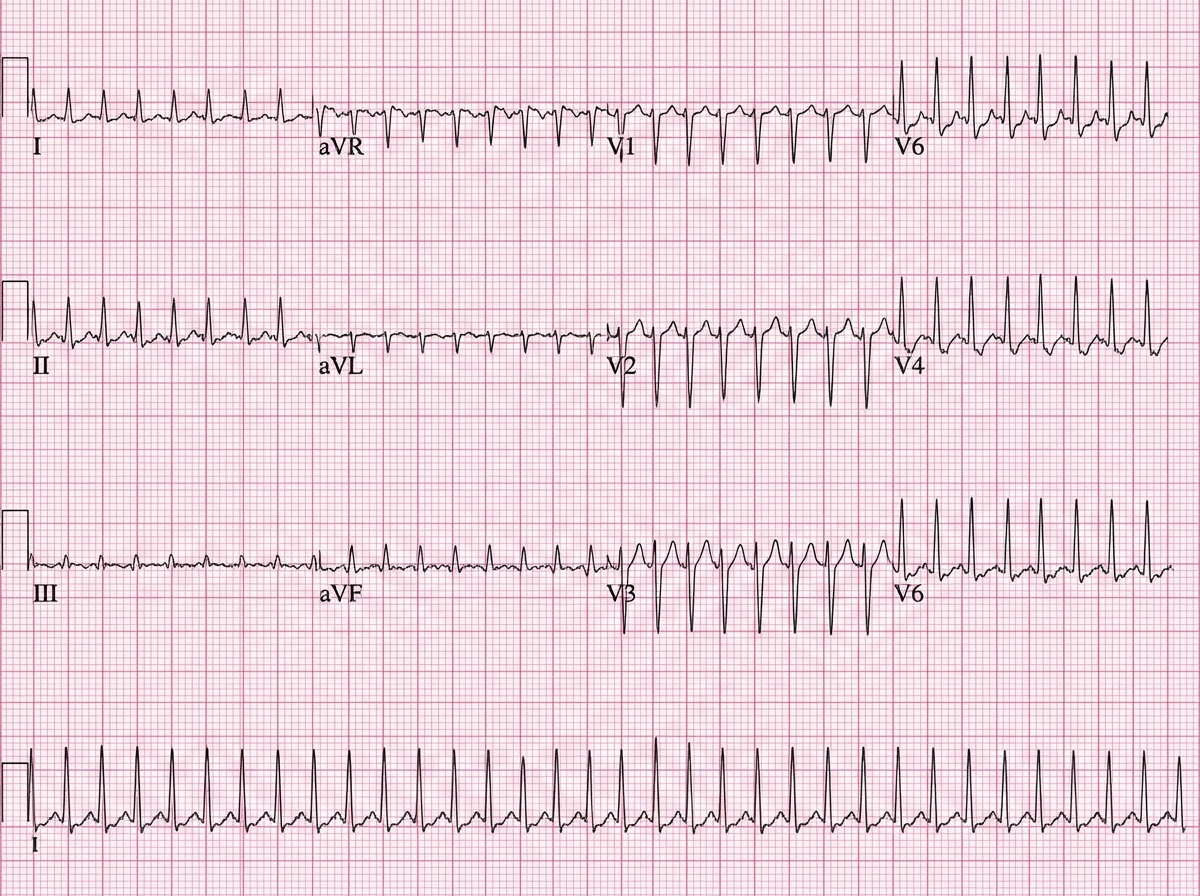
Question 176: A 52-year-old man presents to the emergency department (ED) complaining of palpitations and lightheadedness for the last 30 minutes. He denies feeling pain or discomfort in his chest and is not short of breath. He does not have any known medical problems and does not take any medications regularly. He drinks 4–6 caffeinated drinks a day. The temperature is 36.8°C (98.2°F), the pulse rate is 150/min and slightly irregular, the blood pressure is 144/84 mm Hg, and the respiratory rate is 16/min. A focused examination of the cardiovascular and respiratory systems is unremarkable. An electrocardiogram is performed in the ED and the results are shown in the accompanying image. The ED physician prescribes a calcium channel blocking agent for his condition. Which of the following statements best describes the choice of verapamil over nifedipine in the treatment of this patient?
A. Verapamil does not have non-specific anti-adrenergic effects, unlike nifedipine.
B. Verapamil has fewer negative inotropic effects than nifedipine.
C. Verapamil is more effective in decreasing blood pressure than nifedipine.
D. Verapamil binds to the α2 subunit of the L-type calcium channel, while nifedipine binds to the α1 subunit of the L-type calcium channel.
E. Verapamil slows atrioventricular conduction more effectively than nifedipine. (Correct Answer)
Explanation: ***Verapamil slows atrioventricular conduction more effectively than nifedipine.***
- Verapamil is a **non-dihydropyridine calcium channel blocker** that primarily acts on the **L-type calcium channels** in the heart, particularly in the AV node, slowing conduction and reducing heart rate. This is crucial for managing arrhythmias like the one suggested by the patient's symptoms (palpitations, lightheadedness, irregular pulse of 150/min), which is likely atrial fibrillation or flutter with rapid ventricular response.
- In contrast, nifedipine, a **dihydropyridine calcium channel blocker**, primarily acts on vascular smooth muscle to cause vasodilation, with little direct effect on cardiac conduction.
*Verapamil does not have non-specific anti-adrenergic effects, unlike nifedipine.*
- Neither verapamil nor nifedipine are known for significant anti-adrenergic effects; their primary mechanisms involve calcium channel blockade.
- Dihydropyridines like **nifedipine** can sometimes cause reflex tachycardia due to their vasodilation, which is an indirect adrenergic response, but not a direct anti-adrenergic effect.
*Verapamil has fewer negative inotropic effects than nifedipine.*
- Verapamil, by slowing calcium influx into cardiac myocytes, has more pronounced **negative inotropic effects** (decreases myocardial contractility) compared to nifedipine, which primarily affects peripheral vasculature.
- Nifedipine's effect on contractility is less profound clinically due to its selective action on smooth muscle cells and potential reflex sympathetic activation.
*Verapamil is more effective in decreasing blood pressure than nifedipine.*
- Nifedipine, a dihydropyridine, is generally more potent and preferred for its **vasodilatory effects** and greater efficacy in lowering blood pressure.
- While verapamil also lowers blood pressure, its primary utility in this context is its effect on cardiac rhythm and AV nodal conduction, not its blood pressure-lowering capabilities.
*Verapamil binds to the α2 subunit of the L-type calcium channel, while nifedipine binds to the α1 subunit of the L-type calcium channel.*
- Both verapamil and nifedipine primarily bind to the **α1 subunit** of the L-type calcium channel, though at different binding sites, leading to their distinct pharmacological effects.
- The α2 subunit is accessory and involved in channel trafficking and modulation, not the primary binding site for these drugs' therapeutic action.
Question 177: A 69-year-old man with type 2 diabetes mellitus comes to the physician for a follow-up examination. His only medication is metformin. He has tried to lose weight for several years without success. He is 168 cm (5 ft 6 in) tall and weighs 110 kg (243 lb); BMI is 39 kg/m2. His hemoglobin A1c is 8.5%. Which of the following is the most appropriate antidiabetic drug to address both this patient's glucose control and weight?
A. Nateglinide
B. Rosiglitazone
C. Liraglutide (Correct Answer)
D. Miglitol
E. Glipizide
Explanation: ***Liraglutide***
- **Liraglutide** is a **glucagon-like peptide-1 (GLP-1) receptor agonist** that improves glycemic control by increasing glucose-dependent insulin secretion, decreasing glucagon secretion, and slowing gastric emptying.
- A significant side effect of GLP-1 agonists is **weight loss**, making it an ideal choice for this patient who is obese (BMI 39 kg/m2) and struggling with weight management while having suboptimal glycemic control (HbA1c 8.5%).
*Nateglinide*
- **Nateglinide** is a **meglitinide**, which stimulates insulin release from pancreatic beta cells, similar to sulfonylureas, but with a more rapid and short-lived effect.
- While it helps in glucose control, it is often associated with **weight gain** and does not address the patient's desire for weight loss.
*Rosiglitazone*
- **Rosiglitazone** is a **thiazolidinedione (TZD)** that improves insulin sensitivity by acting on PPAR-gamma receptors.
- TZDs are commonly associated with **weight gain** and fluid retention, which would be detrimental to this patient's weight management goals.
*Miglitol*
- **Miglitol** is an **alpha-glucosidase inhibitor** that delays the absorption of carbohydrates from the gut, reducing postprandial glucose excursions.
- While it can help with glucose control and is weight-neutral or may cause modest weight loss, its efficacy in reducing HbA1c is generally lower compared to other agents, and it commonly causes **gastrointestinal side effects** like flatulence and diarrhea.
*Glipizide*
- **Glipizide** is a **sulfonylurea** that stimulates insulin secretion from pancreatic beta cells independently of glucose concentration.
- It is associated with a risk of **hypoglycemia** and often leads to **weight gain**, which is not suitable for a patient who needs to lose weight.
Question 178: A 42-year-old man comes to the physician because of a 6-month history of progressively worsening shortness of breath with exertion. He was diagnosed with systemic sclerosis 5 years ago. Vital signs are within normal limits. Physical examination shows puffy, taut skin over the fingers. Pulmonary examination is unremarkable. There is no jugular venous distention. An x-ray of the chest shows enlargement of the pulmonary vessels and a prominent right heart border. Cardiac catheterization shows elevated right ventricular pressures and a mean pulmonary artery pressure of 55 mm Hg. Treatment with tadalafil is begun. The expected beneficial effect of this drug is most likely due to which of the following actions?
A. Reduced transmembrane calcium current
B. Enhanced activity of nitric oxide (Correct Answer)
C. Increased activation of protein kinase A
D. Blockade of endothelin-1 binding at the endothelin receptor
E. Decreased smooth muscle sensitivity to norepinephrine
Explanation: ***Enhanced activity of nitric oxide***
- **Tadalafil** is a **phosphodiesterase-5 (PDE5) inhibitor** that prevents the degradation of **cGMP**, leading to increased cGMP levels.
- Elevated cGMP levels result in vascular smooth muscle relaxation and **vasodilation**, mimicking and enhancing the effects of **nitric oxide**.
*Reduced transmembrane calcium current*
- This is the mechanism of action for **calcium channel blockers**, which can be used in pulmonary hypertension but is not the primary action of tadalafil.
- While calcium plays a role in smooth muscle contraction, tadalafil's direct effect is not on calcium channels.
*Increased activation of protein kinase A*
- This effect is primarily mediated by **beta-adrenergic agonists** or **prostacyclin analogs**, which increase cAMP and subsequently activate protein kinase A.
- Tadalafil's mechanism is through the cGMP pathway, not directly through cAMP or protein kinase A activation.
*Blockade of endothelin-1 binding at the endothelin receptor*
- This describes the action of **endothelin receptor antagonists** (e.g., bosentan, ambrisentan), which are another class of drugs used for pulmonary hypertension.
- Tadalafil does not act on endothelin receptors; its mechanism is distinct.
*Decreased smooth muscle sensitivity to norepinephrine*
- This effect is typically achieved by **alpha-adrenergic blockers**, which are not the primary mechanism of action for tadalafil.
- Tadalafil acts downstream of neurotransmitter receptors by affecting intracellular signaling pathways involving cGMP.
Question 179: A 55-year-old man with a history of repeated hospitalization for chronic pancreatitis comes to the physician because of difficulty walking and standing steadily. Neurological examination shows an unsteady, broad-based gait, distal muscle weakness, decreased deep tendon reflexes, and an abnormal Romberg test. His hemoglobin concentration is 11.9 g/dL, mean corpuscular volume is 89/μm3, and serum lactate dehydrogenase is 105 U/L. His serum haptoglobin is slightly decreased. A deficiency of which of the following substances is the most likely cause of this patient's findings?
A. Niacin
B. Folate
C. Phytomenadione
D. Tocopherol (Correct Answer)
E. Pyridoxine
Explanation: ***Tocopherol***
- **Tocopherol (Vitamin E)** deficiency can cause neurological symptoms such as **ataxia**, **distal muscle weakness**, decreased deep tendon reflexes, and an **abnormal Romberg test** due to its role in nerve function and antioxidant properties.
- **Chronic pancreatitis** often leads to **fat malabsorption** as pancreatic enzymes are crucial for fat digestion, which impairs the absorption of fat-soluble vitamins like Vitamin E.
*Niacin*
- **Niacin (Vitamin B3)** deficiency causes **pellagra**, characterized by the "3 Ds": **dermatitis**, **diarrhea**, and **dementia**, none of which are the primary presenting symptoms here.
- While neurological symptoms can occur in severe cases, the specific presentation of ataxia and peripheral neuropathy points away from pellagra.
*Folate*
- **Folate (Vitamin B9)** deficiency primarily causes **megaloblastic anemia** with an elevated **mean corpuscular volume (MCV)**, which is normal in this patient (MCV 89/μm3).
- While neurological symptoms can be present, they are less specific to folate deficiency compared to the classic presentation seen here.
*Phytomenadione*
- **Phytomenadione (Vitamin K)** deficiency leads to **coagulopathy** due to impaired synthesis of clotting factors, resulting in bleeding tendencies.
- It does not typically cause neurological symptoms like ataxia or peripheral neuropathy.
*Pyridoxine*
- **Pyridoxine (Vitamin B6)** deficiency can cause **peripheral neuropathy** and **ataxia**, but it's often associated with **sideroblastic anemia** or seizures.
- While some symptoms overlap, the strong history of chronic pancreatitis and fat malabsorption makes a fat-soluble vitamin deficiency more likely.
Question 180: A 61-year-old male is given acetazolamide to treat open-angle glaucoma. Upon diuresis, his urine is found to be highly alkaline. Which of the following accounts for the alkaline nature of this patient’s urine?
A. Inhibition of bicarbonate reabsorption in the proximal tubule (Correct Answer)
B. Inhibition of bicarbonate reabsorption in beta-intercalated cells
C. Inhibition of acid secretion in alpha-intercalated cells
D. Inhibition of chloride reabsorption in the distal convoluted tubule
E. Inhibition of chloride reabsorption in the thick ascending loop of Henle
Explanation: ***Inhibition of bicarbonate reabsorption in the proximal tubule***
- **Acetazolamide** is a **carbonic anhydrase inhibitor** that primarily acts on the **proximal tubule** of the kidney.
- Its action here prevents the reabsorption of **bicarbonate (HCO3-)**, leading to its increased excretion in the urine and thus making the urine alkaline.
*Inhibition of chloride reabsorption in the distal convoluted tubule*
- This effect is typically associated with **thiazide diuretics**, which inhibit the **Na-Cl cotransporter** in the distal convoluted tubule.
- While it affects electrolyte balance, it does not directly lead to the observed **alkaline urine** in the manner described.
*Inhibition of bicarbonate reabsorption in beta-intercalated cells*
- **Beta-intercalated cells** in the collecting duct secrete bicarbonate, and their inhibition would lead to **acidic urine**, not alkaline.
- They play a role in **bicarbonate secretion**, not reabsorption as seen with acetazolamide's primary action.
*Inhibition of acid secretion in alpha-intercalated cells*
- **Alpha-intercalated cells** secrete acid (H+) into the urine. Inhibiting their function would reduce acid excretion, making the urine less acidic or even alkaline.
- However, the primary mechanism of acetazolamide's effect on urine pH is through **bicarbonate wasting** in the proximal tubule, not direct inhibition of acid secretion in the collecting duct.
*Inhibition of chloride reabsorption in the thick ascending loop of Henle*
- This is the mechanism of action for **loop diuretics** like furosemide, which inhibit the **Na-K-2Cl cotransporter**.
- While loop diuretics cause significant diuresis, they do not directly lead to the pronounced **urinary alkalinization** seen with acetazolamide.