
Class III antiarrhythmics (potassium channel blockers) — MCQs

A 63-year-old man comes to the physician for a routine health maintenance examination. He feels well. He has a history of hypertension, atrial fibrillation, bipolar disorder, and osteoarthritis of the knees. Current medications include lisinopril, amiodarone, lamotrigine, and acetaminophen. He started amiodarone 6 months ago and switched from lithium to lamotrigine 4 months ago. The patient does not smoke. He drinks 1–4 beers per week. He does not use illicit drugs. Vital signs are within normal limits. Examination shows no abnormalities. Laboratory studies show: Serum Na+ 137 mEq/L K+ 4.2 mEq/L Cl- 105 mEq/L HCO3- 24 mEq/L Urea nitrogen 14 mg/dL Creatinine 0.9 mg/dL Alkaline phosphatase 82 U/L Aspartate aminotransferase (AST) 110 U/L Alanine aminotransferase (ALT) 115 U/L Which of the following is the most appropriate next step in management?
A 70-year-old male immigrant from Asia is brought to the emergency room with complaints of palpitations and light-headedness for 1 hour. The patient was sitting in his chair watching television when he felt his heart racing and became dizzy. He was unable to stand up from his chair because of weakness and light-headedness. His past medical history is notable for mitral stenosis secondary to rheumatic fever as a child. On arrival to the emergency department, the patient's temperature is 99.7°F (37.6°C), blood pressure is 110/55 mmHg, pulse is 140/min, and respirations are 15/min. The patient appears comfortable but anxious. Electrocardiogram shows atrial fibrillation with rapid ventricular response. The patient is started on dofetilide. Which of the following would be expected in this patient’s cardiac action potential as a result of this drug?
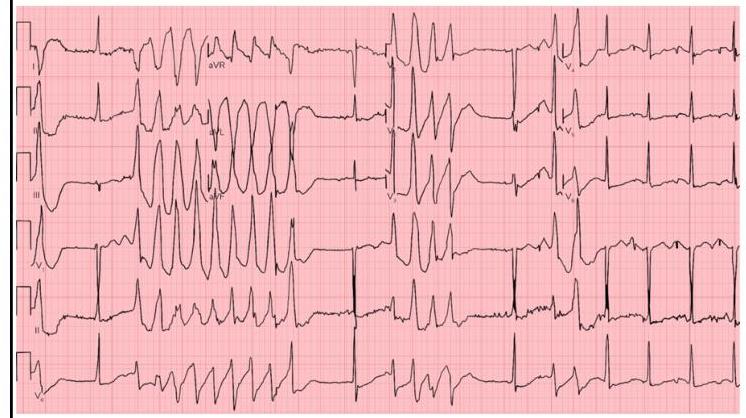
A 53-year-old man with obesity and heart disease presents to your outpatient clinic with complaints of orthopnea, significant dyspnea on minimal exertion, nausea, vomiting, and diarrhea. He says that his old doctor gave him "some pills" that he takes in varying amounts every morning. Physical exam is significant for a severely displaced point of maximal impulse, bilateral rales in the lower lung fields, an S3 gallop, and hepatomegaly. You decide to perform an EKG (shown in figure A). Suddenly, his rhythm changes to ventricular tachycardia followed by ventricular fibrillation, and he syncopizes and expires despite resuscitative efforts. High levels of which medication are most likely responsible?
An investigator is comparing the risk of adverse effects among various antiarrhythmic medications. One of the drugs being studied primarily acts by blocking the outward flow of K+ during myocyte repolarization. Further investigation shows that the use of this drug is associated with a lower rate of ventricular tachycardia, ventricular fibrillation, and torsades de pointes when compared to similar drugs. Which of the following drugs is most likely being studied?
A 65-year-old woman comes to the physician because of a 3-month history of progressive shortness of breath and a dry cough. She has also noticed gradual development of facial discoloration. She has coronary artery disease, hypertension, and atrial fibrillation. She does not remember which medications she takes. Her temperature is 37°C (98.6°F), pulse is 90/min, respirations are 18/min, and blood pressure is 150/85 mm Hg. Pulse oximetry on room air shows an oxygen saturation of 95%. Examination shows blue-gray discoloration of the face and both hands. Diffuse inspiratory crackles are heard. An x-ray of the chest shows reticular opacities around the lung periphery and particularly around the lung bases. The most likely cause of this patient's findings is an adverse effect to which of the following medications?
A 50-year-old man with a history of atrial fibrillation presents to his cardiologist’s office for a follow-up visit. He recently started treatment with an anti-arrhythmic drug to prevent future recurrences and reports that he has been feeling well and has no complaints. The physical examination shows that the arrhythmia appears to have resolved; however, there is now mild bradycardia. In addition, the electrocardiogram recording shows a slight prolongation of the PR and QT intervals. Which of the following drugs was most likely used to treat this patient?
A 70-year-old man is brought to the emergency department unconscious after a fall. He appears pale and is pulseless. A 12-lead EKG reveals wide, monomorphic sawtooth-like QRS complexes. He undergoes synchronized cardioversion three times at increasing voltage with no effect. Epinephrine is administered with minimal effect. Which drug will minimize his risk of developing multifocal ventricular tachycardia?
An 18-year-old boy is brought to the emergency department by his parents because he suddenly collapsed while playing football. His parents mention that he had complained of dizziness while playing before, but never fainted in the middle of a game. On physical examination, the blood pressure is 130/90 mm Hg, the respirations are 15/min, and the pulse is 110/min. The chest is clear, but a systolic ejection murmur is present. The remainder of the examination revealed no significant findings. An electrocardiogram is ordered, along with an echocardiogram. He is diagnosed with hypertrophic cardiomyopathy and the physician lists all the precautions he must follow. Which of the following drugs will be on the list of contraindicated substances?
Match the following antiarrhythmic drugs with their mechanism of action: | Mechanism of action | Drug | | :-- | :-- | | 1. Na+ channel blocker | A. Quinidine | | 2. K+ channel blocker | B. Digoxin | | 3. Na+K+ ATPase inhibitor | C. Esmolol | | 4. Beta-blocker | D. Ibutilide |
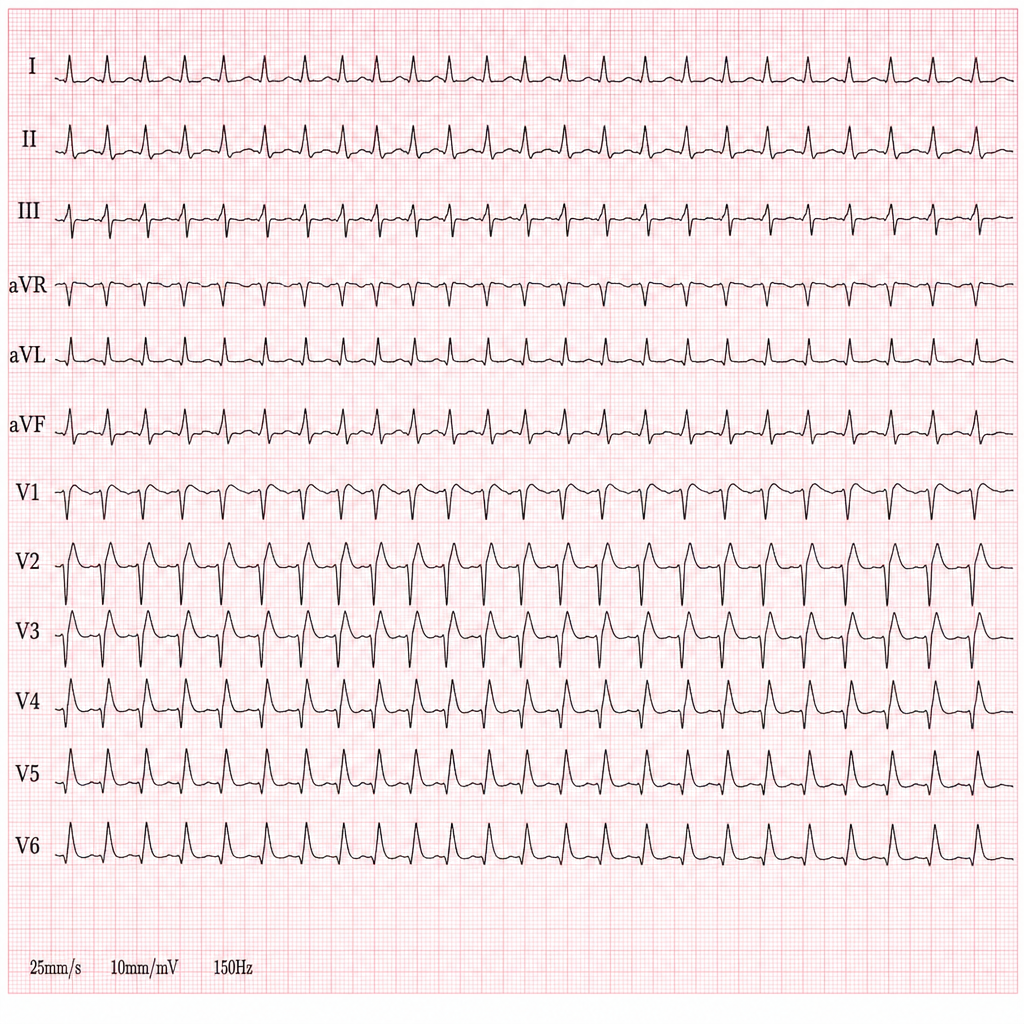
A 44-year-old woman presents with palpitations and lightheadedness. She says that symptoms onset 3 days ago and have not improved. She denies any similar episodes in this past. Her blood pressure is 140/90 mm Hg, heart rate is 150/min, respiratory rate is 16/min, and temperature is 36.6℃ (97.9℉). An ECG is performed and the results are shown in the picture. For cardioversion, it is decided to use an antiarrhythmic agent which has a use-dependent effect. Which of the following medications was most probably used?
Want unlimited practice?
Get full access to all questions, explanations, and performance tracking.
Scan to download app