An HIV-positive patient with a CD4+ count of 45 is receiving recommended first-line treatment for a case of cytomegalovirus retinitis. Coadministration with which of the following agents would be most likely to precipitate a deficiency of neutrophils in this patient?
Q62
A 26-year-old nurse presents 12 hours after she accidentally stuck herself with a blood-contaminated needle. She reported the accident appropriately and now seeks post-exposure prophylaxis. She does not have any complaints at the moment of presentation. Her vital signs include: blood pressure 125/80 mm Hg, heart rate 71/min, respiratory rate 15/min, and temperature 36.5℃ (97.7℉). Physical examination is unremarkable. The nurse has prescribed a post-exposure prophylaxis regimen which includes tenofovir, emtricitabine, and raltegravir. How will tenofovir change the maximum reaction rate (Vm) and Michaelis constant (Km) of the viral reverse transcriptase?
Q63
A previously healthy 26-year-old man is brought to the emergency department because of extreme agitation and confusion. He is unable to give a clear history. His mother says he returned from a hiking trip 4 weeks ago on which he also explored caves. Over the past few days, he has had generalized fever and malaise with a sore throat. He has refused to drink any liquids for the last day. His immunizations are up-to-date. His temperature is 100.6°F (38.1°C), pulse is 92/min, respirations are 18/min, and blood pressure is 110/75 mm Hg. His pupils are 6 mm wide and reactive to light. He has a moderate amount of drool. Muscle tone is greatly increased in both the upper and lower extremities. The remainder of the examination is not performed because the patient becomes combative and refuses further assessment. Serum and urine toxicology screens are negative. Which of the following is most likely to have prevented this patient's condition?
Q64
A 27-year-old woman consults an obstetrician as she is planning to become pregnant. She has been diagnosed with HIV (human immunodeficiency virus) infection recently and is currently taking antiretroviral therapy (HAART), as prescribed by her physician. The obstetrician emphasizes the importance of antenatal and peripartum antiretroviral therapy for reducing the risk of mother-to-child transmission of HIV. She also tells the patient that certain antiretroviral drugs, if taken during pregnancy, increase the risk of birth defects in the fetus. She gives a printed list of such drugs to the woman for educational and informational purposes. Which of the following drugs are most likely to be present on the list?
Q65
A 49-year-old woman presents to her primary care doctor in late December with malaise. She reports worsening fatigue, myalgias, headache, and malaise that started 1 day ago. She works as a lunch lady at an elementary school. Her past medical history is notable for a distal radius fracture after a fall 2 years ago, but she is otherwise healthy and takes no medications. She does not smoke or drink alcohol. She is married and has 3 adult children who are healthy. Her temperature is 102.9°F (39.4°C), blood pressure is 101/61 mmHg, pulse is 112/min, and respirations are 21/min. On exam, she appears lethargic and uncomfortable but is able to answer questions appropriately. Breath sounds are normal bilaterally. She is started on intravenous fluids and a pharmacologic agent for treatment. Which of the following is the most likely mechanism of action of the drug being used to treat this patient?
Q66
A 35-year-old woman presents to a physician’s office for a follow-up visit. She recently underwent a complete physical examination with routine laboratory tests. She also had a Pap smear and testing for sexually transmitted diseases. Since her divorce 2 years ago, she had sexual encounters with random men at bars or social events and frequently did not use any form of contraception during sexual intercourse. She was shown to be positive for the human immunodeficiency virus (HIV). Combination anti-retroviral treatment is initiated including zidovudine, didanosine, and efavirenz. One week later, she is rushed to the hospital where she is diagnosed with acute pancreatitis. Which of the following precautions will be required after pancreatitis resolves with treatment?
Q67
A 49-year-old man presents to a new primary care provider complaining of fatigue and occasional fever over the last month. These symptoms are starting to affect his job and he would like treatment. The physician runs a standard metabolic panel that shows elevated AST and ALT. The patient is then tested for hepatitis viruses. He is hepatitis C positive. The patient and his doctor discuss treatment options and agree upon pegylated interferon and oral ribavirin. Which side-effect is most likely while taking the ribavirin?
Q68
A 60-year-old man comes to the physician’s office with jaundice. Liver ultrasound reveals a shrunken liver and biopsy reveals cirrhosis. Hepatitis serologies are below:
Anti-HAV: negative
HBsAg: negative
HBsAb: positive
HBeAg: negative
Anti-HBe: negative
Anti-HBc: negative
Anti-HCV: positive
The hepatitis C viral load is 1,000,000 copies/mL. The patient is started on an antiviral regimen including sofosbuvir. What is the mechanism of action of this drug?
Q69
A 45-year-old man with HIV comes to the physician because of multiple lesions on his chest and lower extremities. The lesions have progressively increased in size and are not painful or pruritic. Current medications include abacavir, dolutegravir, and lamivudine. A photograph of the lesions is shown. His CD4+ T-lymphocyte count is 450/mm3 (normal ≥ 500/mm3). A skin biopsy shows multiple spindle-shaped cells and lymphocytic infiltrate. Which of the following is the most appropriate pharmacotherapy?
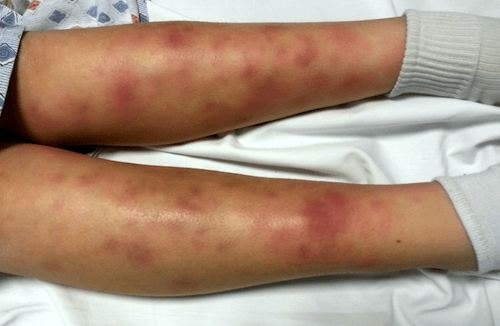
Q70
A 53-year-old woman comes to the physician in February because of a 1-day history of fever, chills, headache, and dry cough. She also reports malaise and generalized muscle aches. She works as a teacher at a local high school, where there was recently an outbreak of influenza. She has a history of intermittent asthma, for which she takes albuterol as needed. She declined the influenza vaccine offered in the fall because her sister told her that a friend developed a flulike illness after receiving the vaccine. She is worried about possibly becoming ill and cannot afford to miss work. Her temperature is 37.9°C (100.3°F), heart rate is 58/min, and her respirations are 12/min. Physical examination is unremarkable. Her hemoglobin concentration is 14.5 g/dL, leukocyte count is 9,400/mm3, and platelet count is 280,000/mm3. In addition to analgesia, which of the following is the most appropriate next step in management?
Antivirals US Medical PG Practice Questions and MCQs
Question 61: An HIV-positive patient with a CD4+ count of 45 is receiving recommended first-line treatment for a case of cytomegalovirus retinitis. Coadministration with which of the following agents would be most likely to precipitate a deficiency of neutrophils in this patient?
A. Ritonavir
B. Raltegravir
C. Foscarnet
D. Efavirenz
E. Zidovudine (Correct Answer)
Explanation: ***Zidovudine***
- **Zidovudine (AZT)** is a nucleoside reverse transcriptase inhibitor (NRTI) that is well-known for causing **myelosuppression**, particularly **neutropenia** and **anemia**.
- In an HIV-positive patient with a low **CD4+ count** and concurrent treatment for **CMV retinitis** (which often involves drugs like ganciclovir that can also cause myelosuppression), adding zidovudine significantly increases the risk of severe neutropenia.
*Ritonavir*
- **Ritonavir** is a protease inhibitor primarily known for its role as a **pharmacokinetic booster** in HIV therapy, enhancing the levels of other antiretrovirals.
- While it can cause gastrointestinal side effects and hepatotoxicity, **myelosuppression** and specifically neutropenia are not its primary or common adverse effects.
*Raltegravir*
- **Raltegravir** is an integrase strand transfer inhibitor (INSTI) generally well-tolerated with a favorable side effect profile.
- Common side effects include headache, nausea, and fatigue, but it is **not typically associated with significant myelosuppression** or neutropenia.
*Foscarnet*
- **Foscarnet** is an antiviral agent used for treating CMV retinitis, particularly in cases of ganciclovir resistance.
- Its major dose-limiting toxicities include **nephrotoxicity** and **electrolyte disturbances** (e.g., hypocalcemia, hypomagnesemia), not primarily neutropenia.
*Efavirenz*
- **Efavirenz** is a non-nucleoside reverse transcriptase inhibitor (NNRTI) associated with central nervous system side effects such as dizziness, insomnia, and vivid dreams.
- While skin rash and hepatotoxicity can occur, **bone marrow suppression** leading to neutropenia is not a characteristic or frequent adverse effect of efavirenz.
Question 62: A 26-year-old nurse presents 12 hours after she accidentally stuck herself with a blood-contaminated needle. She reported the accident appropriately and now seeks post-exposure prophylaxis. She does not have any complaints at the moment of presentation. Her vital signs include: blood pressure 125/80 mm Hg, heart rate 71/min, respiratory rate 15/min, and temperature 36.5℃ (97.7℉). Physical examination is unremarkable. The nurse has prescribed a post-exposure prophylaxis regimen which includes tenofovir, emtricitabine, and raltegravir. How will tenofovir change the maximum reaction rate (Vm) and Michaelis constant (Km) of the viral reverse transcriptase?
A. Vm will decrease, Km will increase
B. Vm and Km will both decrease
C. Vm will stay the same, Km will increase
D. Vm and Km will both increase
E. Vm will decrease, Km will stay the same (Correct Answer)
Explanation: ***Vm will decrease, Km will stay the same***
- **Tenofovir** is a **nucleotide reverse transcriptase inhibitor (NtRTI)** that acts as a **competitive substrate analog**. Once phosphorylated to **tenofovir diphosphate**, it competes with natural deoxyadenosine triphosphate (dATP) for incorporation into the viral DNA chain.
- Upon incorporation, tenofovir acts as a **chain terminator** because it lacks a 3'-hydroxyl group necessary for further DNA elongation. This **irreversibly inactivates** the enzyme-DNA complex, effectively reducing the **maximum reaction rate (Vm)** by decreasing the amount of functional enzyme available.
- Since tenofovir competes with natural nucleotides but doesn't affect the enzyme's affinity for its natural substrates, the **Michaelis constant (Km) remains unchanged**. The inhibition pattern shows characteristics of competitive inhibition with irreversible chain termination.
*Vm will decrease, Km will increase*
- This pattern is characteristic of a **mixed inhibitor**, where the inhibitor can bind to both the free enzyme and the enzyme-substrate complex, reducing Vm while also decreasing substrate affinity (increasing Km).
- While tenofovir does reduce Vm through chain termination, it does not significantly alter the enzyme's affinity for natural nucleotide substrates. Tenofovir diphosphate **competes directly** with dATP rather than binding to an allosteric site, so Km remains unchanged rather than increasing.
*Vm and Km will both decrease*
- This effect is typical of an **uncompetitive inhibitor**, which binds only to the **enzyme-substrate complex**. Uncompetitive inhibitors decrease both Vm and Km, implying increased apparent substrate affinity.
- Tenofovir does not function as an uncompetitive inhibitor. As a **nucleotide analog**, it competes for the active site and gets incorporated into DNA, causing chain termination. This mechanism does not involve preferential binding to the enzyme-substrate complex that would decrease Km.
*Vm will stay the same, Km will increase*
- This describes **pure reversible competitive inhibition**, where the inhibitor competes with substrate for the active site but can be overcome by increasing substrate concentration, leaving Vm unchanged.
- While tenofovir diphosphate does **compete with natural nucleotides**, it acts as a **suicide substrate** that causes irreversible chain termination once incorporated. This **permanently inactivates** the enzyme-DNA complex, reducing the pool of functional enzyme and thus decreasing Vm, distinguishing it from simple reversible competitive inhibition.
*Vm and Km will both increase*
- An increase in both Vm and Km is not a standard pattern for enzyme inhibition and would suggest **reduced substrate affinity** with paradoxically increased catalytic capacity, which is inconsistent with any inhibitory mechanism.
- This scenario contradicts the **intended therapeutic effect** of tenofovir, which is to inhibit HIV reverse transcriptase activity and prevent viral replication, not to enhance enzyme function.
Question 63: A previously healthy 26-year-old man is brought to the emergency department because of extreme agitation and confusion. He is unable to give a clear history. His mother says he returned from a hiking trip 4 weeks ago on which he also explored caves. Over the past few days, he has had generalized fever and malaise with a sore throat. He has refused to drink any liquids for the last day. His immunizations are up-to-date. His temperature is 100.6°F (38.1°C), pulse is 92/min, respirations are 18/min, and blood pressure is 110/75 mm Hg. His pupils are 6 mm wide and reactive to light. He has a moderate amount of drool. Muscle tone is greatly increased in both the upper and lower extremities. The remainder of the examination is not performed because the patient becomes combative and refuses further assessment. Serum and urine toxicology screens are negative. Which of the following is most likely to have prevented this patient's condition?
A. Corticosteroid therapy
B. Plasmapheresis
C. Antifungal therapy
D. Antiviral therapy
E. Immunoglobulin and vaccination administration (Correct Answer)
Explanation: ***Immunoglobulin and vaccination administration***
- This patient's symptoms, especially **agitation**, **hydrophobia** (refusal to drink due to painful spasms), **drooling**, and history of **cave exploration** (bat exposure), are highly suggestive of **rabies**.
- **Post-exposure prophylaxis (PEP)** for rabies involves immediate administration of both **rabies immunoglobulin (RIG)** and the **rabies vaccine** to prevent the development of the disease, which is almost universally fatal once symptoms appear.
*Corticosteroid therapy*
- Corticosteroids are **immunosuppressants** and would not be effective in preventing a viral infection like rabies; in some cases, they might even worsen the outcome.
- They are primarily used to reduce inflammation in various autoimmune or inflammatory conditions, which is not the primary issue here.
*Plasmapheresis*
- Plasmapheresis is a procedure used to remove harmful antibodies or other substances from the blood and is not indicated for preventing or treating acute viral infections like rabies.
- It is typically considered for conditions such as **Guillain-Barré syndrome** or certain autoimmune diseases.
*Antifungal therapy*
- Antifungal medications target **fungal infections**, which do not align with the patient's symptoms or the suggested exposure (bats in caves are associated with rabies, not typically fungal meningitis in this acute, severe presentation).
- The rapid progression and neurological symptoms are characteristic of a viral etiology, not a fungal one.
*Antiviral therapy*
- There are **no effective antiviral drugs** for rabies prevention or treatment; the virus has a unique pathogenesis that does not respond to standard antiviral medications.
- **Specific post-exposure prophylaxis** with rabies immunoglobulin and vaccine is the only effective preventive measure after potential exposure, and must be given before symptom onset.
Question 64: A 27-year-old woman consults an obstetrician as she is planning to become pregnant. She has been diagnosed with HIV (human immunodeficiency virus) infection recently and is currently taking antiretroviral therapy (HAART), as prescribed by her physician. The obstetrician emphasizes the importance of antenatal and peripartum antiretroviral therapy for reducing the risk of mother-to-child transmission of HIV. She also tells the patient that certain antiretroviral drugs, if taken during pregnancy, increase the risk of birth defects in the fetus. She gives a printed list of such drugs to the woman for educational and informational purposes. Which of the following drugs are most likely to be present on the list?
A. Nelfinavir and Saquinavir
B. Abacavir and Didanosine
C. Efavirenz and Delavirdine (Correct Answer)
D. Lopinavir and Ritonavir
E. Lamivudine and Nevirapine
Explanation: ***Efavirenz and Delavirdine***
- Both **efavirenz** and **delavirdine** are **non-nucleoside reverse transcriptase inhibitors (NNRTIs)** and have been associated with an increased risk of **teratogenicity**, particularly neural tube defects, in early pregnancy.
- Due to these potential risks, they are generally **avoided during the first trimester of pregnancy** or when pregnancy is being planned, unless no other suitable alternative exists.
*Nelfinavir and Saquinavir*
- **Nelfinavir** and **saquinavir** are **protease inhibitors (PIs)** which are generally considered **safe for use during pregnancy** and are often part of recommended regimens for HIV-positive pregnant women.
- They do not carry the same significant teratogenic risks as some other antiretroviral drugs.
*Abacavir and Didanosine*
- **Abacavir** and **didanosine** are **nucleoside reverse transcriptase inhibitors (NRTIs)** commonly used in HIV treatment.
- While didanosine can be associated with lactic acidosis and pancreatitis, neither drug is typically considered to significantly increase the risk of birth defects.
*Lopinavir and Ritonavir*
- **Lopinavir/ritonavir** is a commonly used **protease inhibitor (PI)** combination that is generally considered **safe and effective for use throughout pregnancy** to prevent mother-to-child transmission.
- It does not have known significant teratogenic effects.
*Lamivudine and Nevirapine*
- **Lamivudine** is an **NRTI** and **nevirapine** is an **NNRTI**. Lamivudine is generally considered safe during pregnancy.
- Nevirapine is used in pregnancy, particularly if started after the first trimester, and generally has a more favorable safety profile regarding birth defects compared to efavirenz and delavirdine.
Question 65: A 49-year-old woman presents to her primary care doctor in late December with malaise. She reports worsening fatigue, myalgias, headache, and malaise that started 1 day ago. She works as a lunch lady at an elementary school. Her past medical history is notable for a distal radius fracture after a fall 2 years ago, but she is otherwise healthy and takes no medications. She does not smoke or drink alcohol. She is married and has 3 adult children who are healthy. Her temperature is 102.9°F (39.4°C), blood pressure is 101/61 mmHg, pulse is 112/min, and respirations are 21/min. On exam, she appears lethargic and uncomfortable but is able to answer questions appropriately. Breath sounds are normal bilaterally. She is started on intravenous fluids and a pharmacologic agent for treatment. Which of the following is the most likely mechanism of action of the drug being used to treat this patient?
A. Neuraminidase inhibitor (Correct Answer)
B. Reverse transcriptase inhibitor
C. RNA-dependent polymerase inhibitor
D. DNA polymerase inhibitor
E. Protease inhibitor
Explanation: ***Neuraminidase inhibitor***
- The patient's symptoms (malaise, fatigue, myalgias, headache, fever) with rapid onset in **late December**, especially given her exposure to children in an elementary school, are highly suggestive of **influenza**.
- **Neuraminidase inhibitors** (e.g., oseltamivir, zanamivir) are the primary antiviral treatment for influenza, preventing the release of new viral particles from infected cells.
*Reverse transcriptase inhibitor*
- **Reverse transcriptase inhibitors** are primarily used in the treatment of **HIV infection**, which typically presents with a different constellation of symptoms and has a chronic rather than acute course.
- This class of drugs targets the enzyme **reverse transcriptase**, which is not central to the influenza virus replication cycle.
*RNA-dependent polymerase inhibitor*
- While **baloxavir marboxil** (an RNA polymerase inhibitor) is FDA-approved for influenza treatment, **neuraminidase inhibitors** remain the most commonly used first-line agents.
- In this clinical scenario without specific contraindications to neuraminidase inhibitors, oseltamivir or zanamivir would be the most likely agents prescribed.
*DNA polymerase inhibitor*
- **DNA polymerase inhibitors** are primarily used to treat **DNA viral infections** such as herpes viruses (e.g., acyclovir for HSV/VZV) or cytomegalovirus (e.g., ganciclovir).
- Influenza is an **RNA virus** and therefore does not have a DNA polymerase for replication.
*Protease inhibitor*
- **Protease inhibitors** are a class of antiviral drugs predominantly used in the treatment of **HIV** and **Hepatitis C virus** infections.
- Influenza viruses do not have a protease target that is typically inhibited by these drugs for therapeutic purposes.
Question 66: A 35-year-old woman presents to a physician’s office for a follow-up visit. She recently underwent a complete physical examination with routine laboratory tests. She also had a Pap smear and testing for sexually transmitted diseases. Since her divorce 2 years ago, she had sexual encounters with random men at bars or social events and frequently did not use any form of contraception during sexual intercourse. She was shown to be positive for the human immunodeficiency virus (HIV). Combination anti-retroviral treatment is initiated including zidovudine, didanosine, and efavirenz. One week later, she is rushed to the hospital where she is diagnosed with acute pancreatitis. Which of the following precautions will be required after pancreatitis resolves with treatment?
A. Frequent monitoring of CD4+ cell count
B. Add ritonavir to the HIV treatment regimen
C. Replace efavirenz with nevirapine
D. Replace didanosine with lamivudine (Correct Answer)
E. Check hemoglobin levels
Explanation: ***Replace didanosine with lamivudine***
- **Didanosine (ddI)** is known to cause **pancreatitis** as a significant adverse effect and should be discontinued if pancreatitis occurs. Replacing it with **lamivudine** is appropriate because lamivudine is also a nucleoside reverse transcriptase inhibitor (NRTI) and does not typically cause pancreatitis.
- This step ensures that the medication causing the adverse reaction is removed while maintaining an effective anti-retroviral regimen
*Frequent monitoring of CD4+ cell count*
- While **CD4+ cell count monitoring** is crucial in HIV management to assess immune status and treatment efficacy, it is a routine part of HIV care and not a specific precaution for resolving pancreatitis.
- Pancreatitis itself does not directly alter the *frequency* of CD4+ monitoring beyond standard HIV care protocols.
*Add ritonavir to the HIV treatment regimen*
- **Ritonavir** is a **protease inhibitor** and a strong pharmacokinetic booster, but adding it without specific indication or considering potential drug interactions is not the appropriate first step for managing pancreatitis.
- It might increase the risk of other side effects or alter the metabolism of other antiretrovirals, and is not directly related to managing didanosine-induced pancreatitis.
*Replace efavirenz with nevirapine*
- **Efavirenz** and **nevirapine** are both **non-nucleoside reverse transcriptase inhibitors (NNRTIs)**. Replacing efavirenz with nevirapine is a change within the NNRTI class and is not indicated as a direct result of didanosine-induced pancreatitis.
- Both drugs have their own side effect profiles, and switching between them would be based on issues specific to the NNRTI chosen, not the pancreatitis induced by didanosine.
*Check hemoglobin levels*
- While **zidovudine (AZT)** can cause **bone marrow suppression** leading to **anemia** and requiring hemoglobin monitoring, this is a known side effect of zidovudine itself, not a specific precaution *after pancreatitis resolves* that was induced by didanosine.
- Checking hemoglobin would be part of routine monitoring for patients on zidovudine, but not the primary intervention for pancreatitis resolution in this context.
Question 67: A 49-year-old man presents to a new primary care provider complaining of fatigue and occasional fever over the last month. These symptoms are starting to affect his job and he would like treatment. The physician runs a standard metabolic panel that shows elevated AST and ALT. The patient is then tested for hepatitis viruses. He is hepatitis C positive. The patient and his doctor discuss treatment options and agree upon pegylated interferon and oral ribavirin. Which side-effect is most likely while taking the ribavirin?
A. Hemolytic anemia (Correct Answer)
B. Leukopenia
C. Rash
D. Drug-associated lupus
E. Hyperthyroidism
Explanation: ***Hemolytic anemia***
- **Ribavirin** is a guanosine analog that causes **hemolytic anemia** by accumulating in red blood cells and disrupting their metabolism.
- This side effect is common and often dose-limiting, requiring close monitoring of hemoglobin levels.
*Leukopenia*
- **Leukopenia** (low white blood cell count) is a known side effect of **interferon therapy**, not primarily ribavirin.
- While patients on combination therapy may experience this, it's more directly attributable to the interferon component.
*Rash*
- **Rash** can occur with various medications, including combination hepatitis C therapy, but it is not a hallmark or most likely side effect specifically associated with **ribavirin**.
- It's generally less clinically significant than hemolytic anemia.
*Drug-associated lupus*
- **Drug-associated lupus** is a rare and severe reaction, sometimes linked to certain drugs like **hydralazine** or **procainamide**, but not typically associated with **ribavirin** or hepatitis C treatment.
- Its occurrence probability is much lower than hemolytic anemia.
*Hyperthyroidism*
- **Thyroid dysfunction**, including **hyperthyroidism** and hypothyroidism, is a known side effect of **interferon therapy**, due to its immunomodulatory effects.
- It is not a primary side effect of **ribavirin**.
Question 68: A 60-year-old man comes to the physician’s office with jaundice. Liver ultrasound reveals a shrunken liver and biopsy reveals cirrhosis. Hepatitis serologies are below:
Anti-HAV: negative
HBsAg: negative
HBsAb: positive
HBeAg: negative
Anti-HBe: negative
Anti-HBc: negative
Anti-HCV: positive
The hepatitis C viral load is 1,000,000 copies/mL. The patient is started on an antiviral regimen including sofosbuvir. What is the mechanism of action of this drug?
A. Inhibits reverse transcriptase
B. Inhibits integrase
C. Inhibits synthesis of DNA-dependent DNA polymerase
D. Inhibits RNA-dependent RNA polymerase (Correct Answer)
E. Inhibits hepatitis C protease
Explanation: ***Inhibits RNA-dependent RNA polymerase***
- Sofosbuvir is a **nucleotide analog** that targets the **HCV RNA-dependent RNA polymerase (NS5B)**, essential for viral replication.
- By inhibiting NS5B, it acts as a **chain terminator**, preventing the synthesis of new viral RNA strands.
*Inhibits reverse transcriptase*
- This mechanism is characteristic of drugs used to treat **HIV infection**, as reverse transcriptase is an enzyme found in retroviruses.
- Hepatitis C virus (HCV) is an **RNA virus** that replicates via an RNA intermediate, not DNA, and thus does not utilize reverse transcriptase.
*Inhibits integrase*
- Integrase inhibitors are a class of drugs primarily used in the treatment of **HIV infection**, preventing the viral DNA from integrating into the host genome.
- HCV replication does not involve an integration step into the host DNA, making this mechanism irrelevant for HCV treatment.
*Inhibits synthesis of DNA-dependent DNA polymerase*
- Inhibition of DNA-dependent DNA polymerase primarily targets organisms that replicate their DNA, such as **herpesviruses** or host cell processes.
- HCV is an RNA virus and does not synthesize or rely on a DNA-dependent DNA polymerase for its replication cycle.
*Inhibits hepatitis C protease*
- While **protease inhibitors (e.g., -previr drugs)** are an important class of anti-HCV drugs, sofosbuvir specifically targets the viral **RNA polymerase (NS5B)**.
- Protease inhibitors block the **NS3/4A protease**, which is responsible for cleaving the large HCV polyprotein into functional proteins.
Question 69: A 45-year-old man with HIV comes to the physician because of multiple lesions on his chest and lower extremities. The lesions have progressively increased in size and are not painful or pruritic. Current medications include abacavir, dolutegravir, and lamivudine. A photograph of the lesions is shown. His CD4+ T-lymphocyte count is 450/mm3 (normal ≥ 500/mm3). A skin biopsy shows multiple spindle-shaped cells and lymphocytic infiltrate. Which of the following is the most appropriate pharmacotherapy?
A. Ganciclovir
B. Amphotericin B
C. Alpha-interferon (Correct Answer)
D. Doxycycline
E. Nitazoxanide
Explanation: ***Alpha-interferon***
- This patient's presentation with **multiple skin lesions** in the setting of **HIV infection** and a **CD4+ count of 450/mm3** is highly suggestive of **Kaposi's sarcoma (KS)**. The biopsy findings of **spindle-shaped cells** and **lymphocytic infiltrate** further support this diagnosis. Though chemotherapy regimens are common for widespread KS, **alpha-interferon** is an appropriate treatment for **localized or less aggressive KS**, especially given his relatively preserved immune status (CD4+ count).
- Alpha-interferon exerts **antineoplastic effects** by inhibiting cell proliferation and stimulating host immune responses against tumor cells, making it suitable for managing KS.
*Ganciclovir*
- **Ganciclovir** is an antiviral agent primarily used for the treatment of **cytomegalovirus (CMV) infections**, such as retinitis or colitis, especially in immunocompromised patients.
- The patient's symptoms are not consistent with CMV disease, and the biopsy findings point away from a viral infection typically treated by ganciclovir.
*Amphotericin B*
- **Amphotericin B** is a broad-spectrum antifungal medication used to treat severe, **invasive fungal infections** like candidiasis, aspergillosis, or cryptococcosis.
- The clinical presentation and biopsy results (spindle cells, lymphocytic infiltrate) do not indicate a fungal etiology.
*Doxycycline*
- **Doxycycline** is a tetracycline antibiotic with broad antibacterial activity, used for infections like Lyme disease, chlamydia, or acne. It also has anti-inflammatory properties but is not a primary treatment for Kaposi's sarcoma.
- While some research explores its potential in KS due to its anti-angiogenic properties, it is not considered first-line pharmacotherapy for established Kaposi's sarcoma at this stage.
*Nitazoxanide*
- **Nitazoxanide** is an antiparasitic medication used to treat certain parasitic infections, such as cryptosporidiosis and giardiasis.
- The patient's symptoms and biopsy findings are not indicative of a parasitic infection.
Question 70: A 53-year-old woman comes to the physician in February because of a 1-day history of fever, chills, headache, and dry cough. She also reports malaise and generalized muscle aches. She works as a teacher at a local high school, where there was recently an outbreak of influenza. She has a history of intermittent asthma, for which she takes albuterol as needed. She declined the influenza vaccine offered in the fall because her sister told her that a friend developed a flulike illness after receiving the vaccine. She is worried about possibly becoming ill and cannot afford to miss work. Her temperature is 37.9°C (100.3°F), heart rate is 58/min, and her respirations are 12/min. Physical examination is unremarkable. Her hemoglobin concentration is 14.5 g/dL, leukocyte count is 9,400/mm3, and platelet count is 280,000/mm3. In addition to analgesia, which of the following is the most appropriate next step in management?
A. Inactivated influenza vaccine
B. Amantadine
C. Live attenuated influenza vaccine
D. Oseltamivir (Correct Answer)
E. Supportive therapy only
Explanation: ***Oseltamivir***
- This patient presents with classic symptoms of **influenza** (fever, chills, headache, dry cough, malaise, myalgias) during an outbreak, making **antiviral therapy** like oseltamivir appropriate.
- She is at risk for complications due to her history of **asthma**, and early treatment (within 48 hours of symptom onset) can reduce illness severity and duration.
*Inactivated influenza vaccine*
- An **inactivated influenza vaccine** is a **preventive measure** and is not effective as a treatment once symptoms have already begun.
- Vaccination in the past fall would have been appropriate, but it will not help resolve her current acute illness.
*Amantadine*
- **Amantadine** is an older antiviral agent active only against **influenza A**, and its use is limited due to widespread **resistance**.
- It is generally not recommended for routine influenza treatment due to its narrow spectrum and resistance profile.
*Live attenuated influenza vaccine*
- The **live attenuated influenza vaccine (LAIV)** is a **preventive measure** indicated for healthy individuals aged 2-49 years and is contraindicated in individuals with **asthma**.
- Like the inactivated vaccine, it is not used for treating active influenza infection.
*Supportive therapy only*
- While supportive care (analgesia, hydration) is important, relying solely on it is not the most appropriate step given the patient's **risk factors** (asthma) and the availability of effective antiviral treatment.
- Early antiviral therapy can reduce serious complications in at-risk individuals.