A 20-year-old man is brought to the emergency department for evaluation of an animal bite. He was hiking earlier that day when he was bitten by a raccoon. He says the attack was unprovoked and the animal ran away after the encounter. He was bitten by a stray dog when he was 11 years old and received postexposure prophylaxis for rabies at that time. His immunizations are up-to-date. His immunization record shows he received 3 doses of diphtheria-tetanus-acellular pertussis vaccine as a child and a tetanus-diphtheria-acellular pertussis vaccination at the age of 16. He is in no apparent distress. His temperature is 98.4°F (36.9°C), pulse is 72/min, respirations are 18/min, and blood pressure is 124/75 mm Hg. He has a wound on his left lower extremity with actively bleeding puncture sites. The wound is thoroughly irrigated with normal saline and cleansed with antiseptic and a bandage is applied. Which of the following is the most appropriate next step in management?
Q12
A 30-year-old woman presents with generalized fatigue, joint pain, and decreased appetite. She says that symptoms onset a year ago and have not improved. The patient’s husband says he has recently noticed that her eyes and skin are yellowish. The patient denies any history of smoking or alcohol use, but she admits to using different kinds of intravenous illicit drugs during her college years. The patient is afebrile and vital signs are within normal limits. Physical examination is unremarkable, except for moderate scleral icterus. A polymerase chain reaction (PCR) of a blood sample is positive for a viral infection that reveals a positive-sense RNA virus, that is small, enveloped, and single-stranded. The patient is started on a drug that resembles a purine RNA nucleotide. She agrees not to get pregnant before or during the use of this medication. Which of the following is the drug that was most likely given to this patient?
Q13
A 31-year-old man comes to the emergency department because of drooping of the left side of his face since awakening that morning. He had difficulty chewing his food at breakfast. He was treated the previous day at the hospital after sustaining a head injury from falling off a ladder while working on his roof. A plain CT of the brain at that visit showed no abnormalities. He is in no apparent distress. His vital signs are within normal limits. The pupils are equal and reactive to light. There is drooping of the left corner of the mouth. The left nasolabial fold is flattened. When asked to close both eyes, the left eye remains partially open. There are no wrinkles on the left side of the forehead when the eyebrows are raised. Which of the following is the most appropriate next step in management?
Q14
A 24-year-old woman with HIV infection comes to the physician for a follow-up examination. She has been inconsistently taking combined antiretroviral therapy for the past 5 years. She did not receive any childhood vaccinations because her parents were against them. During the consultation, the patient says that she wants to catch up on the missed vaccinations. Laboratory studies show a CD4+ T lymphocyte cell count of 180/mm3. Administration of the vaccine against which of the following agents should be avoided in this patient?
Q15
A 28-year-old woman presents to the emergency department with a sudden onset of nausea, vomiting, and pain in the upper abdomen for the past 3 hours. She reports that the pain has increased in severity over these 3 hours and frequently radiates to the back. She was diagnosed as HIV positive 2 years ago. She was placed on raltegravir/tenofovir/emtricitabine 1 year ago, but because of treatment failure, her antiretroviral therapy was changed to abacavir/didanosine/dolutegravir/enfuvirtide/fosamprenavir 3 months ago. Her temperature is 37.8°C (100.0°F), heart rate is 110/min, respiratory rate is 18/min, and blood pressure is 124/80 mm Hg. Abdominal examination shows tenderness in the upper abdomen, but there is an absence of guarding or rigidity. Ultrasonography of the abdomen shows an edematous pancreas and an absence of gallstones. Laboratory studies show:
Serum glucose 120 mg/dL
Serum aspartate aminotransferase 74 U/L
Serum alanine aminotransferase 88 U/L
Serum amylase 800 U/L
Serum triglyceride 125 mg/dL
In addition to pain control, which of the following is an appropriate initial step in treatment?
Q16
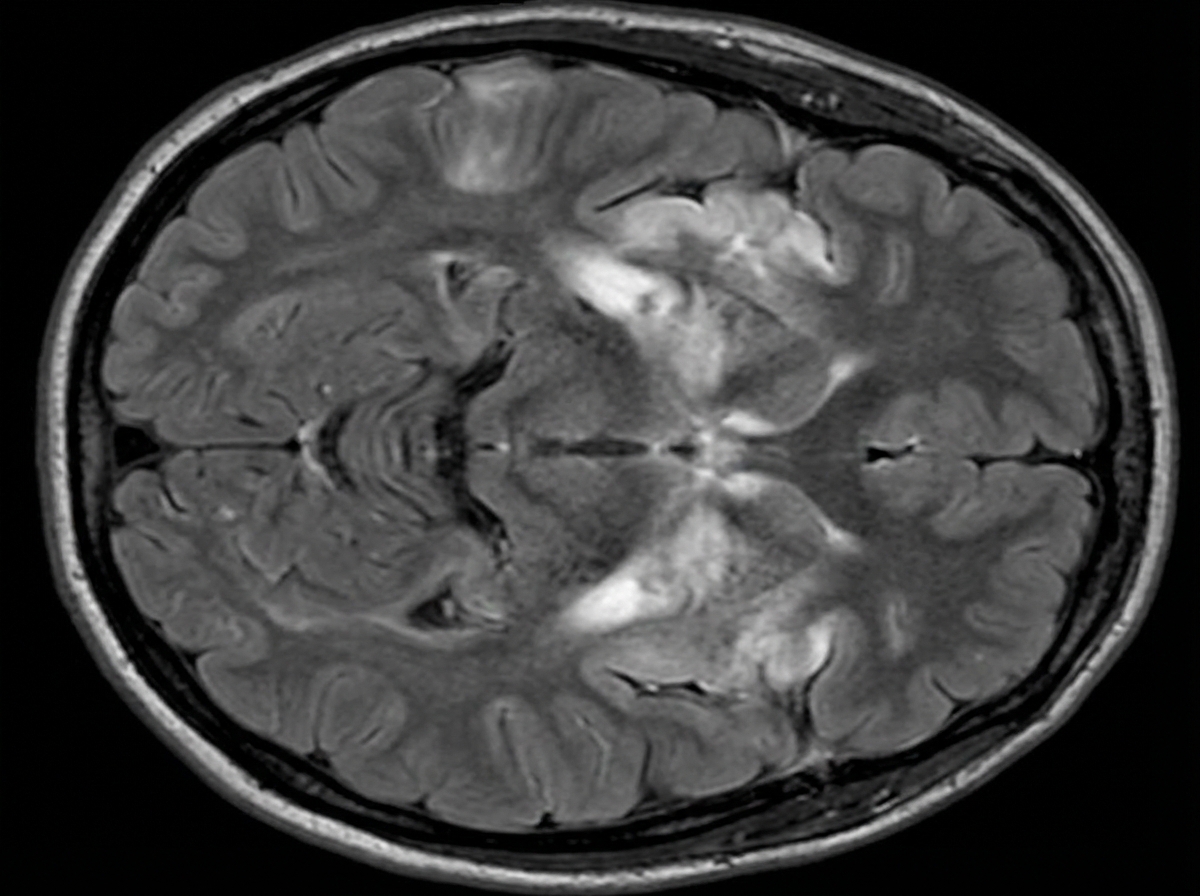
A 46-year-old man is brought to the emergency department because of worsening confusion and weakness in his right arm and leg for 2 days. He has also had fever and headache that began 5 days ago. He has hypertension and type 2 diabetes mellitus. Current medications include metformin and lisinopril. His temperature is 39.3°C (102.7°F), pulse is 103/min, and blood pressure is 128/78 mm Hg. He is confused and agitated. He is not oriented to person, place, or time. Neurologic examination shows nuchal rigidity. Muscle strength is 3/5 on the right upper and lower extremity strength but normal on the left side. His speech is incoherent. An ECG shows no abnormalities. An MRI of the brain is shown. Shortly after the MRI scan, the patient has a seizure and is admitted to the intensive care unit following administration of intravenous lorazepam. Which of the following is the most appropriate pharmacotherapy?
Q17
A 43-year-old man with HIV infection comes to the physician because of a 2-week history of progressive diarrhea and a 3-kg (6.6-lb) weight loss. During this period, he has had 3–4 episodes of watery stools daily, with multiple instances of blood in the stool. He is currently receiving antiretroviral therapy with zidovudine, lamivudine, and dolutegravir. Physical examination shows pallor and dry mucous membranes. A colonoscopy shows multiple linear ulcers. Polymerase chain reaction of a stool sample is positive for cytomegalovirus. Treatment with valganciclovir is begun. Adding this drug to his current medication regimen puts this patient at greatest risk for which of the following adverse effects?
Q18
A 59-year-old woman comes to the physician for a routine health maintenance examination. She feels well. She has systemic lupus erythematosus and hypertension. She does not drink alcohol. Her current medications include lisinopril and hydroxychloroquine. She appears malnourished. Her vital signs are within normal limits. Examination shows a soft, nontender abdomen. There is no ascites or hepatosplenomegaly. Serum studies show:
Total bilirubin 1.2 mg/dL
Alkaline phosphatase 60 U/L
Alanine aminotransferase 456 U/L
Aspartate aminotransferase 145 U/L
Hepatitis A IgM antibody negative
Hepatitis A IgG antibody positive
Hepatitis B surface antigen positive
Hepatitis B surface antibody negative
Hepatitis B envelope antigen positive
Hepatitis B envelope antibody negative
Hepatitis B core antigen IgM antibody negative
Hepatitis B core antigen IgG antibody positive
Hepatitis C antibody negative
Which of the following is the most appropriate treatment for this patient?
Q19
A 44-year-old man comes to the physician for a follow-up examination. Eight months ago, he was diagnosed with HIV infection and combined antiretroviral treatment was begun. He feels well. He does not smoke or drink alcohol. Current medications include lamivudine, zidovudine, atazanavir, and trimethoprim-sulfamethoxazole. Laboratory studies show:
Hemoglobin 11.2 g/dL
Mean corpuscular volume 102 μm3
Leukocyte count 2,600/mm3
Segmented neutrophils 38%
Lymphocytes 54%
Platelet count 150,000/mm3
Serum
Folate normal
Lactate 6.0 mEq/L (N = 0.5–2.2)
Arterial blood gas analysis on room air shows:
pH 7.34
pCO2 55 mm Hg
pO2 99 mmHg
HCO3- 14 mEq/L
The drug most likely responsible for this patient's current laboratory findings belongs to which of the following classes of drugs?
Q20
A 26-year-old female medical student presents to occupational health after sustaining a needlestick injury. She reports that she was drawing blood from an HIV-positive patient when she stuck herself percutaneously while capping the needle. She immediately washed the puncture wound with betadine. The medical student has a negative HIV serology from the beginning of medical school two years ago. She is monogamous with one male partner and denies any intravenous drug use. The source patient was recently diagnosed with HIV, and has a CD4 count of 550 cells/µL. His most recent viral load is 1,800,000 copies/mL, and he was started on HAART three days ago.
Which of the following is the best next step to manage the female medical student’s exposure?
Antivirals US Medical PG Practice Questions and MCQs
Question 11: A 20-year-old man is brought to the emergency department for evaluation of an animal bite. He was hiking earlier that day when he was bitten by a raccoon. He says the attack was unprovoked and the animal ran away after the encounter. He was bitten by a stray dog when he was 11 years old and received postexposure prophylaxis for rabies at that time. His immunizations are up-to-date. His immunization record shows he received 3 doses of diphtheria-tetanus-acellular pertussis vaccine as a child and a tetanus-diphtheria-acellular pertussis vaccination at the age of 16. He is in no apparent distress. His temperature is 98.4°F (36.9°C), pulse is 72/min, respirations are 18/min, and blood pressure is 124/75 mm Hg. He has a wound on his left lower extremity with actively bleeding puncture sites. The wound is thoroughly irrigated with normal saline and cleansed with antiseptic and a bandage is applied. Which of the following is the most appropriate next step in management?
A. Rabies immunoglobulin and vaccine
B. No action needed
C. Rabies vaccination (Correct Answer)
D. Tetanus booster, rabies immunoglobulin
E. Tetanus booster
Explanation: ***Rabies vaccination***
- This patient has a history of receiving **post-exposure prophylaxis (PEP)** for rabies 9 years ago, meaning he has been previously immunized. For individuals with prior rabies vaccination, treatment for a new exposure consists solely of a **rabies vaccine** series.
- **Rabies immunoglobulin (RIG)** is not indicated for previously vaccinated individuals because their immune system is primed to produce antibodies rapidly upon re-exposure.
*Rabies immunoglobulin and vaccine*
- **Rabies immunoglobulin (RIG)** is administered as part of post-exposure prophylaxis for **unvaccinated individuals** to provide immediate passive immunity.
- Since this patient has a history of rabies PEP, he is considered previously vaccinated, making RIG unnecessary and potentially interfering with the active immune response.
*No action needed*
- An **unprovoked attack by a raccoon** is considered a high-risk exposure for rabies, requiring intervention even in previously vaccinated individuals.
- Despite prior vaccination, a **booster series of rabies vaccine** is indicated to rapidly reactivate the immune response and ensure protection.
*Tetanus booster, rabies immunoglobulin*
- The patient's tetanus immunization history (Tdap at age 16) indicates he is **up-to-date on tetanus** and would not require a booster for this wound unless more than 5 years had passed since the last dose and the wound was clean.
- As explained, **rabies immunoglobulin (RIG)** is not given to previously vaccinated individuals.
*Tetanus booster*
- The patient received a Tdap booster at age 16, and given he is 20, his tetanus immunization is **still considered current** (up to 10 years for clean wounds, 5 years for dirty wounds).
- While a tetanus booster might be considered depending on the exact timing of his last dose and wound characteristics, it is **not the primary or sole action needed** given the high-risk rabies exposure.
Question 12: A 30-year-old woman presents with generalized fatigue, joint pain, and decreased appetite. She says that symptoms onset a year ago and have not improved. The patient’s husband says he has recently noticed that her eyes and skin are yellowish. The patient denies any history of smoking or alcohol use, but she admits to using different kinds of intravenous illicit drugs during her college years. The patient is afebrile and vital signs are within normal limits. Physical examination is unremarkable, except for moderate scleral icterus. A polymerase chain reaction (PCR) of a blood sample is positive for a viral infection that reveals a positive-sense RNA virus, that is small, enveloped, and single-stranded. The patient is started on a drug that resembles a purine RNA nucleotide. She agrees not to get pregnant before or during the use of this medication. Which of the following is the drug that was most likely given to this patient?
A. Sofosbuvir
B. Cidofovir
C. Ribavirin (Correct Answer)
D. Simeprevir
E. Interferon-alpha
Explanation: ***Ribavirin***
- The patient's history of **intravenous drug use**, fatigue, joint pain, decreased appetite, and **scleral icterus** are highly suggestive of **chronic Hepatitis C virus (HCV) infection**. The description of the virus as a **small, enveloped, single-stranded positive-sense RNA virus** confirms HCV. The patient is started on a drug that resembles a **purine RNA nucleotide** and is instructed not to get pregnant, which is characteristic of Ribavirin.
- **Ribavirin** is a **guanosine analog** that interferes with viral RNA synthesis and is known to be **teratogenic**, necessitating strict contraception during and after treatment.
*Sofosbuvir*
- While **Sofosbuvir** is used to treat Hepatitis C and is a **nucleotide analog** (specifically a uridine analog), it is a **prodrug** that mimics a uridine nucleotide, not a purine, and it is **not associated with the severe teratogenicity** that requires a two-contraception rule like Ribavirin.
- Sofosbuvir is a **direct-acting antiviral (DAA)** that inhibits the HCV RNA-dependent RNA polymerase, but the description of a purine RNA nucleotide points away from this drug.
*Cidofovir*
- **Cidofovir** is a **cytosine nucleotide analog** primarily used to treat **cytomegalovirus (CMV)** retinitis in HIV/AIDS patients.
- It works by inhibiting viral DNA polymerase, and it is **not used for Hepatitis C infection**.
*Simeprevir*
- **Simeprevir** is an **HCV protease inhibitor**, not a nucleotide analog. It specifically targets the **NS3/4A protease** of the Hepatitis C virus.
- Although it is an effective DAA for HCV, its mechanism of action and class are different from the described "purine RNA nucleotide."
*Interferon-alpha*
- **Interferon-alpha** was historically used to treat Hepatitis C, but it is a **cytokine** that modulates the immune response, not a nucleoside/nucleotide analog.
- Its use has largely been replaced by more effective and better-tolerated direct-acting antivirals due to significant side effects and lower efficacy.
Question 13: A 31-year-old man comes to the emergency department because of drooping of the left side of his face since awakening that morning. He had difficulty chewing his food at breakfast. He was treated the previous day at the hospital after sustaining a head injury from falling off a ladder while working on his roof. A plain CT of the brain at that visit showed no abnormalities. He is in no apparent distress. His vital signs are within normal limits. The pupils are equal and reactive to light. There is drooping of the left corner of the mouth. The left nasolabial fold is flattened. When asked to close both eyes, the left eye remains partially open. There are no wrinkles on the left side of the forehead when the eyebrows are raised. Which of the following is the most appropriate next step in management?
A. Steroid therapy (Correct Answer)
B. Acyclovir therapy
C. Reassurance
D. Surgical decompression
E. Surgical repair
Explanation: ***Steroid therapy***
- The patient presents with unilateral facial weakness affecting both the upper and lower face (inability to close the eye, flattened nasolabial fold, no forehead wrinkles), which is characteristic of **Bell's palsy**, an idiopathic **facial nerve paralysis**.
- **Corticosteroids** (e.g., prednisone) are the most appropriate initial treatment for Bell's palsy, especially when started within 72 hours of symptom onset, to reduce inflammation and improve recovery rates.
*Acyclovir therapy*
- While Bell's palsy is often associated with reactivation of **herpes simplex virus**, routine antiviral therapy (like acyclovir) in addition to corticosteroids for Bell's palsy does not provide significant additional benefit over corticosteroids alone.
- Antivirals are typically reserved for severe cases or those with evidence of **herpes zoster oticus (Ramsay Hunt syndrome)**, which is not indicated here.
*Reassurance*
- Although Bell's palsy often resolves spontaneously, simply reassuring the patient without offering treatment is not appropriate management given the availability of effective therapies.
- Delaying treatment with corticosteroids can lead to a lower chance of full recovery.
*Surgical decompression*
- **Surgical decompression** of the facial nerve is a controversial and rarely indicated treatment for Bell's palsy.
- It is typically reserved for very severe cases with complete facial paralysis and evidence of nerve compression, and its efficacy is not consistently proven.
*Surgical repair*
- **Surgical repair** is usually reserved for facial nerve paralysis caused by trauma with confirmed nerve transection, which is not suggested by the patient's presentation or prior CT scan.
- Bell's palsy is an inflammatory rather than structural injury to the nerve.
Question 14: A 24-year-old woman with HIV infection comes to the physician for a follow-up examination. She has been inconsistently taking combined antiretroviral therapy for the past 5 years. She did not receive any childhood vaccinations because her parents were against them. During the consultation, the patient says that she wants to catch up on the missed vaccinations. Laboratory studies show a CD4+ T lymphocyte cell count of 180/mm3. Administration of the vaccine against which of the following agents should be avoided in this patient?
A. Clostridium tetani
B. Human papillomavirus
C. Varicella zoster virus (Correct Answer)
D. Bordetella pertussis
E. Haemophilus influenzae
Explanation: ***Varicella zoster virus***
- The **varicella zoster vaccine is a live attenuated vaccine**, which is generally contraindicated in individuals with severe **immunodeficiency**, such as HIV patients with a **CD4+ count below 200 cells/mm³**.
- Administering a live vaccine to an immunocompromised patient can lead to **uncontrolled viral replication** and potentially cause the disease it is meant to prevent.
*Clostridium tetani*
- The **tetanus vaccine** is a **toxoid vaccine**, meaning it contains inactivated bacterial toxins, not live organisms.
- It is **safe and recommended** for individuals with HIV, regardless of their CD4+ count, to provide protection against tetanus.
*Human papillomavirus*
- The **HPV vaccine** is a **recombinant vaccine**, consisting of viral-like particles (VLPs) and containing no live virus.
- It is **safe and recommended** for HIV-positive individuals and helps prevent HPV-related cancers.
*Bordetella pertussis*
- The **pertussis vaccine** (part of DTaP or Tdap) is an **acellular vaccine**, containing purified bacterial components, not live bacteria.
- It is **safe and recommended** for HIV patients to protect against whooping cough.
*Haemophilus influenzae*
- The **Haemophilus influenzae type b (Hib) vaccine** is a **conjugate vaccine**, made from bacterial capsular polysaccharide linked to a carrier protein.
- It is **safe and recommended** for HIV-positive individuals, as they are at increased risk for invasive Hib disease.
Question 15: A 28-year-old woman presents to the emergency department with a sudden onset of nausea, vomiting, and pain in the upper abdomen for the past 3 hours. She reports that the pain has increased in severity over these 3 hours and frequently radiates to the back. She was diagnosed as HIV positive 2 years ago. She was placed on raltegravir/tenofovir/emtricitabine 1 year ago, but because of treatment failure, her antiretroviral therapy was changed to abacavir/didanosine/dolutegravir/enfuvirtide/fosamprenavir 3 months ago. Her temperature is 37.8°C (100.0°F), heart rate is 110/min, respiratory rate is 18/min, and blood pressure is 124/80 mm Hg. Abdominal examination shows tenderness in the upper abdomen, but there is an absence of guarding or rigidity. Ultrasonography of the abdomen shows an edematous pancreas and an absence of gallstones. Laboratory studies show:
Serum glucose 120 mg/dL
Serum aspartate aminotransferase 74 U/L
Serum alanine aminotransferase 88 U/L
Serum amylase 800 U/L
Serum triglyceride 125 mg/dL
In addition to pain control, which of the following is an appropriate initial step in treatment?
A. Discontinue enfuvirtide
B. Discontinue didanosine (Correct Answer)
C. Discontinue fosamprenavir
D. Discontinue dolutegravir
E. Discontinue abacavir
Explanation: ***Discontinue didanosine***
- The patient presents with **acute pancreatitis**, characterized by sudden onset of severe upper abdominal pain radiating to the back, nausea, vomiting, and elevated serum amylase. Acute pancreatitis is a known adverse effect of **didanosine**.
- Given the recent change in her antiretroviral therapy to include didanosine and the absence of other common causes like gallstones or hypertriglyceridemia, discontinuing **didanosine** is the most appropriate initial step.
*Discontinue enfuvirtide*
- **Enfuvirtide** is a fusion inhibitor used in HIV treatment, but it is not commonly associated with **acute pancreatitis**.
- Its most common side effects are injection site reactions, hypersensitivity reactions, and increased risk of bacterial pneumonia.
*Discontinue fosamprenavir*
- **Fosamprenavir** is a protease inhibitor, and while some protease inhibitors have been linked to metabolic side effects, it is **less commonly implicated in acute pancreatitis** compared to nucleoside reverse transcriptase inhibitors (NRTIs) like didanosine.
- Its adverse effects usually include gastrointestinal disturbances, rash, and elevations in liver enzymes.
*Discontinue dolutegravir*
- **Dolutegravir** is an integrase strand transfer inhibitor (INSTI) and is generally well-tolerated, with a low incidence of serious adverse events.
- It is **not associated with acute pancreatitis**. Common side effects include insomnia and headache.
*Discontinue abacavir*
- **Abacavir** is an NRTI, but it is **not directly linked to acute pancreatitis** as a common or significant adverse effect.
- The most concerning adverse reaction associated with abacavir is a potentially life-threatening **hypersensitivity reaction**, which typically presents with fever, rash, and systemic symptoms, not pancreatitis.
Question 16: A 46-year-old man is brought to the emergency department because of worsening confusion and weakness in his right arm and leg for 2 days. He has also had fever and headache that began 5 days ago. He has hypertension and type 2 diabetes mellitus. Current medications include metformin and lisinopril. His temperature is 39.3°C (102.7°F), pulse is 103/min, and blood pressure is 128/78 mm Hg. He is confused and agitated. He is not oriented to person, place, or time. Neurologic examination shows nuchal rigidity. Muscle strength is 3/5 on the right upper and lower extremity strength but normal on the left side. His speech is incoherent. An ECG shows no abnormalities. An MRI of the brain is shown. Shortly after the MRI scan, the patient has a seizure and is admitted to the intensive care unit following administration of intravenous lorazepam. Which of the following is the most appropriate pharmacotherapy?
A. Ceftriaxone and vancomycin
B. Ceftriaxone, vancomycin, and ampicillin
C. Recombinant tissue plasminogen activator
D. Acyclovir (Correct Answer)
E. Amphotericin B
Explanation: ***Acyclovir***
- The patient presents with **fever**, **headache**, **confusion**, **focal neurological deficits** (right-sided weakness, incoherent speech), **nuchal rigidity**, and a **seizure**, all highly suggestive of **herpes simplex encephalitis (HSE)**. The MRI findings would typically support this with abnormalities in the temporal lobes.
- **Acyclovir** is the treatment of choice for HSV encephalitis and should be initiated empirically when HSE is suspected, given its high morbidity and mortality if untreated.
*Ceftriaxone and vancomycin*
- This combination is appropriate for empirical treatment of **bacterial meningitis**.
- While the patient has signs of central nervous system infection (**fever, headache, nuchal rigidity, confusion**), the **focal neurological deficits** and **seizure** specifically point towards encephalitis rather than uncomplicated meningitis.
*Ceftriaxone, vancomycin, and ampicillin*
- This regimen adds **ampicillin** to cover for *Listeria monocytogenes*, which is particularly important in older adults, immunocompromised individuals, and neonates.
- Although the patient's age (46) is not extreme, the **focal neurological deficits** and **seizure activity** make bacterial meningitis less likely as the primary diagnosis compared to encephalitis.
*Recombinant tissue plasminogen activator*
- **tPA** is used to treat acute **ischemic stroke** by dissolving blood clots.
- The patient's symptoms (fever, headache, nuchal rigidity) and the progression over days are more consistent with an **infectious process** rather than an acute thromboembolic event.
*Amphotericin B*
- **Amphotericin B** is an antifungal medication indicated for serious **fungal infections**, including fungal meningitis or encephalitis.
- While fungal infections can cause similar symptoms, they typically have a more **subacute or chronic course** and are less common in an otherwise relatively healthy individual, making it less likely given the acute presentation.
Question 17: A 43-year-old man with HIV infection comes to the physician because of a 2-week history of progressive diarrhea and a 3-kg (6.6-lb) weight loss. During this period, he has had 3–4 episodes of watery stools daily, with multiple instances of blood in the stool. He is currently receiving antiretroviral therapy with zidovudine, lamivudine, and dolutegravir. Physical examination shows pallor and dry mucous membranes. A colonoscopy shows multiple linear ulcers. Polymerase chain reaction of a stool sample is positive for cytomegalovirus. Treatment with valganciclovir is begun. Adding this drug to his current medication regimen puts this patient at greatest risk for which of the following adverse effects?
A. Hepatic steatosis
B. Abnormal dreams
C. Pancytopenia (Correct Answer)
D. Orthostatic dysregulation
E. Hyperglycemia
Explanation: ***Pancytopenia***
- **Valganciclovir** is a known cause of **bone marrow suppression**, leading to **pancytopenia** (low red blood cells, white blood cells, and platelets).
- The patient is also on **zidovudine**, an antiretroviral that can cause **myelosuppression**, thus the combined use significantly increases the risk of pancytopenia.
*Hepatic steatosis*
- **Hepatic steatosis** (fatty liver) is a rare but known adverse effect of some nucleoside reverse transcriptase inhibitors (NRTIs), particularly older ones.
- While lamivudine is an NRTI, **valganciclovir** is not primarily associated with hepatic steatosis, and the combination does not specifically heighten this risk more than other options.
*Abnormal dreams*
- **Abnormal dreams** are a common side effect associated with certain antiretroviral drugs, particularly the non-nucleoside reverse transcriptase inhibitor **efavirenz**.
- This patient is on dolutegravir (an integrase inhibitor), zidovudine, and lamivudine, none of which are primarily known for causing abnormal dreams as a prominent side effect, and valganciclovir does not contribute to this.
*Orthostatic dysregulation*
- **Orthostatic dysregulation** (orthostatic hypotension) can be a side effect of various medications, but it is not a prominent adverse effect of either **valganciclovir** or the patient's current antiretroviral regimen.
- While dehydration from diarrhea can cause it, the medication itself does not directly increase this risk in particular.
*Hyperglycemia*
- **Hyperglycemia** can be a side effect of certain antiretroviral drugs, particularly some **protease inhibitors** and older NRTIs.
- However, the patient's current regimen (zidovudine, lamivudine, dolutegravir) and **valganciclovir** are not strongly associated with hyperglycemia as a primary adverse effect compared to other options.
Question 18: A 59-year-old woman comes to the physician for a routine health maintenance examination. She feels well. She has systemic lupus erythematosus and hypertension. She does not drink alcohol. Her current medications include lisinopril and hydroxychloroquine. She appears malnourished. Her vital signs are within normal limits. Examination shows a soft, nontender abdomen. There is no ascites or hepatosplenomegaly. Serum studies show:
Total bilirubin 1.2 mg/dL
Alkaline phosphatase 60 U/L
Alanine aminotransferase 456 U/L
Aspartate aminotransferase 145 U/L
Hepatitis A IgM antibody negative
Hepatitis A IgG antibody positive
Hepatitis B surface antigen positive
Hepatitis B surface antibody negative
Hepatitis B envelope antigen positive
Hepatitis B envelope antibody negative
Hepatitis B core antigen IgM antibody negative
Hepatitis B core antigen IgG antibody positive
Hepatitis C antibody negative
Which of the following is the most appropriate treatment for this patient?
A. Pegylated interferon alpha therapy
B. Tenofovir therapy (Correct Answer)
C. Referral to a liver transplantation center
D. Reassurance and follow-up
E. Lamivudine therapy
Explanation: ***Tenofovir therapy***
- This patient has **chronic hepatitis B** with evidence of **active viral replication** (positive HBsAg, HBeAg, and elevated liver enzymes), indicating a need for antiviral treatment.
- **Tenofovir** is a highly effective and well-tolerated oral antiviral agent for chronic hepatitis B, suitable for initial therapy.
*Pegylated interferon alpha therapy*
- While an option for chronic hepatitis B, **pegylated interferon alpha** has more significant side effects and is generally avoided in patients with **systemic lupus erythematosus (SLE)** due to the risk of exacerbating the autoimmune condition.
- It also requires subcutaneous injections and has a lower rate of HBeAg seroconversion compared to nucleos(t)ide analogs in many patient populations.
*Referral to a liver transplantation center*
- This patient currently shows **elevated liver enzymes** but no immediate signs of **decompensated liver disease** (e.g., ascites, encephalopathy, variceal bleeding) or severe liver failure that would warrant urgent transplantation.
- Treatment with antiviral medication is the first step to prevent progression to end-stage liver disease.
*Reassurance and follow-up*
- The patient has **elevated transaminases** and markers of **active viral replication** (positive HBeAg), indicating ongoing liver injury and potential progression to cirrhosis.
- Simply observing the patient without treatment would be inappropriate and could lead to irreversible liver damage.
*Lamivudine therapy*
- **Lamivudine** is an older nucleos(t)ide analog for hepatitis B that has a significantly **higher rate of drug resistance** compared to newer agents like tenofovir.
- It is generally not recommended as a first-line treatment due to its resistance profile.
Question 19: A 44-year-old man comes to the physician for a follow-up examination. Eight months ago, he was diagnosed with HIV infection and combined antiretroviral treatment was begun. He feels well. He does not smoke or drink alcohol. Current medications include lamivudine, zidovudine, atazanavir, and trimethoprim-sulfamethoxazole. Laboratory studies show:
Hemoglobin 11.2 g/dL
Mean corpuscular volume 102 μm3
Leukocyte count 2,600/mm3
Segmented neutrophils 38%
Lymphocytes 54%
Platelet count 150,000/mm3
Serum
Folate normal
Lactate 6.0 mEq/L (N = 0.5–2.2)
Arterial blood gas analysis on room air shows:
pH 7.34
pCO2 55 mm Hg
pO2 99 mmHg
HCO3- 14 mEq/L
The drug most likely responsible for this patient's current laboratory findings belongs to which of the following classes of drugs?
A. Entry inhibitor
B. Dihydrofolate reductase inhibitor
C. Nucleoside reverse transcriptase inhibitor (Correct Answer)
D. Integrase inhibitor
E. Protease inhibitor
Explanation: ***Nucleoside reverse transcriptase inhibitor***
- The patient presents with **macrocytic anemia** (Hgb 11.2, MCV 102), **leukopenia** (2600), **lactic acidosis** (lactate 6.0, pH 7.34, HCO3- 14, pCO2 55), and is on a regimen including **zidovudine** and **lamivudine**.
- **Zidovudine** (AZT), a nucleoside reverse transcriptase inhibitor (NRTI), is well-known for causing **myelosuppression** (anemia, leukopenia) and **mitochondrial toxicity**, which can lead to lactic acidosis due to impaired oxidative phosphorylation.
*Entry inhibitor*
- Entry inhibitors like **enfuvirtide** and **maraviroc** block HIV from entering CD4+ cells; side effects are mainly injection site reactions or hepatotoxicity.
- They are not associated with macrocytic anemia, leukopenia, or lactic acidosis.
*Dihydrofolate reductase inhibitor*
- **Trimethoprim-sulfamethoxazole (TMP-SMX)**, listed as a current medication, is a dihydrofolate reductase inhibitor that can cause **bone marrow suppression** mimicking folate deficiency.
- However, the patient's folate levels are normal, and the significant lactic acidosis points away from TMP-SMX as the primary cause of all findings.
*Integrase inhibitor*
- Integrase inhibitors like **raltegravir** or **dolutegravir** prevent the integration of viral DNA into the host genome.
- Their primary side effects are typically gastrointestinal (nausea, diarrhea), headache, or insomnia, and they do not cause macrocytic anemia, leukopenia, or lactic acidosis.
*Protease inhibitor*
- **Atazanavir**, a protease inhibitor from the patient's regimen, can cause **hyperbilirubinemia** and **lipodystrophy** but is not directly linked to the bone marrow suppression and severe lactic acidosis seen here.
- Other protease inhibitors can cause metabolic complications, but not this specific constellation of hematologic and metabolic abnormalities.
Question 20: A 26-year-old female medical student presents to occupational health after sustaining a needlestick injury. She reports that she was drawing blood from an HIV-positive patient when she stuck herself percutaneously while capping the needle. She immediately washed the puncture wound with betadine. The medical student has a negative HIV serology from the beginning of medical school two years ago. She is monogamous with one male partner and denies any intravenous drug use. The source patient was recently diagnosed with HIV, and has a CD4 count of 550 cells/µL. His most recent viral load is 1,800,000 copies/mL, and he was started on HAART three days ago.
Which of the following is the best next step to manage the female medical student’s exposure?
A. Draw her repeat HIV serology and initiate three-drug antiretroviral therapy if positive
B. Perform genotype testing on source patient and initiate antiretroviral therapy tailored to results
C. Immediately initiate three-drug antiretroviral therapy
D. Draw her repeat HIV serology and immediately initiate three-drug antiretroviral therapy (Correct Answer)
E. Draw her repeat HIV serology and initiate three-drug antiretroviral therapy if negative
Explanation: ***Draw her repeat HIV serology and immediately initiate three-drug antiretroviral therapy***
- This approach ensures that baseline **HIV status** is established while simultaneously providing **post-exposure prophylaxis (PEP)** as quickly as possible. Time is critical for PEP efficacy.
- The patient has a high-risk exposure (percutaneous injury, high viral load source) warranting immediate initiation of a **three-drug antiretroviral regimen** to prevent seroconversion.
*Draw her repeat HIV serology and initiate three-drug antiretroviral therapy if positive*
- Waiting for serology results before initiating therapy would delay PEP, significantly reducing its effectiveness in potentially preventing **HIV transmission**.
- If the student is already HIV-positive from a prior undisclosed exposure, PEP for a new exposure is not the primary concern; rather, she would need full **HIV treatment**. However, the immediate concern after an exposure is always prevention.
*Immediately initiate three-drug antiretroviral therapy*
- While immediate initiation of PEP is correct, it is still crucial to obtain a **baseline HIV serology** for the exposed individual.
- This baseline allows for clear documentation of the pre-exposure HIV status, which is vital for any future testing and counseling following the exposure.
*Draw her repeat HIV serology and initiate three-drug antiretroviral therapy if negative*
- Waiting for serology results to return before starting PEP is incorrect as this would significantly delay the initiation of therapy.
- The critical window for effective PEP is within hours of exposure, ideally within 72 hours.
*Perform genotype testing on source patient and initiate antiretroviral therapy tailored to results*
- While **genotype testing** on the source patient provides valuable information about drug resistance, it should not delay the immediate initiation of **empiric PEP** for the exposed individual.
- PEP must be started as soon as possible, and the regimen can be adjusted later if the genotype results indicate resistance to the initial drugs.