
Herpesvirus antivirals — MCQs

A 57-year-old man comes to the emergency department because he has been having problems seeing over the last week. He says that he has been seeing specks in his vision and his vision also becomes blurry when he tries to focus on objects. He says that he cannot recall anything that may have precipitated this; however, he has been homeless for several months. His CD4+ cell count is 27 cells/mL so he is started on a new medication. Notably, this drug has the following properties when mixed with various proteins: Drug alone - drug remains unphosphorylated Drug and HSV proteins - drug remains unphosphorylated Drug and CMV proteins - drug remains unphosphorylated Drug and human proteins - drug is phosphorylated Which of the following drugs is most consistent with this set of findings?
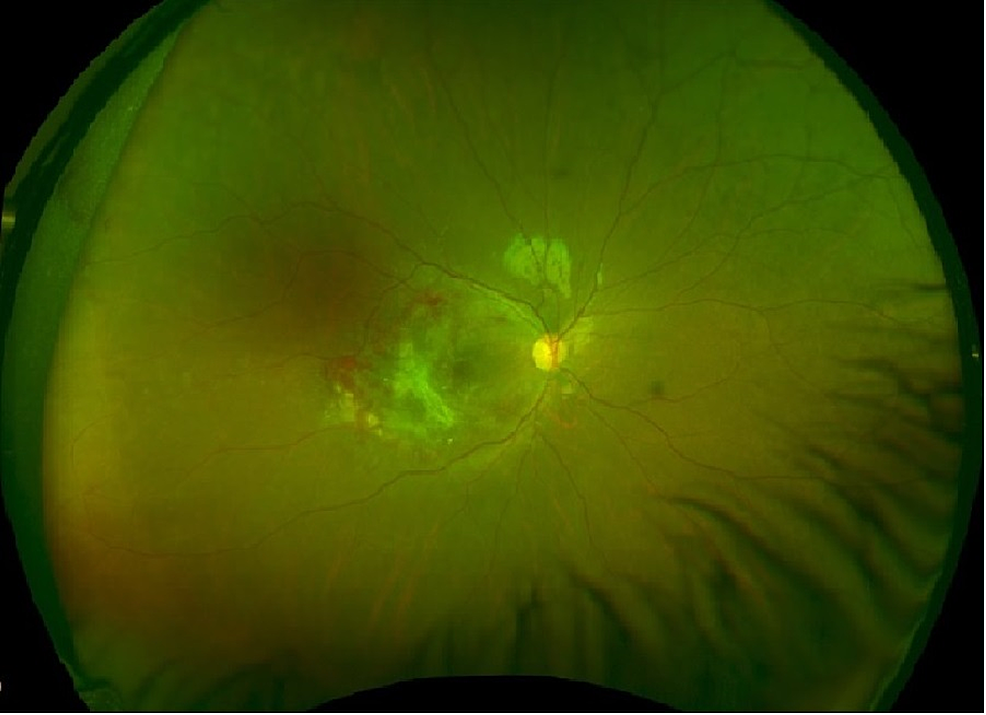
A 40-year-old man presents with problems with his vision. He says he has been experiencing blurred vision and floaters in his left eye for the past few days. He denies any ocular pain, fever, or headaches. Past medical history is significant for HIV infection a few years ago, for which he is noncompliant with his antiretroviral medications and his most recent CD4 count was 100 cells/mm3. His temperature is 36.5°C (97.7°F), the blood pressure is 110/89 mm Hg, the pulse rate is 70/min, and the respiratory rate is 14/min. Ocular exam reveals a decreased vision in the left eye, and a funduscopic examination is shown in the image. The patient is admitted and immediately started on intravenous ganciclovir. A few days after admission he is still complaining of blurry vision and floaters, so he is switched to a different medication. Inhibition of which of the following processes best describes the mechanism of action of the newly added medication?
A 43-year-old man with HIV infection comes to the physician because of a 2-week history of progressive diarrhea and a 3-kg (6.6-lb) weight loss. During this period, he has had 3–4 episodes of watery stools daily, with multiple instances of blood in the stool. He is currently receiving antiretroviral therapy with zidovudine, lamivudine, and dolutegravir. Physical examination shows pallor and dry mucous membranes. A colonoscopy shows multiple linear ulcers. Polymerase chain reaction of a stool sample is positive for cytomegalovirus. Treatment with valganciclovir is begun. Adding this drug to his current medication regimen puts this patient at greatest risk for which of the following adverse effects?
A 29-year-old female presents to her gynecologist complaining of a painful rash around her genitals. She has multiple sexual partners and uses condoms intermittently. Her last STD screen one year ago was negative. On examination, she has bilateral erosive vesicles on her labia majora and painful inguinal lymphadenopathy. She is started on an oral medication that requires a specific thymidine kinase for activation. Which of the following adverse effects is associated with this drug?
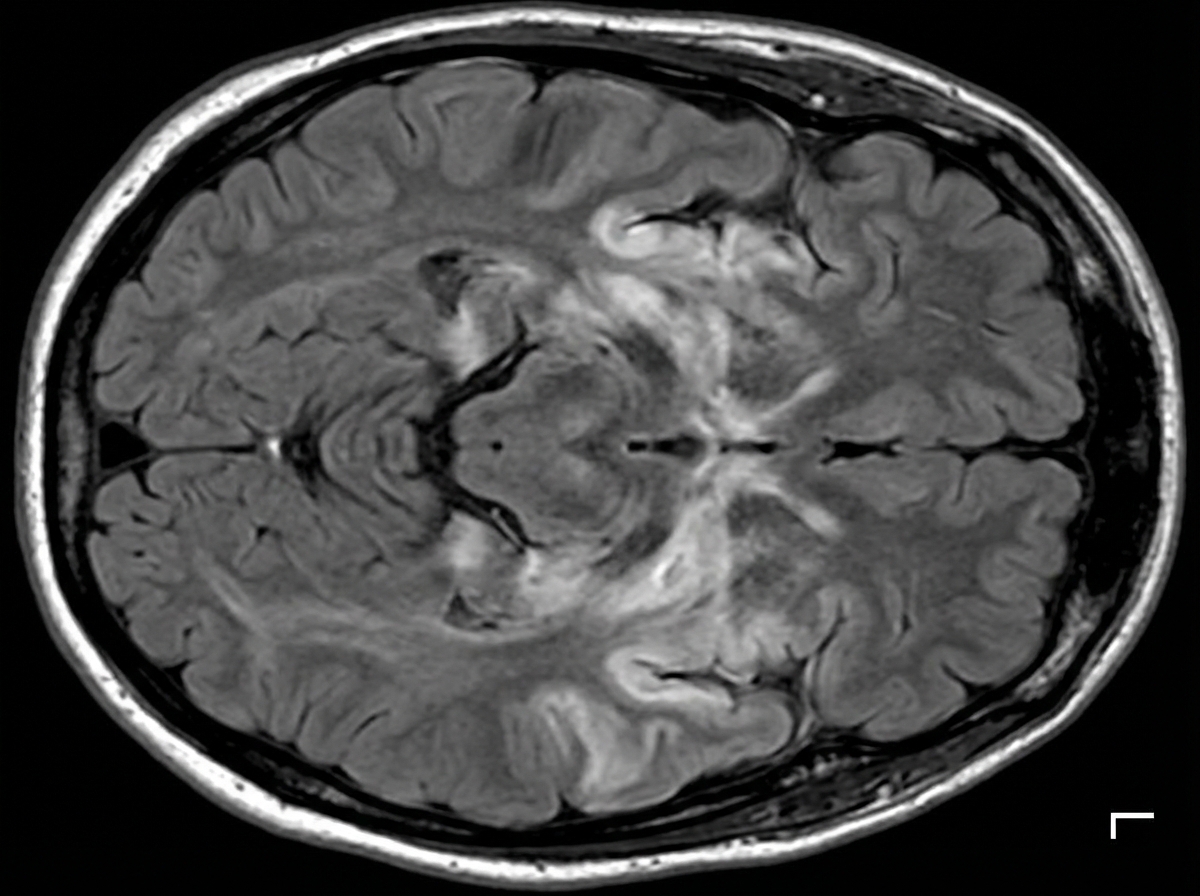
A 27-year-old man is brought to the emergency department by his friends in a confused state. He was doing fine 5 days ago when he started to complain of fever and flu-like symptoms. His fever was low-grade and associated with a headache. For the past 2 days, he has become increasingly irritable, confused, and was getting angry at trivial things. Past medical history is unremarkable. He is a college student and is physically active. He smokes cigarettes occasionally. He drinks alcohol socially. He is sexually active with his girlfriend and they use condoms inconsistently. Physical examination reveals: blood pressure 120/80 mm Hg, heart rate 108/min, respiratory rate 10/min, and temperature 37.4°C (99.4°F). He is confused and disoriented. Pupils are 3 mm in diameter and respond to light sluggishly. He is moving all his limbs spontaneously. His neck is supple. MRI of the brain is shown in the picture. Cerebrospinal fluid (CSF) reveals an opening pressure of 16 cm of H20, a total leukocyte count of 112/mm3 with 85% lymphocytes, the protein of 42 mg/dL, and glucose of 58 mg/dL. What is the best treatment for this condition?
A 61-year-old woman presents to her primary care physician complaining of left-sided facial pain that started yesterday. She describes the pain as stinging, burning, and constant. It does not worsen with jaw movement or chewing. Her past medical history includes hyperlipidemia and multiple sclerosis (MS), and she had chickenpox as a child but received a shingles vaccination last year. Medications include simvastatin and glatiramer acetate. The patient’s last MS flare was 5 weeks ago, at which time she received a prednisone burst with taper. At this visit, her temperature is 99.9 °F (37.7°C), blood pressure is 139/87 mmHg, pulse is 82/min, and respirations are 14/min. On exam, there is no rash or skin change on either side of the patient’s face. Gentle palpation of the left cheek and mandible produce significant pain, but there is full range of motion in the jaw. Which of the following medications is the most likely to prevent long-term persistence of this patient’s pain?
A 56-year-old man comes to the emergency department because of progressively worsening shortness of breath and fever for 2 days. He also has a nonproductive cough. He does not have chest pain or headache. He has chronic myeloid leukemia and had a bone marrow transplant 3 months ago. His current medications include busulfan, mycophenolate mofetil, tacrolimus, and methylprednisolone. His temperature is 38.1°C (100.6°F), pulse is 103/min, respirations are 26/min, and blood pressure is 130/70 mm Hg. Pulse oximetry on room air shows an oxygen saturation of 93%. Pulmonary examination shows diffuse crackles. The spleen tip is palpated 4 cm below the left costal margin. Laboratory studies show: Hemoglobin 10.3 g/dL Leukocyte count 4,400/mm3 Platelet count 160,000/mm3 Serum Glucose 78 mg/dL Creatinine 2.1 mg/dL D-dimer 96 ng/mL (N < 250) pp65 antigen positive Galactomannan antigen negative Urinalysis is normal. An x-ray of the chest shows diffuse bilateral interstitial infiltrates. An ECG shows sinus tachycardia. Which of the following is the most appropriate pharmacotherapy?
A 58-year-old man comes to the physician because of a sore throat and painful lesions in his mouth for the past few days. Six weeks ago, he underwent cardiac catheterization and stent implantation of the left anterior descending artery for treatment of acute myocardial infarction. Pharmacotherapy with aspirin and ticlopidine was started. His temperature is 38.1°C (100.6°F). Oral examination shows several shallow ulcers on the buccal mucosa. Laboratory studies show: Hematocrit 41.5% Leukocyte count 1,050/mm3 Segmented neutrophils 35% Platelet count 175,000/mm3 Which of the following drugs is most likely responsible for this patient's current condition?
An 8-year-old boy is brought to the emergency department by his parents because of vomiting, abdominal pain, and blurry vision for the past hour. The parents report that the boy developed these symptoms after he accidentally ingested 2 tablets of his grandfather’s heart failure medication. On physical examination, the child is drowsy, and his pulse is 120/min and irregular. Digoxin toxicity is suspected. A blood sample is immediately sent for analysis and shows a serum digoxin level of 4 ng/mL (therapeutic range: 0.8–2 ng/mL). Which of the following electrolyte abnormalities is most likely to be present in the boy?
A 64-year-old woman presents to the clinic with a history of 3 fractures in the past year with the last one being last month. Her bone-density screening from last year reported a T-score of -3.1 and she was diagnosed with osteoporosis. She was advised to quit smoking and was asked to adapt to a healthy lifestyle to which she complied. She was also given calcium and vitamin D supplements. After a detailed discussion with the patient, the physician decides to start her on weekly alendronate. Which of the following statements best describes this patient’s new therapy?
Want unlimited practice?
Get full access to all questions, explanations, and performance tracking.
Scan to download app