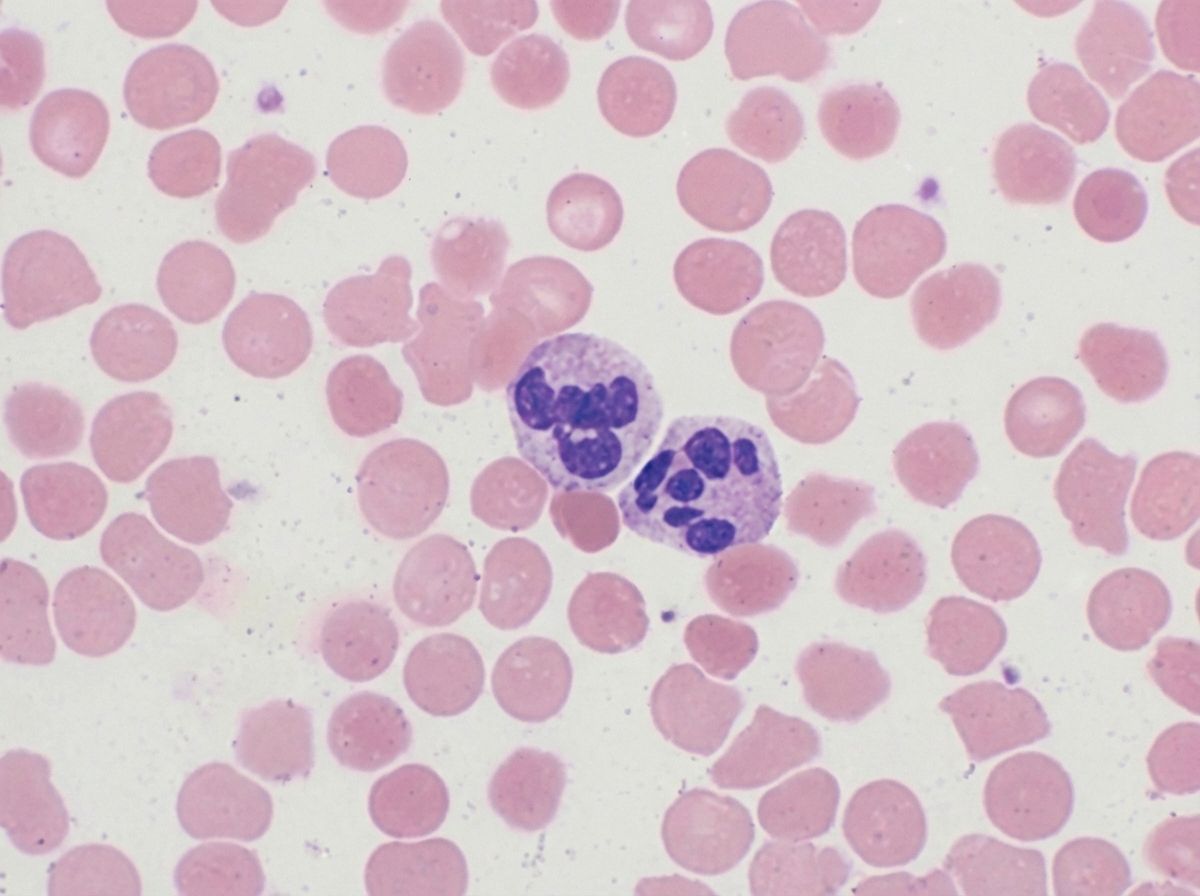
A 7-month-old girl is brought to the pediatrician by her parents with a mild, persistent fever for the past week. The patient’s mother also states she is feeding poorly and has become somewhat lethargic. The patient was born at term and the delivery was uncomplicated. The child’s birth weight was 3.5 kg (7.7 lb) and at 6 months was 7.0 kg (15.4 lb). She is fully immunized. The patient’s father recently returned from a business trip to India with a mild cough and was diagnosed with tuberculosis. The patient’s mother tests negative for tuberculosis The patient’s temperature is 38.1℃ (100.5℉). Today, she weighs 7.0 kg (15.4 lb). Cardiopulmonary auscultation reveals diminished breath sounds in the upper lobes. A chest radiograph demonstrates hilar lymphadenopathy and infiltrates in the upper lobes. Gastric aspirates are positive for acid-fast bacilli, however, cultures are still pending. Father and daughter are both started on standard antitubercular therapy. Which of the following is the appropriate management for the patient’s mother?
Q82
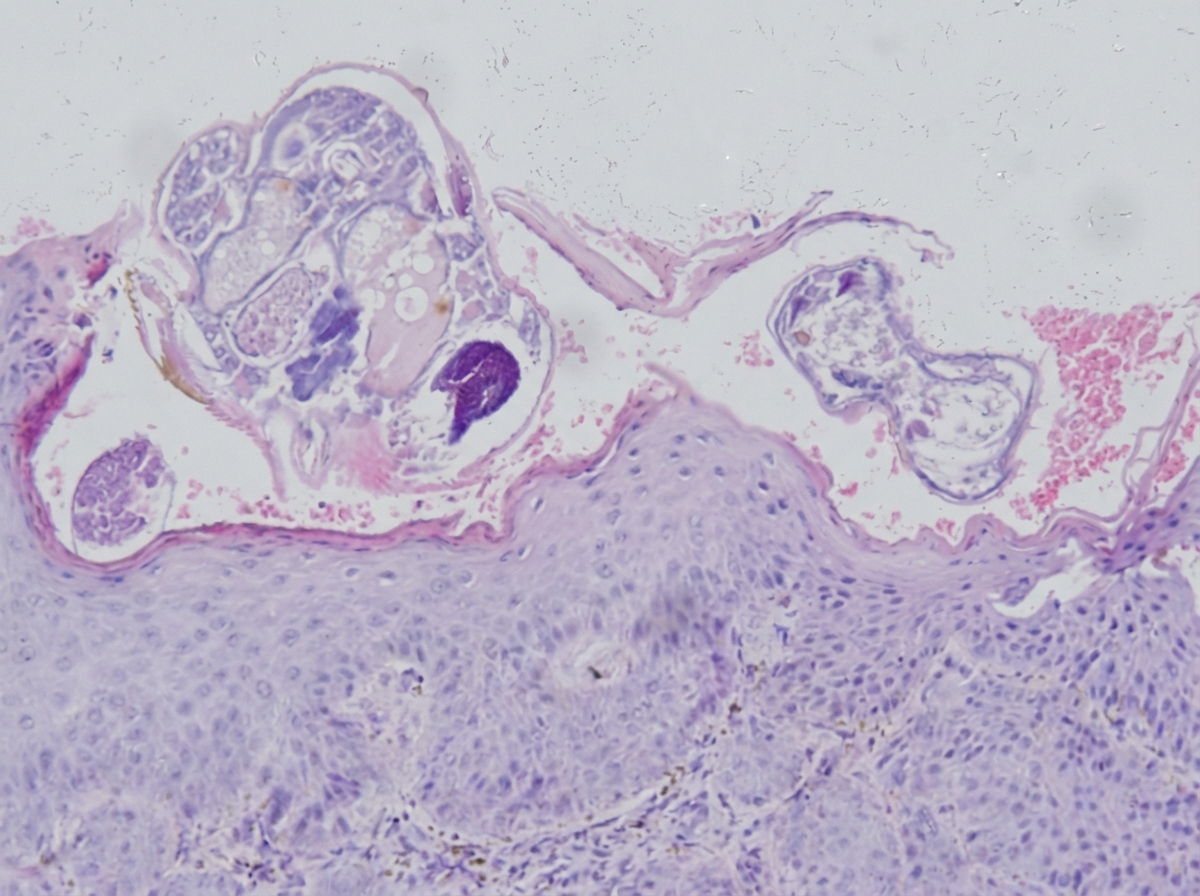
A 37-year-old woman with a history of systemic lupus erythematosus, on prednisone and methotrexate, presents to the dermatology clinic with three weeks of a diffuse, itchy rash. Physical exam is remarkable for small red papules in her bilateral axillae and groin and thin reddish-brown lines in her interdigital spaces. The following skin biopsy is obtained. Which of the following is the most appropriate treatment?
Q83
A 42-year-old man with non-small cell lung cancer is enrolled in a clinical trial for a new chemotherapeutic drug. The drug prevents microtubule depolymerization by binding to the beta subunit of tubulin. The mechanism of action of this new drug is most similar to which of the following?
Q84
A 33-year-old Hispanic woman who recently immigrated to the United States with her newborn daughter is presenting to a free clinic for a wellness checkup for her baby. As part of screening for those immigrating or seeking refuge in the United States, she and her child are both evaluated for tuberculosis. The child’s purified protein derivative (PPD) test and chest radiograph are negative, and although the mother’s chest radiograph is also negative, her PPD is positive. She states that she is currently asymptomatic and has no known history of tuberculosis (TB). The mother’s vital signs include: blood pressure 124/76 mm Hg, heart rate 74/min, and respiratory rate 14/min. She is advised to begin treatment with isoniazid, supplemented with pyridoxine for the next 9 months. She asks about the potential for harm to the child if she begins this course of treatment since she is breastfeeding. Which of the following is the most appropriate response to this patient’s concerns?
Q85
A 54-year-old woman presents with acute pain in her left toe. She says she hasn't been able to wear closed shoes for 2 weeks. Past medical history is significant for gastroesophageal reflux disease, diagnosed 2 years ago. The patient is afebrile and vital signs are within normal limits. Her BMI is 31 kg/m2. On physical examination, the left toe is warm to touch, swollen, and erythematous. A joint fluid aspiration from the left toe is performed and shows needle-shaped negatively birefringent urate crystals. The patient is started on methotrexate for gout prophylaxis. On her follow-up visit 6 weeks later, she has an elevated homocysteine level, a decreased serum folic acid level, and a normal methylmalonic acid level. Which of the following drugs would most likely cause a similar side effect to that seen in this patient?
Q86
A 22-year-old female with a history of bipolar disease presents to the emergency room following an attempted suicide. She reports that she swallowed a bottle of pain reliever pills she found in the medicine cabinet five hours ago. She currently reports malaise, nausea, and anorexia. She has vomited several times. Her history is also notable for alcohol abuse. Her temperature is 99.4°F (37.4°C), blood pressure is 140/90 mmHg, pulse is 90/min, and respirations are 20/min. Physical examination reveals a pale, diaphoretic female in distress with mild right upper quadrant tenderness to palpation. Liver function tests and coagulation studies are shown below:
Serum:
Alkaline phosphatase: 110 U/L
Aspartate aminotransferase (AST, GOT): 612 U/L
Alanine aminotransferase (ALT, GPT): 557 U/L
Bilirubin, Total: 2.7 mg/dl
Bilirubin, Direct: 1.5 mg/dl
Prothrombin time: 21.7 seconds
Partial thromboplastin time (activated): 31 seconds
International normalized ratio: 2.0
Serum and urine drug levels are pending. Which of the following medications should be administered to this patient?
Q87
A 67-year-old woman presents to the infectious disease clinic after her PPD was found to be positive. A subsequent chest radiography shows a cavity in the apex of the right upper lobe, along with significant hilar adenopathy. The patient is diagnosed with tuberculosis and is started on the standard four-drug treatment regimen. Four weeks later, she returns for her first follow-up appointment in panic because her eyes have taken on an orange/red hue. Which of the following describes the mechanism of action of the drug most likely responsible for this side effect?
Q88
A 60-year-old man comes to the physician because of persistent fatigue over the past ten months. His previous annual health maintenance examination showed no abnormalities. He appears pale. Physical examination shows numerous petechial lesions over the abdomen and marked splenomegaly. His serum hemoglobin concentration is 9.4 g/dL, leukocyte count is 4,100/mm3, and thrombocyte count is 110,000/mm3. A peripheral blood smear shows large white blood cells with centrally placed nuclei and multiple fine, radial cytoplasmic projections that stain positively for tartrate-resistant acid phosphatase (TRAP). Which of the following is the most likely characteristic of the medication used as first-line treatment for this patient's condition?
Q89
A 2-year-old girl is rushed to the emergency department by her parents following ingestion of unknown pills from an unmarked bottle she found at the park. The parents are not sure how many pills she ingested but say the child has been short of breath since then. Her respiratory rate is 50/min and pulse is 150/min. Examination shows the girl to be quite restless and agitated. No other findings are elicited. Laboratory testing shows:
Serum electrolytes
Sodium 142 mEq/L
Potassium 4.0 mEq/L
Chloride 105 mEq/L
Bicarbonate 14 mEq/L
Serum pH 7.23
The girl most likely ingested which of the following drugs?
Q90
A 55-year-old woman with diabetes presents to the emergency department due to swelling of her left leg, fever, and chills for the past 2 days. The woman’s maximum recorded temperature at home was 38.3°C (101.0°F). Her left leg is red and swollen from her ankle to the calf, with an ill-defined edge. Her vital signs include: blood pressure 120/78 mm Hg, pulse rate 94/min, temperature 38.3°C (101.0°F), and respiratory rate 16/min. On physical examination, her left leg shows marked tenderness and warmth compared with her right leg. The left inguinal lymph node is enlarged to 3 x 3 cm. Which of the following chemical mediators is the most likely cause of the woman’s fever?
Antimicrobials US Medical PG Practice Questions and MCQs
Question 81: A 7-month-old girl is brought to the pediatrician by her parents with a mild, persistent fever for the past week. The patient’s mother also states she is feeding poorly and has become somewhat lethargic. The patient was born at term and the delivery was uncomplicated. The child’s birth weight was 3.5 kg (7.7 lb) and at 6 months was 7.0 kg (15.4 lb). She is fully immunized. The patient’s father recently returned from a business trip to India with a mild cough and was diagnosed with tuberculosis. The patient’s mother tests negative for tuberculosis The patient’s temperature is 38.1℃ (100.5℉). Today, she weighs 7.0 kg (15.4 lb). Cardiopulmonary auscultation reveals diminished breath sounds in the upper lobes. A chest radiograph demonstrates hilar lymphadenopathy and infiltrates in the upper lobes. Gastric aspirates are positive for acid-fast bacilli, however, cultures are still pending. Father and daughter are both started on standard antitubercular therapy. Which of the following is the appropriate management for the patient’s mother?
A. Isoniazid and rifampicin
B. Isoniazid alone (Correct Answer)
C. No medication is required
D. Isoniazid, rifampicin, and pyrazinamide
E. Isoniazid, rifampicin, pyrazinamide, and ethambutol
Explanation: ***Isoniazid alone***
- The mother is a **close household contact** to TWO active tuberculosis cases (her husband and daughter), placing her at extremely high risk for TB infection.
- Although her TB test is currently **negative**, she may be in the **window period** (8-10 weeks post-exposure before test conversion) or at ongoing risk of infection.
- **Preventive therapy with isoniazid** (daily for 9 months or twice-weekly for 9 months) is recommended by CDC guidelines for high-risk contacts, even with negative initial testing, to prevent development of active TB.
- She should undergo **repeat TB testing in 8-10 weeks** to detect delayed conversion.
*Isoniazid and rifampicin*
- This combination (3-4 months duration) is an **alternative regimen for LTBI treatment**, shorter than isoniazid monotherapy.
- However, for contacts with **negative testing**, single-drug prophylaxis with isoniazid is the standard first-line recommendation.
- This regimen would be appropriate if she had **documented LTBI** (positive test) and needed a shorter course.
*No medication is required*
- This would be **inappropriate** given her extremely high-risk exposure to two household members with active TB.
- Even with negative testing, household contacts warrant preventive therapy due to the risk of recent infection in the window period and ongoing exposure.
- Failure to provide prophylaxis could result in progression to active TB.
*Isoniazid, rifampicin, and pyrazinamide*
- This three-drug regimen is used for the **intensive phase of active TB treatment**, not for preventive therapy in contacts.
- The mother has **no evidence of active disease** (negative test, asymptomatic), so this would be overtreatment with unnecessary toxicity risk.
*Isoniazid, rifampicin, pyrazinamide, and ethambutol*
- This four-drug regimen is the standard for treating **active tuberculosis** or when drug resistance is suspected.
- This represents significant **overtreatment** for a contact with negative testing and no clinical evidence of disease.
- Would expose her to unnecessary adverse effects including hepatotoxicity and optic neuritis.
Question 82: A 37-year-old woman with a history of systemic lupus erythematosus, on prednisone and methotrexate, presents to the dermatology clinic with three weeks of a diffuse, itchy rash. Physical exam is remarkable for small red papules in her bilateral axillae and groin and thin reddish-brown lines in her interdigital spaces. The following skin biopsy is obtained. Which of the following is the most appropriate treatment?
A. Capsaicin cream
B. Ketoconazole cream
C. Permethrin cream (Correct Answer)
D. Hydrocortisone cream
E. Nystatin cream
Explanation: ***Permethrin cream***
- The patient's presentation with **diffuse itchy rash**, small red papules in the axillae and groin, and **reddish-brown lines in interdigital spaces (burrows)** is classic for **scabies**.
- **Permethrin 5% cream** is the **first-line treatment** for scabies due to its efficacy as a **scabicidal agent** by disrupting the parasite's nervous system.
- The patient's **immunocompromised status** (on prednisone and methotrexate) increases risk for **crusted (Norwegian) scabies**, but permethrin remains the primary topical treatment; severe cases may require addition of oral ivermectin.
*Capsaicin cream*
- Capsaicin cream is used for **neuropathic pain** and often causes a burning sensation, making it unsuitable for a pruritic rash caused by mites.
- It does not have any **antiparasitic properties** and would not treat the underlying cause of scabies.
*Ketoconazole cream*
- Ketoconazole is an **antifungal agent** used to treat conditions like candidiasis or tinea infections.
- The clinical presentation is not suggestive of a fungal infection, and ketoconazole would be ineffective against scabies mites.
*Hydrocortisone cream*
- Hydrocortisone is a **topical corticosteroid** used to reduce inflammation and itching associated with various dermatoses.
- While it may temporarily relieve itching, it would not eradicate the **scabies mites** and their eggs, leading to recurrence.
- Using corticosteroids alone in an **already immunocompromised patient** could worsen the infestation.
*Nystatin cream*
- Nystatin is another **antifungal medication** primarily used for cutaneous candidiasis.
- It has no activity against parasitic infestations such as scabies and would therefore be an inappropriate treatment.
Question 83: A 42-year-old man with non-small cell lung cancer is enrolled in a clinical trial for a new chemotherapeutic drug. The drug prevents microtubule depolymerization by binding to the beta subunit of tubulin. The mechanism of action of this new drug is most similar to which of the following?
A. Bleomycin
B. Irinotecan
C. Vincristine
D. Cladribine
E. Paclitaxel (Correct Answer)
Explanation: ***Paclitaxel***
- **Paclitaxel** is a **taxane** that stabilizes microtubules by binding to the **beta-tubulin subunit**, preventing their depolymerization and arresting cells in metaphase.
- This mechanism is consistent with the described drug's action of preventing **microtubule depolymerization**.
*Bleomycin*
- **Bleomycin** is an **antitumor antibiotic** that causes **DNA strand breaks** by forming free radicals.
- Its mechanism is entirely different from microtubule stabilization.
*Irinotecan*
- **Irinotecan** is a **topoisomerase I inhibitor** that prevents DNA unwinding, leading to DNA damage and cell death.
- This drug targets DNA replication and repair, not microtubule dynamics.
*Vincristine*
- **Vincristine** is a **vinca alkaloid** that inhibits microtubule formation by binding to **beta-tubulin**, preventing its polymerization (assembly).
- While it also targets microtubules, its action is to *prevent polymerization*, whereas the new drug prevents *depolymerization*.
*Cladribine*
- **Cladribine** is a **purine analog** that inhibits DNA synthesis by incorporating into DNA and RNA, leading to strand breaks and cell death.
- This drug primarily interferes with nucleic acid metabolism, not microtubule function.
Question 84: A 33-year-old Hispanic woman who recently immigrated to the United States with her newborn daughter is presenting to a free clinic for a wellness checkup for her baby. As part of screening for those immigrating or seeking refuge in the United States, she and her child are both evaluated for tuberculosis. The child’s purified protein derivative (PPD) test and chest radiograph are negative, and although the mother’s chest radiograph is also negative, her PPD is positive. She states that she is currently asymptomatic and has no known history of tuberculosis (TB). The mother’s vital signs include: blood pressure 124/76 mm Hg, heart rate 74/min, and respiratory rate 14/min. She is advised to begin treatment with isoniazid, supplemented with pyridoxine for the next 9 months. She asks about the potential for harm to the child if she begins this course of treatment since she is breastfeeding. Which of the following is the most appropriate response to this patient’s concerns?
A. “You should not breastfeed your baby for the next 9 months because isoniazid in breast milk can damage your child’s liver.”
B. “You should not breastfeed your baby for the next 9 months because pyridoxine in breast milk can damage your child’s liver.”
C. “You may breastfeed your baby because you are asymptomatic and because neither isoniazid nor pyridoxine will harm your child.” (Correct Answer)
D. “You should not breastfeed your baby because she is at greater risk for infection with TB than for adverse side effects of your treatment regimen.”
E. “You may breastfeed your baby because pyridoxine will prevent isoniazid from causing peripheral neuropathy.”
Explanation: ***“You may breastfeed your baby because you are asymptomatic and because neither isoniazid nor pyridoxine will harm your child.”***
- The **benefits of breastfeeding** (providing immunity, nutrition, and bonding) generally outweigh the minimal risks associated with isoniazid and pyridoxine secretion into breast milk.
- Since the mother is **asymptomatic** and her chest X-ray is negative, she has **latent tuberculosis infection (LTBI)**, making transmission to the infant highly unlikely through casual contact, and therefore breastfeeding is safe.
*“You should not breastfeed your baby for the next 9 months because isoniazid in breast milk can damage your child’s liver.”*
- While **isoniazid (INH)** can cause drug-induced hepatitis in adults, the amount excreted in breast milk is typically very low and **not considered harmful** to the infant's liver.
- The American Academy of Pediatrics states that INH is **compatible with breastfeeding**.
*“You should not breastfeed your baby for the next 9 months because pyridoxine in breast milk can damage your child’s liver.”*
- **Pyridoxine (vitamin B6)** is a vitamin and is added to the treatment regimen to **prevent INH-induced peripheral neuropathy**; it is not harmful to the infant's liver and is naturally present in breast milk.
- There is **no evidence** that pyridoxine in breast milk can cause liver damage in an infant.
*“You should not breastfeed your baby because she is at greater risk for infection with TB than for adverse side effects of your treatment regimen.”*
- The mother has **latent TB**, not active TB, meaning she is **not contagious** and cannot spread the infection to her infant.
- Breastfeeding does not increase the risk of TB transmission from a mother with LTBI, and preventing transmission is best achieved through treating the mother's LTBI.
*“You may breastfeed your baby because pyridoxine will prevent isoniazid from causing peripheral neuropathy.”*
- This statement accurately describes a function of **pyridoxine** for the mother (preventing **peripheral neuropathy**), but it does not address the infant's safety concerning breast milk intake.
- While correct that pyridoxine prevents this side effect in the mother, it's not the primary reason why breastfeeding is safe for the infant.
Question 85: A 54-year-old woman presents with acute pain in her left toe. She says she hasn't been able to wear closed shoes for 2 weeks. Past medical history is significant for gastroesophageal reflux disease, diagnosed 2 years ago. The patient is afebrile and vital signs are within normal limits. Her BMI is 31 kg/m2. On physical examination, the left toe is warm to touch, swollen, and erythematous. A joint fluid aspiration from the left toe is performed and shows needle-shaped negatively birefringent urate crystals. The patient is started on methotrexate for gout prophylaxis. On her follow-up visit 6 weeks later, she has an elevated homocysteine level, a decreased serum folic acid level, and a normal methylmalonic acid level. Which of the following drugs would most likely cause a similar side effect to that seen in this patient?
A. Cisplatin
B. α-Methyldopa
C. Cephalosporins
D. Penicillins
E. Azathioprine (Correct Answer)
Explanation: ***Azathioprine***
- Both methotrexate and azathioprine are **antimetabolites** that cause **myelosuppression** by interfering with nucleic acid synthesis in rapidly dividing cells
- Methotrexate inhibits dihydrofolate reductase, blocking folate metabolism essential for purine and thymidine synthesis, leading to **folate deficiency** (elevated homocysteine, low folate)
- Azathioprine, a purine analog, inhibits purine synthesis and can cause similar **bone marrow suppression**, though through a different mechanism
- Both agents share common toxicities including leukopenia, thrombocytopenia, and increased infection risk
*Cisplatin*
- Cisplatin is a **platinum-based alkylating agent** that cross-links DNA strands
- Primary toxicities are **nephrotoxicity**, ototoxicity, and peripheral neuropathy—not related to folate metabolism or antimetabolite effects
*α-Methyldopa*
- Alpha-methyldopa is a **centrally-acting antihypertensive** (alpha-2 agonist) used especially in pregnancy
- Side effects include sedation, orthostatic hypotension, and hemolytic anemia—**not myelosuppression or folate-related effects**
*Cephalosporins*
- Cephalosporins are **beta-lactam antibiotics** that inhibit bacterial cell wall synthesis
- Well-tolerated with main side effects being **gastrointestinal upset and hypersensitivity reactions**—no antimetabolite effects
*Penicillins*
- Penicillins are **beta-lactam antibiotics** with similar mechanism to cephalosporins
- Primary concern is **hypersensitivity reactions** (rash to anaphylaxis)—no antimetabolite or bone marrow suppression effects
Question 86: A 22-year-old female with a history of bipolar disease presents to the emergency room following an attempted suicide. She reports that she swallowed a bottle of pain reliever pills she found in the medicine cabinet five hours ago. She currently reports malaise, nausea, and anorexia. She has vomited several times. Her history is also notable for alcohol abuse. Her temperature is 99.4°F (37.4°C), blood pressure is 140/90 mmHg, pulse is 90/min, and respirations are 20/min. Physical examination reveals a pale, diaphoretic female in distress with mild right upper quadrant tenderness to palpation. Liver function tests and coagulation studies are shown below:
Serum:
Alkaline phosphatase: 110 U/L
Aspartate aminotransferase (AST, GOT): 612 U/L
Alanine aminotransferase (ALT, GPT): 557 U/L
Bilirubin, Total: 2.7 mg/dl
Bilirubin, Direct: 1.5 mg/dl
Prothrombin time: 21.7 seconds
Partial thromboplastin time (activated): 31 seconds
International normalized ratio: 2.0
Serum and urine drug levels are pending. Which of the following medications should be administered to this patient?
A. Atropine
B. Flumazenil
C. Fomepizole
D. Physostigmine
E. N-acetylcysteine (Correct Answer)
Explanation: ***N-acetylcysteine***
- The patient's symptoms (malaise, nausea, anorexia, vomiting, RUQ tenderness), elevated transaminases (AST, ALT), hyperbilirubinemia, and coagulopathy (elevated PT/INR) following a pain reliever overdose strongly suggest **acetaminophen toxicity**.
- **N-acetylcysteine (NAC)** is the antidote for acetaminophen overdose, working by replenishing **glutathione** stores and detoxifying the toxic metabolite **NAPQI**, preventing further hepatic damage.
*Atropine*
- **Atropine** is an anticholinergic medication used to treat bradycardia or organophosphate poisoning.
- The patient's symptoms and vital signs are not consistent with cholinergic toxicity.
*Flumazenil*
- **Flumazenil** is a benzodiazepine receptor antagonist used to reverse the effects of **benzodiazepine overdose**.
- There is no clinical indication for benzodiazepine overdose in this patient presentation.
*Fomepizole*
- **Fomepizole** is an alcohol dehydrogenase inhibitor used as an antidote for **methanol** or **ethylene glycol** poisoning.
- While the patient has a history of alcohol abuse, her current presentation and lab findings are not consistent with methanol or ethylene glycol toxicity.
*Physostigmine*
- **Physostigmine** is a **cholinesterase inhibitor** used to treat anticholinergic toxicity.
- The patient's symptoms and vital signs are not indicative of anticholinergic poisoning.
Question 87: A 67-year-old woman presents to the infectious disease clinic after her PPD was found to be positive. A subsequent chest radiography shows a cavity in the apex of the right upper lobe, along with significant hilar adenopathy. The patient is diagnosed with tuberculosis and is started on the standard four-drug treatment regimen. Four weeks later, she returns for her first follow-up appointment in panic because her eyes have taken on an orange/red hue. Which of the following describes the mechanism of action of the drug most likely responsible for this side effect?
A. Inhibition of RNA polymerase (Correct Answer)
B. Inhibition of squalene epoxidase
C. Inhibition of arabinosyltransferase
D. Inhibition of mycolic acid synthesis
E. Inhibition of topoisomerase
Explanation: ***Inhibition of RNA polymerase***
- The drug most likely responsible for the **orange/red discoloration of tears, sweat, saliva, and urine is rifampin**.
- **Rifampin exerts its bactericidal effect by inhibiting bacterial DNA-dependent RNA polymerase**, thereby blocking RNA synthesis.
*Inhibition of squalene epoxidase*
- This mechanism of action is characteristic of **terbinafine**, an antifungal drug.
- **Terbinafine is used to treat fungal infections** like dermatophytosis and onychomycosis, not tuberculosis.
*Inhibition of arabinosyltransferase*
- This is the **mechanism of action for ethambutol**, another first-line drug for tuberculosis.
- While ethambutol is part of the standard regimen, its primary side effect is **optic neuritis**, not orange discoloration of bodily fluids.
*Inhibition of mycolic acid synthesis*
- This mechanism is primarily associated with **isoniazid (INH)**, a key drug in tuberculosis treatment.
- **Isoniazid's main toxicities include hepatotoxicity and peripheral neuropathy**, not the red-orange discoloration.
*Inhibition of topoisomerase*
- This mechanism is characteristic of **fluoroquinolone antibiotics**, such as ciprofloxacin and levofloxacin.
- While fluoroquinolones can be used in some tuberculosis regimens, they are typically **second-line agents** and do not cause the orange/red bodily fluid discoloration.
Question 88: A 60-year-old man comes to the physician because of persistent fatigue over the past ten months. His previous annual health maintenance examination showed no abnormalities. He appears pale. Physical examination shows numerous petechial lesions over the abdomen and marked splenomegaly. His serum hemoglobin concentration is 9.4 g/dL, leukocyte count is 4,100/mm3, and thrombocyte count is 110,000/mm3. A peripheral blood smear shows large white blood cells with centrally placed nuclei and multiple fine, radial cytoplasmic projections that stain positively for tartrate-resistant acid phosphatase (TRAP). Which of the following is the most likely characteristic of the medication used as first-line treatment for this patient's condition?
A. Increases risk of thromboembolic events
B. Inhibits progression from G2 phase
C. Unable to cross the blood-brain barrier
D. Resistant to breakdown by adenosine deaminase (Correct Answer)
E. Requires bioactivation by the liver
Explanation: ***Resistant to breakdown by adenosine deaminase***
- The patient's presentation with **fatigue**, **pale appearance**, **petechiae**, **splenomegaly**, **pancytopenia**, and characteristic **"hairy cells"** (large leukocytes with fine, radial cytoplasmic projections that stain **TRAP-positive**) is highly indicative of **hairy cell leukemia (HCL)**.
- The first-line treatment for HCL involves purine analogs like **cladribine** or **pentostatin**. These drugs are **resistant to breakdown by adenosine deaminase (ADA)**, allowing them to accumulate in lymphoid cells and induce apoptosis.
*Increases risk of thromboembolic events*
- While some cancer treatments can increase the risk of thromboembolic events, purine analogs like cladribine and pentostatin are **not primarily known for this side effect**.
- **Thromboembolic events** are more commonly associated with certain chemotherapies (e.g., thalidomide, lenalidomide) or direct effects of some cancers.
*Inhibits progression from G2 phase*
- This statement describes the mechanism of action of **microtubule inhibitors** (e.g., taxanes, vinca alkaloids) which arrest cells in the **M phase** or **G2/M phase** of the cell cycle.
- **Purine analogs** like cladribine and pentostatin are **cytotoxic during the S phase** by interfering with DNA synthesis and repair, not typically by arresting G2 phase progression.
*Unable to cross the blood-brain barrier*
- While many chemotherapy drugs have difficulty crossing the **blood-brain barrier (BBB)**, **cladribine (2-CdA)**, which is a common first-line agent for HCL, **does penetrate the central nervous system (CNS)**.
- This characteristic can be relevant in certain CNS lymphomas or leukemias, but it's not the defining feature of HCL treatment.
*Requires bioactivation by the liver*
- **Purine analogs** like cladribine and pentostatin are **intracellularly phosphorylated** to their active triphosphate forms by **kinases** within the target cells.
- This activation is **not primarily hepatic bioactivation** but rather occurs within the lymphoid cells themselves, where they interfere with DNA metabolism.
Question 89: A 2-year-old girl is rushed to the emergency department by her parents following ingestion of unknown pills from an unmarked bottle she found at the park. The parents are not sure how many pills she ingested but say the child has been short of breath since then. Her respiratory rate is 50/min and pulse is 150/min. Examination shows the girl to be quite restless and agitated. No other findings are elicited. Laboratory testing shows:
Serum electrolytes
Sodium 142 mEq/L
Potassium 4.0 mEq/L
Chloride 105 mEq/L
Bicarbonate 14 mEq/L
Serum pH 7.23
The girl most likely ingested which of the following drugs?
A. Spironolactone
B. Calcium carbonate
C. Codeine
D. Salicylates/Aspirin (Correct Answer)
E. Acetaminophen
Explanation: ***Salicylates/Aspirin***
- This presentation is **classic for salicylate (aspirin) poisoning** in a child. Salicylates cause **direct stimulation of the respiratory center**, leading to **tachypnea** and respiratory alkalosis initially, but also cause **uncoupling of oxidative phosphorylation**, resulting in **high anion gap metabolic acidosis**.
- The anion gap here is **elevated at 23 mEq/L** (142 - (105 + 14) = 23; normal is 8-12), consistent with salicylate toxicity.
- In **pediatric patients**, the metabolic acidosis component often **predominates** and may present without preceding respiratory alkalosis, unlike adults who typically show mixed acid-base disturbances.
- Clinical features include **tachycardia, tachypnea, agitation, restlessness**, hyperthermia, tinnitus, and altered mental status - matching this patient's presentation.
- Treatment involves activated charcoal (if early), alkaline diuresis with sodium bicarbonate, and hemodialysis for severe cases.
*Acetaminophen*
- Acetaminophen overdose does **NOT** cause acute metabolic acidosis, tachypnea, or tachycardia immediately after ingestion.
- The **first 24 hours** after acetaminophen ingestion are typically **asymptomatic** or show only mild nausea and vomiting.
- **Metabolic acidosis with elevated lactate** occurs only in **late-stage toxicity** (48-72 hours post-ingestion) when severe **hepatic failure** develops, not acutely as presented here.
- This patient's immediate symptoms after ingestion rule out acetaminophen as the culprit.
*Spironolactone*
- Spironolactone is a **potassium-sparing diuretic** that can cause **hyperkalemia** and **non-anion gap (hyperchloremic) metabolic acidosis**.
- This patient has a **high anion gap** metabolic acidosis, which is inconsistent with spironolactone toxicity.
- Overdose would cause **dehydration, hypotension**, and electrolyte disturbances, not the acute agitation and tachypnea seen here.
*Calcium carbonate*
- Calcium carbonate causes **metabolic alkalosis** (milk-alkali syndrome), not metabolic acidosis.
- Would present with hypercalcemia symptoms: confusion, constipation, polyuria, and renal insufficiency.
- Does not cause tachypnea, tachycardia, or the acid-base disturbance seen in this case.
*Codeine*
- Codeine is an **opioid** causing **CNS and respiratory depression**.
- Classic opioid toxidrome: **miosis, bradypnea, decreased respiratory rate**, and sedation - the opposite of this presentation.
- Would not cause tachypnea, tachycardia, agitation, or metabolic acidosis.
Question 90: A 55-year-old woman with diabetes presents to the emergency department due to swelling of her left leg, fever, and chills for the past 2 days. The woman’s maximum recorded temperature at home was 38.3°C (101.0°F). Her left leg is red and swollen from her ankle to the calf, with an ill-defined edge. Her vital signs include: blood pressure 120/78 mm Hg, pulse rate 94/min, temperature 38.3°C (101.0°F), and respiratory rate 16/min. On physical examination, her left leg shows marked tenderness and warmth compared with her right leg. The left inguinal lymph node is enlarged to 3 x 3 cm. Which of the following chemical mediators is the most likely cause of the woman’s fever?
A. Bradykinin
B. Histamine
C. PGE2 (Correct Answer)
D. Arachidonic acid
E. LTB4
Explanation: ***PGE2***
- **Prostaglandin E2 (PGE2)** is a potent **pyrogen** that acts on the **hypothalamus** to reset the body's thermoregulatory set point, leading to fever.
- In infections like **cellulitis**, inflammatory mediators stimulate the production of PGE2, causing the systemic symptom of fever.
*Bradykinin*
- **Bradykinin** primarily mediates **pain** and **vasodilation** at the site of inflammation.
- While it contributes to local signs of inflammation, it is not a direct mediator of systemic fever.
*Histamine*
- **Histamine** is a key mediator in immediate **hypersensitivity reactions** and local inflammation, causing **vasodilation** and increased **vascular permeability**.
- It does not directly induce fever by acting on the thermoregulatory center.
*Arachidonic acid*
- **Arachidonic acid** is a **precursor** molecule derived from membrane phospholipids, which is metabolized to various inflammatory mediators like prostaglandins and leukotrienes.
- It is not a direct chemical mediator of fever itself; rather, its downstream products such as PGE2 are.
*LTB4*
- **Leukotriene B4 (LTB4)** is a potent **chemotactic agent** for neutrophils, playing a role in immune cell recruitment to the site of inflammation.
- While involved in inflammation, LTB4 does not directly cause fever.