A 4-year-old boy is brought by his mother to the emergency room for malaise, dizziness, and sleepiness. The mother owns a dry cleaning shop and found her son in the back room with an open canister of carbon tetrachloride, one of their cleaning fluids. The boy reports feeling nauseous and has a mild headache. He has a history of spastic hemiplegic cerebral palsy and is seen regularly by a pediatric neurologist. He is otherwise healthy and takes no medications. His temperature is 98.6°F (37°C), blood pressure is 105/55 mmHg, pulse is 105/min, and respirations are 22/min. On exam, he appears tired and drowsy but is able to answer questions. He has increased tone in his left upper and lower extremities. Which of the following is most likely to be affected by this patient's exposure to the dry cleaning fluid?
Q22
A 2-week-old boy presents to the pediatrics clinic. The medical records note a full-term delivery, however, the boy was born with chorioretinitis and swelling and calcifications in his brain secondary to an in utero infection. In immunocompromised patients, a drug can be used for prophylaxis against the pathogen responsible for this neonate's findings. This same drug also provides protection against which other microorganism?
Q23
At 10 a.m. this morning, a semi-truck carrying radioactive waste toppled over due to a blown tire. One container was damaged, and a small amount of its contents leaked into the nearby river. You are a physician on the government's hazardous waste committee and must work to alleviate the town's worries and minimize the health hazards due to the radioactive leak. You decide to prescribe a prophylactic agent to minimize any retention of radioactive substances in the body. Which of the following do you prescribe?
Q24
A 25-year-old male graduate student is brought to the emergency department for respiratory distress after he was found by his roommate coughing and severely short of breath. He was diagnosed with HIV infection 3 months ago but is not compliant with his antiretroviral therapy. He is from Chile and moved here 5 years ago. He appears unwell and is unable to speak in full sentences. His temperature is 38.2°C (100.7°F), pulse is 127/min, respirations are 32/min, and blood pressure is 95/65 mm Hg. Pulse oximetry shows an oxygen saturation of 86% on room air. No oral thrush is seen. The patient is placed on supplemental oxygen. Serum studies show:
Lactate dehydrogenase 364 IU/L
CD4 cell count 98/mm3
Beta-D-glucan elevated
Arterial blood gas analysis shows:
pH 7.50
PaCO2 22 mm Hg
PaO2 60 mm Hg
HCO3 20 mEq/L
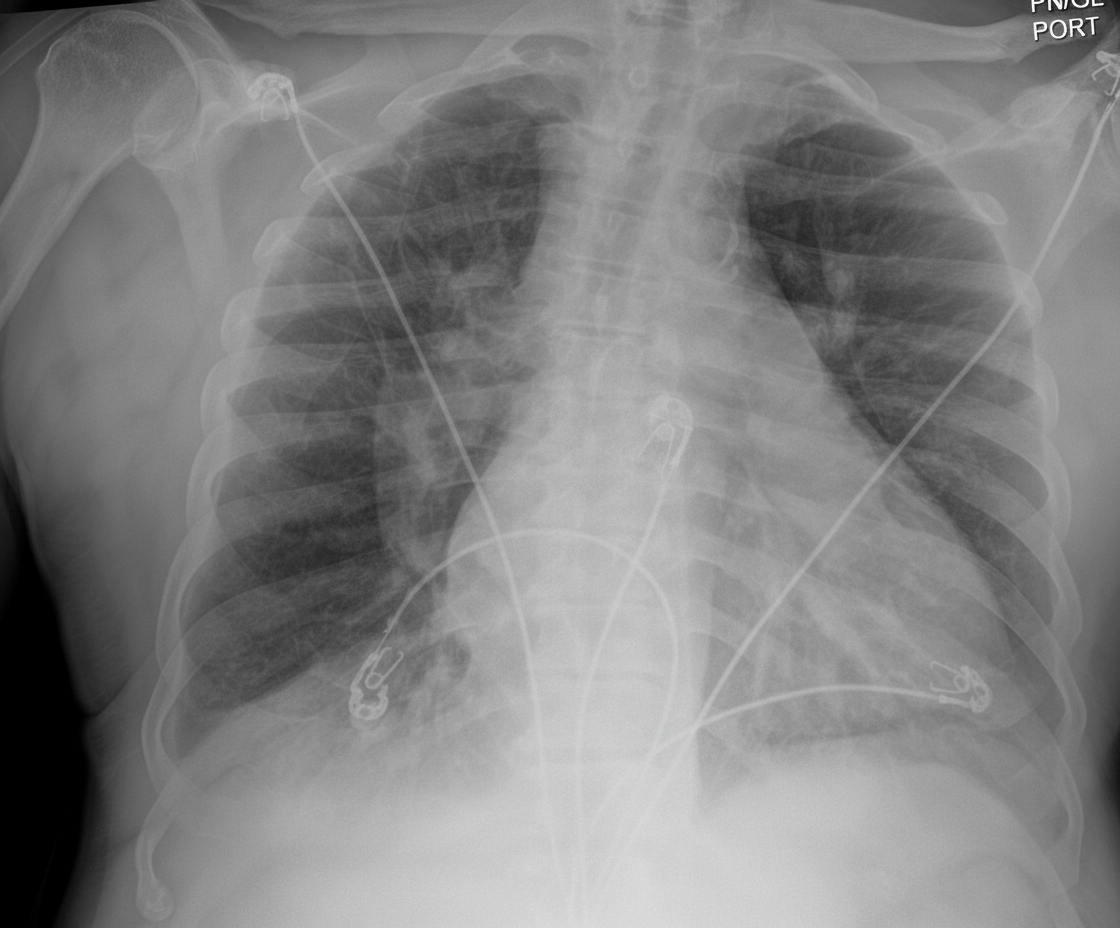
An x-ray of the chest is shown. Standard antibiotic therapy is begun immediately. The most appropriate next step in management is administration of which of the following?
Q25
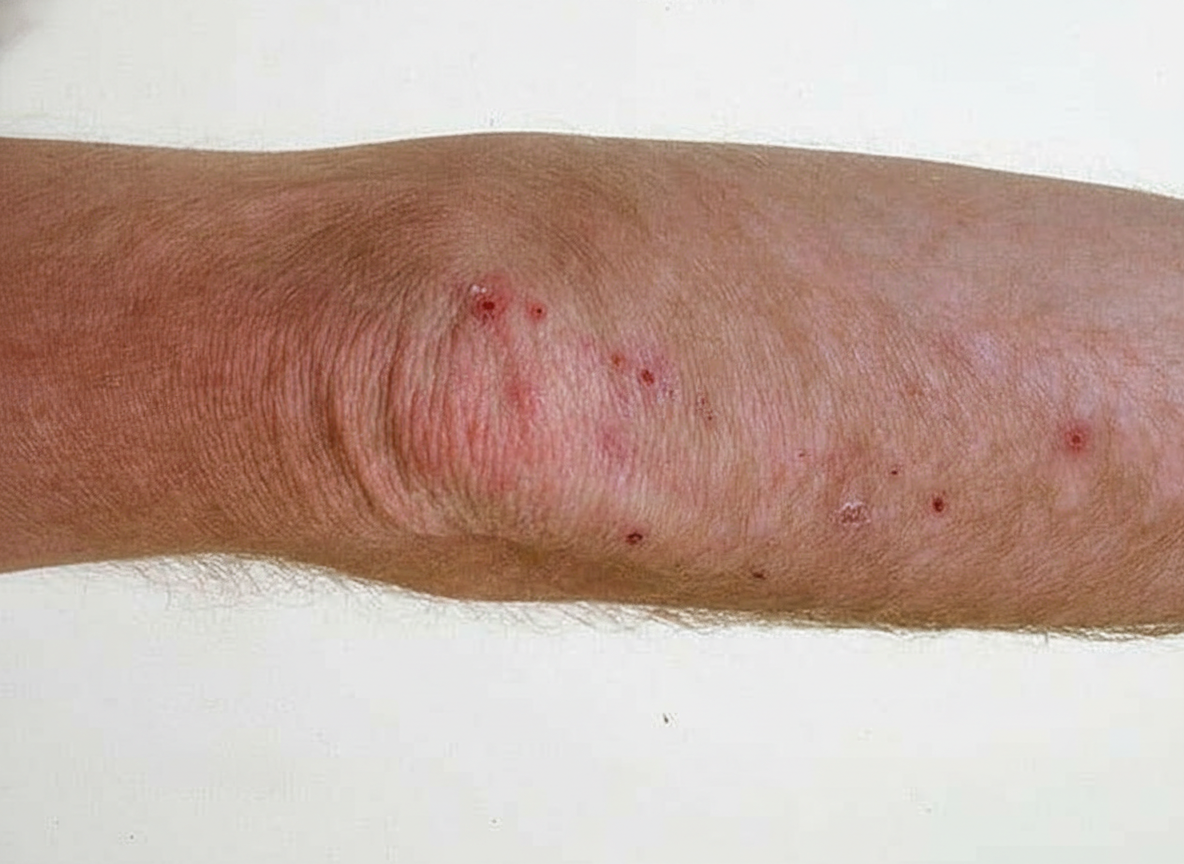
A 22-year-old man comes to the physician for the evaluation of a skin rash over both of his shoulders and elbows for the past 5 days. The patient reports severe itching and burning sensation. He has no history of serious illness except for recurrent episodes of diarrhea and abdominal cramps, which have occurred every once in a while over the past three months. He describes his stools as greasy and foul-smelling. He does not smoke or drink alcohol. He does not take illicit drugs. He takes no medications. He is 180 cm (5 ft 11 in) tall and weighs 60 kg (132 lb); BMI is 18.5 kg/m2. His temperature is 37°C (98.6°F), pulse is 70/min, and blood pressure is 110/70 mm Hg. Physical examination shows a symmetrical rash over his shoulders and knees. A photograph of the rash on his left shoulder is shown. Rubbing the affected skin does not lead to upper epidermal layer separation from the lower layer. His hemoglobin concentration is 10.2 g/dL, mean corpuscular volume is 63.2 μm3, and platelet count is 450,000/mm3. Which of the following is the most appropriate pharmacotherapy for this skin condition?
Q26
A 45-year-old woman presents to the emergency department with fever, cough, tonsillar enlargement, and bleeding lips. She has a diffuse blistering rash that encompasses the palms and soles of her feet, in total covering 55% of her total body surface area (TBSA). The upper epidermal layer easily slips away with slight rubbing. Within 24 hours the rash progresses to 88% TBSA involvement and the patient requires mechanical ventilation for respiratory distress. Which of the following is the most likely etiology of this patient’s condition?
Q27
A 28-year-old man comes to the physician for the evaluation of a progressively worsening tremor in his hands and multiple falls over the past 3 months. The tremor occurs both at rest and with movement. He also reports decreased concentration and a loss of interest in his normal activities over this time period. He has no history of serious medical illness and takes no medications. He drinks two alcoholic beverages daily and does not use illicit drugs. Vital signs are within normal limits. Physical exam shows mild jaundice, a flapping tremor, and a broad-based gait. Serum studies show:
Aspartate aminotransferase 554 U/L
Hepatitis B surface antibody positive
Hepatitis B surface antigen negative
Ceruloplasmin 5.5 mg/dL (normal: 19.0-31.0 mg/dL)
Which of the following is the most appropriate pharmacotherapy for this patient?
Q28
A 56-year-old woman comes to the physician with a 6-month history of black spots in her vision. She has been unable to drive at night for the past 4 months. The patient has rheumatoid arthritis, type 2 diabetes mellitus, and depression. Her mother has glaucoma. She has never smoked. She drinks one or two glasses of homemade moonshine every day after dinner. Current medications include metformin, citalopram, and chloroquine. She is 168 cm (5 ft 6 in) tall and weighs 79 kg (174 lb); BMI is 28 kg/m2. Her temperature is 36.8°C (98.2°F), pulse is 68/min, and blood pressure is 138/83 mm Hg. Examination shows swan neck deformities of both hands. The patient's vision is 20/20 in both eyes. She has difficulty adapting to changes in lighting in both eyes. Slit lamp examination shows a normal anterior segment. The posterior segment shows bilateral bull's eye macular lesions.
Hemoglobin 11.7 g/dL
Mean corpuscular volume 98 μm3
Serum
Alkaline phosphatase 65 U/L
Aspartate aminotransferase (AST, GOT) 20 U/L
Alanine aminotransferase (ALT, GPT) 17 U/L
γ-Glutamyltransferase (GGT) 90 U/L (N=5–50 U/L)
Which of the following is the most likely cause of this patient's symptoms?
Q29
A 74-year-old woman presents to the emergency department for shortness of breath and bilateral lower extremity pitting edema. She has had exacerbations like this in the past and notes that she has not been taking her home heart medications as scheduled. Review of systems is negative for any other symptoms including GI, urinary, and musculoskeletal symptoms. Physical exam reveals bilateral pulmonary crackles, lower extremity pitting edema that extends to the hip, and no abdominal tenderness. Neurological exam is unremarkable and the patient is at her baseline mental status. She is subsequently started on BiPAP, given furosemide, and admitted to the hospital. Routine admission workup includes urinalysis, which shows >100,000 cfu/mL of E. coli. She has no known drug allergies. Which of the following is the most appropriate treatment for this patient for this finding?
Q30
A 15-year-old boy with Down syndrome is admitted to the hospital because of a 2-week history of pallor, easy bruising, and progressive fatigue. He has a history of acute lymphoblastic leukemia that has been in remission for 2 years. Examination shows cervical and axillary lymphadenopathy. Bone marrow biopsy predominantly shows immature cells that stain positive for terminal deoxynucleotidyl transferase. A diagnosis of relapsed acute lymphoblastic leukemia is made. Treatment with a combination chemotherapeutic regimen including teniposide is initiated. The effect of this drug is best explained by which of the following mechanisms of action?
Antimicrobials US Medical PG Practice Questions and MCQs
Question 21: A 4-year-old boy is brought by his mother to the emergency room for malaise, dizziness, and sleepiness. The mother owns a dry cleaning shop and found her son in the back room with an open canister of carbon tetrachloride, one of their cleaning fluids. The boy reports feeling nauseous and has a mild headache. He has a history of spastic hemiplegic cerebral palsy and is seen regularly by a pediatric neurologist. He is otherwise healthy and takes no medications. His temperature is 98.6°F (37°C), blood pressure is 105/55 mmHg, pulse is 105/min, and respirations are 22/min. On exam, he appears tired and drowsy but is able to answer questions. He has increased tone in his left upper and lower extremities. Which of the following is most likely to be affected by this patient's exposure to the dry cleaning fluid?
A. Bone marrow
B. Myocardium
C. Hepatocytes (Correct Answer)
D. Lung parenchyma
E. Gastric mucosa
Explanation: ***Hepatocytes***
- **Carbon tetrachloride (CCl4)** is a potent **hepatotoxin** that is bioactivated in the liver by cytochrome P450 enzymes, leading to the formation of free radicals and subsequent **lipid peroxidation** and **hepatocellular necrosis**.
- Exposure to CCl4, commonly found in dry cleaning fluids, results in significant liver damage, manifesting as symptoms like nausea, malaise, and dizziness, with potential progression to liver failure.
*Bone marrow*
- While some toxins can affect bone marrow, such as benzene or certain chemotherapeutic agents, **carbon tetrachloride** is not primarily known for causing **bone marrow suppression** or hematological disorders.
- The symptoms described do not point to bone marrow dysfunction; instead, they align with acute toxic exposure affecting other organ systems.
*Myocardium*
- Although high doses of carbon tetrachloride can potentially induce cardiac arrhythmias or myocardial damage, it is **not the primary target organ** for acute CCl4 toxicity.
- **Dizziness** and **sleepiness** are more indicative of central nervous system involvement or general malaise rather than direct myocardial injury.
*Lung parenchyma*
- Inhalation of carbon tetrachloride vapors can cause **respiratory irritation** and, in severe cases, pulmonary edema, but **it is not the main organ system affected** by CCl4 poisoning.
- The presented symptoms of malaise, dizziness, and nausea are not typical primary manifestations of isolated lung parenchyma injury from CCl4.
*Gastric mucosa*
- While ingestion of CCl4 could cause **gastrointestinal irritation** and symptoms like nausea, the gastric mucosa is **not the main target organ responsible for the systemic toxicity** observed in CCl4 poisoning.
- The overall clinical picture, especially given the history of exposure to an industrial solvent, points more definitively to systemic organ damage, particularly hepatic.
Question 22: A 2-week-old boy presents to the pediatrics clinic. The medical records note a full-term delivery, however, the boy was born with chorioretinitis and swelling and calcifications in his brain secondary to an in utero infection. In immunocompromised patients, a drug can be used for prophylaxis against the pathogen responsible for this neonate's findings. This same drug also provides protection against which other microorganism?
A. Pneumocystis jirovecii (Correct Answer)
B. Mycobacterium tuberculosis
C. Cryptococcus neoformans
D. Mycobacterium avium complex
E. Cytomegalovirus
Explanation: ***Pneumocystis jirovecii***
- The neonate's symptoms of **chorioretinitis**, **intracranial calcifications**, and **brain swelling** are characteristic of congenital **toxoplasmosis**, caused by *Toxoplasma gondii*.
- In **immunocompromised patients** (especially those with HIV/AIDS and CD4 counts <100 cells/μL), **trimethoprim-sulfamethoxazole (TMP-SMX)** is used for dual prophylaxis against both *Toxoplasma gondii* and ***Pneumocystis jirovecii***.
- TMP-SMX is the **primary prophylactic agent** for *Pneumocystis jirovecii* pneumonia (PCP) and also provides effective protection against toxoplasmic encephalitis in this population.
*Mycobacterium tuberculosis*
- Tuberculosis prophylaxis primarily involves **isoniazid (INH)** or **rifampin**, not TMP-SMX.
- TB does not present with congenital chorioretinitis or diffuse intracranial calcifications.
*Cryptococcus neoformans*
- Prophylaxis for cryptococcosis in immunocompromised patients typically involves **fluconazole**, not TMP-SMX.
- Cryptococcal disease primarily causes meningitis and pulmonary disease in HIV/AIDS patients.
*Mycobacterium avium complex*
- MAC prophylaxis is typically with **azithromycin** or **clarithromycin**, not TMP-SMX.
- MAC infection presents with disseminated disease (fever, weight loss, anemia) in advanced HIV/AIDS, not congenital findings.
*Cytomegalovirus*
- While CMV can cause similar congenital findings (chorioretinitis and periventricular calcifications), CMV prophylaxis involves **ganciclovir** or **valganciclovir**, not TMP-SMX.
- TMP-SMX does not provide protection against CMV.
Question 23: At 10 a.m. this morning, a semi-truck carrying radioactive waste toppled over due to a blown tire. One container was damaged, and a small amount of its contents leaked into the nearby river. You are a physician on the government's hazardous waste committee and must work to alleviate the town's worries and minimize the health hazards due to the radioactive leak. You decide to prescribe a prophylactic agent to minimize any retention of radioactive substances in the body. Which of the following do you prescribe?
A. Potassium iodide (Correct Answer)
B. EDTA
C. Methylene blue
D. Vitamin C
E. Succimer
Explanation: ***Potassium iodide***
- **Potassium iodide (KI)** is used to block the uptake of **radioactive iodine** by the **thyroid gland**, preventing it from causing thyroid cancer.
- This is a crucial prophylactic measure when there's a risk of exposure to radioactive iodine, which is a common component of nuclear waste.
*EDTA*
- **EDTA (Ethylenediaminetetraacetic acid)** is a **chelating agent** used to treat **heavy metal poisoning**, such as lead poisoning.
- It works by binding to metal ions in the body, facilitating their excretion, but it is not effective against radioactive iodine.
*Methylene blue*
- **Methylene blue** is primarily used as an antidote for **methemoglobinemia**, a condition where the iron in hemoglobin is oxidized, reducing its oxygen-carrying capacity.
- It also has applications in diagnosing certain medical conditions and as an antiseptic but has no role in preventing radioactive iodine uptake.
*Vitamin C*
- **Vitamin C (ascorbic acid)** is an essential vitamin and a powerful **antioxidant**, important for immune function, collagen synthesis, and protecting cells from oxidative damage.
- It does not have any known protective action against the absorption or effects of radioactive substances.
*Succimer*
- **Succimer (DMSA)** is another **chelating agent** specifically approved for the treatment of **lead poisoning** in children and other heavy metal poisoning.
- While effective for heavy metal chelation, it does not prevent the uptake of radioactive iodine by the thyroid.
Question 24: A 25-year-old male graduate student is brought to the emergency department for respiratory distress after he was found by his roommate coughing and severely short of breath. He was diagnosed with HIV infection 3 months ago but is not compliant with his antiretroviral therapy. He is from Chile and moved here 5 years ago. He appears unwell and is unable to speak in full sentences. His temperature is 38.2°C (100.7°F), pulse is 127/min, respirations are 32/min, and blood pressure is 95/65 mm Hg. Pulse oximetry shows an oxygen saturation of 86% on room air. No oral thrush is seen. The patient is placed on supplemental oxygen. Serum studies show:
Lactate dehydrogenase 364 IU/L
CD4 cell count 98/mm3
Beta-D-glucan elevated
Arterial blood gas analysis shows:
pH 7.50
PaCO2 22 mm Hg
PaO2 60 mm Hg
HCO3 20 mEq/L
An x-ray of the chest is shown. Standard antibiotic therapy is begun immediately. The most appropriate next step in management is administration of which of the following?
A. Azithromycin
B. Isoniazid
C. Filgrastim
D. Antiretroviral therapy
E. Prednisone (Correct Answer)
Explanation: ***Prednisone***
- This patient presents with severe **Pneumocystis pneumonia (PCP)**, indicated by HIV infection with a CD4 count <200/mm3, dyspnea, hypoxemia (PaO2 60 mm Hg), elevated LDH, elevated Beta-D-glucan, and diffuse interstitial infiltrates on chest X-ray.
- For moderate to severe PCP (PaO2 <70 mmHg or A-a gradient >35 mmHg), **adjunctive corticosteroids (prednisone)** are crucial to reduce inflammation and improve outcomes.
*Azithromycin*
- Azithromycin is primarily used for bacterial infections, including atypical pneumonia and community-acquired pneumonia, but this patient's presentation is highly suggestive of **PCP**, a fungal infection.
- While macrolides can have immunomodulatory effects, they are not the primary or adjunctive treatment for severe PCP.
*Isoniazid*
- Isoniazid is a cornerstone drug for the treatment and prophylaxis of **tuberculosis**.
- There are no findings in the clinical presentation or lab results that strongly suggest active tuberculosis, and it would not address the acute respiratory distress from PCP.
*Filgrastim*
- Filgrastim is a **granulocyte colony-stimulating factor (G-CSF)** used to stimulate neutrophil production, primarily in conditions like neutropenia (e.g., due to chemotherapy or bone marrow failure).
- This patient's problem is an opportunistic infection (PCP) in the setting of immunosuppression, not primarily neutropenia, and filgrastim would not directly address the respiratory compromise.
*Antiretroviral therapy*
- While ART is essential for long-term management of HIV infection, initiating it during an acute opportunistic infection like severe PCP can sometimes lead to **IRIS (Immune Reconstitution Inflammatory Syndrome)**, potentially worsening the patient's condition.
- The immediate priority is to treat the PCP and stabilize the patient; ART is typically started or resumed a few weeks after PCP treatment initiation, once the patient is stable.
Question 25: A 22-year-old man comes to the physician for the evaluation of a skin rash over both of his shoulders and elbows for the past 5 days. The patient reports severe itching and burning sensation. He has no history of serious illness except for recurrent episodes of diarrhea and abdominal cramps, which have occurred every once in a while over the past three months. He describes his stools as greasy and foul-smelling. He does not smoke or drink alcohol. He does not take illicit drugs. He takes no medications. He is 180 cm (5 ft 11 in) tall and weighs 60 kg (132 lb); BMI is 18.5 kg/m2. His temperature is 37°C (98.6°F), pulse is 70/min, and blood pressure is 110/70 mm Hg. Physical examination shows a symmetrical rash over his shoulders and knees. A photograph of the rash on his left shoulder is shown. Rubbing the affected skin does not lead to upper epidermal layer separation from the lower layer. His hemoglobin concentration is 10.2 g/dL, mean corpuscular volume is 63.2 μm3, and platelet count is 450,000/mm3. Which of the following is the most appropriate pharmacotherapy for this skin condition?
A. Topical permethrin
B. Oral acyclovir
C. Topical coal tar
D. Oral dapsone (Correct Answer)
E. Systemic prednisone
Explanation: ***Oral dapsone***
- The patient's presentation with a **pruritic rash** on extensor surfaces, recurrent **diarrhea with greasy stools**, **iron deficiency anemia** with microcytosis, and low BMI (18.5) strongly suggests **dermatitis herpetiformis** secondary to **celiac disease**.
- **Oral dapsone** is the drug of choice for symptomatic relief of the rash in dermatitis herpetiformis, providing rapid relief from itching and burning.
*Topical permethrin*
- This is an antiparasitic medication used to treat **scabies** or **lice infestations**.
- The clinical presentation, including the characteristic rash distribution and associated gastrointestinal symptoms, does not align with a parasitic infection.
*Oral acyclovir*
- This antiviral medication is used to treat **herpes simplex virus** or **varicella-zoster virus** infections.
- The patient's rash is not vesicular or consistent with a herpetic eruption, and there are no prodromal symptoms typical of viral infections.
*Topical coal tar*
- Coal tar preparations are commonly used for chronic skin conditions like **psoriasis** or **eczema** due to their anti-inflammatory and antiproliferative properties.
- While it might alleviate some itching, it is not the specific or most effective treatment for dermatitis herpetiformis, especially given the clear systemic associations.
*Systemic prednisone*
- **Systemic corticosteroids** like prednisone are potent anti-inflammatory agents used for various severe inflammatory or autoimmune conditions.
- While it could reduce inflammation, dapsone is the preferred treatment for dermatitis herpetiformis because it specifically targets the neutrophilic infiltration characteristic of the disease and is effective at lower, less immunosuppressive doses.
Question 26: A 45-year-old woman presents to the emergency department with fever, cough, tonsillar enlargement, and bleeding lips. She has a diffuse blistering rash that encompasses the palms and soles of her feet, in total covering 55% of her total body surface area (TBSA). The upper epidermal layer easily slips away with slight rubbing. Within 24 hours the rash progresses to 88% TBSA involvement and the patient requires mechanical ventilation for respiratory distress. Which of the following is the most likely etiology of this patient’s condition?
A. Cytomegalovirus
B. Deficiency of C-1 esterase inhibitor
C. Exposure to carbamazepine (Correct Answer)
D. Herpes simplex virus
E. Molluscum contagiosum
Explanation: ***Exposure to carbamazepine***
- The rapid progression of a widespread blistering rash, **positive Nikolsky's sign** (skin slipping away), significant TBSA involvement (55% rapidly increasing to 88%), and systemic symptoms (fever, respiratory distress) are highly characteristic of **Stevens-Johnson Syndrome/Toxic Epidermal Necrolysis (SJS/TEN)**.
- **Carbamazepine** is a well-known medication trigger for SJS/TEN, a severe cutaneous adverse drug reaction.
*Cytomegalovirus*
- While CMV can cause a rash and systemic symptoms, it typically manifests as a **maculopapular rash** or purpura, not extensive blistering with a positive Nikolsky's sign.
- CMV infection usually presents with features like mononucleosis-like syndrome, hepatitis, or retinitis, which are not described here as the primary concern.
*Deficiency of C-1 esterase inhibitor*
- This deficiency causes **hereditary angioedema**, characterized by recurrent episodes of localized swelling, typically affecting the face, airways, and gastrointestinal tract.
- It does not cause a blistering rash or the extensive epidermal detachment seen in this patient.
*Herpes simplex virus*
- HSV can cause blistering lesions, but these are typically **localized vesicles** that progress to ulcers, such as cold sores or genital herpes.
- While widespread HSV infection can occur in immunocompromised patients, it does not typically present as a diffuse blistering rash with such extensive epidermal detachment and high TBSA involvement as described.
*Molluscum contagiosum*
- This is a viral skin infection that causes characteristic **dome-shaped, umbilicated papules**.
- It does not cause a widespread blistering rash, fever, or the severe systemic symptoms and epidermal detachment seen in this patient.
Question 27: A 28-year-old man comes to the physician for the evaluation of a progressively worsening tremor in his hands and multiple falls over the past 3 months. The tremor occurs both at rest and with movement. He also reports decreased concentration and a loss of interest in his normal activities over this time period. He has no history of serious medical illness and takes no medications. He drinks two alcoholic beverages daily and does not use illicit drugs. Vital signs are within normal limits. Physical exam shows mild jaundice, a flapping tremor, and a broad-based gait. Serum studies show:
Aspartate aminotransferase 554 U/L
Hepatitis B surface antibody positive
Hepatitis B surface antigen negative
Ceruloplasmin 5.5 mg/dL (normal: 19.0-31.0 mg/dL)
Which of the following is the most appropriate pharmacotherapy for this patient?
A. Penicillamine (Correct Answer)
B. Levodopa
C. Prednisolone
D. Deferoxamine
E. Tenofovir
Explanation: ***Penicillamine***
- This patient presents with symptoms and lab findings suggestive of **Wilson's disease**, including a **progressively worsening tremor** (both rest and action), **gait ataxia**, **neuropsychiatric symptoms** (decreased concentration, loss of interest), **jaundice**, **elevated AST**, and a **markedly low ceruloplasmin level**.
- **Penicillamine** is a copper chelating agent that promotes the excretion of copper and is an established treatment for Wilson's disease.
- Note: While penicillamine has been historically used as first-line therapy, current guidelines often favor **trientine or zinc** due to better side effect profiles, particularly in neurologic presentations. However, penicillamine remains a valid therapeutic option among the choices provided.
*Levodopa*
- **Levodopa** is a precursor to dopamine and is the primary treatment for **Parkinson's disease**, which typically presents with a rest tremor, bradykinesia, rigidity, and postural instability.
- While this patient has a tremor, his young age, liver involvement, and low ceruloplasmin point away from Parkinson's disease.
*Prednisolone*
- **Prednisolone** is a corticosteroid used as an anti-inflammatory and immunosuppressant, effective in treating conditions like autoimmune hepatitis or inflammatory bowel disease.
- It does not address the underlying **copper accumulation** in Wilson's disease, and the patient's presentation does not primarily suggest an autoimmune inflammatory process.
*Deferoxamine*
- **Deferoxamine** is an iron chelating agent used to treat **iron overload (hemochromatosis)**, typically caused by conditions like multiple blood transfusions or a genetic predisposition.
- This patient's symptoms and labs, particularly the low ceruloplasmin, do not indicate iron overload.
*Tenofovir*
- **Tenofovir** is an antiviral medication primarily used to treat **chronic hepatitis B** or HIV.
- While the patient has elevated AST and a history of hepatitis B exposure (indicated by positive surface antibody), his surface antigen is negative, meaning he is not currently infected with active hepatitis B, and his severe neurologic symptoms point to another diagnosis.
Question 28: A 56-year-old woman comes to the physician with a 6-month history of black spots in her vision. She has been unable to drive at night for the past 4 months. The patient has rheumatoid arthritis, type 2 diabetes mellitus, and depression. Her mother has glaucoma. She has never smoked. She drinks one or two glasses of homemade moonshine every day after dinner. Current medications include metformin, citalopram, and chloroquine. She is 168 cm (5 ft 6 in) tall and weighs 79 kg (174 lb); BMI is 28 kg/m2. Her temperature is 36.8°C (98.2°F), pulse is 68/min, and blood pressure is 138/83 mm Hg. Examination shows swan neck deformities of both hands. The patient's vision is 20/20 in both eyes. She has difficulty adapting to changes in lighting in both eyes. Slit lamp examination shows a normal anterior segment. The posterior segment shows bilateral bull's eye macular lesions.
Hemoglobin 11.7 g/dL
Mean corpuscular volume 98 μm3
Serum
Alkaline phosphatase 65 U/L
Aspartate aminotransferase (AST, GOT) 20 U/L
Alanine aminotransferase (ALT, GPT) 17 U/L
γ-Glutamyltransferase (GGT) 90 U/L (N=5–50 U/L)
Which of the following is the most likely cause of this patient's symptoms?
A. Angle-closure glaucoma
B. Age-related macular degeneration
C. Chloroquine retinopathy (Correct Answer)
D. Diabetic retinopathy
E. Methanol toxicity
Explanation: ***Chloroquine retinopathy***
- The presence of **bilateral bull's eye macular lesions** is a classic and highly specific finding for **chloroquine (or hydroxychloroquine) toxicity**.
- **Chloroquine** is known to cause dose-dependent retinopathy, leading to **vision changes** like black spots and difficulty with **night vision** as described.
*Angle-closure glaucoma*
- This condition presents with **sudden severe eye pain**, blurred vision, and a **mid-dilated pupil**, which are not reported here.
- While visual symptoms can occur, **bull's eye maculopathy** is not a feature of glaucoma; glaucoma primarily causes **optic nerve damage** and peripheral vision loss.
*Age-related macular degeneration*
- This typically presents with **gradual central vision loss**, metamorphopsia, and drusen or neovascularization on exam, not **bull's eye maculopathy**.
- Although the patient's age is a risk factor, the specific finding of **bull's eye macular lesions** points away from this diagnosis.
*Diabetic retinopathy*
- This condition is characterized by **microaneurysms**, hemorrhages, cotton wool spots, and neovascularization on funduscopic exam.
- While the patient has diabetes, the characteristic **bull's eye maculopathy** is not a feature of diabetic retinopathy, nor do her visual symptoms specifically align with its common presentations.
*Methanol toxicity*
- Methanol poisoning causes **severe visual loss** (often total blindness), **anion gap metabolic acidosis**, and symptoms like abdominal pain and altered mental status.
- While the patient consumes moonshine (which can contain methanol), her specific ocular findings and chronic presentation are inconsistent with acute methanol poisoning.
Question 29: A 74-year-old woman presents to the emergency department for shortness of breath and bilateral lower extremity pitting edema. She has had exacerbations like this in the past and notes that she has not been taking her home heart medications as scheduled. Review of systems is negative for any other symptoms including GI, urinary, and musculoskeletal symptoms. Physical exam reveals bilateral pulmonary crackles, lower extremity pitting edema that extends to the hip, and no abdominal tenderness. Neurological exam is unremarkable and the patient is at her baseline mental status. She is subsequently started on BiPAP, given furosemide, and admitted to the hospital. Routine admission workup includes urinalysis, which shows >100,000 cfu/mL of E. coli. She has no known drug allergies. Which of the following is the most appropriate treatment for this patient for this finding?
A. Nitrofurantoin
B. No treatment (Correct Answer)
C. Ceftriaxone
D. Levofloxacin
E. Trimethoprim-sulfamethoxazole
Explanation: ***No treatment***
- This patient presents with **asymptomatic bacteriuria (ASB)**, characterized by significant bacteriuria without symptoms of a urinary tract infection (UTI).
- Treatment of ASB is generally **not recommended** in non-pregnant women, as it does not reduce morbidity or mortality and can contribute to antibiotic resistance.
*Nitrofurantoin*
- This antibiotic is used for uncomplicated UTIs but is **not indicated** for asymptomatic bacteriuria.
- Its use in ASB would expose the patient to potential side effects and contribute to antibiotic resistance without clinical benefit.
*Ceftriaxone*
- A broad-spectrum antibiotic often used for more severe infections; however, it is **inappropriate** for asymptomatic bacteriuria.
- Using parenteral antibiotics like ceftriaxone for ASB significantly increases the risk of **Clostridioides difficile infection** and antimicrobial resistance without improving outcomes.
*Levofloxacin*
- A fluoroquinolone, typically reserved for complicated UTIs or situations where other antibiotics are not suitable, especially in patients with **drug allergies**.
- Its broad spectrum and potential for significant side effects like tendon rupture and **Clostridioides difficile infection** make it an **unsuitable choice** for asymptomatic bacteriuria.
*Trimethoprim-sulfamethoxazole*
- A common antibiotic for uncomplicated UTIs, but like other antibiotics, it is **not recommended** for asymptomatic bacteriuria.
- Treating ASB with this drug could lead to side effects such as **rash** or **hyperkalemia** and promote resistance to this widely used agent.
Question 30: A 15-year-old boy with Down syndrome is admitted to the hospital because of a 2-week history of pallor, easy bruising, and progressive fatigue. He has a history of acute lymphoblastic leukemia that has been in remission for 2 years. Examination shows cervical and axillary lymphadenopathy. Bone marrow biopsy predominantly shows immature cells that stain positive for terminal deoxynucleotidyl transferase. A diagnosis of relapsed acute lymphoblastic leukemia is made. Treatment with a combination chemotherapeutic regimen including teniposide is initiated. The effect of this drug is best explained by which of the following mechanisms of action?
A. Inhibition of microtubule formation
B. Increase in double-stranded DNA breaks (Correct Answer)
C. Inhibition of topoisomerase I
D. Decrease in nucleotide synthesis
E. Inhibition of thymidylate synthase
Explanation: ***Increase in double-stranded DNA breaks***
- **Teniposide** is a **topoisomerase II inhibitor**, which creates **double-stranded DNA breaks** by preventing the relegation of DNA after it has been cleaved.
- This leads to an accumulation of DNA breaks, triggering **apoptosis** in rapidly dividing cancer cells.
*Inhibition of microtubule formation*
- This mechanism is characteristic of **vinca alkaloids** (e.g., vincristine, vinblastine) and **taxanes** (e.g., paclitaxel, docetaxel).
- These drugs interfere with the formation and function of **microtubules**, which are essential for cell division and cell structure.
*Inhibition of topoisomerase I*
- This action is associated with **camptothecins** (e.g., irinotecan, topotecan), which specifically target **topoisomerase I**.
- Topoisomerase I inhibitors prevent the unwinding of DNA during replication, leading to **single-strand DNA breaks**.
*Decrease in nucleotide synthesis*
- This mechanism is employed by **antimetabolites** like **methotrexate** (folate antagonist) and **purine/pyrimidine analogs**.
- These drugs interfere with the production of DNA and RNA building blocks, thus inhibiting cell growth and division.
*Inhibition of thymidylate synthase*
- This is the primary mechanism of action for **5-fluorouracil (5-FU)**, which is a pyrimidine analog.
- By inhibiting **thymidylate synthase**, 5-FU prevents the synthesis of **thymidine monophosphate (dTMP)**, a crucial component for DNA synthesis.