A 60-year-old man presents to the emergency department with shortness of breath, cough, and fever. He states that his symptoms started a few days ago and have been progressively worsening. The patient recently returned from international travel. He works from home and manages a chicken coop as a hobby. He has a past medical history of an ST-elevation myocardial infarction and recently has had multiple sick contacts. His temperature is 102°F (38.9°C), blood pressure is 187/108 mmHg, pulse is 120/min, respirations are 17/min, and oxygen saturation is 93% on room air. A radiograph of the chest reveals bilateral pleural effusions. Pleurocentesis demonstrates the findings below:
Protein ratio (pleural/serum): 0.8
Lactate dehydrogenase ratio (pleural/serum): 0.75
Glucose: 25 mg/dL
Further analysis reveals a lymphocytic leukocytosis of the pleural fluid. Which of the following is the next best step in management?
Q182
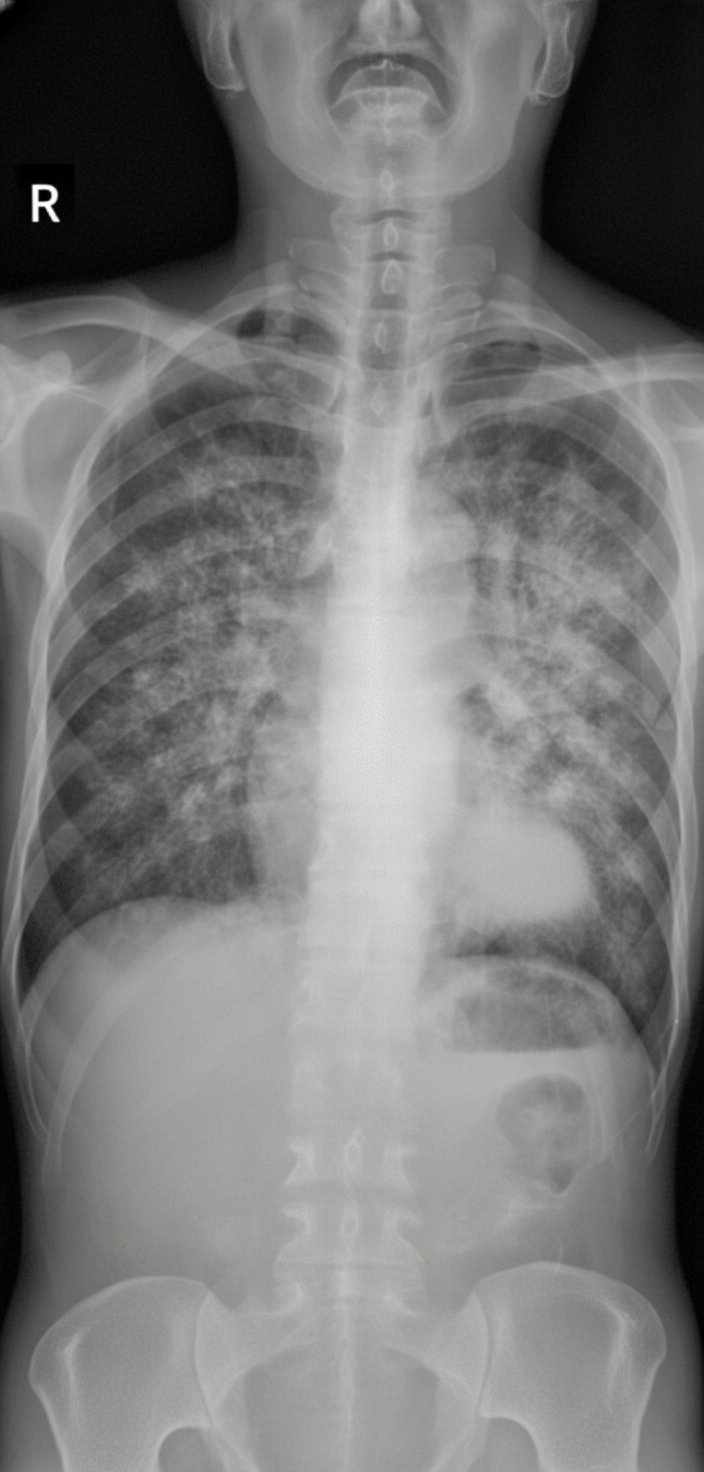
A 67-year-old female presents to the emergency room with dry cough and malaise. She has no other complaints. She has a past medical history of a meningioma status post resection complicated by hemiplegia and has been managed with dexamethasone for several months. Her vital signs are T 100.4 F (38 C), O2 93% on room air, RR 20, BP 115/75 mmHg. Physical examination is notable for crackles bilaterally. A chest radiograph is obtained (Image A). The patient is admitted and initially treated guideline-compliant antibiotics for community-acquired pneumonia. Unfortunately, her respiratory function deteriorates. An arterial blood gas is drawn. On room air at sea level, PaO2 is 71 mmHg and PaCO2 is 34 mmHg. Induced sputum samples reveal organisms on methenamine silver stain. What is the best treatment strategy for this patient?
Q183
A 26-year-old woman is brought to the emergency department after a suicide attempt. Her mother found her next to an empty bottle of acetaminophen in the bathroom. The patient reports that she ingested about twenty-five 500 mg pills. She took the pills 1 hour prior to arrival to the emergency department. She has a history of major depressive disorder. She does not smoke or use illicit drugs. Current medications include fluoxetine. She is oriented to person, place, and time. Vital signs are within normal limits. Physical examination shows no abnormalities. Laboratory studies show:
Hemoglobin 12.5 g/dL
Leukocyte count 8,000/mm3
Platelet count 150,000/mm3
Serum
Prothrombin time 10.5 sec (INR=1.0)
Na+ 141 mEq/L
K+ 4.2 mEq/L
Cl- 101 mEq/L
HCO3- 25 mEq/L
Urea nitrogen 10 g/dL
Creatinine 0.5 g/dL
Ca2+ 8.8 mg/dL
Total bilirubin 0.4 mg/dL
AST 22 U/L
ALT 25 U/L
Alkaline phosphatase 62 U/L
Which of the following is the most appropriate next step in management?
Q184
A 45-year-old female who recently immigrated to the United States presents to the community health clinic for episodes of disrupted vision. She is concerned because she knows several people from her hometown who went blind after having these episodes. Over the past several months, she also has developed itchy bumps on her back and lower extremities. Physical exam reveals black hyperpigmented nodules with edema and palpable lymphadenopathy, but is otherwise unremarkable without any visible discharge from the eyes. Her physician explains her underlying disease was likely transmitted by black flies. Which of the following is the most appropriate pharmacotherapy for this patient?
Q185
A 10-year-old girl is brought to the physician because of itching of the vulva and anal region for the past 2 weeks. She has difficulty sleeping because of the itching. Physical examination shows excoriation marks around the vulva and perianal region. There is minor perianal erythema, but no edema or fissures. Microscopy of an adhesive tape applied to the perianal region shows multiple ova. Which of the following is the most appropriate treatment for this patient?
Q186
A 23-year-old woman visits her general practitioner with left ear pain and fever. She complains of multiple episodes of respiratory infection including bronchitis, laryngitis, and sinusitis. She was diagnosed with systemic lupus erythematosus with nephritis 8 months ago and was placed on oral prednisone. Currently, she takes prednisone daily. Her vital signs are as follows: blood pressure 130/85 mm Hg, heart rate 79/min, respiratory rate 16/min, and temperature 37.5°C (99.5°F). Her weight is 78 kg (172 lb) and height is 169 cm (5 ft 6 in). Physical examination reveals a swollen erythematous left eardrum, erythematous macular rash over sun-exposed skin, and slight calf edema. Inhibition of which of the following pathways causes diminished immune cell activation in this patient?
Q187
A 44-year-old woman is being treated by her oncologist for metastatic breast cancer. The patient had noticed severe weight loss and a fixed breast mass over the past 8 months but refused to see a physician until her husband brought her in. Surgery is scheduled, and the patient is given an initial dose of radiation therapy to destroy malignant cells. Which of the following therapies was administered to this patient?
Q188
An 84-year-old man comes to the emergency department because of lower back pain and lower extremity weakness for 3 weeks. Over the past week, he has also found it increasingly difficult to urinate. He has a history of prostate cancer, for which he underwent radical prostatectomy 8 years ago. His prostate-specific antigen (PSA) level was undetectable until a routine follow-up visit last year, when it began to increase from 0.8 ng/mL to its present value of 64.3 ng/mL (N < 4). An MRI of the spine shows infiltrative vertebral lesions with a collapse of the L5 vertebral body, resulting in cord compression at L4–L5. The patient receives one dose of intravenous dexamethasone and subsequently undergoes external beam radiation. Which of the following cellular changes is most likely to occur as a result of this treatment?
Q189
Antituberculosis treatment is started. Two months later, the patient comes to the physician for a follow-up examination. The patient feels well. She reports that she has had tingling and bilateral numbness of her feet for the past 6 days. Her vital signs are within normal limits. Her lips are dry, scaly, and slightly swollen. Neurologic examination shows decreased sensation to pinprick and light touch over her feet, ankles, and the distal portion of her calves. Laboratory studies show:
Leukocyte count 7400 /mm3
RBC count 2.9 million/mm3
Hemoglobin 10.8 g/dL
Hematocrit 30.1%
Mean corpuscular volume 78 fL
Mean corpuscular hemoglobin 24.2 pg/cell
Platelet count 320,000/mm3
Serum
Glucose 98 mg/dL
Alanine aminotransferase (ALT) 44 U/L
Aspartate aminotransferase (AST) 52 U/L
Administration of which of the following is most likely to have prevented this patient's neurological symptoms?
Q190
A 62-year-old woman presents to the clinic with a lacerated wound on her left forearm. She got the wound accidentally when she slipped in her garden and scraped her hand against some nails sticking out of the fence. The patient has rheumatoid arthritis and takes methylprednisolone 16 mg/day. She cannot recall her vaccination history. On physical examination her blood pressure is 140/95 mm Hg, heart rate is 81/min, respiratory rate is 16/min, and temperature is 36.9°C (98.4°F). The wound is irregularly shaped and lacerated and measures 4 × 5 cm with a depth of 0.5 cm. It is contaminated with dirt. The physician decides to administer both the tetanus toxoid and immunoglobulin after wound treatment. What is true regarding the tetanus prophylaxis in this patient?
Antimicrobials US Medical PG Practice Questions and MCQs
Question 181: A 60-year-old man presents to the emergency department with shortness of breath, cough, and fever. He states that his symptoms started a few days ago and have been progressively worsening. The patient recently returned from international travel. He works from home and manages a chicken coop as a hobby. He has a past medical history of an ST-elevation myocardial infarction and recently has had multiple sick contacts. His temperature is 102°F (38.9°C), blood pressure is 187/108 mmHg, pulse is 120/min, respirations are 17/min, and oxygen saturation is 93% on room air. A radiograph of the chest reveals bilateral pleural effusions. Pleurocentesis demonstrates the findings below:
Protein ratio (pleural/serum): 0.8
Lactate dehydrogenase ratio (pleural/serum): 0.75
Glucose: 25 mg/dL
Further analysis reveals a lymphocytic leukocytosis of the pleural fluid. Which of the following is the next best step in management?
A. Furosemide
B. Azithromycin and ceftriaxone
C. Supportive therapy
D. Azithromycin and vancomycin
E. Rifampin, isoniazid, pyrazinamide, and ethambutol (Correct Answer)
Explanation: ***Rifampin, isoniazid, pyrazinamide, and ethambutol***
- The patient's **pleural fluid analysis** (exudative effusion by Light's criteria, low glucose, and lymphocytic leukocytosis) with a history of **recent international travel** and sick contacts, and hobbies involving **chickens**, strongly suggests **tuberculous pleurisy**.
- **Quadruple antituberculous therapy** is the appropriate initial management for active tuberculosis.
*Furosemide*
- This is a **diuretic** primarily used for conditions like **heart failure**, which causes **transudative effusions**.
- The patient's pleural fluid is **exudative** (high protein and LDH ratios), making furosemide inappropriate.
*Azithromycin and ceftriaxone*
- These are common antibiotics for **community-acquired bacterial pneumonia**.
- While the patient has respiratory symptoms, the **pleural fluid characteristics** (lymphocytic predominance, very low glucose) are not typical for uncomplicated bacterial pneumonia.
*Supportive therapy*
- While supportive care (oxygen, fluids) is always part of managing critically ill patients, it is **insufficient as the primary treatment** for a suspected active infectious process like tuberculosis.
- Delaying specific treatment for tuberculosis can lead to **disease progression** and poorer outcomes.
*Azithromycin and vancomycin*
- This combination targets a broader spectrum of bacteria, including atypical pathogens and MRSA, often used in severe bacterial pneumonia or healthcare-associated infections.
- However, the **pleural fluid characteristics** point away from typical bacterial causes and toward tuberculosis.
Question 182: A 67-year-old female presents to the emergency room with dry cough and malaise. She has no other complaints. She has a past medical history of a meningioma status post resection complicated by hemiplegia and has been managed with dexamethasone for several months. Her vital signs are T 100.4 F (38 C), O2 93% on room air, RR 20, BP 115/75 mmHg. Physical examination is notable for crackles bilaterally. A chest radiograph is obtained (Image A). The patient is admitted and initially treated guideline-compliant antibiotics for community-acquired pneumonia. Unfortunately, her respiratory function deteriorates. An arterial blood gas is drawn. On room air at sea level, PaO2 is 71 mmHg and PaCO2 is 34 mmHg. Induced sputum samples reveal organisms on methenamine silver stain. What is the best treatment strategy for this patient?
A. Piperacillin-tazobactam + steroids
B. Metronidazole
C. Trimethoprim-sulfamethoxazole
D. Trimethoprim-sulfamethoxazole + steroids (Correct Answer)
E. Piperacillin-tazobactam
Explanation: ***Trimethoprim-sulfamethoxazole + steroids***
- The patient's presentation with **subacute onset of dry cough**, **malaise**, diffuse infiltrates on chest X-ray, and a PaO2 of 71 mmHg (indicating **hypoxemia**) in an immunocompromised patient (due to chronic dexamethasone use) is highly suggestive of **Pneumocystis jirovecii pneumonia (PJP)**.
- **Trimethoprim-sulfamethoxazole (TMP-SMX)** is the first-line treatment for PJP, and adjunctive **corticosteroids** are indicated in patients with moderate to severe PJP (PaO2 < 70 mmHg on room air or A-a gradient > 35 mmHg).
*Piperacillin-tazobactam + steroids*
- **Piperacillin-tazobactam** is a broad-spectrum antibiotic effective against many bacterial pathogens but is **not active against PJP**.
- While steroids are relevant for severe PJP, the antimicrobial chosen is incorrect for this specific diagnosis.
*Metronidazole*
- **Metronidazole** is an antibiotic primarily used for anaerobic bacterial infections and certain parasitic infections; it has **no activity against PJP**.
- Its use here would be ineffective and delay appropriate treatment.
*Trimethoprim-sulfamethoxazole*
- While **trimethoprim-sulfamethoxazole** is the correct antimicrobial for PJP, the patient's **hypoxemia** (PaO2 71 mmHg) indicates moderate to severe disease.
- For moderate to severe PJP, **adjunctive corticosteroids** are crucial to reduce inflammation and mortality.
*Piperacillin-tazobactam*
- **Piperacillin-tazobactam** is a broad-spectrum antibiotic effective against many bacterial pathogens but is **not active against PJP**.
- This antibiotic would be ineffective and does not address the likely diagnosis in an immunocompromised patient with hypoxemia.
Question 183: A 26-year-old woman is brought to the emergency department after a suicide attempt. Her mother found her next to an empty bottle of acetaminophen in the bathroom. The patient reports that she ingested about twenty-five 500 mg pills. She took the pills 1 hour prior to arrival to the emergency department. She has a history of major depressive disorder. She does not smoke or use illicit drugs. Current medications include fluoxetine. She is oriented to person, place, and time. Vital signs are within normal limits. Physical examination shows no abnormalities. Laboratory studies show:
Hemoglobin 12.5 g/dL
Leukocyte count 8,000/mm3
Platelet count 150,000/mm3
Serum
Prothrombin time 10.5 sec (INR=1.0)
Na+ 141 mEq/L
K+ 4.2 mEq/L
Cl- 101 mEq/L
HCO3- 25 mEq/L
Urea nitrogen 10 g/dL
Creatinine 0.5 g/dL
Ca2+ 8.8 mg/dL
Total bilirubin 0.4 mg/dL
AST 22 U/L
ALT 25 U/L
Alkaline phosphatase 62 U/L
Which of the following is the most appropriate next step in management?
A. Administer N-acetylcysteine (Correct Answer)
B. Admit for observation
C. Administer activated charcoal
D. List for liver transplant
E. Perform liver biopsy
Explanation: ***Administer N-acetylcysteine***
- The patient ingested a significant amount of **acetaminophen** (25 x 500 mg = 12,500 mg or 12.5 grams), which is a potentially fatal dose, necessitating immediate administration of **N-acetylcysteine (NAC)** as an antidote.
- NAC replenishes **glutathione stores**, which helps detoxify the toxic metabolite N-acetyl-p-benzoquinone imine (NAPQI) and prevents **hepatic necrosis**.
*Admit for observation*
- While observation is part of the management, simply admitting for observation without administering **NAC** would be insufficient and potentially dangerous given the high dose of **acetaminophen** ingested.
- The risk of **liver damage** is high with this dose; active treatment is required, not just monitoring.
*Administer activated charcoal*
- **Activated charcoal** is most effective when administered within **1-2 hours** of ingestion. Although the patient presented within 1 hour, **NAC** is the more critical intervention for **acetaminophen overdose** to prevent **hepatotoxicity**.
- Activated charcoal's efficacy significantly decreases after 1 hour, and it does not directly prevent the toxic effects of acetaminophen on the liver, unlike NAC.
*List for liver transplant*
- **Liver transplant** is considered for **fulminant hepatic failure** unresponsive to medical management, indicated by severe coagulopathy, encephalopathy, and persistent metabolic acidosis, which are not present at this early stage.
- Administering **NAC** promptly can prevent the progression to severe **liver damage** that would necessitate a transplant.
*Perform liver biopsy*
- A **liver biopsy** is an invasive procedure and is not indicated in the acute management of **acetaminophen overdose**.
- Diagnostic information regarding liver damage (e.g., AST/ALT levels) can be obtained through less invasive blood tests, and the priority is to administer the antidote rather than perform a biopsy.
Question 184: A 45-year-old female who recently immigrated to the United States presents to the community health clinic for episodes of disrupted vision. She is concerned because she knows several people from her hometown who went blind after having these episodes. Over the past several months, she also has developed itchy bumps on her back and lower extremities. Physical exam reveals black hyperpigmented nodules with edema and palpable lymphadenopathy, but is otherwise unremarkable without any visible discharge from the eyes. Her physician explains her underlying disease was likely transmitted by black flies. Which of the following is the most appropriate pharmacotherapy for this patient?
A. Diethylcarbamazine
B. Ivermectin (Correct Answer)
C. Praziquantel
D. Mebendazole
E. Nifurtimox
Explanation: ***Ivermectin***
- This patient presents with symptoms characteristic of **onchocerciasis** (river blindness), including visual disturbances, itchy skin nodules, and transmission by **black flies**.
- **Ivermectin** is the drug of choice for onchocerciasis as it effectively kills the **microfilariae** and reduces the adult worm burden.
*Diethylcarbamazine*
- While effective against some filarial infections, **diethylcarbamazine (DEC)** is contraindicated in onchocerciasis due to the risk of severe and potentially fatal **Mazzotti reaction**.
- This reaction results from a rapid killing of microfilariae, leading to intense inflammation, bronchospasm, and hypotension.
*Praziquantel*
- **Praziquantel** is the drug of choice for treating **schistosomiasis** and **tapeworm infections**.
- It has no activity against the filarial nematodes that cause onchocerciasis.
*Mebendazole*
- **Mebendazole** is an anthelminthic primarily used to treat intestinal nematode infections like **ascariasis**, **hookworm**, and **pinworm**.
- It is not effective against onchocerciasis.
*Nifurtimox*
- **Nifurtimox** is the drug of choice for treating **Chagas disease** (American trypanosomiasis).
- It has no role in the treatment of onchocerciasis.
Question 185: A 10-year-old girl is brought to the physician because of itching of the vulva and anal region for the past 2 weeks. She has difficulty sleeping because of the itching. Physical examination shows excoriation marks around the vulva and perianal region. There is minor perianal erythema, but no edema or fissures. Microscopy of an adhesive tape applied to the perianal region shows multiple ova. Which of the following is the most appropriate treatment for this patient?
A. Mebendazole (Correct Answer)
B. Diethylcarbamazine
C. Praziquantel
D. Nifurtimox
E. Melarsoprol
Explanation: ### ***Mebendazole***
* This patient's symptoms (perianal and vulvar itching, difficulty sleeping, excoriation marks) along with the finding of **ova on an adhesive tape test** are characteristic of **enterobiasis (pinworm infection)** caused by *Enterobius vermicularis*.
* **Mebendazole** is an **effective and commonly used broad-spectrum anthelmintic for pinworm infections**, working by inhibiting microtubule synthesis in the worms.
### *Diethylcarbamazine*
* **Diethylcarbamazine** is primarily used to treat **filariasis (e.g., lymphatic filariasis caused by *Wuchereria bancrofti* or *Brugia malayi*)** and **loiasis (*Loa loa*)**.
* It is not indicated for the treatment of pinworm infection.
### *Praziquantel*
* **Praziquantel** is the drug of choice for treating **schistosomiasis (bilharzia)** and most **cestode (tapeworm) infections**.
* It works by increasing parasitic cell membrane permeability to calcium, causing paralysis and dislodgement of the worms, but it is not effective against pinworms.
### *Nifurtimox*
* **Nifurtimox** is an antiprotozoal drug primarily used for the treatment of **Chagas disease** (American trypanosomiasis) caused by *Trypanosoma cruzi*.
* It is not used for helminthic infections like pinworms.
### *Melarsoprol*
* **Melarsoprol** is a highly toxic arsenic-containing drug reserved for the treatment of **late-stage (meningoencephalitic stage) African trypanosomiasis** (sleeping sickness) caused by *Trypanosoma brucei rhodesiense* and *gambiense*.
* Its severe side effects make it unsuitable for common parasitic infections like pinworms.
Question 186: A 23-year-old woman visits her general practitioner with left ear pain and fever. She complains of multiple episodes of respiratory infection including bronchitis, laryngitis, and sinusitis. She was diagnosed with systemic lupus erythematosus with nephritis 8 months ago and was placed on oral prednisone. Currently, she takes prednisone daily. Her vital signs are as follows: blood pressure 130/85 mm Hg, heart rate 79/min, respiratory rate 16/min, and temperature 37.5°C (99.5°F). Her weight is 78 kg (172 lb) and height is 169 cm (5 ft 6 in). Physical examination reveals a swollen erythematous left eardrum, erythematous macular rash over sun-exposed skin, and slight calf edema. Inhibition of which of the following pathways causes diminished immune cell activation in this patient?
A. NF-κB pathway (Correct Answer)
B. PI3K/AKT/mTOR pathway
C. Notch pathway
D. Wnt pathway
E. Hippo pathway
Explanation: ***NF-κB pathway***
- This patient is on **prednisone**, a glucocorticoid, to manage her **systemic lupus erythematosus (SLE)**. Glucocorticoids exert their anti-inflammatory and immunosuppressive effects primarily by inhibiting the **NF-κB pathway**.
- Inhibition of **NF-κB** prevents the transcription of pro-inflammatory genes, including those for **cytokines**, chemokines, and adhesion molecules, thereby diminishing immune cell activation and reducing inflammation.
*PI3K/AKT/mTOR pathway*
- This pathway is crucial for cell growth, proliferation, survival, and metabolism, and its dysregulation is often associated with cancer.
- While it can influence immune cell function, it is **not the primary target** of glucocorticoids like prednisone in suppressing immune activation.
*Notch pathway*
- The **Notch pathway** is critical for cell-to-cell communication, regulating cell fate decisions, differentiation, proliferation, and apoptosis, particularly in embryonic development and T-cell differentiation.
- It is **not the main mechanism** by which glucocorticoids exert their immunosuppressive effects.
*Wnt pathway*
- The **Wnt pathway** plays a significant role in embryogenesis, tissue homeostasis, and regeneration, particularly in cell proliferation, differentiation, and migration.
- It is **not the primary target** for the immunosuppressive action of glucocorticoids in conditions like SLE.
*Hippo pathway*
- The **Hippo pathway** is essential for organ size control, cell proliferation, and apoptosis, often acting as a tumor suppressor pathway.
- While important in cell regulation, it is **not directly inhibited by glucocorticoids** to achieve immune suppression.
Question 187: A 44-year-old woman is being treated by her oncologist for metastatic breast cancer. The patient had noticed severe weight loss and a fixed breast mass over the past 8 months but refused to see a physician until her husband brought her in. Surgery is scheduled, and the patient is given an initial dose of radiation therapy to destroy malignant cells. Which of the following therapies was administered to this patient?
A. Induction therapy
B. Salvage therapy
C. Adjuvant therapy
D. Consolidation therapy
E. Maintenance therapy
F. Neoadjuvant therapy (Correct Answer)
Explanation: ***Neoadjuvant therapy***
- This therapy refers to treatment given **before the primary definitive treatment** (usually surgery) to shrink the tumor and improve surgical outcomes.
- In solid tumors like breast cancer, **radiation or chemotherapy administered before surgery** is called neoadjuvant therapy.
- In this case, radiation therapy is given to reduce the size of the fixed breast mass before surgical resection, which is the classic indication for neoadjuvant treatment.
*Induction therapy*
- This term is primarily used in **hematologic malignancies** (leukemias, lymphomas) to describe initial intensive treatment aimed at achieving remission.
- While conceptually similar to neoadjuvant therapy, "induction" is not the standard terminology for pre-operative treatment in solid tumors.
*Salvage therapy*
- This therapy is used when initial treatments have **failed** or when the disease **recurs** after prior therapy.
- Here, the radiation is given as the *initial* treatment before surgery, not as a response to treatment failure.
*Adjuvant therapy*
- This therapy is given **after the primary treatment** (e.g., surgery) to eliminate remaining microscopic disease and prevent recurrence.
- The radiation here is administered *before* surgery, not as a follow-up measure.
*Maintenance therapy*
- This therapy is administered for an **extended period** at lower doses to prevent cancer growth or recurrence after initial intensive treatment has achieved remission.
- This is not applicable to the initial pre-surgical treatment described.
*Consolidation therapy*
- This therapy is given after induction therapy in hematologic malignancies to **deepen the initial response** or to eliminate residual disease.
- This term is not used for pre-operative treatment in solid tumors.
Question 188: An 84-year-old man comes to the emergency department because of lower back pain and lower extremity weakness for 3 weeks. Over the past week, he has also found it increasingly difficult to urinate. He has a history of prostate cancer, for which he underwent radical prostatectomy 8 years ago. His prostate-specific antigen (PSA) level was undetectable until a routine follow-up visit last year, when it began to increase from 0.8 ng/mL to its present value of 64.3 ng/mL (N < 4). An MRI of the spine shows infiltrative vertebral lesions with a collapse of the L5 vertebral body, resulting in cord compression at L4–L5. The patient receives one dose of intravenous dexamethasone and subsequently undergoes external beam radiation. Which of the following cellular changes is most likely to occur as a result of this treatment?
A. Intercalation of neighbouring DNA base pairs
B. Disruption of microtubule assembly
C. Formation of DNA crosslinks
D. Generation of hydroxyl radicals (Correct Answer)
E. Formation of pyrimidine dimers
Explanation: ***Generation of hydroxyl radicals***
- **External beam radiation** primarily causes cellular damage through the **ionization of water molecules**, leading to the formation of highly reactive **hydroxyl radicals**.
- These radicals directly damage **DNA**, proteins, and cell membranes, leading to **cell death or apoptosis**, especially in rapidly dividing cells like cancer cells.
*Intercalation of neighbouring DNA base pairs*
- This mechanism is characteristic of certain **chemotherapeutic agents** (e.g., **doxorubicin**, **daunorubicin**) that insert themselves between stacked DNA base pairs.
- This process distorts the DNA helix, interfering with replication and transcription, but it is **not the primary mechanism of radiation therapy**.
*Disruption of microtubule assembly*
- **Microtubule inhibitors** (e.g., **vincristine**, **paclitaxel**) disrupt the formation or disassembly of microtubules, which are essential for cell division and intracellular transport.
- While this is a common mechanism of action for some **chemotherapeutic drugs**, it is **not how radiation therapy works**.
*Formation of DNA crosslinks*
- **Alkylating agents** (e.g., **cyclophosphamide**, **cisplatin**) form covalent bonds within or between DNA strands, creating crosslinks that prevent DNA replication and transcription.
- Though highly damaging to DNA, this is a distinct mechanism of action typically associated with **chemotherapy**, not direct radiation.
*Formation of pyrimidine dimers*
- **Ultraviolet (UV) radiation** causes the formation of **pyrimidine dimers** (e.g., thymine dimers) in DNA.
- This type of DNA damage is characteristic of UV light exposure and is **not the primary mechanism of action for external beam radiation therapy**, which uses higher-energy ionizing radiation.
Question 189: Antituberculosis treatment is started. Two months later, the patient comes to the physician for a follow-up examination. The patient feels well. She reports that she has had tingling and bilateral numbness of her feet for the past 6 days. Her vital signs are within normal limits. Her lips are dry, scaly, and slightly swollen. Neurologic examination shows decreased sensation to pinprick and light touch over her feet, ankles, and the distal portion of her calves. Laboratory studies show:
Leukocyte count 7400 /mm3
RBC count 2.9 million/mm3
Hemoglobin 10.8 g/dL
Hematocrit 30.1%
Mean corpuscular volume 78 fL
Mean corpuscular hemoglobin 24.2 pg/cell
Platelet count 320,000/mm3
Serum
Glucose 98 mg/dL
Alanine aminotransferase (ALT) 44 U/L
Aspartate aminotransferase (AST) 52 U/L
Administration of which of the following is most likely to have prevented this patient's neurological symptoms?
A. Interferon beta
B. Iron
C. Vitamin B12
D. Vitamin E
E. Pyridoxine (Correct Answer)
Explanation: ***Pyridoxine***
- The patient is experiencing **peripheral neuropathy** (tingling, numbness in feet) and **cheilosis** (dry, scaly, swollen lips), which are characteristic side effects of **isoniazid** (an antituberculosis drug).
- Isoniazid interferes with **pyridoxine (vitamin B6)** metabolism, leading to its deficiency, which can be prevented by co-administering **pyridoxine** with isoniazid.
*Interferon beta*
- **Interferon beta** is primarily used in the treatment of **multiple sclerosis** to reduce the frequency and severity of relapses by modulating the immune system.
- It is not related to the metabolic pathways or side effects of antituberculosis medications and would not prevent these neurologic symptoms.
*Iron*
- The patient's mild microcytic anemia (low Hb, low MCV, low MCH) could suggest **iron deficiency**, but this is not the primary cause of her neurological symptoms.
- While iron supplementation would address the anemia, it would not prevent the **isoniazid-induced peripheral neuropathy** or cheilosis.
*Vitamin B12*
- **Vitamin B12 deficiency** can cause peripheral neuropathy and anemia, often **macrocytic anemia**, but the patient here has **microcytic anemia** and cheilosis.
- Furthermore, the symptoms are characteristic of **isoniazid-induced pyridoxine deficiency** occurring during antituberculosis treatment, rather than an underlying B12 deficiency.
*Vitamin E*
- **Vitamin E deficiency** can cause neurological symptoms, including neuropathy and ataxia, due to its role as an **antioxidant** protecting nerve membranes.
- However, there is no direct link between antituberculosis drugs like isoniazid and vitamin E deficiency, and supplementation would not prevent the specific neurological symptoms seen here.
Question 190: A 62-year-old woman presents to the clinic with a lacerated wound on her left forearm. She got the wound accidentally when she slipped in her garden and scraped her hand against some nails sticking out of the fence. The patient has rheumatoid arthritis and takes methylprednisolone 16 mg/day. She cannot recall her vaccination history. On physical examination her blood pressure is 140/95 mm Hg, heart rate is 81/min, respiratory rate is 16/min, and temperature is 36.9°C (98.4°F). The wound is irregularly shaped and lacerated and measures 4 × 5 cm with a depth of 0.5 cm. It is contaminated with dirt. The physician decides to administer both the tetanus toxoid and immunoglobulin after wound treatment. What is true regarding the tetanus prophylaxis in this patient?
A. It does not make sense to administer tetanus toxoid as it will fail to induce sufficient immunity in a patient who takes oral glucocorticoids.
B. The immunoglobulin administration will provide sufficient levels of anti-tetanus toxin antibodies until the production of the patient’s own antibodies starts. (Correct Answer)
C. It does not make sense to administer tetanus toxoid as it will fail to induce sufficient immunity in patients aged more than 60 years.
D. The immunoglobulin is given to this patient to promote the action of the toxoid and antibody production.
E. Immunoglobulin administration can provide constant levels of antibodies in the patient’s blood for more than 4 months.
Explanation: ***The immunoglobulin administration will provide sufficient levels of anti-tetanus toxin antibodies until the production of the patient’s own antibodies starts.***
* **Tetanus immunoglobulin (TIG)** provides immediate, but temporary, passive immunity through pre-formed antibodies, crucial for high-risk wounds in unvaccinated or immunocompromised individuals.
* This **passive immunity** offers immediate protection while the patient's immune system begins to mount an active response to the **tetanus toxoid vaccine**.
*It does not make sense to administer tetanus toxoid as it will fail to induce sufficient immunity in a patient who takes oral glucocorticoids.*
* While **glucocorticoids (like methylprednisolone)** can reduce the immune response, **tetanus toxoid** vaccination is still recommended, although the immune response might be attenuated.
* A **reduced, but still present, immune response** from vaccination in combination with passive immunity from TIG offers better long-term protection than TIG alone.
*It does not make sense to administer tetanus toxoid as it will fail to induce sufficient immunity in patients aged more than 60 years.*
* **Age alone** is not a contraindication for tetanus toxoid vaccination; while the immune response may be somewhat reduced in older adults, it can still provide significant protection.
* The **immunogenicity of tetanus toxoid** remains high in older adults, and it is part of routine vaccination schedules for all ages.
*The immunoglobulin is given to this patient to promote the action of the toxoid and antibody production.*
* **Immunoglobulin (TIG)** provides immediate passive immunity; it does not promote or enhance the active immune response induced by the **tetanus toxoid vaccine**.
* The toxoid stimulates the patient's own immune system to produce antibodies, a process that is separate from the immediate, temporary protection offered by immunoglobulin.
*Immunoglobulin administration can provide constant levels of antibodies in the patient’s blood for more than 4 months.*
* **Tetanus immunoglobulin** provides only **short-term passive immunity**, with antibodies typically lasting for a few weeks to a few months, not more than 4 months.
* For long-term protection, **active immunization with tetanus toxoid** is necessary, as it induces memory B and T cells.