A 40-year-old man with AIDS comes to the physician because of a 3-week history of intermittent fever, abdominal pain, and diarrhea. He has also had a nonproductive cough and a 3.6-kg (8-lb) weight loss in this period. He was treated for pneumocystis pneumonia 2 years ago. He has had skin lesions on his chest for 6 months. Five weeks ago, he went on a week-long hiking trip in Oregon. Current medications include efavirenz, tenofovir, and emtricitabine. He says he has had trouble adhering to his medication. His temperature is 38.3°C (100.9°F), pulse is 96/min, and blood pressure is 110/70 mm Hg. Examination shows oral thrush on his palate and a white, non-scrapable plaque on the left side of the tongue. There is axillary and inguinal lymphadenopathy. There are multiple violaceous plaques on the chest. Crackles are heard on auscultation of the chest. Abdominal examination shows mild, diffuse tenderness throughout the lower quadrants. The liver is palpated 2 to 3 cm below the right costal margin, and the spleen is palpated 1 to 2 cm below the left costal margin. Laboratory studies show:
Hemoglobin 12.2 g/dL
Leukocyte count 4,800/mm3
CD4+ T-lymphocytes 44/mm3 (Normal ≥ 500 mm3)
Platelet count 258,000/mm3
Serum
Na+ 137 mEq/L
Cl- 102 mEq/L
K+ 4.9 mEq/L
Alkaline phosphatase 202 U/L
One set of blood culture grows acid-fast organisms. A PPD skin test shows 4 mm of induration. Which of the following is the most appropriate pharmacotherapy for this patient's condition?
Q132
For which patient would isoniazid monotherapy be most appropriate?
Q133
A 32-year-old man is admitted to the hospital for evaluation of a 3-month history of insomnia, odynophagia, and irritability. He works in a metal refinery. He appears distracted and irritable. Oral examination shows inflammation of the gums and buccal mucosa with excessive salivation. Neurological examination shows a broad-based gait and an intention tremor in both hands. After treatment with dimercaprol is begun, his symptoms slowly improve. This patient was most likely exposed to which of the following?
Q134
A 25-year-old man presents with jaw discomfort and the inability to open his mouth fully for about 3 days. About a week ago, he says he cut himself while preparing a chicken dinner but did not seek medical assistance. Five days after the original injury, he started noticing jaw discomfort and an inability to open his mouth completely. He has no history of a serious illness or allergies and takes no medications. The patient says he had received his primary tetanus series in childhood, and that his last booster was more than 10 years ago. His blood pressure is 125/70 mm Hg and temperature is 36.9℃ (98.5°F). On physical examination, the patient is unable to open his jaw wider than 2.5 cm. Head and neck examinations are otherwise unremarkable. There is a 5 cm linear shallow laceration with some granulation tissue on the right index finger without necrosis, erythema, or pus. After wound care and initiation of metronidazole, which of the following is the next best step in the management of this patient?
Q135
A 46-year-old woman presents to her family physician for a general wellness checkup with a chief complaint of high levels of anxiety over the past year. Her anxiety has started to affect her performance at work, making her even more anxious and concerned that she will lose her job. She started psychotherapy several months ago and has experienced minimal improvement in her symptoms from this treatment. The patient is vehemently opposed to beginning any pharmacologic treatment for anxiety; however, she is interested in potential herbal remedies and has started taking kava. She also takes vitamin D, a multivitamin, fish oil, protein powder, and drinks goat milk regularly. The patient works as a commercial sex worker and has a history of IV drug abuse and alcohol abuse which she states she has not used in over a year. She has chronic tension headaches for which she self-administers acetaminophen usually multiple times per day. Her last wellness appointment was unremarkable and these problems are new. Laboratory values are ordered as seen below.
Hemoglobin: 13 g/dL
Hematocrit: 38%
Leukocyte count: 6,870/mm^3 with normal differential
Platelet count: 227,000/mm^3
Serum:
Na+: 138 mEq/L
Cl-: 102 mEq/L
K+: 4.1 mEq/L
HCO3-: 25 mEq/L
BUN: 20 mg/dL
Glucose: 111 mg/dL
Creatinine: 1.0 mg/dL
Ca2+: 10.2 mg/dL
AST: 82 U/L
ALT: 90 U/L
Which of the following is the most likely cause of this patient's lab derangements?
Q136
A 29-year-old woman presents to the physician with a blurred vision of her right eye over the past day. She has pain around her right eye during eye movement. She has a history of tingling in her left leg 5 months ago, which spontaneously resolved after 2 weeks. She takes no medications. Her blood pressure is 110/70 mm Hg, the pulse is 72/min, the respirations are 15/min, and the temperature is 36.5℃ (97.7℉). On physical examination, after illumination of the left eye and bilateral pupillary constriction, illumination of the right eye shows pupillary dilation. Fundoscopic examination shows optic disk swelling in the right eye. A color vision test shows decreased perception in the right eye. The remainder of the physical examination shows no abnormalities. A brain MRI shows several foci of hyperintensity in the periventricular and juxtacortical regions. Which of the following is the most appropriate next step in management?
Q137
A 25-year-old medical student returns from a volunteer mission trip in Nicaragua with persistent cough and occasional hemoptysis for 3 weeks. A purified protein derivative test revealing a 20 mm wheal and a chest radiograph with hilar lymphadenopathy support a diagnosis of active tuberculosis. The patient is started on appropriate therapy. Among the prescribed medications, one drug inhibits carbohydrate polymerization of the pathogen's cell wall. What is the most likely complaint that the patient may present with because of this drug?
Q138
A 50-year-old woman presents with an acute worsening of a chronic rash on her arms and hands for the past week. She says she first noticed the rash 1 year ago which started as little red spots and gradually increased in size. 7 days ago, she noticed the rash suddenly got much worse and spread to her inguinal area, scalp, and knees, which has steadily worsened. She describes the rash as itchy but generally not painful. She says she feels it is very noticeable now and is causing her significant anxiety and depression in addition to the discomfort. The patient denies any fever, chills, sick contacts, or recent travel, and has no significant past medical history. She denies any alcohol use, smoking history, or recreational drug use. Her family history is significant for Crohn disease in her mother and maternal grandmother. She mentions that she has been excessively stressed the past few weeks as she is starting a new job. Review of systems is significant for early morning swelling of the distal joints in her hands and feet for the past 3 months. The patient is afebrile and her vital signs are within normal limits. On physical examination, there are multiple silvery scaly plaques on the extensor surfaces of her upper extremities bilaterally as shown in the exhibit (see image). Similar lesions are present on both knees, inguinal area, and scalp, involving > 10% of her total body surface area. Laboratory tests are unremarkable. Which of the following is the next best step in the management of this patient?
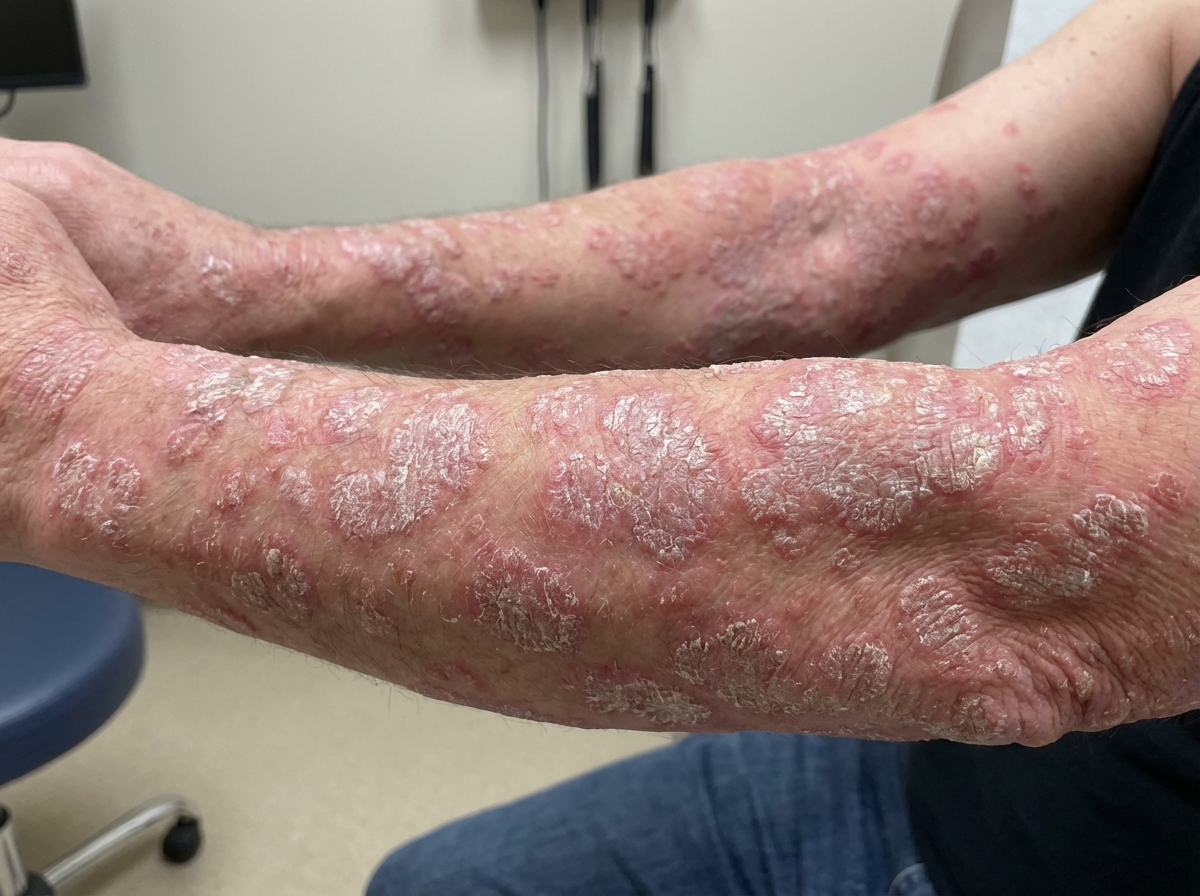
Q139
A 67-year-old man is seen on the surgical floor after a transplant procedure. The previous day, the patient had a renal transplant from a matched donor. He is currently recovering and doing well. The patient has a past medical history of IV drug use, diabetes mellitus, oral cold sores, hypertension, renal failure, and dyslipidemia. The patient's current medications include lisinopril, atorvastatin, insulin, and aspirin. Prior to the procedure, he was also on dialysis. The patient is started on cyclosporine. The patient successfully recovers over the next few days. Which of the following medications should be started in this patient?
Q140
A 49-year-old African American female with a history of chronic myeloid leukemia for which she is receiving chemotherapy presents to the emergency room with oliguria and colicky left flank pain. Her serum creatinine is 3.3 mg/dL. What is the preferred preventative therapy that could have been administered to this patient to prevent her complication of chemotherapy?
Antimicrobials US Medical PG Practice Questions and MCQs
Question 131: A 40-year-old man with AIDS comes to the physician because of a 3-week history of intermittent fever, abdominal pain, and diarrhea. He has also had a nonproductive cough and a 3.6-kg (8-lb) weight loss in this period. He was treated for pneumocystis pneumonia 2 years ago. He has had skin lesions on his chest for 6 months. Five weeks ago, he went on a week-long hiking trip in Oregon. Current medications include efavirenz, tenofovir, and emtricitabine. He says he has had trouble adhering to his medication. His temperature is 38.3°C (100.9°F), pulse is 96/min, and blood pressure is 110/70 mm Hg. Examination shows oral thrush on his palate and a white, non-scrapable plaque on the left side of the tongue. There is axillary and inguinal lymphadenopathy. There are multiple violaceous plaques on the chest. Crackles are heard on auscultation of the chest. Abdominal examination shows mild, diffuse tenderness throughout the lower quadrants. The liver is palpated 2 to 3 cm below the right costal margin, and the spleen is palpated 1 to 2 cm below the left costal margin. Laboratory studies show:
Hemoglobin 12.2 g/dL
Leukocyte count 4,800/mm3
CD4+ T-lymphocytes 44/mm3 (Normal ≥ 500 mm3)
Platelet count 258,000/mm3
Serum
Na+ 137 mEq/L
Cl- 102 mEq/L
K+ 4.9 mEq/L
Alkaline phosphatase 202 U/L
One set of blood culture grows acid-fast organisms. A PPD skin test shows 4 mm of induration. Which of the following is the most appropriate pharmacotherapy for this patient's condition?
A. Rifampin and isoniazid
B. Voriconazole
C. Erythromycin
D. Amphotericin B and itraconazole
E. Azithromycin and ethambutol (Correct Answer)
Explanation: ***Azithromycin and ethambutol***
- This patient presents with disseminated **Mycobacterium avium complex (MAC)** infection, evidenced by systemic symptoms (fever, weight loss, abdominal pain, diarrhea), **hepatosplenomegaly**, elevated alkaline phosphatase, and the isolation of **acid-fast organisms** from blood cultures in an HIV-positive patient with a **CD4 count of 44 cells/mm³**. Azithromycin (or clarithromycin) in combination with ethambutol is the recommended treatment for disseminated MAC.
- The diagnosis is further supported by the patient's history of non-adherence to ART, leading to a severely immunocompromised state, and the fact that MAC is a common opportunistic infection in patients with **AIDS and CD4 counts below 50 cells/mm³**.
*Rifampin and isoniazid*
- This combination is part of the standard regimen for **Mycobacterium tuberculosis** infection. While the patient has acid-fast organisms, his low **CD4 count** and disseminated symptoms are more characteristic of MAC than typical pulmonary tuberculosis, especially given the rapid dissemination.
- The PPD induration of 4mm is not diagnostic of active tuberculosis in an immunocompromised patient; a PPD response can be blunted in severe immunodeficiency.
*Voriconazole*
- **Voriconazole** is an antifungal medication primarily used to treat serious fungal infections, such as invasive aspergillosis, candidiasis, and scedosporiosis.
- The patient's presentation with acid-fast organisms from blood culture indicates a bacterial infection, not a fungal infection, making voriconazole inappropriate.
*Erythromycin*
- **Erythromycin** is a macrolide antibiotic, but it is not the preferred or effective treatment for disseminated MAC. While macrolides like azithromycin and clarithromycin are used, erythromycin has generally fallen out of favor for mycobacterial infections due to its inferior efficacy and higher gastrointestinal side effects compared to newer macrolides.
- It is typically used for common bacterial respiratory tract infections, skin infections, and sexually transmitted infections, but not for opportunistic mycobacterial infections in immunocompromised patients.
*Amphotericin B and itraconazole*
- **Amphotericin B** and **itraconazole** are antifungals used for systemic fungal infections (e.g., blastomycosis, histoplasmosis, cryptococcosis, aspergillosis).
- The isolation of **acid-fast organisms** from blood culture confirms a mycobacterial infection, not a fungal one, hence these antifungals would not be effective.
Question 132: For which patient would isoniazid monotherapy be most appropriate?
A. 50-year-old male with positive PPD, active tuberculosis and poor compliance to multidrug regimens
B. 25-year-old female with positive PPD and acid-fast bacilli on sputum stain
C. 41-year-old female with positive PPD and a Ghon complex on chest radiograph
D. 37-year-old male with positive PPD and no clinical signs or radiographic evidence of disease (Correct Answer)
E. 31-year-old male with negative PPD but recent exposure to someone with active tuberculosis
Explanation: ***37-year-old male with positive PPD and no clinical signs or radiographic evidence of disease***
- This patient has **latent tuberculosis infection (LTBI)**, characterized by a positive PPD (indicating immune response to TB exposure) with no symptoms or radiographic findings of active disease.
- **Isoniazid monotherapy** (6-9 months) is the standard treatment for LTBI to prevent progression to active tuberculosis.
- This is the classic indication for isoniazid monotherapy.
*50-year-old male with positive PPD, active tuberculosis and poor compliance to multidrug regimens*
- This patient has **active tuberculosis**, which absolutely requires **multidrug therapy** (minimum 4 drugs: isoniazid, rifampin, pyrazinamide, and ethambutol) regardless of compliance issues.
- Isoniazid monotherapy in active TB would rapidly lead to **drug resistance** and treatment failure.
- Poor compliance is managed with directly observed therapy (DOT), not by simplifying to monotherapy.
*25-year-old female with positive PPD and acid-fast bacilli on sputum stain*
- **Acid-fast bacilli on sputum stain** confirms **active pulmonary tuberculosis**, which requires multidrug therapy.
- Isoniazid monotherapy would be inadequate and promote drug resistance.
*41-year-old female with positive PPD and a Ghon complex on chest radiograph*
- A **Ghon complex** (calcified granuloma with associated lymph node) represents a **healed primary TB infection**.
- While this patient may have LTBI (positive PPD), the presence of radiographic findings requires further evaluation to rule out active or reactivation TB before considering monotherapy.
- Standard practice would include additional workup (sputum cultures, clinical assessment) rather than proceeding directly to monotherapy.
*31-year-old male with negative PPD but recent exposure to someone with active tuberculosis*
- A **negative PPD** can occur during the **window period** (initial 8-10 weeks after exposure before the immune response develops).
- While **post-exposure prophylaxis** may be considered in recent close contacts per CDC guidelines (with repeat testing in 8-10 weeks), the patient with documented LTBI (positive PPD without active disease) remains the most clear-cut indication for isoniazid monotherapy.
- The correct answer represents the most straightforward and standard indication.
Question 133: A 32-year-old man is admitted to the hospital for evaluation of a 3-month history of insomnia, odynophagia, and irritability. He works in a metal refinery. He appears distracted and irritable. Oral examination shows inflammation of the gums and buccal mucosa with excessive salivation. Neurological examination shows a broad-based gait and an intention tremor in both hands. After treatment with dimercaprol is begun, his symptoms slowly improve. This patient was most likely exposed to which of the following?
A. Lead
B. Mercury (Correct Answer)
C. Arsenic
D. Copper
E. Iron
Explanation: **Mercury**
- The constellation of **insomnia, odynophagia, irritability, gingivostomatitis, excessive salivation, broad-based gait, and intention tremor** is highly characteristic of **mercury poisoning** (also known as erethism or Mad Hatter's disease).
- The patient's occupation in a **metal refinery** increases his risk of exposure to mercury vapor, and the improvement with **dimercaprol**, a chelating agent, supports this diagnosis.
*Lead*
- While lead poisoning can cause neurological symptoms like **neuropathy** and **encephalopathy** (especially in children), it typically presents with **abdominal pain**, **constipation**, **anemia**, and a **"lead line" on the gums**, which are not dominant features here.
- Although **dimercaprol** can be used for severe lead poisoning, the specific combination of symptoms points away from lead.
*Arsenic*
- Arsenic poisoning often presents with **gastrointestinal symptoms** (vomiting, diarrhea), **garlic breath**, **neuropathy**, and **skin changes** such as hyperkeratosis and Mee's lines on the nails.
- The described oral inflammation and specific neurological signs (intention tremor, broad-based gait) are less typical of arsenic.
*Copper*
- Copper toxicity (e.g., Wilson's disease) involves **liver disease**, **Kayser-Fleischer rings** in the cornea, and **basal ganglia dysfunction** causing tremor and dystonia.
- The patient's symptoms, particularly the prominent gingivostomatitis and irritability, do not align well with copper toxicity.
*Iron*
- Acute iron poisoning typically occurs in young children and causes severe **gastrointestinal irritation**, **metabolic acidosis**, and **shock**.
- Chronic iron overload (**hemochromatosis**) primarily affects the liver, pancreas, heart, and joints, and does not cause the neurological or oral symptoms seen in this patient.
Question 134: A 25-year-old man presents with jaw discomfort and the inability to open his mouth fully for about 3 days. About a week ago, he says he cut himself while preparing a chicken dinner but did not seek medical assistance. Five days after the original injury, he started noticing jaw discomfort and an inability to open his mouth completely. He has no history of a serious illness or allergies and takes no medications. The patient says he had received his primary tetanus series in childhood, and that his last booster was more than 10 years ago. His blood pressure is 125/70 mm Hg and temperature is 36.9℃ (98.5°F). On physical examination, the patient is unable to open his jaw wider than 2.5 cm. Head and neck examinations are otherwise unremarkable. There is a 5 cm linear shallow laceration with some granulation tissue on the right index finger without necrosis, erythema, or pus. After wound care and initiation of metronidazole, which of the following is the next best step in the management of this patient?
A. DTaP
B. Td
C. Tetanus immunoglobulin (TIG) (Correct Answer)
D. No further treatment is required
E. Tdap
Explanation: ***Tetanus immunoglobulin (TIG)***
- This patient presents with symptoms highly suggestive of **tetanus**, including **trismus** (lockjaw) and a recent puncture wound. TIG provides **passive immunity** with pre-formed antibodies that can neutralize circulating tetanus toxin, which is crucial for immediate treatment.
- Given that his last tetanus booster was more than 10 years ago and he is symptomatic, immediate TIG is necessary to combat the toxin already produced by *Clostridium tetani*.
- **Note**: A tetanus toxoid vaccine (Td or Tdap) should also be administered at a different site to provide active immunity, but TIG is the **priority** intervention for neutralizing existing toxin in a symptomatic patient.
*DTaP*
- **DTaP (diphtheria, tetanus, acellular pertussis)** is administered to **children younger than 7 years old**. This patient is 25 years old.
- While it provides **active immunity**, its effect is not immediate and would not address the acute, life-threatening toxin effects already present in a symptomatic patient.
*Td*
- **Td (tetanus and diphtheria)** is a booster vaccine providing **active immunity** suitable for adults.
- Like DTaP, it confers active immunity, which takes time to develop and would not provide immediate protection against the existing tetanus toxin in a symptomatic patient. However, Td should be administered alongside TIG at a different site as part of complete management.
*No further treatment is required*
- This patient is clearly symptomatic with **trismus** after a puncture wound and an outdated tetanus vaccination, indicating an active **tetanus infection**.
- Without immediate intervention, tetanus can lead to severe muscle spasms, respiratory failure, and death, so further treatment is urgently required.
*Tdap*
- **Tdap (tetanus, diphtheria, acellular pertussis)** is an adult-formulation booster vaccine, primarily given to adolescents and adults, especially during pregnancy or when in contact with infants.
- It provides **active immunity**, which is not effective in neutralizing the immediate effects of existing tetanus toxin in a symptomatic patient. However, Tdap should be administered alongside TIG at a different site as part of complete management.
Question 135: A 46-year-old woman presents to her family physician for a general wellness checkup with a chief complaint of high levels of anxiety over the past year. Her anxiety has started to affect her performance at work, making her even more anxious and concerned that she will lose her job. She started psychotherapy several months ago and has experienced minimal improvement in her symptoms from this treatment. The patient is vehemently opposed to beginning any pharmacologic treatment for anxiety; however, she is interested in potential herbal remedies and has started taking kava. She also takes vitamin D, a multivitamin, fish oil, protein powder, and drinks goat milk regularly. The patient works as a commercial sex worker and has a history of IV drug abuse and alcohol abuse which she states she has not used in over a year. She has chronic tension headaches for which she self-administers acetaminophen usually multiple times per day. Her last wellness appointment was unremarkable and these problems are new. Laboratory values are ordered as seen below.
Hemoglobin: 13 g/dL
Hematocrit: 38%
Leukocyte count: 6,870/mm^3 with normal differential
Platelet count: 227,000/mm^3
Serum:
Na+: 138 mEq/L
Cl-: 102 mEq/L
K+: 4.1 mEq/L
HCO3-: 25 mEq/L
BUN: 20 mg/dL
Glucose: 111 mg/dL
Creatinine: 1.0 mg/dL
Ca2+: 10.2 mg/dL
AST: 82 U/L
ALT: 90 U/L
Which of the following is the most likely cause of this patient's lab derangements?
A. Acetaminophen
B. Chronic hepatitis C infection
C. Alcoholic hepatitis
D. Acute hepatitis B infection
E. Dietary supplement (Correct Answer)
Explanation: **Dietary supplement**
- The elevated **AST** and **ALT** levels, while non-specific, combined with the patient's anxiety and use of **kava**, strongly suggest kava-induced liver injury. **Kava** is well-known for its potential hepatotoxicity.
- Other supplements like **fish oil** and **multivitamins** are generally safe for the liver, and goat milk or protein powder are unlikely to cause significant transaminitis.
*Acetaminophen*
- While **acetaminophen** overdose can cause severe liver damage, the patient describes chronic use for headaches, not an acute overdose. Chronic therapeutic use of acetaminophen is less likely to cause such significant transaminase elevations without other signs of toxicity.
- The presented lab values show isolated elevation of AST and ALT without other signs of acute liver failure (e.g., coagulopathy, jaundice) that would be expected with severe acetaminophen toxicity.
*Chronic hepatitis C infection*
- **Chronic hepatitis C** can cause elevated **AST** and **ALT**, especially in patients with a history of **IV drug abuse**. However, the transaminase levels are typically more fluctuating and often show a disproportionate AST/ALT ratio or higher elevations.
- Given the recent onset of symptoms and new lab derangements, and the patient's recent change in supplement use, **kava-induced liver injury** is a more acute and plausible explanation for initial workup.
*Alcoholic hepatitis*
- **Alcoholic hepatitis** often presents with an **AST:ALT ratio of 2:1 or greater**, and the AST and ALT levels are usually not as high as seen here (often <500IU/L). The patient also claims to have stopped alcohol consumption over a year ago.
- While the patient has a history of alcohol abuse, the timing and the specific enzyme pattern make it less likely than kava-induced injury, especially with reported abstinence.
*Acute hepatitis B infection*
- **Acute hepatitis B infection** can cause significant hepatocellular injury with elevated **AST** and **ALT**, which can be very high (>1000 U/L). However, the patient's history doesn't immediately suggest an acute exposure event.
- Without further serological markers, differentiating it from other causes of acute liver injury is difficult, but the prompt onset and symptomology point away from a new acute hepatitis B infection without supportive history details.
Question 136: A 29-year-old woman presents to the physician with a blurred vision of her right eye over the past day. She has pain around her right eye during eye movement. She has a history of tingling in her left leg 5 months ago, which spontaneously resolved after 2 weeks. She takes no medications. Her blood pressure is 110/70 mm Hg, the pulse is 72/min, the respirations are 15/min, and the temperature is 36.5℃ (97.7℉). On physical examination, after illumination of the left eye and bilateral pupillary constriction, illumination of the right eye shows pupillary dilation. Fundoscopic examination shows optic disk swelling in the right eye. A color vision test shows decreased perception in the right eye. The remainder of the physical examination shows no abnormalities. A brain MRI shows several foci of hyperintensity in the periventricular and juxtacortical regions. Which of the following is the most appropriate next step in management?
A. Methylprednisolone (Correct Answer)
B. Carbamazepine
C. Plasma exchange
D. Intravenous immunoglobulin (IVIG)
E. Acyclovir
Explanation: ***Methylprednisolone***
- This patient presents with **optic neuritis** (blurred vision, pain with eye movement, afferent pupillary defect, optic disc swelling, decreased color perception) and a history of a prior neurological episode (tingling in the left leg), suggestive of **multiple sclerosis exacerbation**. **High-dose intravenous corticosteroids** like methylprednisolone are the cornerstone of acute MS relapse treatment to shorten the duration and severity of attacks.
- While corticosteroids do not alter the long-term prognosis of MS, they are effective in speeding recovery from acute neurological deficits and are the **most appropriate initial management** for an acute flare.
*Carbamazepine*
- **Carbamazepine** is an anticonvulsant primarily used for **trigeminal neuralgia** and certain seizure disorders. It is not indicated for the acute treatment of optic neuritis or multiple sclerosis exacerbations.
- It works by stabilizing inactivated sodium channels and is not effective in reducing inflammation or demyelination in MS flares.
*Plasma exchange*
- **Plasma exchange**, or plasmapheresis, is considered for **severe acute MS relapses** when there is a suboptimal response to high-dose corticosteroids. It is a second-line therapy, not the initial treatment.
- While it can be effective in refractory cases, the first step is always corticosteroid therapy, as it is less invasive and generally well-tolerated.
*Intravenous immunoglobulin (IVIG)*
- **IVIG** is another treatment option for severe MS relapses, particularly when there are contraindications to corticosteroids or an inadequate response to steroids and plasma exchange.
- Similar to plasma exchange, it is generally considered a **second-line or third-line treatment** and not the initial management for an acute MS exacerbation.
*Acyclovir*
- **Acyclovir** is an antiviral medication used to treat infections caused by herpes viruses, such as **herpes simplex virus (HSV)** and **varicella-zoster virus (VZV)**.
- There is no indication of a viral infection causing the optic neuritis or neurological symptoms in this patient; therefore, acyclovir would not be an appropriate treatment.
Question 137: A 25-year-old medical student returns from a volunteer mission trip in Nicaragua with persistent cough and occasional hemoptysis for 3 weeks. A purified protein derivative test revealing a 20 mm wheal and a chest radiograph with hilar lymphadenopathy support a diagnosis of active tuberculosis. The patient is started on appropriate therapy. Among the prescribed medications, one drug inhibits carbohydrate polymerization of the pathogen's cell wall. What is the most likely complaint that the patient may present with because of this drug?
A. Leg numbness
B. Nausea and vomiting
C. Vision changes (Correct Answer)
D. Orange colored urine
E. Joint pain
Explanation: ***Vision changes***
- The drug that inhibits **carbohydrate polymerization** of the pathogen's cell wall is **ethambutol**.
- Ethambutol's most significant side effect is **optic neuritis**, which can lead to **red-green color blindness** and **decreased visual acuity**.
*Leg numbness*
- **Leg numbness** or **peripheral neuropathy** is a common side effect of **isoniazid (INH)**, not ethambutol.
- INH inhibits **mycolic acid synthesis** and its neurotoxic effects are due to vitamin B6 (pyridoxine) depletion.
*Nausea and vomiting*
- **Nausea and vomiting** are general gastrointestinal side effects that can occur with several anti-tuberculosis drugs, but are not specifically characteristic of the drug described.
- **Pyrazinamide** is particularly known for causing gastrointestinal upset.
*Orange colored urine*
- **Orange-colored urine**, tears, and sweat are a classic side effect of **rifampin**, which inhibits **DNA-dependent RNA polymerase**.
- This discoloration is harmless but important for patients to be aware of.
*Joint pain*
- **Joint pain** or **arthralgia** is a common side effect of **pyrazinamide**, often due to **hyperuricemia** caused by the drug.
- It is not a characteristic side effect of ethambutol.
Question 138: A 50-year-old woman presents with an acute worsening of a chronic rash on her arms and hands for the past week. She says she first noticed the rash 1 year ago which started as little red spots and gradually increased in size. 7 days ago, she noticed the rash suddenly got much worse and spread to her inguinal area, scalp, and knees, which has steadily worsened. She describes the rash as itchy but generally not painful. She says she feels it is very noticeable now and is causing her significant anxiety and depression in addition to the discomfort. The patient denies any fever, chills, sick contacts, or recent travel, and has no significant past medical history. She denies any alcohol use, smoking history, or recreational drug use. Her family history is significant for Crohn disease in her mother and maternal grandmother. She mentions that she has been excessively stressed the past few weeks as she is starting a new job. Review of systems is significant for early morning swelling of the distal joints in her hands and feet for the past 3 months. The patient is afebrile and her vital signs are within normal limits. On physical examination, there are multiple silvery scaly plaques on the extensor surfaces of her upper extremities bilaterally as shown in the exhibit (see image). Similar lesions are present on both knees, inguinal area, and scalp, involving > 10% of her total body surface area. Laboratory tests are unremarkable. Which of the following is the next best step in the management of this patient?
A. Phototherapy
B. Infliximab
C. Skin biopsy
D. Cyclosporine
E. Methotrexate (Correct Answer)
Explanation: ***Methotrexate***
- This patient presents with new-onset, widespread **psoriasis** (silvery scaly plaques on extensor surfaces and over 10% TBSA) and features of **psoriatic arthritis** (early morning swelling of distal joints), indicating severe disease.
- **Methotrexate** is a systemic agent, appropriate for moderate-to-severe psoriasis and psoriatic arthritis, especially when topical treatments, phototherapy, or milder systemic agents are insufficient or contraindicated.
*Phototherapy*
- While phototherapy can be effective for moderate to severe psoriasis, the patient's presentation includes significant **arthritis** symptoms that require systemic treatment.
- **Phototherapy alone** would not adequately address the systemic inflammatory component of psoriatic arthritis.
*Infliximab*
- **Infliximab** is a biologic agent, typically reserved for severe psoriasis and psoriatic arthritis that has failed to respond to conventional systemic therapies like methotrexate or cyclosporine.
- It would not be the **next best step** as first-line systemic agents should be tried first.
*Skin biopsy*
- The clinical presentation with classic **silvery scaly plaques**, distribution (extensor surfaces, scalp, inguinal area), and history of worsening with stress is highly suggestive of **psoriasis**.
- A **skin biopsy** is usually not required for diagnosis in such clear-cut cases and would delay definitive treatment for a widely distributed and symptomatic rash.
*Cyclosporine*
- **Cyclosporine** is an effective systemic treatment for severe psoriasis but is generally used for **short-term control** or in cases where methotrexate is contraindicated or ineffective due to its potential for **nephrotoxicity** and other side effects with long-term use.
- It is often considered after methotrexate, or when rapid clearance is needed in erythrodermic or pustular psoriasis.
Question 139: A 67-year-old man is seen on the surgical floor after a transplant procedure. The previous day, the patient had a renal transplant from a matched donor. He is currently recovering and doing well. The patient has a past medical history of IV drug use, diabetes mellitus, oral cold sores, hypertension, renal failure, and dyslipidemia. The patient's current medications include lisinopril, atorvastatin, insulin, and aspirin. Prior to the procedure, he was also on dialysis. The patient is started on cyclosporine. The patient successfully recovers over the next few days. Which of the following medications should be started in this patient?
A. Azithromycin
B. TMP-SMX (Correct Answer)
C. Acyclovir
D. Low dose acyclovir
E. Penicillin
Explanation: ***TMP-SMX***
- **TMP-SMX (trimethoprim-sulfamethoxazole)** is the **most critical** prophylactic medication for all solid organ transplant recipients on immunosuppression.
- It provides essential prophylaxis against **Pneumocystis jirovecii pneumonia (PJP)**, a life-threatening opportunistic infection with high mortality if not prevented.
- PJP prophylaxis is a **universal recommendation** for all transplant patients and is typically continued for 6-12 months post-transplant.
- Additionally offers protection against **Toxoplasma gondii**, **Nocardia**, and common urinary tract infections, making it particularly valuable in renal transplant recipients.
*Azithromycin*
- Azithromycin is a macrolide antibiotic used for specific bacterial infections and sometimes for **Mycobacterium avium complex (MAC)** prophylaxis in severely immunocompromised patients.
- It is not standard prophylaxis in routine post-transplant care and does not protect against PJP, the most critical opportunistic infection in this setting.
*Acyclovir*
- High-dose acyclovir is used to **treat active HSV or VZV infections**, not for routine prophylaxis.
- This patient has no active viral infection requiring treatment doses at this time.
*Low dose acyclovir*
- Low-dose acyclovir (or valacyclovir) is indeed used for **HSV/VZV prophylaxis** in transplant patients, especially those with a history of cold sores.
- Many transplant centers do initiate this medication alongside TMP-SMX in the post-transplant period.
- However, in a **single-best-answer** context, **TMP-SMX takes priority** as it prevents PJP, which is universally life-threatening and has higher incidence without prophylaxis compared to severe HSV reactivation.
- TMP-SMX is considered the **essential first-line** prophylaxis that all transplant patients must receive.
*Penicillin*
- Penicillin is a narrow-spectrum antibiotic effective against certain gram-positive bacteria.
- It has no role in post-transplant opportunistic infection prophylaxis and does not protect against PJP, HSV, or other transplant-related infections.
Question 140: A 49-year-old African American female with a history of chronic myeloid leukemia for which she is receiving chemotherapy presents to the emergency room with oliguria and colicky left flank pain. Her serum creatinine is 3.3 mg/dL. What is the preferred preventative therapy that could have been administered to this patient to prevent her complication of chemotherapy?
A. Diuresis
B. Acidification of the urine
C. Dialysis
D. Steroids
E. Allopurinol (Correct Answer)
Explanation: ***Allopurinol***
- The patient's presentation (oliguria, flank pain, elevated creatinine) indicates **acute kidney injury** from **tumor lysis syndrome (TLS)**, a common complication of chemotherapy for high-burden malignancies like chronic myeloid leukemia.
- **Allopurinol**, a xanthine oxidase inhibitor, is the **standard preventative pharmacologic therapy** for TLS in patients at risk before starting chemotherapy.
- It works by **blocking uric acid production**, preventing the hyperuricemia that leads to uric acid crystal deposition in renal tubules and subsequent acute kidney injury.
- **Prophylactic allopurinol** (typically 300-600 mg/day) should be started **24-48 hours before chemotherapy** in high-risk patients and is the most commonly tested preventative agent for TLS on board examinations.
*Diuresis*
- **Aggressive IV hydration** (promoting diuresis) is indeed a critical component of TLS prevention, but it is **supportive care rather than specific pharmacologic therapy**.
- While essential for maintaining renal perfusion and flushing metabolic byproducts, when the question asks for "preventative therapy," it typically refers to a **specific drug intervention** like allopurinol.
- Hydration and allopurinol are used **together** in TLS prevention protocols.
*Acidification of the urine*
- This is **contraindicated** in TLS as **uric acid precipitates more readily in acidic urine**, worsening renal injury.
- **Urine alkalinization** (with sodium bicarbonate) was historically used but is now controversial and less commonly recommended in modern protocols.
*Dialysis*
- Dialysis is a **treatment for established, severe TLS**, not a preventative measure.
- It is reserved for life-threatening complications (severe hyperkalemia, refractory fluid overload, uremia) when medical management fails.
*Steroids*
- **Corticosteroids** have roles in certain malignancies but do not directly prevent the metabolic complications of tumor lysis syndrome.
- They are not standard preventative therapy for TLS-induced kidney injury.