An American pediatrician travels to Bangladesh on a medical mission. While working in the local hospital's emergency room, she sees a 2-week-old boy who was brought in by his mother with muscle spasms and difficulty sucking. The mother gave birth at home at 38 weeks gestation and was attended to by her older sister who has no training in midwifery. The mother had no prenatal care. She has no past medical history and takes no medications. The family lives on a small fishing vessel on a major river, which also serves as their fresh water supply. The boy's temperature is 99°F (37.2°C), blood pressure is 100/60 mmHg, pulse is 130/min, and respirations are 22/min. On exam, the boy's arms are flexed at the elbow, his knees are extended, and his neck and spine are hyperextended. Tone is increased in the bilateral upper and lower extremities. He demonstrates sustained facial muscle spasms throughout the examination. The umbilical stump is foul-smelling. Cultures are taken, and the appropriate treatment is started. This patient's condition is most likely caused by a toxin with which of the following functions?
Q92
A 55-year-old male presents to his primary care physician for a normal check-up. He has a history of atrial fibrillation for which he takes metoprolol and warfarin. During his last check-up, his international normalized ratio (INR) was 2.5. He reports that he recently traveled to Mexico for a business trip where he developed a painful red rash on his leg. He was subsequently prescribed an unknown medication by a local physician. The rash resolved after a few days and he currently feels well. His temperature is 98.6°F (37°C), blood pressure is 130/80 mmHg, pulse is 95/min, and respirations are 18/min. Laboratory analysis reveals that his current INR is 4.5. Which of the following is the most likely medication this patient took while in Mexico?
Q93
A 17-year-old girl is brought to the emergency department 6 hours after she attempted suicide by consuming 16 tablets of acetaminophen (500 mg per tablet). At present, she does not have any complaints or symptoms. The patient is afebrile and vital signs are within normal limits. Physical examination is unremarkable. Laboratory findings show a serum acetaminophen level that is predictive of ‘probable hepatic toxicity’ on the Rumack-Matthew nomogram. Treatment is started with a drug, which is a precursor of glutathione and is a specific antidote for acetaminophen poisoning. Which of the following is an additional beneficial mechanism of action of this drug in this patient?
Q94
A 32-year-old woman is admitted to the hospital after undergoing an open cholecystectomy under general anesthesia. Preoperatively, the patient was administered a single dose of intravenous ceftriaxone. Now, the anesthetic effects have worn off, and her pain is well managed. The patient has a prior medical history of hypertension which has been well-controlled by captopril for 2 years. Her vitals currently show: blood pressure 134/82 mm Hg, heart rate 84/min, and respiratory rate 16/min. Postoperative laboratory findings are significant for the following:
Serum glucose (random) 174 mg/dL
Serum electrolytes
Sodium 142 mEq/L
Potassium 3.9 mEq/L
Chloride 101 mEq/L
Serum creatinine 0.9 mg/dL
Blood urea nitrogen 10 mg/dL
Alanine aminotransferase (ALT) 150 U/L
Aspartate aminotransferase (AST) 172 U/L
Serum bilirubin (total) 0.9 mg/dL
Preoperative labs were all within normal limits. Which of the following drugs is most likely responsible for this patient’s abnormal laboratory findings?
Q95
A 13-year-old girl is brought to the physician because of an itchy rash on her knee and elbow creases. She has had this rash since early childhood. Physical examination of the affected skin shows crusty erythematous papules with skin thickening. She is prescribed topical pimecrolimus. The beneficial effect of this drug is best explained by inhibition of which of the following processes?
Q96
A 57-year-old man comes to the emergency department because of pain in the sides of his abdomen and blood-tinged urine since the previous night. Over the last 2 days, he has also had progressive malaise, myalgia, and a generalized itchy rash. He has a history of gastroesophageal reflux that did not respond to ranitidine but has improved since taking pantoprazole 2 months ago. He occasionally takes acetaminophen for back pain. His vital signs are within normal limits. Examination shows a generalized, diffuse maculopapular rash. The remainder of the examination shows no abnormalities. Laboratory studies show:
Hemoglobin 13 g/dL
Leukocyte count 7,800/mm3
Serum
Na+ 140 mEq/L
Cl- 105 mEq/L
K+ 4.6 mEq/L
HCO3- 25 mEq/L
Glucose 102 mg/dL
Creatinine 4.1 mg/dL
Renal ultrasonography shows no abnormalities. Which of the following findings is most likely to be observed in this patient?
Q97
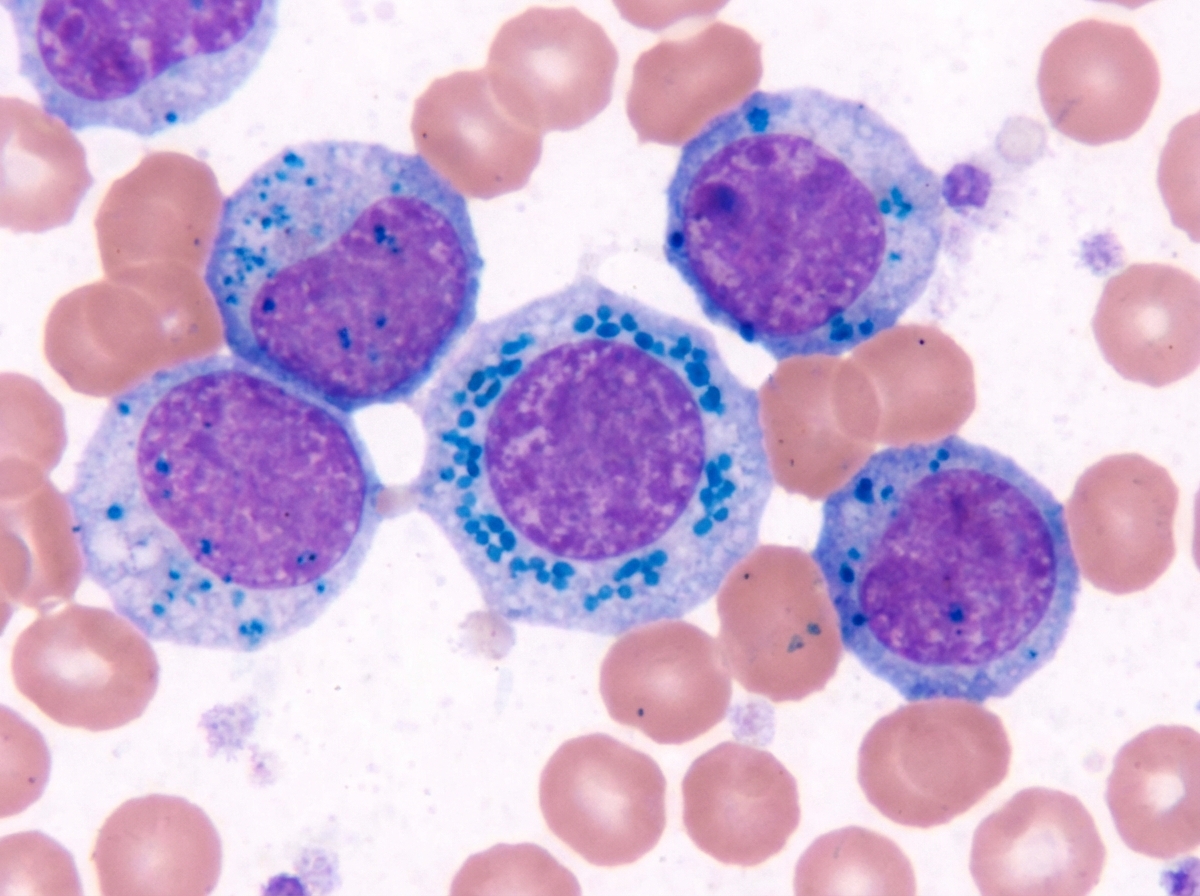
A 29-year-old Mediterranean man presents to the clinic for fatigue and lightheadedness for the past week. He reports an inability to exercise as his heart would beat extremely fast. He was recently diagnosed with active tuberculosis and started on treatment 2 weeks ago. He denies fever, weight loss, vision changes, chest pain, dyspnea, or bloody/dark stools. A physical examination is unremarkable. A peripheral blood smear is shown in figure A. What is the most likely explanation for this patient’s symptoms?
Q98
A 57-year-old patient comes to the physician for a 2-month history of progressive dyspnea and cough productive of large amounts of yellow, blood-tinged sputum. He has a history of COPD and recurrent upper respiratory tract infections. Examination of the lung shows bilateral crackles and end-expiratory wheezing. An x-ray of the chest shows thin-walled cysts and tram-track opacities in both lungs. The physician prescribes nebulized N-acetylcysteine. Which of the following is the most likely effect of this drug?
Q99
A 42-year-old man presents to a free dermatology clinic, complaining of itchy skin over the past several days. He has no insurance and lives in a homeless shelter. The patient has no significant medical history. Physical evaluation reveals 2 mm erythematous papules and vesicles on his back and groin, with linear excoriation marks. Careful observation of his hands reveals serpiginous, grayish, threadlike elevations in the superficial epidermis, ranging from 3–9 mm in length in the webbing between several digits. What should be the suggested treatment in this case?
Q100
A 22-year-old man presents with abdominal cramps and diarrhea over the last few weeks. He notes that several of his bowel movements have a small amount of blood. Past medical history is significant for an intermittent cough that has been persistent since returning from Mexico last month. The patient takes no current medications. On physical examination, there is diffuse tenderness to palpation. Which of the following medications is indicated for this patient’s condition?
Antimicrobials US Medical PG Practice Questions and MCQs
Question 91: An American pediatrician travels to Bangladesh on a medical mission. While working in the local hospital's emergency room, she sees a 2-week-old boy who was brought in by his mother with muscle spasms and difficulty sucking. The mother gave birth at home at 38 weeks gestation and was attended to by her older sister who has no training in midwifery. The mother had no prenatal care. She has no past medical history and takes no medications. The family lives on a small fishing vessel on a major river, which also serves as their fresh water supply. The boy's temperature is 99°F (37.2°C), blood pressure is 100/60 mmHg, pulse is 130/min, and respirations are 22/min. On exam, the boy's arms are flexed at the elbow, his knees are extended, and his neck and spine are hyperextended. Tone is increased in the bilateral upper and lower extremities. He demonstrates sustained facial muscle spasms throughout the examination. The umbilical stump is foul-smelling. Cultures are taken, and the appropriate treatment is started. This patient's condition is most likely caused by a toxin with which of the following functions?
A. Binding to MHC II and the T cell receptor simultaneously
B. Blocking voltage-gated sodium channel opening
C. Blocking release of GABA and glycine (Correct Answer)
D. Blocking voltage-gated calcium channel opening
E. Blocking release of acetylcholine
Explanation: ***Blocking release of GABA and glycine***
- The clinical presentation of muscle spasms, hyperextension (opisthotonus), difficulty sucking, and a foul-smelling umbilical stump in a neonate born at home in a developing country strongly suggests **neonatal tetanus**.
- **Tetanus toxin (tetanospasmin)**, produced by *Clostridium tetani*, acts by preventing the release of inhibitory neurotransmitters **GABA** and **glycine** from Renshaw cells in the spinal cord, leading to uncontrolled muscle contractions and spasms.
*Binding to MHC II and the T cell receptor simultaneously*
- This describes the action of **superantigens**, such as **toxic shock syndrome toxin-1 (TSST-1)** from *Staphylococcus aureus* or streptococcal pyrogenic exotoxins.
- Superantigens cause widespread T cell activation and cytokine release, leading to symptoms like fever, rash, and shock, which are not the primary symptoms here.
*Blocking voltage-gated sodium channel opening*
- Toxins that block voltage-gated sodium channels, such as **tetrodotoxin** (from pufferfish) and **saxitoxin** (from shellfish), interfere with nerve impulse propagation.
- This typically results in **paralysis** and numbness, rather than the sustained muscle spasms seen in this patient.
*Blocking voltage-gated calcium channel opening*
- Blocking voltage-gated calcium channels can impair neurotransmitter release at the presynaptic terminal, leading to **muscle weakness** or paralysis.
- Examples include toxins like **conotoxins** (from cone snails) or certain autoimmune conditions attacking these channels (e.g., Lambert-Eaton myasthenic syndrome), which do not fit the spastic presentation described.
*Blocking release of acetylcholine*
- This is the mechanism of **botulinum toxin**, produced by *Clostridium botulinum*, which blocks the release of **acetylcholine** at the neuromuscular junction.
- This leads to **flaccid paralysis**, not the spastic paralysis and sustained muscle contractions observed in the patient.
Question 92: A 55-year-old male presents to his primary care physician for a normal check-up. He has a history of atrial fibrillation for which he takes metoprolol and warfarin. During his last check-up, his international normalized ratio (INR) was 2.5. He reports that he recently traveled to Mexico for a business trip where he developed a painful red rash on his leg. He was subsequently prescribed an unknown medication by a local physician. The rash resolved after a few days and he currently feels well. His temperature is 98.6°F (37°C), blood pressure is 130/80 mmHg, pulse is 95/min, and respirations are 18/min. Laboratory analysis reveals that his current INR is 4.5. Which of the following is the most likely medication this patient took while in Mexico?
A. Griseofulvin
B. Rifampin
C. St. John’s wort
D. Trimethoprim-sulfamethoxazole (Correct Answer)
E. Phenobarbital
Explanation: ***Trimethoprim-sulfamethoxazole***
- **Trimethoprim-sulfamethoxazole** is a potent inhibitor of **CYP2C9**, the primary enzyme responsible for metabolizing **warfarin**, leading to significantly increased INR and bleeding risk.
- The patient's **elevated INR (4.5)** from a previous stable level of 2.5 strongly suggests an interaction with a medication that inhibits warfarin metabolism, and trimethoprim-sulfamethoxazole is a common culprit.
- TMP-SMX is commonly used to treat **cellulitis** and other skin infections, which aligns with the clinical presentation of a painful red rash.
*Griseofulvin*
- **Griseofulvin** is an antifungal agent that acts as a **CYP inducer**, which would *increase* warfarin metabolism and lead to a *decreased* INR, not the elevated INR seen in this patient.
- While it could treat fungal skin infections (e.g., tinea), it would cause the opposite effect on warfarin levels.
*Rifampin*
- **Rifampin** is a strong **CYP inducer**, meaning it would *increase* warfarin metabolism and thus *decrease* INR, leading to a higher risk of clotting, which is the opposite of what is seen in this patient.
- It is often used for tuberculosis or serious bacterial infections, not typically for a simple skin rash.
*St. John's wort*
- **St. John's wort** is a known **CYP inducer**, similar to rifampin, and would lead to a *decrease* in warfarin levels and INR.
- It is an herbal supplement primarily used for depression and would not typically be prescribed by a physician for a rash.
*Phenobarbital*
- **Phenobarbital** is a potent **CYP inducer**, which would *accelerate* warfarin metabolism and result in a *decreased* INR, increasing the risk of thrombosis.
- It is an anticonvulsant and sedative, not a medication typically prescribed for a rash.
Question 93: A 17-year-old girl is brought to the emergency department 6 hours after she attempted suicide by consuming 16 tablets of acetaminophen (500 mg per tablet). At present, she does not have any complaints or symptoms. The patient is afebrile and vital signs are within normal limits. Physical examination is unremarkable. Laboratory findings show a serum acetaminophen level that is predictive of ‘probable hepatic toxicity’ on the Rumack-Matthew nomogram. Treatment is started with a drug, which is a precursor of glutathione and is a specific antidote for acetaminophen poisoning. Which of the following is an additional beneficial mechanism of action of this drug in this patient?
A. Promotes glucuronidation of unmetabolized acetaminophen
B. Promotes microcirculatory blood flow (Correct Answer)
C. Promotes fecal excretion of unabsorbed acetaminophen
D. Prevents gastrointestinal absorption of acetaminophen
E. Promotes oxidation of N-acetyl-p-benzoquinoneimine (NAPQI)
Explanation: ***Promotes microcirculatory blood flow***
- **N-acetylcysteine** (NAC), the antidote for acetaminophen poisoning, acts as a **vasodilator** and **improves microcirculatory blood flow**, which can be beneficial in preventing and treating liver injury.
- This benefit is particularly relevant in cases of severe poisoning, where compromised hepatic perfusion can exacerbate damage.
*Promotes glucuronidation of unmetabolized acetaminophen*
- NAC primarily works by replenishing **glutathione stores**, which are crucial for detoxifying the toxic metabolite **NAPQI**, not by enhancing glucuronidation.
- Glucuronidation is a separate metabolic pathway that conjugates acetaminophen for excretion and is not directly augmented by NAC.
*Promotes fecal excretion of unabsorbed acetaminophen*
- NAC is given systemically (orally or intravenously) to counteract absorbed acetaminophen and does not directly promote fecal excretion of unabsorbed drug.
- Activated charcoal is used to prevent absorption if given shortly after ingestion.
*Prevents gastrointestinal absorption of acetaminophen*
- NAC does not prevent the **Gastrointestinal absorption** of acetaminophen; it is administered after absorption has occurred and the drug is circulating in the body.
- Measures like activated charcoal or gastric lavage are used to prevent absorption if the patient presents early enough.
*Promotes oxidation of N-acetyl-p-benzoquinoneimine (NAPQI)*
- NAC works by **reducing** the toxic metabolite **NAPQI** back to acetaminophen and by replenishing **glutathione**, which then detoxifies NAPQI.
- It does not promote the *oxidation* of NAPQI; rather, it facilitates its *reduction* or conjugation to render it harmless.
Question 94: A 32-year-old woman is admitted to the hospital after undergoing an open cholecystectomy under general anesthesia. Preoperatively, the patient was administered a single dose of intravenous ceftriaxone. Now, the anesthetic effects have worn off, and her pain is well managed. The patient has a prior medical history of hypertension which has been well-controlled by captopril for 2 years. Her vitals currently show: blood pressure 134/82 mm Hg, heart rate 84/min, and respiratory rate 16/min. Postoperative laboratory findings are significant for the following:
Serum glucose (random) 174 mg/dL
Serum electrolytes
Sodium 142 mEq/L
Potassium 3.9 mEq/L
Chloride 101 mEq/L
Serum creatinine 0.9 mg/dL
Blood urea nitrogen 10 mg/dL
Alanine aminotransferase (ALT) 150 U/L
Aspartate aminotransferase (AST) 172 U/L
Serum bilirubin (total) 0.9 mg/dL
Preoperative labs were all within normal limits. Which of the following drugs is most likely responsible for this patient’s abnormal laboratory findings?
A. Captopril
B. Propofol
C. Nitrous oxide
D. Sevoflurane (Correct Answer)
E. Ceftriaxone
Explanation: ***Sevoflurane***
- **Sevoflurane** is a volatile halogenated anesthetic that can rarely cause **postoperative hepatotoxicity** (halogenated anesthetic hepatitis)
- This presents with **elevated transaminases** (ALT and AST) within 2-14 days post-surgery
- Sevoflurane can also cause **transient hyperglycemia** through stress response and insulin resistance during and after anesthesia
- While less hepatotoxic than halothane, sevoflurane metabolism produces trifluoroacetic acid derivatives that can trigger immune-mediated liver injury in susceptible individuals
- Renal function remains normal, distinguishing this from fluoride-induced nephrotoxicity
*Captopril*
- **Captopril** is an ACE inhibitor that can rarely cause **cholestatic hepatitis** with chronic use
- However, the patient has been on captopril for 2 years with normal preoperative labs, making it an unlikely cause of acute postoperative transaminase elevation
- Does not explain the hyperglycemia observed
*Propofol*
- **Propofol** is an intravenous anesthetic that can cause **propofol infusion syndrome** with prolonged high-dose infusions (typically >48 hours)
- While propofol can cause metabolic derangements, acute transaminase elevation is not a typical feature of short-term use for routine surgery
- The degree of liver enzyme elevation seen here is more consistent with volatile anesthetic hepatotoxicity
*Nitrous oxide*
- **Nitrous oxide** inactivates **vitamin B12** (methionine synthase inhibition), leading to megaloblastic anemia and neurological complications with prolonged or repeated exposure
- Does not cause acute hepatotoxicity or explain the elevated transaminases and glucose seen in this case
*Ceftriaxone*
- **Ceftriaxone** can cause **cholestatic hepatitis** and hyperbilirubinemia, particularly with prolonged use
- However, this patient received only a **single preoperative dose**, making ceftriaxone an unlikely cause
- The patient's bilirubin is normal (0.9 mg/dL), which would be elevated in ceftriaxone-induced cholestasis
- Does not explain the hyperglycemia
Question 95: A 13-year-old girl is brought to the physician because of an itchy rash on her knee and elbow creases. She has had this rash since early childhood. Physical examination of the affected skin shows crusty erythematous papules with skin thickening. She is prescribed topical pimecrolimus. The beneficial effect of this drug is best explained by inhibition of which of the following processes?
A. Synthesis of tetrahydrofolic acid
B. Oxidation of inosine-5-monophosphate
C. Reduction of ribonucleotides
D. Oxidation of dihydroorotic acid
E. Calcineurin phosphatase activity (Correct Answer)
Explanation: ***Calcineurin phosphatase activity***
- Pimecrolimus is a **calcineurin inhibitor**, which works by blocking the phosphatase activity of calcineurin, an intracellular protein involved in T-cell activation.
- Inhibiting calcineurin prevents the **dephosphorylation of NFAT (Nuclear Factor of Activated T-cells)**, thus impairing its translocation to the nucleus and subsequent transcription of pro-inflammatory cytokines like IL-2.
*Synthesis of tetrahydrofolic acid*
- Inhibition of **tetrahydrofolic acid synthesis** is the mechanism of action for drugs like **methotrexate** and **trimethoprim**, which interfere with folate metabolism.
- These drugs are primarily used in chemotherapy or for bacterial infections, not directly for atopic dermatitis via calcineurin inhibition.
*Oxidation of inosine-5-monophosphate*
- The enzyme **inosine-5'-monophosphate dehydrogenase (IMPDH)** is involved in the de novo synthesis of guanine nucleotides.
- Drugs like **mycophenolate mofetil** inhibit IMPDH, primarily used as immunosuppressants in transplant medicine and autoimmune diseases, not the primary mechanism for pimecrolimus.
*Reduction of ribonucleotides*
- The enzyme **ribonucleotide reductase** converts ribonucleotides to deoxyribonucleotides, a crucial step in DNA synthesis.
- Hydroxyurea, for example, inhibits this enzyme, which is used in conditions like myeloproliferative disorders, not the mechanism of pimecrolimus.
*Oxidation of dihydroorotic acid*
- The enzyme **dihydroorotate dehydrogenase (DHODH)** is involved in the de novo pyrimidine synthesis pathway.
- **Leflunomide** inhibits DHODH, an action used in the treatment of rheumatoid arthritis, which is distinct from the mechanism of action of pimecrolimus.
Question 96: A 57-year-old man comes to the emergency department because of pain in the sides of his abdomen and blood-tinged urine since the previous night. Over the last 2 days, he has also had progressive malaise, myalgia, and a generalized itchy rash. He has a history of gastroesophageal reflux that did not respond to ranitidine but has improved since taking pantoprazole 2 months ago. He occasionally takes acetaminophen for back pain. His vital signs are within normal limits. Examination shows a generalized, diffuse maculopapular rash. The remainder of the examination shows no abnormalities. Laboratory studies show:
Hemoglobin 13 g/dL
Leukocyte count 7,800/mm3
Serum
Na+ 140 mEq/L
Cl- 105 mEq/L
K+ 4.6 mEq/L
HCO3- 25 mEq/L
Glucose 102 mg/dL
Creatinine 4.1 mg/dL
Renal ultrasonography shows no abnormalities. Which of the following findings is most likely to be observed in this patient?
A. Elevated levels of eosinophils in urine (Correct Answer)
B. Mesangial IgA deposits on renal biopsy
C. Urinary crystals on brightfield microscopy
D. Crescent-shape extracapillary cell proliferation
E. Papillary calcifications on CT imaging
Explanation: ***Elevated levels of eosinophils in urine***
- This patient's symptoms of **fever, rash, eosinophilia (implied by high creatinine and drug history), and acute kidney injury** after starting pantoprazole strongly suggest **acute interstitial nephritis (AIN)**. **Eosinophiluria** is a hallmark of AIN.
- The history of recent initiation of **pantoprazole**, a proton pump inhibitor, is a significant clue as it is a common cause of drug-induced AIN.
*Mesangial IgA deposits on renal biopsy*
- **IgA nephropathy** typically presents with recurrent gross hematuria, often triggered by an upper respiratory infection.
- It would not explain the prominent **maculopapular rash**, malaise, and myalgia, which are more characteristic of a drug reaction.
*Urinary crystals on brightfield microscopy*
- **Urinary crystals** are associated with conditions like nephrolithiasis or certain drug toxicities, but not typically with this constellation of symptoms including a rash and systemic malaise.
- While the patient has flank pain and hematuria, the **acute kidney injury (creatinine 4.1 mg/dL)** and rash are inconsistent with simple crystaluria.
*Crescent-shape extracapillary cell proliferation*
- This finding is characteristic of **rapidly progressive glomerulonephritis (RPGN)**, which presents with severe acute renal failure and nephritic syndrome.
- While the patient has acute kidney injury, the prominent **rash, malaise, and eosinophilia** in the context of drug exposure point away from RPGN as the primary diagnosis.
*Papillary calcifications on CT imaging*
- **Papillary calcifications** or **nephrocalcinosis** indicate calcium deposition in the kidney parenchyma, often seen in chronic conditions like hyperparathyroidism or renal tubular acidosis.
- This imaging finding is not consistent with the acute presentation of systemic symptoms (rash, malaise) and acute kidney injury in this patient.
Question 97: A 29-year-old Mediterranean man presents to the clinic for fatigue and lightheadedness for the past week. He reports an inability to exercise as his heart would beat extremely fast. He was recently diagnosed with active tuberculosis and started on treatment 2 weeks ago. He denies fever, weight loss, vision changes, chest pain, dyspnea, or bloody/dark stools. A physical examination is unremarkable. A peripheral blood smear is shown in figure A. What is the most likely explanation for this patient’s symptoms?
A. Hereditary mutations of beta-globin
B. Inhibition of ferrochelatase and ALA dehydratase
C. Abnormally low level of glutathione activity
D. Drug-induced deficiency in vitamin B6 (Correct Answer)
E. Iron deficiency
Explanation: ***Drug-induced deficiency in vitamin B6***
- The patient's symptoms of **fatigue** and **lightheadedness**, along with the peripheral blood smear showing **sideroblasts** (ringed forms, indicated by the accumulation of iron in mitochondria around the nucleus of immature red blood cells) suggest **sideroblastic anemia**.
- The patient was recently started on treatment for **tuberculosis**, which commonly includes **isoniazid**. Isoniazid is known to **inhibit vitamin B6 (pyridoxine)**, leading to **sideroblastic anemia**.
- While the patient's **Mediterranean ethnicity** raises consideration for G6PD deficiency (another potential complication of TB treatment), the **presence of sideroblasts** on smear is diagnostic for sideroblastic anemia, not hemolytic anemia.
*Hereditary mutations of beta-globin*
- Hereditary mutations in beta-globin are characteristic of **beta-thalassemia**, which typically presents in childhood and is associated with significant **hemolysis** and **microcytic, hypochromic anemia**, usually without sideroblasts.
- While patients with thalassemia may experience fatigue and lightheadedness due to anemia, the presence of sideroblasts on smear and recent initiation of TB treatment point away from this diagnosis.
*Inhibition of ferrochelatase and ALA dehydratase*
- Inhibition of **ferrochelatase** and **ALA dehydratase** is characteristic of **lead poisoning**, which presents with signs of anemia and can cause sideroblastic anemia.
- However, there is no mention of lead exposure in the patient's history, and the recent initiation of TB treatment is a more direct and likely explanation for drug-induced sideroblastic anemia.
*Abnormally low level of glutathione activity*
- Abnormally low levels of **glutathione activity**, often due to **glucose-6-phosphate dehydrogenase (G6PD) deficiency**, lead to **hemolytic anemia** (e.g., after exposure to oxidative stressors like certain drugs or infections).
- G6PD deficiency is more common in **Mediterranean populations** and can be triggered by isoniazid. However, G6PD deficiency is associated with **Heinz bodies** and **bite cells** on peripheral smear, **not sideroblasts**.
- The smear findings are definitive in distinguishing between these two complications of TB treatment.
*Iron deficiency*
- **Iron deficiency** leads to **microcytic, hypochromic anemia** due to insufficient heme synthesis.
- While it causes fatigue and lightheadedness, **iron deficiency anemia does not cause sideroblastic anemia** and would not present with sideroblasts on the peripheral blood smear.
Question 98: A 57-year-old patient comes to the physician for a 2-month history of progressive dyspnea and cough productive of large amounts of yellow, blood-tinged sputum. He has a history of COPD and recurrent upper respiratory tract infections. Examination of the lung shows bilateral crackles and end-expiratory wheezing. An x-ray of the chest shows thin-walled cysts and tram-track opacities in both lungs. The physician prescribes nebulized N-acetylcysteine. Which of the following is the most likely effect of this drug?
A. Increase of ciliary beat rate
B. Inhibition of peptidoglycan crosslinking
C. Inhibition of phosphodiesterase
D. Breakdown of leukocyte DNA
E. Breaking of disulfide bonds (Correct Answer)
Explanation: ***Breaking of disulfide bonds***
- **N-acetylcysteine** is a **mucolytic** agent that works by cleaving the **disulfide bonds** in mucin glycoproteins, thereby reducing the viscosity of sputum.
- This action helps to thin thick secretions, making them easier to clear from the airways, which is beneficial in conditions like **bronchiectasis** (suggested by the 'tram-track opacities' and 'thin-walled cysts' on X-ray, along with large amounts of sputum).
*Increase of ciliary beat rate*
- This is primarily enhanced by **beta-agonists** or **methylxanthines**, not N-acetylcysteine.
- While improved mucociliary clearance is a goal, N-acetylcysteine achieves it by altering mucus properties, not directly by increasing ciliary activity.
*Inhibition of peptidoglycan crosslinking*
- This is the mechanism of action for **beta-lactam antibiotics** (e.g., penicillins, cephalosporins), which target bacterial cell walls.
- N-acetylcysteine has no antibacterial properties or effects on bacterial cell wall synthesis.
*Inhibition of phosphodiesterase*
- **Phosphodiesterase inhibitors** (e.g., theophylline, roflumilast) work by increasing intracellular **cAMP** levels, leading to bronchodilation and anti-inflammatory effects.
- This is not the mechanism by which N-acetylcysteine exerts its therapeutic effect.
*Breakdown of leukocyte DNA*
- This is the mechanism of action of **dornase alfa** (recombinant human deoxyribonuclease I), which is used in cystic fibrosis to break down DNA released from neutrophils in thick mucus.
- N-acetylcysteine acts on mucin proteins, not DNA.
Question 99: A 42-year-old man presents to a free dermatology clinic, complaining of itchy skin over the past several days. He has no insurance and lives in a homeless shelter. The patient has no significant medical history. Physical evaluation reveals 2 mm erythematous papules and vesicles on his back and groin, with linear excoriation marks. Careful observation of his hands reveals serpiginous, grayish, threadlike elevations in the superficial epidermis, ranging from 3–9 mm in length in the webbing between several digits. What should be the suggested treatment in this case?
A. No medication should be administered, only proper hygiene.
B. Antiviral medication
C. Permethrin (Correct Answer)
D. Antifungal medication
E. Broad-spectrum antibiotic
Explanation: ***Permethrin***
- This patient's symptoms, including intense itching, erythematous papules and vesicles, linear excoriations, and especially the **serpiginous, grayish, threadlike elevations (burrows)** in the web spaces of the fingers, are classic signs of **scabies**.
- **Permethrin cream** (5%) is the first-line treatment for scabies due to its high efficacy and safety profile, targeting the *Sarcoptes scabiei* mite.
*No medication should be administered, only proper hygiene.*
- While good hygiene is important for overall health, it is **insufficient** to eradicate a parasitic infestation like scabies.
- Scabies requires **specific pharmacologic intervention** to kill the mites and eggs, as they are not simply washed away.
*Antiviral medication*
- **Antiviral medications** are used to treat viral infections (e.g., herpes, varicella), which do not present with the characteristic burrows or respond to antiviral agents.
- The patient's symptoms are indicative of a **parasitic infestation**, not a viral one.
*Antifungal medication*
- **Antifungal medications** are indicated for fungal infections (e.g., ringworm, candidiasis), which typically present with a different morphology (e.g., annular lesions with raised borders) and lack the classic burrows seen in scabies.
- The clinical presentation points away from a fungal etiology.
*Broad-spectrum antibiotic*
- **Broad-spectrum antibiotics** treat bacterial infections. While secondary bacterial infections can occur due to scratching in scabies, the primary issue here is the mite infestation itself, which antibiotics do not address.
- Treating the primary scabies infestation is crucial to stop the itching and prevent further secondary infections.
Question 100: A 22-year-old man presents with abdominal cramps and diarrhea over the last few weeks. He notes that several of his bowel movements have a small amount of blood. Past medical history is significant for an intermittent cough that has been persistent since returning from Mexico last month. The patient takes no current medications. On physical examination, there is diffuse tenderness to palpation. Which of the following medications is indicated for this patient’s condition?
A. Pyrantel
B. Praziquantel
C. Albendazole
D. Mebendazole
E. Ivermectin (Correct Answer)
Explanation: ***Ivermectin***
- This patient's symptoms (abdominal cramps, bloody diarrhea, persistent cough, recent travel to Mexico) are highly suggestive of **Strongyloidiasis**. **Ivermectin** is the drug of choice for this parasitic infection.
- Strongyloidiasis larvae can cause a **transient cough** as they migrate through the lungs, and adult worms in the intestines lead to gastrointestinal symptoms like **diarrhea** and abdominal pain.
*Pyrantel*
- **Pyrantel** is primarily effective against **pinworms**, **roundworms**, and **hookworms**, but not Strongyloides.
- It works by neuromuscular blockade, causing paralysis and expulsion of the worms.
*Praziquantel*
- **Praziquantel** is the drug of choice for treating **tapeworm** infections (e.g., Taenia species) and **schistosomiasis**.
- It acts by increasing the permeability of the worm's cells to calcium, leading to paralysis and death.
*Albendazole*
- **Albendazole** is a broad-spectrum anthelmintic effective against many intestinal nematodes, including **hookworm**, **roundworm**, and **whipworm**, and some tissue nematodes.
- While it has some activity against Strongyloides, **Ivermectin is generally preferred** due to higher efficacy and fewer side effects in many cases of strongyloidiasis.
*Mebendazole*
- **Mebendazole** is effective against various intestinal worms such as **pinworms**, **roundworms**, and **hookworms**.
- Its mechanism of action involves inhibiting microtubule synthesis, thereby impairing glucose uptake by the worms.