
Antimicrobial stewardship principles — MCQs

A 64-year-old woman with a past medical history of poorly managed diabetes presents to the emergency department with nausea and vomiting. Her symptoms started yesterday and have been progressively worsening. She is unable to eat given her symptoms. Her temperature is 102°F (38.9°C), blood pressure is 115/68 mmHg, pulse is 120/min, respirations are 17/min, and oxygen saturation is 98% on room air. Physical exam is notable for left-sided costovertebral angle tenderness, and urinalysis demonstrates bacteriuria and pyuria. The patient is admitted to the hospital and started on IV ceftriaxone. On day 3 of her hospital stay she is afebrile, able to eat and drink, and feels better. Which of the following antibiotic regimens should be started or continued as an outpatient upon discharge?
The surgical equipment used during a craniectomy is sterilized using pressurized steam at 121°C for 15 minutes. Reuse of these instruments can cause transmission of which of the following pathogens?
A 37-year-old woman with a history of anorectal abscesses complains of pain in the perianal region. Physical examination reveals mild swelling, tenderness, and erythema of the perianal skin. She is prescribed oral ampicillin and asked to return for follow-up. Two days later, the patient presents with a high-grade fever, syncope, and increased swelling. Which of the following would be the most common mechanism of resistance leading to the failure of antibiotic therapy in this patient?
A 42-year-old woman with a history of multiple sclerosis and recurrent urinary tract infections comes to the emergency department because of flank pain and fever. Her temperature is 38.8°C (101.8°F). Examination shows left-sided costovertebral angle tenderness. She is admitted to the hospital and started on intravenous vancomycin. Three days later, her symptoms have not improved. Urine culture shows growth of Enterococcus faecalis. Which of the following best describes the most likely mechanism of antibiotic resistance in this patient?
An investigator is studying the chemical structure of antibiotics and its effect on bacterial growth. He has synthesized a simple beta-lactam antibiotic and has added a bulky side chain to the molecule that inhibits the access of bacterial enzymes to the beta-lactam ring. The synthesized drug will most likely be appropriate for the treatment of which of the following conditions?
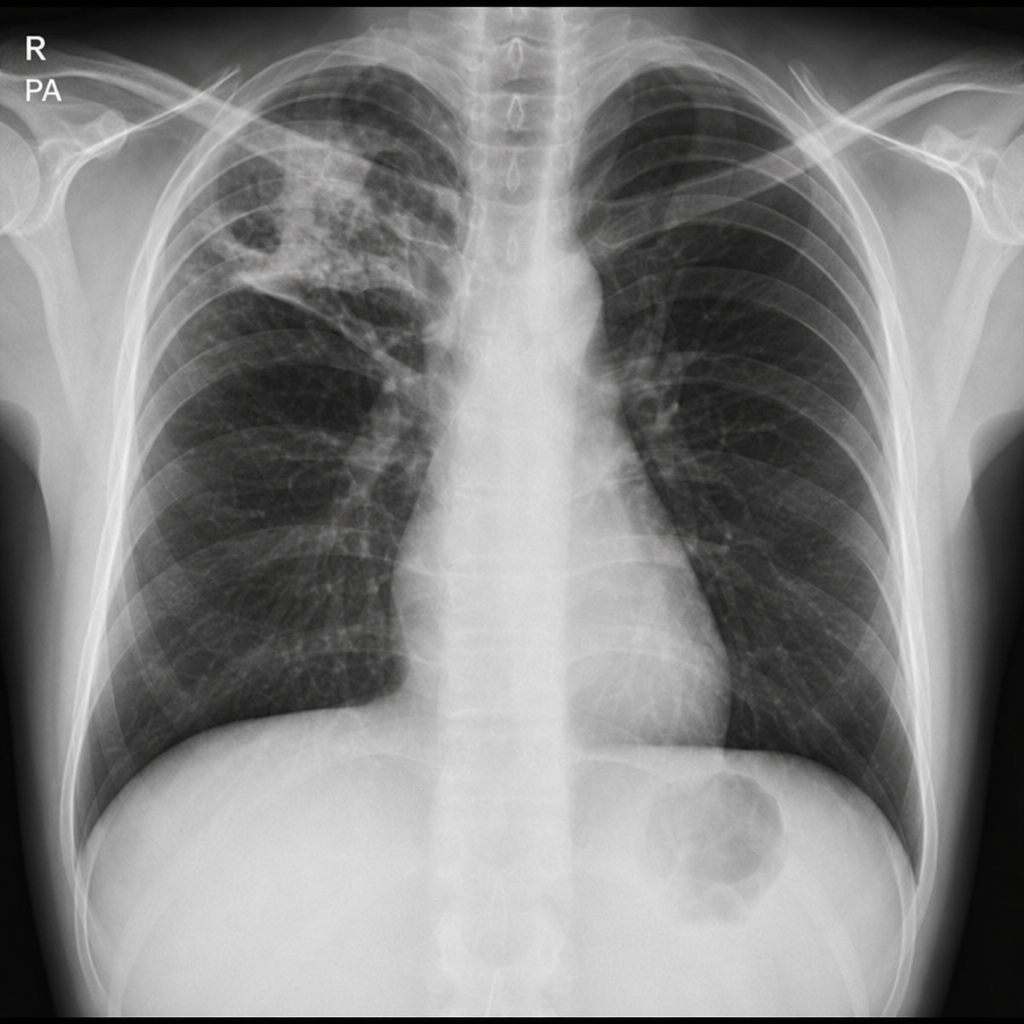
A 35-year-old man who recently emigrated from a country with a high prevalence of tuberculosis presents with 3 weeks of cough, night sweats, and weight loss. Chest radiography shows a right upper-lobe cavitary opacity with surrounding infiltrate, as shown. Which of the following is the most appropriate initial management?
A 32-year-old woman is supposed to undergo tooth extraction surgery. Physical examination is unremarkable, and she has a blood pressure of 126/84 mm Hg and regular pulse of 72/min. She takes no medications. Which of the following cardiac conditions would warrant antibiotic prophylaxis to prevent infective endocarditis in this patient?
A 21-year-old U.S. born first year medical student with no prior hospital or healthcare work presents to the physician for a routine physical exam. The patient is HIV negative, denies drug use, and denies sick contacts. The physician places a purified protein tuberculin test in the patient's right forearm intradermally. What is the proper time to read the test and induration diameter that would indicate a positive test result?
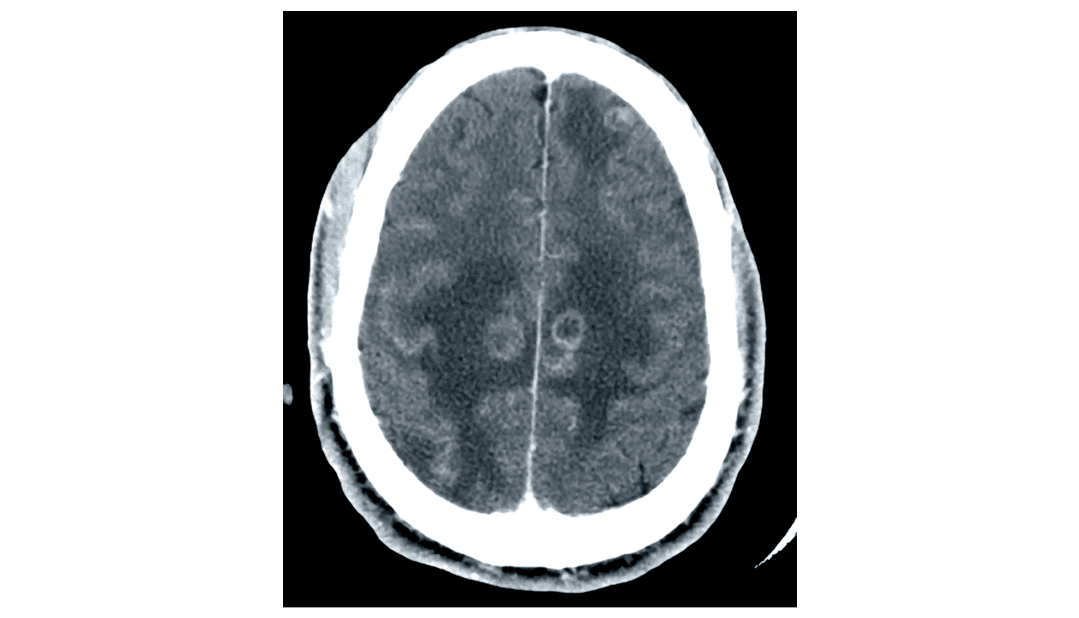
A 35-year-old man is brought to the emergency department after experiencing a seizure. According to his girlfriend, he has had fatigue for the last 3 days and became confused this morning, after which he started having uncontrollable convulsions throughout his entire body. He was unconscious throughout the episode, which lasted about 4 minutes. He has not visited a physician for over 10 years. He has smoked one pack of cigarettes daily for 12 years. His girlfriend admits they occasionally use heroin together with their friends. His temperature is 38.8°C (101.8°F), pulse is 93/min, respirations are 20/min, and blood pressure is 110/70 mm Hg. The lungs are clear to auscultation and examination shows normal heart sounds and no carotid or femoral bruits. He appears emaciated and somnolent. There are multiple track marks on both his arms. He is unable to cooperate for a neurological exam. Laboratory studies show a leukocyte count of 3,000/mm3, a hematocrit of 34%, a platelet count of 354,000/mm3, and an erythrocyte sedimentation rate of 27 mm/h. His CD4+ T-lymphocyte count is 84/mm3 (normal ≥ 500). A CT scan of the head is shown. Which of the following is the most appropriate next step considering this patient's CT scan findings?
An 11-year-old girl is brought to the emergency department because of high-grade fever, headache, and nausea for 3 days. She avoids looking at any light source because this aggravates her headache. She has acute lymphoblastic leukemia and her last chemotherapy cycle was 2 weeks ago. She appears lethargic. Her temperature is 40.1°C (104.2°F), pulse is 131/min and blood pressure is 100/60 mm Hg. Examination shows a stiff neck. The pupils are equal and reactive to light. Neck flexion results in flexion of the knee and hip. Muscle strength is decreased in the right upper extremity. Deep tendon reflexes are 2+ bilaterally. Sensation is intact. Extraocular movements are normal. Two sets of blood cultures are obtained. Which of the following is the most appropriate next step in management?
Want unlimited practice?
Get full access to all questions, explanations, and performance tracking.
Scan to download app