An 81-year-old man with a history of congestive heart failure presents to his cardiologist because he has been feeling increasingly short of breath while lying down. Specifically, he says that he is now no longer able to sleep flat on the bed and instead has to be propped up on multiple pillows. In addition, he has been experiencing increased swelling in his legs. Finally, he reports that he has been experiencing muscle cramping and weakness. He reports that he has been taking a diuretic as prescribed and adhering to a low-salt diet. Physical exam reveals crackles on lung auscultation bilaterally and 2+ pitting edema in his legs bilaterally. Left ventricular ejection fraction (LVEF) is measured by echocardiogram and found to be 36%. This is decreased from his last measurement of 41%. He is put on a second diuretic that has an additional effect that corrects an electrolyte imbalance in this patient. Which of the following medications is consistent with this description?
Q72
A 67-year-old man with a history of diabetes mellitus type II and a previous myocardial infarction presents to your office for a routine examination. His blood pressure is found to be 180/100 mmHg. Which drug is the first-line choice of treatment for this patient's hypertension?
Q73
A 51-year-old woman comes to the physician because of a 6-month history of fatigue and increased thirst. She has no history of serious medical illness and takes no medications. She is 163 cm (5 ft 4 in) tall and weighs 72 kg (160 lb); BMI is 28 kg/m2. Her fasting serum glucose concentration is 249 mg/dL. Treatment with an oral hypoglycemic agent is begun. Which of the following best describes the mechanism of action of the drug that was most likely prescribed for this patient?
Q74
A 51-year-old woman is brought to the emergency department after not being able to urinate for the past 12 hours. She also complains of a headache that is sharp in nature, 9/10, without radiation, and associated with nausea and vomiting. She neither smokes cigarettes nor drinks alcohol. She complains that her fingers have become numb and very painful on exposure to cold weather during the last few months. She has also noticed her fingers change color from blue to pale to red on cold exposure. Her face looks shiny with thickened, wrinkle-free skin. She has had joint pain and stiffness for the last 20 years. She takes over-the-counter omeprazole for heartburn, which she says improves her symptoms. She has unintentionally lost 9 kg (20 lb) in the last 6 months. She has no previous history of diabetes, hypertension, chest pain, orthopnea, or paroxysmal nocturnal dyspnea. Her mother has rheumatoid arthritis for which she takes methotrexate, and her father takes medications for hypertension and hypercholesterolemia. Her temperature is 37°C (98.6°F), blood pressure is 210/120 mm Hg, pulse is 102/min, respiratory rate is 18/min, and BMI is 22 kg/m2.
Laboratory test
Complete blood count:
Hemoglobin 9.5 g/dL
Leukocytes 15,500/mm3
Platelets 90,000/mm3
Serum haptoglobin 20 mg/dL (30–200 mg/dL)
Serum creatinine 2.3 mg/dL
Blood urea nitrogen 83.5 mg/dL
The peripheral blood film of the patient shows the following. Which of the following would be the most appropriate treatment for this patient?
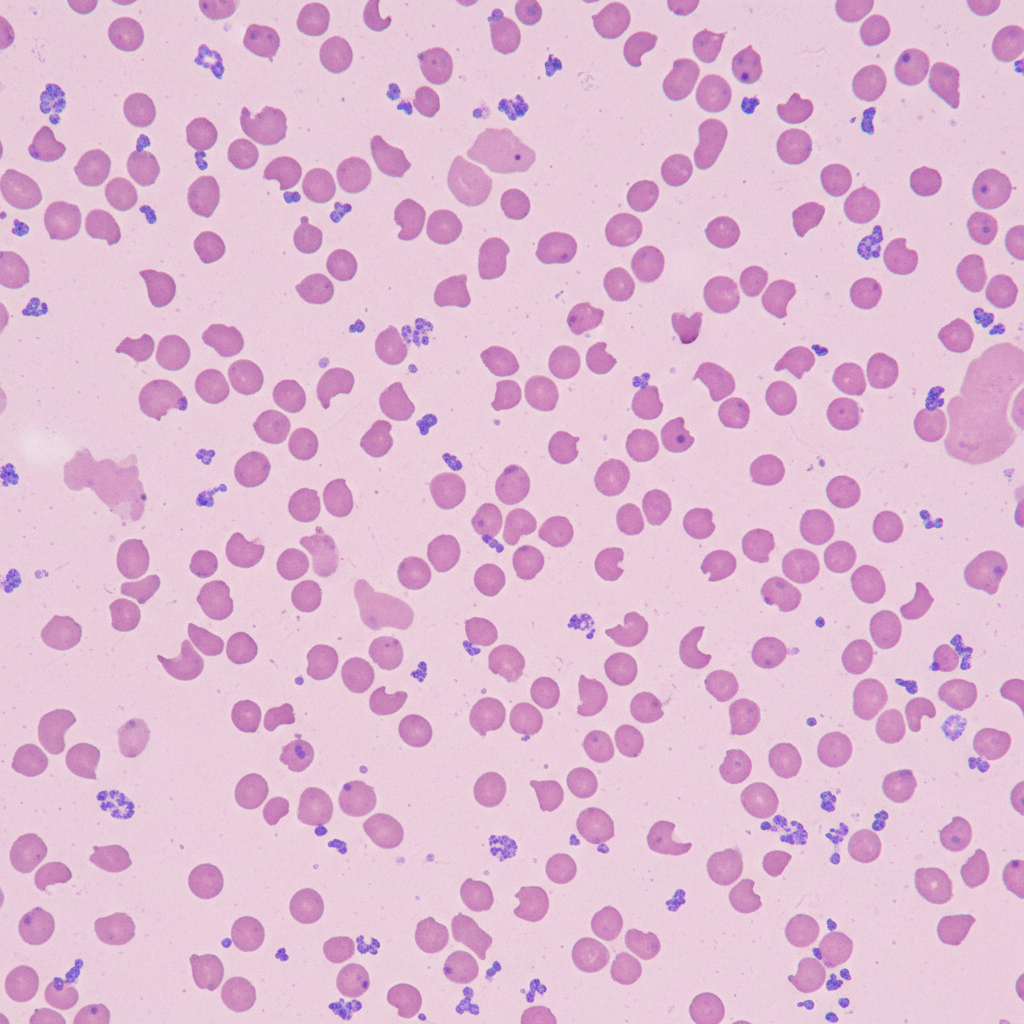
Q75
A 45-year-old diabetic man presents to your office for routine follow-up. One year ago, the patient’s hemoglobin A1C was 7.2% and the patient was encouraged to modify his diet and increase exercise. Six months ago, the patient’s HA1C was 7.3%, and you initiated metformin. Today, the patient has no complaints. For which of the following co-morbidities would it be acceptable to continue metformin?
Q76
A 45-year-old woman presents to your office with a serum glucose of 250 mg/dL and you diagnose diabetes mellitus type II. You intend to prescribe the patient metformin, but you decide to order laboratory tests before proceeding. Which of the following basic metabolic panel values would serve as a contraindication to the use of metformin?
Q77
A 57-year-old woman comes to the physician because of a 2-week history of swelling of both her feet. It improves a little bit with elevation but is still bothersome to her because her shoes no longer fit. She has type 2 diabetes mellitus treated with metformin and linagliptin. She was diagnosed with hypertension 6 months ago and started treatment with amlodipine. Subsequent blood pressure measurements on separate occasions have been around 130/90 mm Hg. She otherwise feels well. Today, her pulse is 80/min, respirations are 12/min, and blood pressure is 132/88 mm Hg. Cardiovascular examination shows no abnormalities. There is pitting edema of both ankles. Which of the following would have been most likely to reduce the risk of edema in this patient?
Q78
A 58-year-old male presents to the clinic for a follow-up visit. He takes metformin every day and says that he is compliant with his medication but can not control his diet. Three months prior, his HbA1c was 8.2% when he was started on metformin. He does not have any complaints on this visit. His temperature is 37°C (98.6°F), respirations are 15/min, pulse is 67/min and blood pressure is 122/88 mm Hg. His BMI is 33. Physical examination is within normal limits. Blood is drawn for laboratory tests and the results are given below:
Fasting blood glucose 150 mg/dL
Glycated hemoglobin (HbA1c) 7.2 %
Serum Creatinine 1.1 mg/dL
BUN 12 mg/dL
The physician wants to initiate another medication for his blood glucose control, specifically one that does not carry a risk of weight gain. Addition of which of the following drugs would be most suitable for this patient?
Q79
A 54-year-old African American male presents to the emergency department with 1 day history of severe headaches. He has a history of poorly controlled hypertension and notes he hasn't been taking his antihypertensive medications. His temperature is 100.1 deg F (37.8 deg C), blood pressure is 190/90 mmHg, pulse is 60/min, and respirations are 15/min. He is started on a high concentration sodium nitroprusside infusion and transferred to the intensive care unit. His blood pressure eventually improves over the next two days and his headache resolves, but he becomes confused and tachycardic. Labs reveal a metabolic acidosis. Which of the following is the best treatment?
Q80
A 58-year-old woman presents to her physician complaining of a headache in the occipital region for 1 week. Past medical history is significant for essential hypertension, managed with lifestyle modifications and 2 antihypertensives for the previous 6 months. Her blood pressure is 150/90 mm Hg. Neurological examination is normal. A third antihypertensive drug is added that acts as a selective α2 adrenergic receptor agonist. On follow-up, she reports that she does not have any symptoms and her blood pressure is 124/82 mm Hg. Which of the following mechanisms best explains the therapeutic effect of this new drug in this patient?
Antihypertensives US Medical PG Practice Questions and MCQs
Question 71: An 81-year-old man with a history of congestive heart failure presents to his cardiologist because he has been feeling increasingly short of breath while lying down. Specifically, he says that he is now no longer able to sleep flat on the bed and instead has to be propped up on multiple pillows. In addition, he has been experiencing increased swelling in his legs. Finally, he reports that he has been experiencing muscle cramping and weakness. He reports that he has been taking a diuretic as prescribed and adhering to a low-salt diet. Physical exam reveals crackles on lung auscultation bilaterally and 2+ pitting edema in his legs bilaterally. Left ventricular ejection fraction (LVEF) is measured by echocardiogram and found to be 36%. This is decreased from his last measurement of 41%. He is put on a second diuretic that has an additional effect that corrects an electrolyte imbalance in this patient. Which of the following medications is consistent with this description?
A. Acetazolamide
B. Furosemide
C. Spironolactone (Correct Answer)
D. Hydrochlorothiazide
E. Amiloride
Explanation: ***Spironolactone***
- The patient exhibits symptoms of worsening **heart failure** (orthopnea, bilateral crackles, leg edema, decreased LVEF) despite being on a diuretic, suggesting he is likely developing diuretic-induced **hypokalemia** due to chronic diuresis. The **muscle cramping and weakness** are consistent with **hypokalemia**.
- **Spironolactone** is an **aldosterone antagonist** that acts as a potassium-sparing diuretic, thus correcting the electrolyte imbalance (hypokalemia) and also improving heart failure outcomes with proven mortality benefit (RALES trial).
*Acetazolamide*
- **Acetazolamide** is a **carbonic anhydrase inhibitor** primarily used for glaucoma, urinary alkalinization, and altitude sickness; it is a weak diuretic.
- While it causes bicarbonate excretion, it is not typically used for chronic heart failure or to specifically correct hypokalemia.
*Furosemide*
- **Furosemide** is a **loop diuretic** that is already likely the initial diuretic the patient is on, given his history of heart failure.
- It works by inhibiting the Na-K-2Cl cotransporter in the thick ascending limb of the loop of Henle and is known to cause **hypokalemia**, not correct it.
*Hydrochlorothiazide*
- **Hydrochlorothiazide** is a **thiazide diuretic** that inhibits Na-Cl cotransport in the distal convoluted tubule.
- Similar to loop diuretics, it also causes significant potassium loss and would worsen, rather than correct, hypokalemia.
*Amiloride*
- **Amiloride** is an **epithelial sodium channel (ENaC) inhibitor** in the collecting duct, making it a potassium-sparing diuretic.
- While it helps correct hypokalemia, it lacks the aldosterone antagonism of spironolactone and has no proven mortality benefit in heart failure, making it a less appropriate choice for this patient.
Question 72: A 67-year-old man with a history of diabetes mellitus type II and a previous myocardial infarction presents to your office for a routine examination. His blood pressure is found to be 180/100 mmHg. Which drug is the first-line choice of treatment for this patient's hypertension?
A. Hydrochlorothiazide
B. Prazosin
C. Lisinopril (Correct Answer)
D. Isoproterenol
E. Amlodipine
Explanation: ***Lisinopril***
- **ACE inhibitors** (like lisinopril) are first-line for patients with hypertension and **diabetes mellitus** due to their **renal protective effects** and ability to slow the progression of diabetic nephropathy.
- They are also beneficial post-myocardial infarction as they **reduce ventricular remodeling** and improve long-term outcomes.
*Hydrochlorothiazide*
- While **thiazide diuretics** can be used for hypertension, they may **worsen glucose control** in diabetic patients and are not preferred as first-line in the presence of diabetes and a history of MI.
- They primarily act by reducing blood volume and peripheral resistance but lack the specific **cardio-renal protective benefits** of ACE inhibitors.
*Prazosin*
- **Alpha-1 blockers** like prazosin are generally not recommended as first-line monotherapy for hypertension due to potential side effects such as **orthostatic hypotension** and a higher risk of cardiovascular events compared to other classes.
- Their use is typically reserved for patients with concomitant **benign prostatic hyperplasia (BPH)** or as add-on therapy.
*Isoproterenol*
- **Isoproterenol** is a non-selective beta-agonist primarily used for **bradycardia** or **heart block**, not for the treatment of hypertension.
- It would actually **increase heart rate and contractility**, exacerbating hypertension rather than treating it.
*Amlodipine*
- **Calcium channel blockers** like amlodipine are effective antihypertensives and can be used in patients with diabetes, but **ACE inhibitors** are generally preferred as first-line in patients with both diabetes and a history of MI due to their direct **renoprotective** and **cardioprotective** benefits.
- While effective for blood pressure control, amlodipine does not offer the same degree of **renal benefit** in diabetic nephropathy or post-MI remodeling as ACE inhibitors.
Question 73: A 51-year-old woman comes to the physician because of a 6-month history of fatigue and increased thirst. She has no history of serious medical illness and takes no medications. She is 163 cm (5 ft 4 in) tall and weighs 72 kg (160 lb); BMI is 28 kg/m2. Her fasting serum glucose concentration is 249 mg/dL. Treatment with an oral hypoglycemic agent is begun. Which of the following best describes the mechanism of action of the drug that was most likely prescribed for this patient?
A. Decreased carbohydrate hydrolysis
B. Increased insulin release
C. Decreased hepatic gluconeogenesis (Correct Answer)
D. Decreased glucagon release
E. Increased renal glucose elimination
Explanation: ***Decreased hepatic gluconeogenesis***
- The patient presents with symptoms of **diabetes mellitus** (fatigue, increased thirst, and a fasting glucose of 249 mg/dL). Given her BMI of 28 kg/m2, **Type 2 Diabetes** is highly likely, and the initial treatment for such patients, especially those not excessively obese, is often **metformin**.
- **Metformin** works primarily by inhibiting **hepatic gluconeogenesis** and, to a lesser extent, by increasing insulin sensitivity in peripheral tissues.
*Increased insulin release*
- This mechanism is characteristic of **sulfonylureas** (e.g., glipizide, glyburide) and **meglitinides** (e.g., repaglinide), which stimulate insulin secretion from pancreatic beta cells.
- While these can be used in Type 2 Diabetes, they are typically not the first-line oral hypoglycemic agent due to the risk of **hypoglycemia** and weight gain, making metformin a more likely initial choice.
*Decreased carbohydrate hydrolysis*
- This mechanism is associated with **alpha-glucosidase inhibitors** (e.g., acarbose, miglitol), which delay the breakdown and absorption of carbohydrates in the gut.
- These drugs are less commonly prescribed as initial monotherapy for Type 2 Diabetes due to side effects like **flatulence** and diarrhea, and their moderate efficacy.
*Decreased glucagon release*
- Although reducing glucagon release is beneficial in diabetes, this is the primary mechanism of action for drugs like **GLP-1 receptor agonists** (e.g., exenatide, liraglutide) and **DPP-4 inhibitors** (e.g., sitagliptin, saxagliptin), which also affect insulin secretion and gastric emptying.
- These are often considered second-line agents or used in combination therapy, not typically the first oral medication prescribed.
*Increased renal glucose elimination*
- This is the mechanism of action for **SGLT2 inhibitors** (e.g., dapagliflozin, empagliflozin), which block glucose reabsorption in the renal tubules, leading to increased urinary glucose excretion.
- While effective, SGLT2 inhibitors are often not the very first oral medication chosen, especially given metformin's long-standing role as a first-line agent.
Question 74: A 51-year-old woman is brought to the emergency department after not being able to urinate for the past 12 hours. She also complains of a headache that is sharp in nature, 9/10, without radiation, and associated with nausea and vomiting. She neither smokes cigarettes nor drinks alcohol. She complains that her fingers have become numb and very painful on exposure to cold weather during the last few months. She has also noticed her fingers change color from blue to pale to red on cold exposure. Her face looks shiny with thickened, wrinkle-free skin. She has had joint pain and stiffness for the last 20 years. She takes over-the-counter omeprazole for heartburn, which she says improves her symptoms. She has unintentionally lost 9 kg (20 lb) in the last 6 months. She has no previous history of diabetes, hypertension, chest pain, orthopnea, or paroxysmal nocturnal dyspnea. Her mother has rheumatoid arthritis for which she takes methotrexate, and her father takes medications for hypertension and hypercholesterolemia. Her temperature is 37°C (98.6°F), blood pressure is 210/120 mm Hg, pulse is 102/min, respiratory rate is 18/min, and BMI is 22 kg/m2.
Laboratory test
Complete blood count:
Hemoglobin 9.5 g/dL
Leukocytes 15,500/mm3
Platelets 90,000/mm3
Serum haptoglobin 20 mg/dL (30–200 mg/dL)
Serum creatinine 2.3 mg/dL
Blood urea nitrogen 83.5 mg/dL
The peripheral blood film of the patient shows the following. Which of the following would be the most appropriate treatment for this patient?
A. Nitroprusside
B. Renal transplantation
C. Ramipril (Correct Answer)
D. Dialysis
E. Labetalol
Explanation: ***Ramipril***
- This patient presents with **scleroderma renal crisis (SRC)**, characterized by new-onset **malignant hypertension**, **acute kidney injury**, and features of **microangiopathic hemolytic anemia**. **ACE inhibitors** like ramipril are the **first-line treatment** for SRC, regardless of the blood pressure, as they can reverse renal ischemia and improve kidney function.
- The patient's presentation with **Raynaud phenomenon**, **thickened skin** (sclerodactyly leading to "wrinkle-free" appearance), **esophageal dysmotility** (heartburn managed with omeprazole), and **unintentional weight loss** over many months are all consistent with systemic sclerosis, which predisposed her to SRC.
*Nitroprusside*
- While nitroprusside is a potent vasodilator used in **hypertensive emergencies**, it is **contraindicated** in scleroderma renal crisis.
- Its rapid reduction in blood pressure can exacerbate renal hypoperfusion and worsen kidney function in SRC.
*Renal transplantation*
- Renal transplantation is a treatment option for **end-stage renal disease**, but it is **not the initial management** for acute kidney injury in the context of scleroderma renal crisis.
- The priority is to stabilize the patient's condition and preserve existing renal function with ACE inhibitors.
*Dialysis*
- Dialysis is indicated for **severe kidney failure** or uremia, which may develop if SRC is not adequately treated or if kidney function rapidly deteriorates.
- However, the primary goal in SRC is to prevent progression to dialysis through prompt and aggressive ACE inhibitor therapy, making it not the most appropriate initial treatment.
*Labetalol*
- Labetalol is a **beta-blocker with alpha-blocking activity** used to treat **hypertensive emergencies**, but it is generally **not the first-line agent for SRC**.
- While it can lower blood pressure, ACE inhibitors are specifically preferred in SRC due to their targeted effect on the **renin-angiotensin-aldosterone system (RAAS)** and ability to reverse renal ischemia.
Question 75: A 45-year-old diabetic man presents to your office for routine follow-up. One year ago, the patient’s hemoglobin A1C was 7.2% and the patient was encouraged to modify his diet and increase exercise. Six months ago, the patient’s HA1C was 7.3%, and you initiated metformin. Today, the patient has no complaints. For which of the following co-morbidities would it be acceptable to continue metformin?
A. Prior hospitalization for alcoholic hepatitis
B. Hepatitis C infection
C. Mild chronic obstructive pulmonary disease (Correct Answer)
D. Headache and family history of brain aneurysms requiring CT angiography
E. Recent diagnosis of NYHA Class II congestive heart failure
Explanation: ***Mild chronic obstructive pulmonary disease***
- **Metformin is safe** in patients with **stable, mild COPD** as respiratory disease alone is **not a contraindication** to metformin use.
- COPD does not increase the risk of **lactic acidosis**, the primary safety concern with metformin, as long as tissue perfusion and renal function are adequate.
- The benefits of metformin for glycemic control are maintained without additional respiratory risks.
*Prior hospitalization for alcoholic hepatitis*
- **Metformin is contraindicated** in **severe or decompensated liver disease** due to increased risk of **lactic acidosis**.
- A history of **alcoholic hepatitis requiring hospitalization** suggests significant hepatic impairment that could compromise lactate clearance.
- The liver plays a key role in lactate metabolism, and impaired function substantially increases lactic acidosis risk.
*Hepatitis C infection*
- While **chronic compensated liver disease** (including Hepatitis C) is no longer considered an absolute contraindication per updated FDA guidance (2016-2017), the presence of Hepatitis C raises concerns about **potential liver dysfunction**.
- Without confirmation of **normal liver function and preserved renal function**, metformin use requires caution.
- Metformin should be avoided if there is evidence of **hepatic decompensation** or significantly elevated transaminases.
*Headache and family history of brain aneurysms requiring CT angiography*
- The concern is the **IV contrast dye** used during **CT angiography**, which can cause **acute kidney injury** in susceptible patients.
- Traditional guidance recommends **holding metformin** before contrast procedures and for 48 hours after to prevent contrast-induced nephropathy and subsequent **lactic acidosis**.
- Though recent evidence suggests this risk is lower with modern iso-osmolar contrast and preserved renal function, temporary discontinuation remains standard practice for patient safety.
*Recent diagnosis of NYHA Class II congestive heart failure*
- Historically, **CHF was considered a contraindication** to metformin due to concerns about lactic acidosis from poor tissue perfusion.
- However, current evidence and guidelines (2020s) demonstrate that metformin is **generally safe and may be beneficial** in **stable NYHA Class II-III CHF** with preserved renal function.
- The qualifier "**recent diagnosis**" suggests a potentially **unstable period** where cautious monitoring is warranted, making this scenario less clearly acceptable for continuation without further clinical assessment and stability confirmation.
Question 76: A 45-year-old woman presents to your office with a serum glucose of 250 mg/dL and you diagnose diabetes mellitus type II. You intend to prescribe the patient metformin, but you decide to order laboratory tests before proceeding. Which of the following basic metabolic panel values would serve as a contraindication to the use of metformin?
A. HCO3- > 30
B. Na+ > 140
C. K+ > 4.0
D. Glucose > 300
E. Creatinine > 2.0 (Correct Answer)
Explanation: ***Creatinine > 2.0***
- An elevated **serum creatinine** level indicating significant renal impairment is a contraindication to metformin use, as it markedly increases the risk of **lactic acidosis**.
- **Metformin** is primarily excreted by the kidneys unchanged, and impaired renal function leads to drug accumulation and potential toxicity.
- Traditional contraindication thresholds include serum creatinine >1.5 mg/dL in men or >1.4 mg/dL in women; a value **>2.0 mg/dL** clearly indicates significant renal dysfunction requiring avoidance of metformin.
- Current guidelines emphasize using **eGFR** (contraindicated if <30 mL/min/1.73m²), but creatinine remains a key marker of renal function on basic metabolic panels.
*HCO3- > 30*
- An elevated **bicarbonate level** (HCO3-) above 30 mEq/L typically indicates **metabolic alkalosis**, which is not a direct contraindication for metformin.
- While metabolic alkalosis should be investigated, it does not pose the specific risk of lactic acidosis associated with renal dysfunction and metformin use.
*Na+ > 140*
- A slightly elevated **sodium level** (Na+) above 140 mEq/L (normal: 135-145 mEq/L) is often associated with **dehydration** or other electrolyte imbalances and is not a contraindication for metformin.
- While significant electrolyte imbalances should be addressed, mild hypernatremia does not directly increase the risk of metformin-induced lactic acidosis.
*K+ > 4.0*
- A potassium level of >4.0 mEq/L is within the **normal range** (typically 3.5-5.0 mEq/L) and is not a contraindication for metformin.
- Significant hyperkalemia or hypokalemia would require evaluation and management, but a normal or slightly elevated potassium level does not preclude metformin use.
*Glucose > 300*
- While a blood **glucose level** >300 mg/dL indicates poorly controlled diabetes, this is actually an **indication** for initiating glucose-lowering therapy like metformin, not a contraindication.
- Metformin's primary therapeutic purpose is to lower elevated glucose levels, and severe hyperglycemia itself does not increase the risk of metformin's specific adverse effects.
Question 77: A 57-year-old woman comes to the physician because of a 2-week history of swelling of both her feet. It improves a little bit with elevation but is still bothersome to her because her shoes no longer fit. She has type 2 diabetes mellitus treated with metformin and linagliptin. She was diagnosed with hypertension 6 months ago and started treatment with amlodipine. Subsequent blood pressure measurements on separate occasions have been around 130/90 mm Hg. She otherwise feels well. Today, her pulse is 80/min, respirations are 12/min, and blood pressure is 132/88 mm Hg. Cardiovascular examination shows no abnormalities. There is pitting edema of both ankles. Which of the following would have been most likely to reduce the risk of edema in this patient?
A. Use of compression stockings
B. Addition of enalapril (Correct Answer)
C. Addition of furosemide
D. Addition of chlorpheniramine
E. Use of nifedipine instead
Explanation: ***Addition of enalapril***
- The patient is likely experiencing **amlodipine-induced edema**, a common side effect of dihydropyridine calcium channel blockers due to precapillary vasodilation.
- Adding an **ACE inhibitor (e.g., enalapril)** can counteract this effect by causing postcapillary vasodilation, thereby reducing hydrostatic pressure in the capillaries.
*Use of compression stockings*
- While compression stockings can help with **venous insufficiency or lymphedema**, they do not address the underlying pharmacological cause of amlodipine-induced edema.
- They primarily aid in reducing fluid accumulation by **increasing interstitial pressure externally**, but a medication change would be more effective.
*Addition of furosemide*
- Furosemide is a **loop diuretic** primarily used for fluid overload associated with conditions like heart failure or renal failure, or for severe hypertension.
- It would not specifically counteract the mechanism of amlodipine-induced edema and would primarily address the symptom (edema) rather than the underlying cause, potentially leading to **dehydration or electrolyte imbalances**.
*Addition of chlorpheniramine*
- Chlorpheniramine is an **antihistamine** typically used to treat allergic reactions, such as rhinitis or hives.
- It has no role in managing **edema caused by calcium channel blockers**, as the edema is due to hemodynamic changes, not an allergic response.
*Use of nifedipine instead*
- Nifedipine is also a **dihydropyridine calcium channel blocker** with a similar mechanism of action to amlodipine, causing precapillary vasodilation.
- Switching to nifedipine would likely result in the **same side effect of peripheral edema**, as the mechanism of action is largely identical.
Question 78: A 58-year-old male presents to the clinic for a follow-up visit. He takes metformin every day and says that he is compliant with his medication but can not control his diet. Three months prior, his HbA1c was 8.2% when he was started on metformin. He does not have any complaints on this visit. His temperature is 37°C (98.6°F), respirations are 15/min, pulse is 67/min and blood pressure is 122/88 mm Hg. His BMI is 33. Physical examination is within normal limits. Blood is drawn for laboratory tests and the results are given below:
Fasting blood glucose 150 mg/dL
Glycated hemoglobin (HbA1c) 7.2 %
Serum Creatinine 1.1 mg/dL
BUN 12 mg/dL
The physician wants to initiate another medication for his blood glucose control, specifically one that does not carry a risk of weight gain. Addition of which of the following drugs would be most suitable for this patient?
A. Sitagliptin (Correct Answer)
B. Glimepiride
C. Rosiglitazone
D. Glyburide
E. Pioglitazone
Explanation: ***Sitagliptin***
- This is a **dipeptidyl peptidase-4 (DPP-4) inhibitor** that enhances incretin effects, leading to glucose-dependent insulin secretion and suppressed glucagon.
- DPP-4 inhibitors like sitagliptin are **weight-neutral** and pose a low risk of hypoglycemia, making them suitable additions for patients who need further glycemic control without weight gain, especially with their current BMI.
*Glimepiride*
- This is a **sulfonylurea** that stimulates insulin release from pancreatic beta cells independently of glucose levels.
- Sulfonylureas are associated with a **risk of weight gain** and hypoglycemia, which is an undesirable effect for this patient.
*Rosiglitazone*
- This is a **thiazolidinedione (TZD)** that improves insulin sensitivity in peripheral tissues and the liver.
- TZDs, including rosiglitazone, are associated with **weight gain** due to fluid retention and increased adipogenesis, and can also cause congestive heart failure.
*Glyburide*
- This is also a **sulfonylurea**, similar to glimepiride, that stimulates insulin secretion.
- Like other sulfonylureas, glyburide carries a significant risk of **weight gain** and hypoglycemia, making it less ideal for this patient.
*Pioglitazone*
- This is another **thiazolidinedione (TZD)** that improves insulin sensitivity.
- Pioglitazone is known to cause **weight gain** and fluid retention, and it has a black box warning for exacerbating heart failure.
Question 79: A 54-year-old African American male presents to the emergency department with 1 day history of severe headaches. He has a history of poorly controlled hypertension and notes he hasn't been taking his antihypertensive medications. His temperature is 100.1 deg F (37.8 deg C), blood pressure is 190/90 mmHg, pulse is 60/min, and respirations are 15/min. He is started on a high concentration sodium nitroprusside infusion and transferred to the intensive care unit. His blood pressure eventually improves over the next two days and his headache resolves, but he becomes confused and tachycardic. Labs reveal a metabolic acidosis. Which of the following is the best treatment?
A. Sodium nitrite (Correct Answer)
B. Bicarbonate
C. Methylene blue
D. Ethanol
E. Glucagon
Explanation: ***Sodium nitrite***
- This patient is exhibiting symptoms of **cyanide toxicity** (confusion, tachycardia, metabolic acidosis) due to prolonged high-dose **sodium nitroprusside** infusion.
- Sodium nitrite works by inducing **methemoglobinemia**, which then binds to cyanide to form **cyanmethemoglobin**, thereby detoxifying the cyanide.
- **Note:** In clinical practice, sodium nitrite is typically combined with **sodium thiosulfate** (which converts cyanide to thiocyanate for renal excretion), and **hydroxocobalamin** is now preferred as first-line therapy. However, among the options listed, sodium nitrite is the most appropriate antidote.
*Bicarbonate*
- While metabolic acidosis is present, **bicarbonate** only addresses the symptom (acidosis) and does not treat the underlying cause of **cyanide poisoning**.
- Without addressing the cyanide, the acidosis will persist or worsen.
*Methylene blue*
- **Methylene blue** is used to treat **methemoglobinemia**, not cyanide toxicity.
- In this scenario, inducing methemoglobinemia with sodium nitrite is part of the treatment for cyanide poisoning, not reversing it.
*Ethanol*
- **Ethanol** is used to treat **methanol** or **ethylene glycol poisoning** by competitively inhibiting alcohol dehydrogenase.
- It has no role in the treatment of **cyanide toxicity**.
*Glucagon*
- **Glucagon** is primarily used to treat **beta-blocker overdose** or severe **hypoglycemia**.
- It does not have any therapeutic effect in cases of **cyanide poisoning**.
Question 80: A 58-year-old woman presents to her physician complaining of a headache in the occipital region for 1 week. Past medical history is significant for essential hypertension, managed with lifestyle modifications and 2 antihypertensives for the previous 6 months. Her blood pressure is 150/90 mm Hg. Neurological examination is normal. A third antihypertensive drug is added that acts as a selective α2 adrenergic receptor agonist. On follow-up, she reports that she does not have any symptoms and her blood pressure is 124/82 mm Hg. Which of the following mechanisms best explains the therapeutic effect of this new drug in this patient?
A. Vasodilation of peripheral arteries
B. Vasodilation of peripheral arteries and peripheral veins
C. Decreased peripheral sympathetic outflow (Correct Answer)
D. Negative inotropic effect on the heart
E. Vasodilation of peripheral veins
Explanation: ***Decreased peripheral sympathetic outflow***
- Selective **α2 adrenergic receptor agonists** (e.g., clonidine, guanfacine, methyldopa) act **centrally in the brainstem** (nucleus tractus solitarius and rostral ventrolateral medulla) to reduce **sympathetic nervous system activity**.
- This **central action** leads to a **decrease in peripheral sympathetic outflow**, resulting in reduced heart rate, decreased cardiac output, and peripheral vasodilation, all contributing to lower blood pressure.
- This is the **primary mechanism** of antihypertensive action for central α2 agonists.
*Vasodilation of peripheral arteries*
- While central α2 agonists do cause some peripheral vasodilation, this is an **indirect effect** of **reduced sympathetic tone**, not a primary direct action on peripheral arteries.
- Their main mechanism of action is **central**, decreasing the overall sympathetic drive to the vasculature.
*Vasodilation of peripheral arteries and peripheral veins*
- This option describes a broader effect, and while some vasodilation occurs, it doesn't pinpoint the **primary mechanism of action** of central α2 agonists.
- Drugs like alpha-1 blockers (prazosin, doxazosin) or direct vasodilators (hydralazine, minoxidil) would have a more pronounced direct effect on both arterial and venous smooth muscle.
*Negative inotropic effect on the heart*
- While central α2 agonists can **reduce heart rate** (bradycardia) and cardiac output due to decreased sympathetic stimulation, a **negative inotropic effect** (decreased myocardial contractility) is not their primary or most significant mechanism.
- **Beta-blockers** are primarily known for their negative inotropic and chronotropic effects on the heart.
*Vasodilation of peripheral veins*
- Similar to arterial vasodilation, this is an **indirect effect** of **reduced sympathetic tone**, not the primary mechanism of action of central α2 agonists.
- Direct venodilators like **nitrates** would primarily target peripheral veins to reduce preload.