A molecular biologist is studying the roles of different types of ion channels regulating cardiac excitation. He identifies a voltage-gated calcium channel in the sinoatrial node, which is also present throughout the myocardium. The channel is activated at ~ -40 mV of membrane potential, undergoes voltage-dependent inactivation, and is highly sensitive to nifedipine. Which of the following phases of the action potential in the sinoatrial node is primarily mediated by ion currents through the channel that the molecular biologist is studying?
Q2
A 72-year-old man comes to the emergency department because of blurry vision for the past 3 days. He has also had 4 episodes of right-sided headaches over the past month. He has no significant past medical history. His father died of coronary artery disease at the age of 62 years. His temperature is 37.2°C (99°F), pulse is 94/min, and blood pressure is 232/128 mm Hg. Fundoscopy shows right-sided optic disc blurring and retinal hemorrhages. A medication is given immediately. Five minutes later, his pulse is 75/min and blood pressure is 190/105 mm Hg. Which of the following drugs was most likely administered?
Q3
A previously healthy 52-year-old woman comes to the physician because of a 3-month history of chest pain on exertion. She takes no medications. Cardiopulmonary examination shows no abnormalities. Cardiac stress ECG shows inducible ST-segment depressions in the precordial leads that coincide with the patient's report of chest pain and resolve upon cessation of exercise. Pharmacotherapy with verapamil is initiated. This drug is most likely to have which of the following sets of effects?
$$$ End-diastolic volume (EDV) %%% Blood pressure (BP) %%% Contractility %%% Heart rate (HR) $$$
Q4
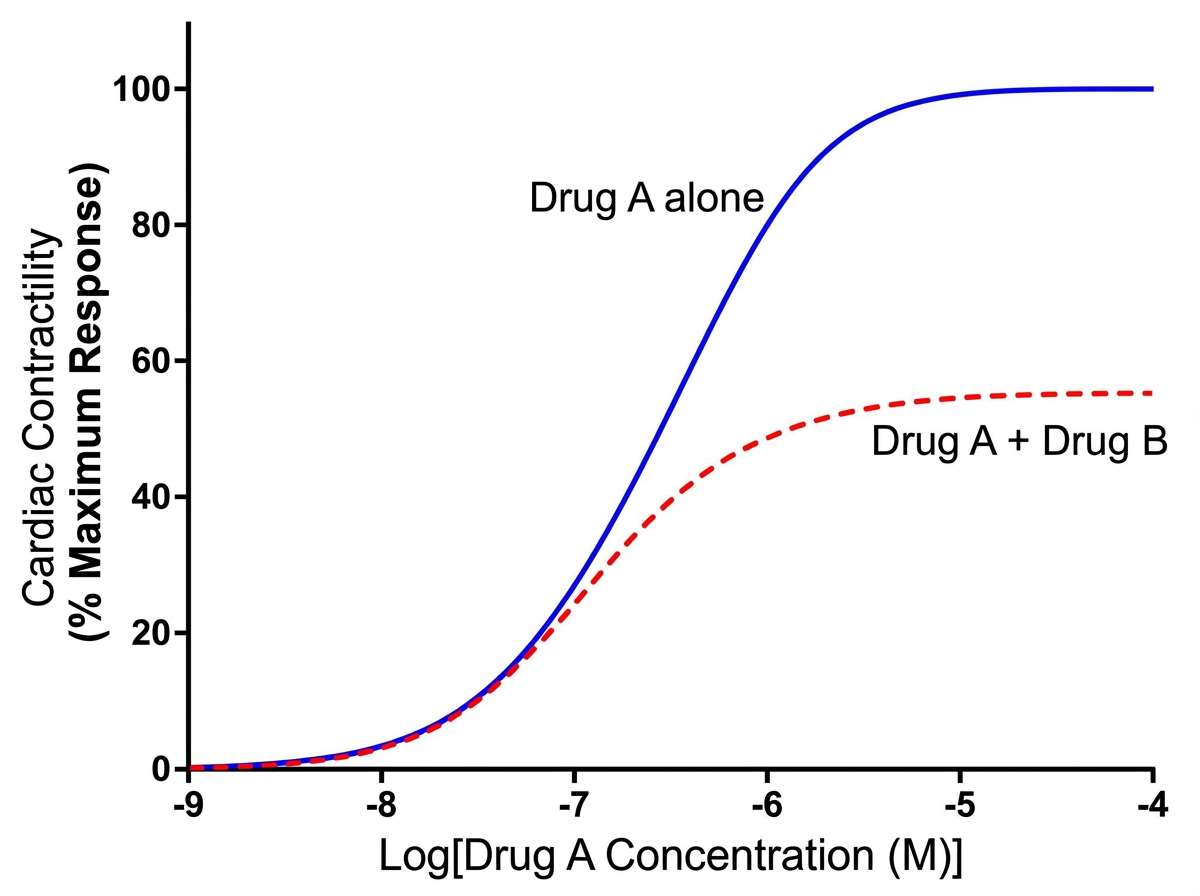
An investigator is studying the effects of different drugs on the contraction of cardiomyocytes. The myocytes are able to achieve maximal contractility with the administration of drug A. The subsequent administration of drug B produces the response depicted in the graph shown. Which of the following drugs is most likely to produce a response similar to that of drug B?
Q5
A previously healthy 45-year-old man comes to the physician for a routine health maintenance examination. He has been having recurrent headaches, especially early in the morning, and sometimes feels dizzy. There is no family history of serious illness. The patient runs 5 miles 3 days a week. He does not smoke or drink alcohol. He is 177 cm (5 ft 10 in) tall and weighs 72 kg (159 lb); BMI is 23 kg/m2. His temperature is 37°C (98.6°F), pulse is 70/min, and blood pressure is 152/90 mm Hg. Physical examination shows no abnormalities. Laboratory studies are within normal limits. Two weeks later, the patient's blood pressure is 150/90 mm Hg in both arms. He is started on an antihypertensive medication. One month later, physical examination shows 2+ pretibial edema bilaterally. This patient was most likely treated with which of the following medications?
Q6
A 44-year-old man comes to the emergency department because of a severe headache and blurry vision for the past 3 hours. He has hypertension treated with hydrochlorothiazide. He has missed taking his medication for the past week as he was traveling. He is only oriented to time and person. His temperature is 37.1°C (98.8°F), pulse is 92/min and regular, and blood pressure is 245/115 mm Hg. Cardiopulmonary examination shows no abnormalities. Fundoscopy shows bilateral retinal hemorrhages and exudates. Neurologic examination shows no focal findings. A complete blood count and serum concentrations of electrolytes, glucose, and creatinine are within the reference range. A CT scan of the brain shows no abnormalities. Which of the following is the most appropriate pharmacotherapy?
Q7
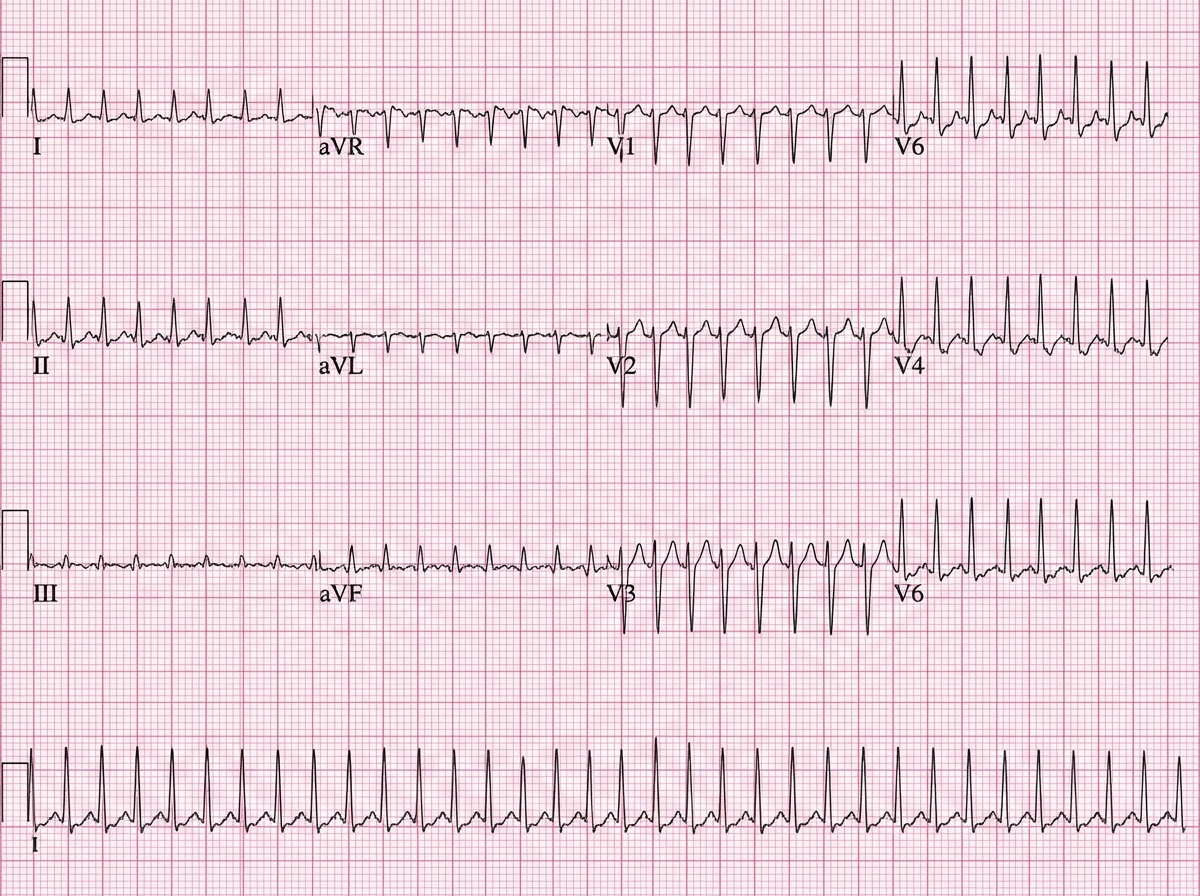
A 52-year-old man presents to the emergency department (ED) complaining of palpitations and lightheadedness for the last 30 minutes. He denies feeling pain or discomfort in his chest and is not short of breath. He does not have any known medical problems and does not take any medications regularly. He drinks 4–6 caffeinated drinks a day. The temperature is 36.8°C (98.2°F), the pulse rate is 150/min and slightly irregular, the blood pressure is 144/84 mm Hg, and the respiratory rate is 16/min. A focused examination of the cardiovascular and respiratory systems is unremarkable. An electrocardiogram is performed in the ED and the results are shown in the accompanying image. The ED physician prescribes a calcium channel blocking agent for his condition. Which of the following statements best describes the choice of verapamil over nifedipine in the treatment of this patient?
Q8
An 18-year-old boy is brought to the emergency department by his parents because he suddenly collapsed while playing football. His parents mention that he had complained of dizziness while playing before, but never fainted in the middle of a game. On physical examination, the blood pressure is 130/90 mm Hg, the respirations are 15/min, and the pulse is 110/min. The chest is clear, but a systolic ejection murmur is present. The remainder of the examination revealed no significant findings. An electrocardiogram is ordered, along with an echocardiogram. He is diagnosed with hypertrophic cardiomyopathy and the physician lists all the precautions he must follow. Which of the following drugs will be on the list of contraindicated substances?
Q9
A 27-year-old woman with no past medical history presents to her primary care provider because she has begun to experience color changes in her fingers on both hands in cold temperatures. She reports having had this problem for a few years, but with the weather getting colder this winter she has grown more concerned. She says that when exposed to cold her fingers turn white, blue, and eventually red. When the problem subsides she experiences pain in the affected fingers. She says that wearing gloves helps somewhat, but she continues to experience the problem. Inspection of the digits is negative for ulcerations. Which of the following is the next best step in treatment?
Q10
A 65-year-old male with a history of hypertension presents to his primary care physician complaining of multiple episodes of chest pain, palpitations, and syncope. Episodes have occurred twice daily for the last week, and he is asymptomatic between episodes. Electrocardiogram reveals a narrow-complex supraventricular tachycardia. He is treated with diltiazem. In addition to its effects on cardiac myocytes, on which of the following channels and tissues would diltiazem also block depolarization?
Calcium channel blockers (dihydropyridine/non-dihydropyridine) US Medical PG Practice Questions and MCQs
Question 1: A molecular biologist is studying the roles of different types of ion channels regulating cardiac excitation. He identifies a voltage-gated calcium channel in the sinoatrial node, which is also present throughout the myocardium. The channel is activated at ~ -40 mV of membrane potential, undergoes voltage-dependent inactivation, and is highly sensitive to nifedipine. Which of the following phases of the action potential in the sinoatrial node is primarily mediated by ion currents through the channel that the molecular biologist is studying?
A. Phase 2
B. Phase 3
C. Phase 1
D. Phase 4
E. Phase 0 (Correct Answer)
Explanation: ***Phase 0***
- The description of the channel (**activated at -40 mV**, **voltage-dependent inactivation**, sensitive to **nifedipine**) points to an **L-type calcium channel**.
- In the **sinoatrial node**, **L-type calcium channels** are primarily responsible for the **Phase 0 depolarization** (upstroke) of the action potential.
*Phase 2*
- In **myocardial cells**, **Phase 2** (plateau phase) is primarily mediated by **L-type calcium channels**, but the question refers to the **sinoatrial node action potential**.
- **Sinoatrial node cells** typically lack a distinct **Phase 2** plateau, distinguishing them from ventricular myocytes.
*Phase 3*
- **Phase 3** (repolarization) in the **sinoatrial node** is primarily mediated by the **efflux of potassium ions** through various **potassium channels**.
- The described channel, being a **calcium channel**, would contribute to depolarization rather than repolarization.
*Phase 1*
- **Phase 1** (initial repolarization) is characteristic of **ventricular myocytes** and is mediated by a transient outward **potassium current (Ito)**.
- The **sinoatrial node** action potential typically lacks a distinct **Phase 1**, as it does not have this rapid initial repolarization.
*Phase 4*
- **Phase 4** (spontaneous depolarization) in the **sinoatrial node** is primarily driven by the "funny" current (**If**, carried by **HCN channels**) and a gradually increasing **calcium current** (mainly through **T-type calcium channels**), leading to the threshold for **Phase 0**.
- While L-type channels contribute to reaching the threshold, their primary role is the rapid depolarization of **Phase 0**.
Question 2: A 72-year-old man comes to the emergency department because of blurry vision for the past 3 days. He has also had 4 episodes of right-sided headaches over the past month. He has no significant past medical history. His father died of coronary artery disease at the age of 62 years. His temperature is 37.2°C (99°F), pulse is 94/min, and blood pressure is 232/128 mm Hg. Fundoscopy shows right-sided optic disc blurring and retinal hemorrhages. A medication is given immediately. Five minutes later, his pulse is 75/min and blood pressure is 190/105 mm Hg. Which of the following drugs was most likely administered?
A. Nicardipine
B. Hydralazine
C. Nitroprusside
D. Fenoldopam
E. Labetalol (Correct Answer)
Explanation: ***Labetalol***
- This patient presents with **malignant hypertension** given the severely elevated blood pressure (232/128 mm Hg) and signs of **end-organ damage** (blurry vision, optic disc blurring, retinal hemorrhages suggesting hypertensive retinopathy, and new-onset headaches).
- **Labetalol** is a mixed alpha- and beta-blocker commonly used in hypertensive emergencies because of its **rapid onset of action** and ability to effectively lower blood pressure without causing significant reflex tachycardia. The decrease in pulse rate from 94/min to 75/min after administration is consistent with its beta-blocking effects.
*Nicardipine*
- **Nicardipine** is a dihydropyridine calcium channel blocker that primarily causes **vasodilation**, making it effective in hypertensive emergencies.
- While it would lower blood pressure, it typically causes **reflex tachycardia** due to vasodilation, which is not observed in this patient (pulse decreased).
*Hydralazine*
- **Hydralazine** is a direct arterial vasodilator often used in hypertensive emergencies, but it typically causes a more pronounced **reflex tachycardia** than calcium channel blockers.
- Its onset of action can also be less predictable, and its use is generally avoided if there's evidence of **coronary artery disease** due to the risk of increased myocardial oxygen demand.
*Nitroprusside*
- **Nitroprusside** is a powerful balanced arterial and venous vasodilator, leading to a rapid and significant drop in blood pressure.
- It is known for causing **reflex tachycardia** and has a risk of **cyanide toxicity** with prolonged use, making its use in this scenario less ideal given the patient's existing elevated pulse.
*Fenoldopam*
- **Fenoldopam** is a dopamine-1 receptor agonist that causes vasodilation and improves renal blood flow, useful in hypertensive emergencies.
- Like other vasodilators, it can cause **reflex tachycardia** and may lead to increased intraocular pressure, which would be a concern in a patient with acute blurry vision.
Question 3: A previously healthy 52-year-old woman comes to the physician because of a 3-month history of chest pain on exertion. She takes no medications. Cardiopulmonary examination shows no abnormalities. Cardiac stress ECG shows inducible ST-segment depressions in the precordial leads that coincide with the patient's report of chest pain and resolve upon cessation of exercise. Pharmacotherapy with verapamil is initiated. This drug is most likely to have which of the following sets of effects?
$$$ End-diastolic volume (EDV) %%% Blood pressure (BP) %%% Contractility %%% Heart rate (HR) $$$
A. No change no change no change no change
B. ↓ ↓ no change ↑
C. ↓ ↓ ↓ ↑
D. ↓ ↓ ↓ no change
E. ↑ ↓ ↓ ↓ (Correct Answer)
Explanation: ***↑ ↓ ↓ ↓***
- **Verapamil**, a **non-dihydropyridine calcium channel blocker**, reduces **cardiac contractility**, leading to decreased **heart rate** and **blood pressure**, while increasing **end-diastolic volume**.
- Its therapeutic effect in **exertional angina** is primarily due to reduced myocardial oxygen demand, achieved by decreasing **heart rate**, **contractility** (both leading to reduced work of heart), and **afterload** (due to vasodilation which decreases blood pressure).
*No change no change no change no change*
- This option is incorrect because verapamil has significant **pharmacological effects** on the cardiovascular system.
- Verapamil is prescribed to treat the patient's symptoms, implying a need for **hemodynamic changes**, not stasis.
*↓ ↓ no change ↑*
- Verapamil typically **decreases heart rate** due to its action on the sinoatrial (SA) node, making an increase unlikely.
- While it decreases **blood pressure** and **contractility**, the absence of an effect on heart rate and an increase in heart rate are inconsistent with verapamil's known pharmacology.
*↓ ↓ ↓ ↑*
- This option incorrectly suggests an **increase in heart rate**, whereas verapamil is known to cause a dose-dependent **decrease in heart rate**.
- The other parameters (decreased EDV, BP, contractility) are also not fully aligned with verapamil's effects; EDV tends to increase due to better filling time and reduced contractility.
*↓ ↓ ↓ no change*
- This option suggests a **decrease in EDV**, which is generally incorrect; verapamil tends to allow for **increased ventricular filling** due to a reduced heart rate and prolonged diastole.
- The absence of a change in heart rate is also incorrect, as verapamil is a known **negative chronotropic agent**.
Question 4: An investigator is studying the effects of different drugs on the contraction of cardiomyocytes. The myocytes are able to achieve maximal contractility with the administration of drug A. The subsequent administration of drug B produces the response depicted in the graph shown. Which of the following drugs is most likely to produce a response similar to that of drug B?
A. Albuterol
B. Phenoxybenzamine
C. Pindolol (Correct Answer)
D. Isoproterenol
E. Propranolol
Explanation: ***Pindolol***
- The graph shows drug B reducing the maximal contractility achieved by drug A, suggesting it is a **partial agonist** or a **competitive antagonist** that can exert some intrinsic activity. Pindolol is a **beta-blocker** with **intrinsic sympathomimetic activity (ISA)**, meaning it can partially stimulate beta-receptors while blocking full agonists.
- This **partial agonism** allows pindolol to reduce the effect of a stronger agonist (like drug A, if it's a full beta-agonist) but still provide some baseline stimulation, thus decreasing the maximal response rather than completely abolishing it.
*Albuterol*
- Albuterol is a **selective beta-2 adrenergic agonist** primarily used as a bronchodilator.
- It would increase contractility if beta-2 receptors were present and acted upon, but it would not reduce the maximal contraction from an existing strong agonist.
*Phenoxybenzamine*
- Phenoxybenzamine is an **irreversible alpha-adrenergic antagonist**.
- It would not directly affect cardiac contractility which is primarily mediated by beta-adrenergic receptors, nor would it produce the depicted effect on contractility.
*Isoproterenol*
- Isoproterenol is a **non-selective beta-adrenergic agonist**.
- As a full agonist, it would increase contractility and could even be drug A if drug A is a beta-agonist, but it would not reduce the maximal response of an established agonist.
*Propranolol*
- Propranolol is a **non-selective beta-adrenergic antagonist** without intrinsic sympathomimetic activity (ISA).
- It would act as a **full competitive antagonist**, completely blocking the effects of drug A if drug A is a beta-agonist, thus reducing contractility much more significantly than depicted, potentially to baseline or below.
Question 5: A previously healthy 45-year-old man comes to the physician for a routine health maintenance examination. He has been having recurrent headaches, especially early in the morning, and sometimes feels dizzy. There is no family history of serious illness. The patient runs 5 miles 3 days a week. He does not smoke or drink alcohol. He is 177 cm (5 ft 10 in) tall and weighs 72 kg (159 lb); BMI is 23 kg/m2. His temperature is 37°C (98.6°F), pulse is 70/min, and blood pressure is 152/90 mm Hg. Physical examination shows no abnormalities. Laboratory studies are within normal limits. Two weeks later, the patient's blood pressure is 150/90 mm Hg in both arms. He is started on an antihypertensive medication. One month later, physical examination shows 2+ pretibial edema bilaterally. This patient was most likely treated with which of the following medications?
A. Prazosin
B. Losartan
C. Propranolol
D. Amlodipine (Correct Answer)
E. Spironolactone
Explanation: ***Amlodipine***
- **Amlodipine** is a **dihydropyridine calcium channel blocker** known to cause **peripheral edema** (like pretibial edema) as a common side effect due to precapillary vasodilation.
- The patient's blood pressure was elevated, and after starting an antihypertensive medication, he developed new-onset **2+ pretibial edema**, strongly suggesting this class of medication.
*Prazosin*
- **Prazosin** is an **alpha-1 adrenergic antagonist** that can cause orthostatic hypotension or reflex tachycardia but is less commonly associated with significant peripheral edema.
- While it lowers blood pressure, its side effect profile does not typically include prominent pretibial edema.
*Losartan*
- **Losartan** is an **angiotensin receptor blocker (ARB)** that works by blocking the effects of angiotensin II. It is generally well-tolerated and less likely to cause peripheral edema compared to calcium channel blockers.
- ARBs like losartan do not cause the same degree of precapillary vasodilation that leads to ankle edema.
*Propranolol*
- **Propranolol** is a **non-selective beta-blocker**. Common side effects include bradycardia, fatigue, and bronchospasm, but not typically peripheral edema.
- Beta-blockers primarily reduce heart rate and contractility, and do not cause vasodilation leading to pretibial edema.
*Spironolactone*
- **Spironolactone** is a **potassium-sparing diuretic** used for hypertension, but also in conditions like heart failure and cirrhosis to reduce fluid retention. It is more likely to cause diuresis and reduce edema, not cause it.
- Side effects include hyperkalemia and gynecomastia, but not peripheral edema, as its primary action is to eliminate excess fluid.
Question 6: A 44-year-old man comes to the emergency department because of a severe headache and blurry vision for the past 3 hours. He has hypertension treated with hydrochlorothiazide. He has missed taking his medication for the past week as he was traveling. He is only oriented to time and person. His temperature is 37.1°C (98.8°F), pulse is 92/min and regular, and blood pressure is 245/115 mm Hg. Cardiopulmonary examination shows no abnormalities. Fundoscopy shows bilateral retinal hemorrhages and exudates. Neurologic examination shows no focal findings. A complete blood count and serum concentrations of electrolytes, glucose, and creatinine are within the reference range. A CT scan of the brain shows no abnormalities. Which of the following is the most appropriate pharmacotherapy?
A. Sublingual nifedipine
B. Oral captopril
C. Intravenous nitroprusside (Correct Answer)
D. Oral clonidine
E. Intravenous mannitol
Explanation: ***Intravenous nitroprusside***
- The patient presents with **hypertensive emergency**, characterized by **severe hypertension** (245/115 mmHg) with **acute end-organ damage**, including altered mental status and retinal hemorrhages/exudates.
- **Intravenous nitroprusside** is a potent, rapidly acting vasodilator making it an excellent choice for immediate and controlled reduction of blood pressure in such critical situations.
*Sublingual nifedipine*
- **Sublingual nifedipine** can cause a sudden and uncontrolled drop in blood pressure, leading to **ischemia** due to inadequate perfusion of vital organs.
- It also has a less predictable and slower onset of action compared to intravenous agents, making it unsuitable for acute hypertensive emergencies.
*Oral captopril*
- **Oral captopril** has a slower onset of action and is less suitable for the acute management of a **hypertensive emergency** where immediate and precise blood pressure control is crucial.
- While an ACE inhibitor, its oral administration does not provide the rapid titratability needed to safely lower dangerously high blood pressures.
*Oral clonidine*
- **Oral clonidine** also has a relatively slow onset of action and its effects can be variable, making it less ideal for the acute, emergent management of **severe hypertension** with end-organ damage.
- It is more appropriate for urgent but non-emergent hypertension or chronic management, not for situations requiring immediate and controlled blood pressure reduction.
*Intravenous mannitol*
- **Intravenous mannitol** is an osmotic diuretic primarily used to reduce **intracranial pressure** or to promote diuresis.
- It does not directly lower blood pressure effectively in a hypertensive emergency and is not a primary antihypertensive agent.
Question 7: A 52-year-old man presents to the emergency department (ED) complaining of palpitations and lightheadedness for the last 30 minutes. He denies feeling pain or discomfort in his chest and is not short of breath. He does not have any known medical problems and does not take any medications regularly. He drinks 4–6 caffeinated drinks a day. The temperature is 36.8°C (98.2°F), the pulse rate is 150/min and slightly irregular, the blood pressure is 144/84 mm Hg, and the respiratory rate is 16/min. A focused examination of the cardiovascular and respiratory systems is unremarkable. An electrocardiogram is performed in the ED and the results are shown in the accompanying image. The ED physician prescribes a calcium channel blocking agent for his condition. Which of the following statements best describes the choice of verapamil over nifedipine in the treatment of this patient?
A. Verapamil does not have non-specific anti-adrenergic effects, unlike nifedipine.
B. Verapamil has fewer negative inotropic effects than nifedipine.
C. Verapamil is more effective in decreasing blood pressure than nifedipine.
D. Verapamil binds to the α2 subunit of the L-type calcium channel, while nifedipine binds to the α1 subunit of the L-type calcium channel.
E. Verapamil slows atrioventricular conduction more effectively than nifedipine. (Correct Answer)
Explanation: ***Verapamil slows atrioventricular conduction more effectively than nifedipine.***
- Verapamil is a **non-dihydropyridine calcium channel blocker** that primarily acts on the **L-type calcium channels** in the heart, particularly in the AV node, slowing conduction and reducing heart rate. This is crucial for managing arrhythmias like the one suggested by the patient's symptoms (palpitations, lightheadedness, irregular pulse of 150/min), which is likely atrial fibrillation or flutter with rapid ventricular response.
- In contrast, nifedipine, a **dihydropyridine calcium channel blocker**, primarily acts on vascular smooth muscle to cause vasodilation, with little direct effect on cardiac conduction.
*Verapamil does not have non-specific anti-adrenergic effects, unlike nifedipine.*
- Neither verapamil nor nifedipine are known for significant anti-adrenergic effects; their primary mechanisms involve calcium channel blockade.
- Dihydropyridines like **nifedipine** can sometimes cause reflex tachycardia due to their vasodilation, which is an indirect adrenergic response, but not a direct anti-adrenergic effect.
*Verapamil has fewer negative inotropic effects than nifedipine.*
- Verapamil, by slowing calcium influx into cardiac myocytes, has more pronounced **negative inotropic effects** (decreases myocardial contractility) compared to nifedipine, which primarily affects peripheral vasculature.
- Nifedipine's effect on contractility is less profound clinically due to its selective action on smooth muscle cells and potential reflex sympathetic activation.
*Verapamil is more effective in decreasing blood pressure than nifedipine.*
- Nifedipine, a dihydropyridine, is generally more potent and preferred for its **vasodilatory effects** and greater efficacy in lowering blood pressure.
- While verapamil also lowers blood pressure, its primary utility in this context is its effect on cardiac rhythm and AV nodal conduction, not its blood pressure-lowering capabilities.
*Verapamil binds to the α2 subunit of the L-type calcium channel, while nifedipine binds to the α1 subunit of the L-type calcium channel.*
- Both verapamil and nifedipine primarily bind to the **α1 subunit** of the L-type calcium channel, though at different binding sites, leading to their distinct pharmacological effects.
- The α2 subunit is accessory and involved in channel trafficking and modulation, not the primary binding site for these drugs' therapeutic action.
Question 8: An 18-year-old boy is brought to the emergency department by his parents because he suddenly collapsed while playing football. His parents mention that he had complained of dizziness while playing before, but never fainted in the middle of a game. On physical examination, the blood pressure is 130/90 mm Hg, the respirations are 15/min, and the pulse is 110/min. The chest is clear, but a systolic ejection murmur is present. The remainder of the examination revealed no significant findings. An electrocardiogram is ordered, along with an echocardiogram. He is diagnosed with hypertrophic cardiomyopathy and the physician lists all the precautions he must follow. Which of the following drugs will be on the list of contraindicated substances?
A. Βeta-blockers
B. Dobutamine
C. Nitrates (Correct Answer)
D. Calcium channel blockers
E. Potassium channel blockers
Explanation: ***Nitrates***
- **Nitrates** cause **vasodilation**, which decreases **preload** and worsens **left ventricular outflow tract obstruction (LVOTO)** in **hypertrophic cardiomyopathy (HCM)**, potentially leading to syncope or sudden death.
- Reduced preload exacerbates the dynamic obstruction, causing a critical drop in cardiac output.
- **Commonly encountered substances** patients must avoid include nitroglycerin, isosorbide, and **phosphodiesterase-5 inhibitors** (sildenafil, tadalafil) which potentiate nitrate effects.
- This is a critical counseling point for HCM patients in everyday life.
*Beta-blockers*
- **Beta-blockers** are **first-line treatment** for **hypertrophic cardiomyopathy (HCM)** as they reduce heart rate, improve diastolic filling, and decrease contractility, thereby reducing **LVOTO**.
- They alleviate symptoms and reduce the risk of sudden cardiac death in HCM.
*Dobutamine*
- **Dobutamine** is a **beta-1 adrenergic agonist** that increases contractility and heart rate, which would worsen **LVOTO** in HCM.
- While also contraindicated in HCM, dobutamine is only used in **controlled hospital settings** for stress testing or hemodynamic support, not a substance patients encounter in daily life.
- The question focuses on outpatient counseling about substances to avoid in everyday situations.
*Calcium channel blockers*
- **Non-dihydropyridine calcium channel blockers** (verapamil, diltiazem) are used in **HCM management**, particularly in patients who cannot tolerate beta-blockers.
- They improve **diastolic function** and reduce **LVOTO** by decreasing contractility and heart rate.
- **Caution:** Dihydropyridines (nifedipine, amlodipine) can worsen obstruction and should be avoided.
*Potassium channel blockers*
- **Antiarrhythmics** like **amiodarone** (potassium channel blocker) are used in **HCM** patients for atrial or ventricular arrhythmias.
- Not contraindicated; therapeutically indicated for rhythm management.
Question 9: A 27-year-old woman with no past medical history presents to her primary care provider because she has begun to experience color changes in her fingers on both hands in cold temperatures. She reports having had this problem for a few years, but with the weather getting colder this winter she has grown more concerned. She says that when exposed to cold her fingers turn white, blue, and eventually red. When the problem subsides she experiences pain in the affected fingers. She says that wearing gloves helps somewhat, but she continues to experience the problem. Inspection of the digits is negative for ulcerations. Which of the following is the next best step in treatment?
A. Amlodipine (Correct Answer)
B. Thoracic sympathectomy
C. Phenylephrine
D. Propranolol
E. Sildenafil
Explanation: ***Amlodipine***
- This patient exhibits classic symptoms of **Raynaud's phenomenon**, characterized by color changes (white, blue, red) in the digits upon cold exposure, followed by pain.
- **Calcium channel blockers** like **amlodipine** are the first-line pharmacologic treatment for Raynaud's, working by dilating peripheral arteries to improve blood flow.
*Thoracic sympathectomy*
- **Sympathectomy** is a surgical intervention reserved for **severe cases** of Raynaud's phenomenon that are refractory to medical therapy, especially when there is evidence of impending **ischemic damage** (e.g., ulcerations).
- This patient currently has a mild presentation without ulcerations, making surgery an overly aggressive initial treatment.
*Phenylephrine*
- **Phenylephrine** is an **alpha-1 adrenergic agonist** that causes **vasoconstriction**, primarily used as a decongestant or to raise blood pressure in hypotensive states.
- Administering a vasoconstrictor would **worsen** Raynaud's symptoms by further reducing blood flow to the digits.
*Propranolol*
- **Propranolol** is a **beta-blocker** that can potentially **worsen Raynaud's phenomenon** by causing unopposed alpha-adrenergic vasoconstriction, especially with non-selective agents.
- Beta-blockers are generally contraindicated in patients with Raynaud's, or should be used with extreme caution if absolutely necessary for another condition.
*Sildenafil*
- While **sildenafil** (a **phosphodiesterase-5 inhibitor**) can cause vasodilation and has been used off-label for severe Raynaud's, it is typically considered a **second-line or adjunctive treatment** for refractory cases.
- **Calcium channel blockers** are the preferred initial pharmacologic therapy due to their proven efficacy and broader availability.
Question 10: A 65-year-old male with a history of hypertension presents to his primary care physician complaining of multiple episodes of chest pain, palpitations, and syncope. Episodes have occurred twice daily for the last week, and he is asymptomatic between episodes. Electrocardiogram reveals a narrow-complex supraventricular tachycardia. He is treated with diltiazem. In addition to its effects on cardiac myocytes, on which of the following channels and tissues would diltiazem also block depolarization?
A. L-type Ca channels in skeletal muscle
B. T-type Ca channels in bone
C. P-type Ca channels in Purkinje fibers
D. N-type Ca channels in the peripheral nervous system
E. L-type Ca channels in smooth muscle (Correct Answer)
Explanation: ***L-type Ca channels in smooth muscle***
- **Diltiazem** is a **calcium channel blocker** that acts on **L-type calcium channels**, which are extensively found in both cardiac muscle and vascular **smooth muscle**.
- By blocking these channels in smooth muscle, diltiazem induces **vasodilation**, contributing to its use in hypertension, as seen in the patient's history.
*L-type Ca channels in skeletal muscle*
- While skeletal muscle does contain L-type calcium channels (also known as dihydropyridine receptors), their primary role is in **excitation-contraction coupling**, acting as voltage sensors rather than directly regulating calcium influx for contraction.
- **Skeletal muscle contraction** is primarily triggered by calcium release from the sarcoplasmic reticulum, not direct calcium influx through L-type channels, making them largely **insensitive to calcium channel blockers** like diltiazem at therapeutic doses.
*T-type Ca channels in bone*
- **T-type calcium channels** are found in various tissues, including neurons and cardiac pacemaker cells, but they are generally **not the primary target of diltiazem**, which preferentially binds to L-type channels.
- Furthermore, **bone tissue** is not known to have a significant physiological role mediated by T-type calcium channels that would be relevant to diltiazem's action or clinical effects.
*P-type Ca channels in Purkinje fibers*
- **Purkinje fibers** primarily rely on **L-type calcium channels** for phase 2 of their action potential and are sensitive to diltiazem, but **P-type calcium channels** are mainly found in neurons.
- P-type calcium channels are involved in **neurotransmitter release** at the presynaptic terminal, and diltiazem does not typically block these channels clinically.
*N-type Ca channels in the peripheral nervous system*
- **N-type calcium channels** are predominantly located in the **peripheral and central nervous systems**, where they are crucial for **neurotransmitter release** at nerve terminals.
- Diltiazem's primary mechanism of action is on **L-type calcium channels**, and it has **minimal to no clinically significant effect** on N-type calcium channels.
Want unlimited practice?
Get full access to all questions, explanations, and performance tracking.