A 69-year-old man with metastatic colon cancer is brought to the emergency department because of shortness of breath, fever, chills, and a productive cough with streaks of blood for the past 5 days. He has a history of emphysema. The patient does not have abdominal pain or headache. He receives chemotherapy with 5-fluorouracil, leucovorin, and oxaliplatin every 6 weeks; his last cycle was 3 weeks ago. His temperature is 38.3°C (101°F), pulse is 112/min, and blood pressure is 100/70 mm Hg. Pulse oximetry on room air shows an oxygen saturation of 83%. A few scattered inspiratory crackles are heard over the right lung. His mucous membranes are dry. Cardiac examination is normal. Laboratory studies show:
Hemoglobin 9.3 mg/dL
Leukocyte count 700/mm3
Segmented neutrophils 68%
Lymphocytes 25%
Eosinophils 4%
Monocytes 3%
Platelet count 104,000/mm3
Serum
Glucose 75 mg/dL
Urea nitrogen 41 mg/dL
Creatinine 2.1 mg/dL
Galactomannan antigen Positive
Which of the following is the most appropriate initial pharmacotherapy?
Q12
A 45-year-old HIV-positive male presents to his primary care physician complaining of decreased libido. He reports that he has been unable to maintain an erection for the past two weeks. He has never encountered this problem before. He was hospitalized four weeks ago for cryptococcal meningitis and has been on long-term antifungal therapy since then. His CD4 count is 400 cells/mm^3 and viral load is 5,000 copies/ml. He was previously non-compliant with HAART but since his recent infection, he has been more consistent with its use. His past medical history is also notable for hypertension, major depressive disorder, and alcohol abuse. He takes lisinopril and sertraline. His temperature is 98.6°F (37°C), blood pressure is 120/85 mmHg, pulse is 80/min, and respirations are 18/min. The physician advises the patient that side effects like decreased libido may manifest due to a drug with which of the following mechanisms of action?
Q13
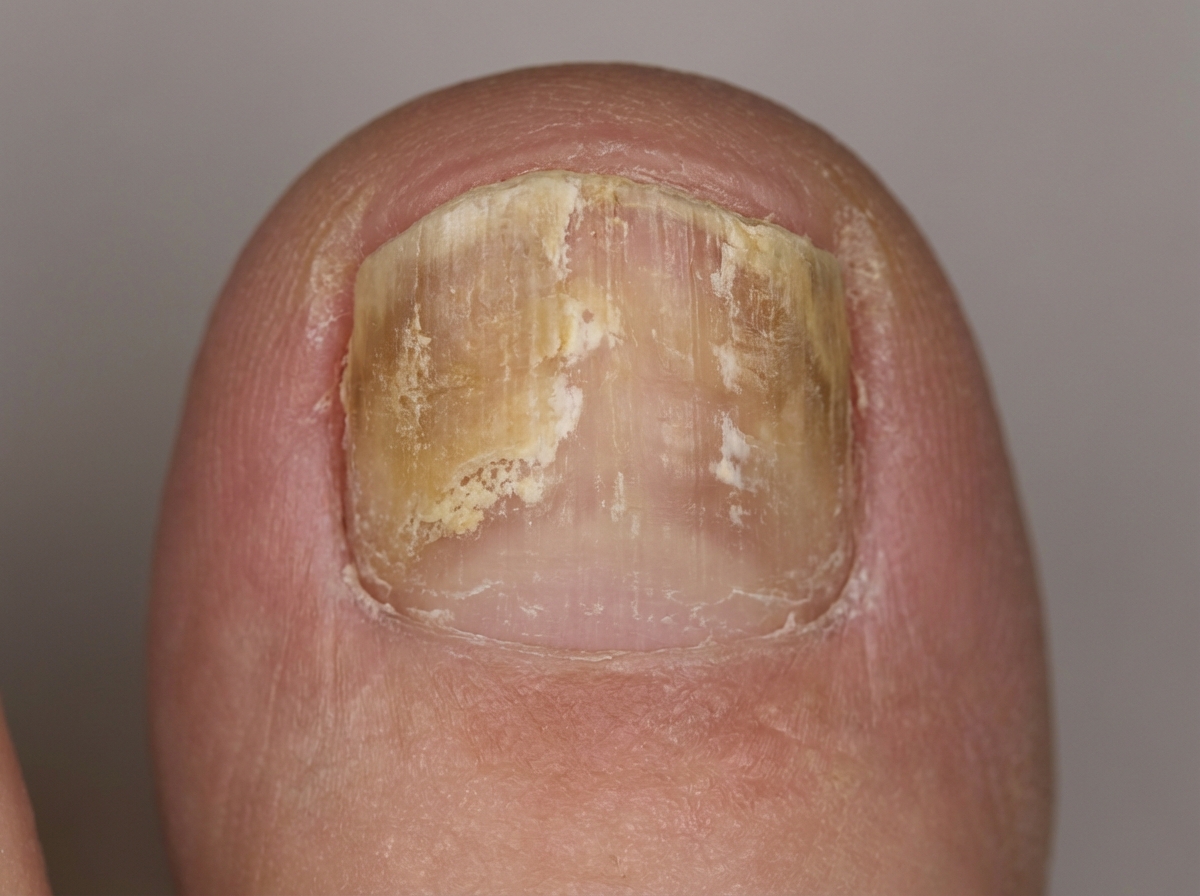
A 67-year-old man presents to his family physician’s office for a routine visit and to discuss a growth on his toenail that has been gradually enlarging for a month. He has a history of diabetes mellitus, hyperlipidemia, and hypertension and is on metformin, atorvastatin, and lisinopril. He admits to smoking 2 packs of cigarettes daily for the past 45 years. His blood pressure reading today is 132/88 mm Hg, heart rate is 78/min, respiration rate is 12/min and his temperature is 37.1°C (98.8°F). On exam, the patient appears alert and in no apparent distress. Capillary refill is 3 seconds. Diminished dull and sharp sensations are present bilaterally in the lower extremities distal to the mid-tibial region. An image of the patient’s toenail is provided. A potassium hydroxide (KOH) preparation of a nail clipping sample confirms the presence of hyphae. Which of the following treatment options will be most effective for this condition?
Q14
An 11-year-old boy with HIV and esophageal candidiasis is being treated with caspofungin. What is the mechanism of action of this drug?
Q15
A 38-year-old man comes to the physician because of white lesions in his mouth for 4 days. He also has intense pain while chewing food. He was diagnosed with non-Hodgkin lymphoma around 8 months ago. He is undergoing chemotherapy and is currently on his fourth cycle. He was treated for herpes labialis 4 months ago with acyclovir. He has smoked half a pack of cigarettes daily for 15 years. He appears healthy. Vital signs are within normal limits. Cervical and axillary lymphadenopathy is present. Oral examination shows white plaques on his tongue and buccal mucosa that bleed when scraped off. The remainder of the examination shows no abnormalities. Which of the following is the next best step in management?
Q16
A 42-year-old man comes to the physician because he is concerned that he is balding. Over the past few months, he has noticed patchy areas of hair loss on his head. He also mentions that he has felt depressed since the death of his wife last year and has unintentionally lost about 18 kg (40 lbs). He is constantly fatigued. He has little appetite because he feels food does not taste the same way anymore. He also has occasional episodes of watery diarrhea. He drinks 5–6 cans of beer daily. Vital signs are within normal limits. Examination shows dry, scaly skin on both feet. There is patchy alopecia of the scalp, axillae, chest, and mons pubis. Which of the following is most likely to directly improve this patient's alopecia?
Q17
A 41-year-old man comes to the physician because of a 3-week history of fatigue, cough, and a 4.5-kg (10-lb) weight loss. He does not smoke or drink alcohol. He appears emaciated. A chest x-ray shows a calcified nodule in the left lower lobe and left hilar lymphadenopathy. The physician initiates therapy for the condition and informs him that he will have to return for monthly ophthalmologic examination for the next 2 months. These examinations are most likely to evaluate the patient for an adverse effect of a drug with which of the following mechanisms of action?
Q18
A 72-year-old woman with type 2 diabetes mellitus comes to the physician because she is concerned about the appearance of her toenails. Examination shows yellowish discoloration of all toenails on both feet. The edges of the toenails are lifted, and there is subungual debris. Potassium hydroxide preparation of scrapings from the nails shows multiple branching septate hyphae. Treatment with oral terbinafine is begun. Which of the following is the primary mechanism of action of this drug?
Q19
You are taking care of a patient with renal failure secondary to anti-fungal therapy. The patient is a 66-year-old male being treated for cryptococcal meningitis. This drug has a variety of known side effects including acute febrile reactions to infusions, anemia, hypokalemia and hypomagnesemia. What is the mechanism of action of this drug?
Q20
A 26-year-old man comes to the physician because of discoloration of the toenails. He has a history of peptic ulcer disease treated with pantoprazole. The physician prescribes oral itraconazole for a fungal infection and temporarily discontinues pantoprazole. Which of the following best describes the reason for discontinuing pantoprazole therapy?
Antifungals US Medical PG Practice Questions and MCQs
Question 11: A 69-year-old man with metastatic colon cancer is brought to the emergency department because of shortness of breath, fever, chills, and a productive cough with streaks of blood for the past 5 days. He has a history of emphysema. The patient does not have abdominal pain or headache. He receives chemotherapy with 5-fluorouracil, leucovorin, and oxaliplatin every 6 weeks; his last cycle was 3 weeks ago. His temperature is 38.3°C (101°F), pulse is 112/min, and blood pressure is 100/70 mm Hg. Pulse oximetry on room air shows an oxygen saturation of 83%. A few scattered inspiratory crackles are heard over the right lung. His mucous membranes are dry. Cardiac examination is normal. Laboratory studies show:
Hemoglobin 9.3 mg/dL
Leukocyte count 700/mm3
Segmented neutrophils 68%
Lymphocytes 25%
Eosinophils 4%
Monocytes 3%
Platelet count 104,000/mm3
Serum
Glucose 75 mg/dL
Urea nitrogen 41 mg/dL
Creatinine 2.1 mg/dL
Galactomannan antigen Positive
Which of the following is the most appropriate initial pharmacotherapy?
A. Ceftriaxone and azithromycin
B. Rifampin, isoniazid, pyrazinamide, and ethambutol
C. Ceftazidime and levofloxacin
D. Piperacillin-tazobactam
E. Voriconazole (Correct Answer)
Explanation: ***Voriconazole***
- The patient has **neutropenic fever** (leukocyte count 700/mm3, recent chemotherapy) with pulmonary symptoms and a positive **galactomannan antigen**, which is highly suggestive of **invasive aspergillosis**.
- **Voriconazole** is the recommended first-line agent for the treatment of **invasive aspergillosis**.
*Ceftriaxone and azithromycin*
- This combination is typically used for **community-acquired pneumonia**, targeting common bacterial pathogens like *Streptococcus pneumoniae* and atypical bacteria.
- It does not cover **fungal infections** like aspergillosis, nor does it provide broad-spectrum gram-negative coverage suitable for neutropenic fever.
*Rifampin, isoniazid, pyrazinamide, and ethambutol*
- This four-drug regimen is the standard treatment for **active tuberculosis**.
- There is no clinical or laboratory evidence (e.g., acid-fast bacilli smear, cultures) to suggest tuberculosis in this patient.
*Ceftazidime and levofloxacin*
- **Ceftazidime** is a third-generation cephalosporin with good gram-negative coverage, including *Pseudomonas*, which might be considered in neutropenic fever. However, it lacks adequate gram-positive coverage.
- **Levofloxacin** is a fluoroquinolone that provides broad-spectrum coverage, but this combination still misses the likely fungal pathogen and is not ideal for initial empiric therapy in severe neutropenic fever.
*Piperacillin-tazobactam*
- **Piperacillin-tazobactam** is a broad-spectrum antibiotic with good coverage against both gram-positive and gram-negative bacteria, including *Pseudomonas aeruginosa*, making it a common choice for **empiric therapy in neutropenic fever**.
- However, it does not cover **fungal infections**, which are strongly indicated by the positive **galactomannan antigen** in this immunocompromised patient.
Question 12: A 45-year-old HIV-positive male presents to his primary care physician complaining of decreased libido. He reports that he has been unable to maintain an erection for the past two weeks. He has never encountered this problem before. He was hospitalized four weeks ago for cryptococcal meningitis and has been on long-term antifungal therapy since then. His CD4 count is 400 cells/mm^3 and viral load is 5,000 copies/ml. He was previously non-compliant with HAART but since his recent infection, he has been more consistent with its use. His past medical history is also notable for hypertension, major depressive disorder, and alcohol abuse. He takes lisinopril and sertraline. His temperature is 98.6°F (37°C), blood pressure is 120/85 mmHg, pulse is 80/min, and respirations are 18/min. The physician advises the patient that side effects like decreased libido may manifest due to a drug with which of the following mechanisms of action?
A. Inhibition of beta-glucan synthesis
B. Formation of pores in cell membrane
C. Inhibition of ergosterol synthesis (Correct Answer)
D. Disruption of microtubule formation
E. Inhibition of pyrimidine synthesis
Explanation: ***Inhibition of ergosterol synthesis***
- The patient was recently treated for **cryptococcal meningitis** and is likely on an **azole antifungal**, such as fluconazole or itraconazole, for long-term therapy.
- Azole antifungals inhibit **14-alpha-demethylase**, an enzyme crucial for **ergosterol synthesis**, and are known to cause endocrine side effects like **decreased libido** and **erectile dysfunction** due to their impact on steroid hormone synthesis.
*Inhibition of beta-glucan synthesis*
- This mechanism of action belongs to **echinocandins** (e.g., caspofungin, micafungin), which inhibit the synthesis of **1,3-beta-D-glucan**, a key component of the fungal cell wall.
- Echinocandins are typically used for *Candida* infections and are generally not associated with significant endocrine side effects like decreased libido or erectile dysfunction.
*Formation of pores in cell membrane*
- This is the mechanism of action for **polyene antifungals** like **amphotericin B** and **nystatin**, which bind to ergosterol in the fungal cell membrane, creating pores and leading to cell lysis.
- While effective against *Cryptococcus*, amphotericin B is primarily used for acute, severe infections due to its significant toxicity, including nephrotoxicity, and is not typically used for long-term maintenance in this context with libido as the main symptom.
*Disruption of microtubule formation*
- This mechanism is characteristic of **griseofulvin**, an antifungal primarily used for dermatophyte infections of the skin and nails.
- It interferes with **microtubule function** and inhibits fungal mitosis, but it is not used for systemic fungal infections like cryptococcal meningitis, nor is it commonly associated with decreased libido.
*Inhibition of pyrimidine synthesis*
- This mechanism belongs to **flucytosine**, which is converted to **5-fluorouracil** within fungal cells, inhibiting DNA and RNA synthesis.
- Flucytosine is typically used in combination with amphotericin B for severe cryptococcal infections, but it is not known to cause decreased libido as a common or prominent side effect.
Question 13: A 67-year-old man presents to his family physician’s office for a routine visit and to discuss a growth on his toenail that has been gradually enlarging for a month. He has a history of diabetes mellitus, hyperlipidemia, and hypertension and is on metformin, atorvastatin, and lisinopril. He admits to smoking 2 packs of cigarettes daily for the past 45 years. His blood pressure reading today is 132/88 mm Hg, heart rate is 78/min, respiration rate is 12/min and his temperature is 37.1°C (98.8°F). On exam, the patient appears alert and in no apparent distress. Capillary refill is 3 seconds. Diminished dull and sharp sensations are present bilaterally in the lower extremities distal to the mid-tibial region. An image of the patient’s toenail is provided. A potassium hydroxide (KOH) preparation of a nail clipping sample confirms the presence of hyphae. Which of the following treatment options will be most effective for this condition?
A. Fluconazole
B. Betamethasone + vitamin D analog
C. Griseofulvin
D. Terbinafine (Correct Answer)
E. Cephalexin
Explanation: ***Terbinafine***
- **Terbinafine** is a highly effective **antifungal medication** used to treat **onychomycosis**, a fungal infection of the nails, confirmed by the presence of hyphae in the KOH preparation.
- It works by inhibiting **squalene epoxidase**, an enzyme essential for fungal cell membrane synthesis, leading to fungicidal action.
*Fluconazole*
- While **fluconazole** is an antifungal medication, it is generally **less effective** than terbinafine for onychomycosis, especially for dermatophyte infections.
- It is often reserved for patients who cannot tolerate terbinafine or have contraindications to it, or for non-dermatophyte molds or yeast infections.
*Griseofulvin*
- **Griseofulvin** is an older antifungal agent that is **less effective** than newer options like terbinafine for onychomycosis and generally requires a much longer treatment course.
- Its use has largely been replaced by more potent and better-tolerated antifungals for nail infections.
*Betamethasone + vitamin D analog*
- This combination is a treatment for **psoriasis**, a chronic inflammatory skin condition that can affect nails, but it is **not effective** against fungal infections.
- The presence of **hyphae** confirmed by KOH preparation rules out psoriasis as the primary diagnosis and indicates a fungal etiology.
*Cephalexin*
- **Cephalexin** is an **antibiotic** used to treat bacterial infections and has **no activity** against fungal pathogens.
- It would be ineffective for onychomycosis, which is a fungal infection.
Question 14: An 11-year-old boy with HIV and esophageal candidiasis is being treated with caspofungin. What is the mechanism of action of this drug?
A. Pore formation in cell membranes
B. Inhibition of ergosterol synthesis
C. Inhibition of 1,3-Beta-glucan synthase (Correct Answer)
D. Inhibition of squalene epoxidase
E. Inhibition of pyrimidine synthesis
Explanation: ***Inhibition of 1,3-Beta-glucan synthase***
- **Caspofungin** is an **echinocandin** antifungal agent that works by inhibiting **1,3-beta-D-glucan synthase**.
- This enzyme is crucial for the synthesis of **glucan**, a vital component of the **fungal cell wall**, leading to cell wall disruption and fungal cell death.
*Pore formation in cell membranes*
- This mechanism of action is characteristic of **polyene antifungals** like **amphotericin B**.
- These drugs bind to **ergosterol** in the fungal cell membrane, forming pores that lead to leakage of cellular contents.
*Inhibition of ergosterol synthesis*
- This is the mechanism of action for **azole antifungals** (e.g., fluconazole, itraconazole) and **allylamines** (e.g., terbinafine).
- Azoles inhibit **14-alpha-demethylase**, an enzyme involved in converting lanosterol to ergosterol, while allylamines inhibit **squalene epoxidase**.
*Inhibition of squalene epoxidase*
- This is the specific mechanism for **allylamine antifungals** like **terbinafine**.
- Inhibition of **squalene epoxidase** prevents the synthesis of **ergosterol**, primarily used for superficial fungal infections.
*Inhibition of pyrimidine synthesis*
- This mechanism is characteristic of **flucytosine**, an antifungal pro-drug.
- Flucytosine is converted to **5-fluorouracil** within fungal cells, which then inhibits fungal DNA and RNA synthesis.
Question 15: A 38-year-old man comes to the physician because of white lesions in his mouth for 4 days. He also has intense pain while chewing food. He was diagnosed with non-Hodgkin lymphoma around 8 months ago. He is undergoing chemotherapy and is currently on his fourth cycle. He was treated for herpes labialis 4 months ago with acyclovir. He has smoked half a pack of cigarettes daily for 15 years. He appears healthy. Vital signs are within normal limits. Cervical and axillary lymphadenopathy is present. Oral examination shows white plaques on his tongue and buccal mucosa that bleed when scraped off. The remainder of the examination shows no abnormalities. Which of the following is the next best step in management?
A. Biopsy of a lesion
B. Culture of the lesions
C. Topical corticosteroids
D. Intravenous fluconazole
E. Topical nystatin (Correct Answer)
Explanation: ***Topical nystatin***
- The patient's presentation with **oral white plaques that bleed when scraped**, combined with recent **chemotherapy** and immunodeficiency due to non-Hodgkin lymphoma, is highly suggestive of **oral candidiasis (thrush)**.
- **Topical antifungal agents** like nystatin are the first-line treatment for uncomplicated oral candidiasis, especially in immunocompromised patients, effectively targeting the fungal overgrowth.
*Biopsy of a lesion*
- While a biopsy might be considered for atypical or persistent lesions, the classic presentation of **scrappable white plaques** in an immunocompromised patient makes **oral candidiasis** highly likely, and empiric antifungal treatment is usually initiated first.
- Doing a biopsy would delay treatment and is not the most immediate or appropriate next step given the clear clinical picture.
*Culture of the lesions*
- A culture could confirm the presence of Candida species and help determine antifungal susceptibility, but it is **not typically the immediate next step** in managing suspected oral candidiasis.
- The clinical picture is strong enough to warrant empiric treatment, and a culture can be considered later if the patient does not respond to initial therapy.
*Topical corticosteroids*
- **Corticosteroids** are used to reduce inflammation and are contraindicated here as the lesions are infective in origin.
- Using corticosteroids in a patient with an active fungal infection would worsen the condition by further **suppressing the immune response** and promoting fungal growth.
*Intravenous fluconazole*
- **Intravenous fluconazole** would be appropriate for **severe or disseminated candidiasis**, or if the patient fails to respond to topical or oral antifungal agents.
- Given that the patient's symptoms are localized to the mouth and he appears relatively healthy otherwise (vital signs normal), a less aggressive, topical approach is appropriate initially.
Question 16: A 42-year-old man comes to the physician because he is concerned that he is balding. Over the past few months, he has noticed patchy areas of hair loss on his head. He also mentions that he has felt depressed since the death of his wife last year and has unintentionally lost about 18 kg (40 lbs). He is constantly fatigued. He has little appetite because he feels food does not taste the same way anymore. He also has occasional episodes of watery diarrhea. He drinks 5–6 cans of beer daily. Vital signs are within normal limits. Examination shows dry, scaly skin on both feet. There is patchy alopecia of the scalp, axillae, chest, and mons pubis. Which of the following is most likely to directly improve this patient's alopecia?
A. Finasteride
B. Behavioral therapy
C. Restriction of vitamin A-rich foods
D. Zinc supplementation (Correct Answer)
E. Griseofulvin
Explanation: ***Zinc supplementation***
- The patient's symptoms, including **patchy alopecia**, **dry scaly skin**, **weight loss**, **fatigue**, **depressed mood**, **taste alteration**, and **diarrhea**, are highly suggestive of **zinc deficiency**.
- Alcoholism also contributes to zinc malabsorption, thus **zinc supplementation** directly addresses the underlying cause of the alopecia.
*Finasteride*
- **Finasteride** is used for **androgenetic alopecia** (male-pattern baldness), which typically presents as diffuse thinning or receding hairline, not patchy hair loss in various body areas.
- It works by inhibiting 5-alpha reductase, reducing the conversion of **testosterone to dihydrotestosterone**, which is not the pathogenesis of this patient's alopecia.
*Behavioral therapy*
- While the patient's **depression** and **alcohol use** could benefit from behavioral therapy, it would not directly address the **alopecia** or other physical manifestations of **zinc deficiency**.
- Behavioral therapy focuses on psychological and lifestyle factors, not specific nutritional deficiencies causing hair loss.
*Restriction of vitamin A-rich foods*
- **Hypervitaminosis A** can cause alopecia, but the patient's symptoms (diarrhea, altered taste, scaly skin) are not consistent with **vitamin A toxicity**.
- Restricting these foods would be inappropriate and potentially harmful given the patient's likely **malnutrition**.
*Griseofulvin*
- **Griseofulvin** is an antifungal medication used to treat **tinea capitis** (ringworm of the scalp), which presents as patchy hair loss often with inflammation, itching, and scaling.
- While it causes patchy hair loss, the patient's other systemic symptoms (taste changes, diarrhea, generalized skin involvement, and potential alcoholism) point away from a purely fungal infection and towards a **nutritional deficiency**.
Question 17: A 41-year-old man comes to the physician because of a 3-week history of fatigue, cough, and a 4.5-kg (10-lb) weight loss. He does not smoke or drink alcohol. He appears emaciated. A chest x-ray shows a calcified nodule in the left lower lobe and left hilar lymphadenopathy. The physician initiates therapy for the condition and informs him that he will have to return for monthly ophthalmologic examination for the next 2 months. These examinations are most likely to evaluate the patient for an adverse effect of a drug with which of the following mechanisms of action?
A. Impaired synthesis of mycolic acids
B. Impaired protein synthesis due to binding to 50S ribosomes
C. Impaired production of hemozoin from heme
D. Impaired synthesis of cell wall polysaccharides (Correct Answer)
E. Impaired protein synthesis due to binding to 30S ribosomes
Explanation: ***Impaired synthesis of cell wall polysaccharides***
- The patient's clinical presentation (fatigue, cough, weight loss, calcified nodule, hilar lymphadenopathy) is classic for **tuberculosis**.
- The requirement for **monthly ophthalmologic examinations** is pathognomonic for **ethambutol** therapy, as this drug causes **optic neuritis** (decreased visual acuity, red-green color blindness).
- **Ethambutol** inhibits **arabinosyl transferase**, which impairs the synthesis of **arabinogalactan**, a key polysaccharide component of the mycobacterial cell wall.
- Due to the risk of optic neuritis, patients on ethambutol require baseline and monthly ophthalmologic monitoring, especially during the first 2 months of therapy.
*Impaired synthesis of mycolic acids*
- This describes the mechanism of **isoniazid (INH)**, a first-line anti-TB drug that inhibits mycolic acid synthesis.
- The main adverse effects of isoniazid are **peripheral neuropathy** (prevented with pyridoxine/vitamin B6) and **hepatotoxicity**, not optic neuritis.
- Isoniazid does not require routine ophthalmologic monitoring.
*Impaired protein synthesis due to binding to 50S ribosomes*
- This mechanism describes **macrolides** (e.g., clarithromycin, azithromycin) and **chloramphenicol**.
- While macrolides may be used for atypical mycobacterial infections, they are not first-line TB therapy and do not cause optic neuritis requiring monthly eye exams.
*Impaired protein synthesis due to binding to 30S ribosomes*
- This mechanism describes **aminoglycosides** (e.g., streptomycin) and **tetracyclines**.
- While streptomycin is a second-line anti-TB drug, its main adverse effects are **ototoxicity** (hearing loss, vestibular dysfunction) and **nephrotoxicity**, not optic neuritis.
- These drugs do not require ophthalmologic monitoring.
*Impaired production of hemozoin from heme*
- This is the mechanism of **chloroquine** and **hydroxychloroquine**, which are antimalarial drugs.
- While chloroquine can cause retinopathy requiring ophthalmologic monitoring, this patient has **tuberculosis**, not malaria.
- The clinical scenario (calcified lung nodule, hilar lymphadenopathy) and TB treatment context make this mechanism incorrect for this case.
Question 18: A 72-year-old woman with type 2 diabetes mellitus comes to the physician because she is concerned about the appearance of her toenails. Examination shows yellowish discoloration of all toenails on both feet. The edges of the toenails are lifted, and there is subungual debris. Potassium hydroxide preparation of scrapings from the nails shows multiple branching septate hyphae. Treatment with oral terbinafine is begun. Which of the following is the primary mechanism of action of this drug?
A. Inhibition of squalene epoxidase (Correct Answer)
B. Formation of pores in cell membrane
C. Inhibition of β-glucan synthesis
D. Interference with mitosis during metaphase
E. Prevention of lanosterol to ergosterol conversion
Explanation: ***Inhibition of squalene epoxidase***
- **Terbinafine** is an **allylamine** antifungal that inhibits the enzyme **squalene epoxidase**, an early step in fungal ergosterol synthesis
- This inhibition leads to the accumulation of **squalene**, which is toxic to the fungal cell, and a deficiency of **ergosterol**, disrupting cell membrane integrity and function
- Terbinafine is highly effective for **onychomycosis** (fungal nail infections) caused by dermatophytes
*Formation of pores in cell membrane*
- This mechanism is characteristic of **polyene antifungals** like **amphotericin B** and **nystatin**
- These drugs bind to **ergosterol** in the fungal cell membrane, creating pores that lead to leakage of intracellular contents and cell death
*Inhibition of β-glucan synthesis*
- This is the primary mechanism of action for **echinocandin** antifungals, such as **caspofungin**, **micafungin**, and **anidulafungin**
- These drugs inhibit **(1,3)-β-D-glucan synthase**, which is essential for the synthesis of glucan, a major component of the fungal cell wall
*Interference with mitosis during metaphase*
- This mechanism is characteristic of **griseofulvin**, another antifungal agent used for dermatophyte infections
- **Griseofulvin** interferes with **microtubule function**, disrupting mitotic spindle formation and preventing fungal cell division
*Prevention of lanosterol to ergosterol conversion*
- This mechanism is associated with **azole antifungals** (e.g., fluconazole, itraconazole), which inhibit fungal **cytochrome P450-dependent 14-α-demethylase**
- This enzyme is responsible for the conversion of **lanosterol** to **ergosterol**, leading to ergosterol depletion and accumulation of toxic sterol precursors
Question 19: You are taking care of a patient with renal failure secondary to anti-fungal therapy. The patient is a 66-year-old male being treated for cryptococcal meningitis. This drug has a variety of known side effects including acute febrile reactions to infusions, anemia, hypokalemia and hypomagnesemia. What is the mechanism of action of this drug?
A. Inhibition of squalene epoxidase
B. Binding of the 50S subunit
C. Pore formation secondary to ergosterol binding (Correct Answer)
D. Disruption of microtubule formation
E. Inhibition of 1,3-beta-glucan synthase
Explanation: ***Pore formation secondary to ergosterol binding***
- This describes the mechanism of action of **amphotericin B**, the antifungal agent used for cryptococcal meningitis.
- Amphotericin B binds to **ergosterol** in the fungal cell membrane, leading to the formation of pores, disruption of membrane integrity, and ultimately cell death.
- The side effects described—**nephrotoxicity with renal failure, hypokalemia, and hypomagnesemia**—are classic adverse effects of amphotericin B due to its effect on renal tubular cells and electrolyte wasting.
*Inhibition of squalene epoxidase*
- This is the mechanism of action for **terbinafine**, an antifungal primarily used for dermatophyte infections (e.g., onychomycosis), not systemic infections like cryptococcal meningitis.
- Terbinafine inhibits ergosterol synthesis at an earlier step but does not cause the severe nephrotoxicity and electrolyte disturbances described.
*Binding of the 50S subunit*
- This mechanism of action is characteristic of **macrolide antibiotics** like azithromycin or clarithromycin, which are antibacterial agents, not antifungals.
- These drugs inhibit bacterial protein synthesis and are ineffective against fungal infections.
*Disruption of microtubule formation*
- This is the mechanism of action for **griseofulvin**, an antifungal drug used for dermatophyte infections of the skin, hair, and nails.
- Griseofulvin interferes with fungal cell division and is not used for life-threatening systemic infections like cryptococcal meningitis.
*Inhibition of 1,3-beta-glucan synthase*
- This mechanism is associated with **echinocandins** (e.g., caspofungin, micafungin), which inhibit fungal cell wall synthesis.
- While echinocandins are used for some systemic fungal infections (particularly Candida and Aspergillus), they do not typically cause the severe renal failure and electrolyte disturbances characteristic of amphotericin B.
Question 20: A 26-year-old man comes to the physician because of discoloration of the toenails. He has a history of peptic ulcer disease treated with pantoprazole. The physician prescribes oral itraconazole for a fungal infection and temporarily discontinues pantoprazole. Which of the following best describes the reason for discontinuing pantoprazole therapy?
A. Decreased therapeutic effect of itraconazole due to cytochrome P450 induction
B. Increased toxicity of itraconazole due to cytochrome P450 induction
C. Decreased therapeutic effect of itraconazole due to decreased absorption (Correct Answer)
D. Increased toxicity of itraconazole due to decreased protein binding
E. Decreased therapeutic effect of itraconazole due to cytochrome P450 inhibition
Explanation: ***Decreased therapeutic effect of itraconazole due to decreased absorption***
- **Itraconazole** requires an **acidic gastric pH** for optimal absorption, as it is a weakly basic drug.
- **Pantoprazole**, a proton pump inhibitor, significantly raises gastric pH, thereby reducing itraconazole's absorption and its therapeutic effect.
*Decreased therapeutic effect of itraconazole due to cytochrome p450 induction*
- **Pantoprazole** does not primarily induce significant **cytochrome P450 enzymes** in a way that would lead to a clinically relevant decrease in itraconazole's therapeutic effect.
- While some PPIs can interact with CYP enzymes, this is not the main reason for discontinuing pantoprazole with itraconazole.
*Increased toxicity of itraconazole due to cytochrome p450 induction*
- **Cytochrome P450 induction** would generally lead to faster metabolism and **decreased levels of itraconazole**, thus reducing its efficacy rather than increasing its toxicity.
- This interaction mechanism is contrary to the clinical concern of increased toxicity.
*Decreased therapeutic effect of itraconazole due to cytochrome p450 inhibition*
- While both **pantoprazole** and **itraconazole** can interact with **cytochrome P450 enzymes** (itraconazole is a strong CYP3A4 inhibitor, and pantoprazole can be a weak CYP2C19 inhibitor), the primary concern when co-administering them is not a decrease in itraconazole's effect due to pantoprazole's P450 inhibition.
- If anything, inhibition of itraconazole's metabolism would theoretically increase its levels, which is not the reason for drug discontinuation.
*Increased toxicity of itraconazole due to decreased protein binding*
- There is no significant evidence that **pantoprazole** widely affects the **protein binding** of **itraconazole** to an extent that would lead to increased toxicity.
- Alterations in protein binding are not the primary mechanism behind this specific drug interaction.